


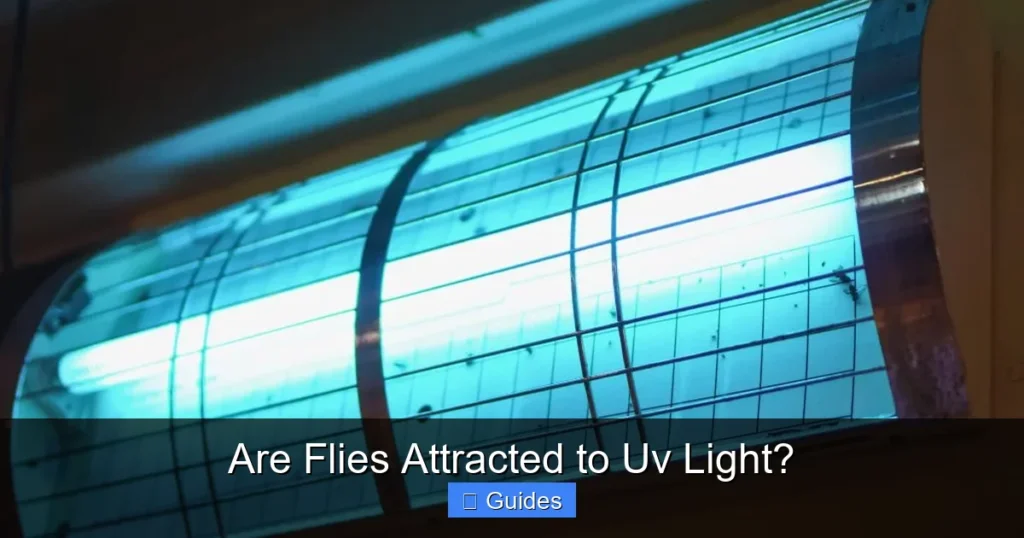
Many people believe flies are strongly attracted to UV light, especially due to their common use in bug zappers. While insects possess the ability to perceive ultraviolet light and some are indeed drawn to it for navigation and foraging, house flies exhibit a more complex and often weaker attraction to UV alone compared to other powerful lures like scent and warmth. Effective fly control requires understanding their diverse sensory world beyond just light.
Welcome, fellow curious minds! Have you ever found yourself wondering, perhaps while watching a bug zapper crackle in the evening, “Are flies attracted to UV light?” It’s a common question, and one that seems to have a simple, straightforward answer, given how many pest control devices use UV lamps. But like many things in the natural world, the truth is far more nuanced and fascinating than you might initially think.
For years, the glowing purple light of a bug zapper has been synonymous with fly and mosquito control. We see it, we hear the tell-tale zap, and we assume it’s doing its job, luring in all the pesky insects. But what if we told you that while some insects are indeed mesmerized by ultraviolet light, our common house flies might not be as impressed as you’d imagine? Let’s peel back the layers of insect vision, explore the science behind UV attraction, and uncover what truly makes flies tick – or, in this case, fly.
Understanding whether flies are attracted to UV light isn’t just about satisfying curiosity; it’s about effective pest management. If we know what genuinely draws these creatures in, we can develop much smarter, more humane, and ultimately more successful strategies to keep them out of our homes and businesses. So, let’s dive deep into the world of light, insects, and uncover the real story.
Key Takeaways
- Flies perceive UV light: Unlike humans, flies have compound eyes that can see into the ultraviolet spectrum, utilizing it for various purposes.
- UV is a navigational tool: For many insects, including some flies, UV light from the sun or moon serves as a crucial cue for orientation and flight.
- House flies have varied attraction: While they can see UV, house flies (Musca domestica) are generally less strongly attracted to UV light *alone* than other insects like moths or some mosquito species.
- Bug zappers have limitations: Devices using UV light to attract and kill insects are effective for certain pests, but their primary targets are often moths and night-flying insects, with limited success for house flies.
- Scent is a stronger attractant: For house flies, strong odors from decaying organic matter, food waste, and feces are significantly more powerful attractants than UV light.
- Integrated pest management is key: The most effective fly control strategies combine sanitation, exclusion (screens), and targeted traps using specific baits, rather than relying solely on UV light.
Quick Answers to Common Questions
Do house flies actively seek out UV light?
House flies can see UV light, but they generally don’t actively seek it out as their primary attractant. Their attraction to UV alone is moderate and often overshadowed by other stimuli like scent.
Are all insects attracted to UV light equally?
No, the attraction to UV light varies greatly among different insect species. Nocturnal insects like moths are often strongly attracted, while house flies show a weaker response compared to their attraction to odors.
How do bug zappers use UV light?
Bug zappers emit UV light to lure insects towards an electrified grid, where they are then electrocuted. The UV is intended as the primary attractant.
What is the most effective attractant for house flies?
For house flies, strong odors from decaying organic matter, food waste, and feces are by far the most effective attractants, significantly more so than UV light.
Does UV light kill flies?
UV light itself does not kill flies; rather, it acts as an attractant to draw them towards a killing mechanism, such as the electric grid in a bug zapper or a sticky trap surface.
📑 Table of Contents
The World Through a Fly’s Eyes: Understanding Insect Vision
Before we can talk about whether flies are attracted to UV light, we first need to understand how flies see the world. It’s vastly different from human vision, and this difference is key to unraveling the mystery.
Compound Eyes and a Broader Spectrum
Flies, like many insects, possess compound eyes. Instead of a single lens like our eyes, a fly’s compound eye is made up of thousands of tiny individual light-sensitive units called ommatidia. Each ommatidium points in a slightly different direction, creating a mosaic-like image in the fly’s brain. This gives flies an incredibly wide field of vision, excellent motion detection, and a rapid ability to process visual information.
Crucially, the photoreceptors within these ommatidia are sensitive to a broader spectrum of light than human eyes. While humans can typically see visible light from red to violet, flies can also perceive ultraviolet (UV) light. This means that a flower that looks uniformly yellow to us might have intricate UV patterns invisible to the human eye but brightly visible to a fly, guiding it towards nectar.
Why UV Perception Matters for Insects
For many insects, the ability to see UV light is not just a party trick; it’s essential for survival. UV light plays a role in:
- Navigation: Many insects use polarized UV light from the sun or moon as a compass to navigate. Without it, they might become disoriented, especially at night.
- Finding Food: As mentioned, flowers often have “nectar guides” – UV patterns that direct pollinators like bees and some flies to the nectar source. Ripe fruits can also reflect UV light differently than unripe ones.
- Mating: Some insects use UV reflections from their own bodies or specific visual cues that only appear in UV light to attract mates.
- Detecting Predators: The unique way UV light interacts with certain surfaces can help insects spot predators or avoid obstacles.
So, yes, flies *can* see UV light. The big question then becomes: are flies *attracted* to UV light in a way that makes it a primary lure?
The Allure of UV Light: Why Some Insects Are Attracted
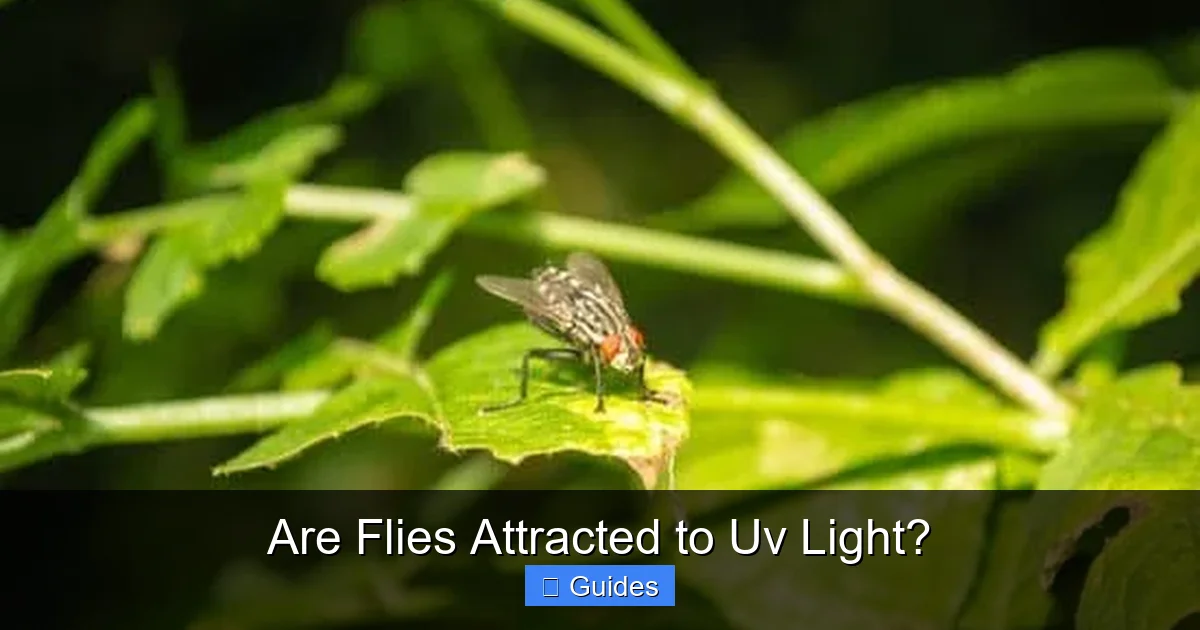
Visual guide about Are Flies Attracted to Uv Light?
Image source: pestwhisperer.com
The phenomenon of insects being drawn to light is called “phototaxis.” If an insect moves towards a light source, it exhibits positive phototaxis. If it moves away, it’s negative phototaxis. Many nocturnal insects, especially moths, are famously positively phototactic, which is why they flutter around streetlights.
UV for Celestial Navigation and Confusion
The primary theory for why many insects are attracted to light, including UV, involves their natural navigation systems. Insects often use celestial bodies (the moon or sun) as a compass, flying at a constant angle relative to the light source. When they encounter an artificial light source, especially one that emits UV, they try to maintain this constant angle. However, since the artificial light is much closer and brighter, their attempt to maintain a constant angle causes them to spiral inward towards the light, eventually colliding with it or circling it endlessly. This is a common reason why moths are so drawn to a bright lamp.
UV in the Environment
UV light is abundant in nature. The sun emits UV, and the sky itself, particularly on a clear day, is rich in polarized UV light. For insects adapted to using these natural cues, an artificial source of UV can be a powerful, albeit confusing, signal. This is why many bug zappers specifically use black lights or UVA bulbs, which emit light in the 315-400 nanometer range, precisely where many insects’ eyes are highly sensitive.
But while the mechanism for *some* insects is clear, does this strong attraction apply equally to house flies? The answer, as we’ll explore, is a bit more complicated.
Are Flies Attracted to UV Light? Distinguishing Different Types
This is where the rubber meets the road. While insects generally can see UV, and many are attracted to it, the specific attraction of *flies* to UV light varies significantly depending on the type of fly.
The Case of the Common House Fly (Musca domestica)
When most people ask “are flies attracted to UV light?”, they’re usually thinking about the common house fly. These are the buzzing pests that land on our food and seem to appear out of nowhere.
Scientific studies and practical observations suggest that house flies *are* capable of seeing UV light, and they do exhibit some degree of positive phototaxis towards it. However, their attraction to UV light alone is generally considered to be moderate at best, and often weak when compared to other stimuli. Unlike moths, which can be almost irresistibly drawn to UV, house flies tend to be much less “enthusiastic.”
Research has shown that while house flies will move towards UV light in controlled environments, their response is significantly boosted – or even overshadowed – by the presence of other cues. For instance, a combination of UV light with specific wavelengths of visible light (like blue or green), or, most importantly, with specific odors, proves far more attractive. This indicates that while UV is on their radar, it’s not their primary navigational or attractant signal for finding food or mates.
Other Types of Flies and Their UV Attraction
It’s important to remember that “fly” is a broad term. There are thousands of different fly species, and their sensory preferences can differ widely:
- Fruit Flies (Drosophila melanogaster): These tiny flies are also capable of seeing UV light. Studies suggest they can be attracted to UV, especially in conjunction with the scent of fermenting fruit. They use UV for navigation and possibly to locate food sources.
- Mosquitoes: While not technically “flies” in the common sense, mosquitoes are often lumped into the same pest category. Mosquitoes are known to be attracted to UV light, but their attraction is often stronger to CO2 (carbon dioxide, mimicking breath), heat, and specific body odors. UV alone is not their strongest lure.
- Gnats and Midges: Many species of gnats and midges, particularly fungus gnats, are quite strongly attracted to UV light, making UV fly traps (often sticky traps with a UV light source) effective against them.
So, while many insects, including some types of flies, *are* attracted to UV light, the common house fly’s attraction is often overestimated, especially in comparison to other, more potent attractants.
The Role of UV in Bug Zappers and Traps
The prevalence of bug zappers and UV fly traps certainly contributes to the popular belief that flies are strongly attracted to UV light. Let’s look at how these devices work and their actual effectiveness.
How Bug Zappers Utilize UV Light
Traditional bug zappers use a fluorescent lamp that emits UV light (primarily UVA) to attract insects. Surrounding this light is an electrical grid. When an insect flies close enough, it completes a circuit, gets electrocuted, and you hear that satisfying (or sometimes startling) “zap!”
Effectiveness for Different Insects
Here’s the catch: while bug zappers *do* kill insects, studies have consistently shown they are far more effective at attracting and killing nocturnal insects like moths, beetles, and certain types of mosquitoes. For the common house fly, their effectiveness is often quite limited. Why? Because as we’ve discussed, house flies aren’t *primarily* drawn to UV light. They are much more interested in the scent of food, decay, or other organic matter.
Many studies have actually revealed that bug zappers often kill more beneficial or harmless insects than actual pest flies. They might provide a sense of control, but for the house fly problem, they’re usually not the silver bullet.
Beyond the Zapper: UV in Modern Fly Traps
Modern fly traps often combine UV light with other attractants to boost their effectiveness. For example:
- Sticky Traps with UV: These traps use a UV light source to draw insects, which then get stuck on a non-toxic adhesive board. These can be effective for fungus gnats and fruit flies, which have a stronger UV attraction. For house flies, they still perform better when combined with specific attractants like pheromones or food-based lures.
- CO2 Emitters with UV: Some sophisticated traps for mosquitoes and biting flies combine UV light with CO2 (to mimic animal breath) and heat. This multi-pronged approach significantly increases their capture rates.
- Wavelength-Specific LED Traps: Newer research is exploring specific wavelengths within the UV and visible spectrum (like blue or green LEDs) that are more attractive to particular fly species, allowing for more targeted and efficient trapping.
So, while UV light *is* a component in many fly control devices, its effectiveness for house flies specifically is often amplified, or even overshadowed, by other attractants.
Beyond UV: What Else Attracts Flies?
If UV light isn’t the primary siren call for house flies, what is? Understanding their true attractants is crucial for effective prevention and control.
The Irresistible Allure of Scent
For house flies, smell is king. They are highly attuned to odors, especially those associated with:
- Decaying Organic Matter: This includes rotting food, compost, animal carcasses, and feces. These are ideal breeding grounds and food sources.
- Sweet and Fermenting Substances: Sugary spills, overripe fruit, and fermenting liquids (like alcohol or vinegar) are strong attractants, particularly for fruit flies.
- Garbage: Uncovered trash cans are a fly magnet due to the rich mix of decaying food odors.
Their olfactory receptors are incredibly sensitive, allowing them to detect these smells from considerable distances. This is why good sanitation is the number one defense against house flies.
Heat and Moisture: Essential for Life
Flies are also attracted to warmth and moisture. Warmth often indicates the presence of food sources or suitable breeding sites. Moisture is essential for their survival, egg-laying, and the development of their larvae. This is why flies are often found near sinks, drains, pet water bowls, and damp garbage.
Visual Cues and Contrast
While not as strong as scent, visual cues still play a role. Flies are very good at detecting movement and contrasts. They are often drawn to areas with high contrast, such as a dark surface next to a light one. This helps them navigate, find resting spots, and detect potential food sources or mates. They also exhibit curiosity towards novel objects in their environment.
Practical Tips for Effective Fly Control
Given what truly attracts flies, here’s how to manage them effectively, going far beyond relying solely on UV light:
- Sanitation is Key: Regularly clean up food spills, keep kitchen surfaces spotless, and empty trash cans frequently. Use sealed bins.
- Eliminate Breeding Sites: Remove pet waste promptly, clean up decaying organic material in your yard, and ensure compost bins are properly managed.
- Exclusion: Repair torn window screens and ensure doors close tightly to prevent flies from entering your home.
- Traps with Bait: Use fly traps that incorporate specific food-based baits (like sugar, vinegar, or protein) or pheromones, which are far more attractive to house flies than just UV light.
- Fans: Flies struggle to fly in moving air. Using fans in outdoor eating areas or near entryways can deter them.
Conclusion
So, are flies attracted to UV light? The answer is a qualified “yes,” but it’s far from the whole story. While flies possess the visual capability to perceive UV light and may exhibit some level of attraction, especially for navigation, their primary drivers for seeking out areas are typically strong scents associated with food, decay, and moisture. For the common house fly, UV light alone is a relatively weak attractant compared to these other powerful cues.
Bug zappers, which rely heavily on UV light, are often more effective against other nocturnal insects like moths than they are against the persistent house fly. Effective fly control demands a more comprehensive approach, one that acknowledges the fly’s diverse sensory world. By focusing on sanitation, eliminating breeding sites, improving exclusion, and using traps that leverage their strong sense of smell, you’ll find much greater success in keeping these unwelcome guests at bay. Understanding this nuanced truth empowers us to tackle fly problems with much smarter, more informed strategies.
🎥 Related Video: Why Bugs Can See UV Light 🪲 w/ Neil deGrasse Tyson
📺 Cosmic Interest
The Science Behind Insect UV Vision! #science #uvlight #scienceexplained #bugfacts #animalvision #neildegrassetyson.
Frequently Asked Questions
Can flies see UV light?
Yes, flies have compound eyes that are sensitive to ultraviolet light, allowing them to perceive wavelengths that are invisible to the human eye. They use this ability for navigation and finding certain food sources.
Why are some bug zappers ineffective against house flies?
Many bug zappers are ineffective against house flies because house flies are not primarily attracted to UV light. Their strong sense of smell for decaying matter and food often overrides any attraction to UV, meaning they might simply ignore the zapper.
What type of UV light do flies see best?
Flies generally perceive UVA light (315-400 nanometers) most effectively, which is the range often used in commercial insect traps. However, their visual system also extends into other parts of the light spectrum.
Are fruit flies attracted to UV light more than house flies?
Fruit flies can be attracted to UV light, particularly when combined with the scent of fermenting fruit. While they might show a stronger response than house flies to UV alone, strong olfactory cues remain paramount for both.
Is UV light harmful to flies?
Direct exposure to strong UV-C light (germicidal UV) can be harmful or lethal to flies and other organisms, damaging DNA. However, the UVA light typically used in insect traps is primarily for attraction, not direct harm through radiation.
Should I rely solely on UV light for fly control?
No, relying solely on UV light for fly control is generally not recommended, especially for house flies. A more effective strategy involves comprehensive sanitation, physical barriers, and traps that utilize strong olfactory baits tailored to fly behavior.
