


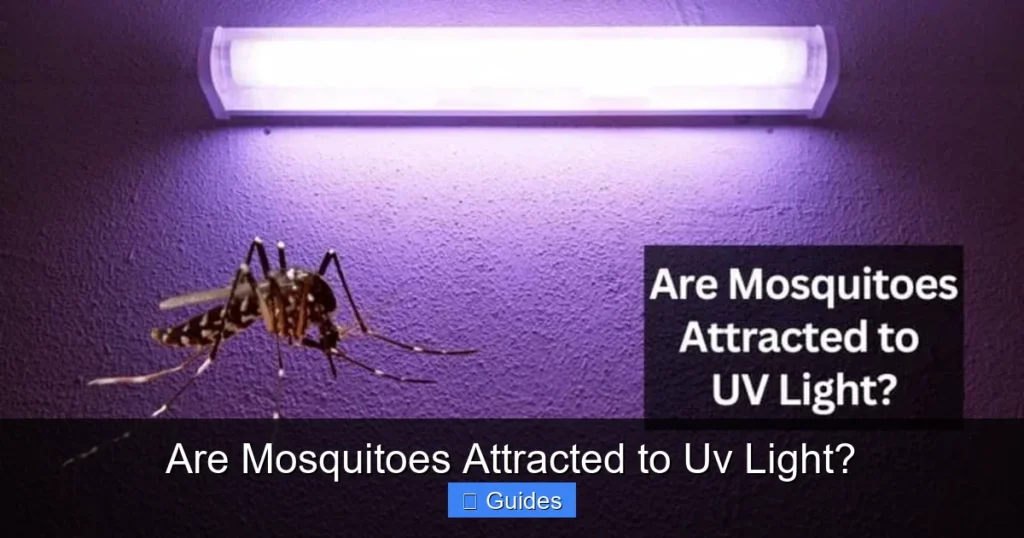
Many people believe mosquitoes are attracted to UV light, often relying on bug zappers for protection. However, scientific evidence shows that while UV lights attract many nocturnal insects, mosquitoes are largely indifferent to them. Instead, these buzzing biters are primarily lured by carbon dioxide, body heat, and specific chemical scents. Effective mosquito control relies on understanding their true attractants, not just relying on light.
Picture this: a warm summer evening, you’re enjoying a backyard BBQ, and then… the incessant buzzing starts. Before you know it, you’re covered in itchy red welts. Mosquitoes! Our perennial warm-weather nemeses. When these tiny vampires descend, many of us instinctively reach for a familiar device: the bug zapper. These glowing contraptions promise to clear the air, their electric crackle signaling the demise of yet another flying pest.
The widespread use of bug zappers, which primarily emit ultraviolet (UV) light, has led to a common belief: mosquitoes are attracted to UV light. It makes sense, right? If the zapper is catching bugs, and mosquitoes are bugs, then surely it’s catching mosquitoes. But what if this widely held assumption is actually a myth? What if the very device you’re relying on to protect you from bites isn’t even registering on a mosquito’s radar? Let’s dive into the fascinating world of mosquito biology and light to uncover the truth.
The Persistent Myth of UV Attraction
For decades, the idea that mosquitoes are attracted to UV light has been a cornerstone of backyard pest control. We’ve been conditioned to associate that purple glow with mosquito eradication. However, scientific research painted a different picture, and it’s time to shed some light on the subject. Understanding what truly attracts mosquitoes is not just an academic exercise; it’s key to developing genuinely effective strategies to keep these disease-carrying pests at bay. Let’s explore their sensory world and discover what truly makes them tick.
Key Takeaways
- Mosquitoes Are Not Primarily Attracted to UV Light: Scientific studies consistently show that mosquitoes are minimally drawn to ultraviolet light, unlike many other common nocturnal insects.
- Bug Zappers Are Ineffective Against Mosquitoes: Devices using UV light to kill insects predominantly trap and kill harmless or beneficial bugs, with very few mosquitoes.
- Mosquitoes Rely on CO2, Heat, and Scent: Their primary attractants are the carbon dioxide we exhale, our body heat, and specific chemical compounds found in human sweat and breath.
- Vision Plays a Secondary Role: While mosquitoes do have vision, they are more sensitive to certain wavelengths in the visible spectrum (like greens and blues) and are better at detecting movement and contrasting colors against the horizon.
- Focus on Proven Control Methods: For effective mosquito management, prioritize eliminating breeding sites, using DEET or picaridin repellents, installing physical barriers, and employing CO2-based traps.
- Understand Insect Phototaxis: Different insects have varying responses to light; what attracts one might not attract another, highlighting the need for targeted pest control strategies.
Quick Answers to Common Questions
Are mosquitoes attracted to UV light at all?
Mosquitoes are minimally attracted to UV light. While they might occasionally fly into a UV light source, it is not a primary attractant for them.
What do bug zappers mostly kill if not mosquitoes?
Bug zappers primarily kill other nocturnal insects such as moths, beetles, and lacewings, many of which are harmless or even beneficial to the environment.
What is the main thing that attracts mosquitoes to humans?
The main attractants for mosquitoes are carbon dioxide (CO2) that we exhale, our body heat, and specific chemical compounds found in our sweat and on our skin.
Do mosquitoes see colors?
Yes, mosquitoes do perceive colors. They are generally more sensitive to longer wavelengths of visible light like greens and blues, and less to reds and oranges.
Are there any lights that deter mosquitoes?
While no light actively deters mosquitoes, yellow or orange LED lights emit wavelengths that are less attractive to many insects, including some mosquitoes, compared to standard white or blue lights.
📑 Table of Contents
The Lure of Light: Understanding Insect Phototaxis
Before we specifically talk about mosquitoes and UV light, it’s helpful to understand a broader concept: phototaxis. This is simply the movement of an organism in response to light. Many insects exhibit phototaxis, and it can be positive (moving towards light) or negative (moving away from light). Think of moths frantically fluttering around a porch light – that’s positive phototaxis in action.
Different Types of Light and Their Appeal
The electromagnetic spectrum includes various types of light, each with different wavelengths and energy levels. We humans can only see a small portion of this spectrum, known as visible light (think rainbow colors: red, orange, yellow, green, blue, indigo, violet).
* Ultraviolet (UV) Light: This is light with wavelengths shorter than visible violet light. It’s invisible to humans but plays a crucial role for many insects.
* Visible Light: The light we see, ranging from deep reds to violets.
* Infrared (IR) Light: Wavelengths longer than visible red light, often perceived as heat.
Many nocturnal insects, like moths, beetles, and some flies, are strongly attracted to UV light. This attraction is often rooted in their navigation systems. They might use celestial light sources (like the moon) for orientation, and artificial lights can confuse them, causing them to circle aimlessly or fly directly into the light source. It’s a phenomenon called “light pollution” for insects. But does this apply to mosquitoes, and are mosquitoes attracted to UV light? The answer might surprise you.
Mosquito Vision: A Different Perspective
Visual guide about Are Mosquitoes Attracted to Uv Light?
Image source: bugbattler.com
To understand if mosquitoes are attracted to UV light, we first need to understand how they see the world. Mosquitoes have compound eyes, made up of thousands of individual lenses, giving them a wide field of vision. However, their visual world is quite different from ours.
What Mosquitoes Can (and Can’t) See
While mosquitoes do use their vision, it’s not their primary sense for finding a meal. Their visual sensitivity tends to be concentrated in specific parts of the spectrum. Research suggests that mosquitoes are generally more sensitive to longer wavelengths of visible light, such as greens and blues, and less so to reds and oranges. However, their sensitivity to UV light is often debated and appears to be minimal compared to many other insects.
For example, studies have shown that mosquitoes can be attracted to dark moving objects against a lighter background, or vice versa, especially when hunting. This helps them spot potential hosts. They also respond to contrast. But when it comes to UV light, their internal compass simply doesn’t seem to point in that direction. This is a critical distinction when asking, “Are mosquitoes attracted to UV light?”
Why Their Vision Differs from Other Insects
The evolutionary needs of a mosquito are distinct. Unlike a moth that might navigate by the moon or a bee that uses UV patterns to find nectar, a mosquito’s main goal is to find blood. This requires a highly specialized set of senses. While vision assists in the final approach, other senses do the heavy lifting in locating a host from a distance. Therefore, developing a strong attraction to UV light wouldn’t necessarily benefit their survival or reproductive success. This explains why they aren’t strongly drawn to it.
The Truth About UV Light and Mosquitoes
This is where we directly address the core question: Are mosquitoes attracted to UV light? The overwhelming scientific consensus is: not significantly. While a mosquito might accidentally stumble into a UV light source, it’s not their primary or even secondary attractant.
Scientific Studies and Evidence
Numerous studies, often conducted by entomologists and pest control experts, have investigated the effectiveness of UV light traps against mosquitoes. A landmark study by the American Mosquito Control Association and the University of Notre Dame found that bug zappers using UV light caught very few mosquitoes. In fact, they predominantly caught beneficial insects like moths and beetles, which are often pollinators or part of the food chain for other animals.
Why is this important? Because it means that the crackling sound you hear from a bug zapper isn’t the sound of mosquito eradication; it’s more likely the sound of innocent bystanders perishing. These devices create a false sense of security while doing little to protect you from mosquito bites.
What *Does* Attract Mosquitoes?
So, if UV light isn’t the answer, what truly draws mosquitoes in? It’s a fascinating cocktail of biological cues:
* Carbon Dioxide (CO2): This is their number one attractant. When we exhale, we release CO2, and female mosquitoes (the ones that bite) can detect even minute changes in CO2 concentrations from up to 50 yards away. They follow this invisible trail upstream to find the source.
* Body Heat: As they get closer, mosquitoes use heat sensors to pinpoint warm-blooded targets. Our body temperature is a strong indicator of a potential blood meal.
* Scent (Volatile Chemical Compounds): Our skin emits a unique blend of chemicals, including lactic acid, ammonia, fatty acids, and octenol, through sweat and breath. Mosquitoes are exquisitely tuned to these compounds, which act like a personalized beacon.
* Movement and Contrast: As mentioned, once they are in close range, they use their vision to spot movement and contrasting shapes against the horizon, helping them home in on their target.
Understanding these true attractants is paramount for effective mosquito control. If you’re trying to prevent bites, focusing on reducing CO2, heat, and scent cues is far more effective than relying on UV light.
The Effectiveness of Bug Zappers: A Deeper Look
The concept of a bug zapper is simple: a UV light source attracts flying insects, which then encounter an electrified grid and are zapped. They are a common sight in backyards across the country, but are they actually doing their job when it comes to mosquitoes?
What Bug Zappers Primarily Catch
As we’ve established, the answer to “Are mosquitoes attracted to UV light?” is largely no. Therefore, bug zappers are overwhelmingly ineffective at controlling mosquito populations. Instead, the vast majority of insects caught in these devices are moths, beetles, lacewings, non-biting midges, and other nocturnal insects. Many of these are harmless, and some are even beneficial, playing roles in pollination or as food sources for birds and bats.
Potential Negative Impacts of Bug Zappers
Beyond their ineffectiveness against mosquitoes, bug zappers can actually have negative environmental consequences:
* Killing Beneficial Insects: They indiscriminately kill a wide range of insects, many of which are vital to local ecosystems. Eliminating pollinators or insects that control other pests can disrupt the natural balance.
* Contamination: The zapped insect parts can be propelled into the air, potentially carrying bacteria or viruses, which could land on food or surfaces.
* False Sense of Security: Relying on a bug zapper for mosquito control gives users a false sense of security, potentially leading them to neglect more effective methods and remain vulnerable to bites and disease.
In short, while the satisfying sizzle of a bug zapper might make you feel productive, it’s doing very little to protect you from mosquitoes and might even be harming your local environment. This is why knowing that mosquitoes are not attracted to UV light is so important.
What *Actually* Works: Proven Mosquito Control Strategies
Since UV light is a bust for mosquitoes, what should you do to protect yourself and your family? The good news is there are many proven, science-backed methods that genuinely work.
Eliminating Breeding Sites: Your First Line of Defense
Mosquitoes need standing water to lay their eggs. Eliminating these breeding grounds is the single most effective way to reduce mosquito populations around your home.
* Drain Standing Water: Regularly empty bird baths, pet water bowls, flowerpot saucers, clogged gutters, old tires, buckets, and anything else that can collect water. Do this at least once a week.
* Maintain Pools and Ponds: Keep swimming pools chlorinated and circulating. For ornamental ponds, consider adding mosquito-eating fish (like gambusia) or using mosquito larvicides.
* Repair Leaks: Fix leaky outdoor faucets and irrigation systems that can create puddles.
Personal Protection: Don’t Leave Home Without It (or a Repellent!)
When you venture outdoors, especially during peak mosquito hours (dawn and dusk), personal protection is key.
* Effective Repellents: Use insect repellents containing active ingredients like DEET, picaridin, oil of lemon eucalyptus (OLE), or IR3535. Apply according to label instructions. These work by masking your natural scents or repelling mosquitoes directly.
* Protective Clothing: Wear long-sleeved shirts, long pants, and socks when outdoors. Light-colored clothing may be slightly less attractive to mosquitoes than dark colors.
* Screens and Barriers: Ensure all windows and doors have well-maintained screens to keep mosquitoes out of your home.
Other Effective Strategies
Beyond the basics, several other methods can bolster your mosquito control efforts:
* Fans: Mosquitoes are weak fliers. A strong fan on your porch or patio can make it difficult for them to land, effectively blowing them away.
* CO2 Traps: Unlike UV traps, CO2 traps mimic human breath, attracting mosquitoes to a collection chamber. These can be effective for localized reduction, though they require maintenance and often propane or electricity.
* Larvicides: For standing water that cannot be drained (like storm drains or neglected ponds), “mosquito dunks” containing Bti (Bacillus thuringiensis israelensis) can kill mosquito larvae without harming other wildlife.
* Professional Pest Control: For severe infestations, professional services can apply targeted treatments to vegetation where adult mosquitoes rest.
* Choosing Outdoor Lighting: If you must have outdoor lights, consider using yellow or orange LED lights. These emit wavelengths that are less attractive to many insects, including some mosquitoes, compared to traditional white or blue lights. This is a subtle but helpful tip, especially since we know mosquitoes are not attracted to UV light.
By combining several of these strategies, you can create a robust defense against mosquitoes, ensuring your outdoor enjoyment isn’t marred by itchy bites.
Conclusion: Separating Fact from Fiction
For years, the glowing allure of the bug zapper has promised an end to our mosquito woes, built on the common misconception that mosquitoes are attracted to UV light. However, as we’ve explored, scientific evidence tells a very different story. Mosquitoes are complex creatures, equipped with sophisticated sensors designed to track down their warm-blooded prey, primarily through the detection of carbon dioxide, body heat, and specific chemical scents. UV light simply isn’t a significant blip on their radar.
Understanding that mosquitoes are not attracted to UV light is more than just a piece of trivia; it’s a fundamental shift in how we approach mosquito control. Relying on bug zappers not only proves ineffective against these biting pests but also indiscriminately harms beneficial insects that are vital to our ecosystems.
The path to a mosquito-free environment lies not in the purple glow of a zapper, but in a multi-pronged approach rooted in scientific understanding. By diligently eliminating breeding sites, using effective personal repellents, employing physical barriers, and considering other targeted control methods, you can create a safer, more enjoyable outdoor space. So, the next time you hear that familiar buzz, remember to ditch the UV light myth and embrace the proven strategies that genuinely keep mosquitoes at bay. Your comfort, and the health of your local ecosystem, will thank you for it.
🎥 Related Video: VERIFY | Are bug zappers good for killing mosquitoes?
📺 WCNC
Being outside means having to deal with more bugs. Here’s what you should know about bug zappers.
Frequently Asked Questions
Do bug zappers help with mosquito control?
No, bug zappers are largely ineffective for mosquito control. Scientific studies have shown they catch very few mosquitoes and primarily kill other, often beneficial, insects. They offer a false sense of security regarding mosquito protection.
What are the most effective ways to prevent mosquito bites?
The most effective ways to prevent mosquito bites include draining standing water around your home, using EPA-registered insect repellents (like those containing DEET or picaridin), wearing protective clothing, and ensuring screens on windows and doors are intact.
Why do mosquitoes prefer some people over others?
Mosquitoes may prefer certain individuals due to a unique combination of factors such as their blood type, body odor (specific chemical compounds in sweat), body temperature, and the amount of carbon dioxide they exhale. Each person’s “scent signature” is different.
Can a fan keep mosquitoes away?
Yes, a fan can be effective at keeping mosquitoes away in a localized area. Mosquitoes are weak fliers, and even a gentle breeze from a fan can make it difficult for them to fly stably and land on a person.
Are mosquito coils or candles effective?
Mosquito coils and candles containing repellents like citronella can offer some localized, short-term protection by creating a smoke barrier or releasing repellent chemicals. However, their effectiveness is limited, especially in windy conditions, and they are not a substitute for stronger repellents or source reduction.
Do plants like citronella or lavender repel mosquitoes?
While some plants, like citronella or lavender, contain compounds that are known mosquito repellents, simply having them in your garden is usually not enough to deter mosquitoes effectively. The concentration of repellent chemicals released by the intact plant is often too low to make a significant difference.
