


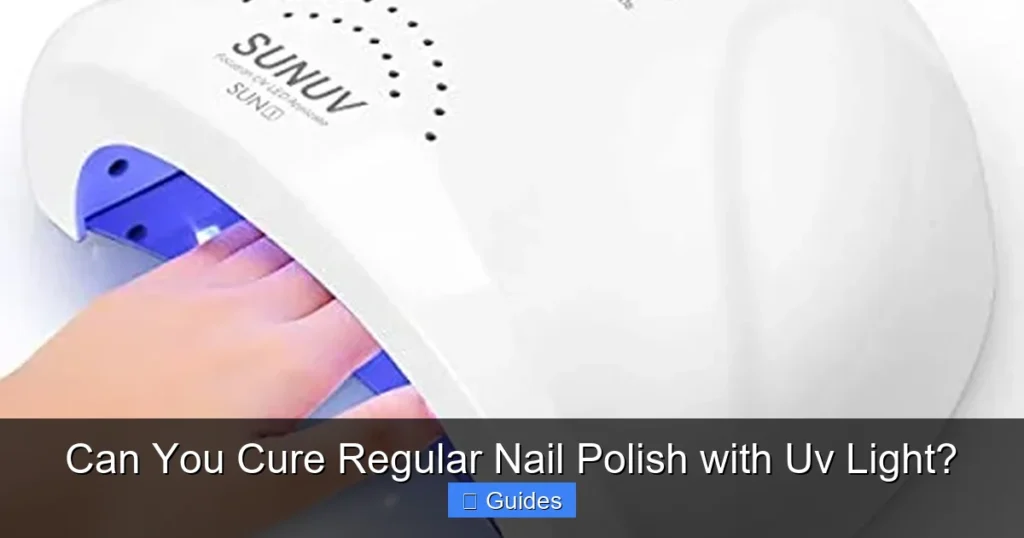
No, you cannot cure regular nail polish with UV light. Regular nail polish dries through solvent evaporation, a completely different chemical process than the polymerization reaction initiated by UV light in gel polishes. Attempting to “cure” regular polish with a UV or LED lamp will only leave it tacky and uncured, as it lacks the necessary photoinitiators to react to the light.
Do you love the glossy, long-lasting finish of a gel manicure? It’s pretty amazing how those polishes go from liquid to super-hard and durable in just a minute or two under a special light. This convenience often sparks a common question among nail enthusiasts: “Can you cure regular nail polish with UV light?” It’s a great question, and one we hear all the time! You might be thinking, if UV lights make gel polish dry so quickly, wouldn’t it do the same magic for your favorite bottle of traditional lacquer?
It’s tempting to think that a UV lamp could be the secret weapon for speeding up the drying time of your everyday nail polish. After all, waiting for regular polish to dry can feel like an eternity, sometimes leading to smudges and dents just when you thought you were in the clear. The idea of getting that perfect, salon-fresh finish without the long wait is incredibly appealing. So, let’s dive deep into this topic and uncover the truth about whether you can cure regular nail polish with UV light, exploring the science behind how different polishes work and what you can do for a perfect, long-lasting manicure every time.
In this guide, we’ll explain the fundamental differences between regular and gel nail polish, shed light on the science of “curing” versus “drying,” and ultimately answer whether UV light can accelerate the process for your standard polishes. We’ll also share some helpful tips for achieving the best results with both types of nail products. By the end, you’ll be a pro at understanding what your nail polish really needs to set beautifully!
Key Takeaways
- Regular Nail Polish vs. Gel Polish: Regular nail polish air-dries through solvent evaporation, while gel polish hardens (cures) through a chemical reaction initiated by UV or LED light.
- Lack of Photoinitiators: Regular nail polish does not contain photoinitiators, the special ingredients found in gel polishes that react to UV/LED light to start the curing process.
- No Curing Action: Exposing regular nail polish to UV light will not make it cure or dry faster; it will remain wet and sticky because the necessary chemical reaction cannot occur.
- Wasted Effort and Time: Using a UV lamp for regular polish is ineffective and a waste of time and energy, as it won’t accelerate drying or improve durability.
- Proper Drying for Regular Polish: The best way to dry regular nail polish is simply to let it air dry in thin coats, or use quick-dry topcoats or drops designed for this purpose.
- Understanding the Difference is Key: Knowing the fundamental chemical differences between polish types helps prevent frustration and ensures you use products correctly for the best results.
Quick Answers to Common Questions
Can I put regular nail polish on top of gel polish?
Yes, you can absolutely apply regular nail polish over a fully cured gel polish manicure. This is a great way to change your nail color frequently without removing the underlying gel, effectively turning your gel manicure into a protective base. Just be sure to let the regular polish air dry completely, as it still won’t cure with UV light.
What’s the main difference between “drying” and “curing”?
“Drying” refers to the process where solvents evaporate from a product, leaving behind a solid film (like regular nail polish). “Curing” is a chemical reaction, often initiated by light, that transforms a liquid substance into a solid by creating new, strong molecular bonds (like gel polish under a UV lamp).
Will UV light make my regular nail polish last longer?
No, exposing regular nail polish to UV light will not make it last longer or become more durable. Since the UV light doesn’t cause any chemical change or hardening in regular polish, it won’t improve its wear time or resistance to chipping.
Is it safe to put my hands under a UV lamp with regular polish on?
While exposing regular polish to UV light won’t cure it, repeated, unprotected exposure to UV light on your skin can carry risks, similar to sun exposure. It’s generally recommended to apply sunscreen or wear fingerless gloves if using a UV lamp for gel polish, regardless of whether you have regular polish on.
Can LED lamps cure regular nail polish?
Just like UV lamps, LED lamps cannot cure regular nail polish. LED lamps emit a different spectrum of light, but they still rely on photoinitiators within the polish to trigger a chemical reaction. Regular nail polish lacks these photoinitiators, so LED light will have no effect on its drying process.
📑 Table of Contents
- Understanding the Basics: Regular Polish vs. Gel Polish
- The Big Question: Can You Cure Regular Nail Polish with UV Light?
- The Science Behind UV/LED Curing: A Closer Look
- What Actually Works: Drying Regular Nail Polish Effectively
- Considering Gel Polish as an Alternative
- Final Thoughts: The Right Tools for the Right Job
Understanding the Basics: Regular Polish vs. Gel Polish
Before we get to the core question, “Can you cure regular nail polish with UV light?”, it’s super important to understand that not all nail polishes are created equal. They look similar in their little bottles, but what’s inside and how they work are actually worlds apart. Think of it like comparing apples and oranges – both are fruit, but they are distinctly different.
The Chemical Makeup Matters
Regular nail polish, the kind you’ve probably been using for years, is a fairly simple concoction. Its main ingredients include polymers (like nitrocellulose), color pigments, plasticizers for flexibility, and, most importantly for our discussion, solvents. These solvents are volatile liquids that keep the polish in its liquid state in the bottle.
Gel nail polish, on the other hand, is a much more complex formulation. It also contains polymers and pigments, but its key difference lies in special ingredients called *photoinitiators*. These are chemicals that are highly sensitive to UV (ultraviolet) or LED (light-emitting diode) light.
How Regular Polish “Dries”
When you apply regular nail polish, you might say it “dries.” But chemically speaking, it’s undergoing a process called *solvent evaporation*. The solvents in the polish simply evaporate into the air, leaving behind the solid film of polymers and pigments on your nail. As more solvent leaves, the polish hardens and becomes dry to the touch. This process takes time, typically anywhere from 10 minutes to an hour or more, depending on the thickness of your coats and the specific polish formula. This is why thin coats are always recommended – less solvent to evaporate means faster drying!
How Gel Polish “Cures”
Gel polish doesn’t “dry” in the traditional sense; it “cures.” This is where the UV or LED light comes into play. When gel polish is exposed to the specific wavelengths of light emitted by a UV or LED lamp, the photoinitiators within the polish absorb this energy. This absorption triggers a rapid chemical reaction called *polymerization*. During polymerization, the tiny monomer molecules in the gel link together to form long, strong polymer chains, effectively hardening the gel into a durable, solid layer. This chemical transformation is quick and thorough, which is why gel polishes set so rapidly under the lamp.
The Big Question: Can You Cure Regular Nail Polish with UV Light?
Visual guide about Can You Cure Regular Nail Polish with Uv Light?
Image source: nailicy.com
Now that we understand the distinct mechanisms, let’s get straight to the point: Can you cure regular nail polish with UV light? The short, definitive answer is **no**. You cannot cure regular nail polish with UV light. Trying to do so is a common misconception, but it simply won’t work as you might hope.
Why UV Light Doesn’t Work for Regular Polish
The fundamental reason UV light is ineffective for regular polish goes back to the photoinitiators we just talked about. Regular nail polish *does not contain photoinitiators*. Without these light-sensitive chemicals, the UV or LED light has no chemical reaction to trigger. It’s like trying to start a car without an engine – all the other parts might be there, but the essential component for motion is missing.
When you put your hand with regular nail polish under a UV lamp, the light might warm your nails slightly, but it won’t kickstart any polymerization process. The solvents in the polish will still need to evaporate naturally into the air for the polish to harden. The UV light doesn’t speed up this evaporation process significantly, if at all.
What Happens If You Try?
If you attempt to “cure” regular nail polish with UV light, you’ll likely end up with a frustrating mess. You might pull your hand out from under the lamp, expecting rock-hard nails, only to find the polish is still wet, tacky, and easily smudged. It might even feel a bit gooey or oddly set on the very surface, but underneath, it will remain liquid. This is because the UV light has done nothing to accelerate the natural evaporation of the solvents. You’ve simply wasted time and energy.
Some people report that the polish feels a little firmer on top, which might lead to further confusion. However, this is merely a superficial effect, not true curing. The inner layers remain uncured, making the manicure fragile and prone to chipping and denting. It also won’t bond to your nail plate in the same way a truly cured gel polish does, leading to poor adhesion and premature wear.
The Science Behind UV/LED Curing: A Closer Look
To truly grasp why you can’t cure regular nail polish with UV light, let’s take a slightly deeper dive into the science of how UV/LED lamps work with gel polish. It’s fascinating stuff!
Photoinitiators: The Key Players
In gel polish, the unsung heroes are the photoinitiators. These molecules are specifically designed to absorb light energy at certain wavelengths (typically within the UV-A spectrum for UV lamps or specific blue light spectrum for LED lamps). When they absorb this energy, they become excited and break apart, creating highly reactive particles called “free radicals.”
Polymerization: Building Strong Chains
These free radicals are like tiny sparks that ignite the polymerization process. They react with the “monomers” and “oligomers” (small, reactive molecules) present in the gel polish formula. This reaction causes the monomers and oligomers to link together, one by one, forming long, strong, cross-linked polymer networks. Imagine building a strong fence by linking individual pickets together with sturdy fasteners – that’s essentially what happens on a microscopic level.
This process transforms the liquid gel into a solid, durable coating. The strength and longevity of gel polish come directly from these interconnected polymer chains. The process is very efficient, which is why gel polish can cure in a matter of seconds to a few minutes.
Why Regular Polish Lacks This Mechanism
Regular nail polish, as we discussed, relies on a much simpler process. Its polymers (like nitrocellulose) are already fully formed long chains. They don’t need to be linked together by a light-activated chemical reaction. Instead, they are simply dissolved in solvents. When the solvents evaporate, the pre-formed polymer chains are left behind to create the solid film. Since there are no photoinitiators and no monomers waiting to be linked by light, a UV lamp has nothing to “cure” in regular polish.
What Actually Works: Drying Regular Nail Polish Effectively
Since you can’t cure regular nail polish with UV light, what are the best ways to get your traditional lacquer to dry quickly and flawlessly? Don’t worry, there are plenty of tried-and-true methods that actually work!
Thin Coats Are Your Best Friend
This is the golden rule of regular polish application. Applying multiple thin coats, allowing each to air dry for a minute or two before the next, is far more effective than one thick, gloopy coat. Thin coats mean less solvent needs to evaporate, leading to quicker and more thorough drying. Plus, thin coats are less prone to bubbling or peeling.
Give It Time and Air
The most fundamental method for drying regular polish is simply letting it air dry. Patience is key! Ensure you’re in a well-ventilated area. Avoid fanning your nails too vigorously or placing them directly in front of a fan, as this can sometimes cause the polish to “skin over” on top while remaining wet underneath, leading to smudges and dents. Gentle air circulation is fine, but don’t overdo it.
Quick-Dry Products: Drops and Sprays
Many brands offer excellent quick-dry drops or sprays. These products typically contain ingredients that help accelerate the evaporation of solvents or create a protective, fast-drying layer over your polish. You simply apply a few drops or a quick spray after your final topcoat, and they significantly cut down drying time. Always check the specific instructions for each product.
Quick-Dry Topcoats
Investing in a good quick-dry topcoat is another fantastic strategy. These are formulated to dry to the touch very quickly, providing a protective layer that helps prevent smudges while the underlying polish continues to fully harden. They also add extra shine and extend the wear of your manicure. Apply it generously over your colored polish.
Cold Water Dip (Use with Caution)
This is a popular home remedy, but it comes with a caveat. After your polish has had a few minutes to air dry (so it’s not dripping wet), you can carefully dip your fingers into a bowl of ice-cold water for a few minutes. The cold temperature helps to solidify the polish film faster. However, if the polish is too wet when you dip it, the water can sometimes affect the finish or cause bubbling. This method primarily hardens the outer layer, but the inner layers still need to air dry.
Considering Gel Polish as an Alternative
If you’re frustrated by the slow drying time of regular polish and were hoping to cure regular nail polish with UV light for speed, perhaps it’s time to fully embrace gel polish! It’s specifically designed for quick curing and offers a whole host of benefits that regular polish simply can’t match.
The Benefits of Gel Polish
- Instant Dry: The biggest draw! Once cured under a lamp, your nails are immediately dry and smudge-proof. No more waiting around or accidental dents.
- Long-Lasting Wear: Gel polish typically lasts 2-3 weeks without chipping, much longer than regular polish, which usually chips within a few days.
- Incredible Shine: Gel manicures boast a superior, high-gloss shine that lasts until removal.
- Strength and Protection: The hard, cured layer of gel polish adds a layer of strength to your natural nails, helping to prevent breakage and splitting.
What You Need for Gel Polish at Home
If you decide to make the switch, you’ll need a few specific items:
- UV or LED Nail Lamp: Essential for curing the gel. LED lamps are generally faster and last longer.
- Gel Base Coat: Creates a strong bond with your natural nail.
- Gel Color Polish: Available in countless shades, just like regular polish.
- Gel Top Coat: Provides shine and seals the manicure.
- Nail Cleanser/Wipe: To remove the “tacky layer” (inhibition layer) left after curing certain gels.
- Acetone: For safe and proper removal.
Proper Application is Key
Applying gel polish requires a slightly different technique than regular polish. Thin coats are even more crucial with gel, as thick layers may not cure properly and can cause issues like wrinkling or peeling. Always follow the manufacturer’s instructions for cure times, as these vary between brands and lamp types.
Final Thoughts: The Right Tools for the Right Job
So, can you cure regular nail polish with UV light? We’ve learned that the answer is a resounding no. Regular nail polish and gel polish are fundamentally different products, designed to “dry” and “cure” through entirely separate chemical processes. One relies on air evaporation, the other on light-activated polymerization. Understanding this distinction is key to achieving successful manicures, whether you prefer traditional lacquer or the long-lasting power of gel.
Trying to force a square peg into a round hole by using a UV lamp on regular polish will only lead to frustration and wasted time. Instead, embrace the appropriate methods for each type of polish. For regular nail polish, focus on thin coats, air drying, and quick-dry products. If you crave instant drying and extended wear, gel polish is your ideal solution, but remember it requires the correct UV or LED lamp and specific application techniques.
Ultimately, having this knowledge empowers you to make informed decisions about your nail care routine. Now you know exactly what your polish needs to look its best, ensuring beautifully finished nails every time, without any sticky surprises!
🎥 Related Video: UV Turns Gel Nail Polish into Plexiglas!
📺 Chemteacherphil
Frequently Asked Questions
Does quick-dry spray or drops use UV light?
No, quick-dry sprays and drops for regular nail polish do not use UV light. These products typically contain ingredients that either help the solvents in the polish evaporate faster or create a protective, fast-setting layer on top, allowing your regular polish to dry more quickly through traditional air drying.
What happens if you try to cure regular nail polish with a UV light?
If you try to cure regular nail polish with a UV light, nothing will happen to accelerate its drying process. The polish will remain wet, tacky, and easily smudged, as it lacks the necessary photoinitiators to react to the UV light and initiate a curing chemical reaction.
Can regular nail polish be used as a base coat for gel?
No, regular nail polish should not be used as a base coat for gel polish. Gel polish requires a specific gel base coat formulated to bond chemically with the gel color and cure under UV/LED light for proper adhesion and long-lasting wear.
Why does regular nail polish take so long to dry?
Regular nail polish takes a long time to dry because it relies solely on the evaporation of solvents into the air. The more solvents there are (i.e., thicker coats), and the less air circulation, the longer it will take for the polish to fully harden.
Are there any UV-activated regular nail polishes?
No, there are no “UV-activated” regular nail polishes in the true sense. If a polish requires a UV or LED lamp to harden, it is by definition a gel polish, not a regular or traditional nail polish. The terminology indicates different chemical compositions and drying/curing methods.
Can I mix regular nail polish with gel polish?
It is generally not recommended to mix regular nail polish with gel polish. Their chemical compositions are incompatible, and mixing them can prevent proper curing, lead to an uneven finish, or cause the mixed product to degrade or separate, resulting in a poor-quality and non-durable manicure.
