


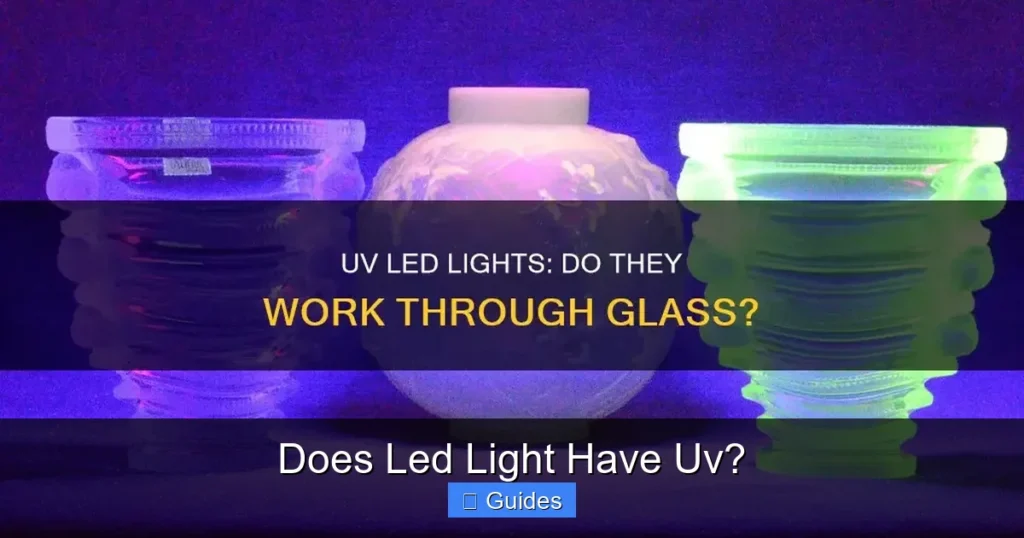
LED lights, unlike traditional incandescent or fluorescent bulbs, generally emit negligible to zero UV radiation. Their design focuses on producing visible light, primarily through blue LEDs exciting phosphors to create white light, without involving the UV spectrum significantly. While specialized UV LEDs exist for specific industrial or germicidal purposes, the common LEDs in your home or office are remarkably safe concerning UV exposure, offering a healthier alternative for everyday lighting needs.
Does LED Light Have UV? Unpacking the Truth About Your Modern Lighting
In our increasingly illuminated world, LED lights have become the undisputed champions of efficiency, longevity, and versatility. From the glow of your smartphone screen to the bright illumination in your living room, these tiny light-emitting diodes are everywhere. But with all the talk about different types of light and their effects, a common question often pops up: “Does LED light have UV?” It’s a valid concern, especially when we’ve been taught for years about the dangers of ultraviolet (UV) radiation from the sun and even some older artificial light sources.
Understanding what types of light we’re exposed to is more important than ever. You might be wondering if your new LED lightbulbs are silently contributing to skin damage or eye strain in the same way direct sunlight can. Or perhaps you’re just curious about the science behind these modern marvels. Well, you’ve come to the right place! We’re going to dive deep into the world of LED lighting, explore the science of UV, and give you a clear, simple answer to whether LED light has UV, debunking myths and setting the record straight.
Let’s shed some light on this topic and clarify exactly what kind of radiation (if any!) you’re getting from your LED lights. By the end of this article, you’ll have a much clearer picture of how LEDs work, their safety profile, and why they’ve become such a popular choice for lighting our homes and public spaces.
Key Takeaways
- Minimal to No UV Emission: Standard consumer LED lights are specifically designed to produce visible light and emit virtually no ultraviolet (UV) radiation. This is a significant difference from older lighting technologies like incandescent or fluorescent bulbs, which can emit small amounts of UV.
- How LEDs Work Without UV: LEDs generate light through electroluminescence, where electrons move through a semiconductor material. For white LEDs, a blue LED often excites a yellow phosphor coating, which converts the blue light into a broad spectrum of visible light, bypassing the UV range.
- Distinction from Blue Light: It’s crucial to understand that blue light and UV light are entirely different. Blue light is part of the visible spectrum, while UV light is invisible and has a shorter, higher-energy wavelength. Concerns about blue light relate to eye strain and sleep patterns, not UV-like skin or eye damage.
- Specialized UV LEDs Exist: While common LEDs don’t emit UV, there are specialized UV-LEDs designed for specific applications. These include UV curing in industrial processes, germicidal UV-C for sterilization, or certain horticultural lights, and they are engineered to *purposefully* emit UV radiation.
- Safety in Everyday Use: For the vast majority of consumer applications – home lighting, office lighting, vehicle lights, and device screens – LED lights are considered safe regarding UV exposure. They do not contribute to sunburn, skin aging, or UV-related eye damage.
- Benefits of LED Lighting: Beyond minimal UV, LEDs offer numerous advantages, including energy efficiency, longer lifespan, durability, and cooler operation, making them an environmentally friendly and cost-effective lighting solution.
Quick Answers to Common Questions
Does LED light have UV that can cause skin damage?
No, standard consumer LED lights emit negligible to no UV radiation. They cannot cause sunburn, accelerate skin aging, or contribute to skin cancer, unlike sunlight or specialized UV lamps.
Is blue light from LEDs the same as UV light?
No, blue light and UV light are entirely different. Blue light is part of the visible light spectrum, while UV light is invisible and has a shorter, higher-energy wavelength. Concerns about blue light relate to circadian rhythms and eye strain, not UV-like skin or eye damage.
Do specialized UV-LEDs exist?
Yes, specialized UV-LEDs are engineered to emit specific wavelengths of UV light for particular purposes, such as UV curing in industrial processes, germicidal UV-C for sterilization, or certain grow lights for plants. These are distinct from general illumination LEDs.
Are LED lights safer than fluorescent bulbs regarding UV?
Yes, LED lights are generally safer than fluorescent bulbs concerning UV emission. Fluorescent bulbs use UV internally to produce visible light, and while most is contained, trace amounts can escape. LEDs, by design, do not rely on UV and emit significantly less, if any.
Do LED screens (phones, TVs) emit UV?
No, LED screens on devices like phones, tablets, computers, and TVs primarily emit visible light, including a blue light component, but they do not emit UV radiation. Concerns about screens are related to blue light’s effects on sleep and eye strain, not UV exposure.
📑 Table of Contents
Understanding Light and UV Radiation
Before we can answer the big question, “Does LED light have UV?”, it’s helpful to understand a little bit about light itself. Light isn’t just one thing; it’s a spectrum!
The Electromagnetic Spectrum: Where Light Lives
Think of light as a form of energy that travels in waves. These waves can be long and slow, like radio waves, or short and fast, like X-rays. What we call “light” is just a tiny slice of this vast electromagnetic spectrum that our eyes can actually see. This visible light spectrum includes all the colors of the rainbow, from red (longer wavelengths) to violet (shorter wavelengths).
Beyond the visible light our eyes can perceive, there are other types of radiation. On one end, you have infrared, microwaves, and radio waves. On the other end, past violet, you have ultraviolet (UV), X-rays, and gamma rays.
What Exactly is UV Radiation?
UV radiation is electromagnetic radiation with wavelengths shorter than visible light but longer than X-rays. It’s invisible to the human eye, but its effects are very much visible and tangible, especially concerning our health. UV radiation is primarily associated with the sun, but it can also be produced by artificial sources.
UV light is typically divided into three main types based on wavelength:
- UVA (320-400 nm): This is the longest wavelength UV light and makes up about 95% of the UV radiation that reaches Earth. It penetrates deep into the skin and is linked to aging, wrinkles, and some skin cancers. UVA can also penetrate glass.
- UVB (280-320 nm): Shorter than UVA, UVB is the primary cause of sunburn and plays a significant role in skin cancer development. Most UVB is absorbed by the Earth’s ozone layer, but enough gets through to cause damage.
- UVC (100-280 nm): This is the shortest and most energetic form of UV radiation. It’s incredibly harmful to living organisms. Fortunately, the ozone layer completely absorbs all UVC from the sun, so it doesn’t reach the Earth’s surface naturally. However, it can be artificially produced for sterilization.
Now that we know what UV is, let’s see how LEDs fit into this picture.
How LEDs Work: A UV-Free Design Focus
Visual guide about Does Led Light Have Uv?
Image source: i.ytimg.com
LED stands for Light-Emitting Diode. These semiconductor devices produce light through a process called *electroluminescence*. It sounds fancy, but it’s actually quite straightforward when you break it down.
The Basic Principle of LED Light Generation
Inside an LED, electricity flows through a semiconductor material. When electrons pass through this material, they release energy in the form of photons – tiny packets of light. The specific materials used in the semiconductor determine the color of the light emitted. For example, gallium arsenide produces infrared light, while gallium nitride produces blue light.
Creating White Light: The Phosphor Connection
Most of the white LEDs you find in homes and offices today don’t emit white light directly. Instead, they use a clever trick:
- A blue LED chip is encased in a protective layer.
- This blue LED emits high-energy blue light.
- The blue light then strikes a phosphor coating (often a yellowish material) that surrounds the LED chip.
- The phosphor absorbs some of the blue light and re-emits it at longer wavelengths, typically in the yellow, green, and red parts of the visible spectrum.
- The blue light that passes through, combined with the yellow/other visible light from the phosphor, mixes to create what our eyes perceive as “white” light.
This process is incredibly efficient and, crucially, is designed to *only* produce visible light.
Why This Design Avoids UV
The key takeaway here is that LEDs are engineered for visible light production. Unlike incandescent bulbs, which generate light by heating a filament to extreme temperatures (creating a broad spectrum including some UV and lots of infrared), or fluorescent bulbs, which use UV to excite a phosphor coating inside the tube (which then converts the UV into visible light), LEDs don’t rely on heat or UV as an intermediate step to create visible light. Their direct emission process means they inherently produce very little, if any, UV radiation.
Does LED Light Have UV? The Definitive Answer
So, let’s get right to it: does LED light have UV? The answer, for the vast majority of consumer LED lighting products, is a resounding **no, or at least a negligible amount that poses no health risk.**
Generally, No Significant UV Emission
Standard household and commercial LED lights are designed to be highly efficient in converting electrical energy into visible light, specifically bypassing the UV spectrum. The manufacturing process and the materials chosen for the semiconductor and phosphor coatings are optimized to ensure that the light output falls squarely within the visible range. Any UV that might be emitted is typically so miniscule that it’s considered insignificant and harmless.
Think of it this way: the goal of a general illumination LED is to light up a room, not to give you a tan or sterilize surfaces. Therefore, the technology is tailored precisely for that purpose. Reputable manufacturers rigorously test their products to ensure they meet safety standards, which include minimal UV output.
Trace Amounts and Specific Cases
While we say “no UV,” it’s worth noting that *all* light sources, to some extent, might have a tiny, trace amount of energy across the spectrum. For LEDs, this is usually so infinitesimally small it’s less than what you’d get from standing briefly near a window on a cloudy day. It’s not enough to cause any biological effect.
However, there are specific, specialized types of LEDs that *do* intentionally emit UV light. We’ll discuss these in more detail in a later section, but it’s important to differentiate them from the everyday LEDs you use for general lighting. When asking “does LED light have UV,” it’s crucial to specify *which* LED light you’re talking about. For your home, office, or car, the answer remains a firm “no.”
Blue Light vs. UV Light: A Crucial Distinction
One of the reasons for the confusion around “does LED light have UV?” often stems from discussions about “blue light.” It’s vital to clarify that blue light is *not* UV light. They are two distinct parts of the electromagnetic spectrum.
The Wavelength Difference
- Blue Light: Part of the visible light spectrum, with wavelengths typically ranging from 400 to 500 nanometers (nm). It’s the shortest wavelength and highest energy part of visible light.
- UV Light: Invisible light with wavelengths *shorter* than blue light, specifically below 400 nm (UVA starts around 320 nm).
So, while blue light has shorter wavelengths than other visible colors, it is still firmly within the visible spectrum and does not cross into the UV range.
Concerns About Blue Light
The concern around blue light, particularly from screens (smartphones, tablets, computers, TVs) and some LED lighting, is different from UV concerns. Research suggests that prolonged exposure to high levels of blue light, especially in the evening, can:
- Disrupt Circadian Rhythms: Blue light suppresses melatonin production, which is a hormone that helps regulate sleep. Exposure to blue light before bed can make it harder to fall asleep.
- Cause Digital Eye Strain: Extended viewing of screens emitting blue light can lead to symptoms like dry eyes, headaches, blurred vision, and general eye fatigue.
- Potential Retinal Damage: Some studies have raised concerns about the potential long-term effects of high-energy blue light on retinal cells, though more research is needed, especially regarding typical exposure levels from consumer devices and lighting.
It’s important to remember that these concerns are *not* about UV exposure. They are specific to the properties of blue light as a component of visible light. The sun is by far the largest source of blue light, and indoor LEDs typically emit far less blue light than direct sunlight.
Practical Tips for Blue Light Management
While blue light is not UV, managing your exposure can still be beneficial:
- Use Night Mode/Filters: Many devices have “night mode” or blue light filters that shift screen colors to warmer tones in the evening.
- Take Breaks: Follow the 20-20-20 rule: every 20 minutes, look at something 20 feet away for at least 20 seconds.
- Adjust Lighting: Choose warmer color temperature LEDs (lower Kelvin values, e.g., 2700K-3000K) for evening use to minimize blue light impact on sleep.
So, when someone asks “does LED light have UV,” you can confidently say “no,” but also offer the nuance that blue light is a different consideration.
Specific LED Applications That *Do* Emit UV
While our focus has been on standard consumer LEDs and the question “does LED light have UV” in that context, it’s crucial to acknowledge that there are specific types of LEDs designed precisely to emit UV radiation. These are not your everyday lightbulbs.
1. UV-C LEDs for Sterilization and Disinfection
UVC light, as we learned, is highly energetic and can destroy bacteria, viruses, and other microorganisms. Because of its germicidal properties, UVC LEDs are increasingly used in:
- Water Purification Systems: To sterilize drinking water.
- Air Purifiers: To kill airborne pathogens.
- Surface Disinfection Devices: Small handheld wands or built-in sterilizers for phones, keys, or other objects.
- Medical Equipment Sterilization: For ensuring hygienic tools and environments.
These devices intentionally use UV-C LEDs to harness their powerful germ-killing abilities. They are designed for specific, controlled applications and should be used with caution, as direct exposure to UVC light is harmful to human skin and eyes.
2. UV-A/UV-B LEDs for Industrial Curing and Grow Lights
Other specialized UV LEDs exist for different purposes:
- UV Curing: UVA LEDs are widely used in industrial applications for curing resins, inks, and adhesives. Think about how gel nail polish is cured under a “UV lamp” – these often use specific UVA LEDs or fluorescent UV lamps. These LEDs are highly efficient for polymerization, causing materials to harden quickly.
- Horticultural/Grow Lights: Some advanced LED grow lights designed for indoor plant cultivation may incorporate a small amount of UVA or even UVB. This is because certain plants benefit from specific wavelengths of UV light to enhance growth, color, flavor, or pest resistance. However, these are specialized lights, and the UV component is carefully controlled for plant benefit, not for general illumination.
It is important to reiterate: these specialized UV-emitting LEDs are distinct from the general lighting LEDs in your home or office. If you’re buying an LED bulb for ambient light, you can be confident that “does LED light have UV?” will lead to a “no” for that product.
Health and Safety of LED Lighting
Given everything we’ve discussed, what’s the overall picture for the health and safety of LED lighting, especially concerning UV?
Minimal UV Risk from Consumer LEDs
The most important point for general consumers is that everyday LED lighting poses virtually no UV risk. You won’t get a sunburn, increase your risk of skin cancer, or damage your eyes from UV radiation by using standard LED bulbs or sitting in an LED-lit room. This is a significant advantage over older lighting technologies.
Comparing to Older Lighting Technologies
- Incandescent Bulbs: These generate light by heating a filament. While their primary output is visible light and infrared (heat), they do produce very small, non-hazardous amounts of UVA and UVB.
- Fluorescent Bulbs (CFLs and Tubes): These work by passing an electric current through a gas, which then emits UV radiation. A phosphor coating inside the bulb converts most of this UV into visible light. However, a tiny amount of UV can escape, especially from older or damaged bulbs. Studies show this is typically very low, but still more than LEDs.
In comparison, LEDs are the clear winner when it comes to minimal UV emission.
Eye Safety and Photobiological Hazards
While UV isn’t a concern for standard LEDs, other aspects of light safety are always considered by manufacturers and regulators. The primary concern is usually about what’s called a “photobiological hazard,” specifically related to very bright light or the blue light component.
- Blue Light Hazard: As discussed, this relates to the potential for high-intensity blue light to affect the retina over long periods. Reputable LED manufacturers design their products to fall within safe limits according to international standards (e.g., IEC 62471 for photobiological safety).
- Glare: Extremely bright LEDs, just like any bright light source, can cause glare and discomfort. Proper fixture design and diffusion help mitigate this.
For typical household and office LED lighting, when used as intended, these potential hazards are managed within safe parameters. You don’t need special glasses to use them, nor should you worry about them harming your skin or eyes from UV.
Practical Tips for Safe LED Use
- Choose Reputable Brands: Buy LEDs from trusted manufacturers who adhere to safety standards.
- Match Light to Activity: Use brighter, cooler light (higher Kelvin) for task-oriented activities during the day, and dimmer, warmer light (lower Kelvin) for relaxation and evenings.
- Avoid Staring Directly: As with any bright light source, avoid staring directly into an LED light, especially high-intensity ones.
- Ensure Proper Installation: Follow manufacturer guidelines for installation and use.
Conclusion: The Bright Future of LED Lighting
The question, “does LED light have UV?” can now be confidently answered: for the vast majority of consumer and general illumination LED products, the answer is a reassuring **no, or at least an amount so negligible it poses no health risk.** LEDs are designed to emit visible light efficiently, utilizing clever phosphor conversion methods that steer clear of the UV spectrum.
We’ve explored the fundamental differences between blue light and UV light, emphasizing that while blue light has its own set of considerations, it is entirely separate from the invisible, higher-energy UV radiation that can damage skin and eyes. We also clarified that specialized UV-emitting LEDs exist for industrial, germicidal, or horticultural applications, but these are distinct from the everyday LEDs lighting our homes and offices.
LED lighting offers a plethora of benefits – energy efficiency, long lifespan, durability, and cool operation – making them an excellent choice for modern living. Their minimal UV emission adds another layer of safety and makes them a healthier alternative to older lighting technologies. So, you can enjoy the bright, efficient light of LEDs without worrying about unwanted UV exposure. Embrace the future of lighting, knowing that LEDs are a safe and smart choice for illuminating your world.
🎥 Related Video: Difference Between Blue LED And UV Ultra LED | UV Light | Ultra Violet LED Light
📺 TECHNICAL PROJECTS EXPERIMENT
All About Of Ultra Violet Light| UV Light | Ultra Violet LED Light technical Projects Experiment uv light ultra violet led light bulb ultra …
Frequently Asked Questions
Do all types of LED lights emit UV?
No, not all types of LED lights emit UV. Standard consumer LEDs for general lighting (e.g., in homes, offices, or vehicles) are designed to produce visible light and emit virtually no ultraviolet radiation. Only specialized LEDs, engineered for specific industrial or germicidal applications, intentionally produce UV.
Can LED lights give me a tan?
Absolutely not. LED lights, particularly those used for general illumination, do not emit the type or amount of UV radiation required to stimulate melanin production in the skin, which is what causes tanning. Your LED lightbulbs pose no risk of giving you a tan or sunburn.
Are LED grow lights safe regarding UV?
Most LED grow lights focus on visible light wavelengths critical for plant photosynthesis. Some advanced grow lights may incorporate small amounts of UVA or UVB to mimic natural sunlight for specific plant benefits. However, general household LEDs used for plants typically do not emit significant UV.
What about LED nail lamps? Do they emit UV?
Yes, many LED nail lamps used for curing gel polish are specifically designed to emit UVA radiation. These are a prime example of specialized LEDs intentionally produced to perform a function that requires UV light. They are not the same as the general lighting LEDs in your home.
Do LED car headlights emit UV?
No, modern LED car headlights are designed to provide bright, white visible light for illumination and safety on the road. They do not emit significant UV radiation. The focus of their design is on optimal visibility and energy efficiency.
Is there a difference in UV emission between warm white and cool white LEDs?
No, the color temperature (warm white vs. cool white) of a standard LED light does not significantly affect its UV emission, which remains negligible. Both warm and cool white LEDs operate on the same fundamental principles of generating visible light without producing UV radiation.
