


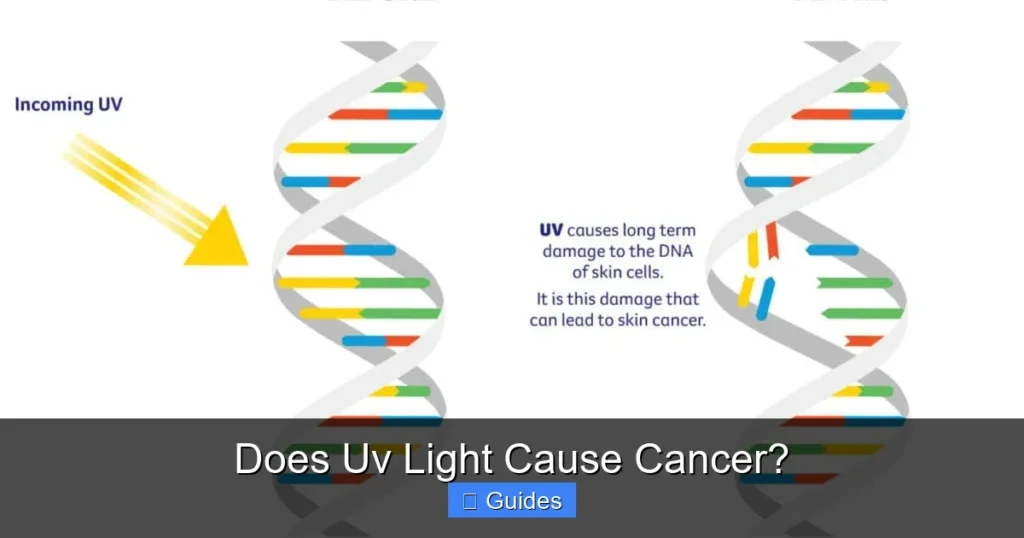
Yes, UV light absolutely causes cancer. Prolonged exposure to ultraviolet (UV) radiation, whether from the sun or artificial sources like tanning beds, directly damages your cells’ DNA, leading to uncontrolled growth and various forms of skin cancer. Understanding this link is crucial for protecting your health and preventing the long-term consequences of UV exposure.
Picture this: a bright, sunny day, the kind that just begs you to go outside. Maybe you’re at the beach, hiking a trail, or simply enjoying a walk in the park. The warmth on your skin feels wonderful, almost therapeutic. But beneath that pleasant sensation, something invisible is at work. Something that, over time, can have serious, even life-threatening, consequences. We’re talking about ultraviolet (UV) light, and the big question: does UV light cause cancer?
It’s a question many of us have pondered, often while slathering on sunscreen or considering a tanning session. The short, unequivocal answer is a resounding yes. UV light is a known carcinogen, meaning it’s a substance or agent that can cause cancer. In fact, it’s the primary cause of most skin cancers, which are among the most common cancers worldwide. Understanding how UV light interacts with our bodies and why it’s so dangerous is the first step toward effective protection and prevention. Let’s peel back the layers and uncover the truth about this pervasive environmental factor.
This article will dive deep into the science behind UV light, how it damages your cells, and the specific types of cancer it can cause. We’ll explore the sources of UV exposure, from the sun to artificial tanning beds, and discuss the long-term health implications. Most importantly, we’ll equip you with practical, actionable strategies to protect yourself and your loved ones from its harmful effects. Because when it comes to your health, knowledge isn’t just power—it’s protection.
Key Takeaways
- Direct DNA Damage: UV light, specifically UVA and UVB rays, directly damages the DNA within your skin cells, leading to mutations that can cause uncontrolled cell growth and cancer.
- Multiple Cancer Types: UV exposure is the primary cause of all major skin cancers: melanoma (the most dangerous), basal cell carcinoma (BCC), and squamous cell carcinoma (SCC).
- Sun and Tanning Beds are Risky: Both natural sunlight and artificial UV sources like tanning beds emit harmful UV radiation, significantly increasing your risk of skin cancer, even after just a few uses.
- Cumulative Damage: UV damage accumulates over time. Every sunburn and unprotected exposure contributes to your lifetime risk, making sun protection a lifelong necessity.
- Beyond Skin Cancer: UV light can also contribute to eye conditions like cataracts and suppress the immune system, making your body less effective at fighting off diseases, including cancer.
- Prevention is Key: Protecting yourself by seeking shade, wearing protective clothing, using broad-spectrum sunscreen, and avoiding tanning beds is the most effective way to reduce your risk of UV-induced cancers.
- Regular Skin Checks: Self-monitoring your skin for new or changing moles and having regular professional skin exams are vital for early detection and successful treatment.
Quick Answers to Common Questions
Can UV light cause cancer even on cloudy days?
Yes, absolutely. Up to 80% of UV rays can penetrate clouds, meaning you can still get significant UV exposure and sunburn even on an overcast day. Always use sun protection regardless of cloud cover.
Are tanning beds safer than natural sun exposure?
No, tanning beds are not safer. They emit concentrated UV radiation, often many times stronger than the sun, and significantly increase your risk of skin cancer, including melanoma.
Does UV light only cause skin cancer?
While skin cancer is the most direct result, UV light can also contribute to eye conditions like cataracts and, in rare cases, eye cancers. It also suppresses the immune system, which can indirectly affect the body’s ability to fight off various diseases.
Is there any safe amount of UV exposure?
While your body needs some sunlight for vitamin D production, there’s no “safe” amount of unprotected UV exposure when it comes to cancer risk. Any exposure that leads to tanning or sunburn indicates DNA damage and increases risk.
Can sunscreen alone fully protect me from UV-induced cancer?
Sunscreen is a crucial tool, but it’s not a complete shield. It’s most effective when used as part of a comprehensive sun protection strategy that also includes seeking shade, wearing protective clothing, and avoiding peak sun hours.
📑 Table of Contents
- What Exactly is UV Light and Why Is It Harmful?
- The Direct Link: How UV Light Damages Your Cells and Causes Cancer
- The Cancers Directly Caused by UV Light
- Sources of Harmful UV Exposure: It’s More Than Just the Sun
- Beyond Skin: Other Health Risks Associated with UV Light
- Protecting Yourself: Practical Steps to Prevent UV-Induced Cancer
- Living a Sun-Safe Life: A Long-Term Commitment
What Exactly is UV Light and Why Is It Harmful?
To understand how UV light causes cancer, we first need to understand what it is. UV light is a form of electromagnetic radiation, just like visible light, radio waves, or X-rays. The difference lies in its wavelength and energy level. UV rays have shorter wavelengths and higher energy than visible light, making them capable of penetrating and damaging living cells.
Three Main Types of UV Radiation
The UV spectrum is divided into three main types based on their wavelength:
- UVA Rays: These are the longest UV wavelengths and account for about 95% of the UV radiation that reaches the Earth’s surface. UVA rays penetrate deep into the skin, affecting the dermis (the skin’s thickest layer). They are largely responsible for skin aging (wrinkles, age spots) and play a significant role in causing skin cancer. UVA rays can pass through window glass, meaning you’re exposed even indoors or in a car.
- UVB Rays: Shorter than UVA rays, UVB rays penetrate the outer layer of the skin (epidermis) and are the primary cause of sunburn. They are also a major contributor to skin cancer development, directly damaging DNA in skin cells. While most UVB rays are absorbed by the ozone layer, a significant amount still reaches us, especially during peak sun hours.
- UVC Rays: These are the shortest and most energetic UV rays. Fortunately, UVC rays are completely absorbed by the Earth’s atmosphere and do not reach the surface. Therefore, they are not a concern for human exposure from the sun. However, artificial sources like germicidal lamps can emit UVC, requiring careful handling.
Both UVA and UVB rays are harmful and contribute to the risk of skin cancer. It’s crucial to protect yourself from both.
The Direct Link: How UV Light Damages Your Cells and Causes Cancer
So, we know UV light is harmful, but how does UV light cause cancer at a cellular level? The process is quite direct and insidious.
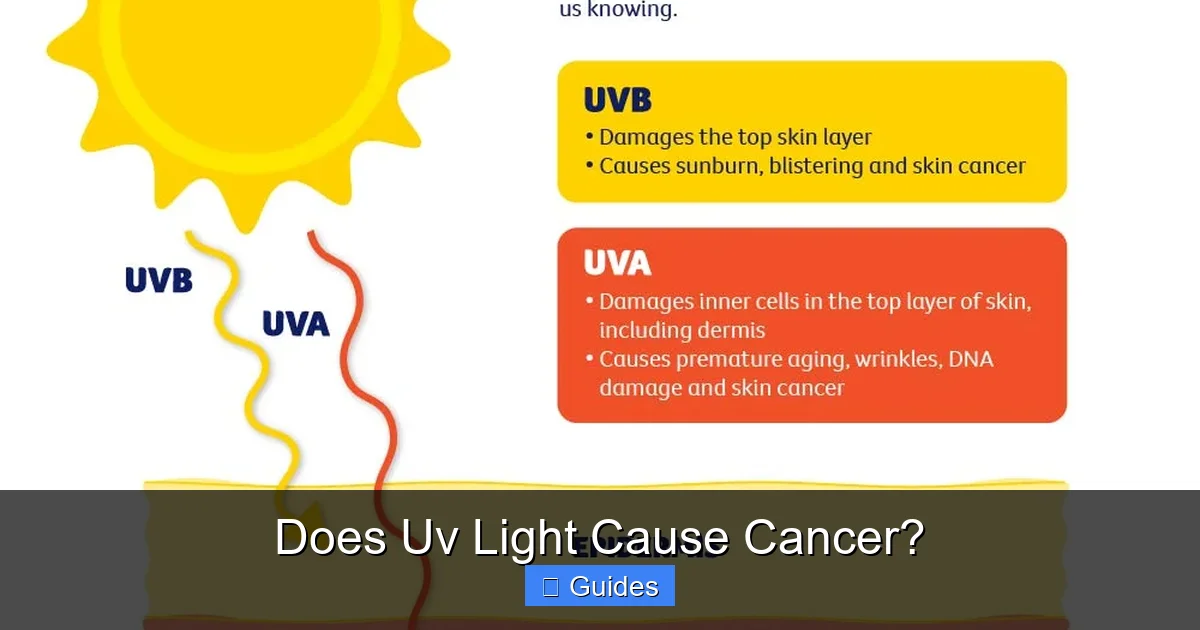
Visual guide about Does Uv Light Cause Cancer?
Image source: cancerwa.asn.au
DNA Damage: The Root Cause
When UV radiation penetrates your skin, its high energy is absorbed by various molecules within your cells, including a very critical one: DNA. DNA is the blueprint that tells your cells how to function, grow, and divide. UV radiation, especially UVB, causes specific types of damage to DNA, often by forming abnormal bonds between adjacent DNA bases (known as pyrimidine dimers).
Normally, your cells have sophisticated repair mechanisms that can fix most of this DNA damage. However, if the damage is too extensive, or if the repair mechanisms become overwhelmed or faulty over time, the cell can’t properly mend its DNA. This unrepaired damage leads to mutations – permanent changes in the DNA sequence.
Mutations Lead to Uncontrolled Growth
These mutations can occur in critical genes that control cell growth and division. For instance, mutations in tumor suppressor genes (which normally stop cell growth) or oncogenes (which normally promote cell growth) can lead to a cell losing its ability to regulate itself. Instead of growing and dividing in an orderly fashion, the damaged cell starts to proliferate uncontrollably, ignoring the body’s normal signals to stop or die off.
This uncontrolled growth is the hallmark of cancer. Over time, these mutated cells can accumulate, forming a tumor. Depending on the type of cell affected and the nature of the mutations, this can manifest as various forms of skin cancer.
Oxidative Stress and Immune Suppression
Beyond direct DNA damage, UV radiation also contributes to cancer development through other mechanisms:
- Oxidative Stress: UV light generates reactive oxygen species (free radicals) in the skin. These molecules can cause further damage to DNA, proteins, and lipids, contributing to cellular dysfunction and inflammation, which can promote cancer growth.
- Immune System Suppression: UV exposure can suppress the skin’s local immune system, making it less effective at identifying and destroying precancerous cells or newly formed cancer cells. This allows damaged cells to escape immune surveillance and proliferate.
The Cancers Directly Caused by UV Light
The vast majority of skin cancers are directly attributable to UV exposure. Let’s look at the main types:
Melanoma: The Most Serious Skin Cancer
Melanoma is the least common but most dangerous type of skin cancer. It develops in melanocytes, the cells that produce melanin (the pigment that gives skin its color). While it can appear anywhere on the body, it often arises from an existing mole or as a new, abnormal dark spot. Melanoma is strongly linked to intense, intermittent UV exposure, especially severe, blistering sunburns experienced during childhood or adolescence. It has a higher potential to spread to other parts of the body (metastasize) if not detected and treated early.
Basal Cell Carcinoma (BCC): The Most Common
Basal cell carcinoma is the most frequently diagnosed skin cancer. It originates in the basal cells, which are at the bottom of the epidermis. BCCs typically appear as pearly or waxy bumps, open sores, red patches, or flat, scar-like areas. They usually grow slowly and rarely spread to other parts of the body, but they can be locally destructive, damaging surrounding tissue if left untreated. Chronic, lifelong sun exposure is a major risk factor for BCC.
Squamous Cell Carcinoma (SCC): The Second Most Common
Squamous cell carcinoma is the second most common type of skin cancer. It arises in the squamous cells, which make up the outer layers of the epidermis. SCCs often look like firm red nodules, scaly patches, or open sores that may bleed or crust. Like BCC, SCC is strongly associated with cumulative lifetime UV exposure. While less likely to metastasize than melanoma, SCC has a greater potential to spread than BCC and requires prompt treatment.
Sources of Harmful UV Exposure: It’s More Than Just the Sun
When people think of UV light causing cancer, their minds often go straight to the sun. And they’re right – the sun is a major culprit. But it’s not the only source.
The Sun: Our Everyday Risk
Natural sunlight is the primary source of UV radiation for most people. The intensity of solar UV radiation depends on several factors:
- Time of Day: UV is strongest between 10 a.m. and 4 p.m.
- Season: UV levels are higher during spring and summer.
- Altitude: UV exposure increases with elevation.
- Latitude: Closer to the equator means stronger UV.
- Cloud Cover: Light cloud cover might block some visible light, but significant UV can still pass through.
- Reflective Surfaces: Sand, snow, water, and pavement can reflect UV rays, increasing exposure.
Even on cloudy days, up to 80% of UV rays can penetrate clouds. This is why you can still get sunburned even when it doesn’t feel particularly sunny. Every time you’re exposed to the sun without protection, you’re accumulating UV damage, which contributes to your lifetime risk of skin cancer.
Tanning Beds and Lamps: Concentrated Danger
Artificial tanning devices, like sunbeds, tanning booths, and sunlamps, emit UV radiation that is often many times more intense than natural sunlight. These devices primarily emit UVA rays, which, as we discussed, penetrate deep into the skin and significantly contribute to skin aging and cancer. Some tanning beds also emit UVB rays.
The notion that a “base tan” protects you from future sunburns or is somehow safer is a dangerous myth. A tan is a sign of skin damage. Research has unequivocally shown that using tanning beds significantly increases the risk of all types of skin cancer, especially melanoma, even after just a few uses. For individuals under 35, the risk of melanoma increases by 75% with just one indoor tanning session. Many health organizations, including the World Health Organization and the American Academy of Dermatology, strongly advise against the use of tanning beds.
Beyond Skin: Other Health Risks Associated with UV Light
While skin cancer is the most direct and well-known consequence, UV light can cause cancer indirectly and impact your health in other ways too.
Eye Damage and Potential for Ocular Melanoma
Your eyes are also vulnerable to UV radiation. Prolonged exposure can lead to several eye problems:
- Cataracts: A clouding of the eye’s natural lens, leading to blurred vision. UV exposure is a significant risk factor.
- Pterygium: A non-cancerous growth that can spread to the cornea.
- Photokeratitis: A painful inflammation of the cornea, often called “sunburn of the eye” or “snow blindness.”
Less commonly, UV exposure may also contribute to certain eye cancers, including ocular melanoma, a rare but serious cancer that develops in the cells that produce pigment in the eye.
Immune System Suppression
As mentioned earlier, UV radiation can suppress the immune system. This immunosuppression can affect the body’s ability to fight off infections and diseases, including certain cancers. For example, UV exposure can reactivate latent herpes viruses (cold sores) and may even reduce the effectiveness of some vaccines. A weakened immune system is less able to detect and eliminate cancerous cells before they grow into tumors.
Premature Skin Aging
While not a cancer, it’s a significant aesthetic and health concern. Chronic UV exposure breaks down collagen and elastin fibers in the skin, leading to premature aging. This manifests as wrinkles, fine lines, age spots (also known as sunspots or liver spots), leathery skin texture, and loss of skin elasticity. This damage is also a sign of cumulative cellular harm that increases cancer risk.
Protecting Yourself: Practical Steps to Prevent UV-Induced Cancer
Understanding that UV light causes cancer is the first step; the next is taking action. The good news is that most UV-induced cancers are preventable. Here are practical tips to protect yourself:
Seek Shade, Especially During Peak Hours
The simplest protection is to avoid direct sun exposure when UV rays are strongest. This is typically between 10 a.m. and 4 p.m. If your shadow is shorter than you are, the sun’s rays are at their most intense. Plan outdoor activities for earlier mornings or late afternoons.
Wear Protective Clothing
Your clothes can be your first line of defense. Opt for:
- Long-sleeved shirts and long pants: Tightly woven fabrics offer the best protection. Some clothing even comes with a UPF (Ultraviolet Protection Factor) rating, similar to SPF for sunscreen.
- Wide-brimmed hats: A hat with a brim all the way around (at least 3 inches wide) protects your face, ears, and neck, areas often overlooked.
- UV-blocking sunglasses: Look for sunglasses that block 99% or 100% of UVA and UVB rays. This protects your eyes and the delicate skin around them.
Apply Broad-Spectrum Sunscreen Reliably
Sunscreen is a vital tool, but it needs to be used correctly:
- Choose Broad-Spectrum: Ensure your sunscreen says “broad-spectrum” to protect against both UVA and UVB rays.
- SPF 30 or Higher: An SPF of 30 blocks 97% of UVB rays; higher SPFs offer slightly more protection but none block 100%.
- Apply Liberally: Use about an ounce (a shot glass full) for your entire body.
- Reapply Frequently: Reapply every two hours, or more often if swimming or sweating.
- Don’t Miss Spots: Remember often-forgotten areas like ears, neck, tops of feet, and scalp (if exposed).
Avoid Tanning Beds and Sunlamps
This is a non-negotiable step. There is no such thing as a safe tan from a tanning bed. If you desire a tanned look, consider self-tanning lotions or sprays, which provide color without harmful UV exposure.
Regular Self-Exams and Professional Skin Checks
Even with the best protection, it’s important to be vigilant. Become familiar with your skin and perform self-exams monthly. Look for any new moles, growths, or sores that don’t heal, and any changes in existing moles (e.g., in size, shape, color, or texture). Use the “ABCDE” rule for moles:
- Asymmetry: One half doesn’t match the other.
- Border irregularity: Edges are ragged, notched, or blurred.
- Color variation: Different shades of black, brown, and tan are present.
- Diameter: Larger than 6mm (about the size of a pencil eraser).
- Evolving: Changes in size, shape, color, elevation, or any new symptoms like bleeding, itching, or crusting.
Additionally, schedule annual professional skin exams with a dermatologist, especially if you have a family history of skin cancer or a high number of moles.
Living a Sun-Safe Life: A Long-Term Commitment
The evidence is overwhelming: UV light causes cancer. It’s not a matter of if, but how much exposure and how effectively your body can repair the damage. The good news is that by taking proactive steps, you can significantly reduce your risk. These aren’t just temporary measures; they are habits for a lifetime of healthier skin and a lower cancer risk.
Think of sun protection as an investment in your future. Every time you choose shade, wear a hat, apply sunscreen, or skip the tanning bed, you’re making a conscious decision to protect your most visible and vulnerable organ. Educate your friends and family, especially children, about the importance of sun safety, as early habits can have a profound impact. Your skin is with you for life; treat it with the care it deserves.
🎥 Related Video: Why does UV light cause skin cancer? Let’s break it down! ☀️ #trending #skincare #explore #viral
📺 Dr. Dustin Portela
Frequently Asked Questions
Does UV light damage stay with you forever?
Yes, UV light causes cumulative damage to your skin cells’ DNA that builds up over your lifetime. While some damage can be repaired by your body, persistent or severe damage leads to permanent mutations, significantly increasing your risk of developing cancer years later.
Can people with darker skin tones get UV-induced cancer?
Absolutely. While darker skin tones have more melanin, offering slightly more natural protection, they are still susceptible to UV damage and skin cancer. Skin cancer in people of color is often diagnosed later, making it more dangerous, so sun protection is vital for everyone.
Is a “base tan” a good way to protect my skin?
No, a “base tan” is a sign of skin damage and offers minimal sun protection, equivalent to an SPF of about 2-4. Relying on a tan to prevent sunburn or skin cancer is a dangerous myth and increases your overall UV exposure and risk.
How often should I get my skin checked by a professional?
It’s generally recommended to have a professional skin exam with a dermatologist at least once a year, especially if you have risk factors like a history of sunburns, numerous moles, or a family history of skin cancer. Discuss the ideal frequency with your doctor.
Can UV radiation pass through windows?
Yes, standard glass windows block most UVB rays, which cause sunburn, but they allow most UVA rays to pass through. UVA rays penetrate deeper into the skin and contribute significantly to aging and skin cancer, so you can still get UV damage indoors or in a car without specific UV-protective window films.
What is the most effective way to prevent UV-induced skin cancer?
The most effective strategy is a multi-pronged approach: consistently seeking shade (especially during peak hours), wearing protective clothing (wide-brimmed hats, long sleeves), regularly applying broad-spectrum sunscreen with SPF 30+, and completely avoiding tanning beds. These measures drastically reduce your exposure to harmful UV radiation.
