


Yes, UV light, specifically UVC, effectively kills bacteria by damaging their DNA and RNA, preventing them from reproducing and rendering them harmless. This powerful sterilization method is widely used in water purification, air disinfection, and surface sanitization, offering a chemical-free way to combat microbes. However, it’s crucial to understand its limitations and safety precautions due to potential harm to human skin and eyes, and its inability to penetrate shadows or opaque materials.
Have you ever wondered about those sleek devices promising to zap germs with invisible light? Or perhaps you’ve seen UV sanitizers for phones, water bottles, or even entire rooms? It’s a fascinating concept, almost futuristic, but the science behind it is well-established. In a world increasingly conscious of hygiene and battling unseen threats, the question “Does UV light kill bacteria?” is more relevant than ever.
The short answer is a resounding yes! But like many things in science, the full story is a little more nuanced. Not all UV light is created equal, and understanding its different types, how it works, and its limitations is key to appreciating its power and using it safely. Join us as we shine a light on the incredible germ-killing capabilities of ultraviolet radiation, delving into the science, applications, safety, and everything you need to know about this invisible defender against bacteria.
Key Takeaways
- UVC Light is Germicidal: Out of the three types of UV light (UVA, UVB, UVC), UVC is the most effective at killing bacteria, viruses, and other microorganisms.
- Mechanism of Action: UVC light destroys bacteria by damaging their DNA and RNA, preventing them from replicating and rendering them inactive or dead.
- Widespread Applications: UV disinfection is commonly used in water treatment plants, HVAC systems for air purification, surface sterilization in hospitals and labs, and even in some consumer products.
- Efficacy Factors: The effectiveness of UV light in killing bacteria depends on the intensity of the UVC lamp, exposure time, distance from the light source, and whether the target is directly exposed without shadows or obstructions.
- Safety is Paramount: Direct exposure to UVC light is harmful to human skin and eyes, causing burns and damage. It should always be used with extreme caution and appropriate safety measures.
- Limitations Exist: UV light cannot penetrate opaque surfaces or shadows, meaning only directly exposed areas will be disinfected. It also doesn’t remove physical contaminants or chemical pollutants.
- Not a Sole Solution: While powerful, UV disinfection often works best as part of a multi-barrier approach to cleanliness and sanitation, complementing traditional cleaning methods.
Quick Answers to Common Questions
Does UV light kill all types of bacteria?
UVC light is effective against a broad spectrum of bacteria, including common pathogens like E. coli, Staphylococcus aureus, and Salmonella, as well as viruses, molds, and yeasts, by damaging their genetic material.
Can I use a UV lamp to disinfect my hands?
No, you should never use a UVC lamp directly on your hands or any part of your body. Direct exposure to UVC light is harmful to human skin and eyes, causing burns and other damage.
How long does UV light take to kill bacteria?
The time required for UV light to kill bacteria varies depending on the intensity of the UVC lamp, the distance to the target, and the specific type of bacteria, but effective inactivation can often occur within seconds to minutes of direct exposure.
Does UV light work through glass or plastic?
UVC light generally does not penetrate standard glass or many types of plastic effectively, as these materials can block or absorb the germicidal wavelengths. This is why UVC devices require special quartz glass or are designed for direct exposure.
Is UV light effective against viruses too?
Yes, UVC light is also highly effective at inactivating viruses, including common cold viruses, influenza, and coronaviruses, by damaging their genetic material (DNA or RNA) and preventing their replication.
📑 Table of Contents
- Understanding UV Light: What Is It and How Does It Work?
- The Science Behind UV-C’s Bacterial Kill
- Applications of UV Light in Killing Bacteria
- The Effectiveness and Limitations of UV Disinfection
- Safety Considerations and Best Practices for UV Light Use
- Integrating UV Disinfection into Your Life: Practical Tips
- Conclusion
Understanding UV Light: What Is It and How Does It Work?
To truly grasp how UV light can kill bacteria, we first need to understand what UV light actually is. It’s not just a single type of light, but rather a spectrum, much like the colors of a rainbow.
The Electromagnetic Spectrum
Light is a form of electromagnetic radiation, which travels in waves. The electromagnetic spectrum includes everything from radio waves to X-rays and gamma rays, with visible light occupying only a tiny portion. Ultraviolet (UV) light sits just beyond the violet end of the visible spectrum, meaning its wavelengths are shorter and carry more energy than visible light.
Types of UV Light: UVA, UVB, UVC
UV light is generally categorized into three main types based on its wavelength:
- UVA (315-400 nm): This is the longest wavelength UV light and makes up about 95% of the UV radiation that reaches the Earth’s surface. It’s what causes skin tanning and contributes to skin aging. While it can have some minor antibacterial effects at very high doses, it’s not primarily used for germicidal purposes.
- UVB (280-315 nm): Shorter than UVA, UVB light is responsible for sunburns and contributes significantly to skin cancer risk. Like UVA, it has limited germicidal properties in practical applications.
- UVC (100-280 nm): This is the superstar when it comes to killing bacteria. UVC light has the shortest wavelength and highest energy of the three types. Fortunately for us, nearly all UVC radiation from the sun is absorbed by the Earth’s ozone layer, so we don’t naturally encounter it in significant amounts. This is why artificial UVC sources are so effective for sterilization – they harness a power that nature largely keeps away from us.
The Germicidal Power of UVC
When we talk about UV light killing bacteria, we are almost exclusively referring to UVC light. Its specific wavelength (particularly around 254 nanometers) is perfectly suited to interact with and disrupt the molecular structure of microorganisms. It’s this unique interaction that makes UVC a powerful disinfectant.
The Science Behind UV-C’s Bacterial Kill
Visual guide about Does Uv Light Kill Bacteria?
Image source: afresherhome.com
So, how exactly does this invisible light manage to incapacitate and kill bacteria? It all comes down to their genetic material.
DNA/RNA Damage: The Mechanism of Action
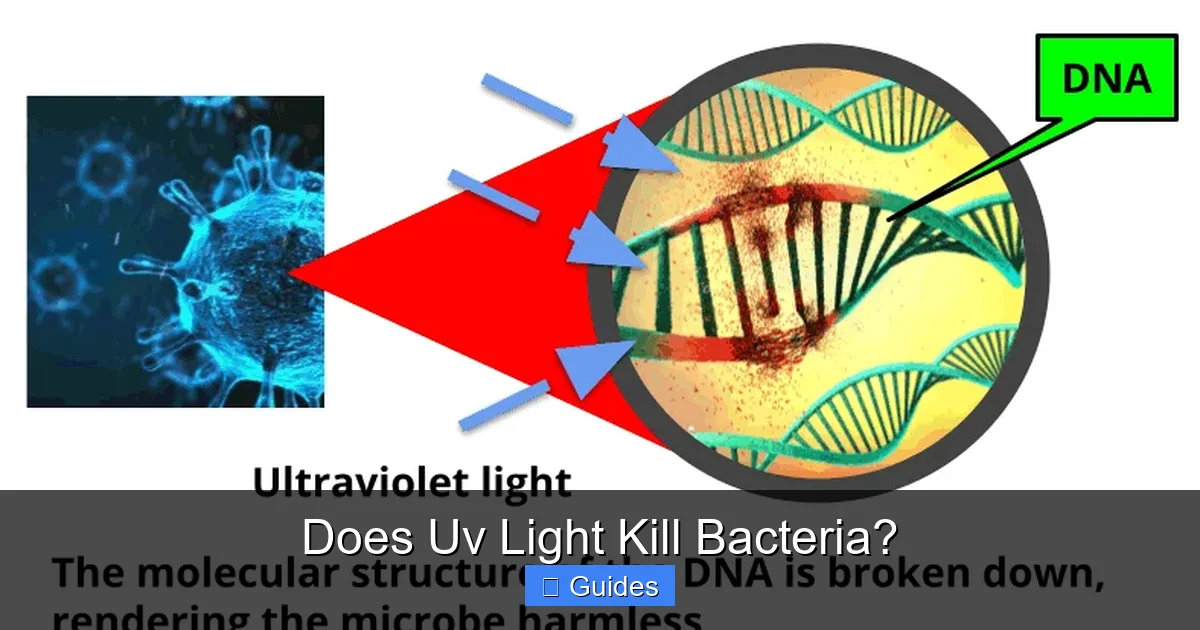
Bacteria, like all living organisms, rely on their genetic material (DNA or RNA) to carry out essential functions, grow, and reproduce. When UVC light irradiates a bacterium, its high-energy photons are absorbed by the DNA and RNA within the microbial cells. This absorption causes a specific type of damage:
- Thymine Dimers: The UVC energy causes adjacent thymine bases (one of the building blocks of DNA) to bond together abnormally, forming what are called “thymine dimers.”
- Cross-linking: Similar damage can occur with RNA and other nucleic acids, leading to cross-linking and structural deformities.
These molecular lesions essentially scramble the genetic code. Imagine trying to read a book where half the letters on a page are stuck together or rearranged – it becomes impossible to understand. The bacteria’s cellular machinery can no longer accurately read or replicate its DNA/RNA.
Irreversible Sterilization
Because the bacteria cannot properly repair this extensive genetic damage, they lose their ability to reproduce. They are effectively sterilized, rendered inactive, and unable to cause infection. In many cases, the damage is so severe that it leads directly to the death of the bacterial cell. This process of inactivation is why UVC is considered a germicidal light. It doesn’t just inhibit growth; it actively kills bacteria or renders them harmless.
Why UV-C is so effective
UVC light is effective against a broad spectrum of microorganisms, including not only bacteria but also viruses, molds, and yeasts. It works without chemicals, leaving no residue, and doesn’t require heat. This makes it a highly desirable method for disinfection in many sensitive environments.
Applications of UV Light in Killing Bacteria
The powerful germicidal properties of UVC light have led to its adoption across a wide range of industries and even in some consumer products. Its ability to kill bacteria without chemicals is a significant advantage.
Water Purification Systems
One of the most common and critical applications of UV light is in water treatment. UV water purifiers are used globally, from large municipal plants to small home systems. As water flows through a chamber containing UVC lamps, bacteria, viruses, and other pathogens present in the water are exposed to the germicidal radiation. This effectively inactivates them, providing safe drinking water without altering its taste, color, or chemical composition. It’s an eco-friendly alternative or complement to chlorine disinfection.
Air Disinfection (HVAC, medical settings)
UVC light plays a vital role in improving air quality, particularly in enclosed spaces where airborne bacteria and viruses can spread rapidly.
- HVAC Systems: UVC lamps are often installed in heating, ventilation, and air conditioning (HVAC) systems. They disinfect the air as it circulates, killing airborne bacteria and mold spores before they are distributed throughout a building. This also helps prevent the buildup of biofilm on evaporator coils, improving efficiency.
- Medical Facilities: Hospitals, clinics, and laboratories use specialized UVC systems to disinfect operating rooms, patient isolation rooms, and even entire wards. Upper-room UVC fixtures are designed to irradiate the upper air volume, killing airborne pathogens while keeping the lower occupied space safe from direct UVC exposure.
Surface Sterilization (hospitals, labs, home devices)
UVC is also highly effective for surface disinfection.
- Healthcare Environments: Robots equipped with UVC lamps are used in hospitals to sterilize rooms after patient discharge, ensuring that surfaces like beds, tables, and equipment are free from harmful bacteria and superbugs.
- Laboratories: Labs use UVC hoods and chambers to sterilize tools, glassware, and work surfaces to maintain sterile conditions for experiments and prevent contamination.
- Consumer Products: You might find small UVC sanitizers for phones, toothbrushes, pacifiers, and even shoes. These devices typically use low-power UVC lamps to kill bacteria on frequently touched items.
Industrial and Food Processing
In industries where hygiene is paramount, UVC light helps ensure product safety. Food processing plants use UVC to disinfect conveyor belts, packaging materials, and even the surface of food items to reduce bacterial contamination. Pharmaceutical manufacturing also relies on UVC for sterilizing equipment and cleanroom environments.
The Effectiveness and Limitations of UV Disinfection
While UV light kills bacteria effectively, its performance isn’t absolute. Several factors influence its efficacy, and it also has certain limitations.
Factors Affecting Efficacy (dose, exposure time, distance, turbidity)
For UV light to effectively kill bacteria, several critical factors must be optimized:
- UV Dose: This is the total amount of UVC energy delivered to the microorganism, measured in mJ/cm². A higher dose generally leads to more effective inactivation. The dose is a function of UV intensity and exposure time.
- Exposure Time: The longer a bacterium is exposed to UVC light, the more damage its DNA/RNA sustains, increasing the likelihood of inactivation.
- Distance from Light Source: UV light intensity diminishes rapidly with distance. A bacterium closer to the UVC lamp will receive a much higher dose than one further away.
- Turbidity and Obstructions: In water purification, turbidity (cloudiness) can shield bacteria from UVC light. For surface disinfection, any dust, dirt, or organic matter on a surface can block the UV rays, preventing them from reaching and killing the bacteria underneath.
Shadowing and Line of Sight Issues
This is perhaps the most significant limitation. UVC light works on a “line of sight” principle. If a bacterium is in a shadow or behind an object, the UVC light cannot reach it, and therefore, it will not be killed. This means UVC cannot penetrate opaque surfaces or materials. For example, a UVC wand will kill bacteria on the top surface of a cutting board but not those embedded within its tiny grooves or on its underside. This limitation highlights why UVC often complements, rather than replaces, traditional cleaning methods.
Resistance and Repair Mechanisms (less common for UVC)
While some bacteria have mechanisms to repair minor DNA damage, the extensive and rapid damage caused by germicidal UVC is usually overwhelming and irreversible. Therefore, developing resistance to UVC radiation in the way bacteria can develop antibiotic resistance is highly unlikely for practical disinfection purposes. The mechanism of killing is physical, not chemical or biological.
UV Light vs. Viruses and Other Microbes
It’s important to note that UV light doesn’t just kill bacteria. It is also highly effective against viruses (like influenza and coronaviruses), mold spores, yeasts, and protozoa. The fundamental principle of DNA/RNA damage applies across a broad spectrum of microorganisms. However, the specific UV dose required to inactivate different types of microbes can vary. Some viruses or spores might require a slightly higher dose or longer exposure than typical bacteria.
Safety Considerations and Best Practices for UV Light Use
The very power that allows UVC light to kill bacteria also makes it dangerous for humans. Understanding and adhering to safety protocols is paramount.
Dangers to Humans (skin, eyes)
Direct exposure to UVC light is extremely hazardous to human health:
- Skin Damage: UVC light can cause severe burns similar to intense sunburn, leading to redness, blistering, and long-term damage, including an increased risk of skin cancer.
- Eye Damage: Even brief exposure can cause a painful condition called photokeratitis (essentially a “sunburn” of the cornea), leading to blurred vision, pain, and temporary blindness. Repeated exposure can contribute to cataracts and other eye problems.
Never, under any circumstances, look directly at an operating UVC lamp or expose your bare skin to it.
Material Degradation
UVC light can also degrade certain materials over time. Plastics, rubber, and some fabrics can become brittle, discolored, or weakened with prolonged exposure. This is an important consideration for systems where UVC lamps are housed within or near sensitive components, or when disinfecting items like phone cases.
Proper Equipment and Training
If you’re using professional-grade UVC disinfection equipment, ensure it comes with appropriate safety features, such as motion sensors that shut off the lamp if a person enters the room. Operators should receive thorough training on safe handling, operation, and maintenance. Always wear appropriate personal protective equipment (PPE), including UVC-blocking eyewear and skin protection, if there’s any risk of exposure.
When NOT to Rely Solely on UV
While powerful, UVC disinfection is not a standalone solution for all cleaning needs. It cannot remove dirt, dust, or organic matter. Surfaces must be physically cleaned *before* UVC treatment for the light to be effective. Think of UVC as the final step in a thorough cleaning process, ensuring that any remaining microbes are inactivated.
Integrating UV Disinfection into Your Life: Practical Tips
With an understanding of how UV light kills bacteria and its safety aspects, you might consider how to integrate this technology safely and effectively into your daily life.
Home Devices: Pros and Cons
Many consumer-grade UV sanitizers are available for items like phones, keys, and baby bottles.
- Pros: They offer a convenient, chemical-free way to disinfect frequently touched small items. They can be helpful for maintaining hygiene between deeper cleans.
- Cons: Their effectiveness can vary widely depending on the device’s design, UVC lamp intensity, and exposure time. They only disinfect surfaces directly exposed to the light. Ensure devices have safety interlocks to prevent accidental exposure. Always use them as directed.
Remember, these devices are great for peace of mind for specific items, but they don’t replace general handwashing or cleaning practices.
Air Purifiers with UV-C
Some air purifiers incorporate UVC lamps along with HEPA filters. The HEPA filter captures airborne particles, dust, and larger allergens, while the UVC lamp targets bacteria, viruses, and mold spores that pass through it. This combination provides a more comprehensive approach to improving indoor air quality. When choosing an air purifier, look for reputable brands and ensure that the UVC component is safely enclosed within the unit, preventing any external exposure.
Water Filters with UV
For home use, UV water filters are excellent for ensuring microbiologically safe drinking water, especially if your water source is from a well or if you have concerns about municipal water quality. They are typically installed after other filtration stages (like sediment or carbon filters) that remove physical particles, allowing the UVC light to effectively reach any remaining microorganisms. Maintenance involves replacing the UV lamp periodically as its intensity degrades over time.
Maintenance and Replacement
UVC lamps, like any light bulb, have a lifespan. Their germicidal intensity decreases over time, even if the bulb still appears to be lit. It’s crucial to follow the manufacturer’s recommendations for lamp replacement, typically every 9-12 months of continuous use, to ensure continued effectiveness in killing bacteria. Always disconnect power before attempting to replace a UVC lamp.
Conclusion
So, does UV light kill bacteria? Absolutely, and with remarkable efficiency, particularly the UVC spectrum. By targeting and damaging the very DNA and RNA that bacteria need to survive and reproduce, UVC light provides a powerful, chemical-free method of disinfection. From purifying our water and air to sanitizing surfaces in critical environments like hospitals, its applications are vast and growing.
However, its power comes with responsibility. Understanding the specific type of UV light, its limitations (like shadowing), and most importantly, the significant safety hazards to human skin and eyes, is crucial. When used correctly and with appropriate precautions, UV light technology is an invaluable tool in our ongoing fight against bacteria and other microscopic threats, contributing significantly to public health and hygiene. Embrace the science, respect its power, and harness its benefits wisely to create cleaner, safer environments.
🎥 Related Video: VERIFY: Does a wave of UV light kill bacteria:
📺 WTHR
According to the CDC and NSF International, a lot of factors influence how effective UV light is — most importantly is intensity and …
Frequently Asked Questions
Is UV light the same as sunlight?
While sunlight contains UV light (primarily UVA and some UVB), it does not contain significant amounts of germicidal UVC. The Earth’s ozone layer blocks almost all UVC radiation from the sun, making artificial UVC sources distinct in their germ-killing capability.
Can UV light remove dirt or stains?
No, UV light is purely a disinfection method. It inactivates microorganisms but does not remove physical dirt, dust, grime, or chemical stains. Surfaces must be cleaned physically before UV treatment for optimal germicidal effectiveness.
Are home UV sanitizers safe for my family and pets?
Home UV sanitizers designed for small items should be safe if used strictly according to instructions, often featuring automatic shut-offs when opened. However, devices that emit UVC radiation into open spaces can be dangerous and should be used with extreme caution, ensuring no humans or pets are present during operation.
Does UV light kill bacteria on food?
UVC light can kill bacteria on the surface of some foods without altering taste or texture. However, it cannot penetrate deep into food, so it’s typically used for surface treatment of produce or packaging, not for deep sterilization.
How often should I replace the UV lamp in my water purifier or air purifier?
Most manufacturers recommend replacing UVC lamps in water or air purifiers annually (every 9,000 to 10,000 hours of operation). Even if the lamp still glows, its germicidal intensity diminishes over time, reducing its effectiveness in killing bacteria.
Does UV light produce ozone?
Some older or lower-quality UVC lamps can produce ozone (O3), which is a respiratory irritant. Modern germicidal UVC lamps are often “ozone-free” or designed to emit wavelengths that do not produce ozone. Always check product specifications if this is a concern.
