


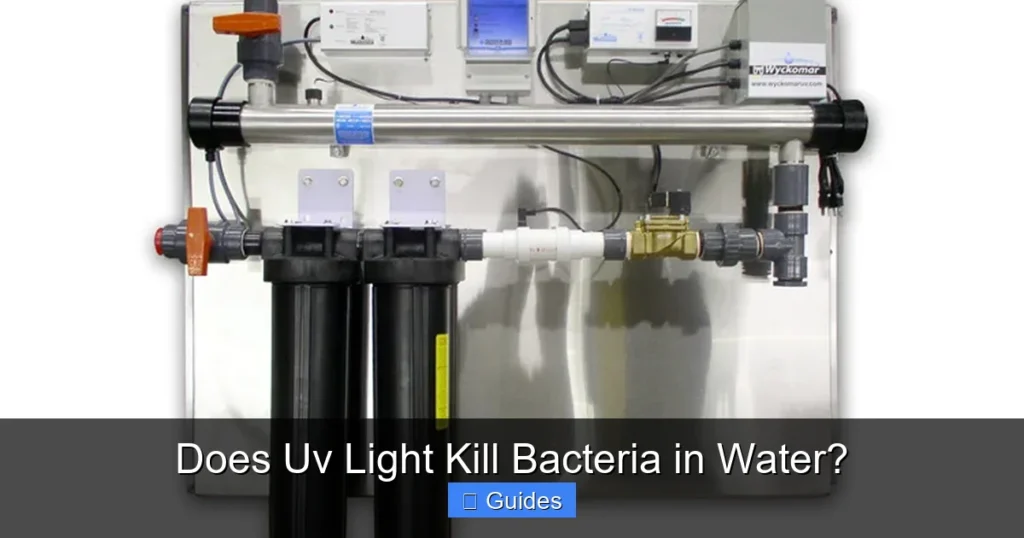
Yes, UV light is highly effective at killing bacteria in water, along with viruses and other microorganisms, by damaging their DNA and preventing reproduction. This chemical-free disinfection method provides safe drinking water without altering taste or adding chemicals, though proper pre-filtration and regular maintenance are crucial for optimal performance.
Imagine a world where your drinking water is perfectly safe, free from harmful bacteria, viruses, and other invisible nasties, all without adding a single chemical. Sounds like a dream, right? Well, it’s closer to reality than you might think, thanks to a remarkable technology that uses nothing more than light: Ultraviolet (UV) light.
For anyone concerned about the quality of their water, especially if you rely on a private well or have doubts about municipal supplies, the question “Does UV light kill bacteria in water?” is a vital one. The short answer is a resounding yes! But like all powerful technologies, understanding how it works, its benefits, and its limitations is key to harnessing its full potential for safe, clean water.
Key Takeaways
- UV Light is Highly Effective: UV-C light effectively inactivates most bacteria, viruses, and protozoa by damaging their genetic material, preventing them from reproducing and causing illness.
- Chemical-Free Disinfection: Unlike chlorine or other chemical treatments, UV purification adds no chemicals to your water, preserving its natural taste and smell and avoiding chemical byproducts.
- Pre-Filtration is Crucial: For UV systems to work optimally, water must be clear and free of sediment, rust, or other particles that can shield microbes from UV light. Pre-filters are essential.
- No Residual Protection: UV disinfection provides immediate treatment but leaves no residual disinfectant in the water, meaning purified water can be re-contaminated downstream from the unit.
- Requires Maintenance: UV lamps need to be replaced annually, and the quartz sleeve surrounding the lamp must be cleaned periodically to ensure consistent UV-C light transmission.
- Does Not Remove Other Contaminants: UV light only targets microorganisms; it does not remove heavy metals, chemicals, pharmaceuticals, or other non-biological contaminants from water.
Quick Answers to Common Questions
Q1: Is UV light safe to use for drinking water?
A: Yes, UV light disinfection is very safe. The UV light is contained within the treatment chamber and does not add any chemicals to your water, so there’s no risk of exposure or chemical byproducts.
Q2: Does UV light remove chemicals or heavy metals from water?
A: No, UV light only targets microorganisms. It does not remove chemicals, heavy metals, sediment, or improve taste/odor. For these contaminants, you need to combine UV with other filtration methods like carbon filters or reverse osmosis.
Q3: How often do I need to change the UV lamp?
A: UV lamps typically need to be replaced annually, or after about 9,000 operating hours, even if they still appear to be glowing. Their UV-C output diminishes over time, reducing disinfection effectiveness.
Q4: What kind of pre-filtration is necessary for a UV system?
A: At minimum, a 5-micron sediment filter is required before a UV system to remove particles that could shield microbes from the UV light. A carbon filter is often recommended too for taste, odor, and chlorine removal.
Q5: Can UV light kill all germs in water?
A: UV light is highly effective against most bacteria, viruses, and many protozoa. However, some hardy cysts may require higher UV doses, and it doesn’t address non-living contaminants.
📑 Table of Contents
The Science Behind UV: How It Works to Kill Bacteria
Let’s dive into the fascinating science that makes UV light such a potent disinfectant. It’s not magic, but it certainly feels like it when you consider its effectiveness.
What is UV-C Light?
UV light is a part of the electromagnetic spectrum, just beyond the violet end of visible light. It’s naturally present in sunlight, but it’s often divided into three main types: UV-A, UV-B, and UV-C. While UV-A and UV-B are what give you a tan (or a sunburn!), it’s UV-C that’s the real star when it comes to disinfection. UV-C has shorter, more energetic wavelengths, typically around 254 nanometers, which are particularly effective at disrupting microbial life.
The Disinfection Process: DNA Damage
So, how exactly does UV light kill bacteria in water? When microorganisms like bacteria, viruses, and protozoa are exposed to UV-C light, the high-energy photons are absorbed by their DNA and RNA. Think of DNA as the instruction manual for a living cell. The UV-C light creates damage, like tiny molecular lesions, within this instruction manual. Specifically, it causes adjacent pyrimidine bases (thymine and cytosine) to bond together, forming what are called “pyrimidine dimers.”
This damage prevents the microbes from performing vital cellular functions, most importantly, replication. If a bacterium can’t replicate, it can’t reproduce and spread. It effectively becomes inactive and harmless, unable to cause infection or disease. It’s not technically “killed” in the sense of being incinerated, but rather rendered inert and unable to pose a threat. This process is incredibly fast, often taking mere seconds of exposure for effective disinfection.
Targeting a Wide Range of Microbes
The beauty of UV-C light is its broad-spectrum effectiveness. It doesn’t discriminate. When you ask, “Does UV light kill bacteria in water?”, the answer extends to many other types of pathogens too. This includes:
- Bacteria: E. coli, Salmonella, Legionella, Cryptosporidium, Giardia, and many more.
- Viruses: Hepatitis, Poliovirus, Rotavirus, and various other waterborne viruses.
- Protozoa: Cysts like Giardia lamblia and Cryptosporidium parvum, which are notoriously resistant to chlorine, are also inactivated by UV light. However, some types of cysts may require higher UV doses.
This wide range of effectiveness makes UV a powerful tool in ensuring water safety.
Benefits of UV Water Disinfection
Beyond simply answering the question, “Does UV light kill bacteria in water?”, understanding the advantages of this technology reveals why it’s such a popular choice for homes and businesses alike.
Visual guide about Does Uv Light Kill Bacteria in Water?
Image source: ultraaqua.com
1. Highly Effective Against Most Microorganisms
As we’ve discussed, UV-C light is incredibly efficient at neutralizing a vast array of waterborne pathogens. It tackles bacteria, viruses, and protozoa that can cause serious illnesses, providing a strong line of defense for your drinking water.
2. Chemical-Free Treatment
One of the biggest draws of UV disinfection is its chemical-free nature. Unlike traditional methods that use chlorine or other chemicals, UV doesn’t add anything to your water. This means no chemical byproducts, no altered taste or odor, and no concerns about residual chemicals in your drinking glass. It’s a purely physical process.
3. Environmentally Friendly
Since UV systems don’t use or produce chemicals, they have a minimal environmental footprint. There’s no need to store hazardous chemicals, and no chemical waste to dispose of, making it a greener choice for water purification.
4. Immediate Action and No Waiting Time
UV disinfection works instantly. As water flows through the UV chamber, it’s exposed to the UV-C light and disinfected on the spot. There’s no need for contact time or waiting for chemicals to react, providing clean water on demand.
5. Low Power Consumption and Relatively Low Maintenance
Once installed, UV systems typically have low operational costs, mainly involving the electricity to power the UV lamp. Maintenance is straightforward, primarily consisting of annual lamp replacement and occasional cleaning of the quartz sleeve.
6. Safe and Easy to Use
UV systems are designed to be safe for home use. The UV light is contained within the treatment chamber, so there’s no direct exposure to users. Installation can be relatively simple for point-of-entry or point-of-use systems.
Limitations and Challenges of UV Water Treatment
While UV light is fantastic for killing bacteria in water, it’s not a magic bullet for all water quality issues. Understanding its limitations is crucial for implementing an effective water treatment strategy.
1. Requires Clear Water (Pre-Filtration is Paramount)
This is arguably the most critical limitation. UV light cannot penetrate cloudy or turbid water effectively. Particles like sediment, rust, sand, or even microscopic organic matter can create “shadows” in the water, shielding microorganisms from the UV-C rays. If bacteria hide in these shadows, they won’t be disinfected. This is why proper pre-filtration – typically a sediment filter and often a carbon filter – is absolutely essential for any UV system to work efficiently.
2. No Residual Disinfection
UV disinfection provides immediate treatment, but it doesn’t leave any residual disinfectant in the water. This means that once the water leaves the UV chamber, if it comes into contact with contaminated surfaces or pipes downstream, it can be re-contaminated. This isn’t usually an issue for point-of-use systems (like under-sink units), but it’s an important consideration for whole-house systems if your plumbing is old or questionable.
3. Does Not Remove Other Contaminants
UV light specifically targets living microorganisms by disrupting their DNA. It does nothing to remove:
- Chemical contaminants: Pesticides, herbicides, pharmaceuticals, industrial solvents.
- Heavy metals: Lead, mercury, arsenic.
- Sediment and rust: As mentioned, these hinder UV effectiveness.
- Taste and odor issues: Though UV doesn’t add taste/odor, it won’t remove existing ones.
For these issues, UV must be paired with other filtration methods like activated carbon filters, reverse osmosis, or water softeners.
4. Electricity Dependency
A UV system requires a continuous power supply to operate. In the event of a power outage, the system will cease to function, meaning water passing through it will not be disinfected. Some systems offer battery backups, but it’s a vulnerability to consider.
5. Lamp Lifespan and Maintenance
UV lamps have a limited lifespan, typically around 9,000 operating hours or about one year. After this time, even if the lamp appears to be working, its UV-C output diminishes, reducing its disinfection power. Regular annual replacement is non-negotiable. Additionally, the quartz sleeve that protects the lamp from water can become fouled with mineral deposits over time, blocking UV light and requiring periodic cleaning.
6. Effectiveness Against Specific Pathogens Can Vary
While highly effective against most bacteria and viruses, some specific pathogens, particularly certain types of protozoan cysts (like Cryptosporidium), may require higher UV doses or longer exposure times for complete inactivation compared to bacteria. Reputable UV systems are designed to deliver sufficient doses, but it’s worth noting the distinction.
Setting Up and Maintaining a UV Water Purification System
To truly answer “Does UV light kill bacteria in water effectively?” and ensure your system delivers on its promise, proper installation and diligent maintenance are key. It’s not a set-it-and-forget-it solution.
Choosing the Right System: Point-of-Entry vs. Point-of-Use
- Point-of-Entry (POE) Systems: These are installed where water enters your home, treating all water used for drinking, bathing, and washing. They are ideal for private well users or those wanting whole-house protection.
- Point-of-Use (POU) Systems: These treat water at a specific tap, like a kitchen faucet. They’re good for targeted drinking water purification if your main concern is just water for consumption.
The size and flow rate of your chosen UV system must match your household’s water demands to ensure adequate UV exposure time.
Installation: More Than Just Plugging It In
While the UV unit itself might seem simple, integrating it into your plumbing requires a bit of planning:
- Proper Placement: The UV system should be installed after any other water treatment equipment (like water softeners or iron filters) and, crucially, after your pre-filtration system.
- Electrical Connection: A dedicated electrical outlet is usually required.
- Professional Help: If you’re not comfortable with plumbing or electrical work, it’s always best to hire a qualified plumber for installation.
The Essential Role of Pre-Filtration
We’ve stressed this, but it bears repeating: pre-filtration is non-negotiable for a UV system. Most manufacturers recommend at least a 5-micron sediment filter upstream of the UV unit. This filter removes larger particles that could shield microbes or damage the quartz sleeve. Many also recommend an activated carbon filter to remove chlorine (which can damage the quartz sleeve over time), improve taste, and remove other chemicals, ensuring the water is crystal clear for the UV light.
Regular Maintenance: The Lifeline of Your System
Your UV system isn’t maintenance-free, but the tasks are generally simple:
- Annual Lamp Replacement: This is the most important task. Even if the lamp appears to be glowing, its UV-C output diminishes significantly after about a year (around 9,000 operating hours). Mark your calendar and replace it on time.
- Quartz Sleeve Cleaning: The clear quartz sleeve that encases the UV lamp can develop a film or mineral deposits over time, blocking the UV light. Depending on your water quality, this might need cleaning every few months or once a year. It’s usually a simple process of removing the sleeve and gently wiping it down with a mild acid solution (like vinegar) and a soft cloth.
- Pre-Filter Replacement: Don’t forget to replace your sediment and carbon pre-filters according to their schedule, usually every 3-6 months, to maintain water clarity and flow.
Monitoring and Indicators
Many modern UV systems come with audible alarms or visual indicators that alert you when the UV lamp needs replacement or if there’s a system malfunction. Some advanced units even monitor UV intensity to ensure adequate disinfection. Pay attention to these indicators!
When to Consider UV Water Disinfection
Knowing that UV light does kill bacteria in water, when is it the right choice for you?
1. Private Well Water Users
If your home relies on a private well, a UV system is often highly recommended, if not essential. Well water is susceptible to contamination from surface runoff, septic systems, agricultural activities, and wildlife. UV provides a robust, chemical-free way to protect against bacterial and viral threats.
2. Rainwater Harvesting Systems
Collecting rainwater is eco-friendly, but rainwater can easily pick up contaminants (bacteria, bird droppings, dust) from your roof and storage tanks. A UV system provides vital disinfection for harvested rainwater intended for potable use.
3. As a Secondary Treatment for Municipal Water
Even if you receive municipal water that’s already treated, some people choose to add a UV system for an extra layer of protection, especially if they have compromised immune systems or live in areas with occasional “boil water” advisories. While municipal water is generally safe, disruptions or certain events can sometimes lead to temporary contamination.
4. For Specific Health Concerns
Individuals with weakened immune systems (e.g., due to illness, medication, or age) are more vulnerable to waterborne pathogens. A UV system provides peace of mind and an added layer of safety.
5. Portable Solutions for Travel or Emergency Preparedness
Small, portable UV purifiers (often shaped like wands) are available for treating small quantities of water while camping, hiking, or during emergencies. These devices effectively ensure safe drinking water from questionable sources when traditional boiling isn’t feasible.
Conclusion
The answer to “Does UV light kill bacteria in water?” is a definite yes, and it does so with impressive efficiency and several distinct advantages. UV-C light offers a powerful, chemical-free method to inactivate harmful bacteria, viruses, and other microorganisms by disrupting their ability to reproduce and cause illness. It’s a technology that brings peace of mind, providing safe and clean drinking water without altering its taste or adding any unwanted byproducts.
However, it’s crucial to remember that UV water treatment isn’t a standalone solution for all water quality issues. Its effectiveness hinges on proper pre-filtration to ensure water clarity and regular maintenance, including timely lamp replacement and sleeve cleaning. When integrated correctly into a comprehensive water treatment plan, a UV system stands as an excellent guardian for your health, ensuring that the water flowing from your taps is free from biological threats.
So, if you’re looking for a reliable and environmentally friendly way to protect your home from waterborne pathogens, a well-maintained UV water purification system is an investment in your health and peace of mind.
🎥 Related Video: UV Light vs Germs Under Microscope
📺 CloseIntel
Frequently Asked Questions
What is UV-C light?
UV-C light is a specific band of ultraviolet radiation with wavelengths typically around 254 nanometers. This wavelength is particularly effective at damaging the DNA and RNA of microorganisms, rendering them unable to reproduce and cause illness.
Does UV light change the taste or smell of water?
No, one of the significant advantages of UV water disinfection is that it’s a chemical-free process. It does not alter the natural taste, odor, or color of your water, providing pure water without any added flavors or scents.
Is UV effective against viruses in water?
Yes, UV light is very effective against most viruses found in water, including common ones like Hepatitis, Poliovirus, and Rotavirus. It works by damaging their genetic material, preventing them from replicating and causing infection.
Can I install a UV system myself?
While some handy individuals can install a UV system, it typically involves plumbing work and electrical connections. If you’re not comfortable with these tasks, it’s always recommended to hire a qualified plumber to ensure proper installation and optimal performance.
What if my power goes out? Will my UV system still work?
UV systems require electricity to power the UV lamp. If there’s a power outage, the system will not function, and any water passing through it will not be disinfected. Some advanced systems may have battery backups for monitoring, but for continuous disinfection, a power source is essential.
How do I know if my UV system is working correctly?
Many modern UV systems include a lamp status indicator, often an LED light, to show that the lamp is on. More advanced systems might have a UV intensity monitor or an alarm that sounds if the lamp fails or its output drops below safe levels. Regular lamp replacement and quartz sleeve cleaning are key to ensuring continued effectiveness.
