


UV light, specifically germicidal UV-C, can effectively kill viruses, including the coronavirus (SARS-CoV-2), by damaging their genetic material. However, direct exposure to UV-C light is highly dangerous to human skin and eyes, making it unsuitable for personal use or disinfecting occupied spaces. It’s primarily used in controlled, professional settings for surface and air sterilization, with safety as the utmost priority.
Does Uv Light Kill Coronavirus?
It’s a question many of us have pondered as we navigate a world grappling with viruses: can UV light kill coronavirus? The idea of using light to zap away harmful pathogens sounds like something out of a science fiction movie, yet it’s a concept rooted in very real science. With the COVID-19 pandemic bringing disinfection to the forefront of our minds, curiosity about technologies like UV light has naturally surged. We want safe, effective, and perhaps even convenient ways to protect ourselves and our loved ones.
The short answer is yes, UV light can kill coronavirus, specifically the SARS-CoV-2 virus that causes COVID-19. But before you rush out to buy a UV lamp, there’s a much longer, more nuanced, and incredibly important story to tell. Understanding how UV light works, its different types, its inherent dangers, and the appropriate ways it can be used is absolutely crucial. This isn’t just about scientific effectiveness; it’s about safety, practicality, and separating fact from fiction.
In this comprehensive guide, we’ll dive deep into the science behind UV light disinfection. We’ll explore the types of UV, how it impacts microorganisms, what the research says about its effectiveness against coronavirus, and most importantly, why direct exposure to germicidal UV is incredibly dangerous for humans. Our goal is to empower you with accurate information, helping you make informed decisions about disinfection and safety.
Key Takeaways
- UV-C Light is Germicidal: Ultraviolet-C (UV-C) light has proven effective in killing bacteria and viruses, including SARS-CoV-2, by damaging their DNA and RNA, preventing replication.
- High Effectiveness, High Danger: While powerful against the coronavirus, UV-C light is extremely harmful to human skin and eyes, causing severe burns and damage with even short exposure.
- Not for Personal Use: Consumer-grade UV devices often lack the necessary power or safety features to be truly effective or safe for home disinfection, and direct exposure to germicidal UV is never recommended for people.
- Professional Applications are Key: Germicidal UV-C is safely and effectively used in hospitals, laboratories, and unoccupied public spaces, employing strict safety protocols and specialized equipment for air and surface sterilization.
- Avoid DIY Solutions: Never attempt to create your own UV disinfection system or use UV lamps designed for other purposes (like tanning) to kill coronavirus, as this poses significant health risks.
- Focus on Proven Methods: For personal and home disinfection, continue to rely on soap and water, alcohol-based sanitizers, and EPA-approved chemical disinfectants, which are safe and effective.
- Future Technologies Hold Promise: Emerging technologies like Far-UV-C are being researched for safer applications in occupied spaces, but they are not yet widely available or fully approved for general use.
Quick Answers to Common Questions
Can I use a UV lamp to disinfect my hands?
No, absolutely not. Direct exposure to germicidal UV-C light is extremely harmful to human skin and eyes, causing severe burns and damage. Always use soap and water or an alcohol-based hand sanitizer instead.
Is Far-UV-C safe for use around people?
Far-UV-C (specifically 222 nm) is currently being researched for its potential to kill viruses and bacteria without penetrating human skin or eyes, making it potentially safe for occupied spaces. However, it’s still largely experimental and not yet widely available or fully approved for general use.
Do UV wands sold online effectively kill coronavirus?
The effectiveness of consumer UV wands varies greatly. Many may not emit sufficient UV-C intensity or provide adequate exposure time to truly kill the coronavirus. More importantly, poorly designed wands can pose significant safety risks if they expose users to harmful UV-C radiation.
Can sunlight kill coronavirus on surfaces?
While sunlight contains some UV radiation and can degrade viruses over time, it is not a rapid or reliable method for disinfecting surfaces. The germicidal UV-C required for quick inactivation is not present in significant amounts in sunlight, especially through windows.
What is the safest way to use UV light against coronavirus?
The safest and most effective way to use UV light against coronavirus is in professional, controlled settings like hospitals or laboratories, using specialized equipment (e.g., robotic disinfectors, upper-room UVGI) that operate only when no people are present or are designed to prevent human exposure.
📑 Table of Contents
- Understanding UV Light: Not All Rays Are Created Equal
- How Does UV Light Kill Microbes, Including Coronavirus?
- The Science Behind UV-C and Coronavirus
- Dangers of UV Light to Humans: A Critical Warning
- Practical Applications and Safety Protocols
- Misconceptions and What to Avoid
- Conclusion: Informed Choices for a Safer Future
Understanding UV Light: Not All Rays Are Created Equal
When we talk about “UV light,” we’re actually referring to a spectrum of electromagnetic radiation that falls beyond visible light. The sun is our primary natural source of UV radiation, but we also create it artificially for various applications. This spectrum is typically divided into three main categories, each with different properties and effects:
UVA Light (315-400 nm)
This is the longest wavelength of UV light. UVA makes up the vast majority of the UV radiation that reaches the Earth’s surface. It’s what causes skin tanning and plays a significant role in skin aging. While UVA can indirectly contribute to skin cancer over long periods, its germicidal properties are very limited compared to other UV types. You’ll find UVA used in things like black lights or to cure certain resins, but it’s not effective for killing viruses.
UVB Light (280-315 nm)
Shorter and more energetic than UVA, UVB light is responsible for sunburns and is a major contributor to skin cancer. A smaller amount of UVB reaches the Earth compared to UVA, as much of it is absorbed by the ozone layer. While UVB has some antiseptic qualities, it’s not as efficient for disinfection as UVC and carries significant risks to human health. It’s often used in medical settings for treating certain skin conditions, but under strict medical supervision.
UV-C Light (100-280 nm) – The Germicidal Workhorse
This is the star of our story when it comes to killing viruses and bacteria. UV-C light has the shortest wavelength and highest energy in the UV spectrum. Fortunately, virtually all natural UV-C radiation from the sun is absorbed by the Earth’s ozone layer, meaning it doesn’t reach us. This is a good thing, because UV-C is extremely damaging to living organisms, including humans. Artificially generated UV-C light, often called “germicidal UV,” is what’s used for disinfection purposes.
- Standard Germicidal UV-C (254 nm): This is the most common wavelength produced by mercury vapor lamps for disinfection. It’s highly effective but also very dangerous to humans.
- Far-UV-C (207-222 nm): This is an exciting new area of research. Far-UV-C light shows promise because it can kill microbes without penetrating human skin or eyes, potentially allowing for safe disinfection in occupied spaces. However, it’s still largely experimental and not yet widely available for general use.
How Does UV Light Kill Microbes, Including Coronavirus?
The mechanism by which germicidal UV-C light kills microorganisms is quite elegant in its destruction. It works at the molecular level, targeting the very essence of life for these tiny invaders.
Damaging Genetic Material
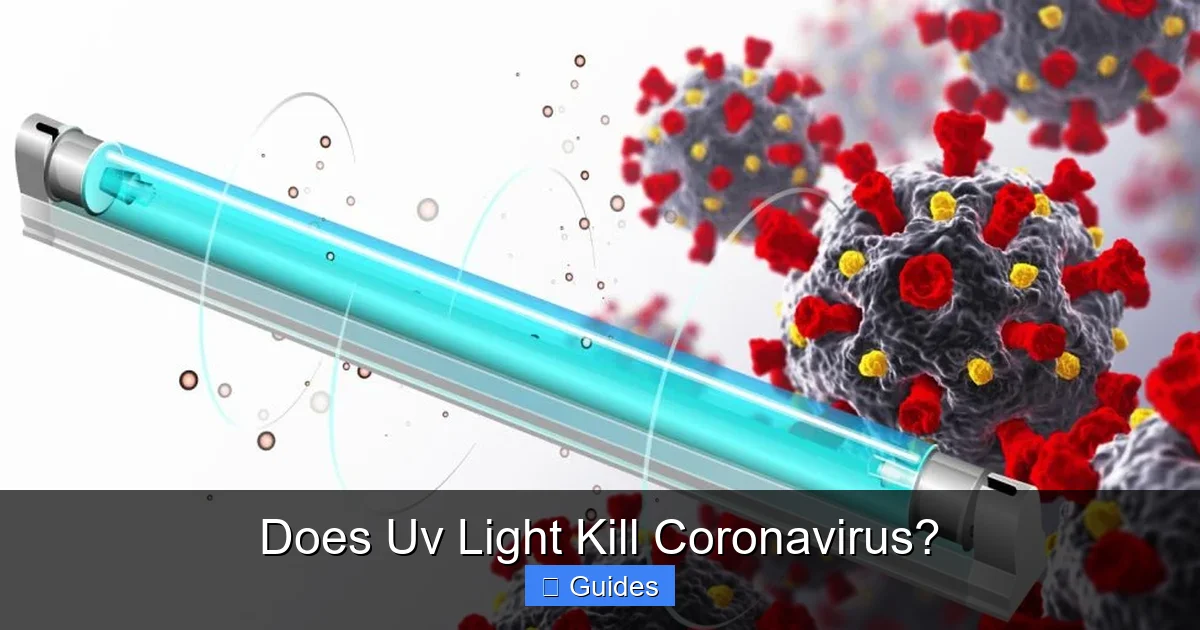
When UV-C light hits a microbe—be it a bacterium, a mold spore, or a virus like the coronavirus—its high energy is absorbed by the organism’s DNA (deoxyribonucleic acid) or RNA (ribonucleic acid). These nucleic acids are the blueprints for life, containing all the instructions a cell or virus needs to function and replicate.
Visual guide about Does Uv Light Kill Coronavirus?
Image source: light-sources.com
Specifically, UV-C radiation causes damage by creating “dimers” between adjacent bases (the building blocks) in the DNA or RNA strand. Think of it like a chain where some links suddenly stick together in the wrong way. These cross-links prevent the organism from being able to properly replicate its genetic material. If a bacterium can’t replicate its DNA, it can’t divide and multiply. If a virus can’t replicate its RNA, it can’t hijack host cells and produce more virus particles.
Inactivating Viruses
For viruses, including the coronavirus, UV-C light effectively inactivates them. An inactivated virus isn’t dead in the traditional sense, as viruses aren’t technically alive, but it can no longer infect cells and cause disease. The damage to its RNA structure makes it incapable of hijacking the cellular machinery of a host to reproduce. So, while you might not “kill” a virus, you render it harmless, which is the ultimate goal of disinfection.
This destructive power makes UV-C an incredibly potent weapon against a wide array of pathogens. Its effectiveness doesn’t rely on chemicals, making it attractive for certain applications where chemical residues are a concern.
The Science Behind UV-C and Coronavirus
Numerous studies have confirmed that UV-C light is highly effective at inactivating coronaviruses, including SARS-CoV-2. Researchers worldwide have investigated how much UV-C energy is needed to neutralize the virus, and the results are consistently positive.
Laboratory Confirmation
Early in the pandemic, laboratories quickly began testing the susceptibility of SARS-CoV-2 to UV-C radiation. Studies published in reputable scientific journals demonstrated that relatively low doses of UV-C light could effectively inactivate the virus on surfaces. For instance, studies from institutions like Boston University and Columbia University showed that standard germicidal UV-C lamps could kill up to 99.9% of SARS-CoV-2 within seconds to minutes, depending on the intensity and distance of the light source.
The coronavirus, like other enveloped viruses, has a lipid outer layer that can be more susceptible to environmental factors, but its genetic material (RNA) is still the primary target for UV-C. Once that RNA is sufficiently damaged, the virus is no longer a threat.
Practical Efficacy
The effectiveness of UV-C against the coronavirus hinges on several factors:
- Wavelength: Optimal germicidal effect is typically around 254 nanometers (nm).
- Dose (Intensity x Time): The higher the intensity of the UV-C lamp and the longer the exposure time, the greater the inactivation of the virus.
- Distance: UV-C intensity drops significantly with distance. A surface far from the lamp will receive less UV-C energy.
- Shadows: UV-C light must directly hit the surface or air containing the virus. Areas in shadow will not be disinfected.
- Surface Type: Some surfaces may absorb or reflect UV-C differently, affecting the overall dose received by the virus.
These factors are critical for professional applications. For example, in a hospital room, specific placement of UV-C robots or fixtures ensures that all high-touch surfaces receive an adequate dose to eliminate any lingering coronavirus particles.
Dangers of UV Light to Humans: A Critical Warning
While UV-C light is incredibly effective at killing coronavirus and other microbes, it’s equally effective at damaging human cells. This is the single most important safety consideration when discussing UV disinfection. **Direct exposure to germicidal UV-C light is extremely dangerous and must be avoided at all costs.**
Skin Damage
Your skin is an amazing barrier, but it’s no match for UV-C. Exposure, even for a short period, can cause severe sunburn-like effects. The high-energy photons in UV-C light damage DNA in skin cells, leading to inflammation, redness, blistering, and in the long term, increased risk of skin cancer. Think of it as an accelerated, super-intense sunburn that happens almost instantly.
Eye Damage
The eyes are particularly vulnerable. Direct exposure to UV-C light can cause a painful condition called photokeratitis, essentially a “sunburn” of the cornea (the clear front surface of the eye). Symptoms include intense pain, gritty sensation, tearing, redness, and extreme sensitivity to light. While usually temporary, severe exposure can lead to more lasting damage and should be treated by a medical professional immediately.
Indirect Exposure Risks
Even reflections of UV-C light can be harmful. While less potent than direct exposure, reflected UV-C from shiny surfaces can still deliver a damaging dose. This is why proper shielding and safety protocols are paramount in environments where germicidal UV is used.
Because of these severe risks, UV-C lights are never meant to be used for disinfecting your hands or any part of your body. They are not a substitute for handwashing or hand sanitizers.
Practical Applications and Safety Protocols
Given its potent germicidal properties and severe risks, how can UV light kill coronavirus safely and effectively in real-world settings? The key lies in controlled environments and strict safety measures.
Healthcare and Laboratory Settings
This is where germicidal UV-C truly shines. Hospitals use UV-C lamps in several ways:
- Robotic Disinfection: Automated robots equipped with powerful UV-C lamps are commonly used to disinfect patient rooms, operating rooms, and isolation units after discharge. These robots operate only when rooms are completely empty, ensuring no human exposure.
- Upper-Room UVGI: In some hospital waiting areas or public spaces with high ceilings, specialized UV-C fixtures are installed to continuously disinfect the air in the upper part of the room. Fans circulate air upwards, where it’s exposed to UV-C, then circulates back down. The fixtures are designed to prevent direct UV-C rays from reaching people at ground level.
- Cabinet Disinfection: Laboratory equipment, safety cabinets, and certain medical devices can be disinfected within enclosed UV-C chambers.
Public Transportation and Commercial Spaces
Some public transportation systems and businesses have explored or implemented UV-C disinfection for their vehicles or premises, again, always with safety in mind:
- Bus and Train Disinfection: Portable or built-in UV-C systems are used to disinfect seats and surfaces in buses, trains, and planes between operational hours, when no passengers are present.
- HVAC Systems: UV-C lamps can be installed within HVAC (heating, ventilation, and air conditioning) systems to continuously treat circulating air, killing airborne pathogens, including the coronavirus, before they spread through a building. This is a very safe and effective application as the UV-C is contained within the ventilation ducts.
Consumer Products and What to Watch Out For
The market has seen an explosion of consumer-grade UV disinfection products, especially during the pandemic. These range from small wands to phone sanitizers and even larger home units. While some may offer a degree of disinfection, it’s crucial to approach them with skepticism and extreme caution:
- Effectiveness Concerns: Many consumer devices may not emit sufficient UV-C intensity, or they may not expose surfaces for long enough, to truly kill robust viruses like the coronavirus effectively.
- Safety Risks: Cheaply made or improperly designed consumer UV wands or open lamps can easily expose users to harmful UV-C radiation. Always check for certifications and clear safety warnings.
- Far-UV-C: As mentioned, Far-UV-C (222 nm) is a promising technology that *could* be safe for use around people in the future. However, it’s still primarily in research and development. If you see consumer products claiming to be “safe UV-C” for use around people, be extremely wary, as they may either be ineffective or dangerous.
The bottom line for consumers: for disinfection in your home or on your personal items, stick to well-understood, safe methods like cleaning with soap and water or using EPA-approved disinfectants. If considering a UV product, ensure it comes from a reputable brand, clearly states safety protocols (e.g., “for use in unoccupied rooms only”), and has verifiable efficacy data.
Misconceptions and What to Avoid
When it comes to UV light and disinfection, there are several dangerous misconceptions that need to be addressed directly. Understanding these can literally save you from harm.
UV Tanning Beds are NOT for Disinfection
This is perhaps one of the most dangerous misconceptions. Tanning beds primarily emit UVA and some UVB light, NOT germicidal UV-C. Not only are they completely ineffective at killing coronavirus, but exposing yourself to their radiation increases your risk of skin cancer. Never, ever use a tanning bed for “disinfection” or “protection” against viruses.
Do Not Use UV Light on Your Skin or Body
As covered extensively, UV-C light is incredibly harmful to human tissue. Do not try to disinfect your hands, face, or any part of your body with a UV lamp, no matter how small or seemingly benign. This includes claims of internal disinfection, which are not only false but extremely dangerous and medically unsound. There have been tragic instances of people attempting to self-treat with UV, leading to severe burns and eye damage.
DIY UV Disinfection Systems Are Risky
Trying to build your own UV disinfection system from components purchased online can be incredibly dangerous. Without proper shielding, knowledge of safe distances, and accurate dosimetry (measuring UV dose), you risk accidental exposure to yourself and others. Leave germicidal UV system design and implementation to professionals.
Sunlight Does Not Immediately Kill Coronavirus on Surfaces
While direct sunlight contains some UV radiation (UVA and UVB), and can help to degrade viruses over time, it’s not a rapid or reliable method for disinfecting surfaces. The intensity of germicidal UV-C required to quickly inactivate coronavirus is far greater than what you’d typically get from sunlight, especially through windows. Relying on sunlight alone for disinfection is not effective for preventing the spread of coronavirus.
For everyday personal and home protection against the coronavirus, stick to the tried-and-true methods: frequent handwashing with soap and water, using alcohol-based hand sanitizers, and regularly cleaning and disinfecting high-touch surfaces with EPA-approved chemical disinfectants.
Conclusion: Informed Choices for a Safer Future
So, does UV light kill coronavirus? Absolutely, yes, especially the potent UV-C spectrum. The science is clear that germicidal UV-C is a powerful tool for inactivating viruses, including SARS-CoV-2, by damaging their genetic material. This makes it an invaluable asset in controlled, professional environments like hospitals, laboratories, and unoccupied public spaces, where strict safety protocols can be enforced to prevent human exposure.
However, the immense power of UV-C light comes with an equally immense risk. Direct exposure to germicidal UV-C is incredibly dangerous, causing severe and rapid damage to human skin and eyes. This is why it is unequivocally not suitable for personal use, nor should it ever be directed at people or used in occupied rooms without highly specialized equipment and expertise.
As we move forward, research into safer UV technologies like Far-UV-C continues to offer exciting possibilities for disinfection in occupied spaces. But for now, and for the foreseeable future, personal safety remains paramount. For your home and personal well-being, continue to rely on proven, safe disinfection methods: wash your hands thoroughly, use hand sanitizer, and clean surfaces with appropriate chemical disinfectants. Understanding the science behind UV light allows us to appreciate its potential while respecting its hazards, ensuring we make informed and safe choices in our ongoing fight against viruses like the coronavirus.
🎥 Related Video: Does UV light kill the new coronavirus?
📺 Live Science
Ultraviolet light has been used to stop pathogens in their tracks for decades. But does it work against SARS-CoV-2, the virus …
Frequently Asked Questions
Does UV light work instantly to kill coronavirus?
UV-C light can inactivate coronavirus quite rapidly, often within seconds to minutes, depending on the intensity of the lamp, the distance to the surface, and the specific dose required. It’s not truly instantaneous, but it works much faster than natural degradation.
Can I use a blacklight (UVA) to kill coronavirus?
No, blacklights primarily emit UVA light, which has very limited germicidal properties and is not effective at killing coronavirus. Only specific wavelengths of UV-C light are potent enough for effective disinfection against viruses.
Are there any viruses that are resistant to UV-C light?
While the exact dose required can vary, most viruses, including coronaviruses, are susceptible to UV-C light because it damages their fundamental genetic material (RNA or DNA). There isn’t a known virus that is truly “resistant” to a sufficient dose of UV-C.
Is it safe to look at a UV-C lamp while it’s on?
Absolutely not. Looking directly at a UV-C lamp, even for a short moment, can cause severe and painful eye damage, including photokeratitis. Always avoid direct eye contact with germicidal UV-C sources.
Can UV light clean the air in my home?
UV-C lamps installed within HVAC systems can effectively disinfect circulating air, killing airborne pathogens like the coronavirus. However, standalone consumer air purifiers with UV often have limited effectiveness unless the air is properly circulated and exposed to a strong enough UV-C dose.
Why do hospitals use UV-C if it’s so dangerous?
Hospitals use UV-C because of its proven high effectiveness against a wide range of dangerous pathogens, including the coronavirus, and because it leaves no chemical residue. They mitigate the danger through strict safety protocols, using automated systems that operate only in empty rooms or through enclosed upper-room air disinfection units.
