


Many homeowners wonder if UV light can kill mold effectively. While UVC light can damage mold’s DNA and kill spores or surface mold under ideal, direct exposure, it’s not a standalone solution for an existing mold problem. UV light does not penetrate porous materials, cannot remove mold residue, and doesn’t address the underlying moisture issue, making comprehensive mold remediation essential.
Does UV Light Kill Mold?
Mold. Just hearing the word can send shivers down a homeowner’s spine. It’s that unwelcome guest that thrives in damp, dark corners, leaving behind unsightly stains and a musty odor. Beyond the aesthetic concerns, mold can also trigger allergies, asthma symptoms, and other health issues for sensitive individuals. So, it’s no surprise that when faced with a mold problem, people start looking for quick, effective, and perhaps even innovative solutions.
One such solution that often pops up in conversations about disinfection is UV light. We hear about UV lamps being used in hospitals, water purification, and even air purifiers. It sounds futuristic, powerful, and clean. But can this seemingly magical light truly tackle a stubborn mold infestation? Does UV light kill mold effectively, or is it another myth in the vast world of home remedies? Let’s shine a light, quite literally, on this question and uncover the truth.
In this comprehensive guide, we’ll dive deep into what mold is, how UV light works, and whether these two forces are a match or a mismatch. We’ll explore the science behind germicidal UV-C light, its potential benefits, its significant limitations when it comes to mold, and most importantly, what truly effective mold remediation looks like. Our goal is to equip you with the knowledge to make informed decisions about protecting your home and health from mold.
Key Takeaways
- UV-C Light Kills Mold Spores: Germicidal UV-C light can destroy the DNA of mold spores, preventing them from reproducing and growing.
- Surface Mold Requires Direct Exposure: To kill active mold growth, UV-C light needs direct, unobstructed, and prolonged exposure to the mold’s surface.
- Limited Penetration: UV light cannot penetrate porous materials like drywall, wood, or fabric, meaning it won’t kill mold growing beneath the surface.
- Doesn’t Remove Mold or Mycotoxins: Even if UV light kills mold, it doesn’t remove the dead mold, its allergens, or harmful mycotoxins, which still need to be physically cleaned.
- Not a Standalone Remediation Solution: UV light is ineffective for large, established mold colonies or addressing the root cause of mold (moisture). It’s a supplemental tool at best.
- Potential Use in HVAC Systems: UV lamps can be beneficial in HVAC systems to prevent mold growth on coils and reduce airborne mold spores, but not for whole-home remediation.
- Safety Concerns: Direct exposure to germicidal UV-C light is harmful to human skin and eyes, requiring strict safety protocols during use.
Quick Answers to Common Questions
Can I use a UV flashlight to kill mold?
While a UV flashlight might reveal hidden mold stains (some mold fluoresces under UV), its UVC output is typically too weak and scattered, and the exposure time too short, to effectively kill mold. It’s more of an inspection tool than a remediation device.
Does UV light kill mold on clothes?
No, UV light is not an effective way to kill mold on clothes. It won’t penetrate the fabric deeply enough to reach all mold growth, and it won’t remove the mold stains or residue. Clothes with mold should be washed thoroughly in hot water with appropriate detergent or discarded.
Is it safe to be in a room with a UV light killing mold?
Absolutely not. Germicidal UVC light is harmful to human skin and eyes. You must never be in a room while a UVC lamp is operating to kill mold or disinfect surfaces. Always follow manufacturer safety guidelines and ensure the area is clear of people and pets.
Will UV light prevent mold from returning?
No. UV light doesn’t address the underlying moisture source that caused the mold in the first place. Even if it kills some mold, if the moisture problem persists, mold will simply return and grow again. Prevention relies on controlling humidity and fixing leaks.
Does UV light remove the musty smell of mold?
UV light might reduce the number of airborne mold spores, which could indirectly lessen the musty smell to some extent. However, it does not chemically break down the volatile organic compounds (VOCs) that cause the musty odor, nor does it remove the source of the smell (the mold colony itself or its byproducts).
📑 Table of Contents
Understanding Mold: The Uninvited Guest
Before we can tackle whether UV light kills mold, let’s first get a clearer picture of mold itself. Mold is a type of fungus, a microscopic organism that is ubiquitous in our environment. Its primary role in nature is to break down organic matter, which is great for fallen leaves but not so great for your home’s structural components or furnishings.
What Exactly is Mold?
Mold reproduces by releasing tiny spores into the air. These spores are everywhere, both indoors and outdoors, and are generally harmless unless they find the right conditions to settle down and grow. What are those conditions? Moisture, food, and a suitable temperature. In your home, “food” can be almost anything organic – drywall, wood, fabric, insulation, dust, and even the dirt on your shoes. Once spores land on a damp surface with a food source, they begin to germinate and form visible colonies, spreading their thread-like structures called hyphae. This is the active mold growth we see and smell.
Why Mold is a Problem
Aside from its unsightly appearance and musty smell, mold poses several health risks. It produces allergens, irritants, and sometimes even toxic substances called mycotoxins. Inhaling or touching mold or mold spores can trigger allergic reactions like sneezing, runny nose, red eyes, and skin rash. For individuals with asthma, mold exposure can lead to severe attacks. Mycotoxins, though less common to cause illness from indoor exposure, are a concern for long-term health, particularly for those with weakened immune systems. This is why addressing mold promptly and effectively is so crucial.
UV Light Explained: Nature’s Disinfectant?
Now, let’s shift our focus to the other side of the equation: UV light. Ultraviolet (UV) light is a form of electromagnetic radiation, just like visible light, radio waves, or X-rays. However, UV light has a shorter wavelength and higher energy than visible light, making it invisible to the human eye.
The Spectrum of UV Light
UV light is typically divided into three main categories based on wavelength:
- UVA (315-400 nm): This is the least harmful type, often used in tanning beds and blacklights. It penetrates the skin most deeply.
- UVB (280-315 nm): More energetic than UVA, UVB is responsible for sunburns and contributes to skin cancer risk.
- UVC (100-280 nm): This is the most energetic and dangerous type of UV light. Fortunately, the Earth’s ozone layer blocks almost all natural UVC light from reaching the surface.
How Germicidal UV-C Works
When people talk about using UV light to kill microorganisms, they are almost always referring to UVC light, specifically in the germicidal range (around 254 nm). Germicidal UVC light works by scrambling the DNA (deoxyribonucleic acid) and RNA (ribonucleic acid) of bacteria, viruses, and fungi (like mold). When the genetic material is damaged, these microorganisms can no longer reproduce, rendering them “inactive” or “dead.” This process is known as UV germicidal irradiation (UVGI). It’s a powerful tool for disinfection in controlled environments.
The Big Question: Can UV Light Really Kill Mold?
So, with that scientific background, we return to our central question: Does UV light kill mold? The short answer is yes, under specific conditions, UV light can kill mold spores and even active mold growth. But the longer, more nuanced answer is that it’s far from a miracle cure for a mold problem in your home.
Killing Mold Spores
Germicidal UV-C light is quite effective at killing airborne mold spores. When mold spores pass through the path of a UVC lamp, their DNA is damaged, preventing them from germinating and reproducing. This is why UV lamps are sometimes integrated into air purification systems or HVAC units – to reduce the concentration of viable mold spores circulating in the air.
Killing Active Surface Mold
For active mold growth on a surface, UVC light can also be effective, but with significant caveats. The UVC light must have:
- Direct Exposure: The light rays must directly hit every part of the mold colony. Any shadow or obstruction will protect the mold.
- Sufficient Intensity: The UVC lamp needs to be powerful enough to deliver the required germicidal dose.
- Adequate Duration: Mold is relatively robust, and killing it requires a longer exposure time compared to many bacteria or viruses. This duration can range from minutes to several hours, depending on the mold species and the intensity of the light.
If these conditions are met, the UVC light can damage the mold’s DNA, preventing further growth and eventually killing the cells. However, this only applies to the mold on the very surface.
Limitations and Challenges of UV Mold Remediation
While UV light can kill mold, it’s critical to understand why it’s generally not recommended as a primary solution for mold remediation in a residential setting. The limitations far outweigh the benefits for most mold situations.
1. No Penetration into Porous Materials
This is perhaps the biggest drawback. UVC light has extremely poor penetration capabilities. It cannot pass through solid objects or even penetrate deep into porous materials. Think about mold growing on drywall, wood, carpeting, or insulation. The mold you see on the surface is often just the tip of the iceberg; its roots (hyphae) can extend deep into these materials. UV light will only kill the mold cells on the very surface that are directly exposed. The mold hidden beneath the surface, or within the material, will remain untouched and continue to grow, leading to a recurring problem. Does UV light kill mold where it truly counts? Not if it’s deeply embedded.
2. The “Line of Sight” Problem
UV light works on a line-of-sight principle. If there’s anything blocking the light – furniture, corners, dust, or even textured surfaces – the mold in those shadowed areas will be unaffected. This makes it incredibly difficult to ensure complete coverage in a typical room with varying surfaces and obstructions. Imagine trying to disinfect an entire wall with mold using a UV lamp; you’d need to meticulously position it to hit every square inch directly, which is practically impossible.
3. Doesn’t Remove Mold Residue or Mycotoxins
Even if UV light successfully kills all the visible mold on a surface, it doesn’t make the mold disappear. Dead mold still needs to be physically removed. More importantly, dead mold spores, cell fragments, allergens, and mycotoxins can still cause health problems. The allergenic and toxic properties of mold are not necessarily neutralized by UVC light. So, even if UV light kills mold, you still have a contaminated surface that requires cleaning and removal. This is a crucial distinction: “killing” doesn’t mean “remediating.”
4. Doesn’t Address the Root Cause: Moisture
Mold growth is a symptom, not the root problem. The root problem is always excessive moisture. Whether it’s a leaky pipe, high humidity, or water intrusion, if you don’t find and fix the moisture source, the mold will inevitably return, even if you manage to kill some of it with UV light. UV light offers no solution for preventing future mold growth.
5. Safety Hazards
Germicidal UVC light is harmful to living organisms, including humans. Direct exposure to UVC can cause painful eye irritation (photokeratitis, similar to a severe sunburn of the eye) and skin damage (sunburn-like redness, blistering, increased risk of skin cancer over time). Therefore, using powerful UVC lamps for mold remediation requires strict safety protocols, including wearing specialized protective gear and ensuring no one is in the treated area during operation. This makes DIY application by homeowners extremely risky.
Where UV Light Can Be Useful (and Where It’s Not)
While UV light isn’t a silver bullet for existing mold infestations, it does have specific applications where it can be a valuable tool, primarily for prevention or supplemental treatment.
Beneficial Applications for UV Light and Mold
- HVAC Systems: This is arguably the most effective application for UV light in a home setting regarding mold. UVC lamps installed within the air handler of an HVAC system can prevent mold growth on the evaporator coils and drain pan, which are often damp and prone to microbial growth. They also help reduce airborne mold spores as air circulates through the system. This helps maintain air quality and efficiency but won’t clean existing mold in ductwork or elsewhere in the house.
- Air Purifiers: Some air purifiers incorporate UVC lamps as a supplementary purification stage. While the primary filtration (HEPA filters) physically removes mold spores, the UVC light can inactivate any airborne spores that manage to pass through or remain in the air. Again, this is about reducing airborne viable spores, not remediating surface mold.
- Controlled Environments: In laboratories, hospitals, and certain industrial settings, UVC lamps are used for surface and air disinfection under strictly controlled conditions, often in conjunction with other cleaning methods.
Where UV Light is NOT Recommended for Mold
- As a primary method for existing mold remediation: For any visible mold growth, particularly on porous surfaces, UV light is ineffective on its own.
- For mold in hidden areas: Mold behind walls, under floors, or in ceilings cannot be reached by UV light.
- For large mold infestations: Extensive mold growth requires professional intervention. UV light is simply not powerful or comprehensive enough.
- As a substitute for proper cleaning: Even if UV light kills mold, you still need to physically remove the residue.
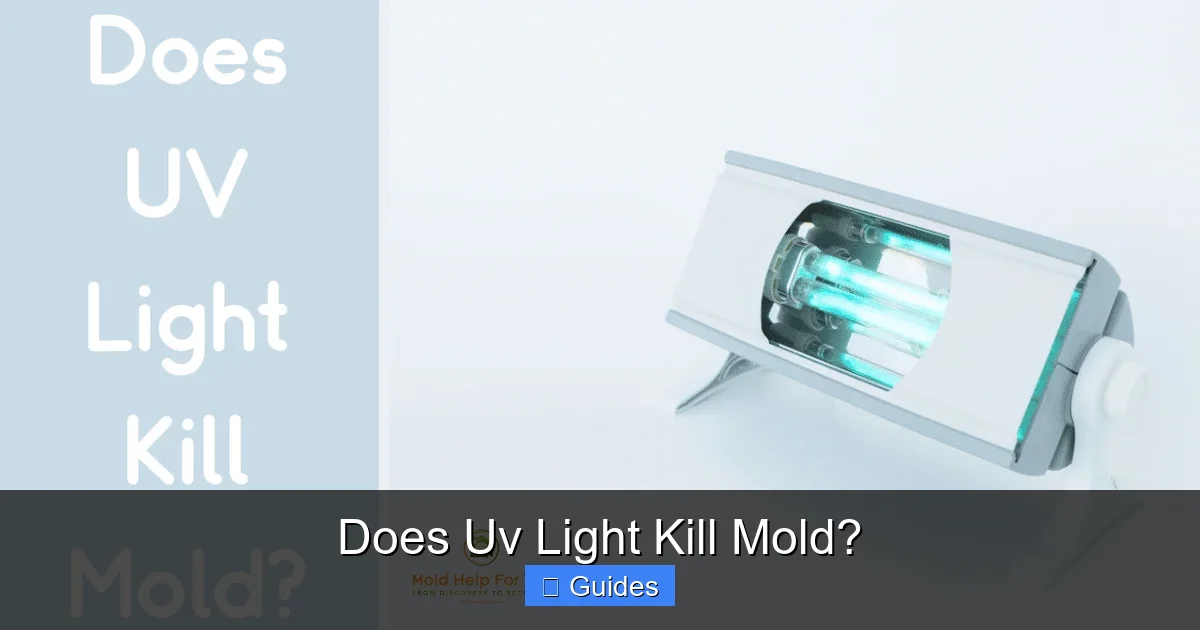
Visual guide about Does Uv Light Kill Mold?
Image source: moldhelpforyou.com
Effective Mold Remediation: The Proven Path
So, if UV light isn’t the answer, what is? Effective mold remediation follows a clear, multi-step process that focuses on identification, containment, removal, and prevention.
1. Identify and Fix the Moisture Source
This is the absolute first step. Mold cannot grow without moisture. Find the leak, condensation issue, or high humidity problem, and fix it immediately. Without this step, any mold you remove will simply return. Does UV light kill mold effectively if the moisture remains? No, it’s a waste of time and effort.
2. Containment
For larger mold problems (areas greater than 10 square feet), or if you suspect toxic mold, containment is crucial to prevent spores from spreading to other parts of your home during cleanup. This might involve sealing off the area with plastic sheeting and using negative air pressure.
3. Proper Personal Protective Equipment (PPE)
Always wear appropriate PPE when cleaning mold, regardless of size. This includes:
- N95 or P100 respirator to prevent inhaling spores.
- Gloves (disposable nitrile or heavy-duty rubber).
- Eye protection (goggles without vents).
- Old clothes that can be washed separately or disposed of.
4. Physical Removal and Cleaning
This is the most critical step. Mold must be physically removed.
- Non-porous surfaces (tile, glass, metal): Scrub with detergent and water. A solution of 1 cup bleach per gallon of water can be used as a disinfectant after cleaning, but physical scrubbing is key.
- Porous materials (drywall, insulation, carpeting, fabric): These materials are often difficult, if not impossible, to clean effectively once mold has rooted deeply. In most cases, they need to be cut out, bagged, sealed, and disposed of properly.
- Wood: Can often be cleaned and dried, but sometimes removal is necessary if the mold is extensive or structural integrity is compromised.
After cleaning, ensure the area is thoroughly dried to prevent re-growth. Dehumidifiers and fans can help.
5. Prevention
Once mold is removed and the moisture source is fixed, focus on prevention:
- Maintain indoor humidity levels between 30-50%.
- Ensure adequate ventilation in bathrooms, kitchens, and laundry rooms.
- Fix leaks promptly.
- Clean and dry water spills immediately.
- Consider using mold-resistant paints or building materials in damp areas.
When to Call a Professional
If the moldy area is larger than 10 square feet, if you have health concerns, or if the mold is in your HVAC system or sewage-contaminated water, it’s best to call a qualified mold remediation professional. They have the expertise, equipment, and safety protocols to handle the job effectively and safely.
Conclusion
So, let’s circle back to our original question: Does UV light kill mold? Yes, germicidal UV-C light has the power to inactivate mold spores and kill surface mold, but its practical application for comprehensive mold remediation in a home is severely limited. It cannot penetrate materials, relies on direct line-of-sight, doesn’t remove dead mold or toxins, and critically, doesn’t address the underlying moisture problem that caused the mold in the first place.
While UV lamps can be a valuable supplementary tool in specific contexts, such as preventing mold growth on HVAC coils or reducing airborne spores in air purifiers, they are not a standalone solution for an existing mold infestation. For true mold remediation, you need a hands-on, multi-step approach that focuses on fixing moisture issues, physically removing the mold, and implementing preventive measures. Don’t fall for the allure of a quick fix; a thorough and proven approach is the only way to ensure your home is truly free from mold and its potential health hazards.
🎥 Related Video: Does UV light kill mold?
📺 Matt Kelly
This video is from my mold Facebook group: https://www.facebook.com/groups/toxicmoldanswers To test your home and body for …
Frequently Asked Questions
What type of UV light kills mold?
The type of UV light that can kill mold is UVC, specifically within the germicidal range (around 254 nanometers). This high-energy light damages the DNA of mold spores and active mold cells, preventing them from reproducing and growing. UVA and UVB light are generally not effective for killing mold.
How long does UV light need to kill mold?
The duration required for UV light to kill mold depends on several factors, including the intensity of the UVC lamp, the distance from the mold, and the specific mold species. It can range from several minutes to hours of direct, unobstructed exposure. Mold is more resilient than many bacteria, requiring longer exposure times.
Can UV light clean mold from air ducts?
While UV lamps installed near the evaporator coil in an HVAC system can prevent mold growth on the coil itself and reduce airborne mold spores circulating through the ducts, they cannot “clean” existing mold from inside the air ducts. For mold in ducts, physical cleaning or professional remediation is required.
Does UV light kill black mold?
Yes, germicidal UVC light can kill “black mold” (which is a general term for many dark-colored molds, including potentially toxic species like Stachybotrys chartarum) under the same specific conditions as other molds: direct, intense, and prolonged exposure. However, like all molds, it does not remove the dead mold, its allergens, or mycotoxins, which still need physical cleanup.
Is UV light a good alternative to professional mold remediation?
No, UV light is not a good alternative to professional mold remediation. It has too many limitations, such as lack of penetration into materials, inability to remove dead mold or toxins, and safety risks. Professional remediation addresses the root cause, contains spread, and physically removes all mold effectively and safely.
Will a portable UV lamp kill mold in a room?
A portable UV lamp might kill some airborne mold spores and surface mold directly exposed to its light if left on for a significant duration. However, due to the “line of sight” limitation, shadows, and lack of penetration into porous materials, it’s highly unlikely to effectively eradicate a mold problem in an entire room and is not a reliable solution for comprehensive mold removal.
