


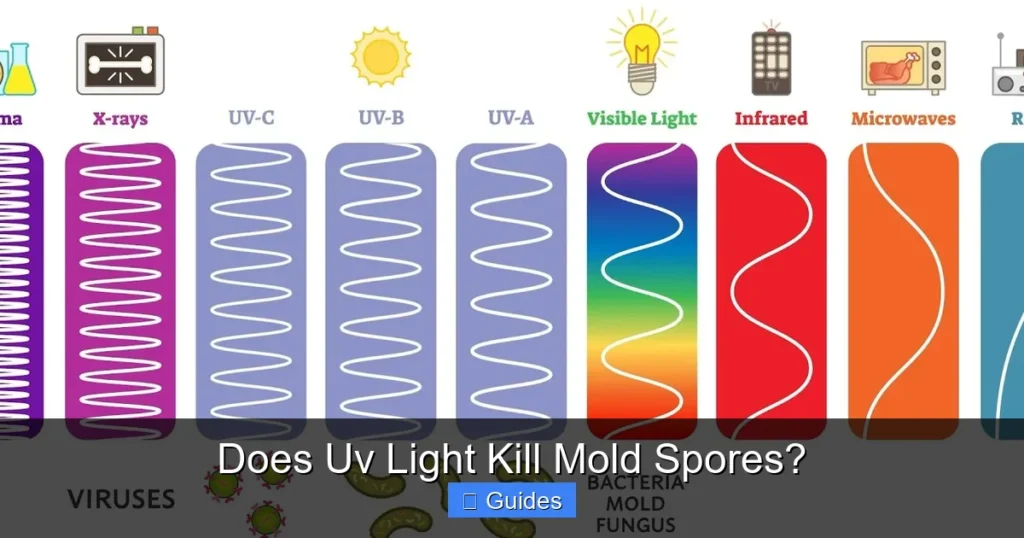
Does UV light kill mold spores? Yes, UV-C light can effectively damage and kill airborne mold spores and inhibit surface mold growth under specific, controlled conditions. However, it’s not a standalone solution for active mold infestations or a substitute for proper cleaning and moisture control. UV light struggles with surface penetration and shaded areas, meaning it won’t eliminate existing mold colonies or address the underlying moisture issues that fuel mold growth.
Have you ever wondered if that fancy UV lamp or air purifier with a UV light feature can really zap away your mold problems? It’s a common question, and for good reason! The idea of a magical light ray eliminating pesky mold spores sounds incredibly appealing, especially when dealing with those musty odors and unsightly patches. Many products on the market claim UV light can purify your air and surfaces, leading homeowners to believe it’s a quick fix for mold.
But here’s the thing: while UV light certainly possesses germicidal properties, its role in effective mold remediation is often misunderstood. Can UV light kill mold spores? The short answer is yes, to an extent. However, the long answer involves understanding the nuances of how UV light works, its limitations, and why it’s usually just one small piece of a much larger mold prevention and removal puzzle.
Let’s dive deep into the science behind ultraviolet light and mold. We’ll explore where UV light shines (pun intended!) and where it falls short, helping you make informed decisions about protecting your home and health from unwelcome mold invaders.
Key Takeaways
- UV-C Light is Germicidal: The UV-C spectrum of ultraviolet light is known for its ability to damage the DNA and RNA of microorganisms, including mold spores, rendering them inactive or unable to reproduce.
- Effectiveness is Conditional: UV light can kill mold spores, especially airborne ones, but its effectiveness against established mold colonies on surfaces is limited due to the need for direct, prolonged exposure and its inability to penetrate surfaces.
- Not a Standalone Remediation Tool: UV light should not be considered a primary method for mold removal. It does not physically remove mold, dead spores can still cause allergic reactions, and it doesn’t address the underlying moisture problem.
- Useful for Air Quality: UV-C systems can be beneficial when integrated into HVAC systems or portable air purifiers to continuously kill airborne mold spores, bacteria, and viruses, improving overall indoor air quality.
- Limitations Exist: UV light cannot penetrate dust, dirt, or porous materials where mold often hides. It also cannot reach mold in shadowed areas, making it ineffective for widespread or hidden infestations.
- Safety Precautions are Crucial: Direct exposure to UV-C light is harmful to human skin and eyes, requiring careful handling and professional installation in applications where people may be present.
- Moisture Control is Paramount: The most effective strategy for preventing and controlling mold remains addressing the root cause: moisture. UV light is a supplementary tool, not a replacement for proper ventilation, humidity control, and water damage repair.
Quick Answers to Common Questions
Can UV light completely eliminate an existing mold colony?
No, UV light is largely ineffective against established mold colonies because it cannot penetrate porous surfaces where mold embeds, nor can it reach mold in shaded areas. It only affects mold spores and growth on the surface that receives direct, sustained UV-C exposure.
Is it safe to use a portable UV lamp in a room where people are present?
Absolutely not. Direct exposure to UV-C light is highly dangerous to human skin and eyes, causing burns and severe eye damage. UV-C lamps should only be used in unoccupied areas, or in enclosed systems like HVAC ducts or air purifiers where human exposure is prevented.
Will UV light remove the musty odor associated with mold?
UV light might help reduce the odor by killing airborne mold spores that contribute to the smell, but it won’t eliminate the odor entirely. The musty smell comes from volatile organic compounds (VOCs) released by active mold growth and the presence of mold biomass, which UV light does not physically remove.
Can UV light prevent mold from growing on surfaces like walls or showers?
UV light can inhibit mold growth on surfaces if it provides constant, direct, and sufficient exposure to the area. However, it’s not practical for most household surfaces due to safety concerns, lack of penetration, and the need for constant application. Moisture control and regular cleaning are far more effective.
If UV light kills mold spores, does that mean they’re harmless?
While inactive or “dead” mold spores cannot reproduce, they can still trigger allergic reactions or respiratory symptoms in sensitive individuals. Therefore, even killed mold spores and dead mold biomass still need to be physically cleaned and removed from the environment.
📑 Table of Contents
- Understanding Mold and Its Dangers
- How UV Light Works Against Microorganisms
- Does UV Light Kill Mold Spores Effectively? The Nuances
- Practical Applications of UV Light in Mold Remediation
- Why UV Light Alone Isn’t a Mold Remediation Solution
- Effective Strategies for Mold Prevention and Removal
- Conclusion
Understanding Mold and Its Dangers
Before we talk about killing mold, let’s briefly understand what mold is and why it’s such a concern. Mold is a type of fungus that grows in damp environments. It reproduces by releasing tiny, lightweight spores into the air. These spores are everywhere, both indoors and outdoors, and are often invisible to the naked eye.
The Ubiquitous Nature of Mold Spores
Mold spores are incredibly resilient. They can lie dormant for long periods, waiting for the right conditions—moisture, warmth, and a food source—to germinate and grow into visible mold colonies. These food sources can be almost anything organic: wood, drywall, carpet, insulation, and even dust. Because spores are constantly circulating, it’s impossible to eliminate them completely from your environment. The goal is to control their growth.
Health Risks Associated with Mold Exposure
Exposure to mold can lead to a range of health issues, varying in severity from person to person. Common symptoms include allergic reactions like sneezing, runny nose, red eyes, and skin rash. For individuals with asthma or other respiratory conditions, mold can trigger more severe attacks. Some molds also produce mycotoxins, which can be toxic and lead to more serious health problems, though this is less common with typical household mold. Children, the elderly, and those with weakened immune systems are particularly vulnerable. This is why addressing mold growth promptly and effectively is crucial.
How UV Light Works Against Microorganisms
When we talk about UV light in the context of killing germs, we’re usually referring to a specific type of ultraviolet light called UV-C. Understanding the different types of UV light is key to grasping how it works against mold.
The UV Spectrum: UV-A, UV-B, and UV-C
Ultraviolet light is a form of electromagnetic radiation that falls between visible light and X-rays on the electromagnetic spectrum. It’s invisible to the human eye and is divided into three main categories based on wavelength:
- UV-A (315-400 nm): This is the longest wavelength UV light and makes up most of the UV radiation that reaches the Earth’s surface. It’s associated with skin aging and tanning.
- UV-B (280-315 nm): This wavelength is responsible for sunburn and is linked to skin cancer. A small amount reaches the Earth’s surface.
- UV-C (100-280 nm): This is the shortest and most energetic wavelength of UV light. Fortunately, the Earth’s ozone layer blocks almost all natural UV-C radiation from reaching us. Man-made UV-C light, however, is a powerful germicide.
UV-C: The Germicidal Wavelength
UV-C light, particularly in the 254-nanometer range, is known as “germicidal UV” or “ultraviolet germicidal irradiation” (UVGI). Here’s how it works its magic:
When UV-C light hits a microorganism like a mold spore, bacterium, or virus, its high energy is absorbed by the organism’s DNA and RNA. This absorption causes damage to the genetic material, creating what are called “thymine dimers.” These dimers disrupt the DNA replication process, preventing the microorganism from reproducing and rendering it inactive or “dead.” In essence, UV-C light sterilizes the organism, making it harmless.
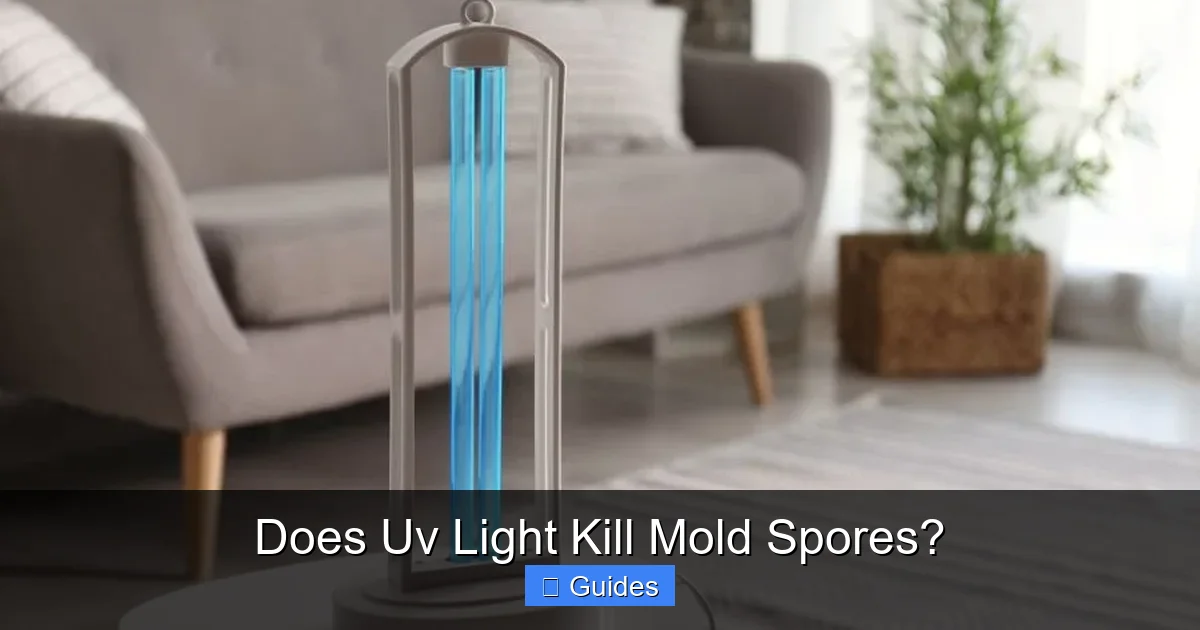
Visual guide about Does Uv Light Kill Mold Spores?
Image source: restorationmasterfinder.com
Does UV Light Kill Mold Spores Effectively? The Nuances
Now for the million-dollar question: Does UV light kill mold spores? Yes, germicidal UV-C light can kill mold spores and inhibit mold growth. However, its effectiveness is highly conditional and comes with significant limitations. It’s not a magic bullet.
Surface vs. Airborne Spores
UV light is most effective against airborne mold spores. When mold spores pass through the direct beam of a UV-C lamp, especially in systems like an HVAC duct, the UV-C energy can effectively damage their DNA, preventing them from germinating and reproducing. This is where UV lights in air purification systems really shine – they reduce the concentration of viable mold spores circulating in your indoor air.
However, when it comes to surface mold (the visible growth you see on walls, ceilings, or other materials), UV light is far less effective. Mold colonies often embed themselves deep into porous materials. For UV-C light to work, it needs direct, unobstructed exposure to the mold cells. It cannot penetrate surfaces or even a layer of dust or dirt that might cover the mold.
Exposure Time and Intensity are Crucial
Killing mold spores and mold growth isn’t instantaneous. The effectiveness of UV-C light depends on two primary factors:
- Exposure Time: Mold spores need to be exposed to UV-C light for a sufficient duration. A quick pass might not be enough to cause fatal damage to all spores. In air purification systems, this means ensuring the airflow rate allows for adequate exposure time.
- Intensity: The power and proximity of the UV-C lamp are critical. A weak lamp or one placed too far from the mold will have minimal effect. Professional-grade UV-C systems use high-intensity bulbs designed for specific applications.
Many consumer-grade UV lamps, especially small portable ones, might not have the intensity or be used for long enough periods to be truly effective against an existing mold problem.
Limitations: Penetration and Shadows
This is arguably the biggest drawback of using UV light for mold remediation:
- No Penetration: UV light cannot penetrate solid objects, dust, dirt, or porous materials like drywall, wood, or fabric. If mold has grown into these materials, the UV light will only affect the very surface, leaving the majority of the mold untouched and ready to regrow.
- Shadows are a Safe Haven: Any area in shadow from the UV light source will be completely unaffected. Mold often grows in crevices, corners, and behind objects—places where UV light simply cannot reach. This means even if you aim a UV lamp at a moldy wall, any mold in a tiny crack or behind a picture frame will survive.
Because of these limitations, using UV light alone to “kill” visible mold is often an exercise in futility. It might damage some surface spores, but it won’t eradicate the colony or prevent its return.
Practical Applications of UV Light in Mold Remediation
While UV light isn’t a silver bullet, it does have valuable applications in mold prevention and improving air quality. It’s best used as a supplementary tool, not a standalone solution.
UV Lights in HVAC Systems
One of the most effective uses of UV-C light for mold control is its integration into heating, ventilation, and air conditioning (HVAC) systems. These systems are designed to improve indoor air quality by continuously treating the air as it circulates throughout your home.
- Coil Sterilization: UV lamps can be installed near the evaporator coil of your HVAC unit. The coil is often a damp, cool place, making it a prime breeding ground for mold, bacteria, and biofilm. A UV light continuously shining on the coil prevents mold and bacterial growth, keeping the coil clean and improving the efficiency of your system.
- Air Stream Disinfection: Other UV lamps can be placed in the return or supply air ducts to sterilize airborne contaminants, including mold spores, as they pass through the system. This significantly reduces the number of viable mold spores circulating in your home’s air.
HVAC UV systems are effective because they provide consistent exposure to circulating air and can prevent growth in a common mold hotspot (the coil). However, they don’t clean existing mold on surfaces outside the HVAC unit.
Portable UV-C Air Purifiers
Many modern air purifiers incorporate UV-C lamps as part of their multi-stage filtration process (alongside HEPA filters and activated carbon). These devices work similarly to HVAC systems by exposing circulating air to UV-C light. They can be very effective at reducing airborne mold spores, as well as bacteria, viruses, and other pathogens, within the room they are placed.
These purifiers are excellent for improving general indoor air quality and reducing the concentration of allergens and irritants, including mold spores. However, like HVAC UV systems, they won’t clean mold that’s already growing on your walls, furniture, or other surfaces.
DIY UV Lamps: Proceed with Caution
You can find many portable UV-C lamps marketed for home disinfection. While these can kill mold spores and other microorganisms on surfaces, they come with significant caveats:
- Safety First: Direct exposure to UV-C light is dangerous for humans and pets. It can cause severe skin burns and eye damage (photokeratitis, akin to a severe sunburn in the eye). You should never be in a room while a high-intensity UV-C lamp is operating.
- Limited Effectiveness: As discussed, these lamps only affect what’s in their direct line of sight and cannot penetrate surfaces. They require careful positioning and sufficient exposure time to be effective.
- No Removal: Even if a DIY UV lamp kills mold spores on a surface, the dead mold biomass still remains. This dead mold can still be allergenic or irritating and needs to be physically removed.
For these reasons, DIY UV lamps should be used with extreme caution and are generally not recommended as a primary mold remediation tool for visible mold growth.
Why UV Light Alone Isn’t a Mold Remediation Solution
It’s critical to understand that while UV light can inactivate mold spores, it’s not a comprehensive solution for dealing with a mold problem. There are several key reasons why.
Dead Mold Still Needs to Be Removed
Even if UV-C light successfully kills all the mold spores on a surface, the physical mold growth (the fuzzy patches you see) still remains. This dead mold, or its remnants, can still trigger allergic reactions, asthma symptoms, or other health issues in sensitive individuals. It can also leave behind unsightly stains and a musty odor. Effective mold remediation always involves physically cleaning and removing the mold growth.
Addressing the Root Cause: Moisture Control
Mold thrives on moisture. If you have a mold problem, it’s because there’s an underlying moisture issue – a leaky pipe, high humidity, condensation, or water intrusion. UV light does absolutely nothing to address this root cause. If you simply use UV light to kill some surface mold without fixing the leak or reducing humidity, the mold will inevitably return. The most important step in mold prevention and control is moisture management.
Safety Concerns with UV-C Light
As mentioned, UV-C light is harmful to living organisms, including humans and pets. Direct exposure can cause painful eye injuries and skin damage. This makes it difficult and dangerous to use UV-C lamps in occupied spaces for surface disinfection. Professional UV-C systems are designed with safety interlocks or for use in unoccupied areas or enclosed systems like HVAC ducts where exposure is minimized.
The risks associated with UV-C light mean it cannot be used carelessly or as a continuous surface treatment in your home where people and pets are present.
Effective Strategies for Mold Prevention and Removal
So, if UV light isn’t the magic bullet, what should you do about mold? Effective mold management relies on a combination of common-sense practices and, for larger issues, professional help.
Professional Mold Remediation
For significant mold growth (areas larger than 10 square feet), or if mold is suspected behind walls or in HVAC systems, it’s best to call a qualified mold remediation professional. They have the expertise, equipment, and safety gear to:
- Identify the source of moisture.
- Contain the affected area to prevent spore spread.
- Safely remove mold-contaminated materials.
- Clean and disinfect surfaces.
- Ensure the area is dried thoroughly to prevent recurrence.
Moisture Management is Key
This is the absolute most crucial step in preventing mold. Mold cannot grow without moisture.
- Fix Leaks Promptly: Repair leaky roofs, pipes, and plumbing fixtures immediately.
- Control Humidity: Maintain indoor humidity levels between 30% and 50% using dehumidifiers, air conditioners, and proper ventilation, especially in bathrooms, kitchens, and basements.
- Ensure Proper Ventilation: Use exhaust fans in bathrooms and kitchens. Open windows when possible to circulate fresh air.
- Dry Wet Areas: Thoroughly dry any water-damaged areas or spills within 24-48 hours to prevent mold growth.
- Prevent Condensation: Insulate cold surfaces like pipes and windows to reduce condensation.
Cleaning Small Mold Growths Safely
For small areas of surface mold (less than 10 square feet) on non-porous surfaces like tile, glass, or hard plastic, you can often clean it yourself. Remember:
- Wear Protective Gear: Gloves, goggles, and an N95 respirator mask are essential to avoid inhaling spores and skin contact.
- Use Appropriate Cleaners: A solution of household detergent and water, or a diluted bleach solution (no more than 1 cup of bleach per gallon of water), can be effective. Never mix bleach with ammonia or other cleaners.
- Scrub and Dry: Vigorously scrub the mold away. Once clean, ensure the area is completely dry to prevent immediate regrowth.
- Identify and Fix the Moisture Source: Always remember to address *why* the mold grew there in the first place.
Conclusion
So, does UV light kill mold spores? The answer is a nuanced “yes, but…” UV-C light is indeed capable of damaging and inactivating mold spores, particularly airborne ones, and can prevent mold growth on surfaces it directly illuminates. This makes it a valuable tool in HVAC systems and air purifiers for improving indoor air quality and preventing mold growth in specific, controlled environments.
However, it’s vital to remember that UV light is not a standalone solution for an existing mold problem. It cannot penetrate surfaces or reach mold in shaded areas, and it does not remove the dead mold biomass that can still cause health issues. Most importantly, it does not address the fundamental cause of mold: moisture. For effective mold remediation, you must identify and fix the moisture source, physically remove the mold, and then implement robust moisture control strategies. Use UV light as a helpful addition to your overall mold prevention strategy, not as a shortcut to a mold-free home.
🎥 Related Video: Does UV light kill mold?
📺 Matt Kelly
This video is from my mold Facebook group: https://www.facebook.com/groups/toxicmoldanswers To test your home and body for …
Frequently Asked Questions
Does UV light work on all types of mold?
UV-C light is generally effective against various types of mold spores by damaging their DNA. However, its effectiveness in practice depends more on exposure conditions (intensity, duration, direct line of sight) rather than the specific mold species.
How long does UV light need to be exposed to mold to kill it?
The exposure time needed for UV light to kill mold spores varies based on the UV-C lamp’s intensity and the distance from the mold. It can range from seconds for airborne spores in strong systems to several minutes or longer for surface growth, assuming direct contact.
Can I use a UV flashlight to check for mold?
No, a UV flashlight (which typically emits UV-A light, not germicidal UV-C) will not effectively detect mold. Some materials might fluoresce under UV-A, but this isn’t a reliable indicator of active mold growth. Professional mold detection methods are more accurate.
Is UV light a good solution for mold in air ducts?
UV lights installed in HVAC systems can be a good supplementary solution for mold in air ducts, particularly for preventing mold growth on the evaporator coils and killing airborne spores as air circulates. However, they won’t clean existing, embedded mold within the ductwork itself.
Does UV light remove mold stains?
No, UV light does not remove mold stains. Mold stains are pigments left behind by the mold growth. Even if UV light kills the mold, the stains will remain and require physical cleaning or scrubbing with appropriate cleaners to be removed.
What are the alternatives to UV light for killing mold spores?
The most effective alternatives involve moisture control, improving ventilation, cleaning surfaces with fungicides or household cleaners (like bleach or vinegar solutions), and using HEPA air purifiers to filter airborne spores. For significant issues, professional mold remediation is recommended.
