


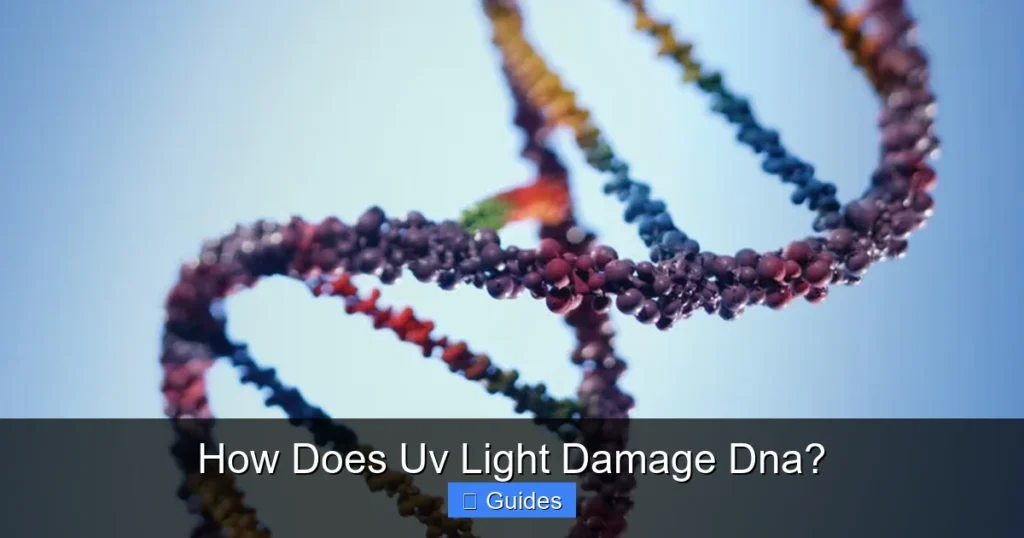
UV light, especially UVB rays, significantly damages our DNA by creating abnormal bonds called pyrimidine dimers. These dimers disrupt DNA’s normal structure and function, leading to errors in replication and transcription. This fundamental harm can result in mutations, premature skin aging, and an increased risk of various skin cancers, highlighting the critical need for sun protection.
How Does Uv Light Damage Dna?
Ever wondered why spending too much time in the sun can be risky, beyond just getting a sunburn? It all comes down to something incredibly tiny yet fundamentally important: your DNA. That invisible light from the sun, specifically ultraviolet (UV) light, has a fascinating and sometimes frightening interaction with the very blueprint of your life. Understanding how UV light damages DNA isn’t just a science lesson; it’s a critical piece of knowledge for protecting your health.
We often associate sun exposure with a nice tan or, unfortunately, a painful burn. But beneath the surface, at a molecular level, the story is far more complex. Each time your skin is exposed to UV radiation, photons of light energy are absorbed by your cells. And when these photons hit the right molecules within your DNA, they can cause changes that range from minor glitches to significant structural breaks. These changes are what initiate a cascade of events that can lead to premature aging, and more seriously, skin cancer.
So, let’s dive into the fascinating world of our cells and unravel the precise mechanisms by which UV light damages DNA. We’ll explore the different types of UV rays, how they interact with our genetic material, the consequences of this damage, and what our amazing bodies do to try and fix it. Most importantly, we’ll equip you with practical tips to safeguard your precious DNA from the sun’s powerful rays.
Key Takeaways
- UV Light Spectrum: Ultraviolet light is categorized into UVA, UVB, and UVC. While UVC is mostly absorbed by the ozone layer, UVA and particularly UVB rays penetrate the skin and are primarily responsible for DNA damage.
- Pyrimidine Dimers are Key: The most common form of UV-induced DNA damage involves the formation of pyrimidine dimers (e.g., cyclobutane pyrimidine dimers – CPDs), where adjacent pyrimidine bases (thymine or cytosine) on a DNA strand abnormally bond together.
- Disruption of DNA Function: These dimers cause distortions or kinks in the DNA double helix, which interferes with vital cellular processes like DNA replication (copying DNA for cell division) and transcription (reading DNA to make proteins), leading to errors.
- Cellular Consequences: If not repaired, UV-induced DNA damage can trigger cell cycle arrest, programmed cell death (apoptosis), or, most critically, mutations. These mutations can alter gene function, potentially leading to uncontrolled cell growth.
- Link to Skin Cancer: Accumulated and unrepaired DNA damage, particularly in critical genes that control cell growth (like tumor suppressor genes or oncogenes), is a primary cause of skin cancers, including basal cell carcinoma, squamous cell carcinoma, and melanoma.
- Body’s Repair Mechanisms: Our cells possess sophisticated DNA repair systems, predominantly Nucleotide Excision Repair (NER), which work to identify and correct UV-induced damage. However, these systems can be overwhelmed or become less efficient over time.
- Prevention is Crucial: The most effective way to prevent UV light damage to DNA is through proactive protection, including seeking shade, wearing protective clothing, using broad-spectrum sunscreen, and avoiding tanning beds.
Quick Answers to Common Questions
What are the three types of UV light?
The three types of UV light are UVA, UVB, and UVC. UVA has the longest wavelength and penetrates deepest, UVB causes sunburn and direct DNA damage, and UVC is mostly absorbed by the ozone layer.
What is a pyrimidine dimer?
A pyrimidine dimer is an abnormal chemical bond formed between two adjacent pyrimidine bases (thymine or cytosine) on the same strand of DNA, primarily caused by UV radiation.
How do pyrimidine dimers affect DNA function?
Pyrimidine dimers distort the DNA double helix, hindering essential cellular processes like DNA replication and transcription, which can lead to errors (mutations) or block these processes entirely.
What is the body’s main repair mechanism for UV-damaged DNA?
The body’s main repair mechanism for UV-damaged DNA, specifically pyrimidine dimers, is Nucleotide Excision Repair (NER), which recognizes, removes, and replaces the damaged section of the DNA strand.
Can UVA light also damage DNA?
Yes, while UVB is known for direct DNA damage, UVA light can also damage DNA indirectly by generating reactive oxygen species (free radicals) that cause oxidative stress and subsequent damage to DNA bases and strands.
📑 Table of Contents
The Science of UV Light: Understanding the Rays
Before we talk about damage, let’s get to know the culprit a little better. What exactly is UV light?
What is UV Light?
Ultraviolet light is a form of electromagnetic radiation, just like visible light, radio waves, or X-rays. What makes UV light unique is its shorter wavelength and higher energy compared to visible light, which means it carries more punch. We can’t see it with our eyes, but we certainly feel its effects on our skin.
Types of UV Rays
Not all UV light is created equal. Scientists categorize UV radiation into three main types based on their wavelength:
- UVA (Ultraviolet A): These rays have the longest wavelength and make up about 95% of the UV radiation that reaches the Earth’s surface. UVA can penetrate deeply into the skin, reaching the dermis, the skin’s thickest layer. While traditionally thought to be less harmful than UVB, we now know that UVA contributes significantly to skin aging and can also play a role in skin cancer development.
- UVB (Ultraviolet B): These rays have a shorter wavelength than UVA and are the primary cause of sunburn. UVB radiation is largely responsible for how UV light damages DNA directly. It doesn’t penetrate as deeply as UVA, mainly affecting the epidermis (the outermost layer of skin), but its higher energy makes it more potent in causing immediate damage.
- UVC (Ultraviolet C): These rays have the shortest and most energetic wavelength. Thankfully, UVC radiation is almost entirely absorbed by the Earth’s ozone layer and does not reach the surface. However, artificial UVC sources (like germicidal lamps) are used for sterilization and can be extremely dangerous if proper precautions aren’t taken.
For our discussion on how UV light damages DNA, we’ll primarily focus on the effects of UVA and, especially, UVB rays, as these are the ones we encounter daily from the sun.
Where Do We Encounter UV Light?
The sun is by far the most significant natural source of UV light. However, artificial sources also exist:
- Tanning Beds: These emit primarily UVA radiation, often at intensities significantly higher than the midday sun, and sometimes a smaller amount of UVB. They pose a serious risk for DNA damage and skin cancer.
- Germicidal Lamps: Used for sterilization in hospitals and laboratories, these lamps emit UVC radiation.
- Welding Arcs: Produce UV radiation that can cause damage to the eyes and skin if unprotected.
DNA: Our Genetic Blueprint
Visual guide about How Does Uv Light Damage Dna?
Image source: nailicy.com
To truly grasp how UV light damages DNA, let’s quickly review what DNA is and why it’s so crucial.
The Structure of DNA
DNA, or deoxyribonucleic acid, is often described as the “blueprint of life.” It’s a complex molecule found in virtually every cell of our body. Imagine a twisted ladder – that’s the famous double helix structure of DNA. The “rungs” of this ladder are made up of pairs of chemical building blocks called nucleotides. There are four types of nucleotides: Adenine (A), Thymine (T), Cytosine (C), and Guanine (G). A always pairs with T, and C always pairs with G. The sequence of these A, T, C, G bases carries all the genetic instructions that make you, well, you!
Why DNA is So Important
DNA holds the instructions for building and operating every part of your body. It dictates everything from your eye color to how your cells grow, divide, and function. When cells divide, they need to make an exact copy of their DNA to pass on to the new daughter cells. This process, called DNA replication, must be incredibly precise. DNA also serves as a template for making proteins, which do most of the work in cells and are required for the structure, function, and regulation of the body’s tissues and organs.
Any errors or damage to this blueprint can have serious consequences because it can alter the instructions, leading to faulty proteins or improper cell function. This is precisely why understanding how UV light damages DNA is so critical.
How Does UV Light Damage DNA? The Molecular Mechanisms
Now for the nitty-gritty: the direct interaction between UV light and our DNA. This is where the damage truly begins.
Pyrimidine Dimers: The Main Culprit
When UV light, particularly UVB, penetrates skin cells, its energy can be absorbed by the DNA. The most common and well-understood form of UV-induced DNA damage is the formation of what are called “pyrimidine dimers.”
Imagine two adjacent pyrimidine bases on the same strand of your DNA – typically two thymines (T-T), but sometimes a thymine and a cytosine (T-C), or two cytosines (C-C). The energy from UV photons can cause these neighboring bases to abnormally bond with each other. Instead of simply being part of the linear DNA strand, they form a new, abnormal chemical bond, creating a “dimer.”
The two most common types of pyrimidine dimers are:
- Cyclobutane Pyrimidine Dimers (CPDs): These are the most frequent type, accounting for about 75-80% of all UV-induced DNA lesions. In CPDs, the C5 and C6 carbons of adjacent pyrimidine bases bond together, forming a four-membered ring structure.
- 6-4 Photoproducts (6-4PPs): These are less frequent but more distorting. They involve a bond between the C6 of one pyrimidine and the C4 of the adjacent pyrimidine.
These dimers are literally kinks or bumps in the DNA strand. Think of it like a perfectly straight railway track suddenly having two sleepers welded together at an odd angle, creating a bump.
How Dimers Disrupt DNA Structure
The formation of pyrimidine dimers causes significant problems because they distort the smooth, elegant double helix structure of DNA. This distortion has severe implications for the cell’s machinery:
- DNA Replication Errors: When a cell tries to copy its DNA before dividing, the replication machinery (DNA polymerase) encounters these dimers. It can either stop completely, leading to stalled replication, or it might try to “skip over” the dimer, inserting incorrect bases in the new DNA strand. This leads to mutations.
- Transcription Errors: Similarly, when the cell tries to read the DNA to make proteins (transcription), a dimer can block the RNA polymerase enzyme, preventing the gene from being properly expressed.
- Altered Gene Function: Even if replication or transcription proceeds, the presence of these dimers or the mutations they cause can change the genetic code. If these changes occur in crucial genes that regulate cell growth and division, it can have serious consequences.
This is the core of how UV light damages DNA: it directly modifies the chemical structure of the genetic code, leading to functional impairments.
Other Forms of UV Damage
While pyrimidine dimers are the stars of the show, UV light can also cause other types of damage:
- Oxidative Damage: UVA rays, in particular, can generate reactive oxygen species (ROS), also known as free radicals, within cells. These highly reactive molecules can then attack DNA, causing oxidative damage to bases (like forming 8-oxoguanine) and even leading to single-strand breaks in the DNA backbone.
- Single and Double-Strand Breaks: Although less common for direct UV exposure, prolonged or intense UV radiation, often in combination with oxidative stress, can lead to breaks in one or both strands of the DNA helix. Double-strand breaks are particularly dangerous as they are harder to repair and can lead to large-scale chromosomal rearrangements.
The Consequences of UV-Damaged DNA
When UV light damages DNA, the cell has to respond. The outcome depends on the extent of the damage and the cell’s ability to fix it.
Cell Cycle Arrest and Apoptosis
Our cells have sophisticated internal checkpoints. If significant DNA damage is detected, a cell might pause its division cycle (cell cycle arrest) to allow time for repair. If the damage is too extensive to be repaired, the cell might initiate programmed cell death, or apoptosis. This is a crucial protective mechanism to prevent damaged cells from multiplying and potentially becoming cancerous. Think of it as the body’s self-destruct button for faulty cells.
Mutations and Their Impact
If the DNA damage is not repaired correctly, or if the repair system makes a mistake, it can lead to permanent changes in the DNA sequence – a mutation. Mutations can be:
- Point Mutations: Where one base is swapped for another.
- Deletions: Where one or more bases are lost.
- Insertions: Where one or more bases are added.
These mutations can be silent (have no effect), beneficial (rare), or harmful. When these mutations occur in genes that control cell growth, repair, or programmed cell death, they can be particularly dangerous.
Skin Cancer: A Direct Link
The most severe consequence of UV-damaged DNA is skin cancer. Accumulated, unrepaired mutations in skin cells can lead to uncontrolled cell growth and division.
- Basal Cell Carcinoma (BCC) and Squamous Cell Carcinoma (SCC): These are the most common types of skin cancer. They are strongly linked to chronic, cumulative sun exposure. UV-induced mutations in genes like the PTCH1 gene (involved in the Hedgehog signaling pathway) for BCCs, or p53 (a tumor suppressor gene) for SCCs, are frequently found.
- Melanoma: This is the most aggressive and life-threatening form of skin cancer. While less common, it accounts for the majority of skin cancer deaths. Melanoma is often associated with intense, intermittent sun exposure (like blistering sunburns) early in life. Mutations in genes such as BRAF and CDKN2A are often found in melanoma cells, many of which can be traced back to UV-induced damage.
The more UV light damages DNA over a person’s lifetime, the higher their risk of developing these cancers.
Premature Aging (Photoaging)
Beyond cancer, chronic exposure to UV radiation also significantly contributes to the visible signs of aging, known as photoaging. This includes:
- Wrinkles and Fine Lines: UV light degrades collagen and elastin fibers in the skin, which are responsible for its elasticity and firmness.
- Sunspots and Uneven Pigmentation: UV exposure triggers melanocytes (pigment-producing cells) to produce melanin erratically, leading to dark spots (solar lentigines) and an uneven skin tone.
- Loss of Elasticity: The breakdown of supporting structures makes the skin sag and lose its youthful resilience.
These visible changes are a direct result of cellular damage and inflammation caused by UV radiation, affecting not just DNA but also other cellular components.
Immune System Suppression
UV light can also suppress the local and systemic immune system. This makes it harder for the body to fight off infections and even to detect and eliminate early cancer cells, further increasing the risk of tumor development.
Our Body’s Defense and Repair Mechanisms
Thankfully, our cells aren’t defenseless against UV light damage. They have evolved sophisticated repair systems.
DNA Repair Pathways
The primary way our body deals with UV-induced DNA damage is through a process called **Nucleotide Excision Repair (NER)**. Think of NER as a highly skilled repair crew.
Here’s how NER generally works:
1. Damage Recognition: Specialized proteins constantly patrol the DNA, looking for distortions or “bulky lesions” like pyrimidine dimers.
2. Unwinding: Once a dimer is detected, the DNA helix is locally unwound around the damaged area.
3. Excision: A section of the damaged DNA strand, typically 24-32 nucleotides long and containing the dimer, is precisely cut out by enzymes.
4. Synthesis: DNA polymerase enzymes then fill in the gap by synthesizing new DNA, using the undamaged complementary strand as a template.
5. Ligation: Finally, DNA ligase seals the new segment into the DNA backbone, completing the repair.
Other repair mechanisms like Base Excision Repair (BER) primarily deal with smaller, non-helix-distorting base damages (often from oxidative stress), and Mismatch Repair (MMR) corrects errors made during DNA replication. However, NER is the main hero against UV-induced pyrimidine dimers.
The Limitations of Repair
While incredibly efficient, our DNA repair systems aren’t perfect.
- Overload: If the UV exposure is too intense or prolonged, the number of dimers can overwhelm the repair machinery.
- Errors: Sometimes, in a rush to repair or if certain enzymes are faulty, the repair process itself can introduce new errors or mutations.
- Genetic Predispositions: Some individuals have genetic conditions (like xeroderma pigmentosum) where their NER pathway is deficient, making them incredibly sensitive to UV light and highly prone to skin cancer at a young age.
- Aging: The efficiency of DNA repair mechanisms can decline with age, making older individuals more vulnerable to accumulated damage.
Melanin: Our Natural Sunscreen
Another important defense mechanism is melanin, the pigment that gives our skin, hair, and eyes their color. Melanin acts like a natural sunscreen, absorbing UV radiation and dissipating it as heat before it can reach and damage the DNA in the deeper layers of skin cells. People with darker skin tones have more melanin and are generally less susceptible to sunburn and the immediate effects of UV exposure, though they are not immune to UV damage and cancer risk.
Protecting Yourself: Practical Tips to Prevent UV Damage
Knowing how UV light damages DNA empowers us to take proactive steps. Preventing damage is always better than relying on repair.
Seek Shade
One of the simplest and most effective strategies. The sun’s UV rays are strongest between 10 AM and 4 PM. If your shadow is shorter than you are, the UV index is high. Plan outdoor activities for earlier or later in the day.
Wear Protective Clothing
Not all clothing is created equal. Loose-fitting, long-sleeved shirts and long pants made from tightly woven fabrics offer excellent protection. Look for clothing with an Ultraviolet Protection Factor (UPF) label, which indicates how much UV radiation the fabric blocks. A UPF of 30+ is considered good protection.
Use Sunscreen Religiously
Choose a broad-spectrum sunscreen that protects against both UVA and UVB rays, with an SPF (Sun Protection Factor) of 30 or higher. Apply it generously 15-30 minutes before going outside, and reapply at least every two hours, or more frequently if swimming or sweating. Don’t forget often-missed spots like ears, neck, tops of feet, and lips.
Sunglasses and Hats
Protect your eyes and scalp. Sunglasses that block 99-100% of UVA and UVB rays are essential for preventing damage to your eyes and the delicate skin around them. A wide-brimmed hat (at least 3-inch brim) protects your face, ears, and neck, areas highly susceptible to UV damage.
Avoid Tanning Beds
Tanning beds expose you to concentrated UV radiation, often mostly UVA, which contributes to premature aging and significantly increases your risk of skin cancer. There’s no such thing as a “safe” tan from a tanning bed.
Regular Skin Checks
Be proactive about detecting any changes. Regularly examine your skin for new moles or changes in existing ones. If you notice anything suspicious (asymmetry, irregular borders, uneven color, diameter larger than 6mm, or evolving changes), consult a dermatologist immediately. Early detection can be life-saving.
Conclusion
The sun is vital for life, bringing warmth and light, and even playing a role in Vitamin D production. However, its ultraviolet rays, particularly UVB, pose a significant threat to our cellular integrity. Understanding how UV light damages DNA, primarily through the formation of pyrimidine dimers that distort our genetic blueprint, is fundamental to appreciating the importance of sun protection.
This damage isn’t just an abstract scientific concept; it’s the direct cause of genetic mutations that can lead to skin cancer, premature aging, and immune suppression. While our bodies possess remarkable DNA repair mechanisms, these systems have their limits and can be overwhelmed or become less efficient over time.
By embracing simple, consistent sun-safe practices – seeking shade, wearing protective clothing, using broad-spectrum sunscreen, and avoiding tanning beds – you can significantly reduce the risk of UV light damaging DNA and safeguard your health for years to come. Your DNA is your unique instruction manual; treat it with the care it deserves!
🎥 Related Video: How UV Rays Damage Skin
📺 DocUnlock
UV radiation is a known cause of skin cancers such as Melanoma, Squamous Cell Carcinoma and Basal Cell Carcinoma.
Frequently Asked Questions
How quickly can UV light damage DNA?
UV light can begin to damage DNA almost immediately upon exposure. The accumulation of these damages, especially from intense or prolonged exposure, is what leads to significant issues over time, like sunburn and increased cancer risk.
Is DNA damage from UV light reversible?
Yes, to a certain extent. Our cells have sophisticated DNA repair mechanisms, like Nucleotide Excision Repair (NER), that can identify and correct UV-induced damage, such as pyrimidine dimers. However, these systems can be overwhelmed or become less efficient, leading to unrepaired damage and mutations.
Does indoor lighting or computer screens emit enough UV to damage DNA?
Most common indoor lighting (LED, fluorescent) and computer screens emit negligible or no harmful UV radiation. While some older fluorescent lights might emit tiny amounts, it’s generally considered insufficient to cause significant DNA damage compared to sunlight.
Are all types of skin equally susceptible to UV DNA damage?
While all skin types are susceptible to UV DNA damage, individuals with lighter skin tones (less melanin) are more prone to sunburn and immediate visible damage because they have less natural UV protection. However, darker skin tones are not immune to damage and still require sun protection.
What are some long-term consequences of unrepaired UV DNA damage?
Long-term consequences of unrepaired UV DNA damage include premature skin aging (photoaging with wrinkles, sunspots), a weakened immune system, and, most significantly, an increased risk of developing various forms of skin cancer, including basal cell carcinoma, squamous cell carcinoma, and melanoma.
Does sunscreen completely prevent UV light from damaging DNA?
No, sunscreen does not completely prevent UV light from damaging DNA, but it significantly reduces it. Sunscreen acts as a protective barrier, absorbing or reflecting UV radiation, thereby reducing the amount that penetrates the skin and reaches the DNA. It’s a crucial tool in a comprehensive sun protection strategy.
