


UV light, specifically UV-C, is a powerful natural disinfectant. It works by damaging the DNA and RNA of bacteria and other microorganisms, making them unable to reproduce and effectively “killing” them. This chemical-free method is widely used for sterilizing air, water, and surfaces, offering an efficient and environmentally friendly way to reduce pathogens.
Have you ever wondered about the invisible forces at play around us, keeping us safe from microscopic invaders? One such powerful force is ultraviolet (UV) light, a silent guardian in the fight against germs. You might already know that sunlight contains UV rays, and while we’re often warned about its potential harm to our skin, there’s a specific type of UV light that’s incredibly beneficial: UV-C. This particular wavelength holds a remarkable secret – it’s a potent weapon against bacteria, viruses, and other pesky microorganisms.
Imagine a world where you could purify water, sterilize air, and disinfect surfaces without a single drop of harsh chemicals. This isn’t science fiction; it’s the reality brought to us by UV-C technology. For decades, scientists and engineers have harnessed the power of how UV light kills bacteria, making our environments cleaner and safer. But how does this invisible light achieve such impressive feats? Let’s peel back the layers and explore the fascinating science behind UV light’s germicidal prowess.
In this guide, we’ll dive deep into the world of ultraviolet light, uncovering its different types, and focusing on the amazing way UV light kills bacteria. We’ll explore the cellular science, the wide array of applications for UV disinfection, and important safety considerations. By the end, you’ll have a clear understanding of this incredible technology that helps protect our health every day.
Key Takeaways
- Understanding UV Light: Ultraviolet (UV) light is a type of electromagnetic radiation, invisible to the human eye. It’s categorized into UV-A, UV-B, and UV-C, with UV-C (200-280 nm) being the germicidal wavelength most effective at killing bacteria.
- The Germicidal Mechanism: UV-C light kills bacteria primarily by damaging their genetic material (DNA and RNA). It creates “dimers” within the DNA strands, which are essentially molecular roadblocks that prevent the bacteria from replicating and performing essential cellular functions.
- Broad-Spectrum Effectiveness: UV-C disinfection is effective against a wide range of microorganisms, including bacteria, viruses, molds, and spores, without needing chemicals. This makes it a versatile tool for sterilization.
- Diverse Applications: UV-C technology is used in various settings, from purifying drinking water and treating wastewater to sterilizing hospital surfaces, air purification systems, and even household appliances.
- Chemical-Free Disinfection: One of the major advantages of UV light is that it doesn’t introduce chemicals into the environment or treated substances, preventing the formation of harmful byproducts and making it environmentally friendly.
- Safety is Key: While incredibly effective, direct exposure to UV-C light is harmful to human skin and eyes. Therefore, UV disinfection systems are designed with safety features, such as enclosed units or automatic shut-offs, and proper protective measures must always be observed.
Quick Answers to Common Questions
What type of UV light kills bacteria?
UV-C light, specifically wavelengths between 200-280 nanometers, is the most effective at killing bacteria and other microorganisms.
How does UV light damage bacteria?
UV light damages the DNA and RNA of bacteria, creating molecular “dimers” that prevent them from replicating or performing essential cellular functions.
Is UV light disinfection safe for humans?
Direct exposure to UV-C light is harmful to human skin and eyes. Most systems are designed to be enclosed or shielded to ensure safety, and proper protective measures must always be used with open sources.
Can UV light penetrate surfaces or shadows?
No, UV light only disinfects surfaces that it can directly illuminate. It cannot penetrate opaque objects, shadows, or even thick layers of dirt or dust.
Is UV disinfection environmentally friendly?
Yes, UV disinfection is considered environmentally friendly because it is a chemical-free process that doesn’t produce harmful byproducts or residues.
📑 Table of Contents
- What Exactly Is UV Light, and Which Type Kills Bacteria?
- The Science Behind UV Disinfection: How UV Light Kills Bacteria at a Cellular Level
- Types of UV-C Disinfection Systems and Their Applications
- Benefits of UV Disinfection
- Safety Considerations and Proper Use of UV Light
- Common Misconceptions and the Future of UV Technology
- Conclusion
What Exactly Is UV Light, and Which Type Kills Bacteria?
Before we talk about how UV light kills bacteria, let’s understand what UV light actually is. Ultraviolet light is a form of electromagnetic radiation, just like visible light, radio waves, or X-rays. What makes them different is their wavelength. UV light has shorter wavelengths than visible light, which means it carries more energy. It’s invisible to the human eye, which is why we can’t see it working its magic.
The UV spectrum is divided into three main categories:
UV-A (315-400 nanometers)
This is the longest wavelength UV light and makes up the majority of the UV radiation that reaches the Earth’s surface. It’s associated with skin aging and, to a lesser extent, skin cancer. You might encounter UV-A in tanning beds. While it has some minor germicidal properties, it’s not the primary player when it comes to effectively killing bacteria.
UV-B (280-315 nanometers)
UV-B rays are shorter and more energetic than UV-A. They are the main cause of sunburn and significantly contribute to skin cancer risk. While UV-B has a stronger effect on microorganisms than UV-A, it’s still not the most efficient for disinfection purposes compared to its more powerful sibling.
UV-C (200-280 nanometers)
This is the star of our show! UV-C light has the shortest wavelength and highest energy within the UV spectrum. Fortunately, most natural UV-C from the sun is absorbed by the Earth’s ozone layer and doesn’t reach us. However, we can generate UV-C light artificially using special lamps. This specific range, particularly around 254 nanometers, is known as germicidal UV (GUV) or germicidal ultraviolet irradiation, and it’s incredibly effective at how UV light kills bacteria. It’s this high energy that allows UV-C to disrupt the fundamental building blocks of life in microorganisms.
The Science Behind UV Disinfection: How UV Light Kills Bacteria at a Cellular Level
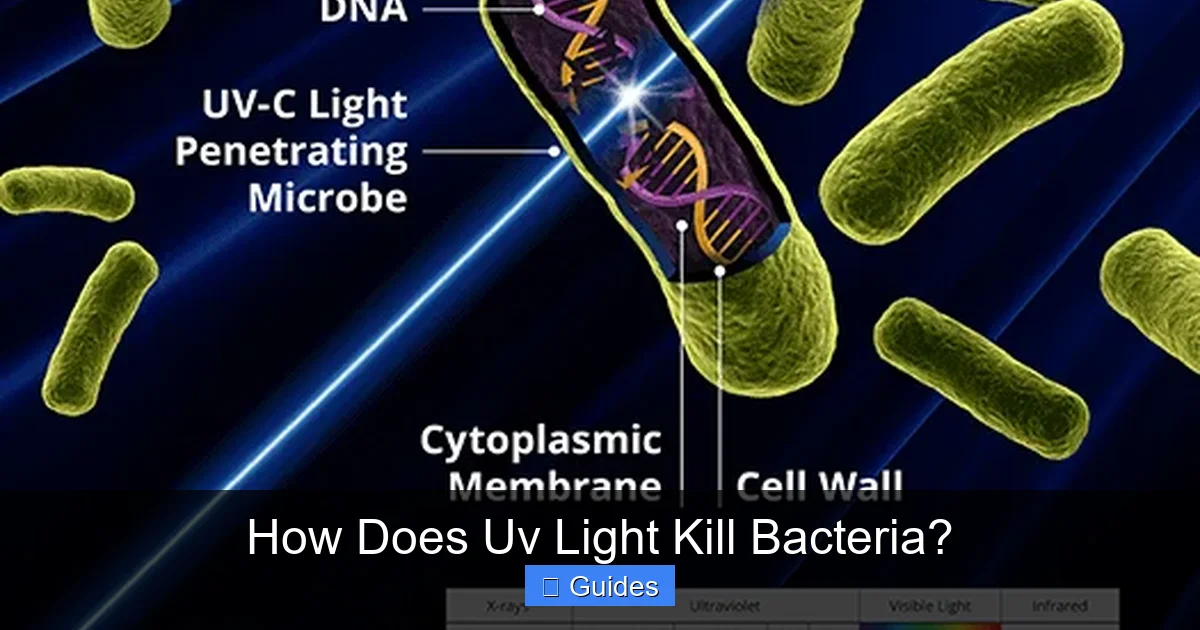
Visual guide about How Does Uv Light Kill Bacteria?
Image source: aerapyanimalhealth.com
Now for the exciting part: understanding the precise mechanism of how UV light kills bacteria. It’s all about attacking their most vulnerable point – their genetic material.
Targeting DNA and RNA
Every living organism, including bacteria, relies on DNA (deoxyribonucleic acid) or RNA (ribonucleic acid) to carry its genetic instructions. This genetic code is crucial for survival, guiding all cellular processes, including growth, repair, and most importantly, reproduction. When UV-C light comes into contact with a bacterium, its high energy is absorbed by the DNA and RNA molecules inside the cell.
Creating Pyrimidine Dimers: The Molecular Roadblock
The absorption of UV-C energy causes a specific type of damage within the DNA or RNA structure. It primarily targets two of the DNA bases, thymine and cytosine. When two adjacent thymine or cytosine molecules absorb UV-C energy, they can bond together abnormally, forming what are called “pyrimidine dimers.” Think of these dimers as molecular kinks or roadblocks in the DNA strand.
Disrupting Replication and Repair
Once these dimers form, the bacterium’s genetic machinery gets confused. When the bacterium tries to replicate its DNA to divide and multiply, or when it tries to repair itself, these dimers prevent the normal reading and copying of the genetic code. It’s like trying to read a sentence with several letters scrambled or missing – the message becomes unintelligible. The bacterium simply cannot accurately replicate its DNA.
Because the bacterium can’t replicate or perform essential cellular functions due to the damaged DNA, it becomes “inactivated.” It can no longer multiply, spread, or cause infection. While technically the bacterium might still be physically present, it’s rendered harmless because it’s biologically dead. This is the core mechanism of how UV light kills bacteria so effectively.
Why It’s So Effective
The beauty of this mechanism is its direct and universal nature. All known bacteria, viruses, molds, and yeasts use DNA or RNA as their genetic material, making them susceptible to UV-C radiation. There’s no escaping the germicidal power of UV light when applied correctly.
Types of UV-C Disinfection Systems and Their Applications
The understanding of how UV light kills bacteria has led to a wide range of practical applications across many industries. From large-scale industrial uses to compact household devices, UV-C technology plays a crucial role in maintaining hygiene and preventing the spread of pathogens.
Water Purification
This is one of the most common and vital applications. UV water purifiers are used in:
- Drinking Water Treatment: Municipal water treatment plants use UV-C to disinfect water after filtration, providing an extra layer of protection against bacteria, viruses, and protozoa like Giardia and Cryptosporidium, which are resistant to chlorine.
- Wastewater Treatment: UV is often used as a final disinfection step in wastewater treatment facilities before water is discharged back into the environment. It reduces the reliance on chemicals and their potential byproducts.
- Point-of-Use Systems: Many homes and businesses use smaller UV systems to purify their tap water, especially in areas where water quality is a concern.
- Aquariums and Ponds: UV sterilizers help control algae, bacteria, and parasites, keeping the water clear and healthy for aquatic life.
Air Disinfection
Maintaining clean air is essential, especially in enclosed spaces. UV-C systems for air purification can be found in:
- HVAC Systems: UV lamps are installed within heating, ventilation, and air conditioning ducts to disinfect the air as it circulates. This helps to reduce airborne bacteria, viruses, mold spores, and allergens throughout buildings.
- Hospitals and Healthcare Facilities: These environments heavily rely on UV-C to sterilize air in patient rooms, operating theaters, and isolation wards, significantly reducing the risk of healthcare-associated infections.
- Schools and Offices: Growing awareness of airborne disease transmission has led to increased adoption of UV air purifiers in public and commercial buildings.
- Portable Air Purifiers: Many modern air purifiers include a UV-C stage to destroy airborne microorganisms alongside filtration.
Surface Disinfection
Direct UV-C exposure can sanitize surfaces effectively. This application is crucial in many settings:
- Hospitals and Clinics: UV-C robots or manual UV-C wands are used to disinfect surfaces in patient rooms, operating rooms, and equipment after cleaning, targeting bacteria that might remain.
- Food Processing Plants: To prevent contamination and extend shelf life, UV-C is used to sterilize conveyor belts, processing equipment, and even food surfaces.
- Laboratories: UV-C lights are used in biological safety cabinets and cleanrooms to sterilize equipment and work surfaces, maintaining sterile conditions.
- Commercial and Retail: There’s a growing trend to use UV-C for disinfecting high-touch surfaces like shopping carts, payment terminals, and public transport interiors.
- Personal Sterilizers: Small UV-C devices are available for sanitizing items like smartphones, keys, baby bottles, and toothbrushes.
Benefits of UV Disinfection
Understanding how UV light kills bacteria also highlights why it’s such an appealing disinfection method. Its advantages are numerous and make it a preferred choice in many situations.
Chemical-Free Process
Perhaps the biggest benefit is that UV disinfection does not use chemicals. This means no chemical storage, handling, or residues. It also eliminates the risk of harmful chemical byproducts, which can occur with traditional chemical disinfectants like chlorine. This is particularly important for drinking water, where chemical byproducts can pose health risks.
Environmentally Friendly
Because it’s chemical-free, UV light disinfection is an environmentally sustainable option. It doesn’t discharge pollutants into the air or water, making it a “green” technology.
Effective Against a Broad Spectrum of Pathogens
As discussed, UV-C targets the fundamental genetic material of microorganisms. This means it’s effective against a vast array of pathogens, including:
- Bacteria (e.g., E. coli, Salmonella, MRSA)
- Viruses (e.g., Influenza, Coronaviruses, Norovirus)
- Molds and Fungi
- Protozoa (e.g., Giardia, Cryptosporidium), which are often resistant to chlorine.
Fast and Efficient
UV-C disinfection works almost instantaneously upon exposure. There’s no need for contact time or complex chemical reactions. Once the light shines on the pathogen, the damage begins. This allows for continuous treatment of flowing water or air, and rapid disinfection of surfaces.
No Alteration of Water Properties
Unlike chemical treatments that can alter the taste, odor, or pH of water, UV disinfection leaves the water’s properties unchanged. This is a significant advantage for drinking water applications.
Cost-Effective in the Long Run
While the initial investment in UV equipment can be comparable to or slightly higher than chemical systems, the operational costs are often lower. There’s no need to purchase and store chemicals, and maintenance primarily involves lamp replacement.
Safety Considerations and Proper Use of UV Light
While incredibly effective at how UV light kills bacteria, it’s crucial to remember that UV-C radiation is powerful and can be harmful to living cells, including our own. Therefore, safety is paramount when using or being near UV-C disinfection systems.
Protecting Your Eyes and Skin
Direct exposure to UV-C light can cause painful and severe eye damage (photokeratitis, similar to a sunburn of the eye) and skin burns. Always avoid looking directly at an active UV-C lamp, and never allow UV-C light to shine on your skin.
- Eye Protection: If working with open UV-C sources, always wear appropriate UV-blocking eyewear designed for UV-C protection.
- Skin Protection: Cover all exposed skin with clothing, or use gloves if direct contact is unavoidable.
Enclosed and Shielded Systems
Most UV-C disinfection systems for water and air are designed to be fully enclosed or shielded, meaning there’s no direct exposure to the UV-C light during operation. For example, UV water purifiers have the lamp safely housed within a chamber, and HVAC UV systems are located inside ducts. These are generally safe for continuous operation in occupied spaces.
Proper Ventilation
Some UV-C lamps (especially older or specialized types) can produce ozone as a byproduct, which is an irritant and harmful to respiratory health. Ensure that any UV-C system in use is either ozone-free or operated in well-ventilated areas where ozone levels are safely managed. Modern germicidal lamps are generally designed to minimize or eliminate ozone production.
Read Manufacturer Guidelines
Always follow the specific instructions and safety warnings provided by the manufacturer of any UV-C device. Different products will have different operational protocols and safety features.
Never Use UV-C Lamps for “Tanning” or Direct Skin Sterilization
Despite some misleading products or ideas, UV-C is NOT for personal skin sterilization or cosmetic use. Its harmful effects on human tissue far outweigh any perceived benefit in that context. Remember, the goal of how UV light kills bacteria is to inactivate microorganisms, not to treat human skin.
Common Misconceptions and the Future of UV Technology
As UV technology becomes more widespread, some misconceptions have arisen. Let’s clarify a few:
UV Light Doesn’t Immediately Destroy Germs into Nothingness
UV-C light inactivates germs by damaging their DNA, preventing them from reproducing. It doesn’t instantly vaporize them. The “dead” microorganisms remain, but they are no longer able to cause infection. For surfaces, cleaning is still necessary to remove physical dirt and dead germs; UV-C provides an added layer of sterilization.
Not All UV Light Is Germicidal
As we’ve learned, only UV-C light (specifically 200-280 nm) is effectively germicidal. UV-A and UV-B have some minor effects but are not used for serious disinfection.
UV Light Doesn’t Penetrate Opaque Surfaces
UV light only works on surfaces it can directly shine on. It cannot penetrate objects, shadows, or even layers of dust or dirt. This is why proper cleaning before UV disinfection is essential for surfaces, and why water or air must be clear enough for UV light to pass through.
The Future Is Bright (and UV-C Powered)
The field of UV technology is continuously evolving. Researchers are developing new types of UV lamps, like Far-UVC (207-222 nm), which shows promise for being effective against pathogens but potentially safer for human exposure. This could lead to new applications where UV-C can be safely used in occupied spaces. Smart UV systems that automatically monitor and adjust intensity are also emerging, making disinfection even more efficient and user-friendly. The continued innovation in how UV light kills bacteria will undoubtedly lead to even more sophisticated and integrated solutions for public health and safety.
Conclusion
The invisible power of UV light, particularly UV-C, offers a fascinating and highly effective method for disinfection. By targeting the very genetic core of bacteria, viruses, and other microorganisms, UV-C light inactivates them, preventing their reproduction and spread. From ensuring clean drinking water to sterilizing hospital environments and purifying the air we breathe, the applications of this technology are vast and impactful.
Understanding how UV light kills bacteria not only highlights its efficiency as a chemical-free and environmentally friendly solution but also underscores the importance of proper safety measures. As technology advances, we can expect even more innovative and safer ways to harness the germicidal power of UV light, further protecting our health and well-being in an increasingly complex microbial world. UV disinfection truly is a testament to nature’s own methods, amplified by human ingenuity, to create healthier living spaces for everyone.
🎥 Related Video: UV Light vs Germs Under Microscope
📺 CloseIntel
Frequently Asked Questions
What are pyrimidine dimers and why are they important in UV disinfection?
Pyrimidine dimers are abnormal bonds formed between adjacent thymine or cytosine molecules in a bacterium’s DNA when exposed to UV-C light. They are crucial because they act as roadblocks, preventing the bacterium’s genetic machinery from accurately replicating or repairing its DNA, thus inactivating the organism.
Can bacteria develop resistance to UV light?
Unlike chemical disinfectants, bacteria cannot develop resistance to UV-C light in the traditional sense, as it attacks their fundamental genetic structure. However, some bacteria may have more robust DNA repair mechanisms, requiring higher UV doses for inactivation.
Is UV light effective against viruses as well as bacteria?
Yes, UV light is highly effective against viruses, as viruses also rely on DNA or RNA as their genetic material. The mechanism of damage is similar: UV-C light disrupts their genetic code, preventing them from replicating and infecting host cells.
Where is UV disinfection commonly used?
UV disinfection is widely used in water treatment facilities for drinking water and wastewater, in HVAC systems for air purification, in hospitals and laboratories for sterilizing surfaces and equipment, and in food processing to prevent contamination.
Does UV light remove odors or physical dirt?
While UV light kills odor-causing bacteria and mold, it does not remove physical dirt, dust, or other particles. For surfaces, cleaning is still necessary before UV disinfection, and for air and water, filtration is often used in conjunction with UV to remove physical impurities.
How often do UV-C lamps need to be replaced?
The lifespan of UV-C lamps varies by manufacturer and type, but they typically need replacement every 9,000 to 12,000 hours of continuous operation (roughly once a year for continuous use). Although the lamp may still glow, its germicidal intensity diminishes over time, making replacement crucial for effective disinfection.
