


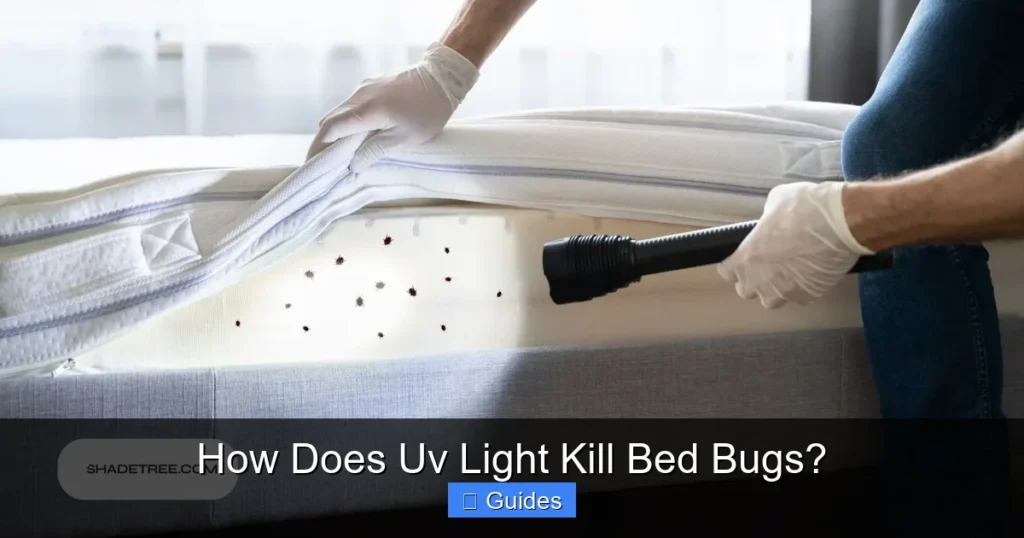
UV light can kill bed bugs by damaging their DNA and cells, particularly potent UVC light. However, its effectiveness is severely limited because bed bugs hide in cracks and crevices, requiring direct and prolonged exposure to be lethal. While it has some potential for surface sterilization, UV light is not a standalone solution for eradicating a bed bug infestation due to its inability to reach hidden pests and eggs.
How Does Uv Light Kill Bed Bugs?
Imagine waking up to itchy red welts on your skin, a tell-tale sign of an unwanted guest: bed bugs. These tiny, nocturnal pests are a nightmare for homeowners and travelers alike, notoriously difficult to get rid of. They hide in the smallest cracks and crevices, emerging at night to feed on your blood, turning your peaceful sleep into a nightmare. The battle against bed bugs often feels relentless, leading many to explore every possible solution, from traditional pesticides to innovative high-tech gadgets.
In this quest for a bed bug-free home, one technology that often sparks interest is UV light. You might have seen handheld UV wands advertised as bed bug killers or wondered if the sun’s powerful rays could do the trick. The idea is certainly appealing – a clean, chemical-free way to eliminate these bloodsuckers. But how exactly does UV light work, and more importantly, can UV light kill bed bugs effectively? Is it the silver bullet we’ve all been searching for, or just another myth in the complex world of pest control?
Today, we’re going to dive deep into the science behind UV light and its potential impact on bed bugs. We’ll explore what UV light is, how it interacts with living organisms, and critically assess its efficacy against these resilient pests. By the end of this article, you’ll have a clear understanding of whether relying on UV light to kill bed bugs is a viable strategy for achieving true peace of mind.
Key Takeaways
- UV-C is the most effective type: UV-C light, the shortest wavelength, is most potent for damaging bed bug DNA and cells, leading to their death.
- Direct exposure is crucial: UV light must directly hit a bed bug for a sufficient duration and intensity to cause harm. Shadows, fabrics, or even dust can block its effect.
- Penetration is a major limitation: UV light cannot penetrate surfaces where bed bugs typically hide, such as deep within mattresses, furniture, walls, or carpets, making it ineffective for hidden pests and eggs.
- Not a standalone solution: Due to their elusive nature and the limitations of UV penetration, UV light is not a reliable or complete method for eradicating an entire bed bug infestation.
- Safety concerns exist: Prolonged exposure to UV-C light is harmful to humans and pets, causing skin and eye damage, necessitating extreme caution during use.
- Potential for surface sanitization: UV-C wands or devices may offer some utility for sanitizing exposed surfaces or items like luggage, but only for visible bugs.
- Best used as part of an integrated approach: For effective bed bug control, UV light should be considered, if at all, as a supplementary tool within a comprehensive strategy that includes professional pest control and other proven methods.
Quick Answers to Common Questions
Can regular sunlight kill bed bugs?
While prolonged, direct exposure to intense summer sun combined with high temperatures might harm some bed bugs on exposed surfaces, regular sunlight (mostly UVA/UVB) is generally not strong enough or sustained enough to be an effective bed bug killer. Bed bugs will simply seek shade.
Are UV wands effective against bed bugs?
UV wands, which typically emit UVC light, can kill individual bed bugs if they receive direct, prolonged, and intense exposure. However, they are highly ineffective for an entire infestation because bed bugs hide in places UV light cannot reach, making wands an impractical and unreliable solution.
Does UV light kill bed bug eggs?
No, UV light does not effectively kill bed bug eggs. Eggs are often laid in hidden crevices and have a protective shell. UV light cannot penetrate these surfaces or the eggshell to damage the embryo inside, allowing the infestation to continue.
Is UV-C light safe to use at home for bed bugs?
UVC light is harmful to humans and pets, causing skin burns and severe eye damage. While devices with safety features exist, using UVC at home requires extreme caution and proper protective equipment, making it risky for DIY bed bug control and generally not recommended.
What is the best non-chemical method to kill bed bugs?
Heat treatment is considered one of the most effective non-chemical methods to kill bed bugs. This involves raising the ambient temperature of an infested area to a lethal level (typically above 120°F or 49°C) for several hours, which can penetrate deep into furniture and walls, killing all life stages.
📑 Table of Contents
Understanding UV Light: The Basics
To understand if UV light can kill bed bugs, we first need to understand what UV light actually is. UV stands for ultraviolet, and it’s a type of electromagnetic radiation, just like visible light, radio waves, or X-rays. What makes UV light different is its wavelength, which is shorter than visible light but longer than X-rays. This shorter wavelength means it carries more energy, and it’s this energy that gives UV light its unique properties – both beneficial and potentially harmful.
The Electromagnetic Spectrum
Think of the electromagnetic spectrum as a giant rainbow of energy, with different “colors” representing different wavelengths. Visible light, the light we can see, sits in the middle. On one end, you have long radio waves, and on the other, super short gamma rays. UV light sits just beyond the violet end of the visible spectrum (hence “ultra-violet”). This position gives it enough energy to interact with molecules at a very fundamental level, which is key to exploring how UV light might kill bed bugs.
Different Types of UV
Not all UV light is created equal. Scientists categorize UV light into three main types based on their wavelengths and energy levels:
- UVA (Long-wave UV): This is the least energetic type, making up about 95% of the UV radiation that reaches the Earth’s surface. It’s associated with skin aging and contributes to tanning. UVA generally doesn’t have enough energy to kill microorganisms effectively.
- UVB (Medium-wave UV): More energetic than UVA, UVB is the primary cause of sunburn and can damage DNA, increasing the risk of skin cancer. A small amount of UVB reaches the Earth, and it’s used by our skin to produce Vitamin D. While more damaging than UVA, its germicidal properties are limited.
- UVC (Short-wave UV): This is the most energetic and dangerous type of UV light. Fortunately, all UVC from the sun is absorbed by the Earth’s ozone layer, so it doesn’t reach us naturally. However, UVC can be artificially produced in special lamps. This type of UV is highly effective at killing bacteria, viruses, and other microorganisms because its short wavelength and high energy are incredibly damaging to DNA. When we talk about UV light killing pests or sanitizing surfaces, we are almost always referring to UVC. So, when discussing if UV light can kill bed bugs, UVC is our focus.
So, when we consider whether UV light can kill bed bugs, we’re primarily focusing on the potent effects of UVC light. The sun’s UV rays (mostly UVA and some UVB) are generally not powerful enough or concentrated enough to be a reliable bed bug killer.
How UV Light Interacts with Living Organisms
Visual guide about How Does Uv Light Kill Bed Bugs?
Image source: images.squarespace-cdn.com
The reason UVC light is considered a germicidal agent – meaning it can kill germs – lies in its ability to interact with the fundamental building blocks of life, particularly DNA and RNA. This interaction is precisely what makes us curious about how UV light can kill bed bugs.
DNA Damage and Cell Death
When UVC light hits a microorganism, its high energy is absorbed by the genetic material (DNA or RNA) within the cells. This absorption causes a specific type of damage called pyrimidine dimers. Imagine the DNA as a ladder; the UV light essentially fuses two rungs together that shouldn’t be connected. This “kink” in the DNA structure prevents the cell from properly replicating its genetic material. It also disrupts normal cellular processes. If the DNA damage is severe enough, the cell cannot repair itself, leading to cell malfunction and ultimately, cell death. This is the core mechanism by which UVC light sterilizes surfaces and explains how UV light can kill bed bugs by damaging their genetic material.
Impact on Insects
Bed bugs, like all living organisms, have DNA. Therefore, theoretically, UVC light has the potential to damage their DNA and disrupt their cellular functions. Studies on various insects have shown that high doses of UVC can indeed cause physiological damage, reproductive issues, and even death. The exoskeleton of an insect, while providing some protection, isn’t completely opaque to UVC light, especially at high intensities and prolonged exposure. The most vulnerable parts would be areas with thinner cuticles or direct exposure to internal tissues. So, the direct effect of strong UVC light *can* be lethal to an individual bed bug.
However, there’s a big caveat. The effectiveness depends heavily on the intensity of the UV light, the duration of exposure, and the specific wavelength. A quick flash of low-power UV light isn’t going to do much. For UVC to kill bed bugs effectively, it needs to deliver a significant dose of energy directly to the pest.
The Promise vs. Reality: UV Light and Bed Bugs
So, we know UVC light *can* damage DNA and potentially kill bed bugs under ideal conditions. This sounds promising, right? Unfortunately, the reality of using UV light to kill bed bugs in a real-world infestation scenario is far more complex and often disappointing.
Direct Exposure is Key
The most significant limitation of UV light, especially UVC, is its inability to penetrate. UVC light has very poor penetrative power. It cannot pass through solid objects like wood, fabric, mattresses, or even a thin layer of dust. For UVC to be effective, it needs a direct line of sight to the bed bug. This means if a bed bug is hiding just under a seam in your mattress, nestled within the fibers of your carpet, or tucked away in a crack in your wall, the UV light will simply be blocked, rendering it completely useless. Think of it like a flashlight: it can only illuminate what’s directly in front of it, not what’s behind a wall. The same principle applies here; UV light will kill bed bugs only if they are directly illuminated.
Furthermore, the duration and intensity of exposure are critical. A bed bug might need to be exposed to a powerful UVC lamp for several minutes, or even longer, to accumulate enough DNA damage to be lethal. A quick sweep with a handheld UV wand is unlikely to deliver this necessary dose, especially if the bug scurries away or is only partially illuminated. This makes it challenging to truly kill bed bugs using casual UV exposure.
Challenges of Penetration
Bed bugs are masters of hiding. They live up to their name, often found in beds – not just on top, but *within* the mattress, box springs, bed frames, and even headboards. They also infest bedside tables, dressers, electrical outlets, wall voids, and behind baseboards. These are all places where direct UV light simply cannot reach. Their eggs are even more protected, often glued into hidden crevices. A UV light cannot penetrate the eggshell or the surrounding material to affect the embryo inside. This inability to reach bed bugs and their eggs in their natural hiding spots is the primary reason why UV light is not considered a primary or standalone solution for eradication. While a surface-dwelling bed bug might be vulnerable, the vast majority of an infestation will be safely out of reach, making it ineffective to try and make UV light kill bed bugs in a widespread manner.
Practical Applications and Limitations of UV for Bed Bugs
Given these limitations, where does UV light fit into the picture of bed bug control? It’s important to set realistic expectations and understand that while UV light can kill bed bugs under very specific, controlled conditions, its practical utility for a full-blown infestation is limited.
UV-C Devices: What to Look For
You might encounter various UV-C devices marketed for pest control, particularly handheld wands. If you consider using one, look for devices that:
- Emit UVC light specifically: UVA and UVB are largely ineffective for killing pests.
- Have sufficient power: Higher wattage generally means more intense UVC output.
- Come with safety features: Given the hazards, devices should have sensors that automatically shut off the UV lamp if it’s pointed upwards or lifted off a surface, preventing accidental exposure to eyes and skin.
- Provide clear instructions for use: Understanding how long to expose a surface and at what distance is vital for any potential effect.
However, even with the “best” device, remember its limitations. It’s a tool for surface sanitization, not deep penetration, meaning it won’t reliably kill bed bugs unless they are fully exposed.
Safety Concerns with UV Light
This is a critical point that cannot be overstated: UVC light is harmful to humans and pets.
- Skin Damage: UVC exposure can cause severe sunburn-like reactions, blistering, and long-term skin damage, including an increased risk of skin cancer, even with brief exposure.
- Eye Damage: Direct exposure to UVC light, even for a few seconds, can cause painful eye inflammation (photokeratitis), similar to a welder’s flash. This can lead to temporary vision impairment and, in severe cases, permanent damage.
Therefore, if you use a UVC device, you must wear appropriate personal protective equipment (PPE), including UVC-blocking goggles (not just sunglasses) and long-sleeved clothing. Pets and children must be completely removed from the area during treatment. The risks associated with UVC exposure often outweigh the minimal benefits for bed bug control when considering DIY approaches. You have to be incredibly careful when using UV light to kill bed bugs.
Where UV *Might* Help
Despite its drawbacks, UV light *might* have a very narrow role as a supplementary tool:
- Sanitizing exposed items: If you suspect a visible bed bug on an item like a book, a photo frame, or the exterior of luggage, a UVC wand *could* potentially kill that specific bug if held over it for a sufficient duration.
- Post-treatment inspection: Some UV flashlights (which emit mostly UVA, causing bed bug feces to fluoresce) can help identify potential hiding spots or confirm activity, but they don’t kill bugs. Be careful not to confuse these with UVC germicidal lights.
These are niche applications, and the emphasis remains on the direct and prolonged exposure required, combined with the safety risks. It’s certainly not a solution for widespread infestation if you are hoping UV light will kill bed bugs throughout your home.
Why UV Alone Isn’t a Silver Bullet for Bed Bugs
The idea of a simple, chemical-free solution like UV light to kill bed bugs is tempting, but it falls short because of the bed bug’s biology and behavior.
The Elusive Nature of Bed Bugs
Bed bugs are nocturnal and masters of concealment. They spend about 90% of their lives hidden, only emerging to feed. Their flat bodies allow them to squeeze into incredibly tight spaces – the width of a credit card is often enough. This hiding behavior makes them incredibly difficult to detect, let alone expose to a direct light source for an extended period. Furthermore, their eggs are tiny, sticky, and often laid in equally inaccessible locations. A UVC device simply cannot reach these hidden populations, allowing the infestation to persist and grow, regardless of how many surface bugs you might manage to zap. This is why UV light can’t fully kill bed bugs on its own.
Importance of a Multi-pronged Approach
Given the resilience and secretive nature of bed bugs, a successful eradication strategy almost always requires a multi-pronged, integrated pest management (IPM) approach. This typically involves:
- Thorough Inspection: Identifying all harborage areas.
- Physical Removal: Vacuuming, encasing mattresses and box springs.
- Heat Treatment: Raising room temperatures to lethal levels, which can penetrate deep into furniture and walls. This is one of the most effective non-chemical methods.
- Chemical Treatment: Targeted application of insecticides by a professional pest controller.
- Follow-up and Monitoring: Essential to ensure all stages of the bed bug lifecycle are disrupted.
Relying solely on UV light to kill bed bugs is akin to trying to empty a swimming pool with a teacup – you might make a dent, but you’ll never get rid of the whole problem. The limitations of using UV light to kill bed bugs are just too significant.
Conclusion
So, can UV light kill bed bugs? The short answer is yes, under very specific and controlled laboratory conditions, primarily using powerful UVC light. However, for real-world infestations, the answer is a resounding “no” as a standalone solution. The fundamental problem lies in the bed bug’s uncanny ability to hide and the poor penetrative power of UV light. While UV light might kill bed bugs on the surface, its overall impact is extremely limited.
While the appeal of a chemical-free, high-tech solution is strong, the reality is that UV light simply cannot reach the vast majority of a bed bug population, which lurks deep within furniture, walls, and other inaccessible areas. Furthermore, the significant safety risks associated with UVC exposure to humans and pets make DIY attempts fraught with danger. If you want UV light to kill bed bugs, you’re exposing yourself to risk with little reward.
For effective bed bug eradication, a comprehensive strategy is essential. This often involves professional pest control services that utilize a combination of thorough inspections, targeted treatments, heat, and ongoing monitoring. While a UV-C wand *might* offer a tiny bit of utility for sanitizing a very specific, exposed surface with a visible bug, it should never be relied upon to solve a bed bug problem. Save your time, money, and health, and instead focus on proven, integrated pest management techniques.
🎥 Related Video: Can the UV Care Ultra Germ Zapper Kill Bed Bugs?
📺 UV Care
Watch this video to find out!
Frequently Asked Questions
How does UV-C light damage bed bugs?
UV-C light damages bed bugs by disrupting their cellular DNA and RNA. This genetic damage prevents cells from functioning properly or replicating, leading to cell death and ultimately killing the bed bug if the exposure is sufficient and direct.
Why can’t UV light reach all bed bugs?
UV light has very poor penetrative power and cannot pass through solid objects like fabric, wood, or even dust. Since bed bugs hide deep within mattresses, furniture, cracks, and crevices, the UV light is blocked from reaching them, rendering it ineffective for hidden pests.
Can I use a black light to find bed bugs?
Black lights (UVA light) don’t directly kill bed bugs, but they can sometimes help in detecting them. Bed bug feces contain porphyrins that may fluoresce under black light, appearing as faint bluish or yellowish spots, which can indicate their presence.
What are the dangers of using UVC light without protection?
Using UVC light without protection can cause significant harm to humans and and pets. It can lead to severe skin burns resembling sunburn, and painful eye inflammation (photokeratitis), potentially causing temporary vision loss or permanent eye damage.
Should I consider UV light as my main bed bug treatment?
No, UV light should not be considered your main bed bug treatment. Its limitations in reaching hidden pests and eggs, combined with safety risks, make it an unreliable and ineffective standalone solution for eradicating an infestation. Professional, integrated pest management is always recommended.
Are there any products that combine UV with other bed bug killing methods?
Some products might claim to combine UV light with other methods, but their overall effectiveness for bed bugs remains questionable. For instance, some vacuum cleaners might incorporate UV, but the primary killing action comes from the vacuum’s suction, not the UV light. Focus on proven methods rather than novelty combinations.
