


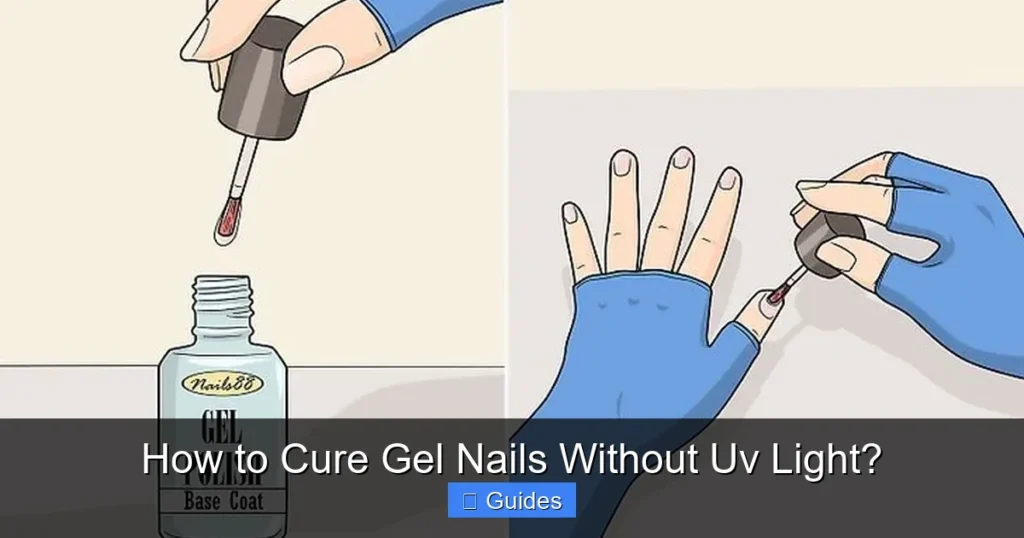
Curing gel nails without UV light is possible but requires specific methods. While traditional gel polishes need UV or LED lamps, you can explore alternatives like direct sunlight for specific gel types, or opt for hybrid gel polishes and dip powder systems that don’t rely on UV exposure. Always prioritize product compatibility and follow safety guidelines for the best, healthiest results.
Hey there, nail enthusiast! Are you just as obsessed with gorgeous, long-lasting manicures as we are, but maybe a little hesitant about those UV lamps? Or perhaps you simply don’t have one handy and are wondering if there’s a secret hack to getting that perfect gel finish without it. You’re not alone! Many people are curious about how to cure gel nails without UV light, whether for convenience, cost savings, or health concerns.
The good news is, while traditional gel polish *does* need some form of light to harden, there are indeed ways to achieve a beautiful, durable manicure that either bypasses a dedicated UV/LED lamp or offers a fantastic lamp-free alternative. Let’s dive deep into the world of “no-light” gel nails, explore what truly works, what doesn’t, and how you can get salon-quality results right at home.
Key Takeaways
- Direct Sunlight Can Cure Gels: Certain gel polishes can harden under natural sunlight due to the UV rays present, but this method requires patience and specific conditions.
- LED-Compatible Gels Offer a Solution: If you’re avoiding UV lamps, look for gel polishes explicitly labeled “LED-compatible,” as these cure under LED lamps, which some prefer over UV, or can sometimes partially cure in sunlight.
- Hybrid Polishes are a Great Alternative: Hybrid gel polishes and “gel-like” formulas often air-dry or cure with minimal light, providing a durable finish without needing a traditional UV/LED lamp.
- Dip Powder Systems are Lamp-Free: For a strong, long-lasting manicure similar to gel but without any light curing, dip powder systems are an excellent, completely lamp-free option.
- Air Drying Doesn’t Work for True Gels: Standard gel polishes contain photoinitiators that *must* react with UV or LED light to harden; they will not air dry completely.
- Product Compatibility is Crucial: Always check the product description to ensure your chosen gel polish is designed for your desired curing method (sun, LED, or air dry for hybrids).
- Safety First: Whether using sunlight or a lamp, protect your skin and eyes. Ensure proper ventilation and follow all product instructions carefully.
Quick Answers to Common Questions
Can I really cure gel polish with just sunlight?
Yes, some gel polishes can partially or fully cure under direct natural sunlight because it contains UV rays. However, results vary greatly depending on sun intensity, gel type, and application thickness, making it less reliable than a lamp.
Will regular gel polish air dry if I just wait long enough?
No, true gel polish will not air dry completely like regular nail polish. It contains photoinitiators that require exposure to specific UV or LED light wavelengths to polymerize and harden. Without light, it will remain sticky and soft.
What is the safest way to cure gel nails without UV light from a traditional lamp?
The safest way to cure gel nails without UV light from a traditional lamp is to use an LED lamp with LED-compatible gel polish, or opt for hybrid gel polishes that air dry. Dip powder systems are another excellent, completely lamp-free alternative.
Are “no-light gel” polishes real gels?
Products marketed as “no-light gel” are typically hybrid polishes, which are a blend of traditional lacquer and gel ingredients. They offer enhanced durability and shine but air dry or require minimal light, unlike true gels that rely on polymerization from dedicated UV/LED light.
Can I use a regular LED flashlight to cure gel nails?
No, a regular LED flashlight will not work to cure gel nails. The LED light in nail lamps emits specific wavelengths of light (usually around 400-410 nm) that activate the photoinitiators in gel polish. A standard flashlight does not emit these specific wavelengths.
📑 Table of Contents
- Understanding Gel Nails and Why They Need Curing
- Direct Sunlight – Nature’s Curing Lamp
- The Rise of LED-Compatible Gels and Hybrid Polishes
- Exploring Other “No-Light” Options (And Why Some Don’t Work for True Gels)
- Safety First: Precautions and Best Practices
- Step-by-Step Guide to a Lamp-Free Gel Manicure (Using Sun or Hybrid)
Understanding Gel Nails and Why They Need Curing
Before we talk about alternatives, let’s quickly understand what gel nails are and why they behave differently from regular nail polish. This will help you make informed choices.
The Science of Gel Curing
Traditional gel polishes aren’t like your everyday nail lacquers that dry through air evaporation. Instead, they are made up of monomers and oligomers, which are small molecules. These formulations also contain special ingredients called “photoinitiators.” When these photoinitiators are exposed to specific wavelengths of light (either UV or LED), they trigger a chemical reaction called polymerization. This reaction causes the monomers and oligomers to link together, forming a hard, durable plastic layer on your nail. Without this light exposure, the gel remains liquid and sticky.
Why Seek Alternatives to UV/LED Lamps?
There are several reasons why you might be looking for ways to cure gel nails without UV light:
- Cost: UV or LED lamps can be an upfront investment, and you might not want to buy one for occasional use.
- Convenience: Maybe you’re traveling, at a friend’s house, or simply don’t want to set up a lamp every time.
- Health Concerns: While the scientific consensus on the direct link between UV nail lamps and skin cancer is still evolving and generally considered low risk with proper precautions, some individuals prefer to avoid any potential UV exposure.
- Accessibility: You might not have access to a lamp due to unforeseen circumstances or simply forgot yours!
Direct Sunlight – Nature’s Curing Lamp
Yes, you read that right! Believe it or not, natural sunlight can sometimes be used to cure gel nails without UV light from a lamp. How? Because sunlight contains UV rays.
How Sunlight Cures Gel Nails
Just like a dedicated UV lamp, the sun emits UV radiation (UVA and UVB). The photoinitiators in many gel polishes are designed to react with these UV wavelengths. So, theoretically, if you expose your wet gel nails to direct sunlight, they can harden.
Tips for Sun Curing
If you decide to try curing gel nails without UV light using the sun, here are some practical tips:
- Choose a Sunny Day: This method works best on a clear, sunny day with strong UV index. Overcast days won’t provide enough consistent UV exposure.
- Work Quickly: Sunlight starts the curing process almost immediately. Apply your gel polish one nail at a time and move quickly to the sunny spot.
- Thin Coats are Key: Always apply very thin layers of gel polish. Thicker layers won’t cure all the way through, leaving them gooey underneath.
- Find a Bright Spot: A windowsill, patio, or outdoor area with direct sunlight is ideal. Make sure there’s no glass between your nails and the sun, as glass can filter out UV rays.
- Be Patient: Curing times will vary greatly depending on the strength of the sun, the specific gel polish, and the thickness of your coats. It could take anywhere from 5-15 minutes per coat, possibly longer. Test for stickiness with a clean, dry finger (not your own!) after a few minutes.
- Protect Your Skin: If you’re exposing your hands to the sun for an extended period, remember to apply sunscreen to the skin around your nails to protect it from UV damage.
Limitations and Considerations
While using the sun to cure gel nails without UV light is possible, it’s not without its drawbacks:
- Inconsistent Curing: Sunlight intensity varies by time of day, season, and weather. This makes consistent, thorough curing difficult to guarantee. You might end up with partially cured, sticky nails.
- Longer Curing Times: It generally takes much longer to cure gel polish in sunlight compared to a dedicated lamp, which can be inconvenient.
- Over-Curing/Under-Curing Risk: It’s hard to control the exact amount of UV exposure. Over-curing can make your gel brittle, while under-curing leads to stickiness and poor adhesion.
- Product Specifics: Some gel polishes are formulated to cure very quickly under specific lamp types and might not respond as well to diffused or less intense sunlight.
The Rise of LED-Compatible Gels and Hybrid Polishes
If direct sunlight seems too unpredictable, don’t worry! There are other excellent product-based solutions if you want to cure gel nails without UV light from a traditional lamp.
What are LED-Compatible Gels?
Many modern gel polishes are specifically formulated to cure under LED lamps. LED lamps emit a narrower, more targeted spectrum of light compared to broader UV lamps. They are often preferred because they cure gels much faster (sometimes in 30-60 seconds per coat) and don’t emit the same broad spectrum of UV rays. If you’re looking to avoid a “UV” lamp but are open to a “light” source, an LED lamp is a fantastic alternative. These gels also contain different photoinitiators that respond to the LED wavelengths.
Practical Tip: When buying gel polish, always check the label. It will usually specify “UV/LED compatible” or “LED only.” If it says “LED only,” it means it’s designed for LED lamps and might not cure well (or at all) under a traditional UV lamp, or optimally in sunlight.
The Magic of Hybrid Polishes (Gel-like, air-dry or minimal light)
This is a game-changer if you genuinely want to cure gel nails without UV light, or any lamp for that matter. Hybrid gel polishes are a blend of traditional nail polish and gel technology. They offer the long-wear and shine of gel but often air-dry to a significant extent, or require very minimal light exposure (sometimes just strong indirect room light) to harden fully. They are not “true” gels in the sense of requiring polymerization, but they mimic the benefits.
Key features of hybrid polishes:
- No Lamp Needed: Most hybrid formulas are designed to air dry like regular polish, often within 10-20 minutes per coat.
- Gel-like Finish: They provide a chip-resistant, high-shine finish that lasts longer than traditional polish, typically up to a week or more.
- Easy Removal: Unlike true gels that need soaking off with acetone, many hybrids can be removed with standard nail polish remover.
Example: Brands often label these as “gel effect,” “gel shine,” “longwear gel,” or “no-light gel” polishes. They usually come as a two-step system with a color coat and a special top coat.
When to Choose LED-Compatible or Hybrid
- For True Gel Durability without Broad UV: If you want the full strength and chip-resistance of true gel and are okay with using a lamp, but prefer to avoid traditional UV, then LED-compatible gels with an LED lamp are your best bet.
- For Lamp-Free Convenience and Enhanced Durability: If your priority is to cure gel nails without UV light *and* without any lamp at all, then hybrid gel polishes are the ideal solution. They provide a step up in longevity and shine from regular polish.
Exploring Other “No-Light” Options (And Why Some Don’t Work for True Gels)
It’s easy to get confused with all the different nail products out there. Let’s clarify some common misconceptions and introduce another fantastic lamp-free alternative.
Dip Powder Systems – A Great Alternative (But Not Gel)
If you’re looking for a durable, long-lasting manicure that doesn’t involve any light curing whatsoever, dip powder is a superb option. While not technically “gel nails” in the traditional sense, they offer a similar level of strength and longevity.
How dip powder works:
- You apply a liquid base coat to your nail.
- You dip your nail into a colored powder.
- You apply an activator liquid that hardens the powder.
- You finish with a top coat that also air-dries.
The whole process is completely light-free. Dip powders are known for being very strong, lasting for weeks, and often requiring less damage to the natural nail during removal compared to some gels.
Air Drying – For Regular Polish and Specific Top Coats Only
This is where confusion often arises. True gel polish, by its chemical nature (containing photoinitiators), *cannot* air dry completely. If you apply a traditional gel polish and leave it out without light, it will remain tacky, soft, and will eventually peel or smudge. It simply won’t polymerize and harden.
However, some “no-wipe” gel top coats might *feel* dry to the touch after a while in regular room light because the tackiness dissipates, but the underlying layers of color gel still need proper light curing to achieve their full hardness and durability. Don’t be fooled into thinking your entire gel manicure is cured if only the top layer feels dry without a lamp.
The Myth of “No-Light” Gels (True gels need photoinitiators)
Any product that claims to be a “true gel” and also “air dries completely without any light” is likely misleading. A product that truly polymerizes into a hard, plastic-like substance (which is the definition of a cured gel) *must* have photoinitiators activated by light. If it air dries, it’s either a hybrid polish (which is a different formulation) or a clever marketing term for something that isn’t a traditional gel. Always read ingredients and instructions carefully!
Safety First: Precautions and Best Practices
No matter which method you choose, safety should always be your top priority.
Protecting Your Skin and Eyes
- Sunscreen for Sun Curing: As mentioned, if you’re using direct sunlight, apply sunscreen to the skin around your nails to protect from UV exposure.
- Gloves for Lamps: If you ever do use a UV/LED lamp, consider wearing fingerless gloves that expose only your nails to the light.
- Eye Protection: Avoid looking directly at the UV or LED light source, whether from a lamp or the sun.
Proper Application Techniques
- Prep is Key: Ensure your nails are clean, dry, and prepped correctly (pushing back cuticles, light buffing). This ensures better adhesion and longevity.
- Thin Coats: Always apply gel polish in very thin layers. This is crucial for proper curing, especially when using sunlight or if your lamp isn’t very strong. Thick layers won’t cure all the way through, leading to peeling and lifting.
- Cap the Free Edge: Paint a thin line of gel across the tip of your nail (the free edge). This helps seal the manicure and prevents chipping.
- Avoid Skin Contact: Try your best to keep gel polish off your skin and cuticles. If it touches, wipe it off with an orange stick or brush before curing. Cured gel on the skin can cause lifting and potential allergic reactions.
Product Compatibility is Key
Always, always, always read the instructions on your gel polish bottles!
- If it says “UV or LED,” it needs a lamp.
- If it says “LED only,” it needs an LED lamp.
- If it says “air dry” or “no light needed” and also “gel-like,” it’s likely a hybrid polish and your lamp-free solution.
- If you want to cure gel nails without UV light using the sun, ensure your gel polish is UV-reactive (most are, but results vary greatly).
Step-by-Step Guide to a Lamp-Free Gel Manicure (Using Sun or Hybrid)
Let’s put it all together. Here’s a simplified guide to achieving a beautiful manicure without a dedicated lamp.
Preparing Your Nails
- Cleanse: Start with clean, dry hands. Remove any old polish.
- Shape and Buff: File your nails to your desired shape. Gently push back cuticles. Lightly buff the surface of your nail to create a slightly rough texture for better adhesion.
- Dehydrate: Wipe your nails with rubbing alcohol or a nail dehydrator to remove any oils or residue. This step is super important for longevity.
Applying Your Gel (Sun-Cured or Hybrid)
Choose your method based on your product:
Visual guide about How to Cure Gel Nails Without Uv Light?
Image source: wikihow.com
Option A: Using Direct Sunlight (for traditional UV/LED gels)
- Base Coat: Apply a very thin layer of gel base coat. Immediately take your hand outside to direct sunlight for 3-5 minutes, or until it feels firm.
- Color Coats: Apply a thin layer of your chosen gel color. Cure in direct sunlight for 5-10 minutes. Repeat for a second thin coat, curing again.
- Top Coat: Finish with a thin layer of gel top coat. Cure in direct sunlight for 8-15 minutes, or until thoroughly hardened and shiny.
- Wipe Away Tackiness: Most traditional gels will have a sticky inhibition layer after curing. Wipe this off gently with a lint-free wipe soaked in rubbing alcohol or a gel cleanser.
Option B: Using Hybrid Gel Polish (air dry)
- Base Coat (if applicable): Some hybrid systems have a base coat; apply a thin layer and let it air dry completely (usually 2-5 minutes).
- Color Coats: Apply a thin layer of your hybrid gel color. Let it air dry completely (5-10 minutes). Apply a second thin coat and let it air dry.
- Top Coat: Finish with the special hybrid gel top coat. Apply a thin layer and let it air dry completely (10-20 minutes). These top coats are typically designed to provide the gel-like shine and hardness without light.
Finishing Touches
Once your manicure is fully cured and dry (whether by sun or air), apply cuticle oil to rehydrate your cuticles and surrounding skin. Enjoy your beautiful, lamp-free manicure!
So, there you have it! While the idea of true gel nails without *any* light is a myth, you absolutely can cure gel nails without UV light from a dedicated lamp by embracing direct sunlight, exploring LED-compatible options with an LED lamp, or choosing fantastic lamp-free alternatives like hybrid gel polishes and dip powder systems. With the right product and technique, you can enjoy stunning, long-lasting nails on your own terms. Happy polishing!
🎥 Related Video: Gel Nails without the UV Lamp?! #nails
📺 Parabell Beauty
Frequently Asked Questions
What is the main difference between UV and LED gel lamps?
UV lamps use a broader spectrum of UV light to cure gels, while LED lamps emit a more targeted, narrower spectrum. LED lamps generally cure gels much faster (often 30-60 seconds) and are considered to have a lower risk profile by some users, though both effectively cure compatible gel polishes.
Can any gel polish be cured with sunlight?
While many gel polishes contain UV-reactive photoinitiators and can partially cure in sunlight, some are specifically formulated for faster curing under high-intensity UV or LED lamps. Results with sunlight are inconsistent and can lead to under-curing or a sticky finish.
Are hybrid gel polishes as durable as true gel nails?
Hybrid gel polishes offer significantly more durability and chip resistance than regular nail polish, often lasting up to a week or more. However, they typically don’t provide the same extreme longevity or strength as true, properly cured gel nails, which can last for two to three weeks.
How long does it take to air dry a “no-light” gel polish?
Air-drying times for “no-light” or hybrid gel polishes vary by brand and product, but generally, each thin coat needs about 2-5 minutes to dry to the touch, with the top coat requiring closer to 10-20 minutes for a complete, hard finish.
Is it safe to get gel polish on my skin when curing?
It is best to avoid getting gel polish on your skin or cuticles. Cured gel on the skin can cause lifting of the manicure and, for some individuals, may lead to allergic reactions or sensitivities over time. Always wipe away any excess before curing.
What should I do if my gel nails remain sticky after attempting to cure them without a lamp?
If your gel nails remain sticky after attempting to cure them without a lamp (especially using sunlight), it’s likely they are under-cured. You can try wiping off the sticky inhibition layer with rubbing alcohol for a temporary fix, but for proper hardening, a dedicated UV/LED lamp is usually necessary for true gels. For hybrids, ensure sufficient air-drying time.
