


For many resin projects, UV light isn’t a necessity. This guide dives into effective, alternative methods for curing resin, focusing primarily on two-part epoxy resins that air cure naturally. You’ll learn the critical steps for proper mixing, controlling environmental factors like temperature, and even safely applying gentle heat to achieve a beautiful, hard cure without ever needing a UV lamp.
How to Cure Resin Without UV Light?
Are you a budding resin artist, a DIY enthusiast, or simply someone who stumbled upon a resin project and realized you don’t own a UV lamp? You might be wondering if it’s even possible to get that beautiful, hard, glassy finish without a special light. Good news! The answer is a resounding “yes!” Many types of resin are designed to cure perfectly well without any UV exposure at all.
While UV resin has gained popularity for its quick curing times under a UV lamp, it’s actually just one player in the vast world of resins. Long before UV lamps became common in crafting, artists and industrial professionals were curing resins with great success. This guide will walk you through everything you need to know about how to cure resin without UV light, ensuring your projects turn out fantastic, whether you’re making jewelry, coating a tabletop, or creating stunning art. Get ready to unlock the secrets to perfect resin curing, no UV required!
Key Takeaways
- Two-Part Epoxy is Key: The primary method for how to cure resin without UV light involves using a two-part epoxy resin system that cures through a chemical reaction, not UV exposure.
- Accurate Mixing is Crucial: Precisely measuring and thoroughly mixing the resin and hardener components according to manufacturer instructions is the single most important step for a successful non-UV cure.
- Patience and Environment Matter: Air curing epoxy resin takes time, typically 24-72 hours. A stable room temperature (around 70-75°F or 21-24°C) and low humidity are ideal for optimal curing.
- Gentle Heat Can Accelerate: Controlled, gentle heat (from a heat gun on a low setting, a warming mat, or a warm box) can safely speed up the curing process of epoxy resin, but avoid excessive or direct intense heat.
- Ventilation is Essential: Always work in a well-ventilated area when mixing and curing resins, as fumes can be harmful. Wear appropriate personal protective equipment (PPE).
- Troubleshooting is Part of the Process: Understand common issues like tackiness or soft spots, which are often caused by improper mixing or unfavorable environmental conditions, and learn how to fix them.
Quick Answers to Common Questions
Can I cure UV resin without UV light?
No, UV resin specifically requires UV light to cure because it contains photoinitiators that only react to ultraviolet radiation. Without UV light, UV resin will remain liquid and will not harden.
How long does it take for epoxy resin to cure without UV light?
Most two-part epoxy resins take between 24 to 72 hours to reach a full cure at room temperature (around 70-75°F or 21-24°C). The exact time depends on the specific product, thickness of the pour, and environmental conditions.
Can I use a normal lamp or sunlight to cure resin without UV light?
While sunlight contains UV rays, its intensity and consistency are unreliable for curing UV resin. For two-part epoxy resin (which doesn’t require UV light), normal lamps provide no benefit for curing. Sunlight can actually yellow epoxy resin over time.
What happens if resin doesn’t fully cure?
If resin doesn’t fully cure, it will remain sticky, tacky, soft, or flexible. It won’t reach its intended hardness or durability, making the project unusable and potentially leaching chemicals.
Is it safe to cure resin indoors without a UV lamp?
Yes, it’s generally safe to cure two-part epoxy resin indoors without a UV lamp, provided you have excellent ventilation (open windows, exhaust fan) and wear appropriate personal protective equipment like gloves and a respirator.
📑 Table of Contents
Understanding Resin Curing Fundamentals (Beyond UV)
Before we dive into the “how-to,” let’s demystify what’s actually happening when resin cures. It’s a fascinating chemical process called polymerization, and understanding it will give you a much better grasp of how to cure resin without UV light.
The Chemical Reaction: Polymerization
At its core, curing is a chemical reaction where liquid resin molecules link together, forming long, strong chains and creating a solid material. Think of it like tiny LEGO bricks snapping together to build a sturdy structure.
* For two-part resins (like epoxy): This reaction starts when you mix two separate components: the resin (Part A) and the hardener (Part B). The hardener acts as a catalyst, initiating the polymerization. The reaction generates heat, which further helps the molecules link up and harden. This is why you might feel your resin get warm after mixing!
* For UV resins: These resins contain photoinitiators. These special chemicals react specifically to UV light, triggering the polymerization process almost instantly. This is why UV resins cure so quickly under a UV lamp.
When discussing how to cure resin without UV light, we are primarily focusing on the first type: two-part resins that cure through a chemical reaction at room temperature, sometimes assisted by warmth.
Different Resin Types and Their Curing Needs
It’s important to know that not all resins are created equal, and each has its own curing requirements.
* Epoxy Resin: This is the star of the show when you want to cure resin without UV light. Epoxy is a two-part system (resin + hardener) that cures through a chemical reaction, typically over 24-72 hours, depending on the specific product and environmental conditions. It’s incredibly versatile, offering strong bonds and a clear, durable finish, making it perfect for art, jewelry, coatings, and more.
* Polyester Resin (Fiberglass Resin): Another two-part system often used in boat building, repairs, and casting larger objects. It cures when mixed with a catalyst (usually MEKP – Methyl Ethyl Ketone Peroxide). It has a stronger odor and shorter pot life than epoxy. It also cures without UV light.
* Urethane (Polyurethane) Resin: Often used for casting highly detailed parts quickly. These are also two-part systems, reacting very rapidly once mixed. Like epoxy and polyester, they cure through a chemical reaction and do not require UV light.
For most DIY and art projects where you’re asking how to cure resin without UV light, you’ll likely be working with epoxy resin. It’s user-friendly and offers excellent results without specialized equipment.
Why UV Light Isn’t Always the Answer
While UV resin is fantastic for certain projects, there are many reasons why you might prefer or need to cure resin without UV light:
* Cost: UV lamps can be an added expense, especially for casual crafters.
* Project Size/Thickness: UV light can only penetrate so far. For thick pours or large projects, UV light might not reach the bottom or center, leading to an incomplete cure. Two-part epoxies, however, cure all the way through, regardless of thickness (within product-specific limits).
* Type of Resin: As we’ve discussed, not all resins are UV-reactive. If you’re using epoxy, polyester, or urethane resin, a UV lamp simply won’t work.
* Safety Concerns: While generally safe, prolonged exposure to UV light isn’t ideal for skin or eyes. Curing resin without UV light often means less direct exposure to strong light sources.
* Accessibility: You might be in a situation where you don’t have access to a UV lamp or electricity.
So, if you’re holding a bottle of two-part epoxy, rest assured you’re on the right path for how to cure resin without UV light!
The Primary Method: Two-Part Epoxy Resin and Air Curing
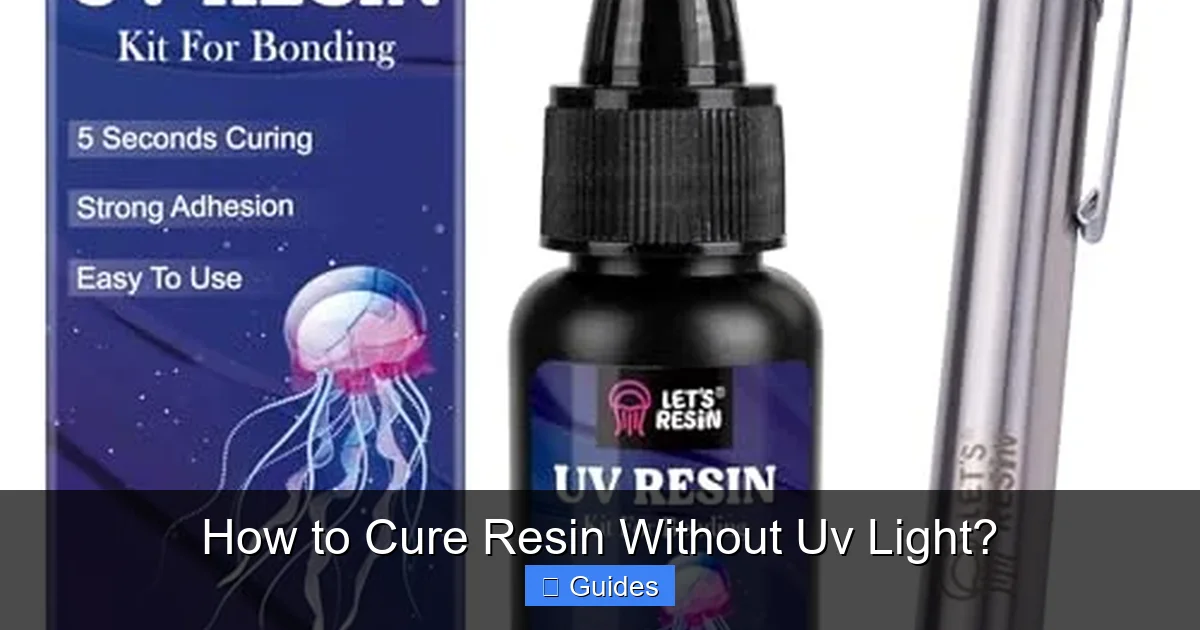
Visual guide about How to Cure Resin Without Uv Light?
Image source: m.media-amazon.com
When you’re looking for how to cure resin without UV light, your go-to solution is almost always a two-part epoxy resin system. This method relies on a carefully balanced chemical reaction that progresses naturally in ambient conditions, often referred to as “air curing” or “room temperature curing.”
What is Two-Part Epoxy Resin?
Two-part epoxy resin consists of two separate bottles: Part A (the resin) and Part B (the hardener or curative). When these two components are mixed together in precise ratios, a chemical reaction begins. This reaction slowly transforms the liquid mixture into a solid, durable plastic. It doesn’t dry like water evaporating; it changes its molecular structure.
The Mixing Process: Crucial for Success
This is the single most important step when trying to figure out how to cure resin without UV light. Improper mixing is the leading cause of resin not curing correctly.
1. Read the Instructions: Every resin brand is different. Always, always, *always* read the manufacturer’s specific instructions for your resin. Pay close attention to the mixing ratio (e.g., 1:1 by volume, 2:1 by weight), pot life, and cure time.
2. Measure Precisely: Use separate measuring cups for Part A and Part B. For volume-based ratios (like 1:1 or 2:1), clearly marked measuring cups are fine. For weight-based ratios, a digital scale is essential for accuracy. Even a slight deviation can throw off the chemical reaction.
3. Mix Thoroughly but Gently: Pour the measured hardener into the resin (or vice versa, as per instructions). Using a clean stirring stick, slowly and continuously stir the mixture. Scrape the sides and bottom of your mixing cup.
* Stir for 3-5 minutes: This might seem long, but it’s critical. You’ll often see wisps or streaks initially; keep stirring until the mixture is completely clear and uniform, with no streaks or cloudy areas.
* Avoid whipping: Stir gently to minimize introducing air bubbles.
4. Double Potting (Optional but Recommended): For extra assurance, after initial mixing, pour your mixed resin into a *second clean mixing cup* and stir for another minute or two. This ensures any unmixed resin from the sides of the first cup is incorporated.
Environmental Factors: Temperature and Humidity
The environment plays a huge role in how to cure resin without UV light effectively.
* Temperature: Most epoxy resins cure best at room temperature, ideally between 70-75°F (21-24°C).
* Too Cold: If your working environment is too cold, the resin will cure much slower, potentially becoming tacky or never fully hardening. It can also increase viscosity, leading to more bubbles.
* Too Hot: If it’s too hot, the resin’s pot life (working time) will be significantly reduced, making it cure too fast and potentially exothermic reaction (generating excessive heat) leading to cracks or yellowing.
* Tip: If your resin components are cold, you can warm them *gently* in a warm water bath before mixing. This lowers their viscosity and helps with bubble release.
* Humidity: High humidity can also interfere with the curing process of some resins, especially certain brands of epoxy. It can lead to a cloudy, hazy, or tacky surface. Try to work in an environment with humidity below 60%.
Ventilation: A Must-Have
When you are curing resin without UV light, or with it for that matter, good ventilation is non-negotiable. While epoxy resin typically has a lower odor than polyester, fumes can still be irritating and potentially harmful. Work in a well-ventilated room, ideally with open windows or an exhaust fan. Wearing a respirator designed for organic vapors is always a good safety practice, along with gloves and eye protection.
Patience is a Virtue: Curing Times
Unlike UV resin that cures in minutes, two-part epoxy resin takes time.
* Working Time (Pot Life): This is how long you have to work with the mixed resin before it starts to gel and become unworkable (typically 20-60 minutes, but check your product).
* Tack-Free/Dust-Free Time: The point at which the surface is no longer sticky to the touch and won’t attract dust (usually 6-12 hours).
* Full Cure Time: This is when the resin has achieved its maximum hardness and durability. For most epoxies, this is 24-72 hours. Some deep pour epoxies can take even longer, up to 7 days or more. Avoid handling, sanding, or placing heavy objects on your piece until it has reached its full cure.
Speeding Up the Cure (Safely!)
While patience is key for how to cure resin without UV light, sometimes you need things to move a little faster. Gentle heat can be a safe and effective way to accelerate the curing process of two-part epoxy resins.
Gentle Heat Application (Heat Guns, Warm Boxes, Heating Mats)
Introducing a controlled amount of warmth can reduce the viscosity of the resin (making it easier to pour and release bubbles) and speed up the chemical reaction.
* Heat Gun or Hair Dryer: Use a heat gun or even a hair dryer on a *low* setting, held several inches away from the resin surface. Move it constantly in a sweeping motion. This is primarily useful for popping surface bubbles and slightly accelerating the very initial stages of cure. Do not hold it in one spot, as excessive heat can cause yellowing, cracking, or boiling.
* Warming Box/Enclosure: Create a simple warming box using a cardboard box and a small space heater or even incandescent light bulbs (ensure safety and fire prevention!). The idea is to raise the ambient temperature around your curing piece to the ideal 70-75°F (21-24°C) or slightly higher (up to 80-85°F/27-29°C), if your manufacturer’s instructions allow. Monitor the temperature inside the box with a thermometer.
* Heating Mats/Cure Boxes: For dedicated crafters, specialized heating mats (like those used for seedling propagation) or enclosed cure boxes designed for resin can provide a consistent, controlled low heat. These are excellent tools for how to cure resin without UV light, especially in cooler climates.
* Warm Water Bath (Pre-Mixing): As mentioned, gently warming your Part A and Part B bottles in a warm water bath *before* mixing can reduce viscosity, making them easier to mix and pour, and aiding initial bubble release. Don’t let water get into the bottles!
The Importance of Controlled Heat
The key word here is “gentle” and “controlled.” Excessive heat can cause a cascade of problems:
* Rapid Exothermic Reaction: The chemical reaction itself generates heat. Adding too much external heat can make the reaction accelerate too quickly, generating even more heat. This “runaway reaction” can lead to yellowing, cracking, or even smoke/fire, especially in larger pours.
* Bubbles: Rapid heating can cause dissolved gasses in the resin to escape too quickly, creating a flurry of new bubbles.
* Distortion: For delicate molds, excessive heat can cause the resin to warp or deform before fully hardening.
* Yellowing: Overheating is a common cause of resin turning yellow, especially lighter-colored or clear pieces.
When NOT to Use Heat
Always exercise caution.
* Large Pours: For very thick or large resin pours, avoid adding external heat, as the resin will generate significant heat on its own. Adding more can be dangerous.
* Sensitive Pigments/Additives: Some colorants or additives might react negatively to high heat.
* If in Doubt: When in doubt, err on the side of caution and let the resin cure naturally at room temperature. It’s better for it to take a little longer than to ruin your project.
Troubleshooting Common Curing Problems Without UV
Even when you know how to cure resin without UV light, issues can sometimes arise. Don’t despair! Most problems have common causes and can often be prevented or even fixed.
Sticky or Tacky Surface
This is one of the most common issues and usually points to an incomplete cure.
* Cause: Improper mixing (not enough hardener, uneven mixing), incorrect ratio, too low ambient temperature, high humidity, or the resin hasn’t had enough time to fully cure.
* Fix/Prevention:
* Ensure precise measuring and thorough mixing (3-5 minutes, scraping sides, double potting).
* Work in a warm, low-humidity environment.
* Give it more time! Sometimes an extra 24-48 hours can make a difference, especially in cooler conditions.
* If only slightly tacky, you might be able to rub it with isopropyl alcohol on a lint-free cloth, but this won’t fix an unmixed area.
* For severely tacky areas, you may need to sand it down (if hard enough) and pour a fresh, properly mixed thin layer over it.
Soft Spots
Similar to tackiness, soft spots mean parts of your resin haven’t cured properly.
* Cause: Localized areas of unmixed resin or hardener, or contamination (e.g., water, dust, oils) that inhibited curing in that specific spot.
* Fix/Prevention:
* Meticulous mixing is the best prevention. Ensure you scrape the bottom and sides of your cup during mixing.
* If the soft spot is isolated and the rest is cured, you might be able to carefully scrape it out and fill the void with new, properly mixed resin.
* Otherwise, if it’s widespread, the piece might be unsalvageable.
Bubbles
While not a curing problem in itself, bubbles are a common aesthetic issue when you’re learning how to cure resin without UV light.
* Cause: Stirring too vigorously, trapped air in porous materials, high viscosity of cold resin, or rapid heating.
* Fix/Prevention:
* Warm your resin components gently before mixing to reduce viscosity.
* Stir slowly and deliberately, avoiding whipping air into the mixture.
* After pouring, use a heat gun or propane torch (quickly, sweeping motion, several inches away) to pop surface bubbles. Be extremely careful with a torch, as it’s an open flame near flammable liquids.
* Let the resin sit for a few minutes after mixing (during its pot life) to allow bubbles to rise before pouring.
* For porous items (wood, flowers), seal them first with a thin coat of resin or a sealant.
* Work in a dust-free environment so you don’t need to overwork the surface with heat to remove dust after initial pouring.
Uneven Curing
When parts of your resin cure differently, it can be frustrating.
* Cause: Temperature gradients across the project, uneven mixing (especially common in larger pours or if the resin spreads thinly), or an unstable curing environment.
* Fix/Prevention:
* Ensure your working surface is level and the ambient temperature is consistent across your workspace.
* Follow mixing instructions meticulously, especially for larger batches.
* For pieces with varying thickness, be aware that thinner areas might cure slower than thicker ones if the environment isn’t consistently warm.
* Avoid placing your curing piece near drafts, open windows, or direct sunlight (which can overheat spots).
Best Practices for Non-UV Resin Curing
Mastering how to cure resin without UV light comes down to consistency, precision, and patience. Follow these best practices to ensure beautiful, durable results every time.
Read the Manufacturer’s Instructions
We can’t stress this enough! Every brand of resin is formulated differently. Their instructions are your ultimate guide for mixing ratios, pot life, cure times, and ideal temperature ranges. Disregarding them is the fastest way to encounter problems.
Accurate Measuring is Key
Whether by volume or by weight, use separate, clean measuring tools for Part A and Part B. Even a slight deviation from the recommended ratio can significantly impact the final cure. Invest in a digital scale if your resin requires measurement by weight.
Proper Mixing Techniques
* Time it: Use a timer for your mixing period (usually 3-5 minutes).
* Scrape: Thoroughly scrape the sides, bottom, and stirring stick during mixing to ensure all components are fully incorporated.
* Double Cup: Consider pouring into a second clean cup and mixing again for a minute to guarantee homogeneity.
* Slow and Steady: Stir slowly to minimize air bubbles.
Maintaining a Stable Environment
* Temperature Control: Aim for a consistent room temperature between 70-75°F (21-24°C). If your workspace is cooler, consider using a warming mat or creating a temporary warming box for your projects.
* Humidity Control: Work in a low-humidity environment (below 60%). High humidity can lead to tackiness or cloudiness.
* Level Surface: Always place your curing resin on a perfectly level surface to prevent uneven pooling or dripping.
* Dust-Free Zone: Cover your curing projects with a box or dome to protect them from dust, pet hair, and other airborne particles while allowing air circulation.
Safety First!
Working with resins, whether you’re learning how to cure resin without UV light or with it, involves chemicals, so safety should always be your top priority.
* Ventilation: Always work in a well-ventilated area.
* PPE: Wear nitrile gloves to protect your skin from contact. Wear safety glasses to protect your eyes. For prolonged exposure or if you’re sensitive to fumes, a respirator with organic vapor cartridges is highly recommended.
* Work Surface Protection: Cover your workspace with silicone mats, plastic sheeting, or waxed paper for easy cleanup.
* Disposal: Dispose of uncured resin and mixing tools according to local regulations. Never pour liquid resin down the drain.
Learning how to cure resin without UV light is not only possible but often the preferred method for many types of projects. By understanding the chemical process, choosing the right resin (two-part epoxy), and meticulously following mixing and environmental guidelines, you can achieve stunning, professional results. Remember, patience is your best friend when working with air-curing resins. Happy crafting!
🎥 Related Video: how to dry UV resin without UV lamp 😱subscribe for more #cute #diy #likeandsubscribe 🌺
📺 DIY crafts with khadija😘
Frequently Asked Questions
What type of resin should I use if I want to cure resin without UV light?
If you specifically want to cure resin without UV light, you should choose a two-part epoxy resin. These resins cure through a chemical reaction between the resin and a hardener, not through exposure to ultraviolet light.
How can I make my epoxy resin cure faster without a UV lamp?
You can gently accelerate the curing process of epoxy resin without a UV lamp by ensuring your workspace is warm (around 75-80°F or 24-27°C) and by using controlled, gentle heat like a warming mat or a low-setting heat gun moved constantly over the surface.
Why is my resin still sticky after 24 hours even without UV light?
If your two-part epoxy resin is still sticky after 24 hours, the most common reasons are inaccurate measuring or insufficient mixing of the resin and hardener, or a working environment that is too cold or humid. Ensure precise ratios and thorough stirring for a complete cure.
Do I need special equipment to cure resin without UV light?
For curing two-part epoxy resin without UV light, you don’t need specialized UV equipment. Essential tools include accurate measuring cups/scale, stirring sticks, and a level, dust-free workspace with good ventilation. Gentle heat sources like a warming mat can be beneficial but aren’t strictly required.
Can I pour thick layers of resin if I’m curing without UV light?
Yes, two-part epoxy resins are excellent for thick pours, much better than UV resins for this purpose. However, always check the manufacturer’s recommendations for “maximum pour depth” for your specific epoxy, as exceeding it can lead to overheating, cracking, or yellowing.
What are the safety precautions when curing resin without UV light?
Safety is paramount when curing resin without UV light. Always work in a well-ventilated area, wear nitrile gloves to protect your skin, and safety glasses to protect your eyes. For strong fumes, consider using a respirator with organic vapor cartridges.
