


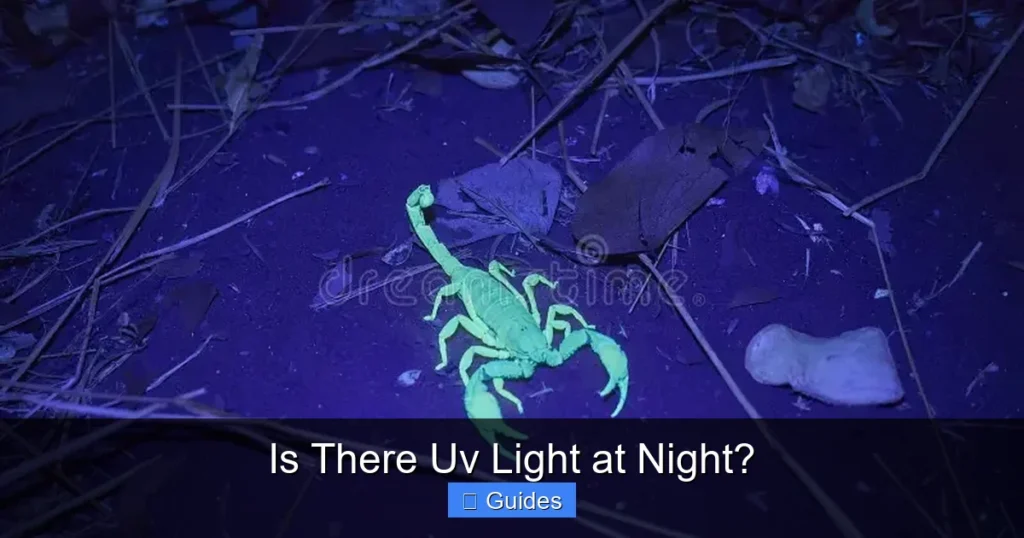
While natural UV light from the sun is virtually absent at night, the idea that all UV disappears after sunset is a common misconception. Artificial sources like specific lamps, devices, and industrial processes can and do emit UV radiation, making it important to understand where and when you might still encounter it. Understanding these sources helps protect your skin and eyes, ensuring you’re aware of potential risks, even after dark.
The sun dips below the horizon, painting the sky in fiery hues before darkness descends. As the stars begin to twinkle, a common thought might be, “Ah, finally, no more worrying about UV rays!” It’s a natural assumption, isn’t it? We associate ultraviolet (UV) light almost exclusively with daylight, sunshine, and the need for sunscreen.
For most of us, the end of the day signals a respite from the sun’s powerful radiation. We kick back, enjoy the evening, and generally don’t give a second thought to UV exposure. But is this assumption entirely accurate? Is there truly no UV light at night? The answer, like many things in science, is a bit more nuanced than a simple yes or no. While the primary source of UV radiation—our glorious sun—is indeed absent, that doesn’t mean all UV light vanishes completely after sunset.
In this article, we’re going to dive deep into the fascinating world of ultraviolet light after dark. We’ll explore the science behind UV, debunk common myths, and uncover the surprising sources of UV light that can still be present in our nighttime environments. So, settle in, and let’s shed some light on whether you need to be concerned about UV light at night.
Key Takeaways
- Natural UV is Absent at Night: The sun is the primary source of natural ultraviolet (UV) light, and once it sets, there is virtually no significant natural UV radiation reaching the Earth’s surface from celestial bodies like the moon or stars.
- Artificial UV Sources Exist: Despite the lack of natural UV, many artificial sources emit UV light at night, including tanning beds, nail-curing lamps, germicidal UV-C lights, black lights, grow lights, and certain medical or industrial equipment.
- Moonlight and Starlight are Harmless: Moonlight is reflected sunlight and contains negligible UV radiation, far too weak to cause sunburn or skin damage. Starlight also emits insignificant amounts of UV.
- Health Risks from Artificial UV: Exposure to artificial UV light, especially UVA and UVB, can pose health risks to your skin (premature aging, DNA damage) and eyes (photokeratitis, cataracts), even after the sun has gone down.
- Blue Light is Not UV: Many nighttime electronic screens emit blue light, which can disrupt sleep patterns but is distinct from UV radiation and does not directly cause UV-related skin damage.
- Protection is Context-Dependent: You generally don’t need sunscreen at night. However, if you are intentionally exposed to artificial UV sources (e.g., tanning beds, working with germicidal lamps), appropriate protective measures like eyewear and specialized clothing are essential.
- Awareness is Key: Understanding the difference between natural and artificial UV light sources empowers you to make informed decisions about protecting your health, whether it’s day or night.
Quick Answers to Common Questions
Is natural UV light present at night?
No, significant natural UV light from the sun is not present at night. Once the sun sets, its direct UV rays no longer reach your location.
Can moonlight cause sunburn or skin damage?
No, moonlight is reflected sunlight and contains such a negligible amount of UV radiation that it cannot cause sunburn, tanning, or any skin damage.
What are some common artificial UV sources at night?
Common artificial UV sources at night include tanning beds, UV nail lamps, germicidal UVC lamps for sterilization, and black lights used for entertainment.
Is blue light the same as UV light?
No, blue light is part of the visible light spectrum and is different from UV light. While blue light can affect sleep, it does not cause the same type of skin or eye damage as UV radiation.
Do I need to apply sunscreen at night?
You do not need to apply sunscreen at night for natural UV protection. Sunscreen is only necessary if you are intentionally exposing yourself to artificial UV light sources like tanning beds.
📑 Table of Contents
Understanding UV Light: A Quick Refresher
Before we explore whether there’s UV light at night, let’s quickly remind ourselves what UV light actually is. It’s an invisible part of the electromagnetic spectrum, meaning it’s a form of energy that travels in waves. We can’t see it with our eyes, but we certainly feel its effects—think of a sunburn or the warmth of the sun on your skin.
What is UV Radiation?
UV radiation is electromagnetic radiation with a wavelength shorter than that of visible light but longer than X-rays. It’s often categorized into three main types based on its wavelength and how much energy it carries. This distinction is crucial because each type interacts differently with our skin and eyes.
Types of UV Light (UVA, UVB, UVC)
- UVA (Ultraviolet A): This has the longest wavelength and accounts for about 95% of the UV radiation that reaches the Earth’s surface. UVA penetrates the skin deeply, playing a significant role in skin aging, wrinkles, and some forms of skin cancer. It can pass through window glass.
- UVB (Ultraviolet B): With a shorter wavelength than UVA, UVB is the primary cause of sunburn. It damages the outermost layers of the skin and is a major contributor to skin cancer. Most UVB is absorbed by the ozone layer, but a significant amount still reaches us.
- UVC (Ultraviolet C): This has the shortest and most energetic wavelength. UVC is extremely harmful to living organisms. Thankfully, all UVC radiation from the sun is absorbed by the Earth’s ozone layer and atmosphere before it reaches the ground. This is why you won’t encounter natural UVC. However, artificial UVC sources are becoming more common for sterilization purposes.
When we talk about natural UV light at night, we’re primarily concerned with whether UVA or UVB could be present in any meaningful amount.
Natural UV Light After Sunset: The Truth
Now for the main event: what happens to natural UV light once the sun goes down? The short answer is, for all practical purposes, it’s gone.
Visual guide about Is There Uv Light at Night?
Image source: images.nexusapp.co
The Sun: The Primary Source of Natural UV
The sun is overwhelmingly the main source of natural UV radiation on Earth. It emits a broad spectrum of electromagnetic radiation, including all three types of UV. As long as the sun is above the horizon, its rays are showering us with UV. The intensity varies depending on the time of day, season, altitude, and proximity to the equator, but the source remains constant.
Once the sun sets, that direct source of natural UV light is removed. Think of it like turning off a light switch in a room. The light disappears. The same applies to UV light from the sun. The Earth itself blocks the sun’s rays from reaching your location, which means no direct solar UV light at night.
The Moon and Stars: Do They Emit UV?
This is where some common misconceptions arise. People sometimes wonder if the moon or stars emit enough UV light at night to be a concern. Let’s clarify this:
- The Moon: Moonlight is nothing more than reflected sunlight. The moon itself does not produce its own light; it simply acts like a giant mirror, reflecting the sun’s light towards Earth. While this reflected light does contain UV components (because it’s sunlight), the intensity is incredibly low. By the time it travels from the sun to the moon, reflects off its surface, and then travels to Earth, the amount of UV radiation is minuscule—orders of magnitude weaker than direct sunlight. You would need to stand under full moonlight for hundreds, if not thousands, of years to get the equivalent UV exposure of just a few minutes in direct midday sun. So, no, moonlight cannot give you a tan or a sunburn.
- The Stars: Stars, like our sun, are indeed giant balls of gas that emit electromagnetic radiation, including UV light. However, they are incredibly far away. The vast distances mean that any UV light they emit is so diluted by the time it reaches Earth that it’s utterly negligible. It poses absolutely no risk to your skin or eyes.
Atmospheric Absorption: Nature’s Shield
Even if there were some faint, indirect sources of natural UV light at night, the Earth’s atmosphere acts as a powerful filter. The ozone layer, oxygen, and other gases in the atmosphere absorb much of the UV radiation before it reaches the surface. This protective shield is always there, day or night, reducing the intensity of any ambient UV. This natural protection, combined with the lack of a strong direct source, means that concerning levels of natural UV light at night simply do not exist.
Artificial UV Light Sources at Night
While natural UV light at night is essentially non-existent, the story changes dramatically when we introduce artificial sources. In our modern world, UV light is used in a surprising number of applications, and many of these are active or used after dark.
Tanning Beds and Nail Lamps: Intentional UV Exposure
These are perhaps the most obvious sources of artificial UV light at night. People intentionally expose themselves to UV radiation for cosmetic purposes:
- Tanning Beds/Sunbeds: These devices emit significant amounts of UVA and often UVB radiation to stimulate melanin production, leading to a tan. Many people use tanning salons in the evenings, meaning they are actively exposing themselves to high levels of UV light at night. This exposure carries the same risks as sun exposure, including skin cancer and premature aging.
- UV Nail Lamps: Used to cure gel nail polish, these lamps primarily emit UVA radiation. While the exposure time for each hand is short, regular use can lead to cumulative UV exposure to the hands, raising concerns about skin damage and potentially skin cancer on the hands. Many nail salons operate into the evening hours.
Germicidal UV-C Lamps: Sterilization at Play
UVC radiation, which is blocked by Earth’s atmosphere naturally, is incredibly effective at killing bacteria, viruses, and other microorganisms. Because of this, artificial UVC lamps are widely used for sterilization:
- Air Purifiers and HVAC Systems: Many modern air purification systems and some HVAC units contain UVC lamps to kill airborne pathogens. These often operate continuously, including through the night.
- Water Purification Systems: UVC is used to disinfect water in homes, businesses, and municipal systems.
- Medical and Dental Offices: UVC lights are employed to sterilize instruments and surfaces, often running outside of patient hours, thus exposing staff to UV light at night during cleaning protocols.
- Disinfection Wands/Robots: Especially since the pandemic, portable UVC wands and autonomous robots are used to disinfect surfaces in homes, hospitals, and public spaces, often operating in unoccupied areas during nighttime.
Exposure to UVC is particularly hazardous to skin and eyes, so these devices are designed to operate safely or in controlled environments.
Black Lights: Illuminating the Invisible
Black lights, or UV-A lamps, are common fixtures in entertainment venues, art installations, and even homes. They emit long-wave UVA radiation, which is mostly invisible to the human eye, but causes fluorescent materials to glow. Think of glow-in-the-dark parties, haunted houses, or forensic investigations.
While the UVA emitted by black lights is generally considered less harmful than UVB, prolonged, close-range exposure can still contribute to skin aging and eye strain. These are definitely sources of UV light at night, usually in recreational or specialized settings.
Grow Lights: A Spectrum for Plants
Indoor plant cultivation, especially for specialized crops, often relies on artificial grow lights. While many grow lights focus on the visible spectrum and specific wavelengths like blue and red, some full-spectrum LED or HID (High-Intensity Discharge) grow lights can emit small amounts of UV radiation, particularly UVA. Plants use UV for various physiological processes, so some cultivators deliberately include UV in their lighting setups. If you have an indoor grow operation, there could be UV light at night present.
Medical and Dental Devices
Beyond sterilization, UV light has specific applications in healthcare. For instance, dermatologists use controlled UV lamps for phototherapy to treat skin conditions like psoriasis or eczema. Dentists use UV curing lights to harden composite fillings. These procedures can occur at any time during operating hours, which might extend into the evening, meaning direct, controlled exposure to UV light at night for therapeutic purposes.
Less Obvious Sources: Printers, Photocopy Machines, and More
Believe it or not, some everyday office equipment can emit very low levels of UV radiation. Old fluorescent light fixtures, certain types of printers, and photocopy machines might produce trace amounts, though generally not enough to be a significant health concern under normal operating conditions. Arc welding, often performed in industrial settings, is another powerful source of UV radiation (including UVC), which can certainly occur at night and requires stringent protective gear.
The Impact of Artificial UV Light on Your Health
Just because the sun isn’t out doesn’t mean UV radiation from artificial sources is harmless. Any UV light, regardless of its origin, carries potential risks if exposure is significant or prolonged.
Skin Concerns: Premature Aging and Damage
Whether from the sun or a tanning bed, UV radiation damages skin cells. UVA light penetrates deeply, contributing to collagen breakdown, wrinkles, and fine lines—the hallmarks of premature aging. Both UVA and UVB can cause DNA damage within skin cells, which can lead to mutations and ultimately skin cancers, including basal cell carcinoma, squamous cell carcinoma, and the most dangerous form, melanoma.
If you’re regularly exposed to artificial UV sources at night, such as from using a home tanning bed or working with uncured UV lamps, these risks are very real and accumulate over time. The idea that “a base tan is a safe tan” is a myth; any tan is a sign of skin damage.
Eye Health: Protecting Your Vision
Your eyes are also highly susceptible to UV damage. Short-term, intense exposure can cause photokeratitis, essentially a “sunburn of the eye” (like snow blindness), leading to pain, redness, and a gritty feeling. Long-term exposure to UV radiation (both UVA and UVB) is a significant risk factor for developing cataracts, a clouding of the eye’s lens that impairs vision, and can contribute to macular degeneration.
When working with or near powerful artificial UV sources, especially UVC or intense black lights, proper eye protection (UV-blocking goggles or face shields) is absolutely critical. Even brief glances at a germicidal UVC lamp can cause severe eye damage.
The Role of Blue Light: Often Confused with UV
It’s important to differentiate UV light from blue light. Blue light is part of the *visible* light spectrum, meaning we can see it. It’s emitted by LEDs in smartphones, tablets, computers, and energy-efficient lighting. While blue light can disrupt your circadian rhythm (your natural sleep-wake cycle) and may contribute to eye strain, it is not the same as UV radiation. Blue light does not cause sunburn, skin cancer, or the type of DNA damage associated with UV light. So, while you might want to limit screen time before bed for sleep quality, you don’t need sunscreen to protect against the blue light from your phone at night.
Protecting Yourself from Nocturnal UV Exposure
Since significant natural UV light at night isn’t an issue, your protection strategies will focus entirely on artificial sources. Here’s how to stay safe:
Identify and Minimize Exposure
The first step is awareness. Understand where artificial UV sources might be present in your nighttime environment:
- Be Mindful of Tanning Beds: If you use them, understand the risks and consider alternatives. If you must use them, follow safety guidelines, and never exceed recommended exposure times.
- Nail Salons: Ask about the type of lamp used and if they offer fingerless gloves to protect your hands.
- Germicidal Lamps: Ensure these are only operated in unoccupied rooms or with proper shielding. Never look directly at a UVC lamp or expose bare skin to it. If you use a UVC wand at home, read instructions carefully and leave the room while it’s active.
- Workplace Safety: If your job involves UV-emitting equipment (welding, medical devices, printing), always follow occupational safety protocols, which should include specific UV protection.
Protective Eyewear and Clothing
For any situation involving intentional or accidental exposure to artificial UV light at night:
- UV-Blocking Eyewear: Invest in high-quality safety goggles or glasses that specifically block UV radiation if you work around UV sources. For black lights, standard eyeglasses may offer some protection, but specialized glasses are better for prolonged exposure.
- Protective Clothing: For situations like tanning beds (if used responsibly) or industrial UV exposure, cover as much skin as possible. Loose-fitting, tightly woven clothing can offer a good barrier.
Awareness in Specific Environments
If you’re in a venue with black lights, remember that while the effect is fun, prolonged exposure, especially at close range, can be taxing on your eyes. Take breaks, and don’t stare directly at the lights. In medical or industrial settings, never bypass safety features or ignore warning signs related to UV radiation. These measures are there for your protection.
Don’t Forget the Sunscreen (When Applicable)
You do not need to apply sunscreen just because it’s dark outside. Sunscreen is designed to protect you from solar UV radiation. However, if you are, for example, getting a spray tan at a tanning salon that uses UV lights *before* the spray tan, or if you are using a home tanning bed, then the principles of sun protection still apply to that specific UV exposure, even if it’s occurring at night.
Debunking Myths About Nighttime UV
Let’s quickly address some common misconceptions to ensure we’re clear on UV light at night.
“If it’s bright, it’s UV.”
Myth Debunked: Brightness refers to the intensity of visible light. UV light is invisible. A very bright LED streetlight might illuminate a large area, but it produces negligible, if any, UV radiation. Conversely, a black light isn’t very bright in terms of visible light, yet it emits significant UVA.
“Moonlight gives you a tan.”
Myth Debunked: As discussed, moonlight is too weak to cause any tanning or sunburn. The amount of UV reflected by the moon is so tiny it’s harmless.
“Light pollution causes skin damage.”
Myth Debunked: Light pollution is the excessive or inappropriate use of artificial outdoor lighting. While it can disrupt wildlife, impact stargazing, and interfere with human sleep patterns (due to blue light), the vast majority of outdoor lighting (LEDs, high-pressure sodium lamps, etc.) emits little to no harmful UV radiation. Therefore, light pollution does not cause UV-related skin damage.
Conclusion
So, is there UV light at night? The definitive answer is: not naturally, in any significant amount that poses a risk to your health. You can enjoy your evenings under the stars or the moonlight without concern for sunburn or UV-induced skin damage. The sun is indeed the sole source of natural UV radiation that matters.
However, our modern world is full of technological advancements, and with them come various artificial sources of UV light. From the cosmetic appeal of tanning beds to the critical sterilization functions of germicidal lamps and the unique effects of black lights, UV radiation can certainly be present in your environment after dark. The key takeaway here is to understand the distinction: natural UV is absent, but artificial UV can be very much present.
By being aware of these artificial sources and understanding their potential risks, you can make informed decisions to protect your skin and eyes. So, while you can ditch the daytime sunscreen when the sun sets, stay mindful of any artificial UV sources you might encounter in your nocturnal activities. Knowledge is your best protection, day or night!
🎥 Related Video: 💡LEARN: When to use a UV light
📺 Geocaching
shorts #geocaching #learn.
Frequently Asked Questions
Does UV light pass through windows at night?
While some UVA can pass through window glass during the day, there’s no significant natural UV light from the sun to pass through windows at night. Any artificial UV source indoors would be unaffected by windows unless it’s designed to be used outdoors.
Are LED lights at night a source of UV?
Most common LED lights used for illumination (e.g., in homes, streetlights, electronics) emit very little to no UV radiation. They primarily produce visible light, including blue light, which is distinct from UV.
Can streetlights emit UV light?
Modern streetlights, especially LED ones, typically emit negligible UV light. Older high-intensity discharge lamps (like mercury vapor) could emit very small amounts, but generally, streetlights are not a significant source of UV exposure.
Do bug zappers produce harmful UV at night?
Bug zappers use a type of UV light (usually UVA) to attract insects. While the UV emitted is generally low power and designed to be harmless to humans from a distance, prolonged, close-range exposure to the lamp itself could potentially contribute to minor eye or skin irritation, so it’s best to keep a safe distance.
How can I tell if a device emits UV light?
Often, devices that emit significant UV light will have warning labels (e.g., “UV Hazard,” “Avoid direct exposure”). For germicidal lamps, the light might appear purplish-blue. If in doubt, check the product specifications or user manual, especially for specialized equipment.
Is there any beneficial UV light at night?
There is no known natural beneficial UV light at night. While controlled artificial UV light (like in phototherapy for skin conditions) can be beneficial under medical supervision, this is a therapeutic application and not something you’d encounter naturally or without specific intent.
