


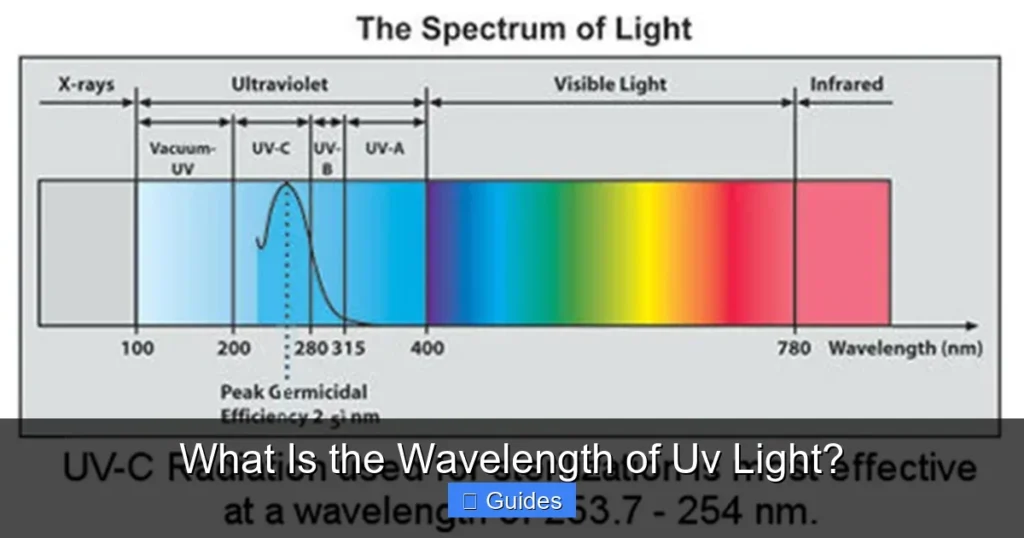
The wavelength of UV light refers to the distance between successive crests of its electromagnetic waves, and it’s crucial for understanding its properties and effects. UV light is categorized into UVA (320-400 nm), UVB (280-320 nm), and UVC (100-280 nm), with shorter wavelengths carrying more energy and potential for harm or beneficial application. Knowing these specific wavelength ranges helps us harness UV light’s power for tasks like sterilization while protecting ourselves from its dangers.
What Is the Wavelength of UV Light?
Have you ever wondered what exactly makes the sun’s rays feel warm, or why too much time outdoors can leave you with a painful sunburn? The answer lies in something we can’t even see: ultraviolet, or UV, light. While we often talk about UV light as a single entity, it’s actually a spectrum within a spectrum, made up of different “colors” or types, each defined by its unique wavelength. Understanding the wavelength of UV light isn’t just a scientific curiosity; it’s essential for protecting our health, developing new technologies, and even understanding the air we breathe.
Think of light like waves in the ocean. Just as some ocean waves are long and slow while others are short and choppy, light waves also have different lengths. This “length” is what we call wavelength. The wavelength of UV light determines how much energy it carries, how deeply it can penetrate materials, and what effects it will have on everything it touches, from our skin to the plastics around us. It’s a fundamental property that dictates the very nature of this invisible force.
In this guide, we’re going to dive deep into the fascinating world of UV light. We’ll explore where it fits into the grand scheme of things, break down its different types based on their wavelengths, and uncover why these tiny measurements have such a huge impact on our lives. Get ready to illuminate your understanding of this powerful, unseen part of our world!
Key Takeaways
- UV Light is Part of the Electromagnetic Spectrum: Ultraviolet (UV) light is a form of electromagnetic radiation, invisible to the human eye, with wavelengths shorter than visible light but longer than X-rays.
- Wavelength Determines Energy and Interaction: The wavelength of UV light directly correlates with its energy level; shorter wavelengths carry more energy and generally penetrate materials less, but can be more damaging to biological tissues upon absorption.
- Three Main Types of UV Light: UV light is classified into UVA (320-400 nanometers), UVB (280-320 nm), and UVC (100-280 nm), each with distinct characteristics, sources, and biological impacts.
- UVA is the Longest and Most Pervasive: UVA has the longest wavelength of UV light, penetrates deeply into skin, causes aging, and is not filtered by the ozone layer. It’s the primary component of sunlight reaching Earth’s surface.
- UVB Causes Sunburn and Vitamin D Synthesis: UVB has a medium wavelength, primarily affects the skin’s surface, is responsible for sunburn, and triggers vitamin D production. Most of it is absorbed by the ozone layer.
- UVC is the Most Energetic and Germicidal: UVC has the shortest wavelength and highest energy, making it extremely damaging to living cells. Fortunately, Earth’s ozone layer completely absorbs natural UVC radiation, though artificial sources are used for sterilization.
- Understanding UV Wavelengths is Crucial for Protection and Application: Knowing the specific wavelength of UV light helps us choose appropriate sun protection, develop effective sterilization methods, and utilize UV technology safely in various industries.
Quick Answers to Common Questions
What is the primary range for the wavelength of UV light?
The primary range for the wavelength of UV light is approximately 10 nanometers (nm) to 400 nanometers (nm), which is shorter than visible light.
Which type of UV light has the longest wavelength?
UVA light has the longest wavelength of UV light, ranging from 320 nm to 400 nm.
What does a shorter UV wavelength imply about its energy?
A shorter UV wavelength implies that it carries more energy. This higher energy can lead to greater potential for damage to biological tissues upon absorption.
Is UVC light dangerous if it reaches the Earth’s surface?
Yes, UVC light is the most energetic and dangerous type of UV light. However, virtually all natural UVC from the sun is absorbed by the Earth’s ozone layer and atmosphere before it reaches the surface.
How does the wavelength of UV light relate to sun protection?
Understanding the wavelength of UV light helps us choose appropriate sun protection; broad-spectrum sunscreens, for example, protect against both UVA (longer wavelength, aging) and UVB (medium wavelength, sunburn) rays.
📑 Table of Contents
- Unpacking the Electromagnetic Spectrum: Where UV Light Resides
- The Wavelength of UV Light: A Closer Look at Its Categories
- Why Wavelength Matters: Impact on Living Organisms and Materials
- Measuring and Protecting Against UV Wavelengths
- Applications of UV Light Across Different Wavelengths
- Conclusion: The Invisible Power of Wavelength
Unpacking the Electromagnetic Spectrum: Where UV Light Resides
Before we zoom in on ultraviolet light, let’s take a quick look at the bigger picture. Our universe is filled with various forms of energy that travel in waves, known as electromagnetic (EM) radiation. This includes everything from radio waves that bring us music, to microwaves that heat our food, infrared light that keeps us warm, visible light that lets us see, and even X-rays and gamma rays used in medicine and industry. Together, all these forms of energy make up the electromagnetic spectrum.
Wavelength, Frequency, and Energy: The Trifecta
Every type of electromagnetic radiation has a specific wavelength, frequency, and energy. These three properties are intrinsically linked:
- Wavelength: This is the distance between two consecutive peaks (or troughs) of a wave. It’s typically measured in nanometers (nm), where one nanometer is one billionth of a meter.
- Frequency: This refers to how many wave cycles pass a fixed point in a given amount of time. It’s measured in Hertz (Hz).
- Energy: The amount of power carried by the wave. Higher frequency and shorter wavelength waves carry more energy.
Think of it this way: if you’re skipping a rope, a very long rope (long wavelength) would swing slowly (low frequency) and take less effort (low energy). A very short rope (short wavelength) would have to be swung very fast (high frequency) to keep it going, requiring more effort (high energy). This relationship is key to understanding the different impacts of various UV wavelengths.
UV Light’s Place in the Spectrum
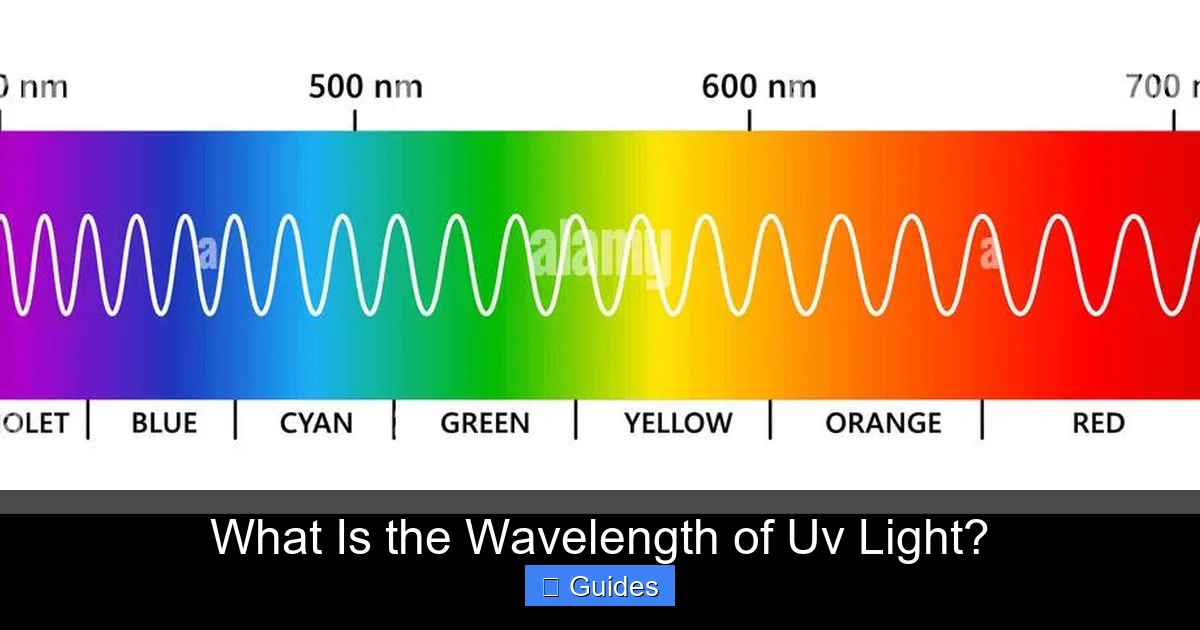
Visible light, the light we can see, ranges from approximately 400 nm (violet) to 700 nm (red). Ultraviolet light sits just beyond the violet end of this visible spectrum, hence its name “ultra-violet.” This means the wavelength of UV light is shorter than visible light, specifically ranging from about 10 nanometers (nm) to 400 nm. Because it has a shorter wavelength than visible light, it also has higher frequency and carries more energy. This higher energy is what gives UV light its unique properties and, in some cases, its potential for harm.
The Wavelength of UV Light: A Closer Look at Its Categories
While the entire UV spectrum spans from 10 nm to 400 nm, it’s commonly divided into three main categories based on the wavelength of UV light: UVA, UVB, and UVC. These distinctions are critical because each type interacts differently with matter, especially living organisms, and has varying implications for health and technology.
UVA: The Longest Wavelength (320-400 nm)
UVA light has the longest wavelength of UV light, ranging from 320 to 400 nanometers. It’s often referred to as “black light” because it can make certain materials glow without appearing visible itself.
- Penetration: UVA light penetrates deeply into the skin, reaching the dermis, the skin’s thickest layer. It also passes relatively easily through glass and clouds.
- Earth’s Surface: About 95% of the UV radiation that reaches Earth’s surface is UVA. This means you’re exposed to UVA every day, year-round, regardless of the weather.
- Effects: UVA is primarily responsible for skin aging (wrinkles, leathery skin), sagging, and contributes to skin cancer development. It can also suppress the immune system. Tanning beds primarily emit UVA light, which, despite the belief it’s safer, still poses significant health risks.
UVB: The Medium Wavelength (280-320 nm)
UVB light has a medium wavelength of UV light, falling between 280 and 320 nanometers. It’s the type of UV light we most commonly associate with the sun’s immediate effects.
- Penetration: UVB light primarily affects the outer layers of the skin (epidermis) and is largely responsible for direct DNA damage. It cannot penetrate glass as easily as UVA.
- Earth’s Surface: Only about 5% of the UV radiation that reaches Earth’s surface is UVB. The intensity of UVB varies significantly by season, time of day, and geographical location, being strongest in summer, midday, and at higher altitudes. The ozone layer absorbs most UVB.
- Effects: UVB is the main cause of sunburn and plays a significant role in developing skin cancer, including melanoma. However, it also has a crucial beneficial effect: it triggers the production of Vitamin D in the skin, which is vital for bone health and immune function.
UVC: The Shortest Wavelength (100-280 nm)
UVC light has the shortest wavelength of UV light, ranging from 100 to 280 nanometers. This makes it the most energetic and potentially dangerous form of UV radiation.
- Penetration: UVC is so energetic that it is almost completely absorbed by the Earth’s ozone layer, oxygen, and water vapor in the atmosphere before it even reaches the surface. It can’t penetrate even the outermost dead layer of human skin.
- Earth’s Surface: Virtually no natural UVC from the sun reaches Earth’s surface.
- Effects: If it were to reach us, UVC would be extremely harmful to all living organisms, causing severe damage to DNA and proteins. However, artificial UVC sources are used for their powerful germicidal properties to kill bacteria, viruses, and other microorganisms in air, water, and on surfaces.
Why Wavelength Matters: Impact on Living Organisms and Materials
The specific wavelength of UV light determines its biological and material interactions. This is a critical concept, as it explains why different types of UV light have different effects and why our protective measures need to be tailored accordingly.
Biological Impacts: From DNA Damage to Vitamin D
The higher energy associated with shorter UV wavelengths means a greater potential for damage to biological molecules like DNA and proteins.
- DNA Damage: Both UVB and UVC can directly damage DNA by causing molecular changes that disrupt its structure. If these changes aren’t repaired correctly by the cell, they can lead to mutations and, ultimately, cancer. UVA can also cause indirect DNA damage by generating reactive oxygen species.
- Skin Damage: UVA’s long wavelength allows it to penetrate deep, accelerating skin aging by damaging collagen and elastin fibers. UVB, with its medium wavelength, causes the immediate redness and pain of sunburn, indicative of damage to skin cells. Both contribute to skin cancer.
- Eye Damage: Prolonged exposure to any form of UV light can damage the eyes, leading to conditions like photokeratitis (sunburn of the cornea), cataracts, and pterygium (growth on the conjunctiva).
- Vitamin D Production: Only UVB light, with its specific wavelength range, has the energy required to convert a precursor molecule in our skin into Vitamin D3. This highlights a beneficial aspect of certain UV wavelengths.
Material Degradation: The Unseen Force of Aging
Beyond living organisms, UV light, particularly UVA and UVB, can significantly impact various materials, leading to degradation over time.
- Plastics: Many plastics, especially those exposed outdoors, become brittle, discolored, and lose strength due to UV exposure. This process is called “photodegradation.”
- Paints and Coatings: The pigments in paints can fade, and the binders can break down, leading to chalking and peeling of outdoor finishes.
- Fabrics: Textiles, especially natural fibers, can weaken and fade when constantly exposed to sunlight, losing their structural integrity and vibrant colors.
Understanding the specific wavelength of UV light responsible for these effects helps manufacturers develop UV-resistant materials and coatings.
Measuring and Protecting Against UV Wavelengths
Given the diverse impacts of different UV wavelengths, it’s clear that protection is paramount. Our strategies for protection are directly informed by our understanding of how UV light behaves.
The UV Index: Your Daily Guide
The UV Index is an international standard measurement of the strength of UV radiation at a particular place and time. It ranges from 0 (low) to 11+ (extreme). While it doesn’t specify the exact wavelength of UV light, it provides an overall risk assessment, predominantly influenced by UVB and UVA levels reaching the Earth’s surface. Higher UV Index values mean a greater risk of sunburn and skin damage, requiring more stringent protective measures.
Sunscreens: Your Invisible Shield
When choosing sunscreen, understanding UV wavelengths is key.
- SPF (Sun Protection Factor): This primarily indicates protection against UVB rays, which cause sunburn. An SPF of 30 means it would theoretically take 30 times longer for your skin to burn than if you weren’t wearing sunscreen.
- Broad-Spectrum: This crucial label means the sunscreen protects against both UVA and UVB rays. Since UVA contributes to aging and cancer and penetrates deeper, broad-spectrum protection is essential for comprehensive skin health. Look for ingredients like zinc oxide or titanium dioxide, or specific chemical filters that block UVA.
Beyond Sunscreen: Practical Protection Tips
While sunscreen is vital, it’s just one tool in your UV protection arsenal:
Visual guide about What Is the Wavelength of Uv Light?
Image source: c8.alamy.com
- Protective Clothing: Long-sleeved shirts, pants, and wide-brimmed hats offer excellent protection, especially if they are made from UV-protective fabric (UPF-rated). The tighter the weave, the better the protection.
- Sunglasses: Choose sunglasses that block 99% or 100% of both UVA and UVB rays. Look for labels like “UV400” or “100% UV protection.”
- Seek Shade: Especially during peak UV hours (typically 10 AM to 4 PM), staying in the shade significantly reduces your exposure.
- Beware of Reflections: Water, snow, sand, and even concrete can reflect UV rays, increasing your exposure even when in the shade. Snow can reflect up to 80% of UV radiation!
Applications of UV Light Across Different Wavelengths
It’s not all about protection! The unique properties of different UV wavelengths allow us to harness this invisible light for a wide array of beneficial applications across various industries.
UVC: The Germicidal Powerhouse (100-280 nm)
Because of its short wavelength and high energy, UVC light is incredibly effective at destroying the DNA and RNA of bacteria, viruses, and other pathogens, rendering them unable to reproduce or cause infection.
- Water Purification: UVC lamps are used in municipal water treatment plants and home filters to disinfect drinking water without chemicals.
- Air Purification: HVAC systems and air purifiers often incorporate UVC lights to sterilize circulating air, reducing airborne pathogens.
- Surface Disinfection: Hospitals, laboratories, and now even public transport use UVC robots or handheld devices for rapid and effective surface sterilization.
- Food Processing: UVC can be used to disinfect surfaces in food processing plants and even treat fresh produce to extend shelf life and reduce contamination.
UVA & UVB: Industrial and Medical Uses
While UVC is specialized for sterilization, UVA and UVB also have critical roles.
- Curing and Hardening: UVA and sometimes UVB are used in industrial processes to quickly cure (harden) resins, inks, and coatings. This is common in dentistry (filling cavities), nail salons (gel polish), and manufacturing.
- Forensics and Counterfeit Detection: UVA “black lights” are used to detect bodily fluids (which fluoresce), authenticate currency, passports, and art (looking for hidden security features or alterations).
- Tanning Beds: These primarily emit UVA, with some UVB, to stimulate melanin production and darken the skin. However, as noted, this comes with significant health risks.
- Phototherapy (Medical Treatment): Specific narrowband UVB (around 311-313 nm) is used under medical supervision to treat skin conditions like psoriasis, eczema, and vitiligo. It helps to slow down rapid skin cell growth or stimulate pigment production in a controlled manner.
Conclusion: The Invisible Power of Wavelength
As we’ve explored, the world of UV light is far more nuanced than a simple “good” or “bad” label. The specific wavelength of UV light dictates its energy, its ability to penetrate, and ultimately, its impact on our health and environment. From the pervasive, aging effects of UVA to the sunburn-causing, Vitamin D-producing UVB, and the germ-killing, ozone-absorbed UVC, each segment of this invisible spectrum plays a distinct role.
Understanding the wavelength of UV light empowers us to make informed decisions – whether it’s choosing the right sunscreen, investing in UV-blocking eyewear, or appreciating the technology that harnesses UV for purification and industrial applications. While we cannot see these wavelengths, their effects are undeniably present in our daily lives. By respecting their power and understanding their nuances, we can better protect ourselves and intelligently utilize this remarkable form of energy for the benefit of all.
🎥 Related Video: Wavelengths of Different Lights #shorts #gk #physics
📺 Offbeat Knowledge
Frequently Asked Questions
What is a nanometer (nm) and why is it used to measure UV light?
A nanometer (nm) is a unit of length equal to one billionth of a meter (10^-9 meters). It’s used to measure the wavelength of UV light because these wavelengths are incredibly tiny, making nanometers a convenient and precise unit for these microscopic distances.
Can different UV wavelengths penetrate glass?
Yes, but to varying degrees. UVA light, with its longer wavelength, can pass through most common window glass relatively easily. UVB light is largely blocked by glass, while UVC light is completely blocked, even by thin panes of glass.
Does the wavelength of UV light change with altitude or time of day?
The actual wavelength of UV light itself doesn’t change, but the amount and intensity of different UV wavelengths reaching the Earth’s surface do. At higher altitudes and closer to midday, more UVB (and UVA) can penetrate the atmosphere due to a shorter path through the ozone layer.
Are artificial UV light sources, like tanning beds, dangerous?
Yes, artificial UV light sources, including tanning beds, are dangerous. They primarily emit UVA, with some UVB, at intensities that can significantly increase the risk of skin cancer, premature aging, and eye damage, regardless of the specific wavelength of UV light they produce.
How does the wavelength of UV light affect its use in sterilization?
The shorter wavelength and high energy of UVC light (100-280 nm) make it highly effective for sterilization. This specific wavelength of UV light directly damages the DNA and RNA of microorganisms, preventing them from replicating and rendering them harmless.
Is there a “safe” wavelength of UV light?
While UVC from the sun doesn’t reach us naturally, no UV wavelength is entirely “safe” for unprotected exposure. All forms of UV radiation carry potential risks, with specific effects depending on the wavelength and duration of exposure. Controlled, medical-grade narrowband UVB is used therapeutically, but always under strict supervision.
