


UV light originates primarily from the sun, a natural nuclear fusion reactor that emits a broad spectrum of electromagnetic radiation. However, understanding “Where Does UV Light Come From?” also reveals numerous man-made sources like tanning beds, germicidal lamps, and specialized industrial equipment. These diverse origins mean UV light has varied impacts, making awareness and protection crucial for health and safety.
Have you ever wondered about that invisible energy that gives you a tan, causes sunburn, or even helps disinfect surfaces? We’re talking about ultraviolet (UV) light! It’s all around us, often without us even realizing it. But if you stop to think about it, a fundamental question pops up: “Where does UV light come from?” It’s a great question, and the answer is more diverse and fascinating than you might initially imagine.
Most people immediately think of the sun when UV light comes to mind, and they’re absolutely right! The sun is, without a doubt, the most significant natural source of UV radiation. But the story doesn’t end there. There’s a whole world of man-made UV sources, each designed for specific purposes, from giving you a glow to purifying water. Understanding these various origins helps us appreciate UV’s presence in our lives and, more importantly, how to interact with it safely.
So, let’s dive deep and explore the many places where UV light comes from. We’ll uncover its natural cosmic origins and then look at the clever ways humans have learned to create and harness this powerful form of energy. Get ready to shine a light on the invisible!
Key Takeaways
- The Sun is the Primary Source: Our sun is by far the most significant natural source of UV radiation, produced through nuclear fusion in its core.
- Man-Made Sources are Ubiquitous: Beyond the sun, many artificial devices generate UV, including tanning beds, germicidal lamps, black lights, and industrial curing systems.
- UV Comes in Different Forms: UV light is categorized into UVA, UVB, and UVC, each with different wavelengths and biological effects.
- Atmosphere Filters UV: Earth’s atmosphere, particularly the ozone layer, plays a crucial role in absorbing most UVC and a significant portion of UVB radiation before it reaches the surface.
- Factors Influence Exposure: Where does UV light come from to reach us? Its intensity depends on factors like time of day, season, altitude, latitude, clouds, and reflective surfaces.
- Dual Nature of UV: UV light offers benefits, such as Vitamin D production and sterilization, but also poses risks like skin damage, premature aging, and eye harm.
- Protection is Essential: Awareness of UV sources and practicing sun-safe behaviors are vital for mitigating the potential health risks associated with excessive UV exposure.
Quick Answers to Common Questions
What are the three main types of UV light?
The three main types of UV light are UVA, UVB, and UVC. They are categorized by their wavelength, with UVA having the longest waves and UVC having the shortest and most energetic waves.
Which type of UV light is mostly blocked by the ozone layer?
The ozone layer effectively blocks 100% of UVC radiation and most of the UVB radiation, preventing these highly damaging forms of UV light from reaching the Earth’s surface.
Do tanning beds emit the same UV as the sun?
Tanning beds are designed to emit UV radiation, primarily UVA with some UVB, mimicking the spectrum of sunlight that reaches Earth. However, the intensity and specific ratios can differ from natural sun exposure.
Can clouds block all UV light?
No, clouds do not block all UV light. While heavy, dark clouds can reduce UV levels significantly, lighter clouds can sometimes scatter UV rays, potentially increasing exposure. It’s still important to protect yourself on cloudy days.
What natural source of UV exists besides the sun?
Besides the sun, other stars in the universe emit UV radiation, and lightning strikes can also produce a small, localized amount of UV light through the ionization of air.
📑 Table of Contents
Understanding UV Light: A Quick Primer
Before we talk about where UV light comes from, let’s quickly understand what it actually is. UV light is a type of electromagnetic radiation. Think of it like a cousin to visible light, radio waves, or X-rays. They all travel in waves, but UV waves are shorter than visible light waves and longer than X-ray waves. This means they carry more energy than visible light, which is why they can have such a strong impact on our bodies and other materials.
The Electromagnetic Spectrum and UV
The electromagnetic spectrum is a fancy way of saying “all the different kinds of light.” UV light sits just beyond the violet end of the visible light spectrum. Our eyes can’t see it, but we can certainly feel its effects! UV light is typically divided into three main types, based on their wavelength:
- UVA (Ultraviolet A): This has the longest wavelength of the UV types. Most UVA light reaches the Earth’s surface. It’s associated with skin aging and wrinkling, and it contributes to tanning. Where does UV light come from that causes aging? Often, it’s UVA!
- UVB (Ultraviolet B): These waves are shorter than UVA. A significant portion of UVB is absorbed by the ozone layer, but some still reaches us. UVB is the primary cause of sunburn and plays a key role in developing skin cancer. It’s also essential for Vitamin D production in our skin.
- UVC (Ultraviolet C): These are the shortest and most energetic UV waves. Thankfully, all UVC light is completely absorbed by the Earth’s ozone layer and atmosphere before it can reach the surface. This is a good thing, because UVC is extremely damaging to living organisms. However, man-made UVC sources are used for specific purposes, which we’ll explore.
So, when we ask where does UV light come from, we’re really asking about the origins of these three distinct types of radiation.
The Sun: Our Primary Natural UV Source
Visual guide about Where Does Uv Light Come From?
Image source: cdn.mos.cms.futurecdn.net
When considering where UV light comes from, the sun is undoubtedly the biggest and most obvious answer. Our sun is a colossal nuclear fusion reactor, continuously converting hydrogen into helium in its core. This process releases an incredible amount of energy, which radiates outwards into space across the entire electromagnetic spectrum, including visible light, infrared, and, of course, UV light.
Solar Radiation and Its Journey
The sun emits all three types of UV light: UVA, UVB, and UVC. However, what reaches us here on Earth is a different story. As this solar radiation travels through space and then encounters our planet’s atmosphere, a natural filtering process occurs.
The Earth’s atmosphere acts like a protective shield. The ozone layer, located in the stratosphere, is particularly good at absorbing UV radiation. It effectively blocks 100% of UVC radiation and most of the UVB radiation. Without this vital ozone layer, life on Earth as we know it would be impossible, as the highly energetic UVC and intense UVB would sterilize the surface.
Therefore, when you’re basking in sunlight, the UV light reaching your skin is primarily UVA (about 95%) and a smaller percentage of UVB (about 5%). So, where does UV light come from that gives you a tan or a sunburn? Almost entirely from the sun, filtered by our planet’s natural defenses.
Man-Made UV Sources: From Everyday to Industrial
While the sun is the ultimate natural source, humans have become quite adept at creating artificial sources of UV light for a wide range of applications. These man-made sources answer the question, “Where does UV light come from?” in a very different way, showing how technology can harness natural phenomena.
1. Tanning Beds and Sun Lamps
Perhaps the most well-known man-made source of UV light is the tanning bed. These devices are specifically designed to emit UV radiation to simulate sun exposure and produce a cosmetic tan. Most tanning beds emit primarily UVA, with a smaller amount of UVB, mimicking the sun’s natural spectrum that reaches the Earth. The goal is to stimulate melanin production in the skin, which creates the tanned appearance. While effective for tanning, it’s crucial to remember that this UV exposure still carries the same risks as natural sunlight, including premature skin aging and an increased risk of skin cancer. So, where does UV light come from for your indoor tan? These specialized lamps!
2. Germicidal Lamps (UV-C Lamps)
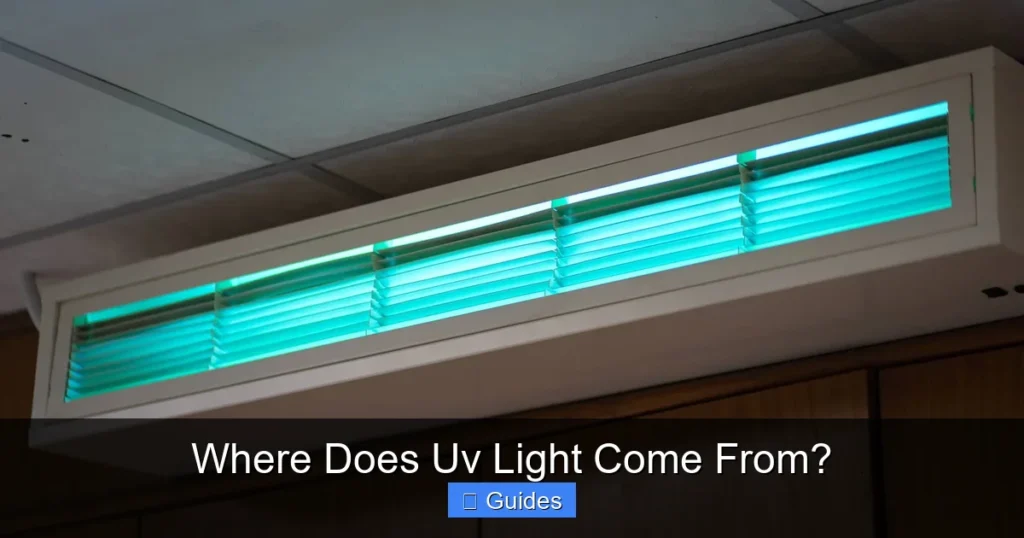
Remember how we said UVC light is the most dangerous but also completely blocked by the atmosphere? Well, humans have learned to create UVC light intentionally! These are called germicidal lamps, and they emit UVC radiation that is highly effective at killing bacteria, viruses, and other microorganisms. Because of its destructive power on DNA and RNA, UVC light is widely used for disinfection in hospitals, laboratories, water purification systems, and even air conditioning units. It’s a powerful tool for sterilization, but direct exposure to germicidal UVC is extremely dangerous for humans, causing severe skin and eye damage. So, for effective sterilization, where does UV light come from? Specialized UVC lamps.
3. Black Lights (UV-A Lamps)
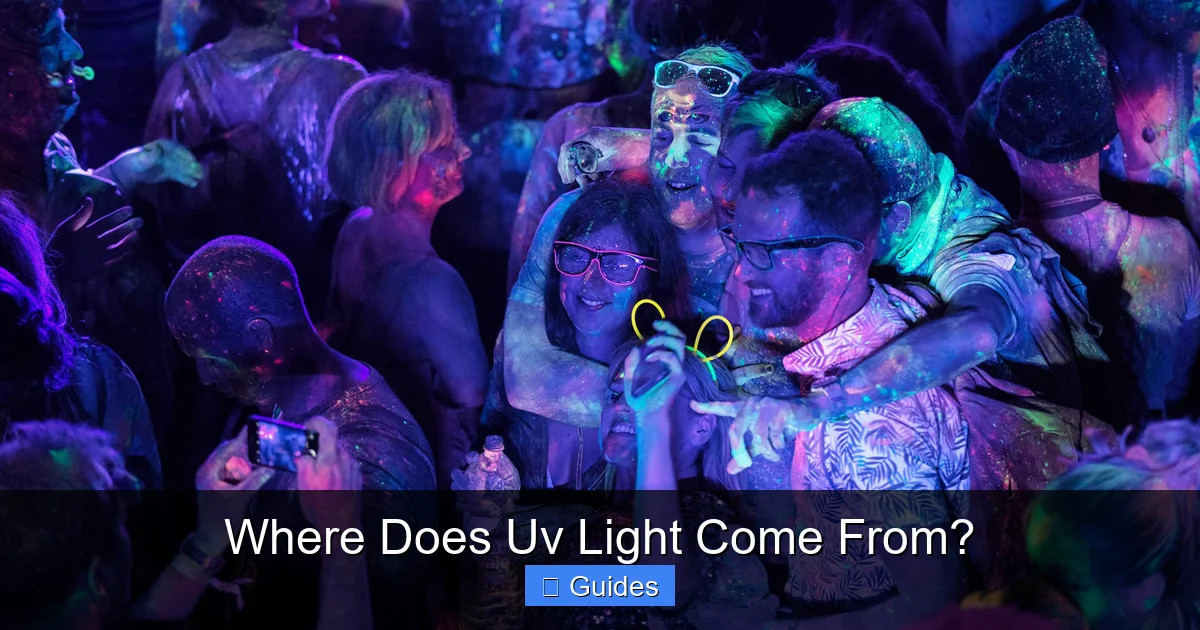
Black lights are a fun and common man-made UV source. These lights emit mainly UVA radiation, with very little visible light. What makes them so interesting is their ability to make certain materials glow or “fluoresce.” Many dyes, inks, and even some natural substances absorb the invisible UVA light and then re-emit it as visible light, creating that distinctive glowing effect. You’ll find black lights used in entertainment (like at parties or clubs), for theatrical effects, to detect counterfeit currency (many banknotes have fluorescent security features), and in forensic investigations to reveal hidden stains or fingerprints. So, where does UV light come from that makes posters glow? Black lights!
4. Industrial Curing Lamps
In manufacturing and industry, UV light plays a critical role in “curing” or hardening various materials. UV curing technology is used to quickly dry inks, coatings, and adhesives. This process uses lamps that emit high-intensity UVA and sometimes UVB radiation. The UV light triggers a chemical reaction in specially formulated materials, causing them to solidify rapidly. This method is incredibly efficient and environmentally friendly, as it often eliminates the need for solvents. You’ll find UV curing used in dentistry (for bonding agents and fillings), printing, electronics manufacturing, and automotive finishes. This is another industrial answer to where does UV light come from.
5. Medical and Diagnostic Tools
UV light also has several applications in medicine. For example, specific UV lamps are used to treat certain skin conditions like psoriasis and vitiligo. These phototherapy treatments carefully control the dose and type of UV light (often UVB) to suppress inflammation and stimulate skin cells. In diagnostics, UV lamps can be used to visualize skin conditions or fungal infections that fluoresce under UV light. Specialized UV sources are also used in laboratories for DNA analysis and sterilization of equipment.
Minor Natural UV Sources Beyond the Sun
While the sun is the undisputed king of natural UV production, it’s worth noting that other minor natural phenomena can also produce UV light. These are far less significant in terms of widespread exposure but demonstrate the diverse natural processes that generate UV. So, where does UV light come from in these rarer instances?
1. Other Stars
Just like our sun, other stars in the universe also emit UV radiation as part of their electromagnetic spectrum. Some stars, particularly very hot, young, and massive stars, emit significantly more UV radiation than our sun. Thankfully, the vast distances between these stars and Earth, along with interstellar gas and dust, mean that this cosmic UV light rarely contributes to our direct exposure.
2. Lightning
During a lightning strike, the intense heat and electrical discharge ionize the air, creating a plasma that emits a broad spectrum of electromagnetic radiation, including a small amount of UV light. While fascinating, the UV produced by lightning is localized and short-lived, posing no significant widespread exposure risk.
Factors Affecting UV Exposure and Intensity
Understanding “where does UV light come from?” is only part of the story. Equally important is understanding how much of that UV light actually reaches us and what factors influence its intensity. It’s not just about the source, but also the journey!
1. Time of Day and Year
The sun’s angle in the sky is a major factor. UV radiation is most intense when the sun is highest in the sky, typically between 10 AM and 4 PM during spring and summer months. During these times, the sun’s rays travel through less of the Earth’s atmosphere, reducing the amount of UV light that gets scattered or absorbed. In winter, or early mornings and late afternoons, the sun’s rays pass through more atmosphere, filtering out more UV.
2. Latitude and Altitude
If you’re wondering where does UV light come from with the most intensity, consider your location. UV radiation is generally stronger closer to the equator (lower latitudes) because the sun’s rays hit the Earth more directly. At higher altitudes (like in the mountains), there’s less atmosphere to filter the UV radiation, leading to higher intensity. For every 1,000 meters (about 3,280 feet) increase in altitude, UV levels increase by about 10-12%.
3. Cloud Cover and Weather
Clouds can block some UV radiation, but they don’t offer complete protection. Thin or scattered clouds can actually scatter UV light, sometimes *increasing* overall exposure due to reflections. Heavy, dark thunderclouds block more UV. It’s a common misconception that if it’s cloudy, you don’t need sun protection. UV rays can still penetrate clouds, so don’t be fooled!
4. Reflective Surfaces
Different surfaces reflect UV radiation to varying degrees, significantly increasing your exposure. For example:
- Snow: Can reflect up to 80% of UV radiation. This is why skiers often get severe sunburns.
- Sand: Reflects about 15% of UV radiation.
- Water: Reflects about 10% of UV radiation, and UV can also penetrate water up to several feet.
- Concrete: Reflects about 10% of UV radiation.
These reflections mean that even if you’re under an umbrella, UV light can still reach you from below and around.
5. The Ozone Layer
As mentioned, the ozone layer is our planet’s natural shield against the most harmful UVC and much of the UVB. Changes in the ozone layer (like temporary depletions) can lead to increased UV radiation reaching the Earth’s surface. Environmental efforts to protect the ozone layer are therefore crucial for our continued protection from harmful UV.
The Impact of UV: Good, Bad, and Protecting Yourself
Now that we’ve covered “where does UV light come from” and how its intensity varies, let’s briefly touch on its double-edged sword nature and, crucially, how to protect yourself.
The Good Side of UV Light
- Vitamin D Production: UVB exposure is essential for our bodies to produce Vitamin D, a vital nutrient for bone health, immune function, and overall well-being. A short, sensible amount of sun exposure can be beneficial.
- Sterilization and Disinfection: As seen with germicidal lamps, UVC light is an incredibly effective disinfectant, killing harmful pathogens in water, air, and on surfaces.
- Medical Treatments: Controlled UV exposure is used to treat certain skin conditions.
The Bad Side of UV Light
Excessive or unprotected exposure to UV light, particularly from the sun or tanning beds, can lead to:
- Sunburn: An inflammatory reaction to overexposure to UVB, causing pain, redness, and blistering.
- Skin Damage and Premature Aging: UVA light penetrates deeper into the skin, contributing to wrinkles, fine lines, age spots, and loss of skin elasticity.
- Skin Cancer: Both UVA and UVB contribute to the development of skin cancers, including basal cell carcinoma, squamous cell carcinoma, and the most dangerous form, melanoma.
- Eye Damage: UV exposure can cause painful conditions like photokeratitis (like a sunburn of the eye) and contribute to long-term problems such as cataracts and pterygium (growths on the eye).
- Immune System Suppression: High levels of UV radiation can temporarily weaken the skin’s local immune system.
Protecting Yourself from UV Radiation
Given the widespread presence of UV light, whether from the sun or man-made sources, protection is key:
- Seek Shade: Especially during peak UV hours (10 AM to 4 PM).
- Wear Protective Clothing: Long-sleeved shirts, pants, and wide-brimmed hats offer excellent protection. Look for UPF (Ultraviolet Protection Factor) clothing.
- Use Sunscreen: Apply broad-spectrum sunscreen with an SPF of 30 or higher liberally and reapply every two hours, or more often if swimming or sweating.
- Wear UV-Blocking Sunglasses: Protect your eyes from harmful UV rays. Look for labels that say “UV400” or “100% UV protection.”
- Be Aware of Reflections: Remember that surfaces like snow, sand, and water can increase your exposure.
- Avoid Tanning Beds: The UV exposure from tanning beds significantly increases the risk of skin cancer.
- Use Caution with Germicidal Lamps: Never look directly at or expose your skin to operating UVC germicidal lamps.
Conclusion
So, “Where does UV light come from?” The answer, as we’ve seen, is both cosmic and close to home. Our sun is the magnificent, life-giving powerhouse that bathes our planet in natural UV, crucial for processes like Vitamin D synthesis. Yet, our ingenuity has also led us to create a diverse array of man-made UV sources, each serving specific purposes from tanning and entertainment to essential disinfection and industrial curing.
Understanding the origins and characteristics of UV light is not just a matter of scientific curiosity; it’s a vital part of staying safe and healthy in our daily lives. By knowing where UV light comes from and how it interacts with our environment, we can better appreciate its benefits, mitigate its risks, and enjoy a healthier relationship with this powerful, invisible force. Stay informed, stay protected!
🎥 Related Video: The Science of UV Light 🔦 Explained in 20 Seconds ✅
📺 hcraft
Ultraviolet (UV) light is a type of electromagnetic radiation just beyond the violet part of visible light. 👁️✨ Though invisible to us, …
Frequently Asked Questions
Is all UV light bad for you?
Not all UV light is bad. For instance, UVB light is essential for our bodies to produce Vitamin D, which is vital for bone health. Controlled UV exposure is also used in medical treatments for certain skin conditions and UVC light is crucial for sterilization.
Can UV light pass through glass?
Yes, most common window glass blocks UVB and UVC light very effectively, but it allows most UVA light to pass through. This is why you can still get skin aging from sun exposure through a window, even if you don’t get a sunburn.
Does UV light only come from hot objects?
While extremely hot objects like the sun certainly emit UV light, not all UV sources are hot. For example, a black light (which emits UVA) feels cool to the touch, and germicidal UVC lamps generate UV through electrical discharge in gas, not necessarily extreme heat.
Why is UVC light used for sterilization?
UVC light is used for sterilization because its short, high-energy wavelengths are very effective at damaging the DNA and RNA of microorganisms like bacteria, viruses, and fungi. This damage prevents them from reproducing and renders them harmless.
How does altitude affect UV exposure?
At higher altitudes, there is less atmosphere above you to absorb and scatter UV radiation. This means that for every 1,000 meters (or roughly 3,280 feet) increase in altitude, UV levels can increase by approximately 10-12%, making sun protection even more important in mountainous regions.
Are “black lights” dangerous?
Black lights primarily emit UVA light, which is less harmful than UVB or UVC. While prolonged, direct exposure to the high-intensity UVA of some black lights could potentially cause mild eye irritation, they are generally considered safe for casual use. However, it’s always wise to avoid staring directly into any light source.
