


Bugs are attracted to UV light primarily because their vision extends into the ultraviolet spectrum, unlike humans. This attraction, known as positive phototaxis, combined with their reliance on celestial bodies for navigation, causes them to become disoriented by artificial light sources. Understanding why bugs are attracted to UV light helps us choose better lighting and manage insect populations more effectively.
Have you ever noticed how, as dusk settles and you flick on an outdoor light, an impromptu insect rave begins? Moths flutter wildly, beetles bump clumsily, and mosquitoes seem to declare open season on anyone nearby. It’s a universal experience, and it often leaves us wondering: what exactly is it about our lights that bugs find so utterly irresistible? Specifically, why are bugs attracted to UV light, which we can’t even see?
This seemingly simple question unravels a fascinating story about insect biology, evolution, and a profound misunderstanding between our artificial world and their ancient instincts. It’s not just about a pretty glow; it’s about survival, navigation, and the very way insects perceive their environment. Understanding this phenomenon isn’t just a matter of curiosity; it can empower us to make smarter lighting choices and manage those pesky visitors more effectively.
In this guide, we’re going to dive deep into the world of insect vision, explore their innate behaviors, and uncover the scientific reasons behind their attraction to UV light. We’ll discuss how this knowledge is used in everyday pest control and, more importantly, how you can use it to create a more bug-free outdoor space. So, let’s shed some light on this buzzing mystery!
Key Takeaways
- Different Vision: Insects possess photoreceptors that allow them to see light in the ultraviolet (UV) spectrum, a range invisible to the human eye. This is a primary reason why bugs are attracted to UV light.
- Positive Phototaxis: Many insects exhibit “positive phototaxis,” an instinctive behavior where they move towards light sources. This innate response is crucial for their survival, guiding them towards open spaces or away from predators.
- Celestial Navigation Confusion: Insects often navigate using distant natural light sources like the moon or stars. Artificial UV lights disrupt this sophisticated navigational system, causing them to circle uncontrollably around the light source.
- Specific Wavelengths Matter: Not all UV light is equally attractive. Many insects are most sensitive to UVA wavelengths (315-400 nm), which is why bug zappers often use black lights emitting in this range.
- Exploiting Attraction: The principle of bugs being attracted to UV light is leveraged in devices like bug zappers, which use UV lamps to lure and eliminate insects.
- Mitigation Strategies: Understanding this attraction allows for practical solutions, such as swapping traditional light bulbs for “bug-friendly” yellow or orange LED lights that emit less UV and blue light, or strategically placing lights away from living areas.
- Not All Bugs Are Equal: While many nocturnal insects are drawn to UV light, some insects are not, and others are even repelled by certain light wavelengths, highlighting the diversity of insect responses.
Quick Answers to Common Questions
Do all bugs see UV light?
No, not all bugs see UV light. While many insects, especially nocturnal ones and pollinators like bees, have photoreceptors sensitive to UV wavelengths, others do not, or are more attracted to other light spectrums or sensory cues.
Is UV light harmful to bugs?
While intense UVC light is germicidal and can be harmful, the UVA light commonly used in bug zappers is not directly harmful in the same way. The harm to bugs in a zapper comes from the electrified grid, not the UV light itself, which serves only as an attractant.
Why do bug zappers use UV light?
Bug zappers use UV light because many insects are highly attracted to its specific wavelengths (primarily UVA). This exploits their natural positive phototaxis and UV vision, drawing them into the electrified grid for elimination.
Can I buy UV-blocking lights?
Instead of “UV-blocking” lights, you can buy lights that emit very little to no UV light. These are typically yellow-spectrum LED “bug lights” or warm-white LEDs, which reduce the appealing wavelengths that attract most insects.
Do “yellow” bug lights work?
Yes, yellow bug lights work by emitting light predominantly in the yellow-orange spectrum, which contains very little UV and blue light. Since many insects are not attracted to these longer wavelengths, these lights significantly reduce the number of bugs that gather around them.
📑 Table of Contents
The Insect Eye: A Different Perspective
To understand why bugs are attracted to UV light, we first need to appreciate that insects don’t see the world in the same way we do. Our human eyes are incredible, but they have their limitations. Insects, on the other hand, possess a visual system that is remarkably different and perfectly tuned to their ecological needs.
Beyond Human Vision: The UV Spectrum
Humans can typically see light in a spectrum ranging from red to violet, which we call the visible spectrum (roughly 400-700 nanometers or nm). Anything beyond violet, like ultraviolet (UV) light, is invisible to us. For many insects, however, the UV spectrum (specifically UVA, 315-400 nm) is not only visible but also a crucial part of their visual world. They literally see light that we cannot. This is perhaps the most fundamental reason why bugs are attracted to UV light. Many insects have photoreceptors that are highly sensitive to UV wavelengths, sometimes even more so than to visible light. For them, a UV light source isn’t just glowing; it’s shining brightly in a spectrum of colors we can’t even perceive.
Compound Eyes and Photoreceptors
Most insects possess compound eyes, made up of thousands of individual light-sensing units called ommatidia. Each ommatidium has its own lens and photoreceptor cells. While a human eye typically has three types of color photoreceptors (for red, green, and blue), many insects have additional types, often including one sensitive to UV light. This specialized vision allows them to detect UV patterns on flowers (which guide them to nectar), identify mates, or even spot predators. For example, many flowers have intricate UV patterns that act as “nectar guides,” visible only to pollinators like bees and butterflies. So, when an artificial light emits UV, insects perceive it as a prominent beacon in their environment.
Positive Phototaxis: A Natural Instinct
Visual guide about Why Are Bugs Attracted to Uv Light?
Image source: electricflykillers.com
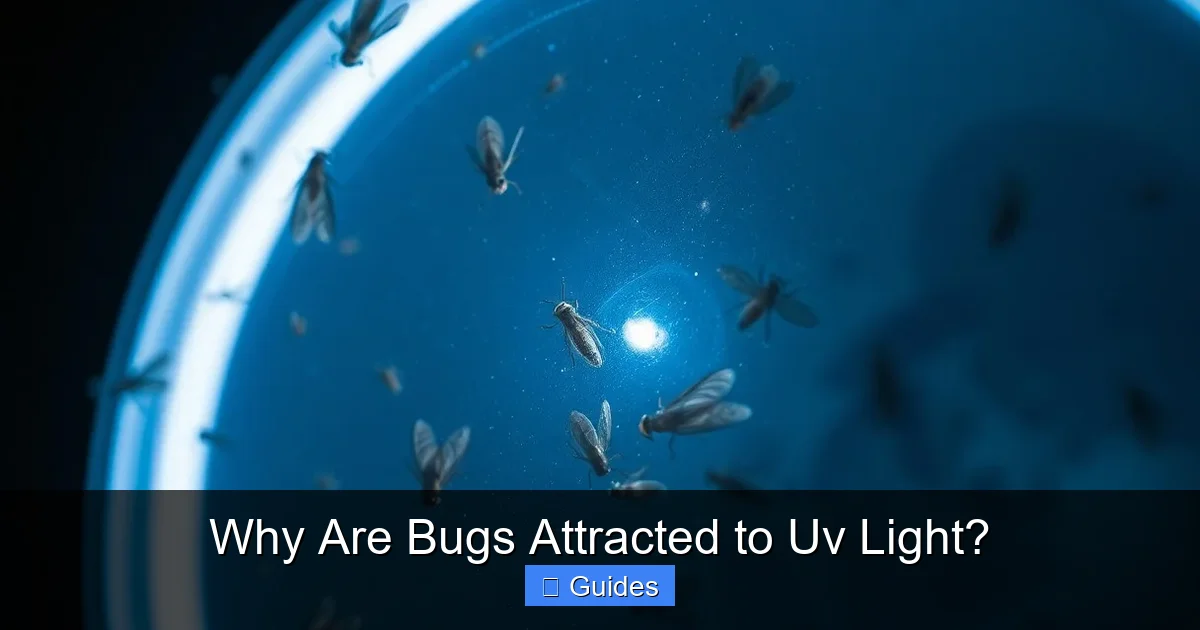
Beyond just seeing UV light, many insects also possess an innate behavioral response called “positive phototaxis.” This simply means they are instinctively drawn towards light sources. It’s a fundamental aspect of their biology, hardwired into their nervous system.
Instinctive Movement Towards Light
Think of it like gravity for objects; for many insects, light is a powerful, irresistible force. This isn’t a learned behavior but an automatic reaction. When they detect a light source, their brains trigger a movement response that directs them towards it. This instinct is incredibly strong and can override other stimuli, even those that might indicate danger. It’s a core reason why bugs are attracted to UV light and other bright lights.
Evolutionary Advantages of Light Attraction
Why would such an instinct evolve? In natural environments, moving towards light often has clear survival advantages. Light can signify open spaces, an escape route from predators hiding in shadows, or a clear path for flight. For nocturnal insects, natural light sources like the moon or stars provide essential navigational cues. For others, light indicates the canopy of trees, where food sources might be abundant. This ancient, beneficial instinct, however, becomes a liability when confronted with the dazzling intensity of modern artificial lights.
Celestial Navigation Gone Awry: The Lighthouse Effect
One of the most compelling and widely accepted theories for why bugs are attracted to UV light and other artificial lights involves their celestial navigation system. Insects, especially nocturnal ones, are master navigators, using distant light sources to orient themselves.
Using the Moon and Stars as a Compass
Imagine trying to walk in a straight line in the dark. You’d likely veer off course without a distant reference point. Insects face a similar challenge. For millennia, they have relied on the moon and stars as their celestial compass. By maintaining a constant angle relative to a distant, uniform light source (like the moon), they can fly in a straight line. The moon, being millions of miles away, effectively acts as a parallel light source.
The Peril of Point Source Light
Now, introduce a bright, artificial UV light source just a few feet away. This is where the problem arises. Unlike the distant moon, an outdoor lamp is a “point source” of light. When an insect tries to maintain a constant angle to this nearby light, it inevitably enters a spiral path that draws it closer and closer to the light. It’s akin to trying to navigate by a lighthouse when you’re accustomed to using a distant star. The lighthouse’s beam, though bright, will pull you into an ever-tightening circle. This phenomenon is often called “transverse orientation.” The insect is literally trying to fly in a straight line, but its navigational system is completely overwhelmed and confused by the close, intense artificial light. It gets trapped in a disorienting loop, unable to break free, relentlessly drawn to the light. This explains why bugs are attracted to UV light and other intense lights, often circling them until exhaustion.
Different Wavelengths, Different Bugs: Not All UV Is Equal
While the general principle holds true, it’s important to understand that not all light, even within the UV spectrum, has the same effect on all insects. The specific wavelength of light plays a crucial role in determining which insects are attracted and how strongly.
UVA: The Primary Attractant
When we talk about bugs being attracted to UV light, we are most often referring to UVA light (315-400 nm). This is the “black light” range, which is just beyond visible violet light. Many insects are highly sensitive to UVA, and it’s the primary wavelength used in commercial bug zappers and insect traps. These devices exploit the fact that why bugs are attracted to UV light is strongest in this particular band. UVB (280-315 nm) and UVC (100-280 nm) are also part of the ultraviolet spectrum, but they are generally less relevant for insect attraction or are actively harmful in high doses. UVC is often used for germicidal purposes and is rarely encountered by insects in significant amounts from artificial light sources.
Not All Insects Respond the Same
While many nocturnal insects (like moths, some beetles, and gnats) are strongly phototaxic and attracted to UV light, others are not. Mosquitoes, for example, are drawn to a combination of factors, including carbon dioxide, body heat, and specific odors, much more than solely to UV light. While they might be incidentally caught by a UV trap, it’s not their primary attractant. Some diurnal insects, like certain butterflies, use UV vision for communication or finding food but may not be drawn to strong artificial UV sources. There are even insects that are repelled by certain wavelengths of light. This nuance highlights that while why bugs are attracted to UV light is a general principle, specific responses vary greatly among species.
Other Attractants: Heat, CO2, and Scent
It’s also crucial to remember that light is just one of many signals insects use to navigate and find resources. Heat, carbon dioxide (CO2), and various chemical scents (pheromones or kairomones) are equally, if not more, important for many species. Mosquitoes, for instance, track down their blood meals by following CO2 plumes exhaled by mammals, detecting body heat, and sniffing out specific skin compounds. While a UV light might grab their attention, it’s often the combination with other lures that makes a trap truly effective for them.
The Practical Implications: Bug Zappers and Beyond
The understanding of why bugs are attracted to UV light has been put to practical use in various pest control methods, most notably the ubiquitous bug zapper. But how effective are these devices, and are there better ways to manage insect populations around our homes?
The Mechanics of a Bug Zapper
Bug zappers are designed to exploit the insect’s natural attraction to UV light. They typically consist of a UV lamp (often emitting UVA light) surrounded by an electrified grid. The light lures the insect towards it, and when the bug flies into contact with the grid, it completes an electrical circuit and is instantly electrocuted with a satisfying “zap!” This method directly leverages the insect’s positive phototaxis and its sensitivity to UV wavelengths.
Are Bug Zappers Truly Effective?
While bug zappers certainly kill insects, their overall effectiveness in reducing biting insect populations (like mosquitoes) is often debated. Studies have shown that traditional bug zappers are very good at killing non-biting insects, like moths and beetles, many of which are beneficial pollinators. However, they are far less effective at controlling mosquito populations, which, as mentioned, are primarily attracted to CO2, heat, and scent rather than just UV light. In fact, some research suggests that bug zappers can actually disrupt local ecosystems by indiscriminately killing beneficial insects. Moreover, the “zapping” process can aerosolize insect parts, potentially spreading bacteria and viruses. So, while they satisfy the urge for immediate insect removal, they might not be the most targeted or environmentally friendly solution for pest control. The understanding of why bugs are attracted to UV light needs to be applied carefully.
Smart Lighting Choices to Deter Bugs
Given that why bugs are attracted to UV light is a key factor in their presence, a more proactive approach involves choosing lighting that emits less of the spectrum insects find appealing. Incandescent bulbs emit a broad spectrum of light, including significant UV and blue light. Halogen lights are similar. Compact fluorescent lamps (CFLs) also emit a good deal of UV. LED lights, on the other hand, offer more control over the emitted spectrum. Warm-colored LEDs (yellow, orange, red) emit very little UV and blue light, making them significantly less attractive to most insects. This is why “bug lights” are typically yellow; they specifically reduce the wavelengths that lure insects.
Minimizing Unwanted Guests: Practical Tips
Now that we understand why bugs are attracted to UV light, we can use this knowledge to make our outdoor spaces more comfortable and less appealing to unwanted insect visitors. Here are some practical tips to minimize their presence.
Swap Your Bulbs
The easiest and most effective step is to replace your existing outdoor light bulbs with “bug-friendly” alternatives.
- Yellow LED Lights: These are specifically designed to emit very little light in the blue and UV spectrum. While they won’t repel every single bug, they will significantly reduce the number of insects drawn to your lights.
- Warm White LEDs: Even warm white LEDs (typically 2700K to 3000K color temperature) emit less blue and UV light than cooler white or incandescent bulbs, making them a better choice.
- Sodium Vapor Lights: These lights, often used in street lighting, emit primarily in the yellow-orange spectrum and are known to attract fewer insects.
Avoid traditional incandescent, halogen, and cool-white or daylight-spectrum LEDs for outdoor use, especially near gathering areas, as these emit more of the light that answers why bugs are attracted to UV light.
Strategic Lighting Placement
It’s not just about the type of light, but also where you put it.
- Illuminate Away from Your Home: Place lights further away from doors, windows, and patios. Use path lighting or spotlights to illuminate features in your yard, drawing bugs away from your living spaces.
- Use Motion Sensors: Install motion-sensing lights so they are only on when truly needed. Less “on” time means less attraction.
- Close Blinds and Curtains: Prevent indoor lights from spilling outside, especially through windows and glass doors, which can act as a beacon.
Physical Barriers and Other Deterrents
Lighting choices are powerful, but combining them with other strategies offers the best defense.
- Screens: Ensure all windows and doors have well-maintained screens to prevent insects from entering your home.
- Fans: Oscillating fans on patios or decks can create a breezy environment that makes it difficult for many flying insects, especially mosquitoes, to land or even fly effectively.
- Repellents: For personal protection, use EPA-approved insect repellents on exposed skin when spending time outdoors.
- Eliminate Standing Water: For mosquitoes, the best offense is a good defense: eliminate any standing water around your home where they can breed.
Conclusion
The persistent question of why bugs are attracted to UV light unravels a fascinating interplay of insect physiology and evolution meeting modern technology. It’s not a malicious act on their part, but a fundamental misinterpretation of our artificial world through their unique sensory filters. Their ability to see UV light, coupled with an instinctive drive towards light (positive phototaxis) and a navigational system designed for distant celestial bodies, creates the perfect recipe for their nightly congregation around our lamps.
By understanding these core principles – how insects see, how they navigate, and which specific light wavelengths attract them – we gain a powerful tool. We can move beyond mere annoyance to make informed choices about our outdoor lighting. Swapping out standard bulbs for bug-friendly yellow LEDs, strategically placing lights, and implementing other physical deterrents are all ways we can reduce unwanted insect encounters. So, the next time you see a moth circling your porch light, you’ll know it’s not just a bug, but a creature of instinct, trying to find its way in a world that has inadvertently become a bewildering maze of artificial beacons. By making conscious choices, we can all enjoy our outdoor spaces more peacefully, while respecting the natural world around us.
🎥 Related Video: why are bugs attracted to light?
📺 Reece Batts
Frequently Asked Questions
Why do moths fly into flames?
Moths fly into flames for similar reasons they’re attracted to UV light: they confuse the intense point source of light with distant celestial navigation cues. While attempting to maintain a constant angle to the “light,” they spiral inward, with the flame’s heat eventually causing harm or death.
Do mosquitos prefer UV light?
Mosquitoes are not primarily attracted to UV light. While they may be incidentally caught by UV traps, their main attractants are carbon dioxide, body heat, and specific chemical scents from their hosts. For mosquito control, other methods are generally more effective than just UV lights.
Are bug zappers safe for pets and humans?
Bug zappers are generally considered safe for pets and humans if used as intended, as the electrified grid is typically protected by a cage. However, direct contact with the internal grid can deliver a painful shock. Some concerns also exist about the potential spread of aerosolized insect parts.
What type of light attracts the fewest bugs?
Warm-colored LED lights, particularly those in the yellow or orange spectrum (often labeled as “bug lights” or with low color temperatures like 2000K-3000K), attract the fewest bugs. These lights emit minimal UV and blue light, which are the wavelengths most appealing to insects.
Does UV light have any natural purpose for bugs?
Yes, UV light has many natural purposes for bugs. Many insects use UV patterns on flowers to locate nectar, detect UV markings on mates for courtship, or even use the polarization of UV light in the sky for navigation, especially by pollinators and some migratory species.
Can UV light be used to deter bugs?
While some specific, high-intensity UV wavelengths (like UVC) can be harmful, UV light is generally used to attract bugs rather than deter them. Most insects find the UVA spectrum highly appealing, making it effective for lures in traps but counterproductive for repelling pests from a desired area.
