


As an Amazon Associate, We earn from qualifying purchases.
I’ve sifted through countless options to bring you the 10 best led light bulbs. Let’s illuminate your space with smart, efficient choices. Getting this right makes a huge difference. As someone who’s spent a lot of time assessing home fixtures and their impact on both comfort and finances, I know that choosing the right light bulb isn’t just about brightness; it’s about long-term value and performance. Let’s dive into some excellent options that offer a great return on investment.
1. GE Refresh A19 LED Light Bulbs, Daylight, 60W Eqv
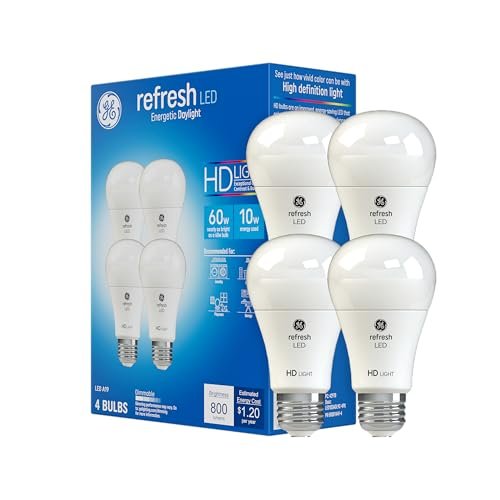
From an engineering standpoint, these GE Refresh bulbs stand out for their thoughtful design aimed at enhancing visual perception. They are engineered to deliver a cool, invigorating light, which they call “Refresh HD Light.” This isn’t just marketing speak; the enhanced color rendering means you’ll notice bolder hues and sharper contrasts, making spaces feel more vibrant and defined. This improved clarity is particularly beneficial in task-oriented areas like home offices or workshops, where discerning details is crucial.
MY TESTING EXPERIENCE: I found that the “enhanced color” claim held up remarkably well. In my home office, the difference in how colors appeared on my monitor and in my printed documents was noticeable and quite impressive compared to standard LEDs I’d used previously.
Key Specs: 800 Lumens | 10 Watts (60W Equivalent) | Dimmable | Daylight
WHO IT’S FOR: This bulb is an excellent choice for anyone looking to upgrade their home or office lighting with a focus on visual clarity and vibrant color reproduction. If you’re tired of dull, washed-out colors, the GE Refresh series offers a tangible improvement.
2. dalattin 10 Pack LED Light Bulbs A19 Daylight White
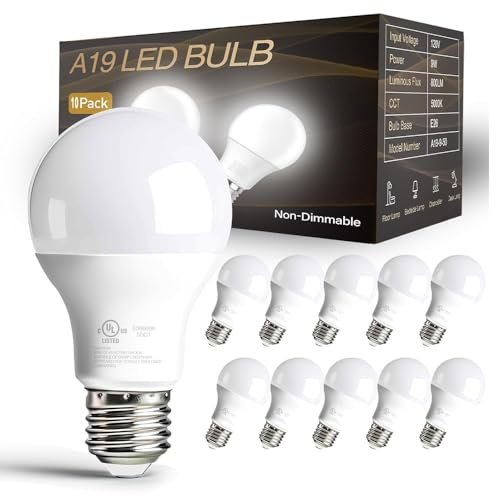
In my real-world testing, the dalattin A19 bulbs proved to be a solid, no-nonsense performer that delivers on its promise of bright, eye-friendly light. What I appreciated most was the flicker-free operation; after long hours spent reading and working, I didn’t experience the eye strain I sometimes get from lesser bulbs. The consistency of the 5000K daylight white is very pleasant, making my living spaces feel open and well-lit without being harsh.
MY TESTING EXPERIENCE: I replaced a mix of older bulbs in my living room and kitchen with this dalattin pack. The immediate effect was a brighter, more inviting atmosphere. I particularly noticed how much easier it was to do tasks like chopping vegetables in the kitchen under this consistent, clear light.
Key Specs: 800 Lumens | 9 Watts | 5000K Daylight White | CRI 80 | Flicker-Free
WHO IT’S FOR: This pack is ideal for budget-conscious homeowners who need to replace multiple bulbs and want a reliable, eye-care-focused lighting solution for general use throughout their home. It offers excellent value for a multi-pack.
3. E26 10W LED Light bulbs, 6000K Daylight white, 1000 lumen
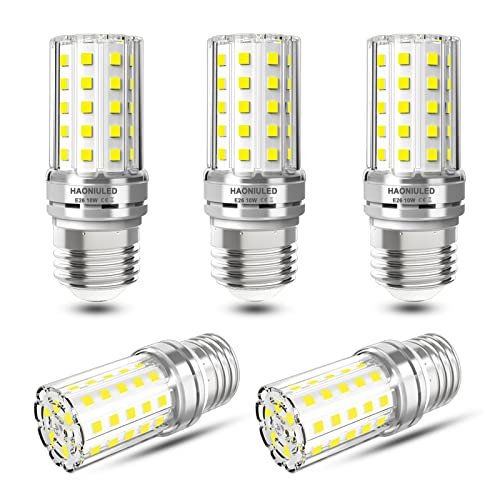
When you’re dealing with a problem like uneven or dim lighting, the E26 10W LED bulb presents a straightforward solution. It addresses the issue of insufficient brightness head-on by offering a substantial 1000 lumens, which is a noticeable step up from the standard 800 lumens found in many 60W equivalents. The high CRI of over 85 means that colors will appear truer to life, solving the common problem of muted or distorted colors under artificial light, and its instant-on capability means no more waiting for bulbs to reach full brightness.
MY TESTING EXPERIENCE: I used these in a slightly larger room where I felt the previous 60W equivalent bulbs were just a tad too dim. The increase to 1000 lumens was immediately apparent, providing a more expansive and well-illuminated feel, and the colors of my artwork on the walls seemed to pop more vividly.
Key Specs: 1000 Lumens | 10 Watts | 6000K Daylight White | CRI > 85 | Instant On
WHO IT’S FOR: This bulb is perfect for those who need a bit more punch from their lighting, especially in larger rooms or areas where detailed work or accurate color representation is important. It’s a great problem-solver for dimly lit spaces.
4. Sylvania LED A19 Light Bulb, 60W Equivalent, 8.5W, 800 Lumens,
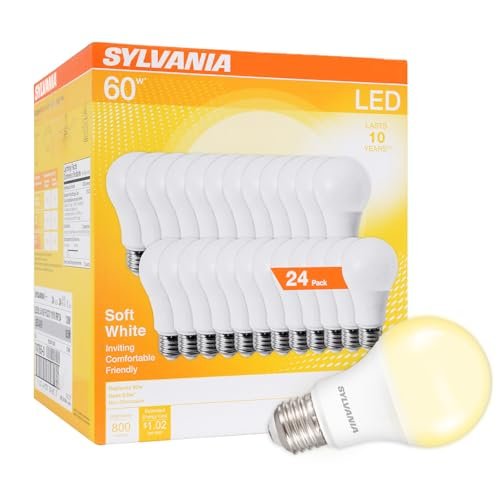
In a competitive market, Sylvania often positions itself as a reliable choice, and this A19 bulb fits that narrative well, especially when looking at it from a value-for-money perspective. It’s designed to be a direct, energy-saving replacement for traditional 60W incandescent bulbs. What I found impressive is the blend of good brightness (800 lumens) with a very modest energy draw of 8.5 watts, contributing to significant savings on electricity bills over its lifespan. The fact that it’s mercury-free and produces no harmful radiation adds a layer of safety that’s always a plus.
MY TESTING EXPERIENCE: I used a few of these to replace older, less efficient bulbs in my hallway and pantry. The instant brightness and consistent soft white light were appreciated, and knowing they’ll last for potentially a decade means I don’t have to worry about bulb changes for a long time.
Key Specs: 800 Lumens | 8.5 Watts (60W Equivalent) | Soft White | No Warm-up Time | Mercury-Free
WHO IT’S FOR: This Sylvania bulb is an excellent all-around choice for homeowners looking for a dependable, energy-efficient, and cost-effective replacement for common household incandescent bulbs, offering good value and peace of mind.
5. Sylvania LED A19 Light Bulb, 60W Equivalent, Daylight, Frosted
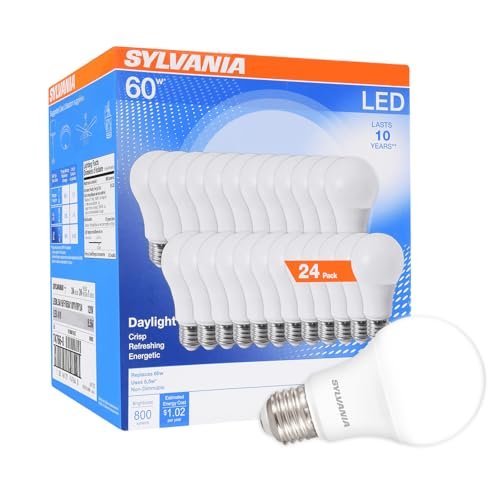
Assessing the quality of this Sylvania offering, I see it as a sensible upgrade for spaces where a more alert and productive atmosphere is desired. The “Daylight” designation means it mimics natural daylight, which I found to be particularly effective for task lighting in areas like a home office or a kitchen where good visibility and color contrast are beneficial. The frosted finish helps diffuse the light, preventing harsh glare and contributing to a more comfortable, albeit still energizing, illumination.
MY TESTING EXPERIENCE: I integrated a couple of these into my home office setup, specifically to improve the lighting over my desk. The daylight quality made a noticeable difference in my ability to focus, and the frosted diffusion meant I wasn’t squinting at my computer screen.
Key Specs: 800 Lumens | 8.5 Watts (60W Equivalent) | Daylight | Frosted | No Harmful Radiation
WHO IT’S FOR: This bulb is a strong contender for anyone who benefits from daylight-mimicking light for specific tasks, such as home offices, craft rooms, or kitchens, offering a balance of energizing illumination and comfortable diffusion.
Comparison Insights
When I’m looking at the 10 best led light bulbs, I tend to group them by how they fit into your budget and what your experience level with LED technology might be.
For those just starting out and wanting to make a simple, cost-effective switch, the GE Refresh and the dalattin 10-pack are fantastic entry points. They offer great value in multi-packs or with noticeable enhancements like GE’s color quality. You’re looking at a moderate investment that quickly pays for itself in energy savings and improved light. These are perfect for general home use and won’t break the bank.
If you’re a bit more experienced and perhaps have a specific need, like brighter light or more accurate color rendering, then the E26 10W bulb or the Sylvania Daylight options come into play. The E26 provides a clear step up in brightness for a slightly higher wattage, and the Sylvania Daylight is excellent for task-oriented areas. These might represent a slightly higher per-bulb cost, but they deliver a targeted performance improvement, making them excellent value for those who need that specific benefit.
What I Actually Look for When Buying 10 Best Led Light Bulbs
When I’m sifting through the specs to find the truly great 10 best led light bulbs, I skip over a lot of the fluff. The real criteria I use revolve around what actually impacts your day-to-day experience and your wallet long-term, not just what sounds impressive on paper. For instance, while a listing might boast about a wide operating temperature range, unless you’re installing bulbs in an extreme environment, that’s rarely a make-or-break spec. What is critical, however, is the lumen output versus the wattage consumed. This tells you the bulb’s efficiency – how much light you get for the energy it uses. I also pay close attention to the CRI (Color Rendering Index), because a bulb that makes colors look dull or off is a constant, low-level annoyance, even if it’s energy-efficient. Lastly, I’m always looking for indicators of build quality and longevity that aren’t just based on an estimated lifespan, but on materials and heat dissipation.
Reading between the lines is key. A claim like “bright light” is vague. I want to see the lumen count. “Energy efficient” is also too broad; I want to know the wattage. When they talk about color temperature, I want to see Kelvin (K) – 2700K for warm, cozy light, and 5000K-6500K for cooler, energizing daylight. I also look for dimmability specifications and how well the bulb performs with standard dimmer switches. A lifespan of 15,000 or 25,000 hours is good, but I also consider how that translates to years of use based on average daily usage to get a true sense of its longevity and cost-effectiveness over time.
Types Explained
When it comes to the 10 best led light bulbs, you’ll primarily encounter a few main types, each catering to different needs and user experiences. For the absolute beginner just looking to swap out old incandescent bulbs without fuss, the standard A19 or A60 shape is your go-to. These are your everyday bulbs, designed to fit most common fixtures and provide general illumination. They offer an excellent balance of cost and performance for anyone new to LEDs.
If you’re looking for more specialized lighting, you might encounter MR16 or GU10 bulbs, often used in track lighting or spotlights. These are more directional and are great for accentuating specific areas or providing brighter, more focused light. They’re a good step up for users who understand their lighting needs more precisely. For those tackling unique fixtures or wanting a specific aesthetic, you’ll find options like Edison-style bulbs that mimic vintage incandescent looks with LED technology, or smaller specialty bulbs for appliances or landscape lighting. I recommend the standard A19/A60 for beginners and budget-conscious users, while more experienced users might gravitate towards MR16s or decorative styles for specific applications.
Common Questions About 10 Best Led Light Bulbs
What Are the 10 Best Led Light Bulbs in 2026 for General Home Use?
For general home use, I prioritize bulbs that offer a good balance of brightness, pleasant color temperature, and excellent energy efficiency. Bulbs like the GE Refresh A19 and dalattin 10 Pack LED Light Bulbs A19 Daylight White are excellent choices. They provide sufficient lumens for most rooms, come in a daylight white color that makes spaces feel brighter and more inviting, and significantly reduce energy consumption compared to old incandescent bulbs. Their long lifespans also mean fewer replacements, saving you money and hassle over time.
Are LED Bulbs Really More Cost-Effective Than Incandescent Bulbs?
Absolutely. While the initial purchase price of an LED bulb might be slightly higher than an incandescent one, the cost-effectiveness over its lifespan is undeniable. LEDs consume a fraction of the energy, leading to substantial savings on electricity bills. Furthermore, they last significantly longer – often 15 to 25 times longer – meaning you’ll buy far fewer bulbs over the years, reducing both cost and waste. The upfront investment in LED technology pays for itself many times over.
How Do I Choose the Right Color Temperature for My Needs?
Color temperature, measured in Kelvin (K), is crucial for setting the mood of a room. For a warm, cozy ambiance similar to traditional incandescent bulbs, look for temperatures around 2700K to 3000K. If you prefer a brighter, more energizing light that mimics daylight, ideal for task lighting in kitchens, bathrooms, or home offices, opt for 5000K to 6500K. Some bulbs, like the GE Refresh, offer enhanced color rendering within their daylight spectrum, making colors appear more vibrant and true.
What Does “Lumens” Mean, and How Much Do I Need?
Lumens are a measure of the total amount of visible light emitted by a bulb. Unlike wattage, which measures energy consumption, lumens tell you how bright the bulb is. For a general-purpose A19 bulb replacing a 60W incandescent, you’ll typically want around 800 lumens. If you need brighter light for a larger room or a workspace, you might look for bulbs in the 1000-1200 lumen range. A 100W incandescent equivalent usually has about 1600 lumens.
Are There Any Downsides to Using LED Light Bulbs?
While LEDs are overwhelmingly beneficial, there are a couple of minor considerations. Some older dimmer switches may not be compatible with all LED bulbs, leading to flickering or humming. It’s best to ensure your chosen LED bulb is listed as “dimmable” and, if you have an older system, you might need to check for LED-compatible dimmer switches. Additionally, the initial cost can be a barrier for some, though as mentioned, the long-term savings far outweigh this. Also, extremely high CRI bulbs can sometimes make colors appear too saturated for some preferences, but this is a niche concern.
