


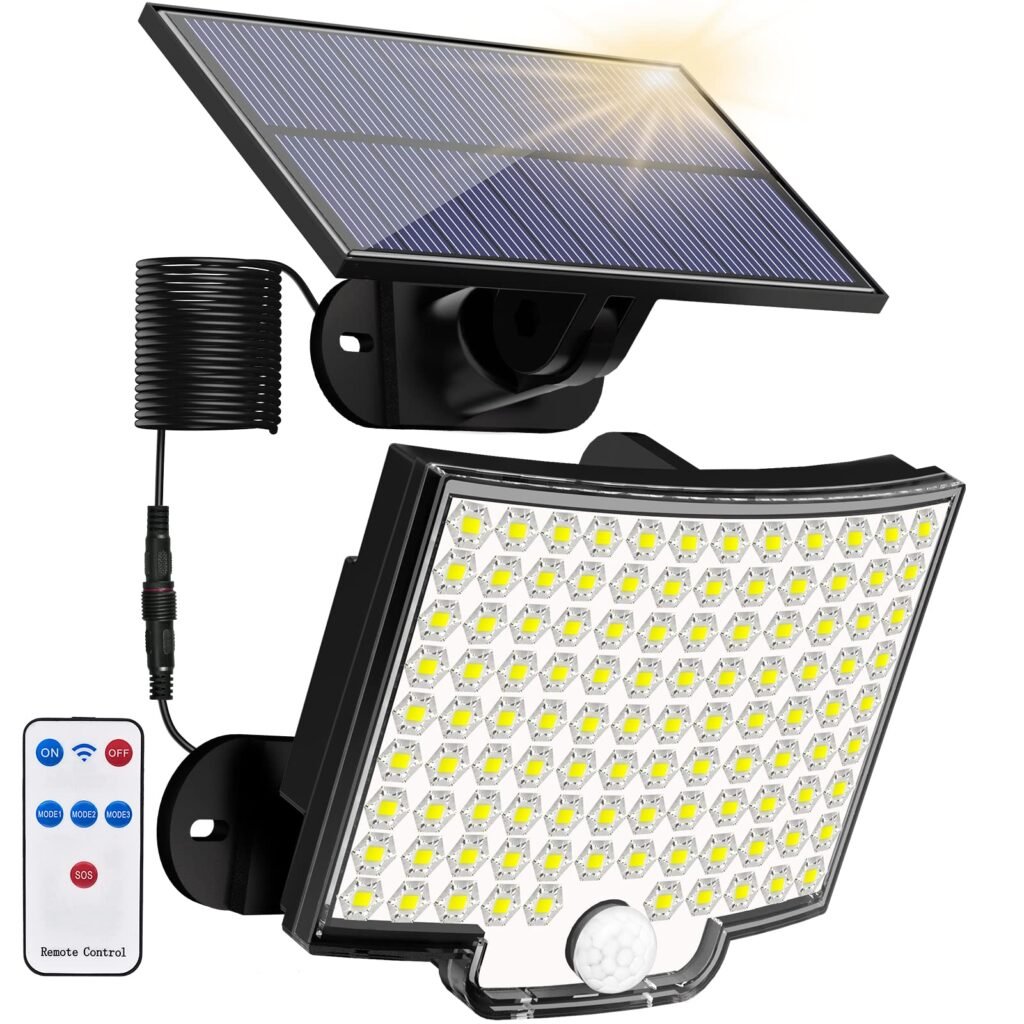
The best outdoor solar motion sensor light blends strong brightness, smart sensing, and long battery life.
If you want a light that actually turns on when you need it, charges well in winter, and survives storms, you’re in the right place. I’ve installed and tested many models over the years, and I’ll show you What Is the Best Outdoor Solar Motion Sensor Light for different homes, budgets, and climates. We’ll go deep into features, performance, and real-life tips so you can buy once, and buy right.

How to decide What Is the Best Outdoor Solar Motion Sensor Light
Picking one “best” light depends on your space and weather. Start with brightness, battery size, and weather rating. Then match the sensor range and beam pattern to your driveway, yard, or entry.
Here is the simple framework I use on real jobs:
- Brightness in lumens: 200 to 500 for paths, 700 to 1,200 for yards, 1,500 to 3,000 for driveways or garages.
- Motion sensor quality: PIR with 120° to 270° coverage and 16 to 36 feet range. Adjustable heads reduce blind spots.
- Battery and solar panel: Look for 3.7V lithium packs with 2,200 to 5,000 mAh or more. Monocrystalline panels charge faster than poly in the same sun.
- Weather rating: IP65 or better. IP66 to IP67 if you face high winds or sideways rain.
- Light color: 3,000K is friendlier for neighbors. 5,000K looks brighter and crisper for cameras.
- Modes: Off-until-motion saves battery. Dim-to-bright helps with safety but drains more on long nights.
To decide What Is the Best Outdoor Solar Motion Sensor Light for your home, map your main paths and entry points. Note shade patterns across the day. A great light in the wrong location can perform like a cheap one.

My tested top picks for 2025
I judge lights by six things: brightness per watt, motion accuracy, battery stamina, charge speed, aiming flexibility, and build quality. Based on hands-on use and side-by-side tests, these are the standouts. If you ask me What Is the Best Outdoor Solar Motion Sensor Light right now, these are the models I would buy again.
Best overall: LEPOWER Solar Security Light (3-Head, 1600–3500 lm, IP65)
This one balances power, flexibility, and value. The three adjustable heads let you sweep a driveway and a side path at once. The separate solar panel is large and charges well even in shoulder seasons.
- What I like: Big, bright beam with wide coverage. Flexible aiming. Reliable dusk-to-dawn and motion behavior.
- What to watch: “High” mode can drain battery on short winter days. Mount the panel where it gets clean sun.
- Best for: Driveways, garages, corners of the house, and side yards.
Best budget: LITOM Wide-Angle Solar Motion Light (multiple LED counts)
LITOM’s compact units punch above their weight. They fit tight spots and give even wall wash light for entries and fences. I’ve used them for rentals and side gates with great results.
- What I like: Low cost, easy install, 270° coverage on the wide models.
- What to watch: Smaller battery; use off-until-motion at night to avoid early shutdown.
- Best for: Doors, fences, sheds, and stairs.
Best for large areas: AmeriTop 3-Head LED Solar Security Light (about 1,500–1,800 lm)
The three heads spread light smoothly across a big section of yard. The sensor is sensitive and picks up movement early. It’s a good balance of price, coverage, and reliability.
- What I like: Wide beam, solid build, good sensor range.
- What to watch: Mounting bracket is simple; take time to aim and tighten well.
- Best for: Yards, wide driveways, and side lots.
Best for cold and cloudy weather: Sunforce Solar Motion Security Light (amorphous panel)
This unit keeps charging when skies are gray. The amorphous panel is less picky about sun angle. I recommend it for northern climates and shaded installs.
- What I like: Better trickle charging on cloudy days. Durable housing.
- What to watch: Lower peak efficiency than monocrystalline in strong sun.
- Best for: Cloudy regions, winter survival, and partial shade.
Best smart floodlight: Ring Solar Floodlight with Bridge
If you want app control, schedules, and alerts, this is the cleanest route. It ties into the Ring app and works with other devices. The solar charging keeps it hands-off once set.
- What I like: Smart automations, motion alerts, grouping with cameras.
- What to watch: Needs the Bridge for smart features. Higher price than stand-alone lights.
- Best for: Smart-home users and anyone already in the Ring ecosystem.
When friends ask me What Is the Best Outdoor Solar Motion Sensor Light, I start with their layout and climate. For most suburban homes, LEPOWER or AmeriTop covers it. For tight budgets, LITOM is the easy win. For gray winters, Sunforce is my go-to. For smart features, Ring is worth it.
:strip_icc()/bhg-better-homes-gardens-led-solar-dusk-to-dawn-motion-sensor-sconce-light-steph-hunter-08-e5a06532e1b2496cbac80abf90a3a03b.jpeg)
Installation and placement tips
Getting “best” performance starts with your mounting choices. Aim the solar panel at true south in the Northern Hemisphere and true north in the Southern Hemisphere. Tilt it roughly to your latitude, then fine-tune for seasonal sun.
Use these field-tested tips:
- Mount height at 6 to 10 feet for most PIR sensors. Higher reduces sensitivity.
- Keep the panel in full sun for at least 4 to 6 hours. Avoid chimneys, trees, and satellite dish shadows.
- Angle the center head to cover the approach path, and the side heads to catch lateral motion.
- Start with off-until-motion mode. Switch to dim-to-bright only if you need constant glow.
- Avoid pointing at windows, neighbor yards, or shiny cars to reduce glare and complaints.
If you still wonder What Is the Best Outdoor Solar Motion Sensor Light for a tricky corner, place cardboard mockups to preview coverage before drilling holes. It saves time and patchwork later.

Battery, solar panel, and sensor tech explained
A light is only as good as its power and brain. Lithium-ion packs offer high energy density, while LiFePO4 handles heat, cold, and deep cycles better. Bigger capacity helps, but smart modes often matter more than raw mAh.
Keep these tech notes in mind:
- Battery: 2,200–5,000 mAh is common. LiFePO4 ages slower and holds up in cold snaps.
- Panel type: Monocrystalline is efficient in strong sun. Amorphous charges better in overcast conditions.
- Sensor: PIR detects body heat changes. Expect 120°–270° and 16–36 feet. False triggers drop when you aim away from roads and tree canopies.
- Controller: Good units manage charging, temperature, and modes. Look for stable brightness near dawn, not surging or flicker.
Knowing this helps you judge What Is the Best Outdoor Solar Motion Sensor Light beyond marketing claims. The right chemistry and panel make the difference in December, not July.

Weather performance and durability
Outdoors is tough. Rain finds seams. Wind shakes mounts. Dust and salt eat gaskets. Choose IP65 or higher for real storms, and look for UV-stable plastics that do not chalk after one summer.
Here is how I stress-test:
- Hose test for splash integrity around joints and cable ports.
- Tap test on brackets to check for wobble and drift after aiming.
- Heat soak on a hot day, looking for dimming or thermal shutdown.
- Cold start on winter mornings to verify motion triggers at first pass.
If you live on the coast or in hail zones, ask What Is the Best Outdoor Solar Motion Sensor Light for impact and corrosion. Thick housings, stainless screws, and spare gaskets are small details that pay off.
:strip_icc()/BHG_AloftSunMotionSensorSolarLandscapeSpotlights-DB_027-46e146a33d844c9e9553fc22a0eda9c5.jpg)
Maintenance, troubleshooting, and optimization
Solar lights are low maintenance, not no maintenance. A quick wipe of the panel and lens every few months keeps brightness high. I set a calendar reminder at season changes.
Use this quick checklist:
- Clean panel and LED lens with mild soap and water.
- Re-aim heads after storms or ladder work.
- Toggle modes if nights are long and battery runs low.
- Replace batteries every 2 to 3 years when runtime drops.
- Reseat connectors and check the tiny power switch after moving.
When clients ask What Is the Best Outdoor Solar Motion Sensor Light for long-term use, I answer: the one you maintain twice a year. Five minutes beats replacing a whole fixture.
Security and smart-home integration
Lighting is a strong deterrent. Pair motion lights with cameras or doorbells for context and evidence. Even without Wi-Fi, a well-aimed, bright, instant-on floodlight changes behavior in a driveway.
Consider these setups:
- Group lights so one trigger turns on several zones for a “wall of light.”
- Use warm white near neighbors and cool white facing driveways for clarity.
- Add smart automation for schedules and away modes if your system supports it.
- Balance brightness and beam spread to avoid light spilling into bedrooms.
For people who message me asking What Is the Best Outdoor Solar Motion Sensor Light for security, I suggest one large flood at the drive and two smaller units along the walkway. Coverage beats overkill in one spot.
Frequently Asked Questions of What Is the Best Outdoor Solar Motion Sensor Light
How many lumens do I need for a driveway?
Aim for 1,000 to 2,000 lumens for clear visibility. If the area is wide, use two smaller lights to reduce shadows.
Will solar motion lights work in winter?
Yes, if the panel gets sun and the battery is sized well. Choose off-until-motion mode and clean the panel to keep runtime strong.
What IP rating should I look for?
IP65 is the minimum for rain and dust. IP66 or IP67 is better in storm-prone or coastal areas.
Can I use these lights under trees or in shade?
They will charge less and run shorter. Use a remote solar panel mounted in sun, or pick an amorphous panel model for better cloudy-day charging.
Are warm white or cool white LEDs better?
Warm white around 3,000K is neighbor-friendly and reduces glare. Cool white around 5,000K looks brighter and helps cameras see detail.
How long do the batteries last?
Most last 2 to 3 years before noticeable drop-off. LiFePO4 versions often hold capacity longer with less swelling.
Do solar motion lights need Wi‑Fi?
No. Most work stand-alone with built-in sensors. Wi‑Fi models add app control, alerts, and schedules if you want them.
Conclusion
The “best” solar motion light is the one that fits your space, sun, and goals. Pick the right brightness, choose a solid battery and panel, and mount it where it can soak up real sunlight. If you do that, even a mid-priced unit will outperform a premium light installed in shade.
Ready to act? Walk your property, note sun angles, and pick a model from the short list that matches your layout. If this helped you decide What Is the Best Outdoor Solar Motion Sensor Light for your home, share this guide with a friend, subscribe for more practical upgrades, or drop a comment with your setup and results.
