


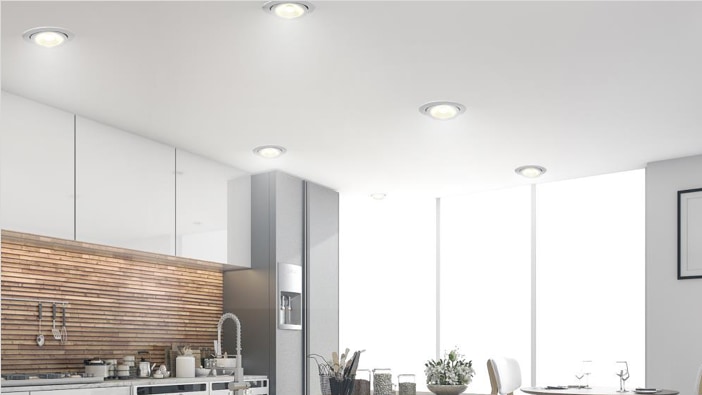
Most kitchens use 4–6 inch recessed lights; 4-inch for task, 6-inch for ambient.
Choosing What Size Recessed Lights for Kitchen can feel tricky, but it is not. I design lighting plans for real homes every week. In this guide, you will learn the exact sizes, spacing, and tricks I use in kitchens of all shapes. You will walk away ready to pick the right size with confidence.
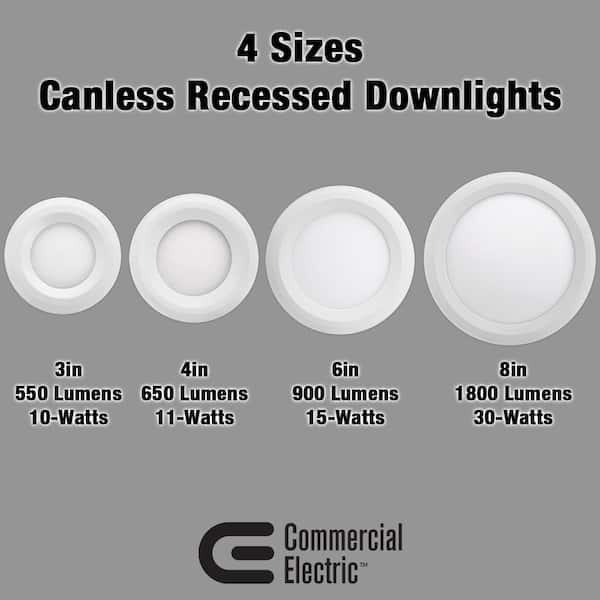
How to Choose the Right Size Recessed Lights for Your Kitchen
Start with the job each light must do. A kitchen needs bright, even light for prep. It also needs softer light for evenings. The size you pick shapes both mood and coverage.
Use this simple path when deciding What Size Recessed Lights for Kitchen:
- Decide the purpose for each zone. Think ambient, task, and accent.
- Match the size to the ceiling height and the area size.
- Check beam angle and spacing so light overlaps without glare.
- Choose trims and color to suit your style and cabinets.
- Test with one or two fixtures if you can. Then scale.
I keep one core rule in mind. Smaller apertures give tighter beams and a cleaner look. Larger apertures cover more area with fewer lights. We will break that down next.
Standard Recessed Light Sizes and When to Use Each
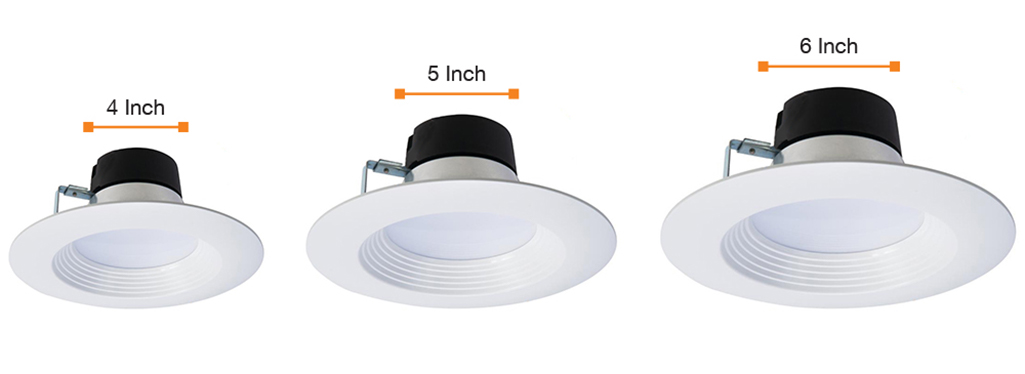
Recessed lights come in many sizes. These are the common ones for kitchens and how they shine.
- 2 inch. Accent only. Use over art or shelves. Narrow beam.
- 3 inch. Accent or tight task. Great for small niches. Needs more fixtures to fill space.
- 4 inch. My go-to for task and general light in most homes. Clean look. Good control. Often 600 to 900 lumens per light.
- 5 inch. Balanced choice for medium spaces. Softer edges. Often 800 to 1200 lumens.
- 6 inch. Best for broad ambient light. Fewer fixtures needed. Often 1000 to 1500 lumens.
- 8 inch. Large rooms or tall ceilings. Use in big open plans, not small kitchens.
If you ask What Size Recessed Lights for Kitchen in a typical 8 to 9 foot space, the answer is often 4 inch for task lines and 5 or 6 inch for overall wash. This mix looks modern and works well.
Ceiling Height, Beam Angle, and Spacing Rules That Work
Ceiling height steers size and spacing. Here are simple rules I use on projects.
- For 8 foot ceilings. Use 4 inch lights spaced about 4 to 5 feet apart. Use 6 inch lights spaced about 5 to 7 feet apart.
- For 9 to 10 foot ceilings. Add one foot to spacing. Or use wider beam trims.
- For over 10 feet. Use larger sizes or tighter beams in clusters.
Beam angle is the spread of light. Narrow beams around 40 degrees punch down. Wide beams around 60 to 90 degrees wash the room. Match the beam to the job.
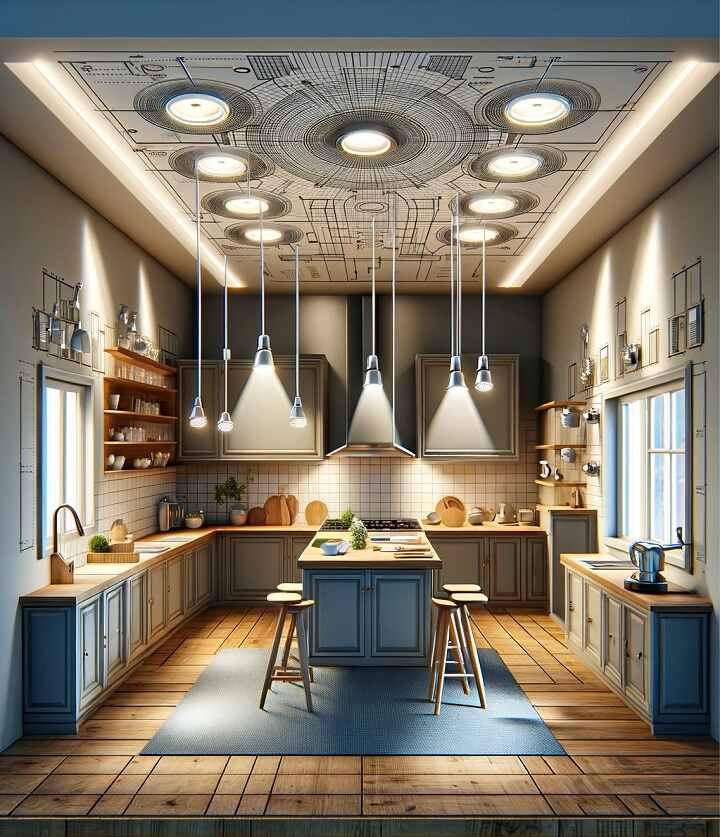
Aim for overlap. You want the edges of each beam to meet at counter height. This avoids dark spots. When planning What Size Recessed Lights for Kitchen, sketch circles to scale on your plan. It helps you see coverage fast.
Target light levels:
- Ambient. About 30 to 40 foot-candles on the floor.
- Task over counters. About 50 to 75 foot-candles.
You can reach those levels with fewer large fixtures or more small ones. I prefer more small fixtures for better control.
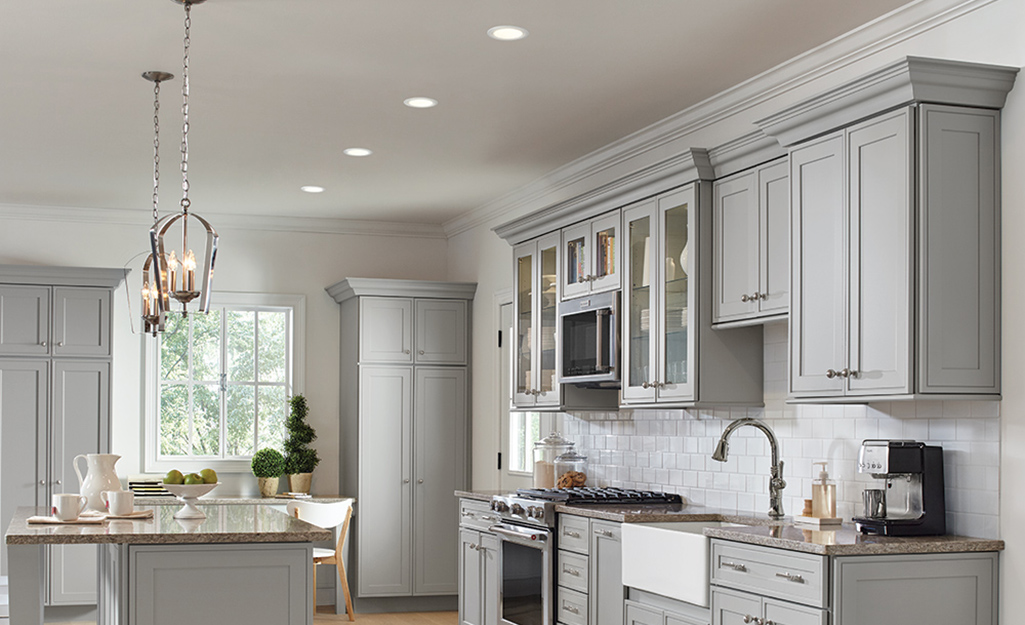
Mapping Size to Zones: Ambient, Task, Island, and Accent
Use a zone plan. It keeps the kitchen bright where needed and calm where wanted.
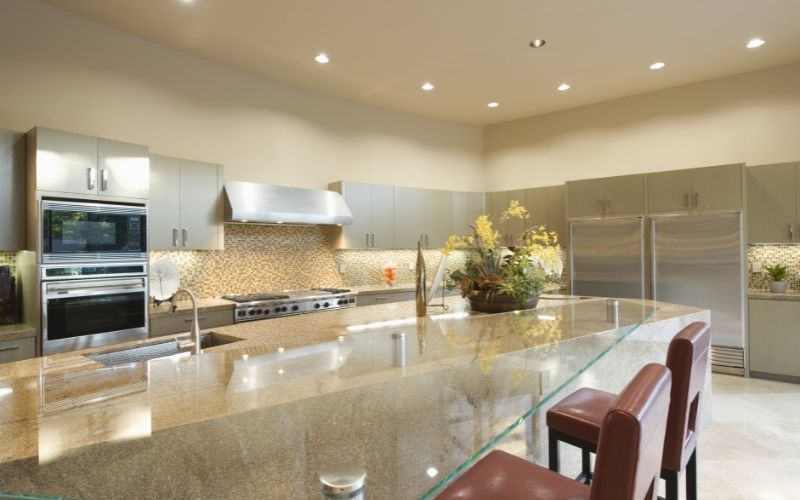
- Ambient ceiling grid. Use 5 or 6 inch lights to wash the room. Space them evenly.
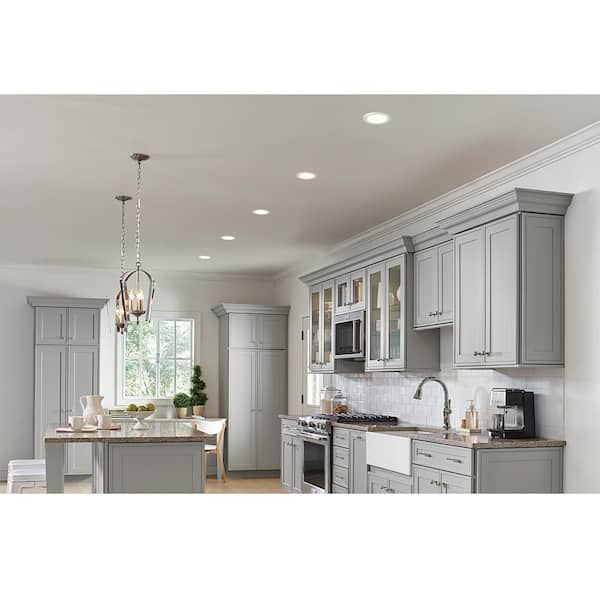
- Task over counters. Use 4 inch lights about 12 to 18 inches from the wall. Center them over the front edge of the counter. This reduces shadows from cabinets.
- Island or peninsula. Use 4 or 5 inch lights spaced 24 to 30 inches. Many also add pendants. If you have pendants, use smaller recessed lights for fill.
- Sink area. One 4 inch light centered on the sink works well. Use a wet rated trim if near spray.
- Accent. Use 2 or 3 inch spots for art, open shelves, or a backsplash.
When someone asks What Size Recessed Lights for Kitchen with a big island, I often say 4 inch over the island for control, and 6 inch in the main grid for cost and coverage.
Trims, Color Temperature, CRI, and Dimming
Size is only part of the story. Trim and color shape the feel of the space.
- Trim style. Baffle trims cut glare. Smooth or reflector trims bounce more light. Adjustable gimbals help aim at a backsplash or sink.
- Color temperature. 2700K feels warm. 3000K feels clean and bright. 3500K is a crisp middle. Stay consistent across all fixtures.
- CRI. Aim for CRI 90 or higher. Food and wood tones look better.
- Dimming. Use 1 percent capable dimmers if you can. Group zones on their own dimmers. It lets you set mood at night.
These choices support What Size Recessed Lights for Kitchen by letting each size do its best work.
Real-World Layout Examples You Can Copy
Here are simple plans I have used and refined. Tweak for your space.
Small galley, 8 by 12 feet, 8 foot ceiling:
- Four 4 inch lights in a line, about 4 feet apart.
- Add one 4 inch over the sink.
- Under-cabinet lights for task.
Medium L-shaped kitchen, 12 by 14 feet, 9 foot ceiling:
- Ambient grid with four to six 5 inch lights, spaced 5 to 6 feet.
- Task line of 4 inch lights 14 inches out from wall cabinets.
- One 4 inch centered over sink.
Large open kitchen with island, 16 by 20 feet, 10 foot ceiling:
- Ambient grid with six to eight 6 inch lights.
- Island line with three or four 4 inch lights, 24 to 30 inches apart.
- Two or three pendants if you like style pieces.
- Add 3 inch accents for shelves.
These patterns answer What Size Recessed Lights for Kitchen in most homes while staying simple and clean.
Canless vs Cans, Remodel vs New, and Safety Ratings
Hardware choices matter for size and placement too.
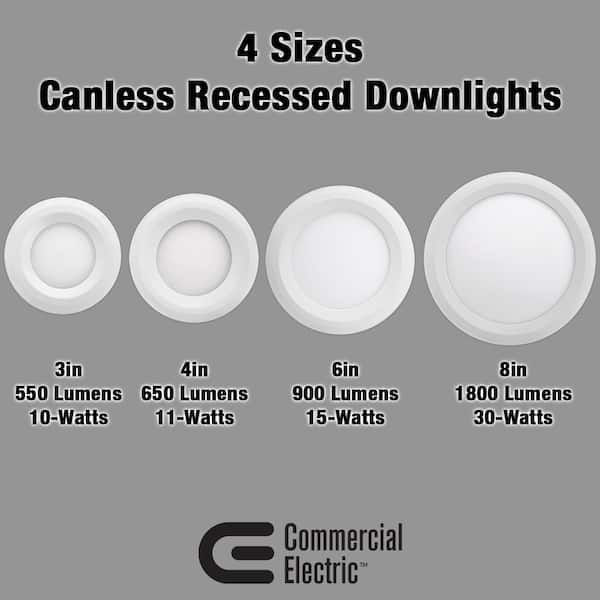
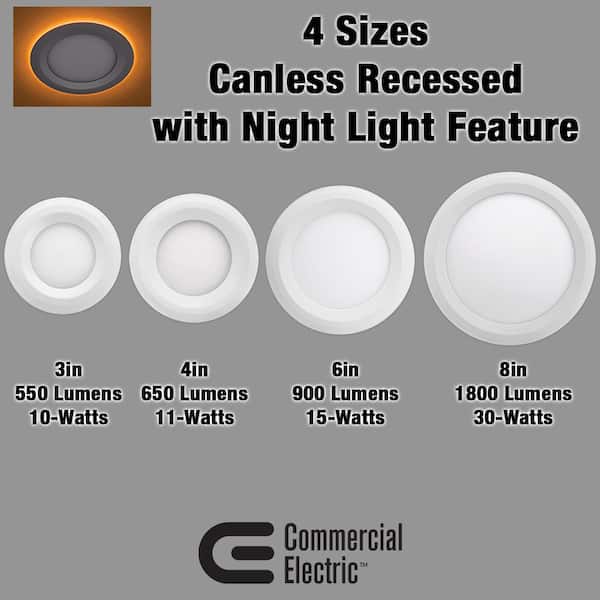
- Canless wafer lights. Slim, fast to install, great for tight joists. Beam can be wide. Output varies by brand.
- Traditional cans with LED modules. Better glare control. Often better dimming and beam options. Needs more depth in the ceiling.
- Remodel vs new construction. Remodel housings clamp into drywall. New construction frames nail to joists. Both can be IC rated.
- IC rating. Use IC rated fixtures in insulated ceilings. It is a code and safety issue.
- Damp or wet rating. Over sinks or near ranges, use damp rated. In showers off the kitchen, use wet rated.
These notes support a safe and durable plan for What Size Recessed Lights for Kitchen, no matter the build stage.
Common Mistakes and Easy Fixes
I see the same errors again and again. Here is how to dodge them.
- Lights too close to cabinets. This causes scallops on doors. Fix by moving the task row 12 to 18 inches out.
- Too few lights with very high lumens. This creates glare and hot spots. Use more fixtures with lower lumens each.
- Mixed color temperatures. The room feels off. Keep all fixtures at the same Kelvin.
- No separate dimmers. You lose mood control. Put ambient, task, and island on different controls.
- Ignoring beam angle. You get dark strips. Pick trims that overlap at counter height.
Avoid these, and the question of What Size Recessed Lights for Kitchen becomes easy to solve.
A Quick Worksheet to Size and Space Your Lights
Use this five minute process on paper.
- Measure the room. Note ceiling height.
- Mark zones. Grid, counters, island, sink, accents.
- Pick sizes. 4 inch for task. 5 or 6 inch for ambient.
- Set spacing. 4 inch at 4 to 5 feet. 6 inch at 5 to 7 feet.
- Choose color and trims. 2700K to 3000K, CRI 90+, baffle or adjustable where needed.
- Plan controls. One dimmer per zone.
Run this plan when you decide What Size Recessed Lights for Kitchen. It keeps choices clear and fast.
Frequently Asked Questions of What Size Recessed Lights for Kitchen
What size recessed lights for kitchen with 8 foot ceilings?
Use mostly 4 inch fixtures for task and general light. Space them about 4 to 5 feet apart for even coverage.
What size recessed lights for kitchen islands?
Use 4 inch lights for control and to avoid glare on polished tops. Space them 24 to 30 inches apart down the centerline.
How many recessed lights do I need in a 12 by 12 kitchen?
Plan four to six 5 inch or 6 inch fixtures for ambient light. Add a row of 4 inch lights over counters for task.
Are 6 inch recessed lights too big for small kitchens?
They can look large in tight spaces. Use 4 inch fixtures instead and add one or two more for smooth light.
What beam angle should I choose for kitchen recessed lights?
Use 60 degrees for general wash and 40 degrees for tight task or accent. Mix as needed so beams overlap at counter height.
Should I use 2700K or 3000K in the kitchen?
Both work. 2700K feels warm and cozy, while 3000K feels bright and clean for tasks.
Is canless or can better for kitchens?
Canless is slim and fast. Cans with LED modules offer more beam and glare control, which many cooks prefer.
Conclusion
You now have a clear plan to pick the right size, the right spacing, and the right trims. Use 4 inch for task, 5 or 6 inch for ambient, and match beam and layout to your space. That is how professionals answer What Size Recessed Lights for Kitchen without guesswork.
Walk your kitchen with a tape and sketch today. Mark zones, pick sizes, and set spacing. If you want more help, subscribe for layout templates or drop a question in the comments.
