


It’s a common misconception that deer see the world just like us. The truth is, deer possess the remarkable ability to see UV light, a spectrum invisible to the human eye. This unique visual perception plays a crucial role in their survival, helping them detect predators, find food, and identify other deer, while also having significant implications for how hunters and outdoor enthusiasts should approach camouflage and gear choices. Understanding that deer can see UV light is key to blending seamlessly into their environment.
Can Deer See UV Light?
Have you ever wondered what the world looks like through the eyes of a deer? For generations, hunters, wildlife enthusiasts, and curious minds alike have pondered this very question. We humans rely so heavily on our sight, perceiving a vibrant world of colors and light, but what if we told you that deer see an entirely different spectrum, one that remains hidden to us? The answer to “Can deer see UV light?” isn’t just a fascinating piece of animal trivia; it’s a game-changer for anyone who spends time in the great outdoors trying to observe or hunt these elusive creatures.
For too long, many believed that deer simply saw in black and white, or perhaps a limited range of muted colors. This misconception led to strategies and products designed with only human vision in mind. However, advancements in scientific research over the past few decades have painted a much clearer, and frankly, more surprising picture. Deer possess a visual capability that extends beyond our own, allowing them to perceive light in the ultraviolet (UV) spectrum. This revelation has profound implications, challenging long-held assumptions and forcing us to rethink how we approach everything from camouflage to laundry detergent.
So, if you’re ready to dive deep into the fascinating world of deer vision and uncover the scientific truths that can drastically improve your understanding and success in the wild, stick around. We’re going to explore what UV light is, how deer evolved to see it, and most importantly, what this means for you, whether you’re a seasoned hunter, a wildlife photographer, or just someone who loves spending time in nature. Understanding if deer can see UV light is not just a scientific curiosity; it’s a practical skill for the modern outdoorsperson.
Key Takeaways
- Deer See UV Light: Unlike humans, deer have specialized photoreceptors and a lack of UV-filtering lenses in their eyes, enabling them to perceive light in the ultraviolet spectrum.
- Survival Advantage: UV vision helps deer in critical survival tasks such as navigating in low light, locating natural food sources, identifying subtle cues from other deer (like urine trails), and detecting predators, making it an essential tool for their daily lives.
- Impact on Hunters’ Gear: Many common hunting detergents contain UV brighteners that make clothing glow intensely to a deer’s UV-sensitive eyes, effectively making a hunter stand out like a beacon.
- Camouflage Effectiveness: Traditional camouflage patterns, while effective to the human eye, can reflect UV light differently depending on their dyes and manufacturing processes, potentially making a hunter more visible to deer if not treated correctly.
- Importance of UV-Neutral Products: Hunters should prioritize using detergents, sprays, and clothing specifically labeled as “UV-neutral” or “UV-killer” to minimize UV reflectance and improve their concealment from deer.
- Beyond Visuals: While UV vision is critical, successful hunting and wildlife observation also rely on scent control, minimizing movement, and understanding deer behavior, creating a multi-faceted approach to remaining undetected.
Quick Answers to Common Questions
Can humans see UV light like deer?
No, humans cannot see UV light. Our eyes have lenses that filter out UV radiation, protecting our retinas but also preventing us from perceiving those wavelengths.
What part of the deer’s eye allows them to see UV light?
Deer eyes lack the UV-filtering lens present in humans and some other animals, allowing UV light to reach their retina, which contains specialized photoreceptor cells (cones) sensitive to the blue-UV spectrum.
Why is seeing UV light important for deer?
UV vision helps deer in crucial survival tasks such as navigating in low light, finding food sources, detecting predators, and identifying communication cues from other deer.
Do all deer species see UV light?
While research has primarily focused on whitetail deer, it is widely accepted that most deer species, being dichromats with similar eye structures, share the ability to see UV light.
How can hunters avoid glowing to deer’s UV vision?
Hunters should use laundry detergents specifically labeled as “UV-neutral” or “UV-killer” for their hunting clothes and gear, and opt for camouflage and equipment designed to minimize UV reflectance.
📑 Table of Contents
Understanding the Basics: How Vision Works and Why UV is Different
Before we can fully grasp why it’s such a big deal that deer can see UV light, let’s take a quick look at how vision generally works, for both humans and animals. Our eyes, and the eyes of most vertebrates, contain specialized cells called photoreceptors in the retina. These are broadly categorized into rods and cones. Rods are incredibly sensitive to light and are responsible for vision in low-light conditions, detecting motion and shapes. Cones are responsible for color vision and require brighter light to function effectively.
Human vs. Deer Vision: A Different Spectrum
Humans are trichromats, meaning we have three types of cone cells, each sensitive to different wavelengths of light: red, green, and blue. When these signals are combined, our brains interpret the vast array of colors we see. This visible spectrum for humans typically ranges from about 400 nanometers (nm) for violet light up to about 700 nm for red light. Anything shorter than 400 nm is ultraviolet (UV), and anything longer than 700 nm is infrared (IR), both invisible to the naked human eye.
Deer, on the other hand, are dichromats, like many other mammals. This means they have only two types of cone cells. One type is most sensitive to the green-yellow part of the spectrum, while the other is sensitive to the blue-UV part. This is a crucial distinction. What’s even more important is that deer lack the UV-filtering lenses that humans and many other animals possess. Our lenses filter out UV light, protecting our retinas but also preventing us from seeing it. Deer eyes, by contrast, allow a significant amount of UV light to pass through to their retinas. This combination of UV-sensitive cones and clear lenses means that yes, deer can see UV light. Their visible spectrum extends much further into the UV range, likely down to around 300-320 nm.
What Exactly is UV Light?
Ultraviolet light is a form of electromagnetic radiation with wavelengths shorter than visible light. It’s the part of sunlight that gives you a sunburn, and it’s why we use sunscreen. While we can’t see it, UV light is all around us, constantly interacting with our environment. Many natural objects, from flowers to snow, reflect UV light in unique ways. This hidden dimension of light is what deer leverage to navigate their world.
The Science Confirms: Deer Possess UV Vision
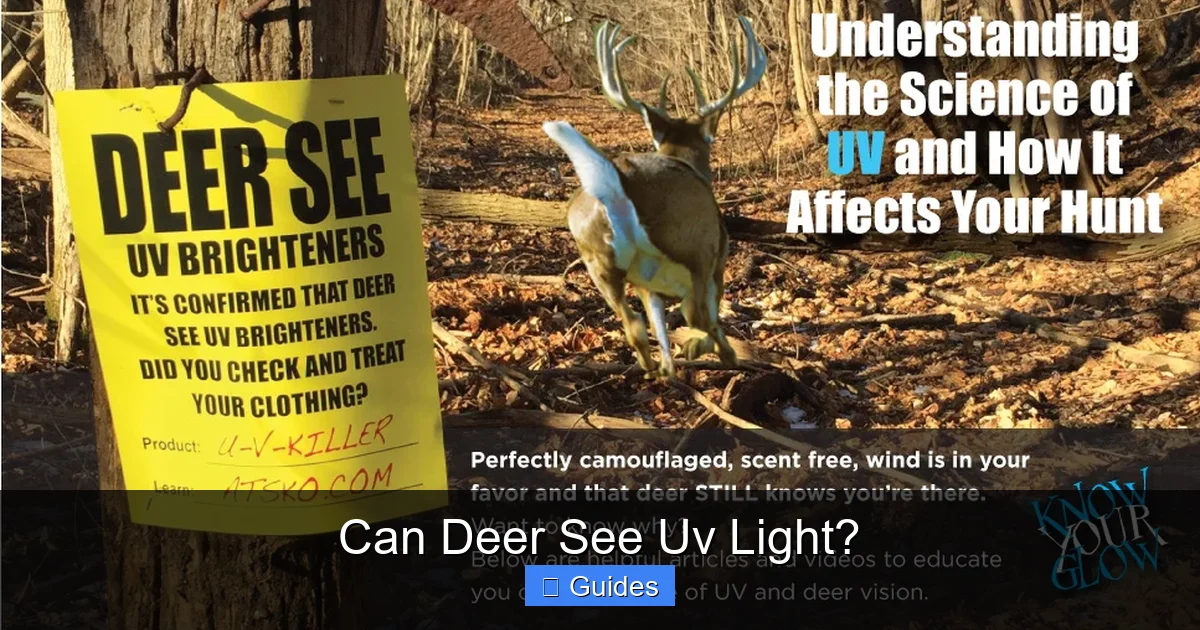
Visual guide about Can Deer See Uv Light?
Image source: cdn10.bigcommerce.com
For years, the understanding of deer vision was based more on speculation than hard science. However, groundbreaking research, particularly from the University of Georgia and other institutions, definitively answered the question: Can deer see UV light? Using electroretinography (ERG) and behavioral studies, scientists have shown that deer retinas respond to UV wavelengths, and deer exhibit behavioral responses consistent with seeing UV light.
How UV Vision Benefits Deer in the Wild
So, why would deer evolve to see UV light? It turns out, this ability provides several significant advantages crucial for their survival and daily activities.
* Low-Light Navigation: Deer are crepuscular, meaning they are most active during dawn and dusk. In these low-light conditions, UV vision can be incredibly helpful. While the human eye struggles as light fades, UV light, even from a twilight sky or moon, can illuminate the environment in ways we can’t comprehend, aiding deer in navigating through dense forests and open fields.
* Foraging and Food Detection: Many plants, fruits, and fungi reflect UV light in distinct patterns, or even absorb it, making them stand out against a background that might appear uniform to a human eye. This could help deer locate food sources more efficiently, especially in varied terrain.
* Predator Avoidance: Imagine a camouflaged predator, like a tiger or a cougar, moving through tall grass. While its coat might blend seamlessly with visible light, certain aspects of its fur or the way it disrupts UV reflectance could potentially be visible to a deer’s UV-sensitive eyes, giving them an extra layer of detection against threats.
* Communication and Social Cues: Deer often leave scent markers, like urine trails or glandular secretions, to communicate with other deer. These substances might have distinct UV signatures that are invisible to us but perfectly clear to another deer, helping them follow trails, find mates, or warn off rivals. The coats of deer themselves, particularly fawns, also reflect UV light, which could be important for recognition and signaling within the herd.
* Camouflage Perception: Just as deer might spot a predator, they also “see” their own environment differently. The natural world around them — trees, leaves, rocks — reflects and absorbs UV light in patterns that help them blend in and navigate. This means anything foreign or unnaturally reflective in the UV spectrum will stand out.
Practical Implications for Hunters and Outdoor Enthusiasts
Knowing that deer can see UV light isn’t just a neat scientific fact; it has profound practical implications, especially for hunters and anyone trying to remain undetected in the wilderness. If you’ve ever wondered why deer seem to spot you from a mile away, even when you feel perfectly hidden, your UV footprint might be the culprit.
The Problem with Laundry Detergents and UV Brighteners
This is perhaps the most critical takeaway for hunters. Many commercially available laundry detergents contain optical brighteners (also known as UV brighteners, fluorescent whitening agents, or FWA). These chemicals are designed to make whites appear “whiter” and colors “brighter” by absorbing UV light and re-emitting it as visible blue light. To our eyes, this makes our clothes look fresh and clean.
However, to a deer, clothing washed in these detergents doesn’t just look brighter; it glows. Imagine putting on your favorite camouflage hunting jacket after washing it in regular detergent. To your eyes, it’s perfectly camouflaged. To a deer, that jacket might be radiating a blueish-white glow, making you stand out like a neon sign against the natural background that absorbs or reflects UV light in a dull, muted way. This is why a deer can see UV light and identify you even when you’re completely still and seemingly invisible.
* Practical Tip: Always use detergents specifically designed for hunting apparel, which are labeled “UV-neutral” or “UV-killer.” These products either lack optical brighteners or contain agents that absorb or neutralize UV reflectance. You can even test your gear under a black light (UV flashlight) to see if it glows. If it does, it’s a deer magnet.
Camouflage Patterns and UV Reflectance
Beyond detergents, the fabrics themselves and the dyes used in camouflage patterns can also reflect UV light differently. While a pattern might perfectly mimic natural elements in the visible spectrum, its UV signature could be entirely off. Some synthetic fabrics or older dyes might reflect more UV light than natural materials.
* Practical Tip: When choosing new camouflage gear, look for brands that specifically state their products are UV-neutral or designed with UV avoidance in mind. Modern hunting apparel manufacturers are increasingly aware of this issue and are developing fabrics and dyes that minimize unnatural UV reflectance. Consider the overall “sheen” of a fabric; shiny materials are generally a red flag.
Scent Control and UV: A Multi-Sensory Approach
While we’re talking about UV light, it’s important to remember that deer also possess an incredibly keen sense of smell. Scent control goes hand-in-hand with UV awareness. Even if you’re UV-neutral, a strong human odor will give you away.
* Practical Tip: Combine your UV-neutral clothing strategy with a rigorous scent control regimen. Shower with scent-free soap, use scent-free detergents, and store your hunting clothes in airtight containers. Avoid strong perfumes, colognes, or even food odors that can cling to your gear. The goal is to make yourself as invisible and undetectable as possible across all their senses.
Gear and Equipment Considerations
It’s not just your clothes; think about all your gear. Backpacks, boots, treestands, and even bowstrings can reflect UV light. Plastics, certain metals, and painted surfaces might have UV signatures that stand out.
* Practical Tip: Give all your outdoor gear a “UV check.” If possible, purchase items that are designed with a matte finish and UV-neutral properties. Some hunters even spray down their gear with UV-neutralizing sprays specifically designed for this purpose. Even a small, unnatural UV reflection from a buckle or a scope lens could be enough to catch a deer’s attention.
Beyond Hunting: A Broader Understanding of Deer Perception
Understanding that deer can see UV light extends beyond just hunting applications. It offers a deeper appreciation for the complex sensory world of wildlife. When we consider how deer perceive their environment, we begin to see the intricate web of adaptations that allow them to thrive.
Respecting Their World
This knowledge encourages us to be more thoughtful and respectful when interacting with wildlife. If we are trying to observe deer for photography or simply for enjoyment, being mindful of our UV footprint can mean the difference between seeing a deer behave naturally and spooking it unnecessarily. It teaches us humility, reminding us that our human-centric view of the world is just one of many. The forest is not just a collection of green and brown hues; it’s a dynamic interplay of visible and invisible light, scents, sounds, and vibrations that we are only beginning to truly understand.
A Constant Evolution of Knowledge
The discovery of UV vision in deer highlights the ongoing nature of scientific inquiry. What we once believed to be true is constantly being refined and expanded. This pushes us to stay curious, to question assumptions, and to embrace new information that helps us better understand and conserve the natural world. Every new insight into animal behavior and physiology enriches our collective knowledge and deepens our connection to the wild.
Conclusion: The Clear Picture on Deer and UV Light
So, can deer see UV light? The unequivocal answer from science is a resounding yes. Deer possess specialized vision that allows them to perceive ultraviolet light, a spectrum that remains invisible to human eyes. This remarkable ability is not just a quirky biological trait; it’s a vital tool that aids them in navigation, foraging, predator detection, and communication, giving them a distinct advantage in their natural habitat.
For anyone who ventures into deer country, whether with a bow, a rifle, or a camera, this scientific understanding is immensely powerful. It reshapes our approach to concealment, emphasizing the critical importance of selecting UV-neutral detergents, camouflage, and gear. Ignoring the UV factor means risking exposure, potentially turning your carefully planned outing into a frustrating experience of being consistently “busted” by deer you can’t even see reacting to your glowing presence.
By embracing this knowledge and adjusting our practices, we not only improve our chances of success in the field but also gain a deeper respect for the incredible sensory world of these magnificent creatures. The next time you step into the woods, remember that you’re not just moving through a world of visible light; you’re also navigating a hidden landscape of ultraviolet, one that the deer see with crystal clarity. And armed with this understanding, you can blend in more effectively, truly becoming a part of their world rather than a foreign disruption.
🎥 Related Video: The deer are laughing at my camo. Does your camouflage reflect UV light?
📺 Adiga Armory
Frequently Asked Questions
What is the visible light spectrum for deer compared to humans?
Humans typically see light from approximately 400 nm (violet) to 700 nm (red). Deer, being dichromats, primarily see in the blue-UV and green-yellow ranges. Their visible spectrum extends into the ultraviolet, likely down to around 300-320 nm, but they struggle to differentiate colors in the red end of the spectrum that humans can.
Do all animals see UV light?
No, not all animals see UV light. However, many species across different animal groups, including insects (like bees), birds, fish, and some mammals (like deer, reindeer, and some rodents), have been found to possess UV vision, each for different evolutionary advantages.
Can regular camouflage clothing make me more visible to deer?
Yes, if regular camouflage clothing is washed with detergents containing optical brighteners, it can cause the fabric to glow under UV light, making you highly visible to deer. Even without brighteners, some dyes or synthetic materials might reflect UV light unnaturally.
Are there special products available to neutralize UV reflectance on hunting gear?
Absolutely. Many hunting-specific brands offer laundry detergents, sprays, and washes that are formulated to be UV-neutral or contain UV-killing agents. These products help absorb or block UV light, preventing your gear from reflecting it and making you less detectable to deer.
How can I test my existing hunting gear for UV brightness?
You can easily test your hunting gear by inspecting it under a black light (a UV flashlight) in a dark room. If your clothing or gear glows with a blueish or whitish tint, it’s reflecting UV light and will likely be visible to deer.
Does UV vision mean deer can see at night better than humans?
While UV vision can aid deer in low-light conditions like dawn and dusk, their excellent night vision primarily comes from a high concentration of rod cells in their retinas and a reflective layer called the tapetum lucidum behind the retina, which bounces light back through the photoreceptors, maximizing light absorption in darkness. UV vision provides an additional layer of sensory information.
