


As an Amazon Associate, We earn from qualifying purchases.
Disposing of light bulbs correctly is crucial for environmental safety and public health, as different bulb types contain various materials, some of which are hazardous. While traditional incandescent bulbs can often go into the regular trash (though recycling glass is better), CFLs and fluorescent tubes require special handling due to mercury content. LEDs, as electronic waste, should also be recycled to recover valuable materials. Always check local recycling guidelines to ensure you’re following the most up-to-date and specific instructions for your area.
Think for a moment about the simple light bulb. It brightens our homes, illuminates our workspaces, and guides us in the dark. But what happens when that trusty bulb flickers one last time and gives out? For many of us, the first instinct might be to just toss it into the nearest trash can. However, knowing how to dispose of a light bulb properly is far more complex and significantly more important than you might realize.
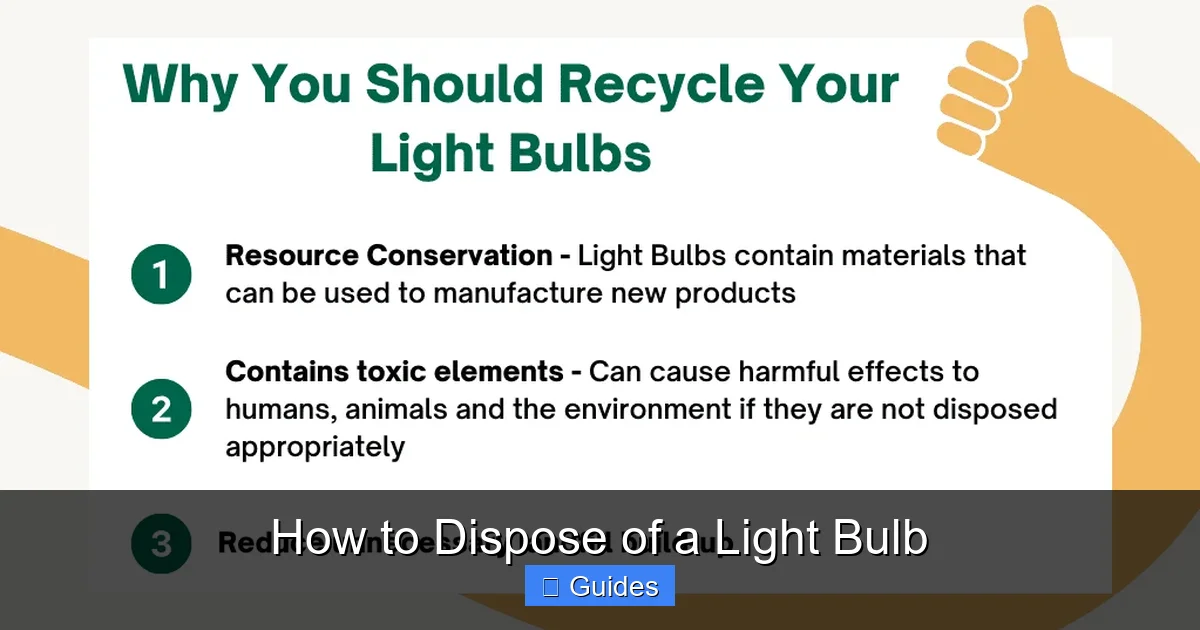
The truth is, not all light bulbs are created equal, especially when it comes to their end-of-life journey. The materials inside a traditional incandescent bulb are very different from those in a modern LED or a curly compact fluorescent lamp (CFL). Some bulbs contain hazardous chemicals, like mercury, which can harm the environment and human health if released improperly. Others contain valuable resources that can be recycled and reused, reducing the demand for new raw materials. Taking the time to understand the correct disposal methods for each type of bulb is a small effort that makes a big difference for our planet.
This comprehensive guide will walk you through everything you need to know about how to dispose of a light bulb safely and responsibly. We’ll break down the different types of bulbs, explain their unique disposal requirements, and provide practical tips for finding recycling centers and ensuring you’re doing your part for a greener future. So, let’s shed some light on proper light bulb disposal!
Key Takeaways
- Incandescent & Halogen Bulbs: These are generally safe for regular trash disposal, but check local glass recycling options first.
- CFL (Compact Fluorescent Lamp) Bulbs: Contain mercury, making them hazardous waste. They must be recycled at designated facilities to prevent mercury release into the environment.
- LED (Light-Emitting Diode) Bulbs: Are considered electronic waste (e-waste). They contain valuable materials and should be recycled, not thrown in the trash.
- Fluorescent Tube Lights: Similar to CFLs, these also contain mercury and require special hazardous waste disposal or recycling.
- Specialty Bulbs: High-Intensity Discharge (HID), UV, and neon bulbs often contain hazardous materials and typically require specialized recycling or disposal services.
- Local Regulations are Key: Always verify disposal instructions with your local municipality, waste management facility, or retailer take-back programs, as rules vary significantly by location.
- Safe Handling: Exercise caution when handling any bulb, especially broken ones, to prevent injury and exposure to potentially harmful substances.
Quick Answers to Common Questions
Can I throw any light bulb in the regular trash?
No, only incandescent and halogen bulbs are generally safe for regular trash, though recycling glass is still preferable. CFLs, LEDs, and fluorescent tubes contain materials that require special recycling or hazardous waste disposal.
What should I do if a CFL bulb breaks?
If a CFL breaks, ventilate the room, have people and pets leave, do NOT vacuum. Carefully scoop up all fragments with stiff paper or tape, wipe the area, seal all cleanup materials in a plastic bag, and take it to a hazardous waste facility.
Are LED bulbs recyclable?
Yes, LED bulbs are considered electronic waste (e-waste) and should be recycled. They contain valuable materials that can be recovered, and they should not be thrown in the regular trash.
Where can I recycle fluorescent tube lights?
Fluorescent tube lights, like CFLs, contain mercury and must be recycled at Household Hazardous Waste (HHW) facilities, specialized lamp recyclers, or through commercial waste services if you’re a business.
Why is proper light bulb disposal important?
Proper light bulb disposal is important to prevent hazardous materials (like mercury) from contaminating the environment, to conserve valuable resources through recycling, and to reduce landfill waste.
📑 Table of Contents
- The Incandescent and Halogen Bulb: Simple Disposal, But Opportunities for More
- The Compact Fluorescent Lamp (CFL): Handle with Care (and Recycle!)
- The Light-Emitting Diode (LED) Bulb: The Future of E-Waste Recycling
- Fluorescent Tube Lights: Larger Scale, Same Mercury Concerns
- Specialty Bulbs: Unique Needs, Professional Handling
- General Tips for Responsible Disposal & Finding Local Resources
- Conclusion
The Incandescent and Halogen Bulb: Simple Disposal, But Opportunities for More
Let’s start with the old-timers: incandescent and halogen bulbs. These are the classic pear-shaped bulbs with a visible filament, and halogen bulbs are typically smaller and brighter, often found in floodlights or spotlights. From a disposal perspective, these are generally the easiest to handle because they don’t contain hazardous materials like mercury.
General Trash Disposal
For the most part, traditional incandescent and halogen bulbs can be safely disposed of in your regular household trash. They are primarily made of glass and a small amount of metal. Once broken, the glass is similar to other household glass waste, and the metal components are inert. This simplicity makes them less of a concern for immediate environmental contamination compared to other bulb types.
However, “safe for trash” doesn’t necessarily mean “best for the environment.” Landfills are filling up, and every item we can divert is a win.
Opportunities for Glass Recycling
Even though incandescent bulbs aren’t typically accepted in curbside recycling programs alongside jars and bottles (due to different glass compositions and the presence of metal filaments that can contaminate the recycling stream), there might still be specialized recycling opportunities in your area. Some municipal recycling centers or private facilities might accept them.
* Tip: Before tossing an incandescent or halogen bulb, consider if you can remove the metal base. If so, the glass portion might be accepted at specific glass recycling facilities. Always call ahead to confirm their acceptance policies.
When thinking about how to dispose of a light bulb of this type, remember that while the immediate hazard is low, responsible recycling always offers a better alternative to landfilling.
The Compact Fluorescent Lamp (CFL): Handle with Care (and Recycle!)
Visual guide about How to Dispose of a Light Bulb
Image source: res.cloudinary.com
CFLs were once hailed as the energy-efficient successors to incandescent bulbs, offering significant savings on electricity. However, their primary drawback is their mercury content. Even a tiny amount of mercury, if released into the environment, can be harmful. This makes knowing how to dispose of a light bulb that is a CFL absolutely critical.
Understanding the Mercury Content
Each CFL bulb contains a small amount of mercury vapor, usually less than 5 milligrams. While this is a minute amount, it’s enough to pose an environmental risk if the bulb breaks in a landfill. Mercury can leach into soil and water, eventually entering the food chain and potentially causing neurological and developmental problems in humans and wildlife. Because of this, CFLs are classified as hazardous waste in many regions and *cannot* be thrown in the regular trash.
Finding CFL Recycling Programs
Fortunately, there are many programs dedicated to recycling CFLs. These programs ensure that the mercury is safely captured and prevented from entering the environment, and other materials like glass and metal are recovered.
* **Retail Take-Back Programs:** Many large hardware stores (e.g., Home Depot, Lowe’s) and sometimes even general merchandise stores (e.g., IKEA, some grocery chains) offer free take-back programs for used CFLs. They usually have designated collection bins near the entrance or customer service desk.
* **Municipal Hazardous Waste Facilities:** Your local city or county waste management department likely operates a Household Hazardous Waste (HHW) collection facility or hosts special collection events. These are ideal places to dispose of a light bulb containing mercury.
* **Mail-Back Programs:** For those without convenient local options, several companies offer mail-back recycling kits. You purchase a pre-paid box, place your used bulbs inside, and ship them to a certified recycling facility. This is a great option for businesses or individuals with larger quantities.
Safe Handling of Broken CFLs
Accidents happen, and a CFL might break. If this occurs, it’s important to clean it up safely to minimize exposure to mercury vapor and glass shards.
1. **Ventilate:** Open windows and doors to air out the room for 5-10 minutes.
2. **Leave the Area:** Have people and pets leave the room.
3. **DO NOT Vacuum:** Vacuuming can spread mercury vapor and dust.
4. **Collect Fragments:** Carefully scoop up all glass fragments and powder using stiff paper or cardboard. Use sticky tape to pick up smaller pieces.
5. **Wipe the Area:** Wipe the area with a damp paper towel or disposable wet wipe.
6. **Seal It Up:** Place all cleanup materials (broken bulb, paper, tape, wipes) into a sealable plastic bag.
7. **Dispose Properly:** Take the sealed bag to a local HHW facility or a designated CFL recycling drop-off. Do not put it in your regular trash.
8. **Wash Hands:** Wash your hands thoroughly after cleanup.
Understanding how to dispose of a light bulb that is a CFL, especially a broken one, is a critical part of being environmentally responsible.
The Light-Emitting Diode (LED) Bulb: The Future of E-Waste Recycling
LED bulbs are the current gold standard for energy efficiency and longevity. They don’t contain mercury, which is a huge plus. However, they are complex electronic devices, meaning they fall under the category of “e-waste” or electronic waste. Knowing how to dispose of a light bulb that is an LED correctly means embracing e-waste recycling.
LEDs as E-Waste
LEDs contain printed circuit boards, various metals (including small amounts of lead, copper, and nickel in some components), and other electronic parts. While these materials are not typically hazardous in the same way mercury is, they are valuable resources that should be recovered. Landfilling LEDs means losing these resources and potentially introducing trace amounts of heavy metals into the environment over time.
Where to Recycle LEDs
Because LEDs are relatively new, dedicated recycling streams are still evolving, but options are becoming more widespread.
* **Retail Take-Back Programs:** Similar to CFLs, many retailers that sell LEDs also offer recycling programs. Check with major hardware stores, electronics retailers, and even some big-box stores.
* **Electronics Recycling Centers:** Your local electronics recycling center or e-waste collection events are excellent places to bring your old LED bulbs. These facilities are equipped to dismantle and process electronic components safely.
* **Municipal Recycling Centers:** Some forward-thinking municipal recycling programs are starting to accept LEDs. Always check your local waste management website for specific guidelines.
* **Mail-Back Programs:** Several companies offer mail-back recycling for all types of light bulbs, including LEDs. This can be a convenient option if local resources are limited.
The Benefit of LED Recycling
Recycling LEDs helps conserve natural resources by recovering metals and other materials that can be used to manufacture new products. It also reduces the energy required to extract and process new raw materials, lessening our carbon footprint. When you learn how to dispose of a light bulb like an LED properly, you’re contributing to a circular economy.
Fluorescent Tube Lights: Larger Scale, Same Mercury Concerns
Fluorescent tube lights are common in kitchens, garages, workshops, and commercial buildings. Like CFLs, these long, cylindrical bulbs contain mercury vapor and must be disposed of as hazardous waste. The mercury content per tube is generally higher than in a single CFL.
Identifying Fluorescent Tubes
These are typically 2 to 8 feet long and come in various diameters (T5, T8, T12). They are often found in fixtures with a ballast, which is another electronic component that also requires special disposal (as it can contain PCBs in older models).
Residential vs. Commercial Disposal
* **Residential:** For homeowners, fluorescent tubes can be taken to municipal Household Hazardous Waste (HHW) facilities or special collection events. Some retailers might accept them, but it’s less common than with CFLs due to their size. Mail-back programs are a practical solution for individuals.
* **Commercial/Industrial:** Businesses that use fluorescent tubes have specific legal requirements for disposal. They cannot typically use residential HHW facilities. Instead, they must contract with licensed hazardous waste disposal companies or specialized lamp recyclers. This ensures compliance with environmental regulations and proper tracking of hazardous waste.
Protecting Yourself During Handling
Given their length and fragility, fluorescent tubes are more prone to breaking than smaller bulbs.
* **Wear Gloves and Eye Protection:** Always handle tubes carefully with gloves to avoid cuts and eye protection to guard against shattering glass.
* **Store Safely:** Store spent tubes in their original packaging or a sturdy box to prevent breakage before disposal. Label the box clearly.
* **Clean Up Broken Tubes:** If a tube breaks, follow the same cleanup procedures as for a broken CFL: ventilate, do not vacuum, collect fragments carefully, seal in a plastic bag, and dispose of at an HHW facility.
Understanding how to dispose of a light bulb that is a fluorescent tube properly is essential for anyone with these lighting fixtures.
Specialty Bulbs: Unique Needs, Professional Handling
Beyond the common household bulbs, there’s a range of specialty lights, each with its own disposal considerations. These often require even more specialized handling due to their unique materials or high-intensity components.
High-Intensity Discharge (HID) Bulbs
HID bulbs, such as mercury vapor, metal halide, and high-pressure sodium lamps, are used in streetlights, stadium lighting, and some vehicle headlamps. They provide very bright light but contain mercury, lead, and other potentially hazardous materials. Like fluorescent tubes and CFLs, HIDs must be recycled through dedicated hazardous waste programs or specialized lamp recyclers. They should never go into regular trash.
UV and Neon Bulbs
UV (ultraviolet) bulbs, used in tanning beds, water purification systems, and insect zappers, often contain mercury. Neon bulbs, commonly used in signage, contain small amounts of noble gases and sometimes mercury. Both types typically require disposal at HHW facilities or through specialized recycling programs due to their contents.
Automotive and Medical Bulbs
Some automotive bulbs (e.g., certain HID headlamps) and medical equipment bulbs can also contain hazardous materials. If you’re replacing a bulb in your car or a piece of specialized equipment, consult the manufacturer’s guidelines or a professional service center for proper disposal instructions. They often have established recycling channels for these specific items.
When dealing with specialty bulbs, the general rule is: if you’re unsure, assume it needs special handling and seek professional advice on how to dispose of a light bulb of this type.
General Tips for Responsible Disposal & Finding Local Resources
No matter what type of bulb you’re holding, some universal principles apply to ensure you’re disposing of it responsibly.
Always Check Local Regulations
This is the single most important piece of advice. Waste disposal rules are primarily set at the local (city, county, state/provincial) level, and they can vary significantly. What’s allowed in one town might be prohibited in another.
* **Visit Your Municipality’s Website:** Most city or county waste management departments have comprehensive websites detailing what they accept and where. Look for sections on “hazardous waste,” “recycling,” or “bulbs/lamps.”
* **Call Them Directly:** If the website isn’t clear, a quick phone call to your local waste management office can provide definitive answers.
Online Recycling Locators
Several national and regional organizations provide online search tools to help you find nearby recycling centers for various items, including light bulbs.
* **Earth911.com:** A fantastic resource for finding recycling options for almost anything, including specific types of light bulbs.
* **LampRecycle.org:** Focuses specifically on mercury-containing lamps, providing state-by-state guidance and drop-off locations.
Retail Take-Back Programs
Don’t underestimate the convenience of retail take-back programs. Many large hardware chains and electronics stores recognize the importance of responsible disposal and offer free recycling for common bulb types like CFLs and LEDs. It’s often as simple as walking into the store and dropping them in a designated bin.
Preparing Bulbs for Disposal
* **Prevent Breakage:** Whenever possible, keep old bulbs in their original packaging or place them in a sturdy box before transporting them for disposal. This prevents them from breaking during transit, which is especially important for mercury-containing bulbs.
* **Separate By Type:** If you’re collecting several bulbs, it’s helpful to separate them by type (e.g., CFLs in one box, LEDs in another) to make drop-off easier at the recycling center.
* **Label Clearly:** If storing bulbs for a while, label the container clearly (e.g., “Used CFLs for Recycling”).
Knowing how to dispose of a light bulb correctly is more than just a chore; it’s an act of environmental stewardship.
Conclusion
The seemingly simple act of changing a light bulb leads to an important decision: how to dispose of a light bulb when its useful life is over. From the straightforward disposal of incandescent bulbs to the careful handling of mercury-containing CFLs and fluorescent tubes, and the e-waste recycling of LEDs, each bulb type demands a specific approach.
By taking the time to understand these differences and utilizing the available recycling resources, we can prevent harmful substances from entering our environment, conserve valuable raw materials, and reduce our overall ecological footprint. It’s a small but significant step towards building a more sustainable future. So, the next time a bulb goes out, remember this guide, and make the responsible choice. Your planet will thank you.
🎥 Related Video: How to recycle lightbulbs! Hint, don't put them in your curbside bin
📺 The Simple Environmentalist
I’m back for more recycling tips! Stop wishcycling and start recycling properly today. Check out my recycling 101 playlist below: …
Frequently Asked Questions
Do light bulbs ever expire if unused?
While light bulbs don’t typically “expire” in the sense that food does, their performance can degrade over time even if unused. LEDs and CFLs, for example, have internal electronic components that can age, and their rated lifespan is often based on an average number of operating hours rather than a calendar date.
How can I safely store old light bulbs before recycling them?
The safest way to store old light bulbs before recycling is to place them back into their original packaging if available. If not, use a sturdy box, separating different bulb types, and label the box clearly. Store them in a cool, dry place where they won’t be easily broken.
Are broken light bulbs considered hazardous waste?
Broken light bulbs, especially CFLs and fluorescent tubes, are absolutely considered hazardous waste due to the potential release of mercury vapor and sharp glass fragments. Even broken incandescent bulbs, while not chemically hazardous, can be dangerous to handle due to glass shards and should be handled with care.
What’s the difference between a Household Hazardous Waste (HHW) facility and a regular recycling center?
A Household Hazardous Waste (HHW) facility is specifically equipped to safely collect, process, and dispose of hazardous materials like mercury-containing bulbs, paints, chemicals, and batteries. A regular recycling center typically handles common recyclables like paper, plastic, glass, and metal, but often lacks the specific infrastructure for hazardous waste.
Can I recycle the packaging that light bulbs come in?
Yes, the packaging for light bulbs is often made of cardboard, plastic, or paper. These materials are generally recyclable through your standard curbside recycling program. Just make sure to separate the packaging from the bulb itself and check local guidelines for specific plastic types.
What are the consequences of throwing a mercury-containing bulb in the trash?
Throwing a mercury-containing bulb (like a CFL or fluorescent tube) in the trash can lead to mercury being released into the environment if the bulb breaks in a landfill. This mercury can then leach into soil and water, potentially contaminating ecosystems and entering the food chain, posing health risks to humans and wildlife.
