


As an Amazon Associate, We earn from qualifying purchases.
A single non-working bulb can plunge an entire string of Christmas lights into darkness, dimming your festive spirit. This comprehensive guide will equip you with the knowledge and tools needed to systematically how to find a bad Christmas light bulb, from visual inspections and simple wiggle tests to specialized light testers. Learn to identify the faulty culprit efficiently and restore your dazzling holiday display, ensuring a bright and joyful season.
The holiday season is a magical time, filled with warmth, joy, and the twinkling glow of Christmas lights. Whether adorning your tree, outlining your home, or bringing cheer to your outdoor spaces, these lights are often the very essence of festive decoration. But then it happens – a dark patch appears. One moment, your display is sparkling beautifully, and the next, a section (or even an entire string!) has gone dark. The culprit? Often, it’s just a single, mischievous bad Christmas light bulb, determined to put a damper on your holiday cheer.
That feeling of frustration when you realize your carefully strung lights are no longer fully illuminating is something many of us know all too well. It can feel like finding a needle in a haystack, especially with hundreds of tiny bulbs staring back at you. Do you throw the whole string away? Start from scratch? Not so fast! With a little patience, a systematic approach, and a few clever tricks up your sleeve, you can learn how to find bad Christmas light bulb and bring your beloved decorations back to life. This guide will walk you through the process step-by-step, transforming you from a frustrated decorator into a light-repairing wizard.
So, take a deep breath, grab your non-working light string, and let’s embark on this mission together. We’ll cover everything from understanding how your lights work to using specialized tools, all with the goal of helping you efficiently how to find bad Christmas light bulb and restore the brilliant sparkle to your holiday display. Let’s get those lights shining bright once more!
Key Takeaways
- Safety First: Always unplug your light strings before attempting any inspection or repair to prevent electrical shock.
- Start with Visuals: Often, a burnt-out bulb will show obvious signs like broken glass, blackening, or a melted base.
- Perform the Wiggle Test: Gently wiggling and tightening bulbs can often restore contact for loose connections.
- Don’t Forget the Fuses: Check the fuses located in the plug; a blown fuse can affect an entire string.
- Utilize Specialized Tools: Devices like the LightKeeper Pro can quickly test bulbs, fuses, and even repair non-functioning shunts.
- Employ a Systematic Approach: Divide long strings into smaller sections for easier troubleshooting, especially when using a tester.
- Keep Spare Bulbs Handy: Having the correct replacement bulbs is crucial for quick repairs and maintaining your lights.
Quick Answers to Common Questions
Why does one bad bulb make the whole string go out?
Most traditional incandescent mini Christmas lights are wired in a series circuit. This means electricity flows through each bulb consecutively. If one bulb burns out or has a loose connection, it breaks the circuit, stopping the flow of electricity to all subsequent bulbs.
Can I use a regular multimeter to how to find bad Christmas light bulb?
Yes, you can use a multimeter set to continuity mode. With the string unplugged, you can carefully test individual bulbs or sections of the string to identify breaks in the circuit, which would indicate a bad bulb or wire.
What if I can’t find a replacement bulb that matches?
It’s crucial to use bulbs of the correct voltage and amperage. If you can’t find an exact match from the original packaging, check local hardware or craft stores. As a last resort, consider taking a working bulb from a less visible part of the string to use as a temporary replacement for the bad Christmas light bulb in a prominent spot.
Is it safe to leave an empty bulb socket on the light string?
No, it’s generally not safe. An empty socket is an exposed electrical connection, which can be a shock hazard. Additionally, on series-wired strings, a missing bulb breaks the circuit, causing the rest of the string to remain dark. Always replace missing bulbs or ensure the socket is covered and sealed if the bulb isn’t essential.
When should I just buy new lights instead of trying to how to find bad Christmas light bulb?
Consider buying new lights if your string is very old, frequently breaks down, shows extensive wire damage, has melted sockets, or if the cost and effort of repairing multiple bad bulbs outweigh the price of a new, more efficient LED string.
📑 Table of Contents
Understanding Your Christmas Lights: The Basics
Before you dive into troubleshooting, it helps to understand a little about how Christmas lights are wired. This knowledge will guide your search for the elusive bad Christmas light bulb.
Series vs. Parallel Circuits
Most traditional incandescent mini Christmas lights use a “series” circuit. In a series circuit, electricity flows through each bulb one after the other. If one bulb burns out or becomes loose, it breaks the circuit, and all the lights downstream (or even the entire string) will go out. This is why a single bad Christmas light bulb can cause such a widespread problem.
Newer LED light strings, and some older C7/C9 incandescent strings, often use a “parallel” or “series-parallel” circuit. In a pure parallel circuit, if one bulb goes out, only that specific bulb will stop working, and the rest of the string remains lit. However, many modern strings combine these, often having sections of lights wired in series, which are then connected in parallel. This means if one bulb in a series section fails, that whole section goes dark, but the rest of the string might stay lit.
Incandescent vs. LED Bulbs
The type of bulb also plays a role in troubleshooting. Incandescent bulbs have a filament that heats up and glows. When this filament breaks, the bulb burns out. Many incandescent mini-lights also have a “shunt” – a tiny wire inside the bulb that bypasses the filament if it breaks. This shunt *should* allow electricity to continue flowing to the rest of the string, even if the bulb is dead. However, these shunts don’t always work perfectly, which is often why a single bad Christmas light bulb still manages to kill a whole string. LED bulbs, on the other hand, use light-emitting diodes. They’re more energy-efficient and last longer, but they can still fail due to component issues or poor connections. Finding a bad Christmas light bulb on an LED string might be different, as they often don’t have the same “shunt” failure mode.
Safety First: Preparing for the Hunt
Before you even think about touching a light bulb, safety is paramount. Electricity can be dangerous, so always prioritize your well-being.
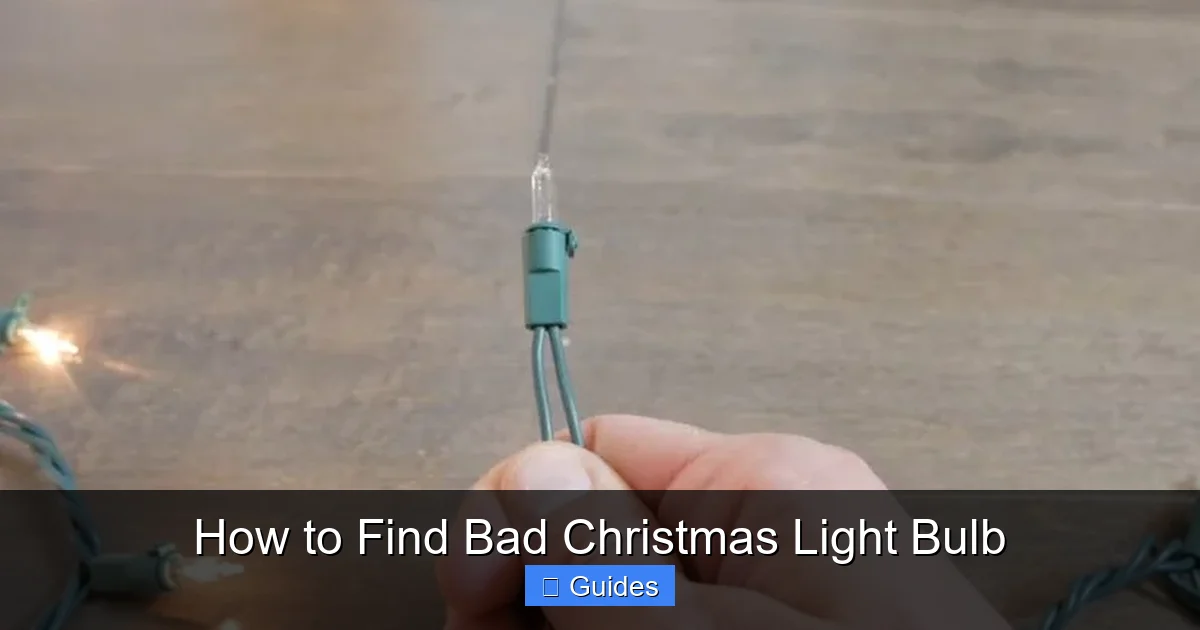
Visual guide about How to Find Bad Christmas Light Bulb
Image source: holidaylightfantasia.org
Unplug Your Lights!
This cannot be stressed enough: always unplug your Christmas light string from the power outlet before you begin any inspection, wiggling, or bulb replacement. Working with plugged-in lights risks electrical shock and potentially even fire. Make it the very first step in your process to how to find bad Christmas light bulb.
Clear Your Workspace and Gather Supplies
Find a well-lit, clean, and stable surface to work on. A kitchen table or workbench is ideal. Uncoil the light string as much as possible to avoid tangles. You’ll want to have a few items on hand: replacement bulbs (from the original packaging, if possible), small needle-nose pliers, a small flathead screwdriver, and potentially a multi-tool. Having everything ready saves time and makes the process smoother when you’re trying to figure out how to find bad Christmas light bulb.
Consider Gloves and Eye Protection
Incandescent bulbs, especially older ones, can be fragile. If a bulb is broken, tiny glass shards can cause cuts. Wearing work gloves can protect your hands. Eye protection is also a good idea, particularly if you’re dealing with very old or damaged strings.
The Visual Inspection: Your First Line of Defense
Often, the simplest method is the most effective. A thorough visual inspection can quickly help you how to find bad Christmas light bulb without any fancy tools.
Look for the Obvious Culprits
Carefully examine every single bulb on the string. What are you looking for?
- Missing Bulbs: An empty socket is a clear break in the circuit. Replace it immediately.
- Broken or Cracked Glass: If the glass casing of a bulb is visibly broken, it’s definitely a bad Christmas light bulb.
- Melted Sockets or Wires: Signs of heat damage, like melted plastic around a socket or discolored wires, indicate a problem. These sections might need more than just a bulb replacement; consider replacing the whole string if damage is extensive.
- Loose Wires: Check if any wires have pulled out of their connection points in the sockets.
Check for Discoloration and Blackened Filaments
For incandescent bulbs, a common sign of a burnt-out bulb is a dark, sooty appearance inside the glass. The tiny filament wire inside might also be visibly broken or black. LED bulbs don’t typically blacken, but they might show internal damage or a visible dark spot if they’ve failed due to overheating. These visual cues are crucial in your quest to how to find bad Christmas light bulb.
Pay Attention to Oddly Colored or Dim Bulbs
Sometimes, a bulb isn’t completely dead but is failing. It might glow a very dim orange, flicker erratically, or have a strange color compared to its neighbors. While not always the primary culprit for an entire string going out (unless its shunt has failed), replacing these weak bulbs can improve the overall appearance and lifespan of your string.
The Wiggle Test and Basic Troubleshooting
If a visual inspection doesn’t reveal the bad Christmas light bulb, it’s time to get a little more hands-on with some basic troubleshooting techniques.
The Gentle Wiggle Test
One of the most common reasons for a light string to go out (especially with incandescent mini-lights) isn’t a burnt-out bulb, but a loose connection. With the string unplugged, gently wiggle each bulb in its socket. You’re trying to re-establish a solid electrical contact. Once you’ve wiggled them all, plug the string back in and see if the problem is resolved. If not, unplug again.
Tighten Loose Bulbs
Some sockets allow you to simply push the bulb in further to secure it. For others, the wire leads of the bulb might have become bent or corroded. With the string unplugged, carefully pull out each bulb, straighten its two tiny wires (prongs), and reinsert it firmly into the socket. This ensures good contact and is a vital step in learning how to find bad Christmas light bulb.
Check and Replace the Fuses
Many Christmas light strings have one or two small fuses located within the plug itself. If your entire string is dark, a blown fuse is often the simplest and quickest fix.
- Locate the Fuse Compartment: Look for a small, sliding door or cover on the side of the plug. You might need a small flathead screwdriver to gently pry it open.
- Inspect the Fuses: Inside, you’ll find one or two tiny glass fuses. A blown fuse will have a visible break in the wire filament inside the glass tube, or the glass might appear sooty.
- Replace the Fuses: Use spare fuses that came with your lights (always match the amperage!). Gently remove the old fuse and insert the new one. Close the compartment.
Plug the lights back in. If they light up, congratulations! You’ve successfully completed a major step to how to find bad Christmas light bulb. If not, unplug again and continue your search.
Tools of the Trade: Specialized Testers
When visual checks and the wiggle test don’t work, it’s time to bring in specialized gadgets. These tools can drastically speed up the process of how to find bad Christmas light bulb.
Non-Contact Voltage Testers
While not specifically for individual bulbs, a non-contact voltage tester can tell you if power is reaching a certain section of your light string. You simply hold it near the wire (after plugging in the string!). If it beeps or lights up, power is present. This helps isolate where the power stops, narrowing down your search area for the bad Christmas light bulb.
The LightKeeper Pro (and Similar Devices)
The LightKeeper Pro is a game-changer for troubleshooting incandescent mini-lights. It’s an all-in-one tool designed specifically to how to find bad Christmas light bulb.
- Bulb Tester: It has a socket to test individual bulbs. Just pull a bulb from the string, plug it into the tester, and it tells you if the bulb is good or bad.
- Fuse Tester: It also has a slot to test those tiny glass fuses from your light string’s plug.
- Shunt Repair: This is where it gets really clever. The LightKeeper Pro has a “pistol grip” trigger that sends a pulse of electricity through the light string. This pulse is designed to repair internal shunts that have failed to complete the circuit when a bulb burns out. If your string has a section out due to a bad shunt, this tool can often fix it without even replacing the bulb! You simply plug the string into the LightKeeper Pro, aim the trigger at an unlit socket in the dark section, and pull the trigger. Keep moving along the dark section until the lights come back on.
Similar tools like the LED Keeper Pro exist for LED strings, offering diagnostic and repair capabilities tailored to those types of lights.
Multimeter (For the Technically Inclined)
If you’re comfortable with electronics, a multimeter can be used to test for continuity (to see if electricity can flow through a bulb or a section of wire). With the string unplugged, set your multimeter to continuity mode. You can pull individual bulbs and test their leads, or even test sections of the string by probing the wires. This is a very precise way to how to find bad Christmas light bulb, but it requires some technical knowledge.
Systematic Approach: Zone by Zone Testing
When you have a long string of lights, a systematic method will save you immense time and frustration when you how to find bad Christmas light bulb.
Divide and Conquer
Imagine your light string as several smaller sections. If you have a tester like the LightKeeper Pro, plug the string into it. Then, for a completely dark string, start by aiming the “gun” at a bulb socket somewhere in the middle of the string. Pull the trigger.
- If the lights to one side of your test point light up, but the other side remains dark, you’ve just isolated the problem to the dark side.
- If neither side lights up, move to the middle of the remaining dark section and repeat.
By repeatedly splitting the dark section in half, you can quickly narrow down the faulty zone to just a few bulbs. This “binary search” method is incredibly efficient to how to find bad Christmas light bulb.
Test in Sections (If Applicable)
Some longer light strings are designed with multiple connection points or split into distinct segments, each with its own power supply or fuse. If your lights have removable sections, disconnect them and test each section individually. This can drastically reduce the number of bulbs you need to inspect when trying to how to find bad Christmas light bulb.
Mark Your Progress
As you test sections or identify suspicious bulbs, use a small piece of tape or a marker to indicate the areas you’ve checked or the bulbs you suspect. This prevents you from re-testing the same areas and keeps your search organized.
Advanced Tips and When to Give Up
Even with all these strategies, sometimes a bad Christmas light bulb or string can be particularly stubborn. Here are a few more tips.
Always Have Spares
When you buy new Christmas lights, keep the spare bulbs and fuses that come with them! These are specifically designed to match your string’s voltage and current. Using incorrect bulbs can cause further damage or pose a fire hazard. Storing them in a small, clearly labeled bag with the light string makes it easy to how to find bad Christmas light bulb replacements when needed.
The “Shunt” Re-activation Trick (for Incandescents)
As mentioned, incandescent mini-lights have shunts. If a bulb burns out but its shunt fails to activate, the circuit breaks. The LightKeeper Pro’s shunt repair function works by sending a voltage pulse that can often “kick-start” a stuck shunt. If you don’t have a LightKeeper Pro, you can sometimes achieve a similar (but less reliable) effect by gently tapping the suspected bad Christmas light bulb or twisting it in its socket to try and force the shunt to connect. This is a bit of a last-ditch effort before replacing the bulb.
When to Replace the Entire String
There comes a point where the effort to how to find bad Christmas light bulb and repair it outweighs the cost of buying a new string. Consider replacing the entire string if:
- The string is very old and frequently breaking.
- There’s extensive damage to the wiring or multiple sockets are melted.
- You’ve found numerous bad bulbs, indicating general wear and tear.
- You simply can’t find the culprit despite your best efforts.
- Newer LED strings offer significant energy savings and longer lifespan, making an upgrade worthwhile.
Sometimes, retiring an old, unreliable string is the best way to ensure a frustration-free holiday season.
Learning how to find bad Christmas light bulb might seem daunting at first, but with the right approach and a bit of patience, it’s a skill anyone can master. Remember to prioritize safety by always unplugging your lights. Start with the simplest methods—a thorough visual check and the wiggle test—before moving on to specialized tools like the invaluable LightKeeper Pro. By adopting a systematic zone-by-zone testing strategy, you can quickly narrow down the problem areas, saving you time and frustration.
Don’t let a dark patch dim your holiday spirit! With these tips and tricks, you’re well-equipped to tackle any faulty bulb. So go forth, light up your home, and enjoy a bright, sparkling, and wonderfully festive season. Happy troubleshooting, and may your Christmas lights always shine their brightest!
Frequently Asked Questions
How do Christmas light circuits work?
Most traditional incandescent Christmas lights use a series circuit, meaning electricity flows through each bulb one after another. If one bulb fails, it breaks the entire circuit, causing the whole string (or a section) to go dark. LED lights and some newer incandescents often use parallel or series-parallel circuits, making them less prone to complete string failure from a single bad bulb.
What are the common signs of a burnt-out Christmas light bulb?
Common signs of a burnt-out bulb include a visible break in its internal filament (for incandescents), blackening or a sooty appearance inside the glass, a melted or discolored plastic base, or a physically broken glass casing. LED bulbs might just appear dark or have a visible dark spot if they’ve failed.
Are LED Christmas lights easier to fix than incandescent ones?
LED lights are generally more durable and last longer, so they might require less frequent fixing. When an LED bulb does fail, it often only affects that specific bulb or a small segment due to their more advanced circuitry, making it easier to pinpoint the problem than with a fully dark incandescent string. However, specialized tools might still be needed to how to find bad Christmas light bulb on an LED string.
Can I fix a broken wire on a Christmas light string?
While minor wire breaks can sometimes be repaired with electrical tape or heat-shrink tubing, it’s generally not recommended for safety reasons. A poorly repaired wire can be a fire hazard or shock risk. If a wire is significantly frayed, cut, or damaged, it’s usually safer to replace the entire string rather than risk an electrical issue.
How can I prevent my Christmas light bulbs from burning out quickly?
To prolong the life of your bulbs, handle light strings gently to avoid stressing wires and filaments. Avoid leaving lights exposed to extreme weather conditions when not in use, and store them properly to prevent tangles and damage. Using the correct wattage and type of replacement bulbs is also crucial.
What is a “shunt” and why is it important for Christmas lights?
A “shunt” is a tiny wire or component inside many incandescent mini Christmas light bulbs. Its purpose is to create an alternate path for electricity if the main filament burns out, ideally allowing the rest of the series-wired string to stay lit. When the shunt fails to activate, the circuit remains broken, which is a common reason why a single bad Christmas light bulb can plunge an entire string into darkness.
