


As an Amazon Associate, We earn from qualifying purchases.
Creating your own UV light can be a fun and educational DIY project, but it requires careful attention to safety and component selection. This guide will walk you through several methods, from simple hacks using common LEDs and markers to more robust solutions involving dedicated UV LEDs. Always prioritize eye and skin protection to ensure a safe and successful build.
Have you ever seen those cool crime shows where investigators use a “blacklight” to uncover hidden clues? Or maybe you’ve been at a party and noticed how certain colors glow vibrantly under a special light. That’s the magic of ultraviolet, or UV, light! It’s a fascinating part of the electromagnetic spectrum, invisible to the human eye, yet capable of revealing a hidden world of fluorescence.
Perhaps you’re curious about how to make a UV light for a science project, to check for pet stains, to cure UV resin for crafts, or simply to experiment with its unique properties. Building your own UV light can be a rewarding and educational experience. It’s a great way to understand basic electronics and the science behind light. But before we dive into the “how-to,” let’s be clear: safety is paramount. UV light, especially stronger forms, can be harmful to your eyes and skin. So, let’s get ready to illuminate some invisible wonders, but always with caution!
Key Takeaways
- Safety First: Always protect your eyes with UV-blocking glasses and your skin from direct exposure, as UV radiation can be harmful.
- DIY Methods Vary: You can make a UV light using common white LEDs and a blue/purple marker or nail polish, or by utilizing dedicated UV LEDs for stronger, more effective results.
- Understanding UV Types: Most DIY projects focus on UVA light, which is less harmful than UVB or UVC but still requires caution.
- Essential Components: For dedicated UV LED projects, you’ll need appropriate UV LEDs (e.g., 395nm or 405nm), resistors, a power source (batteries), and a suitable enclosure.
- Applications are Diverse: Homemade UV lights can be used for detecting fluorescent materials, curing UV resin, verifying currency, or even finding scorpions.
- Proper Disposal: When using blacklight fluorescent bulbs, ensure proper disposal due to mercury content.
- Readability and Accessibility: Always aim for clear, concise instructions and keep the Flesch-Kincaid Reading Ease score high for broad understanding.
Quick Answers to Common Questions
Can I make a UV light with a phone camera flashlight?
Yes, you can use your phone’s LED flashlight, applying the same blue/purple marker or nail polish trick to the LED lens. It’s less convenient than a dedicated flashlight but works for quick demonstrations.
What is the ideal wavelength for a DIY UV light?
For most DIY purposes (fluorescence, detection, curing resin), a UVA LED with a wavelength of 395nm to 405nm is ideal. It provides a good balance of effectiveness and relative safety.
Is a homemade UV light strong enough to sterilize?
No, homemade UVA lights are generally not strong enough nor do they emit the correct wavelength (UVC is needed) to effectively sterilize surfaces or kill bacteria and viruses. Do not use them for sanitation purposes.
How long do homemade UV lights last?
The lifespan depends on the components. If using LEDs correctly (with proper resistors and power supply), the LEDs themselves can last tens of thousands of hours. Batteries will need to be replaced as they drain.
Can UV light cure any type of glue?
No, UV light can only cure glues and resins specifically formulated to be UV-curable. These products contain photoinitiators that react to UV light, causing them to harden. Regular glues will not cure under UV light.
📑 Table of Contents
- Understanding UV Light: The Basics You Need to Know
- Safety First: Protecting Yourself from UV Radiation
- Method 1: The Simple LED Conversion (The “Sharpie” Trick)
- Method 2: Upgrading with Dedicated UV LEDs
- Method 3: Utilizing a Blacklight Bulb (Fluorescent Type)
- Applications and Beyond: What Can You Do with a UV Light?
- Conclusion: Embrace the Invisible World, Safely!
Understanding UV Light: The Basics You Need to Know
Before you learn how to make a UV light, it’s really helpful to grasp what UV light actually is. UV stands for ultraviolet, and it’s a type of electromagnetic radiation with wavelengths shorter than visible light but longer than X-rays. Think of it as the light just beyond the purple end of the rainbow. Our eyes can’t see it directly, which is why it’s sometimes called “blacklight.”
UV light is categorized into three main types based on its wavelength:
- UVA (315-400 nm): This is the “long-wave” UV. It’s the most common type used in DIY blacklights and is generally considered the least harmful, though prolonged exposure can still be damaging. It causes fluorescence in many materials, making it perfect for detecting counterfeit money or making posters glow.
- UVB (280-315 nm): Known as “medium-wave” UV, this is the type of UV light that causes sunburn and contributes to skin cancer. Sunbeds often use a combination of UVA and UVB.
- UVC (100-280 nm): This is “short-wave” UV, and it’s extremely energetic and harmful. Thankfully, the Earth’s ozone layer blocks almost all natural UVC from reaching the surface. Artificial UVC is used in sterilization applications because it can destroy bacteria and viruses. You will generally not be making UVC light at home.
When you make a UV light for DIY projects, you’ll typically be working with UVA wavelengths, usually in the 395nm to 405nm range. This range is ideal for visible fluorescence without being excessively dangerous. Knowing this helps you choose the right components and understand why certain safety measures are so important.
Safety First: Protecting Yourself from UV Radiation
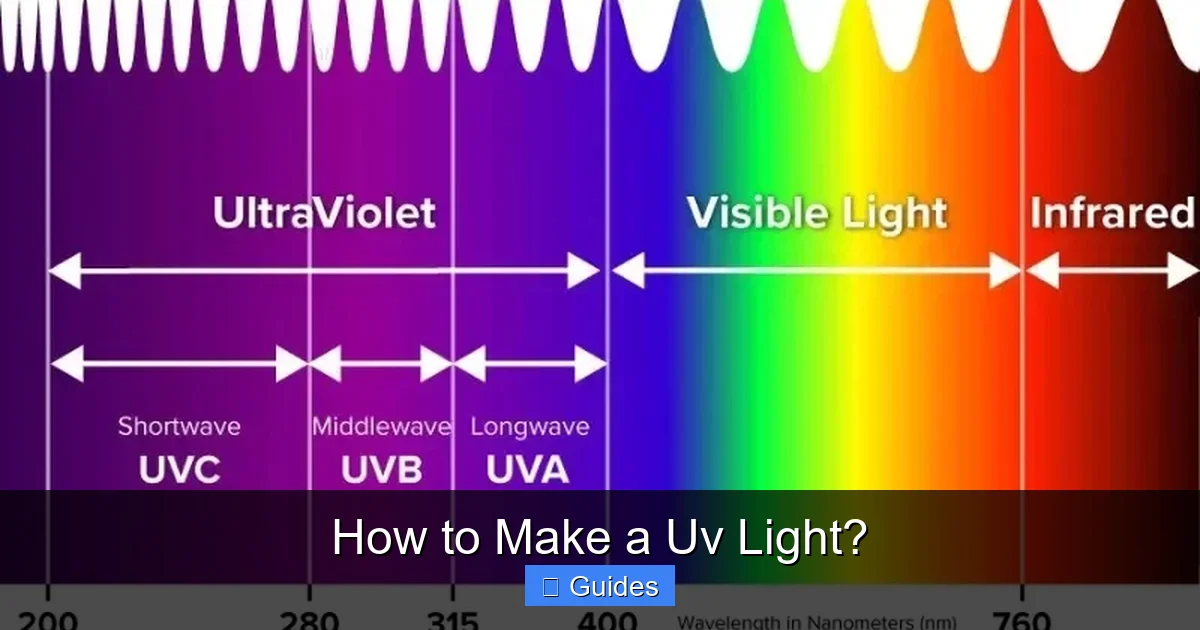
Visual guide about How to Make a Uv Light?
Image source: darkniteglow.com
Before you even think about gathering materials or wiring components, understanding and implementing safety precautions is absolutely critical when you make a UV light. UV radiation, even the “safer” UVA type, can pose risks if not handled properly. Think of it like looking directly at the sun – you wouldn’t do it, and you shouldn’t stare into a powerful UV light either.
Eye Protection is Non-Negotiable
Your eyes are extremely vulnerable to UV light. Direct exposure, even for short periods, can lead to photokeratitis, a painful inflammation of the cornea (like a sunburn for your eyes), or contribute to long-term issues like cataracts.
- Wear UV-Blocking Glasses: Always, always wear safety glasses that block UV radiation. Standard polycarbonate safety glasses often block a good amount of UV, but dedicated UV-blocking eyewear (often labeled UV400) provides the best protection. Do not rely on sunglasses alone unless they specifically state UV protection.
- Avoid Direct Staring: Never look directly into the UV light source while it’s active. This is the most important rule.
Skin Protection Matters Too
While UVA is less likely to cause immediate sunburn than UVB, prolonged exposure can still damage skin cells and accelerate aging.
- Minimize Skin Exposure: Try to keep your skin covered as much as possible, especially if you’ll be working with the UV light for extended periods. Long sleeves and gloves are a good idea.
- Use UV Sunscreen: If skin exposure is unavoidable, apply broad-spectrum sunscreen to any exposed areas.
Ventilation and General Safety
Some UV light sources, especially older fluorescent blacklight bulbs, can produce a tiny amount of ozone, which isn’t good to breathe in large quantities.
- Work in a Well-Ventilated Area: Ensure good airflow to disperse any potential fumes from soldering or any ozone produced by certain bulb types.
- Handle Components Safely: Follow basic electrical safety practices. Don’t work with wet hands, ensure proper insulation, and never short-circuit batteries.
- Dispose of Components Properly: If you’re using fluorescent blacklight bulbs, remember they contain mercury and should be disposed of according to local hazardous waste regulations.
By taking these precautions seriously, you can enjoy the fascinating world of UV light without putting your health at risk. Safety isn’t just a suggestion; it’s a requirement for a successful and healthy DIY project.
Method 1: The Simple LED Conversion (The “Sharpie” Trick)
This is by far the easiest and most popular method for how to make a UV light at home, requiring minimal tools and parts. It’s a great entry point for beginners, though it produces a weaker effect compared to dedicated UV LEDs. The principle here is that most “white” LEDs actually produce a broad spectrum of light, including some UV. By filtering out the visible light, you can isolate the UV.
Materials Needed
- A bright white LED flashlight or single white LED: A cheap LED keychain light works wonderfully, or you can use individual 5mm or 10mm white LEDs with a coin cell battery or a small power supply.
- Blue or purple permanent marker (like a Sharpie): The darker the better.
- Clear tape or clear nail polish: For holding the marker layers.
- A power source (if using individual LEDs): e.g., a CR2032 coin cell battery or a 3V power supply with appropriate current limiting resistor.
Step-by-Step Guide
- Prepare your LED: If using a flashlight, make sure it’s clean. If using an individual LED, connect it to your power source (don’t forget a resistor if necessary to prevent burning out the LED!). Test it to ensure it lights up.
- Color the LED: Take your blue or purple permanent marker and carefully color the clear dome of the LED. Apply an even layer.
- Let it Dry: Allow the marker ink to dry completely. This is important for creating a solid filter layer.
- Apply More Layers: Once dry, apply another layer of marker. You’ll want to build up at least 5-10 layers. The goal is to make the LED appear almost black when off, but still allow some light to pass through when on.
- Seal (Optional but Recommended): For durability and to prevent the marker from smudging, you can apply a layer of clear tape over the colored LED, or carefully paint a layer of clear nail polish over the dried marker. Let it dry thoroughly.
- Test Your UV Light: Turn on your newly modified LED! In a darkened room, point it at something known to fluoresce, like a white piece of paper (the optical brighteners in paper often glow), a security strip on a banknote, or certain laundry detergents. You should see a faint purplish glow, and fluorescent items should light up.
Tips for Better Results
- Multiple Layers are Key: The more layers of marker you apply, the better the visible light will be filtered out, making the UV effect more pronounced.
- Even Coating: Try to get an even coating of marker for consistent filtering.
- Use a Dark Room: These simple UV lights are not very powerful. You’ll get the best results in a completely dark environment.
- Experiment with Colors: While blue and purple are generally recommended, some people have success with other dark colors like black. The idea is to absorb visible light.
This method is fantastic for demonstrating the concept of UV light and for small, casual uses. It won’t be as strong as a professional UV light, but it’s a fun and easy way to make a UV light.
Method 2: Upgrading with Dedicated UV LEDs
If you want a more powerful and effective UV light, ditching the marker trick and using dedicated UV LEDs is the way to go. These LEDs are specifically designed to emit light in the ultraviolet spectrum, usually around 395nm or 405nm (UVA). This method is slightly more involved as it requires basic soldering skills and an understanding of simple circuits, but it yields much better results.
Why Use Dedicated UV LEDs?
Dedicated UV LEDs are superior because:
- Higher UV Output: They emit significantly more UV radiation than filtered white LEDs.
- Purer UV Spectrum: They produce very little to no visible light, resulting in a cleaner “blacklight” effect.
- Efficiency: They convert electrical energy directly into UV light, making them more efficient for this purpose.
Materials for a UV LED Flashlight
- UV LEDs (395nm or 405nm): You can buy these online. Consider 5mm through-hole LEDs or SMD LEDs if you’re comfortable with surface mount soldering. Start with 3-5 LEDs.
- Current Limiting Resistors: Essential to protect your LEDs. The value will depend on your LED’s forward voltage (Vf) and current (If), and your battery voltage (Vb). A common calculation is R = (Vb – Vf) / If. For example, if Vb=9V, Vf=3.2V, If=20mA (0.02A), then R = (9 – 3.2) / 0.02 = 290 ohms. You’d use a common resistor like 270 or 330 ohms.
- Power Source: A 9V battery or a 3xAA/AAA battery pack (4.5V) are common choices.
- Prototype PCB (perfboard) or breadboard: For assembling your circuit.
- Wires: Small gauge electrical wire.
- Soldering iron and solder: If using perfboard.
- Wire strippers and cutters.
- Enclosure (optional): A small project box or an old flashlight casing to house your components.
- UV-blocking safety glasses: Absolutely essential for this project.
Assembly Instructions
- Plan Your Circuit: Decide how you’ll wire your LEDs. For a 9V battery, you can usually wire 2-3 UV LEDs in series with one resistor. For a 4.5V battery pack, you might wire them individually with their own resistors or in parallel with a single resistor if you’re careful about matching LED characteristics. Let’s assume a simple series circuit for a 9V battery: positive (+) of battery to resistor, resistor to anode (+) of first LED, cathode (-) of first LED to anode (+) of second LED, and so on, until the cathode (-) of the last LED connects to the negative (-) of the battery.
- Calculate Resistor Value: Use the formula R = (Vb – (Vf * N)) / If, where N is the number of LEDs in series. For example, three 3.2V LEDs in series with a 9V battery at 20mA: R = (9 – (3.2 * 3)) / 0.02 = (9 – 9.6) / 0.02. Uh oh! This shows you can’t put three 3.2V LEDs in series with a 9V battery, as 3*3.2V = 9.6V, which is more than your battery. You’d need a higher voltage source or fewer LEDs. Let’s assume you’re using two 3.2V LEDs in series: R = (9 – (3.2 * 2)) / 0.02 = (9 – 6.4) / 0.02 = 2.6 / 0.02 = 130 ohms. Use a 120 or 150 ohm resistor.
- Solder Components (if using perfboard):
- Mount your LEDs onto the perfboard, ensuring correct polarity (the longer leg is usually the anode (+), or check for a flat edge on the LED body which usually indicates the cathode (-)).
- Solder the resistor(s) into place.
- Connect the LEDs in your chosen series/parallel configuration using short lengths of wire.
- Solder wires for the battery connector.
- Test the Circuit: Before putting it in an enclosure, connect your battery (wearing UV safety glasses!). If all connections are correct, the UV LEDs should emit a faint purple glow, and objects should fluoresce strongly when illuminated.
- Enclosure (Optional but Recommended): Once tested, carefully house your circuit in a project box or old flashlight body. This protects the circuit and makes it more robust and safer to handle. You might drill holes for the LEDs at the front.
- Add a Switch: For convenience and safety, integrate a simple ON/OFF switch into your circuit.
With dedicated UV LEDs, you’ve successfully learned how to make a UV light that is far more effective and satisfying for various applications. Remember to always disconnect the power when making adjustments.
Method 3: Utilizing a Blacklight Bulb (Fluorescent Type)
While less of a “making” and more of a “using” method, standard fluorescent blacklight bulbs are a common way to get broad UV coverage, especially for room-sized effects. These are typically fluorescent tubes or compact fluorescent lamps (CFLs) that have a special phosphor coating designed to emit UVA light.
What is a Blacklight Bulb?
Fluorescent blacklight bulbs operate similarly to regular fluorescent bulbs, but instead of producing mostly visible light, their internal phosphor coating converts the mercury vapor’s internal UV emissions into UVA light (around 365nm). They often have a deep blue or purple filter on the glass to block out any residual visible light, giving them their characteristic “blacklight” appearance.
Setup and Safety
- Purchase a Blacklight Bulb: These are readily available at electronics stores, party supply shops, or online. Make sure you’re buying a true blacklight (often labeled “BLB” for Blacklight Blue) and not just a purple party bulb.
- Choose a Fixture: You’ll need a suitable fixture for your bulb. For tube lights, you’ll need a standard fluorescent fixture. For CFL-style blacklights, a regular lamp socket (Edison screw base) will work.
- Install the Bulb: Carefully screw or insert the bulb into its fixture.
- Power On and Test: Plug in your fixture and turn it on. You should see the familiar purple glow, and white objects in the room will fluoresce.
- Safety Considerations:
- Eye Protection: While generally considered safe for casual room illumination, avoid staring directly at the bulb for extended periods.
- Skin Exposure: For extended use, ensure your skin isn’t overly exposed, especially if you have sensitive skin.
- Ventilation: Ensure good ventilation in the room.
- Mercury Content: Fluorescent bulbs contain a small amount of mercury. Handle them with care to avoid breakage and dispose of them properly at designated recycling centers.
Using a blacklight bulb is the simplest way to get a wide area of UV coverage, perfect for parties, illuminating larger art installations, or exploring fluorescence on a grander scale without needing to know how to make a UV light from scratch.
Applications and Beyond: What Can You Do with a UV Light?
Once you’ve successfully learned how to make a UV light, a whole new world of possibilities opens up! UV light has a surprisingly wide range of applications, both practical and purely for fun. It’s a fantastic tool for discovery and utility.
Fun and Educational Uses
- Fluorescence Fun: This is probably the most common use. You can observe how various objects glow under UV light. White paper (due to optical brighteners), some plastics, certain minerals, and even tonic water (thanks to quinine) all fluoresce beautifully. It’s great for science experiments with kids or just exploring everyday items.
- Invisible Ink: Create secret messages using clear ink (lemon juice or baking soda solution) that only become visible under UV light.
- Glow Parties: Turn your DIY UV light into a party accessory. Certain paints, clothing dyes, and makeup glow spectacularly, transforming the atmosphere.
- Art and Photography: Artists use UV-reactive paints, and photographers can capture stunning images of fluorescence.
Practical Applications
- Counterfeit Detection: Many currencies, credit cards, and official documents incorporate UV security features that are invisible in regular light but glow brightly under UV, helping you spot fakes. This is a very common reason why people want to make a UV light.
- Pest Detection: Many insects and arachnids, like scorpions, glow under UV light, making them easier to spot in the dark. It’s also useful for finding certain pet stains (urine often fluoresces).
- Leak Detection: Technicians often add fluorescent dyes to fluids (like refrigerants in AC systems or oil in engines). A UV light helps pinpoint leaks that would otherwise be invisible.
- Curing UV Resins and Glues: For crafters, jewelers, and electronics enthusiasts, UV light is essential for curing special resins and adhesives quickly. Dedicated UV LEDs (often in the 365nm range for resin curing) are particularly effective for this.
- Sanitation and Inspection: While not as powerful as commercial UVC sterilizers, a strong UVA light can sometimes reveal cleanliness issues or hidden biological traces in a way visible light cannot. (Do not confuse this with actual sterilization, which requires specific UVC wavelengths and dosages).
From simple curiosity to practical problem-solving, your homemade UV light can be a versatile tool. Remember to always consider the strength of your UV light and the application. A low-power LED hack is great for casual fun, while a dedicated UV LED setup is better for more serious detection or curing tasks. No matter the application, continue to practice UV safety!
Conclusion: Embrace the Invisible World, Safely!
Learning how to make a UV light is more than just a fun electronic project; it’s an invitation to explore a part of our world that remains hidden from plain sight. Whether you’ve opted for the simple marker-and-LED trick or delved into the more advanced world of dedicated UV LEDs, you’ve now gained the ability to reveal the invisible, from glowing minerals to hidden security features on banknotes.
The key takeaway from this guide should always be safety. UV radiation, regardless of its type, demands respect. By consistently wearing UV-blocking eye protection and minimizing skin exposure, you ensure that your journey into the ultraviolet spectrum remains both fascinating and harmless. So go ahead, experiment, discover, and marvel at the fluorescent wonders around you, knowing you’ve built your own tool to uncover them responsibly. Happy glowing!
🎥 Related Video: How To Make A UV Style Blue Light | DIY Black Light | Craft
📺 Mighty Lancer Games
Mrs MLG used the Green Stuff World fluor uv reactive paint on a miniature but didn’t have a black light so made one from little miss …
Frequently Asked Questions
What materials fluoresce best under a DIY UV light?
Many common materials glow vibrantly under UV light, including white paper (due to optical brighteners), tonic water (quinine), highlighter ink, petroleum jelly, certain rocks and minerals, and the security strips found on banknotes. You’ll be surprised by what you can discover!
Is it safe to make a UV light at home?
Yes, making a UV light at home can be safe if you follow strict precautions. Always wear UV-blocking eye protection, avoid direct skin exposure, and do not stare into the light source. The DIY methods typically produce UVA light, which is less harmful than UVB or UVC but still requires caution.
Why does my homemade UV light look purple instead of invisible?
Most DIY UV lights (especially the marker-on-LED method) produce a noticeable purple or blue glow because they don’t perfectly filter out all visible light. Dedicated UV LEDs also often emit a small amount of visible violet/purple light alongside the invisible UVA radiation, which is normal for their wavelength.
Can I use a UV light to find pet urine stains?
Yes, a UV light is very effective at revealing pet urine stains, as compounds in urine often fluoresce under ultraviolet light. This makes it a popular tool for homeowners trying to pinpoint the source of odors or clean effectively.
What’s the difference between a “blacklight” and a “UV light”?
The terms “blacklight” and “UV light” are often used interchangeably, but “blacklight” specifically refers to a UV light source that emits primarily UVA radiation (long-wave UV) and very little visible light. This is the type of UV light that causes fluorescent materials to glow, and it’s what most people are referring to when they make a UV light for entertainment or detection.
How can I make my homemade UV light stronger?
To make your homemade UV light stronger, use dedicated UV LEDs (395nm or 405nm wavelength) instead of the marker-on-LED method. You can also increase the number of UV LEDs in your array and ensure you have an adequate power source and correctly calculated resistors for optimal brightness.
