



Have you ever wondered what color is female discharge under UV light? It’s a fascinating subject! Normal vaginal discharge often displays a distinct, pale blue or yellowish-green fluorescence under UV light due to natural proteins and compounds like riboflavin. While interesting for curiosity or cleaning, it’s crucial to remember that UV light is not a diagnostic tool; any concerns about discharge color, smell, or consistency should always lead to a consultation with a healthcare professional.
Have you ever shined a black light in a dimly lit room and been surprised by what glows? It’s a common party trick or a helpful tool for forensic investigators, revealing hidden messages or forgotten stains that are invisible to the naked eye. UV light, often called a “black light,” has a magical way of making certain substances pop with an otherworldly glow. This isn’t magic, of course, but a scientific phenomenon called fluorescence, where materials absorb UV light and then re-emit it as visible light.
This fascinating property extends to many organic compounds, including those found in our own bodies. From the slight shimmer of teeth to the unexpected luminescence of certain bodily fluids, UV light can offer a unique perspective on what’s usually kept private. This often leads to a question that many might ponder in secret: what color is female discharge under UV light? It’s a natural curiosity, particularly given the body’s intricate chemistry and the varying nature of vaginal discharge.
In this comprehensive guide, we’re going to explore the intriguing world of female discharge under UV light. We’ll delve into the science behind why it glows, what colors normal discharge might appear, and what variations could potentially mean. While it’s certainly fascinating to understand this phenomenon, it’s absolutely crucial to remember that UV light is not a diagnostic tool. Our goal is to satisfy your curiosity and provide informative insights, but always, *always* consult a healthcare professional for any health concerns.
Key Takeaways
- Normal Discharge Glows: Healthy female discharge typically fluoresces a pale blue or yellowish-green under UV (black) light, primarily due to proteins and other organic compounds like riboflavin.
- Variability is Normal: The exact color and intensity of the glow can vary significantly based on individual body chemistry, hydration, diet, and the stage of the menstrual cycle, all within a healthy range.
- Not a Diagnostic Tool: While UV light can reveal the presence of discharge, it cannot reliably diagnose specific vaginal infections or health conditions. Changes in glow may indicate something different, but only a medical professional can provide a diagnosis.
- Other Fluids Fluoresce Too: Urine and semen also fluoresce brightly under UV light, often with a more intense blue-white glow, which can sometimes be confused with discharge.
- Practical Uses (Limited): Understanding discharge fluorescence can be useful for identifying hidden stains for cleaning purposes, but its application in personal health assessment is minimal and should not replace medical advice.
- Safety First with UV: When using UV lights (specifically UVA black lights), ensure responsible use, protect your eyes, and understand that UVC lights are harmful and should not be used for this purpose.
Quick Answers to Common Questions
Does normal vaginal discharge always glow under UV light?
Yes, healthy vaginal discharge typically contains natural proteins and compounds like riboflavin that cause it to fluoresce, usually appearing as a pale blue or yellowish-green glow under UV (black) light.
Can a UV light diagnose a yeast infection or BV?
No, a UV light cannot reliably diagnose a yeast infection, bacterial vaginosis (BV), or any other vaginal health condition. While changes might occur, they are not specific or diagnostic indicators.
What other bodily fluids glow under UV light?
Besides female discharge, urine and semen are also known to glow brightly under UV light, often appearing as a distinct blue-white fluorescence.
Is it safe to shine a UV black light on my body?
Most commercial “black lights” emit UVA light, which is generally considered safe for brief, occasional use. However, avoid shining it directly into your eyes, and be aware that UVC lights are harmful and should not be used.
If my discharge doesn’t glow, does it mean something is wrong?
Not necessarily. The intensity and color of the glow can vary due to many factors like hydration, diet, and individual body chemistry. Absence of glow alone is not a definitive sign of a problem, but if you have other concerning symptoms, consult a doctor.
📑 Table of Contents
- The Mystical Glow: Understanding UV Light and Bodily Fluids
- Normal Discharge Under UV: What to Expect
- When Things Look Different: Abnormal Discharge and UV Light
- Beyond Discharge: Other Vaginal Fluids and Their UV Appearance
- Practical Applications: Why Understanding This Matters
- Safety First: Using UV Lights Responsibly
- Conclusion
The Mystical Glow: Understanding UV Light and Bodily Fluids
Before we dive into the specifics of female discharge, let’s briefly understand what UV light is and why certain substances glow under it. It’s the key to understanding what color is female discharge under UV light.
What is UV Light?
Ultraviolet (UV) light is a type of electromagnetic radiation, just like visible light, radio waves, or X-rays. What makes it “ultraviolet” is that its wavelength is shorter than that of visible light, making it invisible to the human eye. We typically encounter three types: UVA, UVB, and UVC. Black lights primarily emit UVA light, which is generally considered safe for brief exposure and is responsible for making things fluoresce. UVC, on the other hand, is germicidal and harmful, so it’s important not to confuse a black light with a UVC sterilization lamp.
Why Do Some Fluids Glow?
The glowing phenomenon you see under UV light is called fluorescence. It happens when certain substances absorb the high-energy UV light and then almost immediately re-emit that energy at a lower, visible light wavelength. These substances are called fluorophores. Many organic compounds in bodily fluids act as fluorophores. They contain molecules like proteins, amino acids, and vitamins (such as riboflavin) that are naturally fluorescent. When these compounds absorb UV light, they get “excited” and then quickly release that energy, creating the glow you see. This natural property is why you might see a distinct glow when asking what color is female discharge under UV light.
Normal Discharge Under UV: What to Expect
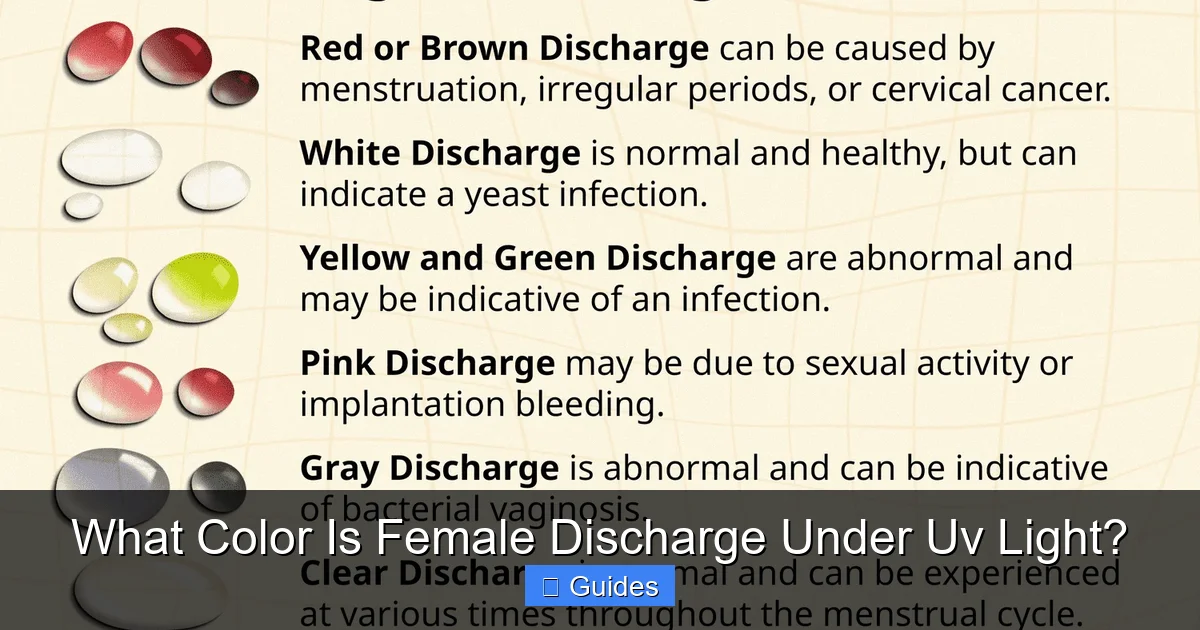
Visual guide about What Color Is Female Discharge Under Uv Light?
Image source: verywellhealth.com
Now for the main event: what happens when you shine a black light on healthy female discharge? The answer might surprise you with its consistency.
The Natural Fluorescence of Healthy Discharge
Healthy vaginal discharge does indeed fluoresce under UV light! This is a completely normal and expected occurrence. The proteins, enzymes, and other organic compounds naturally present in the discharge act as fluorophores. So, if you’re wondering what color is female discharge under UV light, you can expect a certain level of luminescence.
Colors and Nuances: What is “Normal”
Typically, normal female discharge under UV light will appear as a pale blue, a yellowish-green, or sometimes even a greenish-white glow. The exact shade can vary quite a bit, but these are the common healthy appearances. This coloration is largely attributed to the presence of various proteins and especially riboflavin (Vitamin B2), which is known for its yellow-green fluorescence.
Think of it like this: just as healthy discharge appears clear to milky white or slightly yellowish in visible light, its UV signature also has a typical range. It’s a subtle but distinct glow that indicates the presence of these natural bodily compounds.
Factors Influencing the Glow
The specific color and intensity of the glow can be influenced by several factors:
- Individual Body Chemistry: Everyone’s body is unique, and so is the exact composition of their bodily fluids.
- Hydration Levels: More concentrated discharge (if you’re slightly dehydrated, for example) might show a different intensity.
- Diet: What you eat can subtly affect the chemical composition of your bodily fluids.
- Menstrual Cycle Stage: Discharge naturally changes in consistency and composition throughout the menstrual cycle, which could slightly alter its UV appearance. For instance, more protein-rich discharge during ovulation might glow differently.
- Type of UV Light: The specific wavelength and intensity of your black light can also affect how brightly and what exact hue the discharge appears.
These variations are generally normal. The key takeaway here is that some form of fluorescence, usually in the blue to yellow-green spectrum, is perfectly normal when considering what color is female discharge under UV light.
When Things Look Different: Abnormal Discharge and UV Light
While normal discharge has a typical UV signature, what happens if something is off? Can UV light help identify problems? This is where it gets a bit trickier, and where the “not a diagnostic tool” warning becomes paramount.
Changes in Glow Indicating Potential Issues
It’s possible that abnormal discharge *might* have a different UV signature, or perhaps no glow at all, compared to normal discharge. However, these changes are not reliable indicators of specific conditions. A change in glow might simply suggest a change in the chemical composition of the discharge. For example, if there’s less of the naturally fluorescing proteins or different microbial activity, the glow could be duller or absent.
Bacterial Vaginosis (BV) and Yeast Infections
For common conditions like bacterial vaginosis (BV) or yeast infections, there isn’t a definitive “UV signature” that allows for self-diagnosis.
- Bacterial Vaginosis: BV often involves an imbalance of vaginal bacteria and can cause discharge with a distinct “fishy” odor, thin consistency, and a gray-white color in visible light. Under UV, the discharge might appear duller or just less fluorescent than healthy discharge, but this is highly variable and not a reliable test.
- Yeast Infections: A yeast infection typically causes thick, white, “cottage cheese-like” discharge and intense itching. The discharge from a yeast infection might still fluoresce, but perhaps not with the typical healthy glow, or the texture might be visible under UV. Again, this is not a diagnostic characteristic.
The key indicators for these conditions are usually changes in visible color, consistency, odor, and accompanying symptoms like itching or burning, not solely their appearance under UV light.
STIs and Their UV Signatures (or Lack Thereof)
When it comes to sexually transmitted infections (STIs), there is absolutely no specific UV light signature for the associated discharge. Conditions like chlamydia, gonorrhea, or trichomoniasis cause various types of discharge that might be abnormal in color, amount, or smell, but UV light cannot identify them. It is critical to get tested by a healthcare provider if you suspect an STI. Relying on UV light for detection is dangerous and ineffective.
Blood and Other Contaminants
If there is blood mixed with discharge, it will likely alter the UV appearance significantly. Blood itself typically does not fluoresce brightly under standard black lights; in fact, it can sometimes appear dark or black, or simply obscure the fluorescence of the discharge. Other contaminants, like certain fibers or lint from underwear, might also fluoresce, leading to confusing observations.
Beyond Discharge: Other Vaginal Fluids and Their UV Appearance
When you’re shining a UV light, it’s not just female discharge that might catch your eye. Other fluids present in the vaginal area can also fluoresce, and it’s helpful to know what to expect from them so you can accurately interpret what color is female discharge under UV light.
Urine: A Bright Indicator
Urine is well-known for its fluorescence under UV light. It often appears as a bright, sometimes intensely blue-white or pale yellow-green glow. This is largely due to its content of urea, creatinine, and various vitamins (especially B vitamins) which are strong fluorophores. If you see a bright, distinct blue-white glow that seems different from your typical discharge, it’s likely urine.
Semen: The Classic Fluorescent Stain
Semen is perhaps the most famous bodily fluid for its fluorescence under UV light. It glows a very distinct, bright blue-white color, often more intensely than discharge or urine. This strong fluorescence is due to the presence of specific proteins, flavins, and choline in seminal fluid. Forensic scientists routinely use UV light to detect semen stains at crime scenes. So, if sexual activity has occurred, semen might be what’s glowing.
Lubricants and Personal Care Products
Many everyday products, including certain lubricants, lotions, and even some detergents used to wash underwear, can contain ingredients that fluoresce under UV light. If you’re using a black light, be aware that a glowing residue might not be a bodily fluid at all, but rather a product you’ve recently used. This is important to consider when you’re trying to figure out what color is female discharge under UV light versus something else.
Practical Applications: Why Understanding This Matters
So, beyond pure scientific curiosity, why would someone want to know what color is female discharge under UV light? While its practical applications for personal health assessment are limited, it does have some interesting uses.
Forensic Science and Crime Scene Investigation
This is where UV light truly shines (pun intended!). Forensic experts routinely use UV lights to locate biological evidence, including semen, urine, and other bodily fluids, at crime scenes. The distinct fluorescence helps them identify and collect samples that would be invisible in normal light. This is a highly specialized application that relies on extensive training and specific equipment.
Personal Hygiene and Cleanliness
For individuals, understanding that bodily fluids fluoresce can be a useful, albeit somewhat alarming, tool for cleaning. A black light can reveal forgotten spills, pet accidents, or missed spots in bathrooms, making it easier to ensure a thorough clean. It can highlight areas where discharge might have left a subtle stain, guiding your cleaning efforts.
Not a Diagnostic Tool: The Importance of Medical Consultation
We cannot stress this enough: *UV light is not a diagnostic tool for vaginal health.* While it can show the presence of discharge and potentially indicate changes, it cannot tell you *what* those changes mean.
- If you notice changes in the visible color, consistency, or smell of your discharge, or experience itching, burning, pain, or any discomfort, these are the signs you should pay attention to.
- A healthcare professional is the only one qualified to diagnose vaginal infections, STIs, or other health conditions through proper examination and testing.
Using UV light for self-diagnosis can lead to incorrect conclusions, delayed treatment, and potentially worsen health outcomes. It’s a fun trick for curiosity or cleaning, but never a substitute for medical advice.
Safety First: Using UV Lights Responsibly
If your curiosity about what color is female discharge under UV light prompts you to get a black light, it’s essential to use it safely and responsibly.
Choosing the Right UV Light
Most commercially available “black lights” for entertainment or stain detection emit UVA light. These are generally safe for occasional, brief use. However, be cautious and avoid UVC lights. UVC is powerful and used for sterilization because it can damage DNA, making it harmful to human skin and eyes. Always check the specifications of any UV light device you purchase.
Eye and Skin Protection
While UVA light from black lights is relatively mild compared to UVB or UVC, prolonged or direct exposure to any UV light can still be harmful. Avoid shining the light directly into your eyes. If you plan to use it for an extended period, consider wearing UV-protective glasses. For skin, occasional brief exposure is usually fine, but long-term or intense exposure should be avoided.
Maintaining Privacy and Boundaries
If you’re exploring the fluorescence of bodily fluids, remember to do so with respect for privacy and personal boundaries. This kind of exploration is personal and should be kept private unless you explicitly choose to share it within a consenting context.
Conclusion
The question “what color is female discharge under UV light?” opens up a fascinating window into the natural chemistry of our bodies. We’ve learned that healthy vaginal discharge often glows a pale blue to yellowish-green due to naturally occurring proteins and compounds like riboflavin. This phenomenon is a normal aspect of our biology and a testament to the intricate workings of the human body.
However, as captivating as this glowing world under UV light might be, it’s vital to anchor our understanding in reality and responsible health practices. While UV light can illuminate hidden stains for cleaning purposes, and even hold scientific value in fields like forensics, it is unequivocally *not* a reliable tool for self-diagnosis of vaginal health conditions. The subtle variations in glow cannot tell you whether you have an infection, a sexually transmitted infection, or any other specific health issue.
If you ever notice any changes in the visible color, consistency, or odor of your discharge, or experience any discomfort, itching, or pain, please prioritize your health by consulting a healthcare professional. They are your trusted resource for accurate diagnosis, treatment, and personalized advice. So, go ahead and explore the wonders of UV light with a curious mind, but always remember that when it comes to your health, professional medical guidance is irreplaceable.
🎥 Related Video: Types of Vaginal Discharge #medical #information #medicaleducation
📺 Surgical Knowledge
Welcome to our medical education channel! In this informative video, we explain the types of vaginal discharge, their causes, and …
Frequently Asked Questions
What causes female discharge to glow under UV light?
Female discharge glows under UV light primarily due to the presence of naturally occurring proteins, amino acids, and vitamins like riboflavin (Vitamin B2). These compounds are fluorophores, meaning they absorb UV light and re-emit it as visible light, creating the glow.
What does a “normal” glow look like for discharge?
A normal glow for healthy female discharge under UV light is typically described as a pale blue, yellowish-green, or greenish-white. The exact shade and intensity can vary, but generally, a subtle luminescence within this spectrum indicates normal, healthy discharge.
Can different types of discharge glow differently under UV?
Potentially, yes. Changes in the chemical composition of discharge, perhaps due to an infection or different menstrual cycle stages, could alter its fluorescent properties. However, these changes are not standardized or reliable enough for self-diagnosis.
Should I use a UV light to check my vaginal health?
Absolutely not. While fascinating, UV light is not a medical diagnostic tool for vaginal health. Any concerns about discharge color, consistency, odor, or accompanying symptoms should always prompt a visit to a healthcare professional for proper evaluation and diagnosis.
Can products like lubricants or soaps also glow under UV light?
Yes, many common household and personal care products, including certain lubricants, lotions, and even residues from laundry detergents, contain ingredients that fluoresce under UV light. This can sometimes lead to confusion when observing what glows in the vaginal area.
What’s the difference between a black light and a UVC light?
A black light typically emits UVA light, which is relatively harmless for brief exposure and is used for fluorescence effects. A UVC light, however, emits UVC radiation, which is germicidal and harmful to human skin and eyes, so it should never be used for casual observation of bodily fluids.
