


As an Amazon Associate, We earn from qualifying purchases.
The “BR30” on a light bulb refers to its shape and diameter. “BR” stands for “Bulged Reflector,” indicating a wide, floodlight-style beam designed to spread light broadly. The “30” signifies the bulb’s diameter, measuring 30 eighths of an inch, or 3.75 inches across. Understanding BR30 helps you choose the correct bulb for recessed lighting and other fixtures where a broad, even light distribution is desired.
What Does Br30 Mean on a Light Bulb
Ever found yourself staring at a wall of light bulbs at the hardware store, utterly bewildered by the alphabet soup of labels like “A19,” “PAR38,” or “BR30”? You’re not alone! It’s a common experience for many homeowners trying to pick out the right light bulb for a new fixture or replace a burnt-out one. Among these mysterious codes, “BR30” is one you’ll frequently encounter, especially if you have recessed lighting in your home. But what exactly does it mean?
Understanding these labels isn’t just about sounding smart; it’s genuinely practical. Choosing the correct light bulb ensures not only that it fits physically but also that it provides the right kind of light for your space. A BR30 light bulb, for instance, has a specific design meant for a particular lighting effect that a standard A19 bulb simply can’t replicate. So, let’s peel back the layers of this common light bulb designation and shine a light on what BR30 truly signifies.
This article will break down the meaning of “BR30” piece by piece, explain why this type of bulb is so popular, and help you understand when and where to use a BR30 light bulb in your home. By the end, you’ll be able to confidently navigate the light bulb aisle, knowing exactly what you need and why. Let’s dive in and demystify the BR30!
Key Takeaways
- BR Means Bulged Reflector: The “BR” in BR30 stands for “Bulged Reflector,” describing the bulb’s distinctive shape which is wider in the middle and designed to produce a soft, broad floodlight effect.
- 30 Indicates Diameter: The “30” in BR30 refers to the bulb’s maximum diameter, which is 30 eighths of an inch (30/8″ or 3.75 inches). This measurement is crucial for ensuring the bulb fits properly into a fixture, especially recessed cans.
- Ideal for Recessed Lighting: BR30 light bulbs are most commonly used in 5-inch or 6-inch recessed lighting fixtures, where their wide beam angle effectively illuminates larger areas without harsh spots.
- Excellent Light Spread: Thanks to their bulged shape and internal reflector, BR30s provide a smooth, even light distribution, making them perfect for general ambient lighting in living rooms, kitchens, and offices.
- Often Confused with R30 and PAR30: While similar in diameter, BR30s differ from R30 (standard reflector) and PAR30 (parabolic aluminized reflector) bulbs in their beam characteristics and heat dissipation. BR30s offer a softer edge compared to PAR30s’ more focused beam.
- Available in Various Technologies: Today, BR30 bulbs are predominantly found as energy-efficient LEDs, but older versions also existed in incandescent and halogen forms. They come in different wattages, lumens, and color temperatures.
Quick Answers to Common Questions
What does BR30 mean on a light bulb?
BR30 means “Bulged Reflector” (BR) and a diameter of 30 eighths of an inch (30), which equals 3.75 inches.
Where are BR30 light bulbs most commonly used?
BR30 light bulbs are most commonly used in recessed lighting fixtures (can lights) in ceilings, typically 5-inch or 6-inch cans, to provide a wide flood of light.
Can I use an A19 bulb instead of a BR30?
No, generally not. A19 bulbs emit light in all directions and are not designed for recessed fixtures, where a BR30’s directional floodlight is needed.
Do BR30 bulbs come in different light colors?
Yes, modern LED BR30 bulbs come in various color temperatures, from warm white (2700K-3000K) to cool white (4000K) and daylight (5000K-6500K).
Is a BR30 the same as a PAR30?
No, while both have the same diameter, a BR30 provides a softer, wider flood beam, while a PAR30 produces a more focused and intense beam with a sharper edge.
📑 Table of Contents
- Decoding the ‘BR’ in BR30: Understanding the Bulb Shape
- The ’30’ Explained: Measuring Bulb Diameter
- Why Choose a BR30 Bulb? Common Applications and Benefits
- BR30 vs. Other Bulbs: R30, PAR30, A19 – What’s the Difference?
- Shopping for BR30s: Key Considerations Beyond Size
- Installation and Maintenance Tips for Your BR30 Bulbs
Decoding the ‘BR’ in BR30: Understanding the Bulb Shape
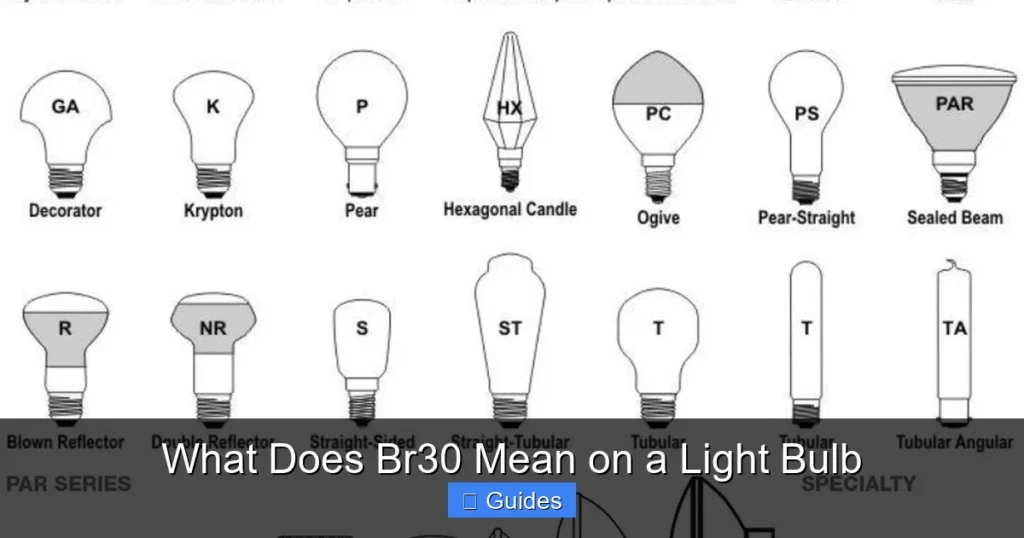
When you see “BR” on a light bulb package, it stands for “Bulged Reflector.” This immediately tells you something crucial about the bulb’s physical appearance and, more importantly, how it distributes light. Unlike a standard pear-shaped (A-type) bulb, a BR30 light bulb has a distinct, wider, and more rounded or “bulged” profile at the top.
The Science Behind the Bulge
The bulged shape isn’t just for aesthetics; it’s a key part of the bulb’s engineering. Inside a BR30 light bulb, there’s an internal reflective coating that works in conjunction with this specific shape. This design is optimized to gather light from the filament (or LED array) and project it forward in a wide, soft beam. Think of it like a mini spotlight that has been expertly designed to spread its glow rather than pinpoint it.
Why a Bulged Reflector?
The primary purpose of the bulged reflector design is to create a “floodlight” effect. This means the light is dispersed over a broad area, often with softer edges compared to a traditional spot light. This broad distribution makes BR30 light bulbs excellent for general ambient lighting in rooms where you want an even wash of light without harsh shadows or concentrated bright spots. They are designed to diffuse light beautifully, making spaces feel more inviting and uniformly lit.
The ’30’ Explained: Measuring Bulb Diameter
After understanding the “BR,” the “30” is the next vital piece of the puzzle for any BR30 light bulb. This number tells you the bulb’s maximum diameter, and it follows a specific, somewhat old-fashioned, measurement system common in the lighting industry.
Eighths of an Inch: The Standard Measurement
The “30” in BR30 indicates that the bulb’s diameter is 30 eighths of an inch. To convert this to a more familiar measurement, you simply divide 30 by 8.
30 / 8 = 3.75 inches.
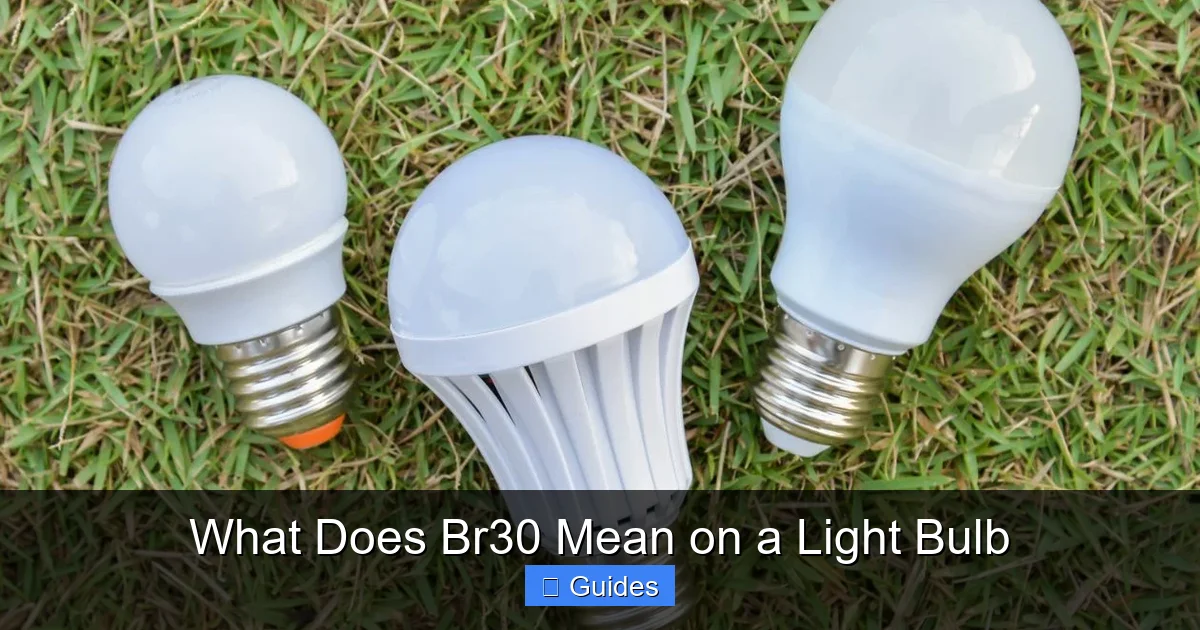
Visual guide about What Does Br30 Mean on a Light Bulb
Image source: storables.com
So, a BR30 light bulb has a maximum diameter of 3.75 inches. This measurement is taken at the widest point of the bulb, which is typically across the bulged reflector portion.
Why Diameter Matters for Fit
Knowing the diameter is absolutely critical for proper fit, especially when dealing with recessed lighting fixtures. Recessed cans, often called “can lights” or “pot lights,” come in various sizes (e.g., 4-inch, 5-inch, 6-inch). A BR30 light bulb is most commonly designed to fit snugly and correctly into 5-inch or 6-inch recessed cans. Trying to squeeze a bulb that’s too wide into a smaller can, or having a bulb that’s too small for a larger can (leading to an unsightly gap), can be frustrating and diminish the aesthetic appeal of your lighting. Always double-check the diameter of your existing bulb or the recommended bulb size for your fixture.
Why Choose a BR30 Bulb? Common Applications and Benefits
Now that we know what “BR” and “30” mean, let’s explore why the BR30 light bulb is such a popular choice for many lighting scenarios. Its unique design offers several practical benefits.
Ideal for Recessed Lighting
This is where the BR30 light bulb truly shines! Its shape and beam spread are perfectly suited for recessed lighting fixtures. When installed in a ceiling can, the BR30’s bulged reflector pushes light downwards and outwards, effectively illuminating a larger area directly below and around the fixture. This prevents the “spotlight effect” that some other reflector bulbs might create, where you get a harsh circle of light with dimmer areas surrounding it.
Excellent for General Ambient Lighting
Because of its wide, soft beam, BR30 bulbs are fantastic for creating ambient, foundational lighting in various rooms.
- Living Rooms: They can provide a comfortable, inviting glow.
- Kitchens: Useful for general illumination over countertops and islands, often complemented by task lighting.
- Hallways and Corridors: Ensures consistent, bright light along pathways.
- Offices: Helps reduce eye strain by providing uniform light across the workspace.
- Bedrooms: Offers a softer light that can be dimmable for mood lighting.
Their ability to distribute light evenly makes them a versatile choice for any area where broad, non-directional light is desired.
Effective Heat Dissipation (Especially for LEDs)
While this was less of a concern with older incandescent BR30s, it’s a significant benefit for modern LED BR30 light bulbs. The wider profile of the BR30 allows for a larger surface area, which is crucial for the heatsink design in LED bulbs. LEDs generate heat at their base, and efficient heat dissipation is vital for their longevity and performance. The BR30 shape often provides ample space for this, contributing to a longer lifespan for the bulb.
BR30 vs. Other Bulbs: R30, PAR30, A19 – What’s the Difference?
The world of light bulbs can be confusing, especially when you encounter similar-looking types. Let’s compare the BR30 light bulb to some of its common counterparts to highlight their unique characteristics.
BR30 vs. R30
The “R” in R30 stands for “Reflector.” An R30 bulb is also a reflector bulb with a 30/8ths inch diameter, similar to a BR30. However, the key difference lies in the reflector’s internal design. An R30 typically has a simpler, more conical reflector shape compared to the BR30’s distinct bulge. This means R30s tend to produce a slightly narrower beam angle and a more defined light pool than the BR30’s softer, wider flood. While both are used for floodlighting, the BR30 provides a broader, more diffused spread, often preferred for general room illumination.
BR30 vs. PAR30
“PAR” stands for “Parabolic Aluminized Reflector.” A PAR30 bulb also has a 30/8ths inch diameter but features a more precise, faceted reflector designed to produce a highly controlled, intense beam.
- Beam Quality: PAR30s offer a much more focused and often brighter beam, with less “spill” light on the edges. They are excellent for accent lighting, highlighting artwork, or task lighting where a concentrated beam is needed.
- Housing: PAR bulbs are typically made of thicker glass and are more robust, making them suitable for outdoor use in weather-rated fixtures or for commercial applications.
- Light Distribution: While a BR30 provides a wide, soft flood, a PAR30 can provide either a narrow spot or a medium flood, but always with a more defined edge and intensity.
Choosing between a BR30 and a PAR30 depends entirely on the desired lighting effect: soft general wash (BR30) or intense, focused light (PAR30).
BR30 vs. A19
An A19 bulb is the classic “standard” light bulb shape – the familiar pear-shaped bulb you probably grew up with.
- Shape and Function: A19s are designed for omnidirectional light output, meaning they spread light in all directions (360 degrees). They don’t have an internal reflector.
- Applications: A19s are perfect for lamps with shades, open fixtures, or anywhere you need general, all-around illumination without focusing the light.
- Recessed Cans: An A19 bulb is generally not suitable for recessed lighting unless the fixture specifically allows for it, as its omnidirectional light output would mostly be trapped inside the can, wasting energy and providing poor illumination.
In essence, A19 is for general-purpose, unfocused light, while a BR30 is for directional, wide-flood lighting, especially in recessed fixtures.
Shopping for BR30s: Key Considerations Beyond Size
Once you’ve determined that a BR30 light bulb is what you need, there are still several other factors to consider to ensure you pick the perfect one for your space. Modern LED BR30s offer a wealth of options beyond just brightness.
Wattage Equivalent vs. Actual Wattage
With the prevalence of LED technology, you’ll often see “wattage equivalent” on BR30 light bulb packaging. This tells you how bright the LED bulb is compared to an old incandescent bulb. For example, a 65W equivalent LED BR30 might only consume 9-12 actual watts but produce the same amount of light as an old 65-watt incandescent BR30. Always check the actual wattage for energy consumption and the “lumens” for true brightness.
Lumens: The True Measure of Brightness
Forget wattage when it comes to LEDs – lumens are your true indicator of how much light a BR30 light bulb will emit. More lumens mean a brighter light. For general room lighting, a BR30 in the range of 650-800 lumens is often suitable for recessed fixtures, but this can vary based on room size and desired light level.
Color Temperature (Kelvin Scale)
The color temperature, measured in Kelvins (K), dictates the “warmth” or “coolness” of the light.
- 2700K-3000K (Warm White/Soft White): Creates a cozy, traditional incandescent glow, great for living rooms, bedrooms, and dining areas.
- 3500K-4000K (Neutral White/Cool White): A more balanced, energizing light, often used in kitchens, bathrooms, offices, or utility spaces.
- 5000K-6500K (Daylight): A very bright, crisp white light that mimics natural daylight, ideal for task lighting, garages, or areas where high visibility is crucial.
Choose the color temperature that best suits the mood and function of your room.
Dimmability
If your fixtures are connected to a dimmer switch, ensure your BR30 light bulb is explicitly labeled as “dimmable.” Not all LED BR30s are dimmable, and using a non-dimmable bulb on a dimmer switch can lead to flickering, buzzing, or premature bulb failure. For best results, use LED-compatible dimmer switches with LED BR30s.
Smart Features
Many modern BR30 light bulbs now come with smart features. These can include:
- Color Changing (RGBW): Allowing you to select millions of colors or various shades of white.
- App Control: Control brightness, color, and schedules from your smartphone.
- Voice Assistant Integration: Compatible with Amazon Alexa, Google Assistant, etc.
- Tunable White: Adjusting the white light from warm to cool throughout the day.
These options add convenience and flexibility to your lighting design.
LED vs. Halogen vs. Incandescent
While LED BR30s dominate the market due to their energy efficiency and long lifespan, you might still encounter halogen or, rarely, incandescent BR30s.
- LED BR30: Most energy-efficient, longest lifespan, cool to the touch, wide range of features. (Highly recommended)
- Halogen BR30: More energy-efficient than incandescent, but still generates significant heat, shorter lifespan than LED. (Becoming less common)
- Incandescent BR30: Very inefficient, hot, short lifespan. (Largely phased out)
For new purchases, LED BR30 is almost always the superior choice.
Installation and Maintenance Tips for Your BR30 Bulbs
Once you’ve chosen the perfect BR30 light bulb, installing and maintaining it correctly will ensure it performs optimally and lasts for its intended lifespan.
Safety First During Installation
Always ensure the power to the fixture is turned OFF at the wall switch or, ideally, at the circuit breaker before attempting to install or replace any light bulb, especially a BR30 in a recessed fixture. This prevents accidental shocks. Allow old bulbs to cool down before removal, as they can be very hot.
Proper Fit in Recessed Cans
As discussed, the “30” in BR30 is crucial for fit. Make sure the bulb’s diameter matches the size requirements of your recessed can (typically 5-inch or 6-inch cans). If the bulb is too small, it might look awkward; if it’s too large, it won’t fit at all. Screw the bulb in firmly but don’t overtighten, as this can damage the socket or the bulb itself.
Cleaning Your BR30 Light Bulbs
Over time, dust can accumulate on BR30 light bulbs, especially in recessed fixtures where they are often exposed. Dust can diminish light output and make the light appear dull.
- Turn Off Power: Always turn off the power before cleaning.
- Allow to Cool: If the bulb has been on, let it cool completely.
- Gentle Wipe: Use a soft, dry, or slightly damp cloth to gently wipe away dust and grime. Avoid harsh chemicals or abrasive cleaners, which can damage the bulb’s finish or internal components, particularly with LED BR30s.
Regular, gentle cleaning will help maintain optimal light output and efficiency.
When to Replace a BR30 LED Bulb
One of the great advantages of LED BR30 light bulbs is their long lifespan. Unlike incandescents that typically burn out abruptly, LEDs often slowly dim over time as they approach the end of their rated life. If you notice a significant decrease in brightness or flickering (and you’ve ruled out dimmer incompatibility), it might be time to replace your LED BR30. Keeping track of purchase dates can help you estimate when replacement might be due, though many LEDs last for years, if not decades.
Choosing the right BR30 light bulb for your home is more than just picking something off the shelf. It’s about understanding its unique design, its intended purpose, and how it compares to other options. The “BR” signals a bulged reflector, perfect for wide, soft floodlighting, while the “30” defines its 3.75-inch diameter, making it ideal for common recessed fixtures.
By considering factors like lumens, color temperature, dimmability, and smart features, you can select a BR30 light bulb that not only fits perfectly but also creates the exact ambiance and functionality you desire for your space. So, the next time you’re in the lighting aisle, you’ll no longer be staring blankly at the BR30 label. Instead, you’ll confidently pick out the perfect bulb, knowing exactly what it means and how it will transform your home’s lighting. Happy lighting!
Frequently Asked Questions
What is the main purpose of a BR30 light bulb?
The main purpose of a BR30 light bulb is to provide a wide, soft floodlight effect, making it ideal for general ambient lighting in rooms. Its bulged reflector design ensures light is spread broadly and evenly.
How do I know if my recessed light fixture needs a BR30 bulb?
Check the specifications of your recessed light fixture, which often list recommended bulb types or sizes. A BR30 is typically suited for 5-inch or 6-inch recessed cans, but always measure your existing bulb or the fixture opening if unsure.
Are BR30 bulbs energy efficient?
Modern BR30 light bulbs, especially LED versions, are highly energy-efficient. They consume significantly less wattage than their incandescent or halogen equivalents while providing the same or greater light output (lumens), leading to lower electricity bills.
Can I use a BR30 bulb outdoors?
BR30 light bulbs themselves are not inherently rated for outdoor use. If you wish to use one outdoors, ensure it is specifically labeled as “wet-rated” or “damp-rated” and placed within an appropriate, sealed outdoor fixture designed to protect the bulb from weather elements.
What does “dimmable BR30” mean?
“Dimmable BR30” means that the BR30 light bulb is designed to work safely and effectively with compatible dimmer switches, allowing you to adjust its light output. Using a non-dimmable LED BR30 on a dimmer can cause flickering, buzzing, or damage.
How long do LED BR30 bulbs typically last?
LED BR30 bulbs typically have a very long lifespan, often rated for 15,000 to 25,000 hours or more. This translates to many years of use, far outlasting traditional incandescent or halogen bulbs and reducing the frequency of bulb replacements.
