


Choose 9–12W LED (60–75W equivalent) warm white with a dimmer for bedrooms.
You landed here asking What Watt Light Bulb for Bedroom. Great question. I’ve designed hundreds of cozy rooms, and the right bulb changes how you sleep, read, and relax. In this guide, I’ll break down watt vs lumens, color temperature, and real setups that work. If you want a simple, trusted answer to What Watt Light Bulb for Bedroom, you’re in the right place.

The sweet spot: how many watts do you need in a bedroom?
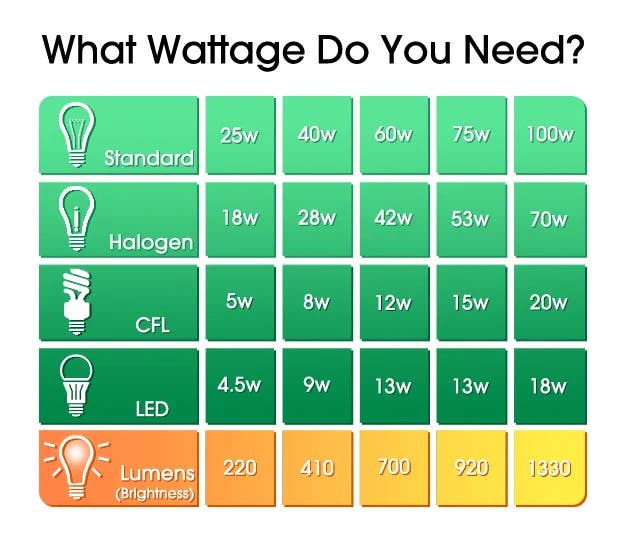
- For most bedrooms, choose a 9–12W LED. That equals a 60–75W old bulb.
- Aim for 1,500–3,000 total lumens in the room. Use more for large rooms.
- Put bulbs on dimmers. It lets you go bright for chores and soft for sleep.
Think of watt as power used. Think of lumens as light you see. A 10W LED gives about 800 lumens. That matches an old 60W bulb. If you wonder What Watt Light Bulb for Bedroom, target lumens first, then pick the watt that delivers it.
Personal tip: I use two 10W LED bulbs in bedside lamps for 1,600 lumens total. I dim to 20% at night. It feels calm and easy on the eyes. Clients love this setup too.
What Watt Light Bulb for Bedroom depends on your room size, age of your eyes, and tasks. Keep reading to fine-tune your pick.

The key metrics: watts, lumens, color temperature, and CRI
- Watts: Energy used. Lower is better for the bill.
- Lumens: Brightness. Look for 450–1,100 lumens per bulb based on need.
- Color temperature (Kelvin): 2200–2700K feels warm and cozy. 3000K is neutral. 4000K+ feels cool.
- CRI (Color Rendering Index): 90+ shows true colors. Great for makeup and decor.
Here is the trick. Don’t shop by watts alone. Shop by lumens and Kelvin. For bedrooms, 2700K is the comfort king. Use 2200K for late night wind-down. If you ask What Watt Light Bulb for Bedroom, the real ask is What Lumens and Kelvin for bedroom.
Why it matters: Warm light supports melatonin at night. Neutral light can help in the morning. Studies show lower blue light helps sleep. That is why a 2700K dimmable bulb works best after sunset.
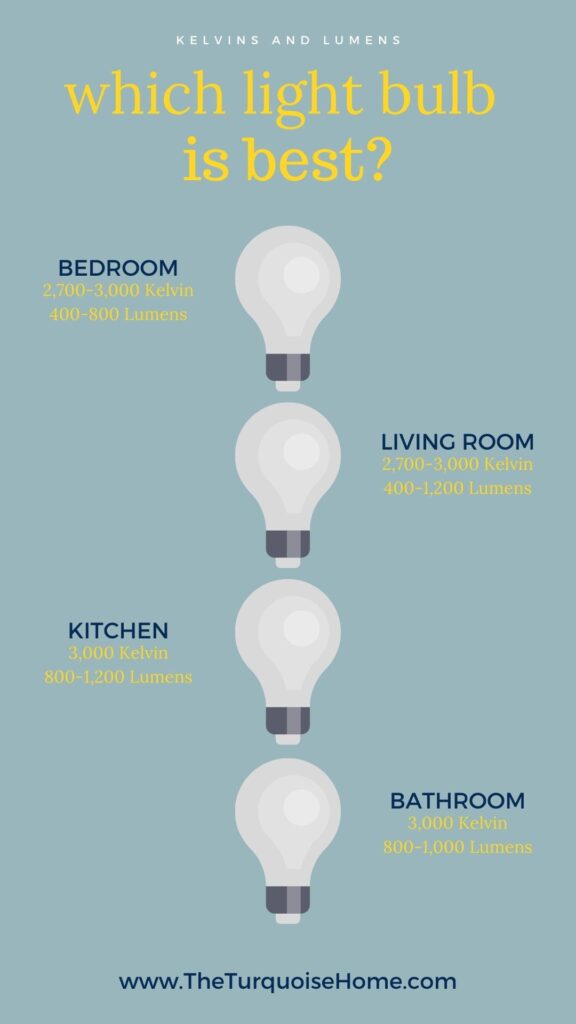
Room factors that change What Watt Light Bulb for Bedroom
- Room size: More area needs more lumens. Small rooms need less.
- Wall and ceiling color: Dark paint absorbs light. White paint bounces light.
- Ceiling height: Tall ceilings need more output.
- Age of eyes: Older eyes need more light to read.
- Shade type: Fabric shades cut output by 30–50%. Glass lets more through.
- Tasks: Reading, makeup, or crafting need targeted task light.
If you have a 12×12 room with medium walls, start with 2,000 lumens total. If walls are dark, go closer to 2,500–3,000 lumens. That often means three bulbs at 800 lumens each. This is the practical path to solve What Watt Light Bulb for Bedroom for your space.

Sample bedroom lighting plans you can copy
Small room (100–120 sq ft)
- Overhead: One 10–12W LED, 800–1,100 lumens, 2700K.
- Bedside: One 7–9W LED lamp, 500–800 lumens, 2700K.
- Total: 1,300–1,900 lumens.
Medium room (140–180 sq ft)
- Overhead: One 12–15W LED flush mount, 1,200–1,600 lumens, 2700–3000K.
- Bedside: Two 7–10W LED lamps, 600–800 lumens each.
- Accent: One 4–6W LED strip or sconce for mood.
- Total: 2,200–3,200 lumens.
Large room (200–300 sq ft)
- Overhead: One 18–22W LED fixture, 1,800–2,400 lumens.
- Bedside: Two 9–12W LEDs, 800–1,100 lumens each.
- Task or vanity: One 10–15W bar or two sconces.
- Total: 3,000–4,500 lumens.
For all sizes, use dimmers. This is the simplest way to nail What Watt Light Bulb for Bedroom without overthinking.
Bulb types and shapes that work best
- LED A19, E26 base: Standard for most bedroom lamps. Pick 2700K, 90+ CRI.
- BR30 for recessed cans: Soft, wide beam for even light.
- Globe bulbs for vanity: Look for 2700–3000K and 90+ CRI.
- Smart bulbs: Great for scenes, warm-dim at night, and schedules.
Skip old CFLs. They are slow to warm up and not cozy. Halogen looks nice but runs hot and uses more power. LED is best for What Watt Light Bulb for Bedroom due to long life and low heat.
Pro tip: If you have enclosed fixtures, buy LEDs rated for enclosed use. Heat kills bulbs fast.

Energy, safety, and sleep health
- Energy: A 10W LED costs only a fraction of a 60W old bulb to run.
- Heat: LEDs stay cooler. Safer near fabric shades and small spaces.
- Sleep: Use 2200–2700K after sunset to support rest.
- Morning boost: Try 3000–3500K for a gentle wake-up if you like.
Want better sleep? Use warm light in the last two hours of the night. Use night lights under 50 lumens in amber. If you ask What Watt Light Bulb for Bedroom for sleep, the answer is warm and dim.
Check safety marks like UL or ETL. Look for low flicker, under 5%, to avoid eye strain.
:max_bytes(150000):strip_icc()/warm-white-vs-soft-white-7567097-Illo1-v1-fcc8336e6bd34405a26e76a390128b27.png)
Simple math: how to calculate the right light
- Target 10–20 lumens per square foot for bedrooms.
- Example: 150 sq ft × 15 lumens = 2,250 lumens total.
- Divide across fixtures. For three lamps, use about 750 lumens each.
To solve What Watt Light Bulb for Bedroom with certainty, do this quick math. Then match bulbs to fill the total. Use dimmers to trim output at night.

Buying checklist and common mistakes to avoid
What to check on the box
- Lumens: 450, 800, 1,100. Pick what you need per fixture.
- Kelvin: 2200–2700K for cozy. 3000K if you like slightly crisper light.
- CRI: 90+ for true colors.
- Dimmable: Confirm yes, and use an LED-rated dimmer.
- Warranty: 3–5 years is a good sign of quality.
- Compatibility: E26 base, A19 or BR30 shape as needed.
Mistakes I see often
- Buying by watts, not lumens.
- Choosing 4000K or 5000K for the bedroom. It feels clinical at night.
- Using non-dimmable bulbs on a dimmer. Buzzing and flicker happen.
- Ignoring shade loss. Fabric eats light.
- Skipping task lighting for reading.
If the question is What Watt Light Bulb for Bedroom, the checklist above saves you time and returns.

Dimmers, switches, and easy setup tips
- Use LED-compatible dimmers. Look for low-end trim to avoid flicker.
- Set scenes: 100% for chores, 50% for evening, 10–20% for wind-down.
- For smart bulbs, leave switches on. Control with the app or voice.
- Avoid mixing bulb brands on one dimmer. It can cause uneven dimming.
I install dimmers in almost every bedroom. It is the simplest way to master What Watt Light Bulb for Bedroom across seasons and moods.
Care and lifespan
- Expect 15,000–25,000 hours from a good LED.
- Heat shortens life. Use bulbs rated for enclosed fixtures if needed.
- Dust shades and bulbs. Clean lenses boost brightness by 10% or more.
- Replace in pairs for matched color and output.
Good care keeps light even and warm for years. This supports a calm space and helps you get full value. It also makes What Watt Light Bulb for Bedroom a set-and-forget choice.
Frequently Asked Questions of What Watt Light Bulb for Bedroom
Is 60W equivalent enough for a bedroom?
Yes, a 60W equivalent LED (about 9–10W, 800 lumens) works for most rooms. Use two or more bulbs or add a lamp for balance.
What color temperature is best for sleep?
Use 2200–2700K in the evening to reduce blue light. This supports melatonin and better rest.
How many lumens do I need for reading in bed?
Aim for 450–800 lumens per bedside lamp with a focused shade. Place the light behind and above your shoulder.
Can I use smart bulbs in the bedroom?
Yes. Smart bulbs let you set warm scenes at night and brighter light in the morning. Keep wall switches on for stable control.
Do I need a special dimmer for LED bulbs?
Use an LED-rated dimmer to avoid flicker and buzz. Set the low-end trim so the light stays stable at low levels.
Conclusion
The simple answer to What Watt Light Bulb for Bedroom is a 9–12W LED at 2700K on a dimmer. Build from there with total lumens based on room size and tasks. Warm, dimmable light creates calm nights and sharper mornings. Try one room this week and dial in your perfect level. Want more tips like this? Subscribe, share your setup, or drop a question in the comments.
