


As an Amazon Associate, We earn from qualifying purchases.
Replacing a refrigerator light bulb often leads to the question: Can you use a regular light bulb in a refrigerator? While it might fit, it’s generally not recommended due to heat, durability, and humidity concerns. Specialized appliance bulbs or modern LEDs are designed to withstand the fridge’s unique environment, ensuring safety and optimal performance.
There’s a universally familiar moment when you open your refrigerator door, expecting a bright, welcoming glow to illuminate your late-night snack quest, only to be met with a frustrating darkness. Your fridge light bulb has officially called it quits. Your immediate thought might be, “Can I just grab any old light bulb from the utility drawer and pop it in?” It’s a fair question, and one many homeowners ponder. After all, a light bulb is a light bulb, right?
Well, not exactly. While the temptation to use a standard household light bulb in your refrigerator is strong – mainly due to convenience and often a lower immediate cost – it’s a decision that comes with potential drawbacks and even risks. The environment inside your refrigerator is quite unique, presenting challenges that a regular light bulb simply isn’t designed to handle. Understanding these differences is key to making an informed choice that ensures your fridge operates safely and efficiently.
In this comprehensive guide, we’ll dive deep into why a refrigerator needs a special kind of bulb, the problems associated with using a regular light bulb in a refrigerator, and what your best options are for replacing that burnt-out bulb. We’ll explore everything from heat generation to durability, energy efficiency, and even a step-by-step guide to replacing your fridge light. So, let’s shed some light on this common household dilemma!
Key Takeaways
- Regular Incandescent Bulbs are Not Ideal: Standard household incandescent bulbs generate too much heat for a cold refrigerator environment, potentially affecting food safety and increasing energy consumption.
- Durability is Key: Refrigerators experience constant vibrations from the compressor and door opening/closing. Regular bulbs are fragile and not designed to withstand these impacts, leading to frequent burnouts.
- Humidity Risks: The humid, cold conditions inside a fridge can shorten the lifespan of a regular bulb and pose a slight electrical risk if not properly sealed or rated for such environments.
- Appliance Bulbs are Purpose-Built: Dedicated refrigerator bulbs (also known as appliance bulbs) are engineered to tolerate extreme temperatures, vibrations, and humidity, ensuring longer life and safe operation.
- LEDs are the Best Modern Solution: LED refrigerator bulbs offer superior energy efficiency, minimal heat generation, excellent durability, and a significantly longer lifespan, making them the top choice.
- Check Your Fridge Manual: Always consult your refrigerator’s user manual for specific bulb wattage, base type, and recommendations before purchasing a replacement.
- Safety First: Prioritize safety by unplugging your refrigerator before attempting any bulb replacement to prevent electrical shock.
Quick Answers to Common Questions
Can a regular light bulb withstand the cold temperature inside a refrigerator?
Regular incandescent bulbs are not designed to operate in the consistently cold temperatures of a refrigerator, which can stress their components and significantly shorten their lifespan.
Will a regular light bulb increase my refrigerator’s energy consumption?
Yes, a regular incandescent bulb generates considerable heat. Your refrigerator’s compressor will have to work harder and longer to counteract this heat, leading to increased energy usage and higher electricity bills.
Are LED bulbs a good replacement for refrigerator lights?
Absolutely, LED bulbs are an excellent choice for refrigerators. They produce minimal heat, are highly energy-efficient, extremely durable against vibrations, and have a very long lifespan, making them ideal for the fridge environment.
What is the most important safety step when replacing a refrigerator bulb?
The most important safety step is to always unplug your refrigerator from the power outlet before attempting to remove or install any light bulb. This prevents the risk of electrical shock.
Do I need to check my refrigerator’s manual before buying a new bulb?
Yes, always check your refrigerator’s user manual. It will specify the exact maximum wattage, base type (e.g., E26, E12), and sometimes even the physical dimensions of the appropriate bulb for your appliance.
📑 Table of Contents
- The Anatomy of a Refrigerator Light Bulb vs. a Regular Bulb
- Why a Regular Bulb Might Not Be a Good Idea (The Risks)
- What Types of Bulbs ARE Safe for Your Refrigerator?
- How to Choose the Right Refrigerator Light Bulb
- Step-by-Step Guide to Replacing Your Refrigerator Bulb
- Conclusion: The Bright Choice for Your Fridge
The Anatomy of a Refrigerator Light Bulb vs. a Regular Bulb
At first glance, many light bulbs might look similar: a glass envelope, a filament (if it’s incandescent), and a metal screw base. However, the similarities often end there when you compare a general-purpose household bulb to one specifically designed for your refrigerator.
What Makes a Refrigerator Bulb Special?
Refrigerator light bulbs, often marketed as “appliance bulbs,” are engineered with specific challenges in mind. Think about the conditions inside your fridge: it’s cold, it’s often humid, and it’s subject to frequent door slams and compressor vibrations. A good refrigerator bulb needs to withstand all of this.
- Temperature Resistance: Appliance bulbs are built to operate reliably in very low temperatures, sometimes as low as -30°F (-34°C) in freezer compartments. A regular light bulb isn’t designed for this kind of cold, which can stress its components.
- Durability Against Vibration: Every time your refrigerator door opens and closes, or the compressor cycles on and off, it creates vibrations. Refrigerator bulbs have reinforced filaments and more robust construction to absorb these shocks without failing prematurely.
- Compact Size: Refrigerator light fixtures are often compact and tucked away, requiring smaller bulbs that fit neatly into tight spaces without touching other components or food items.
- Lower Wattage: While not universally true, many appliance bulbs are lower wattage to prevent excessive heat buildup in a confined, temperature-controlled space.
Characteristics of a Regular Incandescent Bulb
When we talk about a “regular light bulb,” we’re often referring to the traditional incandescent bulb that has been a staple in homes for over a century. These bulbs are designed for ambient lighting in rooms and possess characteristics that make them less suitable for refrigeration:
- High Heat Output: A significant portion of the energy consumed by an incandescent bulb is converted into heat, not light. This is perfectly fine in a living room but problematic inside a fridge.
- Fragility: The thin filament and glass construction of a standard incandescent bulb make it susceptible to breakage from impacts or vibrations.
- Optimized for Room Temperature: These bulbs are designed to operate best at typical room temperatures (around 68-75°F or 20-24°C), not the near-freezing conditions of a refrigerator.
- Standardized Design: They come in various shapes and wattages but aren’t typically reinforced for shock or extreme cold.
So, the immediate answer to “can you use a regular light bulb in a refrigerator?” is that while it might physically fit, it’s not built for the job.
Why a Regular Bulb Might Not Be a Good Idea (The Risks)
Attempting to use a regular light bulb in a refrigerator can lead to several problems, ranging from minor inconveniences to more significant issues affecting your appliance and food.
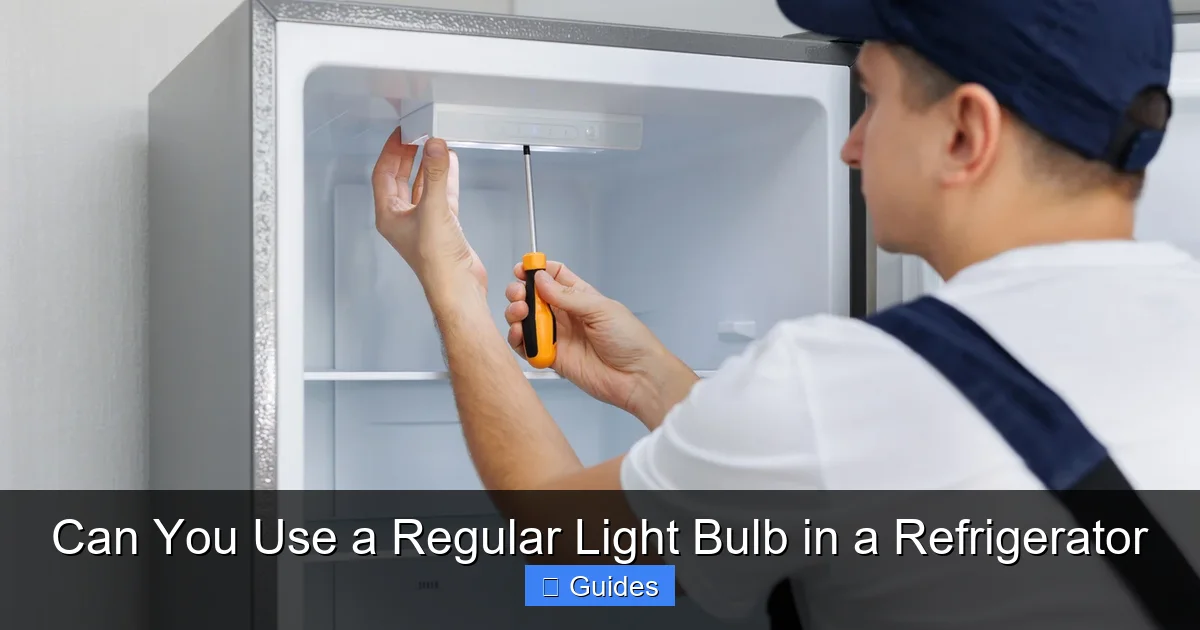
Visual guide about Can You Use a Regular Light Bulb in a Refrigerator
Image source: slashgear.com
Heat Generation and Its Impact
This is perhaps the biggest reason not to use a regular light bulb in a refrigerator. Standard incandescent bulbs convert about 90% of their energy into heat. Inside a sealed, cold environment like a refrigerator, this heat becomes a major issue:
- Compromised Food Safety: The heat generated by the bulb can slightly raise the temperature in the immediate vicinity, especially if the light stays on for extended periods (e.g., if the door is ajar). This can affect the freshness and safety of perishable foods stored nearby.
- Increased Energy Consumption: Your refrigerator has to work harder to maintain its internal temperature when a heat-generating bulb is inside. This means the compressor cycles more frequently, leading to higher electricity bills and increased wear and tear on the appliance. Essentially, you’re paying to cool what the bulb is heating up.
- Strain on the Refrigerator’s Cooling System: Over time, the continuous struggle against the bulb’s heat can reduce the overall efficiency and lifespan of your refrigerator’s cooling components.
Durability and Vibration
Refrigerators are not static environments. They are subject to constant, albeit minor, movements and impacts:
- Door Slams: Every time the fridge door closes, it creates a jolt. A regular light bulb’s delicate filament is not designed to withstand such repeated impacts, leading to premature burnout. You might find yourself replacing bulbs far more frequently than necessary.
- Compressor Vibrations: The refrigerator’s compressor, which runs intermittently, generates subtle vibrations that resonate through the appliance. These vibrations, over time, can also contribute to the failure of a fragile regular incandescent bulb.
Humidity and Condensation Concerns
The interior of a refrigerator is a humid environment, especially when warm, moist air enters each time the door is opened. While appliance bulbs are designed to handle this, a regular light bulb might struggle:
- Shortened Lifespan: High humidity can accelerate the degradation of a regular bulb’s internal components, leading to a shorter operating life.
- Potential for Electrical Issues: In extreme cases, condensation can lead to corrosion or even short circuits if moisture penetrates the bulb’s base or the fixture itself, posing a minor safety risk.
Energy Efficiency Differences
Modern appliance bulbs, especially LED options, are far more energy-efficient than traditional incandescent bulbs. Using a regular incandescent bulb means you’re not only dealing with heat issues but also missing out on significant energy savings.
What Types of Bulbs ARE Safe for Your Refrigerator?
Now that we’ve established why using a regular light bulb in a refrigerator isn’t the best idea, let’s look at the appropriate alternatives. There are specific types of bulbs designed to thrive in the chilly, confined space of your fridge.
Appliance Bulbs: The Go-To Choice
These are the traditional replacements for incandescent refrigerator bulbs. They are essentially incandescent bulbs but built with reinforced filaments and tougher glass to withstand the unique stresses of appliance use.
- Pros:
- Specifically designed for refrigerators and other appliances (ovens, microwaves).
- More durable against vibrations and temperature fluctuations than regular incandescents.
- Relatively inexpensive.
- Cons:
- Still generate heat, though often in lower wattages.
- Not very energy-efficient compared to LEDs.
- Shorter lifespan than LEDs.
LED Refrigerator Bulbs: The Modern Solution
LED (Light Emitting Diode) technology has revolutionized lighting, and refrigerator bulbs are no exception. LED refrigerator bulbs are increasingly becoming the standard and are highly recommended.
- Pros:
- Extremely Energy Efficient: Use significantly less electricity than incandescent or even appliance bulbs, leading to substantial energy savings.
- Minimal Heat Generation: LEDs produce very little heat, which is ideal for a refrigerator as it doesn’t fight against the cooling system or warm up food.
- Superior Durability: LEDs are solid-state devices with no fragile filaments, making them highly resistant to vibrations and impacts.
- Long Lifespan: LED bulbs can last tens of thousands of hours, meaning you might never have to replace your refrigerator bulb again for the life of the appliance.
- Instant Brightness: Provide full brightness immediately, even in cold temperatures.
- Cons:
- Higher initial cost compared to incandescent or appliance bulbs, though the energy savings and longevity quickly offset this.
- Some older refrigerators might have dimming circuits or specific electrical requirements that could be incompatible with certain LED designs (though this is increasingly rare with modern LEDs).
Are Halogen or CFLs an Option?
- Halogen Bulbs: These are a type of incandescent bulb, slightly more efficient than traditional ones and with better light quality. However, they still produce considerable heat and are not typically recommended for refrigerators due to the heat and fragility.
- CFL (Compact Fluorescent Lamp) Bulbs: While energy-efficient, CFLs generally perform poorly in cold temperatures. Their light output can be significantly reduced, and they take longer to warm up and reach full brightness in a cold environment. Therefore, CFLs are not a good choice for refrigerator use.
For almost all modern refrigerators, an LED appliance bulb is the optimal choice for safety, efficiency, and longevity. It effectively answers the question of what to use when you can’t use a regular light bulb in a refrigerator.
How to Choose the Right Refrigerator Light Bulb
Selecting the correct replacement bulb for your refrigerator involves more than just picking the first one you see. Here’s a guide to ensure you get the perfect fit and performance.
Check Your Refrigerator’s Manual
This is always your first and best resource. Your refrigerator’s user manual will specify the exact type of bulb, maximum wattage, and base type required. If you’ve lost the physical manual, most manufacturers provide digital versions on their websites.
Matching Wattage and Base Type
- Wattage: Never exceed the maximum wattage specified by your refrigerator manufacturer. Over-wattage can lead to overheating, damage to the light fixture, and even fire hazards. Refrigerator bulbs are typically low wattage, often ranging from 15W to 40W for incandescent/appliance types, and much lower (e.g., 3-5W equivalent) for LEDs.
- Base Type: The most common base type for refrigerator bulbs in North America is the E26 (standard screw-in, medium base), but some smaller models or European appliances might use E12 (candelabra base) or E17 (intermediate base). Always check the base of your old bulb or consult the manual.
Considering Lumens and Color Temperature
- Lumens (Brightness): Lumens indicate the brightness of the bulb. For refrigerators, you typically don’t need extremely high lumens, but enough to clearly see your food items. LED bulbs often list an “incandescent equivalent wattage” to help you choose the right brightness.
- Color Temperature (Kelvin): This is measured in Kelvin (K) and determines the “warmth” or “coolness” of the light.
- Warm White (2700K-3000K): A soft, yellowish light, similar to traditional incandescents.
- Cool White/Daylight (4000K-5000K+): A brighter, bluer light that can make food colors appear more vibrant and often feels more “clean” or “modern.”
The choice here is largely personal preference, but many people prefer a cooler, brighter light for their fridge.
Safety Certifications and Brands
Look for bulbs from reputable brands and ensure they have relevant safety certifications (e.g., UL listed in North America). This ensures the bulb meets safety standards and is suitable for appliance use. While it might seem trivial for a light bulb, the confined and damp environment of a refrigerator warrants extra caution.
Step-by-Step Guide to Replacing Your Refrigerator Bulb
Replacing a refrigerator light bulb is a straightforward task, but it’s crucial to follow safety precautions. Avoid the urge to just swap it out quickly; taking a moment to do it right prevents accidents.
Safety First: Unplugging Your Fridge
Before you even think about touching the light bulb, you MUST unplug your refrigerator from the wall outlet. This step is non-negotiable. Working with electricity in a damp environment like a fridge without disconnecting power poses a serious risk of electrical shock. If you can’t easily reach the plug, turn off the circuit breaker that powers your kitchen outlets.
Locating and Removing the Old Bulb
- Open the Refrigerator Door: Fully open the door to access the light fixture.
- Locate the Light Cover: Many refrigerators have a plastic cover over the light bulb to protect it from splashes and provide diffuse light. This cover usually snaps or clips into place. Gently look for tabs, screws, or push-release mechanisms. You might need a flathead screwdriver or your fingers to carefully pry it off. Avoid excessive force to prevent breaking the plastic.
- Remove the Old Bulb: Once the cover is off, grasp the old bulb and turn it counter-clockwise to unscrew it. If the bulb is hot (unlikely if it’s been out for a while, but possible if it just burnt out), wait for it to cool or use a cloth to protect your hand. If the bulb is broken, use pliers to carefully extract the metal base, ensuring the power is still off.
Installing the New Bulb Correctly
- Inspect the Socket: Briefly check the socket for any signs of corrosion or damage. If you see anything concerning, it might be time to call a professional.
- Screw in the New Bulb: Take your new appliance-rated LED or incandescent bulb and carefully screw it into the socket clockwise until it’s snug. Do not overtighten, as this can damage the bulb or the socket.
Testing and Finishing Up
- Replace the Light Cover: Carefully reattach the light cover, ensuring it snaps or screws securely back into its original position.
- Plug In Your Refrigerator: Plug your refrigerator back into the wall outlet (or turn the circuit breaker back on).
- Test the Light: Open the refrigerator door to ensure the new bulb illuminates properly.
And there you have it! A brightly lit refrigerator, ready for your next culinary adventure.
Conclusion: The Bright Choice for Your Fridge
So, can you use a regular light bulb in a refrigerator? While it might be tempting in a pinch, the answer is a resounding “it’s not recommended.” The unique environment within your refrigerator demands a specialized light bulb designed to withstand cold temperatures, humidity, and vibrations. Using a regular incandescent bulb can lead to higher energy bills, frequent bulb replacements, and even compromise your food safety by generating unnecessary heat.
The best solution for a burnt-out refrigerator light is to opt for an appliance-specific bulb or, even better, a modern LED refrigerator bulb. LEDs offer unparalleled energy efficiency, produce virtually no heat, boast incredible durability, and provide a clear, bright light for years to come. They truly are the bright choice for your fridge, offering peace of mind, lower running costs, and a consistently well-lit interior.
Always consult your refrigerator’s manual for specific wattage and base type requirements, and remember to prioritize safety by unplugging your appliance before performing any bulb replacement. Making the right choice for your refrigerator light bulb ensures your appliance functions optimally, saves you money in the long run, and keeps your food safely chilled and perfectly visible.
Frequently Asked Questions
Can using a regular bulb damage my refrigerator?
While unlikely to cause immediate severe damage, using a regular incandescent bulb can make your refrigerator’s compressor work harder due to the bulb’s heat, potentially reducing its efficiency and lifespan over time. It’s best to use bulbs specifically designed for appliance use to maintain optimal performance.
How long do typical refrigerator bulbs last?
The lifespan varies significantly by bulb type. Traditional incandescent appliance bulbs might last 1,000-2,000 hours. LED refrigerator bulbs, however, are far more durable and can last 25,000-50,000 hours or even more, often outliving the refrigerator itself.
What wattage should I look for in a refrigerator bulb?
Always refer to your refrigerator’s manual or the existing bulb for the correct wattage. Incandescent refrigerator bulbs are typically 15W to 40W. For LED replacements, look for an “incandescent equivalent” wattage that matches your fridge’s specified wattage, or simply choose an LED bulb designed for refrigerators.
Can I use a smart bulb in my refrigerator?
Generally, no. Smart bulbs are not designed for the cold, confined, and often humid environment of a refrigerator. Their internal electronics might not function correctly or might be damaged by the cold, and their size might be incompatible with the fridge’s fixture.
Where can I buy a proper refrigerator light bulb?
Proper refrigerator light bulbs (appliance bulbs or LED refrigerator bulbs) can be found at most hardware stores, home improvement centers, appliance parts stores, and online retailers. Make sure the packaging explicitly states it’s suitable for appliance or refrigerator use.
My fridge light flickers, what does that mean?
A flickering fridge light usually indicates the bulb is nearing the end of its life and needs replacement. It could also be a sign of a loose connection in the socket, so ensure the bulb is screwed in tightly. If using an incompatible bulb type like some older LEDs, it might also cause flickering.
