


As an Amazon Associate, We earn from qualifying purchases.
The E26 light bulb base is the most common screw-in socket type for light bulbs in North America, often referred to as a “medium” or “standard” base. Measuring 26 millimeters in diameter, it’s designed for 120-volt electrical systems and is universally compatible with countless fixtures, making it easy to find the right bulb for your home’s lighting needs. Understanding the E26 base ensures you choose the correct replacement every time, simplifying your lighting choices and illuminating your spaces efficiently.
Ever found yourself staring at a wall of light bulbs at the store, feeling a little overwhelmed? You’re not alone! With so many shapes, sizes, and technologies available today, it can feel like you need a degree in lighting just to pick out a simple bulb. But here’s a secret: understanding one key piece of information can simplify the entire process dramatically. That piece of information is the light bulb base type, and for most homes in North America, the star of the show is the E26 light bulb base.
The E26 light bulb base isn’t just a technical term; it’s the foundation of how most of our everyday lighting works. From the cozy lamp in your living room to the bright overhead fixture in your kitchen, chances are, an E26 base is holding everything together. But what exactly does “E26” mean, and why is it so important? This comprehensive guide will illuminate all the details, helping you confidently choose the right E26 light bulb for every corner of your home, ensuring both functionality and aesthetic appeal.
Let’s peel back the layers and discover everything you need to know about the E26 light bulb base, from its historical roots to its modern applications, and how to make the best choices for your lighting needs. Get ready to demystify your light bulbs and become a savvy shopper!
Key Takeaways
- North American Standard: The E26 light bulb base is the most prevalent screw-in socket type used in homes and businesses across the United States, Canada, and Mexico.
- Size Matters: “E26” stands for “Edison Screw” with a diameter of 26 millimeters, defining its physical dimensions and ensuring proper fit in compatible fixtures.
- Voltage Compatibility: E26 bases are specifically designed for 120-volt electrical systems, making them suitable for the standard residential power supply in North America.
- Universal Versatility: This base type is incredibly versatile, accommodating a wide range of bulb shapes, wattages, and technologies, including traditional incandescents, CFLs, and modern LEDs.
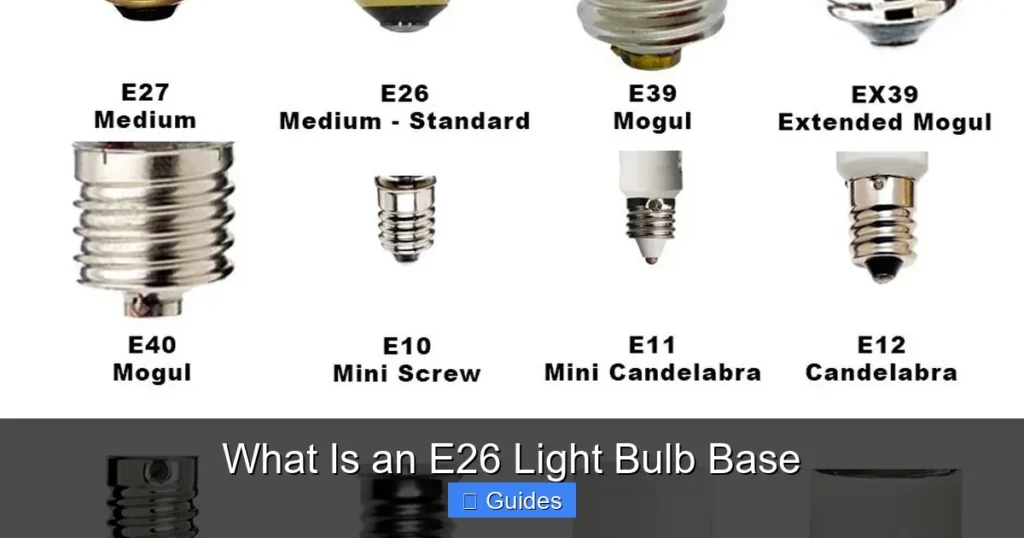
- Easy Identification: You can easily identify an E26 bulb by its medium-sized screw-in threading, which is visibly larger than candelabra (E12) and smaller than mogul (E39) bases.
- Critical for Selection: Knowing your fixture requires an E26 light bulb base is the fundamental first step in choosing the correct replacement bulb, preventing compatibility issues and ensuring safe operation.
- Beyond the Base: While the E26 base defines the fit, remember to also consider wattage, lumens, color temperature, and dimmability when purchasing a new bulb for optimal lighting.
Quick Answers to Common Questions
What does “E26” mean in E26 light bulb base?
The “E” stands for Edison Screw, referencing Thomas Edison’s screw-in design. The “26” indicates the diameter of the base in millimeters (26mm).
Is an E26 light bulb base the same as an E27?
Physically, they are very similar (26mm vs 27mm diameter) and often interchangeable in terms of fit. However, E26 is designed for 120V systems (North America), while E27 is for 220-240V systems (Europe/international). Using the wrong voltage can be dangerous.
Can I use any bulb in an E26 light bulb base?
You can use any bulb that has an E26 base. However, you must also consider the fixture’s maximum wattage rating and whether you need specific features like dimmability, bulb shape, or color temperature.
Are all E26 bulbs LED?
No, not all E26 bulbs are LED. While LED is the most common and energy-efficient type sold today, E26 bases have historically been used for incandescent, halogen, and CFL bulbs. You can still find non-LED E26 bulbs, but LEDs are highly recommended for efficiency and lifespan.
How do I know if my lamp needs an E26 light bulb base?
The easiest way is to look at an existing bulb or the socket itself. If the screw-in base is approximately 1 inch (26mm) in diameter, it’s an E26 base. Most standard lamps and fixtures in North American homes use E26.
📑 Table of Contents
What Exactly Is an E26 Light Bulb Base?
At its core, the “E” in E26 stands for “Edison Screw,” a nod to Thomas Edison, who developed the screw-in bulb base back in the late 19th century. This revolutionary design made it easy to replace bulbs, helping to popularize electric lighting. The “26” refers to the diameter of the base in millimeters (mm). So, an E26 light bulb base is an Edison screw base that measures 26 millimeters across.
This measurement isn’t arbitrary; it’s a precise standard that ensures a secure fit into compatible light fixtures. Imagine trying to fit a square peg in a round hole – it just wouldn’t work! The E26 standard eliminates this guesswork, providing a universal fit for countless lamps, ceiling lights, and other fixtures found in North American homes and businesses. It’s often informally referred to as a “medium” or “standard” base because of its prevalence.
The “Edison Screw” Legacy
The screw-in design of the E26 light bulb base is a testament to timeless engineering. Before Edison’s innovation, light bulbs often required complex wiring or clamping systems to secure them. His screw-thread design offered a simple, safe, and effective way to connect the bulb to the electrical circuit. This design quickly became the industry standard, and even today, well over a century later, the fundamental principle remains unchanged for the E26 base. This longevity speaks volumes about its effectiveness and reliability.
Dimensions and Design Explained
To be more precise, the E26 light bulb base features a threaded metal base that screws into a matching socket. The 26mm diameter refers to the outer measurement of these threads. Inside the socket, there’s a small contact point at the very bottom, which connects to the bottom of the bulb, completing the electrical circuit. This simple yet effective design ensures good electrical contact and a secure physical connection, preventing bulbs from falling out or flickering due to loose connections.
E26 vs. E27: The Global Perspective
While the E26 light bulb base is the dominant standard in North America (including the U.S., Canada, and Mexico), you might occasionally hear about an E27 base. What’s the difference? Physically, the E27 base is also an Edison screw base with a 27mm diameter. That’s just a 1mm difference from the E26! Functionally, they are almost identical in size and can often be interchanged in terms of fit. However, the critical distinction lies in the intended voltage. E26 bases are designed for 120-volt electrical systems (common in North America), while E27 bases are typically used in 220-240-volt systems (common in Europe and many other parts of the world). While they might fit, using an E26 bulb in an E27 240V socket or vice-versa without checking voltage compatibility can be dangerous and damage the bulb or fixture. Always match the bulb’s voltage rating to your home’s electrical supply.
Why the E26 Base Reigns Supreme in North America
The widespread adoption of the E26 light bulb base in North America isn’t just happenstance; it’s the result of historical developments, standardization efforts, and practical advantages that align with the region’s electrical infrastructure. Understanding why it’s so dominant helps us appreciate its convenience and reliability.
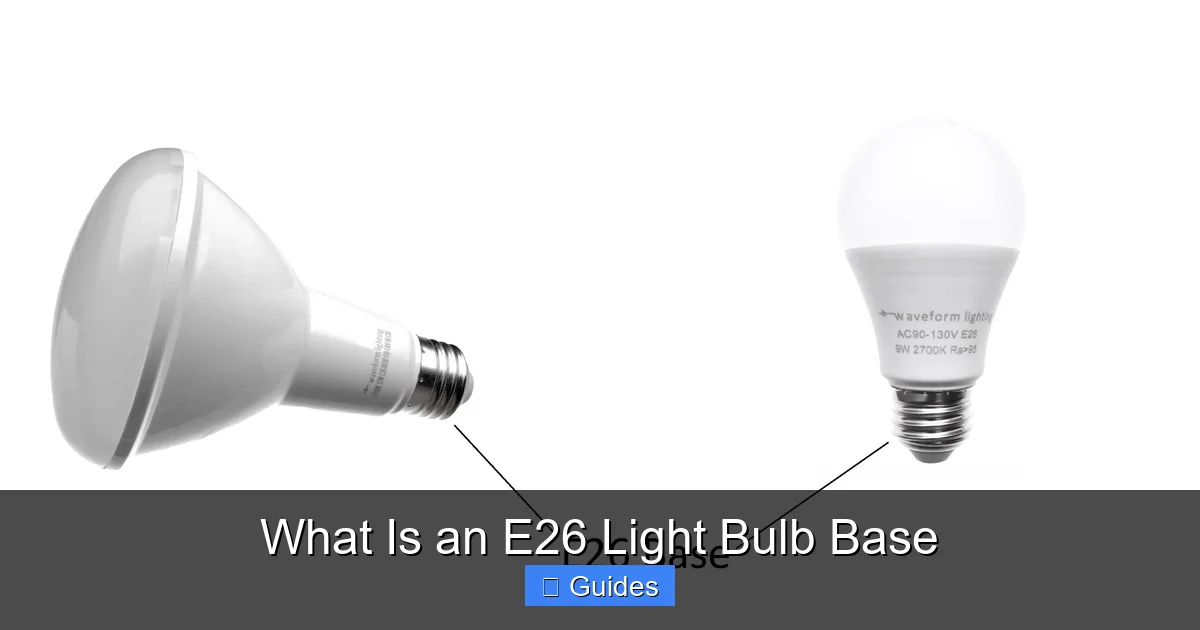
Visual guide about What Is an E26 Light Bulb Base
Image source: waveformlighting.com
Historical Adoption and Standardization
From the early days of electrification, the E26 light bulb base emerged as a practical and safe solution for residential and commercial lighting. As electricity became more common, the need for standardized components became critical to ensure compatibility and simplify manufacturing and distribution. The E26 base filled this role perfectly, becoming the de facto standard through widespread adoption by manufacturers and utilities. This historical momentum created a self-reinforcing cycle: manufacturers produced E26 bulbs and fixtures, consumers bought them, and the standard became even more entrenched.
Voltage Compatibility and Safety
Perhaps the most significant reason for the E26 base’s dominance is its direct compatibility with North America’s 120-volt (120V) AC electrical system. Most household outlets and lighting circuits in the U.S. and Canada deliver electricity at this voltage. The E26 light bulb base, by design, is engineered to handle and safely operate bulbs specifically rated for 120V. This inherent voltage match is crucial for safety and optimal performance. Using a bulb with an incorrect voltage rating in an E26 socket could lead to issues like overheating, premature bulb failure, or even electrical hazards. Therefore, the E26 standard ensures that when you pick up an E26 bulb, it’s generally safe and ready for your 120V system.
Ubiquity in Household Fixtures
Walk into any home in North America, and you’ll be hard-pressed to find a room without at least one light fixture designed for an E26 light bulb base. This includes:
- Table Lamps and Floor Lamps: The most common application, providing ambient or task lighting.
- Ceiling Fixtures: From flush mounts to chandeliers and pendant lights.
- Wall Sconces: Decorative and functional lighting for hallways and rooms.
- Outdoor Lighting: Many porch lights, lampposts, and security lights also utilize the E26 standard.
This ubiquity means that when you need a new bulb, you rarely have to worry about finding an obscure base type. The E26 light bulb base is simply everywhere, making replacement and upgrades incredibly straightforward for the average homeowner.
Identifying Your E26 Light Bulb Base and Choosing the Right Bulb
Now that we understand what an E26 light bulb base is and why it’s so common, let’s talk about the practical side: how to identify it and, more importantly, how to choose the perfect bulb to fit your E26-compatible fixtures.
How to Spot an E26 Base
Identifying an E26 light bulb base is usually quite simple. When you unscrew an existing bulb from a fixture:
- Look at the Base Size: The threaded metal base should be about 1 inch (or 26mm) in diameter. It’s a medium-sized base, not tiny like a candelabra (E12) and not super wide like a mogul (E39) base.
- Check for Markings: Sometimes, the bulb base itself or the packaging will clearly state “E26.”
- Compare to Other Bases: If you have different sized bases around, the E26 will be noticeably the “standard” or “medium” size.
Once you’ve confirmed your fixture needs an E26 light bulb base, you’re halfway there!
Beyond the Base: Other Factors to Consider
While the E26 base ensures physical compatibility, it’s just the starting point. To truly choose the “right” bulb, you need to consider several other factors that impact light quality, energy consumption, and overall experience.
Wattage and Lumens
For a long time, we chose bulbs based on wattage (e.g., a 60-watt bulb). Wattage measures energy consumption. However, with modern LED bulbs, wattage doesn’t directly correlate to brightness anymore. Instead, look for lumens. Lumens measure the actual brightness of the bulb. For example, an LED bulb might only use 9 watts but produce 800 lumens, which is equivalent to an old 60-watt incandescent bulb. Always check the fixture’s maximum wattage rating to ensure you don’t exceed it, even with energy-efficient LEDs, as some heat can still be generated.
Color Temperature (CCT)
Color temperature is measured in Kelvins (K) and describes the “warmth” or “coolness” of the light.
- 2700K – 3000K (Warm White/Soft White): Creates a cozy, inviting atmosphere, similar to traditional incandescents. Ideal for living rooms, bedrooms.
- 3500K – 4000K (Neutral White/Cool White): A balanced light, good for kitchens, offices, and bathrooms where clarity is desired without being overly cool.
- 5000K – 6500K (Daylight): A very bright, crisp white light that mimics natural daylight. Excellent for task lighting, garages, or areas where high visibility is crucial.
Choose a color temperature that suits the mood and function of your space.
Dimmability
Not all E26 bulbs are dimmable. If you have a dimmer switch in your fixture, make sure to purchase an E26 bulb specifically labeled as “dimmable.” Using non-dimmable bulbs on a dimmer switch can lead to flickering, buzzing, or even premature bulb failure. For best results, ensure your dimmer switch is also compatible with LED bulbs if you’re upgrading to that technology.
Smart Features
The E26 light bulb base is also available in smart bulb versions. These bulbs can connect to your home Wi-Fi and be controlled via an app, voice commands (e.g., Alexa, Google Assistant), or smart home hubs. They often offer features like adjustable brightness, color changing, scheduling, and remote control. This is a fantastic option for adding modern convenience to any E26 fixture.
Bulb Shape and Size
Even though the base is E26, bulbs come in a myriad of shapes and sizes (e.g., A19, BR30, PAR38, G25, candelabra). While an A19 bulb is the most common E26 light bulb shape, you need to ensure the overall bulb body fits comfortably within your fixture, especially if it has a shade or enclosure. Always measure the available space if you’re unsure.
The Evolution of E26 Lighting: From Filaments to Smart LEDs
The journey of the E26 light bulb base isn’t static; it has evolved alongside lighting technology, adapting to new innovations while maintaining its fundamental compatibility. This evolution showcases how a century-old standard can remain relevant and vital in our modern world.
Incandescent E26 Bulbs: The Original Standard
For over a hundred years, the incandescent bulb with an E26 light bulb base was the undisputed king of residential lighting. These bulbs produced light by heating a filament until it glowed. They were simple, inexpensive to manufacture, and provided a warm, comforting light. However, incandescents were notoriously inefficient, converting only about 10% of their energy into visible light, with the rest lost as heat. Due to energy efficiency regulations, traditional incandescent E26 bulbs are becoming less common, but many people still cherish their classic glow.
CFL and Halogen E26 Options: Bridging the Gap
As the push for energy efficiency grew, new technologies emerged to fit the familiar E26 light bulb base.
- Compact Fluorescent Lamps (CFLs): These bulbs offered a significant leap in efficiency over incandescents, using a fraction of the energy and lasting much longer. CFLs with an E26 base became a popular choice for homeowners looking to save on electricity bills, though some found their initial warm-up time and color quality less appealing than incandescents.
- Halogen Bulbs: Halogens were essentially an improved form of incandescent technology, offering brighter, whiter light and slightly better efficiency. They also fit the E26 standard but still generated considerable heat and had a shorter lifespan compared to newer technologies.
These options served as important transitional steps, demonstrating the versatility of the E26 light bulb base to accommodate diverse internal workings.
The Rise of LED E26 Bulbs: Efficiency and Innovation
Today, the LED (Light Emitting Diode) bulb is the dominant technology, and for good reason. LED E26 bulbs represent the pinnacle of lighting efficiency, longevity, and versatility.
- Incredible Efficiency: LEDs use up to 90% less energy than incandescents, drastically reducing electricity costs and your carbon footprint.
- Long Lifespan: A typical LED E26 bulb can last 15,000 to 50,000 hours, meaning you might not need to replace them for 10-20 years!
- Cooler Operation: LEDs produce very little heat, making them safer and more comfortable to be around.
- Instant On: Unlike some CFLs, LEDs provide instant full brightness.
- Advanced Features: As mentioned, many E26 LED bulbs come with smart capabilities, color-changing options, and superior dimming performance.
The E26 light bulb base has seamlessly adapted to this cutting-edge technology, ensuring that modern homes can enjoy all the benefits of LEDs without having to replace their existing light fixtures. It’s a testament to the enduring practicality of Edison’s original design.
Practical Tips for Using and Maintaining E26 Bulbs
While the E26 light bulb base is designed for ease of use, a few practical tips can help ensure safe operation, maximize bulb lifespan, and optimize your lighting experience.
Safe Installation and Removal
Installing or removing any E26 light bulb is straightforward, but always follow these safety precautions:
- Turn Off Power: Always turn off the power to the fixture at the switch before touching the bulb. For added safety, consider flipping the circuit breaker.
- Let It Cool: Especially with older incandescent or halogen bulbs, allow the bulb to cool down before touching it. LEDs generate less heat but can still be warm.
- Grip the Base, Not the Glass: When screwing in an E26 bulb, hold it by its base or a sturdy part of the bulb, not the glass or plastic globe. Overtightening can damage the fixture or the bulb’s connection. Screw it in until it’s snug, but don’t force it.
- Wear Gloves (Optional): For some delicate bulbs or those you want to keep pristine, wearing cotton gloves can prevent oils from your skin from transferring to the glass, which can lead to hot spots and reduced lifespan, especially for halogens.
Choosing the Right Fixture for Your E26 Light Bulb Base
Most fixtures are designed for E26 bulbs, but there are some considerations:
- Enclosed Fixtures: Some enclosed fixtures (like certain outdoor lights or flush mount ceiling lights) can trap heat. While LEDs produce less heat, always check if the LED bulb is rated for enclosed fixtures. Excessive heat can shorten an LED’s lifespan.
- Weight: Some very large or decorative LED bulbs can be heavier than traditional incandescents. Ensure your fixture can safely support the weight. Most modern fixtures are robust enough, but it’s worth a check for older or delicate ones.
- Appearance: Consider the bulb’s appearance within the fixture. If the bulb is visible, you might want a decorative filament LED or a specific shape (like a globe or Edison bulb) to complement the aesthetic.
Troubleshooting Common Issues
Even with the reliable E26 light bulb base, issues can sometimes arise:
- Flickering: This is often caused by an incompatible dimmer switch, a loose connection, or a failing bulb. Ensure your bulb is dimmable if used with a dimmer. Tighten the bulb in the socket.
- Buzzing: Similar to flickering, buzzing often indicates dimmer incompatibility with an LED bulb. Sometimes cheap LEDs or dimmers are the culprits.
- Bulb Not Turning On: First, check the basics: is the switch on? Is the bulb screwed in properly? Is the breaker tripped? Try another bulb in the same fixture to rule out a fixture problem.
- Premature Failure: While LEDs last a long time, factors like excessive heat (in enclosed fixtures), power surges, or manufacturing defects can cause early failure.
Environmental Considerations and Disposal
As you cycle through E26 bulbs, consider their environmental impact:
- LEDs are Best: By choosing E26 LED bulbs, you’re already making an environmentally friendly choice due to their low energy consumption and long lifespan.
- Recycling: Incandescent and halogen bulbs can usually be disposed of with regular household waste. However, CFLs contain small amounts of mercury and should be recycled at designated collection points. Some municipalities and retailers offer CFL recycling programs. LED bulbs, while not containing mercury, are electronic waste and should ideally be recycled through e-waste programs to recover valuable materials.
Proper disposal contributes to a healthier planet and responsible resource management.
Conclusion
The E26 light bulb base, often perceived as just a minor detail, is actually the unsung hero of North American lighting. Its consistent 26mm diameter and compatibility with 120-volt electrical systems have made it the bedrock of residential and commercial lighting for well over a century. From the initial glow of Edison’s incandescent lamps to the vibrant, energy-efficient illumination of today’s smart LEDs, the E26 base has proven its adaptability and enduring relevance.
Understanding what an E26 light bulb base is empowers you, the consumer, to make informed decisions. It eliminates the confusion of mismatched bulbs and ensures that you can confidently select the perfect lighting solution for any E26-compatible fixture in your home. By considering not just the base, but also lumens, color temperature, dimmability, and smart features, you can transform your spaces with light that is not only functional but also perfectly tailored to your needs and preferences. So, the next time you pick up a light bulb, remember the humble yet mighty E26 base – your first step to brighter, more efficient living.
Frequently Asked Questions
What is the most common light bulb base in North America?
The E26 light bulb base is overwhelmingly the most common screw-in base type used in residential and commercial lighting fixtures across North America, including the United States, Canada, and Mexico. It’s often referred to simply as the “standard” or “medium” base due to its prevalence.
Can an E26 bulb fit into an E27 socket?
Physically, an E26 bulb will often screw into an E27 socket due to the minimal 1mm difference in diameter. However, the critical factor is voltage compatibility; E26 is for 120V systems, and E27 is for 220-240V systems. Mismatching voltage can lead to safety hazards or bulb damage.
How do I dispose of an old E26 bulb?
Disposal depends on the bulb type. Incandescent and halogen E26 bulbs can usually go in regular trash. CFL E26 bulbs contain mercury and should be recycled at special collection points. LED E26 bulbs are electronic waste and should be recycled through e-waste programs when possible.
What should I look for besides the E26 base when buying a bulb?
Beyond ensuring it’s an E26 light bulb base, consider lumens (brightness), color temperature (warmth/coolness of light), wattage (energy consumption, especially important for fixture limits), and whether the bulb needs to be dimmable or have smart features. Also, check the bulb’s physical shape to ensure it fits your fixture.
Can I use an E26 LED bulb in any E26 fixture?
While most E26 LED bulbs work in any E26 fixture, there are a few considerations. If the fixture is fully enclosed, ensure the LED bulb is rated for enclosed fixtures to prevent overheating. Also, if you plan to use a dimmer, the E26 LED bulb must be specifically labeled as dimmable and your dimmer switch should be compatible with LEDs.
Why are there different sizes of Edison screw bases, like E12 or E39?
Different Edison screw base sizes exist to accommodate varying bulb wattages, fixture types, and aesthetic requirements. E12 (candelabra) bases are smaller for decorative lights, while E39 (mogul) bases are larger for high-wattage commercial or industrial applications, with the E26 light bulb base serving as the versatile middle ground for general household use.
