


As an Amazon Associate, We earn from qualifying purchases.
Smart light bulbs are far more than just illuminated glass; they are miniature computers designed to bring intelligence to your lighting. They work by combining energy-efficient LED technology with communication modules (like Wi-Fi, Bluetooth, Zigbee, or Z-Wave) and tiny microcontrollers. This allows them to connect to your home network and smart home ecosystem, enabling you to control them remotely via apps, voice commands, or automated routines, thereby transforming how you interact with light.
Smart Light Bulb How Does It Work
Have you ever wondered about the magic behind those lights that turn on with a simple voice command or dim themselves as you settle in for a movie? We’re talking about smart light bulbs, of course! They seem almost like something out of a futuristic movie, but they’ve become a common, incredibly useful part of many homes today. They’re not just about switching lights on and off; they’re about transforming your living space with intelligent, responsive lighting.
But what exactly is going on inside that little globe of glass and plastic? How does a smart light bulb know when to change color, dim, or respond to your voice? It’s a fascinating blend of technology that’s much simpler to understand than you might think. Join us as we shine a light on the inner workings of these clever devices, breaking down exactly how a smart light bulb how does it work, and how it brings so much convenience and flair to your everyday life.
Key Takeaways
- Core Components: Smart light bulbs work by integrating energy-efficient LEDs, a microcontroller (their tiny brain), and a wireless communication module (Wi-Fi, Bluetooth, Zigbee, or Z-Wave) into a standard bulb form factor.
- Connectivity is Key: For a smart light bulb to work, it must connect to your home network, either directly via Wi-Fi or Bluetooth, or through a dedicated hub for Zigbee/Z-Wave devices, allowing it to receive commands.
- Multiple Control Methods: You can control smart light bulbs using dedicated smartphone apps, voice assistants like Alexa or Google Assistant, smart switches, motion sensors, or even through geofencing and scheduling.
- The “Brain” Inside: A microcontroller within the bulb processes all incoming commands, translating them into actions like dimming, changing color, or turning the light on/off, ensuring precise control.
- Enabling Smart Home Integration: These bulbs are designed to integrate seamlessly into a broader smart home ecosystem, allowing them to participate in routines and interact with other smart devices for enhanced automation and convenience.
- Benefits Beyond On/Off: Understanding how smart light bulbs work reveals their ability to offer significant energy savings, personalized ambiance, enhanced security, and unparalleled convenience through automation.
Quick Answers to Common Questions
What is the main component that makes a light bulb “smart”?
The main component that makes a light bulb “smart” is its internal microcontroller, which acts as the bulb’s tiny brain, processing commands for dimming, color changes, and on/off functions.
Do I need a hub for every smart light bulb?
No, not every smart light bulb requires a hub. Wi-Fi and Bluetooth smart bulbs can connect directly to your home network or smartphone, respectively. However, Zigbee and Z-Wave bulbs do need a dedicated hub to function.
Can smart light bulbs work without Wi-Fi?
Some smart light bulbs can work without Wi-Fi if they use Bluetooth for direct communication with your phone. However, many advanced features, remote control, and integration with voice assistants typically require a Wi-Fi connection (either directly or through a hub).
How do smart light bulbs change color?
Smart light bulbs change color by incorporating multiple sets of LEDs, typically red, green, and blue (RGB) along with warm and cool white LEDs. The microcontroller precisely adjusts the intensity of each color LED to mix and produce millions of different hues and white light temperatures.
Are smart light bulbs energy efficient?
Yes, smart light bulbs are generally very energy efficient because they use LED technology, which consumes significantly less power and lasts much longer than traditional incandescent bulbs. Their smart features also allow for further energy savings through dimming, scheduling, and automation.
📑 Table of Contents
The Basics: What Makes a Bulb “Smart”?
First things first, let’s peel back the layers and understand what fundamentally makes a light bulb “smart.” Traditional incandescent bulbs are simple devices: electricity flows through a filament, which heats up and glows. LEDs (Light Emitting Diodes) are a step up, using semiconductors to produce light much more efficiently. But a *smart* light bulb? That’s a whole different beast, packing quite a bit of tech into a familiar package.
Beyond the Filament: Key Components
At its heart, a smart light bulb combines three critical elements that elevate it from basic illumination to an intelligent device:
- Energy-Efficient LEDs: Just like modern standard bulbs, smart bulbs use LEDs. These are the actual light-producing elements. They are incredibly efficient, consume less power, and last far longer than old-school incandescent bulbs. Crucially, in many smart bulbs, there are often multiple types of LEDs – some for warm white light, some for cool white light, and often red, green, and blue LEDs to create millions of color options.
- A Tiny Brain (Microcontroller): This is arguably the most important component. Think of the microcontroller as the bulb’s miniature computer. It’s responsible for processing all the incoming commands. When you tell your bulb to dim or change color, the microcontroller receives that instruction and tells the LEDs exactly what to do. It’s tiny but mighty!
- The Communication Module: This is the part that allows the smart light bulb to “talk” to your home network and your control devices (like your phone or smart speaker). It’s essentially a small radio chip that uses a specific wireless protocol, such as Wi-Fi, Bluetooth, Zigbee, or Z-Wave. Without this module, the bulb couldn’t receive any commands from the outside world.
- Power Supply & Driver: Every electronic device needs power, and smart bulbs are no exception. They contain a small power supply that converts your home’s AC electricity into the low-voltage DC power needed by the LEDs and the other electronic components. The driver circuit specifically manages the current flowing to the LEDs, which is how dimming and color changes are precisely controlled.
The Power of Connectivity
The real magic of a smart light bulb how does it work hinges on its ability to connect to your home’s network. This connectivity is what differentiates it from a regular LED bulb. It’s not just about producing light; it’s about connecting to a larger ecosystem. Once connected, the bulb becomes part of your smart home, opening up a world of possibilities for control, automation, and personalization that simply aren’t possible with traditional lighting.
The Communication Highway: How Smart Bulbs Talk
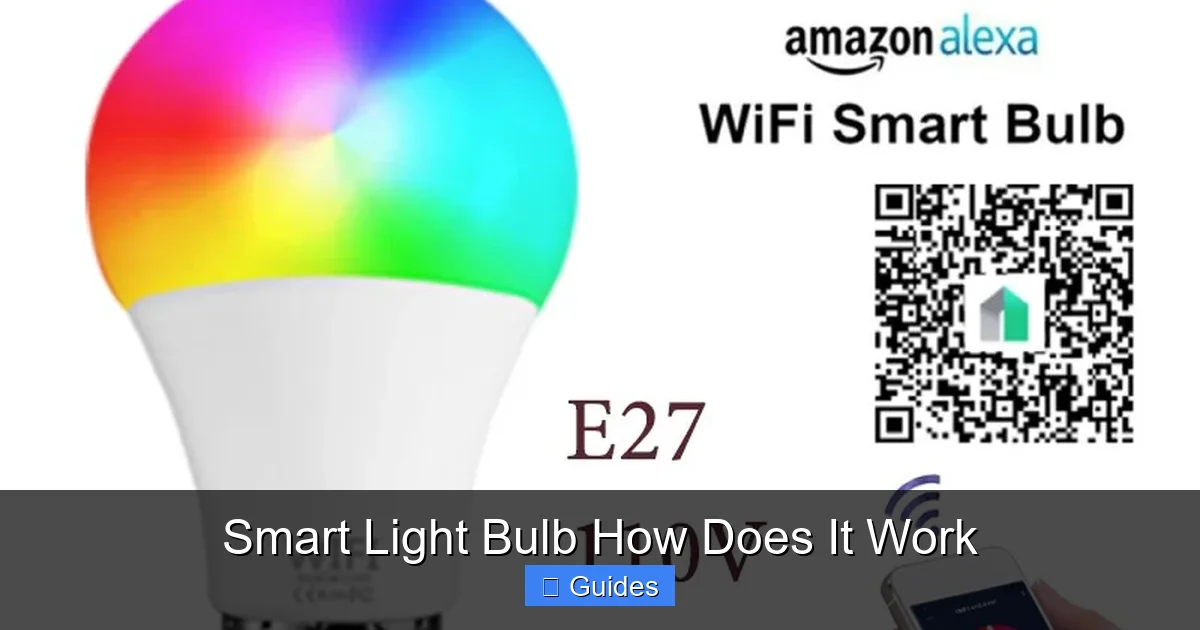
Visual guide about Smart Light Bulb How Does It Work
Image source: images.nexusapp.co
So, we know smart bulbs have a communication module, but how do they actually transmit and receive data? There are several different wireless technologies that smart light bulbs use, and understanding them helps explain the differences in how various smart light bulb how does it work.
Wi-Fi: Direct & Simple
Many smart bulbs connect directly to your home’s Wi-Fi network. This is often the most straightforward setup because you don’t need any additional hardware (like a hub).
- How it Works: The smart light bulb has a built-in Wi-Fi chip, much like your smartphone or laptop. You connect it to your home Wi-Fi network using the manufacturer’s app. Once connected, your app or smart speaker sends commands over your Wi-Fi network to the bulb.
- Pros: No hub required, easy setup for many, leverages existing home infrastructure.
- Cons: Can sometimes clog your Wi-Fi network if you have many smart devices, might have slightly higher power consumption than other protocols when idle, potential for latency depending on network congestion.
Bluetooth: Local Control
Bluetooth-enabled smart bulbs communicate directly with your smartphone or tablet when you are within range.
- How it Works: Your phone pairs directly with the bulb via Bluetooth. Commands are sent from your phone to the bulb over this short-range wireless connection. Some Bluetooth bulbs can also form a “mesh” network, where bulbs relay commands to each other, extending the range beyond a single bulb’s direct connection to your phone.
- Pros: No Wi-Fi or hub needed, very easy to set up for a single bulb or small area, lower power consumption.
- Cons: Limited range (you need to be physically close), typically fewer features than Wi-Fi or hub-based systems, less suitable for whole-home automation without a bridge.
Zigbee & Z-Wave: Hubs and Home Automation
These are two popular protocols specifically designed for smart home devices, known for their reliability and mesh networking capabilities. They require a dedicated hub.
- How it Works: Instead of connecting directly to your Wi-Fi, Zigbee or Z-Wave smart light bulbs communicate with a central hub (sometimes called a bridge or gateway). This hub then connects to your home Wi-Fi network and the internet. Your commands go from your phone/smart speaker to the internet, then to your hub, and finally from the hub to the bulb via Zigbee or Z-Wave. These protocols create a “mesh” network where each powered device (like a light bulb) can act as a repeater, extending the network’s range and reliability.
- Pros: Very robust and reliable network, excellent for whole-home automation, low power consumption for individual devices, doesn’t clog your Wi-Fi network, great interoperability within their respective ecosystems.
- Cons: Requires an additional piece of hardware (the hub), which adds cost and complexity to the initial setup.
Matter: The Future of Interoperability
A newer protocol called Matter is emerging, aiming to unify smart home devices across different brands and ecosystems. While not a new radio technology itself, it builds on existing IP-based technologies like Wi-Fi and Thread (which uses the same radio tech as Zigbee). Matter-certified smart light bulbs promise easier setup and greater compatibility with a wider range of smart home platforms, simplifying how a smart light bulb how does it work in a multi-brand environment.
From Your Finger to the Light: Control Mechanisms
Once your smart light bulb is connected, how do you actually tell it what to do? This is where the user experience comes in, offering a variety of convenient control methods.
Smartphone Apps: The Command Center
Almost every smart light bulb system comes with its own dedicated smartphone app. This app is your primary interface for setting up, managing, and controlling your lights.
- What You Can Do: Through the app, you can turn lights on/off, dim them, change their color or color temperature (warm white to cool white), create custom scenes (e.g., “movie night” or “focus time”), schedule lights to come on or off at specific times, group multiple bulbs together for simultaneous control, and even update the bulb’s firmware. The app is crucial for the initial setup and configuration of how a smart light bulb how does it work.
- Practical Example: Imagine you’re cozied up on the couch, and you realize the lights are too bright. Instead of getting up, you just tap a “Dim” button on your phone app, and instantly, the room softens.
Voice Assistants: Speak and See the Light
This is one of the most popular and “magical” ways to interact with smart lighting. Voice assistants like Amazon Alexa, Google Assistant, and Apple Siri can be integrated with most smart light bulb systems.
- How it Works: Your smart speaker (e.g., Echo Dot, Google Nest Mini, HomePod) listens for your voice commands. When it hears a command like “Alexa, turn on the living room lights,” it sends that instruction over the internet to the smart light bulb’s cloud service, which then relays it to your connected bulb.
- Practical Example: Walking into a dark room with your hands full of groceries? Simply say, “Hey Google, turn on the kitchen light!” and behold, instant illumination.
Smart Switches & Sensors: Beyond the App
While apps and voice are great, sometimes you just want to flip a switch. Smart lighting systems often offer physical smart switches or remotes that can control your bulbs wirelessly.
- Smart Switches: These aren’t just dumb switches; they wirelessly communicate with your smart bulbs (or your hub) to control them. Some smart switches can even be programmed to trigger different scenes or actions with various taps or holds.
- Motion/Occupancy Sensors: These clever devices detect movement or presence in a room. When integrated with your smart bulbs, they can automatically turn lights on when someone enters and off when the room is empty, saving energy and adding convenience.
- Practical Example: A motion sensor in your hallway can be set to turn on a path of dim lights when you walk through it at night, guiding you without blinding you.
Automation & Routines: Lights on Autopilot
This is where smart light bulbs truly shine in their “smartness.” You can set up complex routines and automations based on time, location, or other smart home triggers.
- Scheduling: Lights can be programmed to turn on at sunset and off at bedtime, or gradually brighten to wake you up in the morning.
- Geofencing: Your lights can turn on automatically as you approach your home and turn off when you leave, based on your smartphone’s location.
- Integration with Other Devices: Lights can respond to other smart home events. For instance, if your smart door sensor detects the front door opening after dark, the living room lights could turn on.
- Practical Example: Set a routine: “When I say ‘Good Morning,’ turn on bedroom lights to 50% warm white, then slowly brighten over 15 minutes.”
The Inner Workings: What Happens Inside?
Let’s take a closer look at the actual hardware and processes within the smart light bulb itself to fully grasp how a smart light bulb how does it work.
The Microcontroller: The Brain
We mentioned the microcontroller as the bulb’s brain. When a command arrives via the communication module (Wi-Fi, Zigbee, etc.), it’s the microcontroller’s job to interpret it. Is it a command to turn on? Dim to 70%? Change to a specific shade of blue? The microcontroller understands these instructions and then sends the appropriate signals to the LED driver. It’s essentially translating human-friendly commands into machine-readable signals for the light-emitting components.
LED Technology: The Light Source
The LEDs themselves are incredibly sophisticated. Unlike a single filament, a smart light bulb often contains multiple sets of LEDs:
- White LEDs: Typically, there are two sets of white LEDs – one for warm white light (lower Kelvin temperature) and one for cool white light (higher Kelvin temperature). By adjusting the intensity of each set, the bulb can produce a wide spectrum of white light, from cozy amber to crisp daylight.
- RGB LEDs: For color-changing bulbs, additional red, green, and blue LEDs are included. By mixing these primary colors at different intensities, the bulb can generate millions of distinct hues.
The microcontroller precisely controls the power delivered to each individual LED or LED set, allowing for seamless dimming and color adjustments.
Power Management: Keeping Things Running
Smart light bulbs need a constant, albeit small, amount of power to stay connected to your network, even when the lights are “off.” This low-power mode allows them to instantly respond to commands. The bulb’s internal power supply is designed to efficiently convert the household AC current into the necessary DC current for its internal electronics and LEDs, ensuring stable operation and longevity. This careful power management is key to how a smart light bulb how does it work reliably day after day.
Setting Up Your Smart Lighting System
Getting your smart light bulb up and running is usually a straightforward process, but understanding the steps can demystify how a smart light bulb how does it work from your perspective.
Installation: Screwing it in
Physically installing a smart light bulb is as simple as installing any other bulb. You just screw it into a standard light socket. Ensure the light switch for that socket remains “on” for the smart bulb to receive continuous power and stay connected to your network. If the physical switch is off, the bulb loses power and can’t be controlled smartly.
Pairing: Connecting to the Network
This is the crucial step where the smart bulb joins your home network.
- For Wi-Fi Bulbs: You typically download the manufacturer’s app, screw in the bulb, and follow the in-app instructions. This usually involves putting the bulb into a “pairing mode” (often by quickly turning it on and off a few times) and then selecting your home Wi-Fi network and entering your password within the app. The app then sends these credentials to the bulb.
- For Bluetooth Bulbs: You open the app and it will usually discover nearby Bluetooth bulbs automatically, prompting you to pair them directly.
- For Zigbee/Z-Wave Bulbs: First, you set up your hub (if you haven’t already). Then, within the hub’s app, you initiate a “device discovery” or “add device” process. You might then need to put the bulb into pairing mode, and the hub will find and connect to it.
Integration: Linking with Your Smart Home
Once paired to your network or hub, the next step is often to integrate it with your broader smart home ecosystem, especially if you use voice assistants.
- Voice Assistants: In the Alexa or Google Home app, you’ll enable the “skill” or “service” for your specific smart bulb brand. Then, the voice assistant will discover your newly added smart bulbs, allowing you to control them with your voice.
- Other Smart Devices: You can then use your smart home app (like Google Home, Amazon Alexa, Apple HomeKit, or a dedicated hub app like SmartThings) to create routines, groups, and automations that involve your smart bulbs working in conjunction with other smart devices.
Tips for a Smooth Experience
* Strong Wi-Fi: Ensure your Wi-Fi signal is strong where your bulbs are located, especially for Wi-Fi-only bulbs.
* Router Placement: Keep your Wi-Fi router or smart home hub centrally located for the best coverage.
* Naming Conventions: Give your bulbs clear, easy-to-remember names (e.g., “Living Room Lamp,” “Kitchen Overhead”) for easier voice control.
* Consistency: Try to stick to a single communication protocol (e.g., mostly Zigbee or mostly Wi-Fi) if possible, to simplify your network.
The Benefits: Why Go Smart?
Now that you understand how a smart light bulb how does it work, it’s clear why they’re so popular. The underlying technology translates into some fantastic advantages for homeowners.
Energy Efficiency & Cost Savings
Smart bulbs are predominantly LED bulbs, meaning they are inherently energy-efficient. Beyond that, the ability to dim lights precisely, schedule them, and even have them turn off automatically when a room is empty means you’re only using light exactly when and where you need it, significantly reducing electricity consumption and lowering your energy bills.
Convenience & Control
This is perhaps the most immediate and appreciated benefit. Controlling your lights from anywhere with your phone, using your voice, or setting up automations means you never have to fumble for a switch again. Imagine never having to get out of bed to turn off a forgotten light downstairs!
Ambiance & Personalization
Smart bulbs allow for unparalleled customization of your lighting. You can choose from millions of colors, adjust white light from warm to cool, and create dynamic scenes for any mood or activity. Whether it’s bright, cool light for working, or a warm, dim glow for relaxing, your lighting can match your life perfectly.
Security & Home Automation
Smart lights can enhance your home’s security. By scheduling lights to turn on and off when you’re away, you can simulate occupancy, deterring potential intruders. They also integrate beautifully into larger smart home systems, participating in routines that can lock doors, arm security cameras, and more, all with a single command or trigger.
Conclusion
So, there you have it – the intricate yet surprisingly accessible world of how a smart light bulb how does it work. From their tiny microcontrollers to their sophisticated communication modules, these devices are marvels of modern engineering designed to make our lives easier, more comfortable, and more energy-efficient. They’re not just about light; they’re about control, personalization, and seamless integration into our increasingly connected homes.
Understanding the technology behind them empowers you to choose the right bulbs for your needs, troubleshoot issues, and unlock their full potential. The next time you tell your lights to turn on or watch them dim to your perfect setting, you’ll know it’s not magic, but a brilliant blend of LEDs, chips, and wireless signals working in perfect harmony to illuminate your world. Are you ready to light up your home the smart way?
Frequently Asked Questions
How do smart light bulbs communicate with my phone or smart assistant?
Smart light bulbs communicate using various wireless protocols. Wi-Fi bulbs connect directly to your home router, while Bluetooth bulbs establish a direct link with your phone. Zigbee and Z-Wave bulbs communicate with a central hub, which then connects to your home network and the internet, allowing control via your phone or smart assistant.
What is a “mesh network” in the context of smart light bulbs?
A mesh network is a type of network where devices can communicate directly with each other and also relay signals from one device to another, extending the overall range and reliability of the network. Zigbee and Z-Wave smart light bulbs often utilize mesh networking, where each powered bulb can help transmit commands to other bulbs farther away.
Can I control smart light bulbs when I’m away from home?
Yes, most smart light bulbs allow for remote control when you’re away from home. This capability usually relies on your smart light system connecting to the internet, allowing you to send commands via your smartphone app from anywhere with an internet connection. Hub-based systems or Wi-Fi bulbs typically facilitate this through their cloud services.
Do smart light bulbs work with regular light switches?
Smart light bulbs can be used with regular light switches, but it’s not ideal for optimal smart functionality. For the smart features to work, the physical switch must remain “on” to provide continuous power to the bulb. If you turn off the regular switch, the bulb loses power and cannot receive smart commands.
What happens if my internet goes down?
If your internet goes down, the functionality of your smart light bulbs will depend on their connection method. Wi-Fi bulbs will lose most smart features. Bluetooth bulbs might still be controllable locally from your phone if you’re in range. Some hub-based systems (like Zigbee or Z-Wave) can retain basic local control (on/off, dimming) via the hub even without an internet connection, but remote control or voice assistant commands will not work.
Are smart light bulbs difficult to install and set up?
No, installing and setting up smart light bulbs is generally quite easy. Physical installation is as simple as screwing in a regular bulb. The setup process usually involves downloading a manufacturer’s app and following on-screen instructions to connect the bulb to your home network or hub, which typically takes only a few minutes per bulb.
