


As an Amazon Associate, We earn from qualifying purchases.
Ever wondered how the light bulb worked its magic? At its core, it’s a clever trick: electricity heats a tiny wire, called a filament, so intensely that it glows brightly. By sealing this filament in a glass bulb with either a vacuum or an inert gas, early inventors prevented it from burning out quickly, illuminating our nights and transforming society forever.
How Did the Light Bulb Work
Imagine a world perpetually limited by the setting sun. Once dusk arrived, human activity slowed dramatically, relying on flickering candles, sooty oil lamps, or roaring fireplaces for light. These ancient methods were dim, dangerous, and demanding, offering only glimpses into the darkness. Then, a revolution sparked, literally, changing everything. It was the invention of the practical incandescent light bulb, a device so simple in its final form, yet so profound in its impact, that it remains one of humanity’s greatest achievements.
For many of us, the light bulb is a familiar fixture, an everyday object we take for granted. We flip a switch, and light appears, instantly. But have you ever paused to wonder about the magic behind that glow? How did the light bulb work, especially in its early, groundbreaking iterations? It wasn’t just a matter of making something glow; it was about making it glow reliably, safely, and for a reasonable amount of time. Let’s peel back the layers and uncover the clever science and engineering that brought sustained electric light into our homes and streets.
Understanding how did the light bulb work involves exploring a few key components and principles. It’s a story of discovery, experimentation, and persistence, where inventors sought to harness the power of electricity to conquer the night. From tiny filaments to carefully crafted glass bulbs, each element played a crucial role in transforming a raw electrical current into the bright, steady light we now enjoy.
Key Takeaways
- Incandescence is Key: The fundamental principle behind the light bulb’s glow is incandescence, where a material emits light when heated to a very high temperature by electricity.
- The Filament is the Star: A thin, high-resistance wire, initially carbon and later tungsten, acts as the filament. It’s designed to get extremely hot without melting, producing the bright light.
- The Vacuum or Inert Gas is Essential: To prevent the filament from quickly oxidizing and burning out in the presence of oxygen, the glass bulb is either evacuated to create a vacuum or filled with an inert gas like argon or nitrogen.
- Electricity Completes the Circuit: For the bulb to work, electricity must flow from a power source, through the filament, and back to the source, completing a circuit that heats the filament.
- Simple Yet Revolutionary Design: The genius of the early light bulb lies in its combination of a suitable filament, a protective atmosphere, and a glass enclosure to allow for sustained, safe illumination.
- Paving the Way for Progress: While inefficient by today’s standards, the incandescent light bulb dramatically extended daylight hours, spurred industrial growth, and fundamentally changed human civilization.
Quick Answers to Common Questions
What is incandescence?
Incandescence is the emission of light by a body when it is heated to a high temperature, typically by an electrical current in the case of a light bulb.
What was the primary material for early light bulb filaments?
Early practical light bulbs used carbonized materials, such as cotton thread or bamboo fibers, as their filaments before tungsten became the standard.
Why was a vacuum or inert gas important?
A vacuum or inert gas (like argon or nitrogen) inside the bulb prevented the hot filament from rapidly oxidizing and burning out in the presence of oxygen, significantly extending the bulb’s lifespan.
Who is credited with inventing the practical incandescent light bulb?
While many contributed, Thomas Edison is widely credited with inventing a practical, long-lasting, and commercially viable incandescent light bulb in 1879.
What part of the light bulb actually produces the light?
The filament, a thin wire coiled inside the glass bulb, is the part that gets hot enough from electrical resistance to glow brightly and produce light.
📑 Table of Contents
The Core Principle: Incandescence – How Heat Becomes Light
At the heart of how did the light bulb work lies a fascinating phenomenon called *incandescence*. This big word simply means “light produced by heat.” Think about a piece of metal getting red-hot in a blacksmith’s forge, or the glowing embers of a campfire. As materials get hotter and hotter, they start to emit light. First, they might glow a dull red, then orange, then yellow, and eventually, if hot enough, white-hot.
Heat and Light: A Direct Connection
The brilliant insight behind the light bulb was to create this intense heat using electricity in a very controlled way. When an electrical current flows through a material that resists its passage, that resistance generates heat. This is the same principle that makes a toaster toast your bread or a kettle boil water. For a light bulb, the challenge was to find a material that could get *hot enough* to emit visible light, but *not so hot* that it would melt or burn up instantly. This is precisely how did the light bulb work on a fundamental level.
The Right Material for the Job
To achieve incandescence efficiently, you need a material with specific properties. It needs to have high electrical resistance so it heats up significantly when current passes through it. Crucially, it must also have an incredibly high melting point to withstand the extreme temperatures required to glow brightly (around 2,700 to 3,300 Kelvin, or 4,400 to 5,500 degrees Fahrenheit, for bright white light). Early inventors experimented with countless materials to find this perfect balance, truly defining how did the light bulb work.
The Heart of the Bulb: The Filament

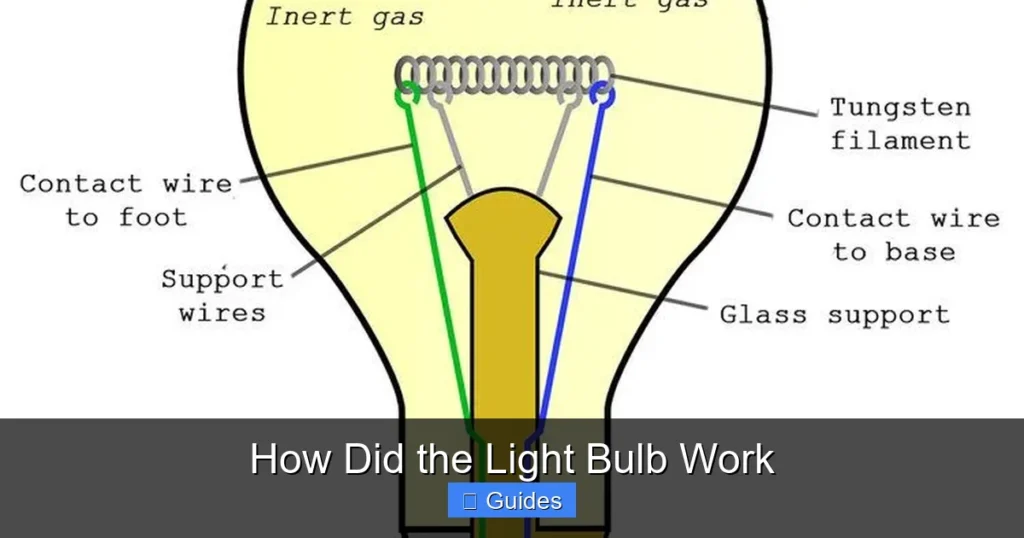
Visual guide about How Did the Light Bulb Work
Image source: revolights.com
If incandescence is the principle, then the filament is the star of the show. This tiny, delicate piece of material is where all the magic happens inside the light bulb. It’s the part that actually glows, and its design and material choice were central to making the light bulb a practical reality.
Early Filament Experiments
Many inventors, including Joseph Swan and Thomas Edison, spent years experimenting with different filament materials. Edison famously tried thousands of substances, from platinum wires to various plant fibers. His early successes came with carbonized cotton thread – cotton that had been baked in an oxygen-free environment to turn it into pure carbon. Later, he found even better results with carbonized bamboo fibers, which provided a longer-lasting glow. These early filaments, while revolutionary, were still quite fragile and relatively short-lived compared to what came later. The material of the filament was a critical factor in figuring out how did the light bulb work effectively.
Tungsten: The Game Changer
The real breakthrough in filament technology came in the early 20th century with the adoption of tungsten. Tungsten is a metal with the highest melting point of any element (over 3,400 degrees Celsius or 6,200 degrees Fahrenheit). This incredible property meant that tungsten filaments could be heated to much higher temperatures than carbon filaments without melting. Higher temperatures translate directly to brighter light and, importantly, more *efficient* light, as more of the energy is converted into visible light rather than just heat. Tungsten also proved to be more durable and long-lasting. Today, even modern incandescent bulbs use coiled tungsten filaments, a testament to its superior performance. This material choice fundamentally changed how did the light bulb work and its longevity.
The Secret to Longevity: The Vacuum or Inert Gas
You might be thinking, “If you just heat a wire until it glows, won’t it just burn up?” And you’d be absolutely right if you did that in open air! This was one of the biggest challenges inventors faced and a crucial element in understanding how did the light bulb work for any extended period.
The Problem with Oxygen
When a material, especially a hot one, is exposed to oxygen in the air, it quickly reacts. This reaction is called oxidation, and it’s essentially a slow form of burning. Imagine the filament glowing super hot – in the presence of oxygen, it would rapidly oxidize, burn out, and break, often within minutes or even seconds. This short lifespan made early attempts at light bulbs impractical for everyday use. Preventing this oxidation was paramount to making the light bulb viable, dictating how did the light bulb work reliably.
Creating the Perfect Environment
The solution to the oxygen problem was ingenious in its simplicity: remove the oxygen! Early light bulbs were painstakingly evacuated, meaning the air inside the glass bulb was pumped out to create a near-perfect vacuum. Without oxygen, the filament couldn’t oxidize and burn out, allowing it to glow for much longer periods – hours instead of minutes. This vacuum technique was a massive leap forward in how did the light bulb work.
Later, around the 1910s, another improvement emerged: filling the bulb with an inert gas, such as argon or nitrogen, instead of a vacuum. Inert gases are non-reactive, meaning they don’t chemically interact with the hot filament. While a vacuum prevents burning, filling the bulb with an inert gas actually helped to slow down another problem: evaporation. At extremely high temperatures, even tungsten atoms can slowly evaporate from the filament surface, depositing a dark film on the inside of the glass and eventually thinning the filament until it breaks. An inert gas, by increasing pressure inside the bulb, reduces this evaporation, further extending the bulb’s lifespan and improving efficiency. So, whether it was a vacuum or inert gas, creating an oxygen-free environment was absolutely essential to how did the light bulb work.
Completing the Circuit: Powering the Glow
Of course, none of this works without electricity. The light bulb needs a continuous flow of electrical current to heat its filament. Understanding the electrical path is another key piece of the puzzle of how did the light bulb work.
From Socket to Filament
When you screw a light bulb into a socket and flip a switch, you’re completing an electrical circuit. Electricity flows from your power source (through wires in your walls) to the light bulb socket. The socket has electrical contacts that touch corresponding contacts on the bulb’s metal base.
One contact on the socket carries the “live” electricity to a contact on the bottom tip of the bulb’s screw base. From there, a wire runs up inside the bulb, connects to one end of the filament, through the filament itself, and then out the other end of the filament. Another wire carries the electricity from the second end of the filament down to the threaded metal shell of the bulb’s base. This metal shell then makes contact with the other side of the socket, completing the circuit and allowing the electricity to flow back to the power source. This complete path is fundamental to how did the light bulb work.
The Base and Contacts
The design of the bulb’s base, typically a screw-in type (like the Edison screw base) or a bayonet fitting, is crucial for secure connection and safe electrical transfer. These bases provide both physical support and the necessary electrical contacts to ensure a reliable flow of current. Without a proper circuit, the filament wouldn’t heat up, and there would be no light. So, while often overlooked, the base plays a vital role in enabling how did the light bulb work.
Putting It All Together: The Bulb’s Components
While the filament and the oxygen-free environment are the core functional parts, the entire assembly works together harmoniously. Each component plays its part in making the light bulb a robust and practical device.
The Glass Enclosure
The glass bulb itself, often called the envelope, serves several important purposes. Firstly, it encloses and protects the delicate filament and the inert gas or vacuum from the outside world. This barrier maintains the controlled internal environment, which is vital for the filament’s longevity. Secondly, the glass must be transparent to allow the light produced by the filament to pass through freely. Modern bulbs sometimes have frosted or coated glass to diffuse the light, making it softer and less harsh. The quality and shape of the glass were continually improved to enhance durability and light output, directly impacting how did the light bulb work.
Support Wires and the Stem
Inside the bulb, you’ll find a small glass tube called the stem or mount. This stem provides structural support for the filament and the lead-in wires that carry electricity to it. The lead-in wires, often made of copper or nickel, are sealed into the glass stem to maintain the airtight seal of the bulb. These wires must be good conductors of electricity but also have a similar coefficient of thermal expansion to the glass, meaning they expand and contract at a similar rate when heated and cooled. This prevents cracks in the glass seal as the bulb heats up and cools down, which could compromise the vacuum or gas fill. Without these seemingly minor components, the overall mechanism of how did the light bulb work would fail.
Conclusion: The Enduring Legacy of Incandescent Light
So, how did the light bulb work? It’s a remarkable testament to human ingenuity: an electrical current heats a specially chosen, high-resistance filament to extreme temperatures. This filament, protected from oxygen by a vacuum or inert gas within a sealed glass bulb, then emits light through incandescence. The simple elegance of this design allowed for consistent, safe, and relatively long-lasting illumination, fundamentally changing daily life.
From extending work hours in factories to enabling evening education and social gatherings, the incandescent light bulb transformed societies across the globe. It freed humanity from the constraints of natural daylight, ushering in an era of unprecedented productivity and possibility. While incandescent bulbs have largely been phased out in favor of more energy-efficient alternatives like LEDs and CFLs today, the principles behind their operation remain a cornerstone of understanding light and electricity. The original light bulb, a beacon of innovation, stands as a powerful reminder of how a seemingly simple invention can illuminate the path to progress and forever alter the course of human civilization.
Frequently Asked Questions
How long did early light bulbs last?
Early incandescent light bulbs, such as Edison’s first commercially successful models, could last for many hours, sometimes over 1,200 hours, which was a significant improvement over previous attempts that lasted only minutes.
Were all early light bulbs the same?
No, early light bulbs varied greatly in design, filament material, and efficiency, as many inventors experimented with different approaches before a standardized and practical design emerged. There was significant competition and innovation.
Why did light bulbs stop using carbon filaments?
Carbon filaments were eventually replaced by tungsten because tungsten has a much higher melting point, allowing it to be heated to brighter, more efficient temperatures without melting, and it also offered greater durability and a longer lifespan.
What replaced the incandescent light bulb?
The incandescent light bulb has largely been replaced by more energy-efficient lighting technologies, primarily Compact Fluorescent Lamps (CFLs) and, more recently and predominantly, Light-Emitting Diodes (LEDs).
Is the original light bulb still used today?
While some specialized or decorative incandescent bulbs are still produced, the traditional, general-purpose incandescent light bulb has been phased out in many regions due to its low energy efficiency compared to modern alternatives.
How did the light bulb change the world?
The light bulb dramatically changed the world by extending daylight hours, allowing for longer workdays, evening education, safer streets, and new forms of entertainment. It spurred industrial growth, transformed urban landscapes, and profoundly impacted human productivity and social life.
