


As an Amazon Associate, We earn from qualifying purchases.
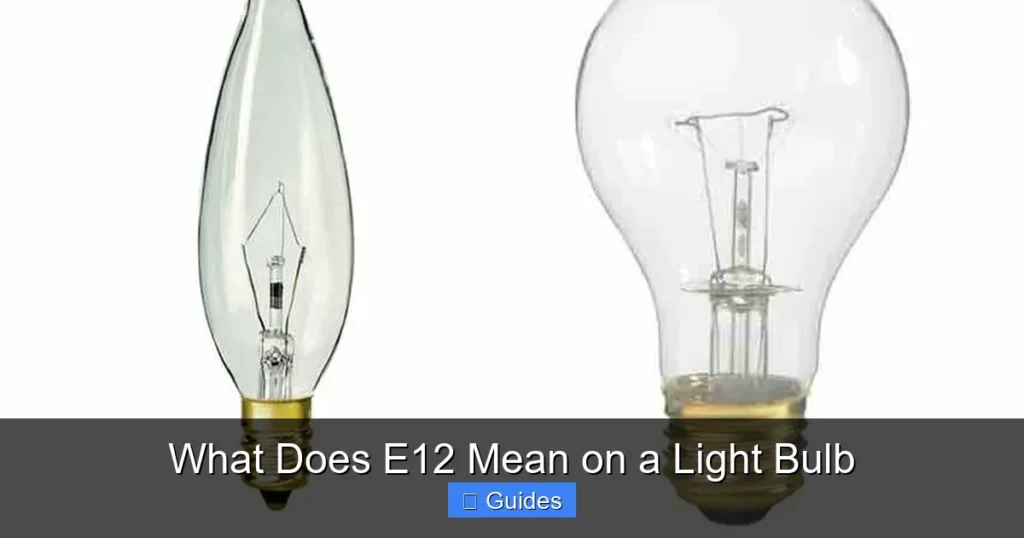
E12 on a light bulb refers to its base size and type: an Edison Screw base with a diameter of 12 millimeters. This small, threaded base is commonly known as a “candelabra” base and is widely used in decorative fixtures, chandeliers, and smaller accent lighting. Understanding the E12 designation ensures you select the correct bulb for proper fit and safe operation.
What Does E12 Mean on a Light Bulb?
Ever found yourself staring at a bewildering array of light bulbs at the store, trying to figure out which one is right for your lamp or fixture? You’re not alone! Among the many codes and numbers, you might have spotted “E12” on a bulb’s packaging or even on the bulb itself. This seemingly small detail is actually incredibly important, and understanding it can save you a lot of hassle, frustration, and unnecessary trips back to the hardware store.
In the world of lighting, “E12” is a fundamental piece of information that tells you exactly what kind of base the light bulb has. It’s essentially a critical compatibility indicator, much like knowing whether your phone needs a USB-C or a Lightning cable. Without the correct base type, your new light bulb simply won’t fit into your fixture, or worse, it could create electrical problems. Let’s peel back the layers and illuminate exactly what this E12 designation means for your lighting choices and why it’s so crucial.
So, whether you’re replacing a burnt-out bulb in your elegant chandelier, a cozy night light, or a decorative sconce, knowing “what does E12 mean on a light bulb” is your first step towards making the right choice. This guide will demystify the E12 standard, explain its common uses, and help you navigate the various options available, ensuring your home stays brightly and beautifully lit.
Key Takeaways
- E12 Definition: The “E” stands for Edison Screw, indicating a threaded base, and “12” signifies the base’s diameter in millimeters. It’s often called a “candelabra” base due to its frequent use in such fixtures.
- Common Applications: E12 bulbs are predominantly found in decorative lighting like chandeliers, sconces, night lights, certain ceiling fans, and some smaller appliance lights (e.g., in microwaves).
- Compatibility is Key: Always match the bulb’s base type (E12) to your fixture’s socket. Using the wrong size can lead to improper fit, electrical issues, or damage.
- Beyond the Base: While E12 defines the fit, you’ll still need to consider other factors like wattage (or lumens for LED), color temperature (Kelvin), bulb shape, and dimmability when selecting a replacement bulb.
- Modern E12 Options: E12 bulbs are available in various technologies, including energy-efficient LED, traditional incandescent, halogen, and CFL, offering choices for different light qualities and energy savings.
- Checking Your Fixture: Before purchasing, either check the label on your existing bulb or inside the fixture’s socket for the exact base designation (e.g., E12, E26, E14).
Quick Answers to Common Questions
What does the “E” in E12 stand for?
The “E” in E12 stands for “Edison Screw,” referring to the threaded design of the bulb base, named after Thomas Edison.
What does the “12” in E12 represent?
The “12” in E12 indicates the diameter of the bulb’s screw base in millimeters, meaning it’s 12 millimeters wide.
Is E12 the same as a candelabra base?
Yes, E12 is the official designation for what is commonly known as a candelabra base in North America due to its frequent use in candelabra-style fixtures.
Can I use an E14 bulb in an E12 socket?
No, an E14 bulb is 14mm in diameter, which is slightly larger than an E12 (12mm) socket, so it will not fit properly or safely.
Are E12 LED bulbs dimmable?
Some E12 LED bulbs are dimmable, but not all. You must check the packaging specifically for a “dimmable” label, and for best performance, use them with an LED-compatible dimmer switch.
📑 Table of Contents
- Understanding Light Bulb Bases: The “E” and the Number
- The E12 Base: Specifically What It Is and Where You’ll Find It
- Beyond the Base: Important Factors When Choosing E12 Bulbs
- Types of E12 Bulbs: LED, Incandescent, Halogen, CFL
- Common Applications and Fixtures for E12 Bulbs
- Tips for Buying and Maintaining E12 Light Bulbs
- Conclusion
Understanding Light Bulb Bases: The “E” and the Number
Before we dive specifically into E12, let’s understand the universal language of light bulb bases. This system is designed to make sure bulbs fit securely into their respective sockets, establishing the electrical connection needed for them to light up.
The “E” for Edison Screw
The “E” in E12 stands for “Edison Screw.” This refers to the inventor, Thomas Edison, who developed one of the first commercially successful incandescent light bulbs and, importantly, its screw-in base. The Edison screw base is characterized by its threaded design, which allows you to screw the bulb into a corresponding socket. This threading provides both mechanical support and the electrical contact needed for the bulb to function. It’s a remarkably simple yet effective design that has stood the test of time, becoming the most common type of bulb base worldwide.
The Number: Diameter in Millimeters
The number following the “E” – in our case, “12” – indicates the diameter of the screw base in millimeters (mm). So, an E12 base means you’re looking at an Edison screw base that is precisely 12 millimeters in diameter. This precise measurement is essential for compatibility. A 13mm bulb won’t fit a 12mm socket, and a 12mm bulb will be too loose in a 14mm socket. Think of it like a nut and bolt; they need to match perfectly.
Other common Edison screw sizes you might encounter include:
- E26: The most common standard screw-in base in North America (26mm).
- E27: The most common standard screw-in base in Europe and many other regions (27mm).
- E14: A smaller screw-in base, popular in Europe (14mm).
- E39/E40: Larger “mogul” bases used for high-wattage industrial or street lighting (39mm/40mm).
Each of these numbers tells you the exact size of the threaded part that screws into the fixture.
The E12 Base: Specifically What It Is and Where You’ll Find It
Now that we understand the basics, let’s focus on the E12. As established, an E12 light bulb has an Edison screw base that is 12 millimeters in diameter. But what does this mean in practical terms for your home?
The “Candelabra” Base
The E12 base is universally known as a “candelabra” base. This nickname comes from its most common and traditional application: chandeliers and other decorative light fixtures that often feature multiple small bulbs designed to mimic the appearance of candles. These fixtures typically have smaller sockets to accommodate the more delicate aesthetic.
Small But Mighty: Common Applications
You’ll often find E12 bulbs in places where aesthetics and compact size are important.
- Chandeliers: This is perhaps the most iconic home for E12 bulbs. The small bases allow for many bulbs to be used in an intricate design without overwhelming the fixture.
- Wall Sconces: Many decorative wall-mounted light fixtures utilize E12 bulbs to provide accent lighting.
- Night Lights: The small, low-wattage bulbs in many standard plug-in night lights use an E12 base.
- Decorative Lamps: Smaller table lamps or accent lamps, especially those with slender designs, often require E12 bulbs.
- Ceiling Fans: Some ceiling fan light kits, particularly those with multiple small lights, may use E12 bases.
- Appliance Lights: Surprisingly, you might find E12 bulbs in certain appliances, such as refrigerator lights or microwave oven interior lights, where space is limited.
Because of their size, E12 bulbs are usually not intended for general room illumination in large spaces unless many are used together in a fixture like a large chandelier. Their strength lies in accent lighting, decorative purposes, and smaller, focused applications.
Beyond the Base: Important Factors When Choosing E12 Bulbs
While ensuring you have an E12 base is the first and most critical step, it’s far from the only consideration when buying a new light bulb. Once you’ve confirmed the base type, you need to think about the quality of light and the performance you desire.
Wattage (or Lumens for LED)
Historically, we chose bulbs based on wattage, which indicated brightness. For traditional incandescent bulbs, higher wattage usually meant more light.
- Incandescent/Halogen: Check your fixture’s maximum wattage rating. Never exceed this limit to prevent overheating and fire hazards.
- LED: For E12 LED bulbs, focus on lumens rather than wattage. Lumens measure actual brightness, while LED wattage measures energy consumption. A 4-watt E12 LED bulb might provide the same brightness (lumens) as a 40-watt incandescent E12 bulb. This is where energy efficiency comes in!
Color Temperature (Kelvin)
The “color” of the light emitted is measured in Kelvins (K). This determines whether the light appears warm and yellowish or cool and bluish.
- Warm White (2700K-3000K): Creates a cozy, inviting atmosphere, similar to traditional incandescent bulbs. Ideal for living rooms, bedrooms, and dining areas.
- Neutral White (3500K-4500K): A balanced light, good for kitchens, bathrooms, or offices where clear visibility is needed without being overly cool.
- Cool White/Daylight (5000K-6500K): Mimics natural daylight, providing crisp, vibrant light. Often used for task lighting, garages, or display areas.
Consider the mood and function of the space when choosing the color temperature for your E12 bulbs.
Bulb Shape and Size
E12 bases come with a variety of bulb shapes. The shape often dictates the aesthetic and how the light is distributed.
- B (B3, B10, etc.): Often called “B-shape” or “bullet” bulbs, they have a blunt tip and are common in chandeliers.
- C (C7, C9, C15, etc.): “C-shape” or “flame tip” bulbs taper to a point, designed to resemble a candle flame, perfect for decorative fixtures.
- G (G16, G25, etc.): “Globe” shaped bulbs, rounder and often used in vanity lights or open fixtures.
- T (T6, T8, etc.): “Tubular” or “Edison style” bulbs, often with exposed filaments in clear glass, for a vintage look.
- A (A15, A19, etc.): Standard “A-shape” bulbs, though less common for E12 compared to larger bases.
Always ensure the physical dimensions (height and width) of the bulb will fit within your fixture’s enclosure or shade.
Dimmability
If your fixture is connected to a dimmer switch, you must purchase E12 bulbs specifically labeled as “dimmable.” Not all LED bulbs are dimmable, and using a non-dimmable LED on a dimmer can lead to flickering, buzzing, or damage to the bulb or switch. For optimal performance, some LED dimmable bulbs require specific LED-compatible dimmer switches.
Types of E12 Bulbs: LED, Incandescent, Halogen, CFL
The E12 base is versatile and supports various lighting technologies, each with its own advantages and disadvantages.
LED (Light Emitting Diode) E12 Bulbs
LEDs are the current champions of energy efficiency and longevity.
- Pros: Extremely long lifespan (25,000+ hours), very low energy consumption, cool to the touch (low heat emission), available in various color temperatures and dimmable options. They offer significant savings on electricity bills over time.
- Cons: Higher initial cost compared to incandescent, some cheaper LEDs may have poor dimming performance or color rendering (CRI).
- Best For: Nearly all applications where you want to save energy and reduce bulb replacement frequency.
Incandescent E12 Bulbs
The traditional light bulb, loved for its warm glow.
- Pros: Inexpensive to purchase, produces a very warm, comforting light, universally dimmable (without special hardware).
- Cons: Very inefficient (most energy lost as heat), short lifespan (around 1,000 hours), being phased out in many regions due to energy regulations.
- Best For: Situations where cost is the absolute priority, or a very specific warm aesthetic is desired and energy efficiency is not a concern for occasional use.
Halogen E12 Bulbs
A more efficient version of the incandescent bulb.
- Pros: Brighter and slightly more energy-efficient than standard incandescents, excellent color rendering, full dimming capability.
- Cons: Still generate significant heat, shorter lifespan than LEDs, more expensive than incandescents.
- Best For: When a bright, crisp white light is needed, and LED alternatives aren’t suitable for specific dimming requirements.
CFL (Compact Fluorescent Lamp) E12 Bulbs
These spiraled bulbs offer some energy savings over incandescents.
- Pros: More energy-efficient and longer lasting than incandescents, lower initial cost than LEDs.
- Cons: Contain small amounts of mercury (require special disposal), slower to reach full brightness, often not dimmable or dim poorly, limited design aesthetics for E12 sizes.
- Best For: Less common in E12 form factor due to their bulky shape often not fitting decorative fixtures.
Common Applications and Fixtures for E12 Bulbs
The E12 bulb, with its candelabra base, truly shines in specific types of lighting where its compact size and often decorative shape are advantageous. Let’s explore some of these common applications in more detail.
Elegant Chandeliers and Pendants
This is the E12 bulb’s natural habitat. Chandeliers, by their very nature, are often intricate fixtures with multiple light sources. The small E12 base allows for slender, candle-like bulbs (like C7, C9, or B10 shapes) to be used, maintaining the fixture’s delicate aesthetic. Whether it’s a grand dining room chandelier or a smaller, decorative pendant light, E12 bulbs provide the necessary illumination without overpowering the design.
Decorative Wall Sconces
Wall sconces are designed to add ambient or accent lighting to a room, often serving as a decorative element themselves. Many sconces have smaller, more enclosed shades or open designs that look best with smaller, unobtrusive bulbs. E12 bulbs fit this bill perfectly, offering a gentle glow that enhances architectural features or illuminates hallways and entryways without glare.
Accent Lighting and Specialty Lamps
Think about those charming accent lamps you might have on a side table or mantelpiece. Many of these smaller, decorative lamps, especially those with unique or vintage designs, require E12 bulbs. The compact size of the E12 base makes it ideal for fixtures where larger E26 bulbs would simply be too big or out of proportion.
Night Lights and Small Appliance Lights
For practical, low-level illumination, E12 bulbs are a go-to choice. Standard plug-in night lights almost exclusively use E12 bases for their tiny, low-wattage bulbs. Beyond that, if you’ve ever had to replace the light inside your microwave or a specific type of sewing machine light, there’s a good chance it was an E12 bulb due to space constraints.
Ceiling Fan Light Kits
While not all ceiling fan light kits use E12, many do, especially those with multiple smaller lights arranged around the fan’s central hub. These bulbs contribute to the overall room lighting but are also selected for their compact size to fit neatly within the fan’s integrated light fixture.
In all these applications, the E12 base ensures a secure fit for bulbs that are often chosen for their aesthetic contribution as much as their functional light output.
Tips for Buying and Maintaining E12 Light Bulbs
Choosing and caring for your E12 bulbs doesn’t have to be complicated. Here are some practical tips to make the process smooth and ensure your lighting lasts.
Always Confirm the Base Type
The golden rule: always check the existing bulb or the fixture itself before you buy a replacement. Many fixtures have a sticker inside the socket or on the lamp’s wiring indicating the required bulb type (e.g., “Max 40W E12”). If you can’t find a label, carefully remove the old bulb and look at its base. Compare it to other bulbs you might have, or even take it with you to the store. Don’t guess!
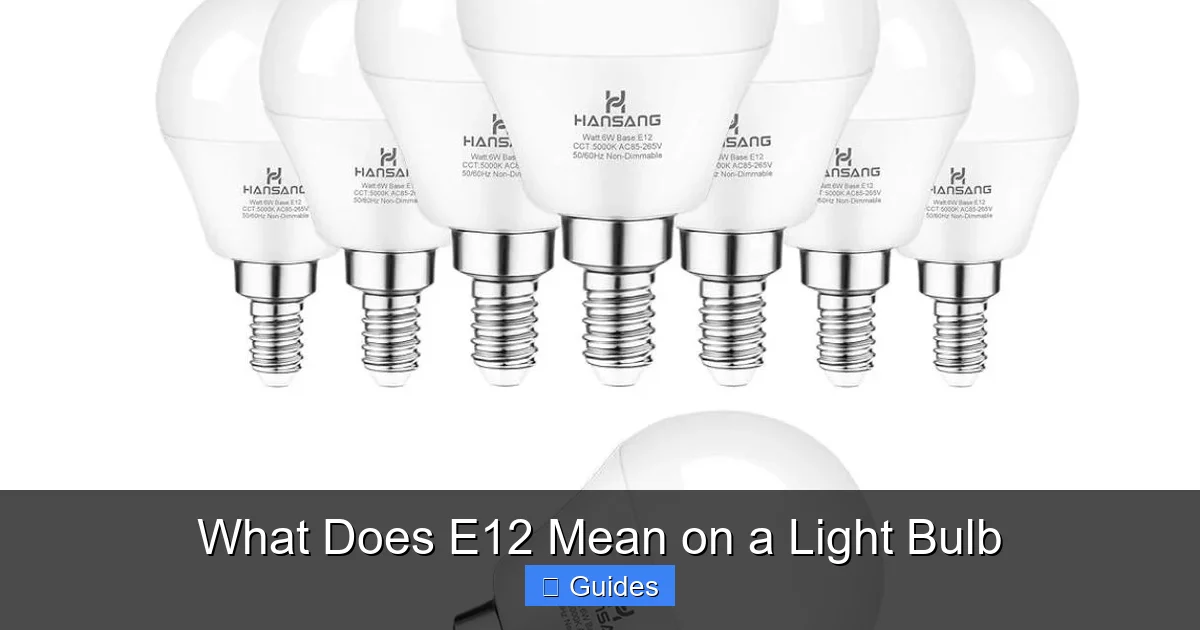
Visual guide about What Does E12 Mean on a Light Bulb
Image source: storables.com
Match Wattage/Lumens to Fixture Ratings
Your fixture will have a maximum wattage rating. For incandescent or halogen E12 bulbs, never exceed this wattage. For E12 LED bulbs, you can typically use a much lower wattage LED that produces equivalent lumens to your old incandescent bulb. For example, if your fixture says “Max 40W,” you can safely use an LED equivalent to 40W (which might only be 4-5 LED watts) without issue. In fact, using lower wattage LEDs often means the fixture will run cooler and last longer.
Consider the Overall Aesthetic
Because E12 bulbs are often used in decorative fixtures, their appearance matters. Think about the bulb’s shape (flame tip, torpedo, globe) and whether the glass is clear, frosted, or amber-tinted. A clear filament LED bulb can add a vintage touch to an open chandelier, while a frosted bulb might diffuse the light more gently in a sconce.
Stock Up Wisely
If you have many fixtures that use E12 bulbs (like a large chandelier), it can be wise to buy bulbs in multi-packs. This ensures you have replacements on hand and that all the bulbs in a fixture match in terms of color temperature and brightness. Just remember, LED bulbs last a very long time, so you won’t need to replace them as often as traditional bulbs.
Safe Handling and Disposal
Always ensure the fixture is off and the bulb has cooled down before attempting to remove or install an E12 bulb. Grip the bulb firmly but gently to avoid breaking it. If you’re replacing CFL E12 bulbs, remember they contain mercury and should be disposed of properly at a hazardous waste facility or designated recycling center, not in regular household trash.
Conclusion
Understanding “what does E12 mean on a light bulb” is a fundamental piece of knowledge that empowers you to make informed lighting decisions for your home. It goes beyond simply screwing in a bulb; it’s about ensuring compatibility, safety, and achieving the desired ambiance for your living spaces. The E12 designation, signifying a 12-millimeter Edison Screw candelabra base, unlocks a world of decorative and accent lighting possibilities.
From the sparkle of a chandelier to the soft glow of a night light, E12 bulbs play a crucial role in enhancing the comfort and style of our homes. By considering not just the base type but also factors like wattage (lumens), color temperature, bulb shape, and dimmability, you can confidently choose the perfect E12 bulb for every fixture. Embrace the simplicity and efficiency of modern E12 LED options, and illuminate your home with precision and elegance. Happy lighting!
Frequently Asked Questions
How do I know if my fixture needs an E12 bulb?
The best way to confirm is to check the existing bulb itself – the base size is often printed on it. Alternatively, look for a label inside the light fixture’s socket or on the fixture’s wiring, which usually specifies the required base type and maximum wattage.
Are E12 bulbs energy efficient?
E12 bulbs can be very energy efficient if you choose LED versions. While traditional incandescent E12 bulbs are not efficient, modern E12 LED bulbs consume significantly less energy and last much longer, offering substantial savings on electricity and replacement costs.
What’s the difference between E12 and E26?
The main difference is the base diameter. E12 has a 12mm diameter base and is known as a candelabra base, used for smaller, decorative fixtures. E26 has a 26mm diameter base and is the standard medium screw-in base for most general lighting fixtures in North America.
Can I replace an incandescent E12 with an E12 LED?
Yes, in most cases, you can directly replace an incandescent E12 bulb with an E12 LED bulb of equivalent lumens. Just ensure the LED bulb’s physical size fits your fixture, and if your fixture is on a dimmer, make sure the LED bulb is specifically labeled as dimmable.
Where are E12 bulbs most commonly used in a home?
E12 bulbs are most commonly used in decorative light fixtures such as chandeliers, wall sconces, ceiling fan light kits with multiple small bulbs, night lights, and some smaller table or accent lamps. Their compact size makes them ideal for fixtures where aesthetics and slender design are important.
Do E12 bulbs come in different light colors?
Yes, E12 bulbs are available in various color temperatures, measured in Kelvins (K). You can find them in warm white (around 2700K-3000K) for a cozy feel, neutral white (around 3500K-4500K) for a balanced light, and cool white or daylight (around 5000K-6500K) for brighter, more vibrant illumination.
