



As an Amazon Associate, We earn from qualifying purchases.
The light bulb’s invention brought about a monumental shift, extending productivity beyond daylight hours and fundamentally altering urban landscapes. It revolutionized daily life, making homes safer, work more efficient, and social activities possible after dark, leaving an indelible mark on human civilization by illuminating virtually every aspect of our existence.
What Was the Impact of the Light Bulb
Imagine a world where your day ends when the sun goes down. A world where working past dusk means huddling around a flickering candle or a smoky oil lamp, where city streets are plunged into dangerous darkness, and evening entertainment is limited by the moon’s glow. This was the reality for humanity for millennia. Then, a seemingly simple invention—the practical electric light bulb—stepped onto the scene, and it changed absolutely everything.
You probably don’t think much about the light bulb today. It’s just there, an unquestioned part of our lives, silently doing its job when we flip a switch. But this unassuming device, perfected by inventors like Thomas Edison and Joseph Swan, didn’t just illuminate rooms; it illuminated possibilities. It wasn’t merely about seeing in the dark; it was about reshaping societies, economies, and our very concept of time. The profound and far-reaching impact of the light bulb is one of the greatest stories of innovation in human history.
So, let’s turn on the light and explore the monumental shifts this invention brought about. We’re going to dive deep into how the light bulb didn’t just banish the night but fundamentally rewrote the script for modern civilization. From factories to families, from city streets to quiet homes, the ripple effects of this glowing filament touched every corner of human experience. Understanding the impact of the light bulb helps us appreciate the foundation upon which much of our modern world is built.
Key Takeaways
- Extended Productivity: The light bulb allowed work, study, and commerce to continue long after sunset, transforming industrial output and academic pursuits into a 24/7 possibility.
- Urban Transformation & Safety: It dramatically illuminated cities, making streets safer, fostering urbanization, and enabling public spaces to thrive and be enjoyed after dark, significantly reducing crime.
- Revolutionized Social Life: Evening entertainment, leisure activities, and social gatherings became commonplace and safe, reshaping cultural norms, family life, and individual lifestyles.
- Foundation for Modern Technology: As a cornerstone of widespread electrical grids and power distribution, it paved the way for countless subsequent electrical inventions and the entire digital age.
- Economic Growth & New Industries: The demand for electricity and lighting led to the creation of massive new industries, jobs in manufacturing and infrastructure, and significant global economic expansion.
- Improved Health & Well-being: By replacing dangerous, smoke-producing alternatives like candles and gas lamps, it drastically improved indoor air quality and reduced fire risks in homes and workplaces.
Quick Answers to Common Questions
Who is generally credited with inventing the practical incandescent light bulb?
While many individuals contributed to the development of electric lighting, Thomas Edison is widely credited with inventing a commercially practical and long-lasting incandescent light bulb in 1879, building upon the work of others like Joseph Swan.
How did the light bulb change daily routines for ordinary people?
The light bulb significantly extended the active day beyond sunset. People could read, work on hobbies, study, and socialize for longer hours in the comfort and safety of their homes, freeing daily schedules from the sole reliance on natural light.
What was the immediate impact of the light bulb on urban safety?
Electric street lighting drastically improved urban safety by illuminating streets and public spaces. This made it harder for criminals to operate unnoticed, reducing crime rates and making citizens feel much safer venturing out after dark.
How did the light bulb affect industrial productivity?
It revolutionized industrial productivity by enabling factories and businesses to operate 24/7. This meant extended working hours, continuous production lines, increased output, and greater efficiency, no longer constrained by daylight.
Did the light bulb have any significant economic consequences?
Absolutely. The light bulb spurred the creation of entirely new industries, including power generation, electrical manufacturing, and infrastructure development, leading to millions of jobs and significant global economic growth and expansion.
📑 Table of Contents
A Brighter World: Lighting Up Homes and Cities
Before electric lights, homes relied on fire-based illumination—candles, oil lamps, and later, gas lamps. These methods were dim, required constant attention, and posed significant fire risks. They also produced smoke and fumes, affecting indoor air quality. The arrival of the light bulb changed all of this, offering a clean, consistent, and significantly brighter source of illumination.
Dispelling the Darkness: From Candlelight to Constant Illumination
One of the most immediate and personal impacts of the light bulb was felt within the home. Families no longer had to limit their activities to daylight hours or tolerate the inadequate glow of open flames. Children could study longer, adults could read, sew, or engage in hobbies, and family gatherings could extend into the evening with comfortable, steady light. The simple act of being able to see clearly indoors after dark transformed domestic life.
Consider the daily routine: with only natural light, schedules were dictated by the sun. Waking with the dawn, eating during daylight, and retiring soon after sunset was the norm. The light bulb dramatically extended the “day,” allowing for greater flexibility and personal freedom within the household. This shift might seem minor now, but it was a revolutionary change that contributed significantly to personal development and leisure time.
The Dawn of Urban Nights: Illuminated Streets and Public Spaces
Beyond individual homes, the impact of the light bulb on urban landscapes was equally transformative. Cities, once dim and dangerous after dusk, began to glow with electric streetlights. This wasn’t just about aesthetics; it was about safety, commerce, and public life. Well-lit streets deterred crime, made navigation easier, and encouraged people to venture out after dark. The fear of the unknown lurking in shadows began to recede.
Public squares, parks, and major thoroughfares became vibrant hubs of activity long into the night. Imagine a bustling city square today without electric lights – it’s almost unimaginable. This ability to extend the effective day for entire communities dramatically influenced urban planning and the development of metropolitan centers. The light bulb quite literally brightened the future of cities, making them safer and more dynamic places to live and work. The overall impact of the light bulb on urban development cannot be overstated.
Transforming Industry and Productivity
Perhaps one of the most profound economic impacts of the light bulb was on industry. For centuries, manufacturing and work schedules were heavily reliant on natural light. Factories and workshops had to shut down or drastically reduce operations when the sun set, limiting productivity and output. The introduction of reliable electric lighting shattered these limitations, ushering in an era of continuous operation.
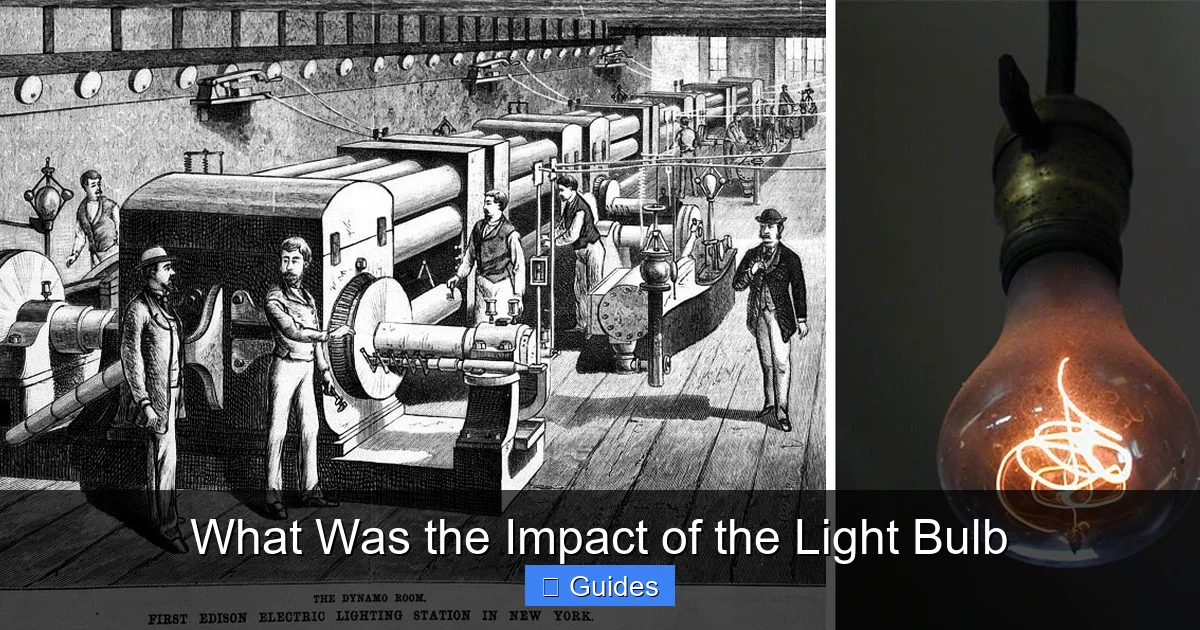
Visual guide about What Was the Impact of the Light Bulb
Image source: d3h6k4kfl8m9p0.cloudfront.net
The 24/7 Economy: Extending Working Hours
With electric lights, factories could operate around the clock, day and night. This meant production lines could run continuously, shifts could be extended, and output could soar. The concept of the “night shift” became a widespread reality. For businesses, this translated directly into increased efficiency, higher production volumes, and greater profits. For workers, it meant more job opportunities, though often accompanied by new challenges related to work-life balance.
This ability to extend the workday had a ripple effect across entire economies. Goods could be produced faster and in larger quantities, leading to lower costs and increased availability for consumers. The 24/7 operational model, which we now take for granted in many industries, owes its existence almost entirely to the reliable illumination provided by the light bulb. Without it, modern global logistics and manufacturing pipelines would simply not be feasible.
Enhanced Safety and Efficiency in Workplaces
Beyond just extending hours, the light bulb significantly improved conditions within workplaces. Dimly lit factories were hazardous environments where accidents were common. Reliable, bright electric light reduced eye strain, allowed workers to see machinery more clearly, and illuminated obstacles, leading to a dramatic reduction in workplace accidents. This made factories safer and more humane places to work.
Furthermore, better lighting led to improved precision and quality control. Workers could perform intricate tasks more accurately, reducing errors and waste. This boost in efficiency, combined with extended operating hours, created a powerful engine for industrial growth and innovation. The overall impact of the light bulb on industrial productivity and safety was nothing short of revolutionary, laying the groundwork for the modern industrial age.
Revolutionizing Social Life and Culture
The light bulb didn’t just change how we worked; it fundamentally transformed how we socialized, entertained ourselves, and experienced urban culture. When night no longer meant an end to public life, a whole new world of possibilities opened up.
New Avenues for Leisure and Entertainment
Before electric lights, evening entertainment was largely confined to the home or to special events that relied on elaborate, often dangerous, temporary lighting. The light bulb changed that. Theaters, music halls, restaurants, and department stores could now operate long after dark, drawing crowds and creating vibrant nightlife districts. Imagine a world without illuminated storefronts or brightly lit restaurant patios – it’s hard to conceive of modern urban entertainment without them.
Sports events could be played at night under stadium lights, parks could host evening concerts, and public gatherings could continue for hours. This expansion of leisure opportunities had a profound impact on social customs, allowing people more time for recreation and cultural enrichment. It created a demand for new forms of entertainment and gave rise to the bustling urban nightlife that many cities are famous for today.
Fostering Urbanization and Community Gathering
As cities became brighter and safer after dark, they became more attractive places to live and visit. This contributed to the trend of urbanization, as people were drawn to the opportunities and vibrancy that well-lit cities offered. The light bulb made urban centers dynamic hubs where people could gather, interact, and build communities in ways that were previously unimaginable. Public spaces, once deserted at night, transformed into lively social arenas.
The ability to see and be seen at night also fostered a greater sense of community and connection. People felt safer meeting friends, attending lectures, or simply taking a stroll. The light bulb, therefore, played a crucial role not only in physical urban development but also in the social fabric of modern cities. It enabled a richer, more active community life that extended far beyond the constraints of daylight.
Advancing Safety and Public Health
While often overlooked, the impact of the light bulb on public safety and health was monumental, quietly saving countless lives and improving living conditions around the globe.
Reducing Fire Hazards and Accidents
The alternatives to electric light—candles, oil lamps, and gas lighting—all carried significant risks. They were open flames that could easily cause fires if knocked over, left unattended, or if fuel leaked. Gas lighting, while brighter, also presented risks of leaks and explosions. Homes and workplaces were constantly susceptible to devastating fires, and burns were common injuries.
The enclosed, relatively cool electric light bulb drastically reduced these dangers. It offered illumination without an open flame, without volatile fuels, and without noxious fumes. This switch to a safer lighting method meant fewer accidental fires in homes, factories, and public buildings, saving lives, property, and reducing the burden on early fire services. The profound impact of the light bulb on fire safety is a silent victory for public well-being.
Improving Public Security and Crime Prevention
Darkness has always been a friend to crime. Poorly lit streets and alleys provided perfect cover for illegal activities. The widespread adoption of electric street lighting had an immediate and measurable effect on public security. Criminals found it harder to operate unnoticed, making public spaces significantly safer for everyone.
This enhanced security encouraged people to use public spaces more freely after dark, further activating city streets and creating a greater sense of community vigilance. It wasn’t just about deterring major crimes; it was about creating environments where people felt more secure walking home, waiting for transport, or gathering in parks. The light bulb, in essence, became a silent guardian, watching over our cities and contributing significantly to the modern concept of urban safety and order.
Paving the Way for Modern Innovation and Technology
The light bulb wasn’t just an end in itself; it was a powerful catalyst for an entire new era of technological development. Its widespread adoption necessitated the creation of entirely new infrastructure and inspired further electrical breakthroughs that continue to shape our world today.
The Catalyst for Electrical Grid Development
To power millions of light bulbs, a robust and extensive electrical infrastructure was needed. This spurred the rapid development of power plants, transmission lines, transformers, and distribution networks. The demand for reliable and affordable electricity for lighting drove massive investments in engineering, research, and construction, leading to the creation of the complex electrical grids we rely on today.
Without the initial widespread adoption of the light bulb, the economic incentive and public demand for a universal electrical supply might have been significantly delayed. It was the “killer app” of its time, demonstrating the immense practical value of electricity and setting the stage for its ubiquitous presence. The light bulb didn’t just need electricity; it created the necessity for its widespread generation and distribution.
A Foundation for Future Electronic Inventions
Once electrical infrastructure was established to power light bulbs, it created an environment ripe for further innovation. With electricity readily available in homes and businesses, inventors and engineers began to explore other ways to harness this new power source. This led to a cascade of inventions: electric motors, refrigerators, washing machines, radios, televisions, and eventually, computers and the internet.
The light bulb, therefore, wasn’t just a single invention; it was the gateway to the entire age of electronics. It made people comfortable with electricity in their homes and workplaces, demystifying it and paving the way for the acceptance and integration of countless other electrical appliances. The impact of the light bulb extended far beyond simple illumination; it was the spark that ignited the modern technological revolution, creating the infrastructure and mindset necessary for our connected, electric world.
The Economic Ripple Effect
The impact of the light bulb was not confined to social or technological spheres; it profoundly reshaped global economies, creating new industries and driving unprecedented growth.
Creating New Industries and Job Markets
The invention and mass production of the light bulb, along with the infrastructure needed to power it, gave birth to entirely new industries. This included the manufacturing of the bulbs themselves, the production of electrical wiring and fixtures, the construction of power plants, and the development of power transmission and distribution systems. Each of these new sectors created millions of jobs, from engineers and factory workers to electricians and utility personnel.
Beyond direct employment, the extended operating hours in factories and businesses, enabled by electric light, meant more shifts and more jobs across various sectors. The ripple effect was enormous, stimulating demand for raw materials, transportation, and specialized services, all contributing to a dynamic and expanding global economy. The light bulb was a powerful engine of job creation and economic diversification.
Driving Global Economic Expansion
The ability to work and produce around the clock, coupled with safer and more efficient workplaces, led to a significant increase in overall economic productivity. This boost in output fueled economic expansion on a global scale. Countries that embraced electrification and the light bulb saw their industries flourish, their cities grow, and their living standards improve.
Moreover, the standardization of electrical systems and the widespread availability of light facilitated international trade and commerce. Businesses could operate across different time zones more effectively, and global supply chains began to take shape, all underpinned by the continuous operation made possible by electric light. The cumulative economic impact of the light bulb fundamentally reshaped world trade and development, proving that sometimes, the simplest innovations can have the most far-reaching financial consequences.
Conclusion
When you next flick a switch and your room bathes in light, take a moment to truly appreciate the humble light bulb. It’s more than just a glowing filament in a glass sphere. Its impact stretches across every facet of modern life, from the quiet comfort of your home to the bustling energy of a metropolitan city, from the silent whir of a factory to the complex web of global commerce.
The light bulb didn’t just banish the literal darkness; it eliminated the metaphorical darkness of limited productivity, restricted social lives, and inherent dangers of older lighting methods. It unlocked potentials that humanity had only dreamed of, extending our days, making our nights safer, and paving the way for a technological revolution that continues to unfold. The influence of electric lighting is so deeply woven into the fabric of our existence that it’s almost invisible, yet its absence would plunge us back into a world we can barely imagine.
Truly, the light bulb stands as a testament to human ingenuity—a seemingly simple invention that profoundly and irrevocably brightened our world in every conceivable way, leaving an indelible legacy that continues to illuminate our path forward.
Frequently Asked Questions
Was Thomas Edison the only inventor involved in the light bulb’s creation?
No, while Edison is famously associated with the light bulb, many scientists and inventors worldwide contributed to its development. Joseph Swan, for example, developed an earlier, albeit less practical, incandescent light bulb. Edison’s contribution was perfecting a long-lasting, practical, and affordable bulb that could be mass-produced.
How did the light bulb improve upon older lighting methods?
The light bulb offered numerous improvements over candles, oil lamps, and gas lighting. It was significantly brighter, produced no smoke or harmful fumes, emitted less heat, and most importantly, presented a much lower risk of fire, making it safer and more convenient for indoor use.
What challenges did the widespread adoption of the light bulb face?
Early challenges included the high cost of bulbs and electricity, the lack of a universal electrical grid, and public skepticism about a new technology. Building the necessary power plants and distribution infrastructure was a massive undertaking, requiring significant investment and engineering prowess.
Beyond illumination, what other long-term impacts did the light bulb have?
Its demand for electricity drove the creation of extensive electrical grids, which then paved the way for countless other electrical inventions like motors, radios, and computers. It also profoundly influenced social behaviors, urban planning, and economic structures, effectively birthing the modern electrical age.
How has the light bulb evolved since its initial invention?
The light bulb has undergone significant evolution, moving from early incandescent bulbs to more energy-efficient fluorescent lights, then compact fluorescent lamps (CFLs), and most recently, highly efficient and long-lasting LED (Light Emitting Diode) technology. Smart lighting systems further integrate bulbs with digital control and connectivity.
Why is the light bulb’s impact still relevant in today’s world?
The light bulb’s legacy is foundational; it established the necessity and infrastructure for electricity that underpins virtually all modern technology. Understanding its impact helps us appreciate the ongoing importance of energy efficiency and sustainable lighting solutions in our increasingly electrified and illuminated world.
