



As an Amazon Associate, We earn from qualifying purchases.
Navigating the world of light bulbs can feel overwhelming, but it doesn’t have to be. This guide breaks down everything you need to know, from understanding brightness (lumens) and color temperature (Kelvin) to choosing the right bulb type and base. Empower yourself to pick the perfect light bulb for every space and need.
How Do I Know Which Light Bulb to Buy
Have you ever stood in the light bulb aisle, staring at a dizzying array of options, and felt a wave of confusion wash over you? You’re not alone! It wasn’t that long ago that buying a light bulb was as simple as grabbing a 60-watt or 100-watt incandescent. But times have changed, and with advancements in lighting technology, choosing the right bulb can feel like deciphering a secret code.
The good news is that this complexity comes with incredible benefits: greater energy efficiency, longer-lasting bulbs, and more control over the ambiance of your home. If you’ve been wondering, “how do I know which light bulb to buy” for your living room, kitchen, or even that tricky outdoor fixture, you’ve come to the right place. We’re going to break down all the jargon and help you confidently select the perfect light for every space.
This comprehensive guide will walk you through the essential factors to consider, from brightness and color to bulb type and special features. By the end, you’ll be able to navigate the light bulb aisle like a pro, making informed decisions that will enhance your home’s comfort, style, and energy efficiency. Let’s shed some light on this often-confusing topic!
Key Takeaways
- Lumens, Not Watts, Measure Brightness: Always look at lumens to determine how bright a bulb is. Forget watts, as they only indicate energy consumption, not light output.
- Color Temperature Sets the Mood: Kelvin (K) describes the light’s color. Lower K values (2700K-3000K) are warm and cozy, while higher values (5000K-6500K) mimic natural daylight and are energizing.
- LEDs Are the Best Choice for Most Applications: Light Emitting Diodes (LEDs) are energy-efficient, long-lasting, and offer a wide range of colors and dimming capabilities, saving you money and hassle in the long run.
- Match Bulb Base and Shape to Your Fixture: Ensure the bulb physically fits your lamp or fixture. Check the existing bulb’s base type (e.g., E26, E12) and shape (e.g., A19, candelabra) before buying.
- Consider Special Features Like Dimming: If you have a dimmer switch, make sure to buy bulbs specifically labeled “dimmable.” Smart bulbs offer convenience and customization through apps or voice control.
- Think About the Room’s Purpose: The ideal bulb depends on the room. Warm light is great for bedrooms and living rooms, while brighter, cooler light suits kitchens, bathrooms, and task areas.
Quick Answers to Common Questions
What’s the most important thing to look for when choosing a light bulb?
The most important thing to look for is lumens, which tell you how bright the bulb is. Forget watts for brightness; they only measure energy consumption.
What Kelvin number is best for a cozy living room?
For a cozy living room, look for light bulbs with a color temperature between 2700K and 3000K (Warm White). This range provides a soft, yellowish glow that mimics traditional incandescent light and creates a relaxed atmosphere.
Can I put any LED bulb in a dimmer switch?
No, you cannot. You must buy LED bulbs that are explicitly labeled “dimmable” to use them with a dimmer switch. Using a non-dimmable bulb can cause flickering, buzzing, or damage.
What does “60W Equivalent” mean on an LED bulb?
“60W Equivalent” means the LED bulb produces roughly the same amount of light (lumens) as an old 60-watt incandescent bulb, but it uses significantly less energy (watts) to do so.
How do I know what base type my lamp needs?
The easiest way to know is to look at the old bulb you are replacing; the base type (e.g., E26, E12) is usually printed on it. If not, inspect the socket or measure the diameter of the screw-in part.
📑 Table of Contents
Understanding the Basics: Lumens vs. Watts (Brightness)
When you’re trying to figure out how do I know which light bulb to buy, the very first thing people often think about is brightness. For decades, we associated brightness with watts. A 100-watt bulb was brighter than a 60-watt bulb. Simple, right? Well, not anymore. With modern, energy-efficient bulbs, watts tell you how much energy the bulb *uses*, not how much light it *produces*.
Lumens Explained: The Real Measure of Brightness
The key to understanding brightness today is a term called lumens. Lumens (lm) are the true measure of a light bulb’s light output – how bright it actually is. The higher the lumen number, the brighter the light. This is a fundamental shift, and once you grasp it, choosing a bulb becomes much clearer.
Think of it this way:
- A traditional 100-watt incandescent bulb produces about 1600 lumens.
- A traditional 75-watt incandescent bulb produces about 1100 lumens.
- A traditional 60-watt incandescent bulb produces about 800 lumens.
- A traditional 40-watt incandescent bulb produces about 450 lumens.
Now, an LED bulb that produces 800 lumens might only use 9-12 watts of power. So, if you want a bulb as bright as your old 60-watt incandescent, you should look for an LED bulb that advertises around 800 lumens, regardless of its wattage. This is crucial for energy savings!
Why Watts Are Outdated for Brightness
Watts are still important because they tell you how much electricity the bulb consumes. Lower wattage for the same lumen output means more energy efficiency and lower electricity bills. When you see claims like “60W Equivalent,” it means the LED bulb produces roughly the same number of lumens as an old 60-watt incandescent bulb, but it uses far less energy. So, when you ask “how do I know which light bulb to buy” for brightness, always look at the lumen count first.
Color Temperature (Kelvin): Setting the Mood
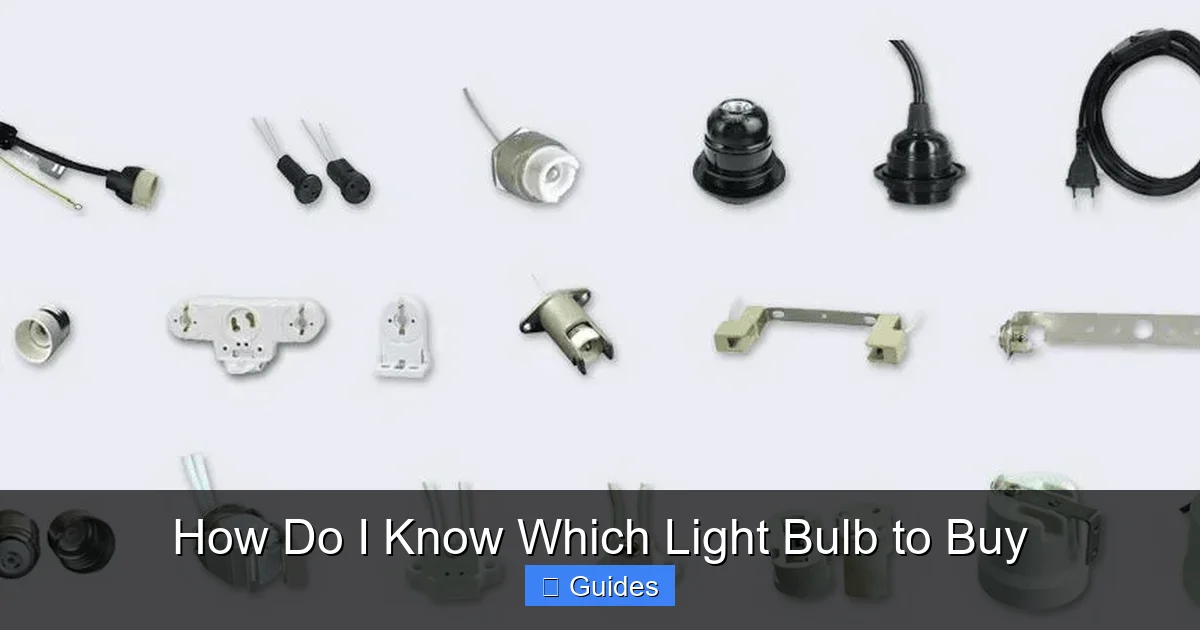
Visual guide about How Do I Know Which Light Bulb to Buy
Image source: lightbulbsocket.com
Beyond brightness, the *color* of the light profoundly affects a room’s atmosphere. This is measured in Kelvin (K). Color temperature describes the warmth or coolness of the light. Lower Kelvin numbers mean warmer, yellower light, while higher Kelvin numbers mean cooler, bluer light.
Warm White (2700K-3000K): Cozy and Inviting
Light in this range mimics the warm, inviting glow of a traditional incandescent bulb or candlelight. It has a yellowish tint, creating a cozy and relaxed feeling.
- Best for: Bedrooms, living rooms, dining rooms, and any area where you want a comfortable, intimate, or traditional feel.
- Example: Think of the soft glow of a fireplace or a sunset.
Cool White / Bright White (3500K-4100K): Neutral and Functional
This range offers a more neutral white light, often described as bright white. It’s less yellow than warm white but not as blue as daylight. It feels more energetic and focused.
- Best for: Kitchens, bathrooms, home offices, and workspaces where you need good visibility without harshness. It’s a good general-purpose light.
- Example: Many fluorescent lights in offices used to have this color temperature, but modern LEDs offer a much better quality of light.
Daylight (5000K-6500K): Crisp and Energizing
Light in this range is very white, almost with a bluish tint, closely mimicking natural daylight on a clear day. It provides excellent contrast and can help with concentration.
- Best for: Garages, workshops, laundry rooms, basements, task lighting for hobbies (like crafting or reading), and anywhere you need maximum visibility or true-to-life colors.
- Example: The light you’d experience outdoors around noon.
When figuring out how do I know which light bulb to buy, consider the primary function of the room and the mood you want to create. Mixing color temperatures within the same fixture or open-concept room can sometimes look jarring, so try to keep them consistent.
Bulb Types and Efficiency: LED, CFL, Halogen
The market is dominated by a few main types of light bulbs, each with its own pros and cons. Understanding these will definitely help you answer the question, “how do I know which light bulb to buy?”
The Reign of LED (Light Emitting Diode)
LEDs are the undisputed champions of modern lighting.
- Pros:
- Incredibly Energy Efficient: Uses up to 90% less energy than incandescent bulbs.
- Extremely Long Lifespan: Can last 15,000 to 50,000 hours or more, meaning you won’t replace them for years, even decades.
- Durable: No filament to break, making them more resistant to shocks and vibrations.
- Instant On: Full brightness immediately, no warm-up time.
- Versatile: Available in a vast array of shapes, sizes, colors, and dimming options.
- Environmentally Friendly: Contain no mercury and are recyclable.
- Cons:
- Higher Upfront Cost: Though prices have dropped significantly, they are still more expensive initially than other types, but they pay for themselves quickly through energy savings and longevity.
- Heat Sensitivity: Some early or poorly designed LEDs can have issues in enclosed fixtures if not properly rated, but this is less common now.
- Recommendation: For almost every application, LEDs are the superior choice. They save money, time, and offer the best performance. If you’re pondering how do I know which light bulb to buy, start with LED.
CFLs (Compact Fluorescent Lamps)
CFLs were once the go-to energy-efficient alternative to incandescents but have largely been replaced by LEDs.
- Pros:
- More Energy Efficient than Incandescent: Uses about 75% less energy.
- Longer Lifespan than Incandescent: Last 8,000 to 15,000 hours.
- Lower Cost: Cheaper than LEDs upfront.
- Cons:
- Contain Mercury: Requires special disposal.
- Warm-up Time: Often take a moment to reach full brightness.
- Limited Dimming: Not all CFLs are dimmable, and those that are may have poor performance.
- Fragile: Glass tubes can break easily.
- Buzzing/Flickering: Some older or cheaper CFLs can produce a noticeable buzz or flicker.
- Recommendation: While they offer energy savings, LEDs are generally a better choice due to their superior performance, lack of mercury, and longer life.
Halogen Incandescents
These are technically a type of incandescent bulb, but they use a halogen gas to improve efficiency and lifespan compared to traditional incandescents.
- Pros:
- Good Color Rendering: Produce a crisp, bright white light that shows colors accurately.
- Dimmable: Dims well with standard incandescent dimmers.
- Relatively Inexpensive: Lower upfront cost.
- Cons:
- Less Efficient: Still much less efficient than LEDs or CFLs, using more energy to produce the same light.
- Shorter Lifespan: Last around 1,000-2,000 hours, much shorter than LEDs.
- Get Very Hot: Generate a significant amount of heat.
- Recommendation: Only consider these if you absolutely need perfect dimming with an old dimmer switch and can’t find a compatible LED, or if your fixture specifically requires them.
Traditional incandescents are largely phased out in many regions due to their inefficiency. If you have an old incandescent, it’s definitely time to upgrade to LED!
Bulb Shapes and Bases: Fitting Your Fixture
This is a very practical aspect when you’re asking “how do I know which light bulb to buy.” Even the most perfect bulb won’t work if it doesn’t fit into your lamp or fixture.
Common Shapes
Bulbs come in a wide variety of shapes, each designated by a letter and a number. The letter indicates the shape, and the number (in eighths of an inch) indicates the diameter at its widest point.
- A-Type (A19, A21): The classic “standard” bulb shape, often used in lamps and open fixtures. A19 is the most common.
- B / C / F-Type (B10, C7, F15): Often called “candelabra” or “flame tip” bulbs. They are decorative, smaller, and shaped like flames or torpedoes. Common in chandeliers and sconces.
- G-Type (G25, G30): Globe-shaped bulbs, often used in bathroom vanity lights or exposed fixtures where the bulb itself is part of the decor.
- MR-Type (MR16): Multi-faceted Reflector bulbs, small and directional, typically used in track lighting or recessed lighting where a focused beam is desired.
- PAR-Type (PAR20, PAR30, PAR38): Parabolic Aluminized Reflector bulbs, designed for floodlight or spotlight applications, often found in recessed cans or outdoor security lights. The number refers to the diameter in eighths of an inch (e.g., PAR38 is 4.75 inches).
- BR-Type (BR30, BR40): Bulged Reflector bulbs, similar to PAR but with a softer, wider flood of light, often used in recessed lighting.
Understanding Bases
The base of the bulb is the part that screws or plugs into the fixture. This is critical for compatibility.
- Edison Screw Bases (E-Type): The most common type. The “E” stands for Edison, and the number indicates the diameter in millimeters.
- E26: Standard medium screw base (North America). Often called a “standard” or “household” base.
- E12: Candelabra screw base (North America). Smaller base, common for decorative bulbs, chandeliers, night lights.
- E17: Intermediate screw base (less common in North America).
- E27: Standard medium screw base (Europe, Asia, Australia – similar to E26 but with slightly different voltage standards).
- Bi-Pin Bases (GU-Type, G-Type): These bulbs have two pins that push into the socket.
- GU10: Common for track lighting or recessed lighting, often found on MR16-shaped bulbs with a twist-and-lock mechanism.
- GU24: A two-pin twist-lock base designed to prevent the use of old incandescent bulbs.
- G4, G9: Small capsule or “loop” bulbs used in specialized fixtures.
- Bayonet Bases (BA-Type, B-Type): Less common in North America for general lighting, but sometimes found in appliances or older fixtures. They have two pins that push into slots and then twist to lock.
The easiest way to determine the correct shape and base is to **look at the old bulb you are replacing**. It will typically have the shape, size, and base type printed on it. If not, measure it and take a picture to compare at the store. This step is non-negotiable when figuring out how do I know which light bulb to buy for a specific fixture.
Special Features: Dimmable, Smart, Specialty
Modern light bulbs offer more than just light. They can be integrated into your home’s technology and lifestyle.
Dimmable Bulbs
If you have a dimmer switch, it’s essential to buy bulbs explicitly labeled “dimmable.” Not all bulbs are dimmable, especially older CFLs or some cheaper LEDs. Using a non-dimmable bulb on a dimmer switch can lead to flickering, buzzing, or even damage to the bulb or switch.
- Tip: Even among dimmable LEDs, performance can vary. Some dim smoothly down to 1%, while others might stop at 10-20% or have a noticeable flicker at very low levels. Check reviews or buy from reputable brands. You might also need an LED-compatible dimmer switch for the best results.
Smart Lighting
Smart bulbs offer unprecedented control and convenience. They connect to your home Wi-Fi or a smart home hub and can be controlled via a smartphone app, voice assistant (like Alexa or Google Assistant), or smart home routines.
- Features:
- Remote Control: Turn lights on/off or dim from anywhere.
- Scheduling: Set lights to come on or off at specific times.
- Color Changing (RGBW): Change the light color to millions of options, perfect for mood lighting or parties.
- Tunable White: Adjust the white light’s color temperature from warm to cool.
- Integration: Connect with other smart home devices and sensors.
- Consideration: While convenient, smart bulbs are typically more expensive than standard LEDs. They’re a great choice for tech-savvy users who want ultimate flexibility.
Specialty Bulbs
Sometimes, a standard bulb just won’t cut it.
- 3-Way Bulbs: Designed for lamps with 3-way switches, these bulbs have two filaments that allow for three levels of brightness (e.g., 50/100/150 watts equivalent). Make sure your fixture and switch are compatible.
- Appliance Bulbs: Smaller, often ruggedized bulbs designed to withstand specific conditions in ovens, refrigerators, or microwaves.
- Decorative/Filament Bulbs: Designed to be seen, these often have exposed “filaments” (LED filaments) that mimic vintage incandescent bulbs, providing an aesthetic appeal with a warm glow.
- Bug Lights: Emit a yellowish light that is less attractive to flying insects, making them ideal for outdoor porches and patios.
- Grow Lights: Specialized lights that emit specific spectrums of light to support plant growth.
When you ask “how do I know which light bulb to buy” for a specific or unusual need, check if a specialty bulb is required.
Making the Right Choice: A Step-by-Step Guide
To help you confidently answer the question “how do I know which light bulb to buy” every time, here’s a simple process to follow:
Step 1: Check Your Fixture
- What kind of base does it need? E26, E12, GU10? Look at the existing bulb or the socket itself.
- What size/shape can it accommodate? Does it have a shade that limits the bulb’s diameter or length? Is it an open fixture or enclosed? (Some LEDs are not rated for enclosed fixtures; check the packaging.)
- Does it have a special function? Is it a dimmer switch? A 3-way lamp?
This is your foundational step. Never buy a bulb without knowing what your fixture demands.
Step 2: Determine Brightness (Lumens)
- How bright do you need the room to be?
- Bedroom/Living Room (Ambient): 800-1100 lumens (equivalent to 60-75W incandescent).
- Kitchen/Bathroom (Task): 1100-1600+ lumens (equivalent to 75-100W incandescent), or more if it’s the primary light source for a large area.
- Accent Lighting: 250-450 lumens (equivalent to 25-40W incandescent).
- If replacing, simply match the lumens of the old bulb if you were happy with the brightness.
Step 3: Choose Color Temperature (Kelvin)
- What mood do you want to create?
- Cozy/Relaxing: 2700K – 3000K (Warm White)
- Neutral/Functional: 3500K – 4100K (Cool White/Bright White)
- Energizing/Task-Oriented: 5000K – 6500K (Daylight)
Step 4: Pick a Bulb Type (LED is Best!)
- LED: Recommended for almost all general lighting applications due to efficiency, longevity, and versatility.
- Halogen: Only if absolutely necessary for specific dimming needs with older dimmers or if fixture explicitly requires it.
- CFL: Generally not recommended over LED unless cost is the absolute primary concern for a rarely used fixture.
Step 5: Consider Special Features
- Do you need it to be dimmable?
- Do you want smart home control or color-changing capabilities?
- Is it for a specialty application (e.g., oven, outdoor bug light, decorative filament)?
By following these steps, you’ll confidently know which light bulb to buy for any situation.
Conclusion
Gone are the days of simple 60-watt or 100-watt choices. But instead of feeling overwhelmed, embrace the power that modern lighting technology gives you! Understanding lumens, Kelvin, bulb types, and base shapes empowers you to make smart, energy-efficient choices that perfectly match your needs and enhance your living spaces.
The next time you find yourself asking, “how do I know which light bulb to buy?”, remember this guide. You’re now equipped with the knowledge to confidently select bulbs that not only fit your fixtures but also create the ideal ambiance, save on energy costs, and last for years to come. Happy lighting!
Frequently Asked Questions
What is the average lifespan of an LED bulb compared to an incandescent?
LED bulbs have a significantly longer lifespan. While a traditional incandescent bulb might last around 1,000-2,000 hours, an LED bulb can typically last 15,000 to 50,000 hours or even more, meaning many years of use.
Are expensive light bulbs worth the extra cost?
Often, yes. While the initial cost of higher-quality LED bulbs might be more, they generally offer superior energy efficiency, longer lifespans, better dimming performance, and more consistent light quality, leading to significant savings and fewer replacements over time.
Can I mix different color temperatures in the same room?
While you can, it’s generally recommended to stick to a consistent color temperature within a single room, especially in an open-concept space. Mixing drastically different Kelvin values can create a visually jarring or unbalanced effect.
What does CRI mean on a light bulb?
CRI stands for Color Rendering Index. It measures how accurately a light source reveals the true colors of objects compared to natural daylight. A higher CRI (80+ is good, 90+ is excellent) means colors will appear more vibrant and true-to-life under that light.
Is it safe to put an LED bulb in an enclosed fixture?
It depends on the specific LED bulb and fixture. Some LEDs are not rated for enclosed fixtures because they can overheat, which shortens their lifespan. Always check the bulb’s packaging or the manufacturer’s specifications to ensure it’s rated for enclosed use.
Do smart bulbs save energy?
Smart bulbs are typically LED bulbs, so they inherently offer excellent energy efficiency compared to older incandescent or halogen bulbs. Their “smart” features, like scheduling and remote control, can further contribute to energy savings by ensuring lights are only on when needed.
