


As an Amazon Associate, We earn from qualifying purchases.
Dusk to dawn light bulbs automatically turn on at sunset and off at sunrise, offering hands-free convenience and energy savings. They achieve this magic through integrated photocell sensors that detect ambient light levels, eliminating the need for timers or manual operation. These smart bulbs provide effortless illumination for security and curb appeal.
How Does a Dusk to Dawn Light Bulb Work
Imagine never having to worry about turning on your outdoor lights as evening falls, or remembering to switch them off when the sun rises. Wouldn’t it be wonderful if your home could simply take care of itself, providing a warm, welcoming glow precisely when you need it most? That’s not a far-off dream from a futuristic movie; it’s the everyday reality offered by a clever innovation known as the dusk to dawn light bulb.
These smart bulbs have transformed how we light our homes, especially outdoor spaces, by providing effortless illumination and peace of mind. They seamlessly blend convenience with energy efficiency, making them a popular choice for homeowners everywhere. But what exactly is the secret behind their seemingly magical ability to know when day ends and night begins? Let’s pull back the curtain and explore the fascinating technology that makes a dusk to dawn light bulb tick.
Key Takeaways
- Automatic Operation: Dusk to dawn light bulbs use an integrated photocell sensor to detect ambient light, automatically switching on at dusk and off at dawn.
- Energy Efficiency: By only illuminating when dark, these bulbs significantly reduce energy consumption compared to traditional bulbs left on continuously or manually forgotten.
- Enhanced Security: Continuous, predictable lighting deters potential intruders and provides a sense of security for your home and property during nighttime hours.
- Ultimate Convenience: Forget manual switches or complicated timers; once installed, a dusk to dawn light bulb operates completely autonomously, adapting to seasonal changes.
- Simple Technology: The core of their function lies in a light-dependent resistor (LDR) which changes electrical resistance based on the amount of light it receives.
- Easy Installation: Most dusk to dawn light bulbs are standard screw-in types, making them incredibly easy to replace existing outdoor or indoor light fixtures.
- Versatile Application: Ideal for outdoor areas like porches, patios, driveways, and security lighting, they ensure your space is always lit when needed.
Quick Answers to Common Questions
Do I need special wiring to install a dusk to dawn light bulb?
No, most dusk to dawn light bulbs are designed to screw into standard light sockets, requiring no special wiring or electrical knowledge.
Can I use a dusk to dawn light bulb indoors?
While technically possible, they are not ideal for indoor use. The sensor needs to detect ambient outdoor light to function correctly, and indoor lighting conditions can confuse it.
How long do dusk to dawn light bulbs typically last?
Because they use LED technology and are only on for part of the day, a quality dusk to dawn light bulb can last for tens of thousands of hours, often many years, before needing replacement.
Can I use a dusk to dawn light bulb with a dimmer switch?
Generally, it’s not recommended unless the specific bulb explicitly states it is dimmable. Dimmers can interfere with the bulb’s internal circuitry and sensor, causing malfunction or flickering.
What happens if it’s a very cloudy or stormy day?
The photocell sensor reacts to ambient light levels, so on a very cloudy or stormy day where light is significantly reduced, the dusk to dawn light bulb will likely turn on earlier than usual, functioning as intended to provide light during dim conditions.
📑 Table of Contents
The Core Technology: How the Photocell Sensor Works
At the heart of every dusk to dawn light bulb is a tiny, yet incredibly intelligent, component: the photocell sensor. This is the “brain” that allows the bulb to perceive its surroundings and react to changes in light. Think of it as the bulb’s eyes, constantly scanning for the difference between daylight and darkness.
What is a Photocell?
A photocell, often referred to as a photoresistor or a Light Dependent Resistor (LDR), is a special type of resistor whose resistance changes based on the intensity of light falling upon it. In simple terms, when there’s a lot of light, its electrical resistance is low, allowing more current to flow through it. When it’s dark, its resistance becomes very high, significantly restricting the flow of electricity. This fundamental property is what makes the magic of a dusk to dawn light bulb possible.
Detecting Darkness and Light
The photocell in your dusk to dawn light bulb is strategically positioned, usually as a small, clear dome or window on the side of the bulb. During the day, sunlight (or any bright ambient light) hits the photocell. Because the photocell’s resistance is low, it signals to the bulb’s internal circuitry that there’s plenty of light, keeping the bulb in an “off” state. As dusk approaches, the ambient light begins to diminish. The photocell senses this drop in light intensity, and its electrical resistance starts to increase.
Triggering the Light: The Internal Circuitry
Once the ambient light falls below a pre-set threshold (i.e., it gets dark enough), the photocell’s resistance reaches a critical point. At this juncture, the internal electronic circuitry within the dusk to dawn light bulb interprets this change. It’s like flipping a switch: the high resistance of the photocell in low light triggers the main power circuit, causing the light-emitting diodes (LEDs) within the bulb to illuminate. Conversely, when morning breaks and sunlight once again strikes the photocell, its resistance drops, signaling the circuit to cut power to the LEDs, thus turning the bulb off. This continuous, automatic monitoring is how a dusk to dawn light bulb provides seamless illumination.
More Than Just a Sensor: Inside the Dusk to Dawn Bulb
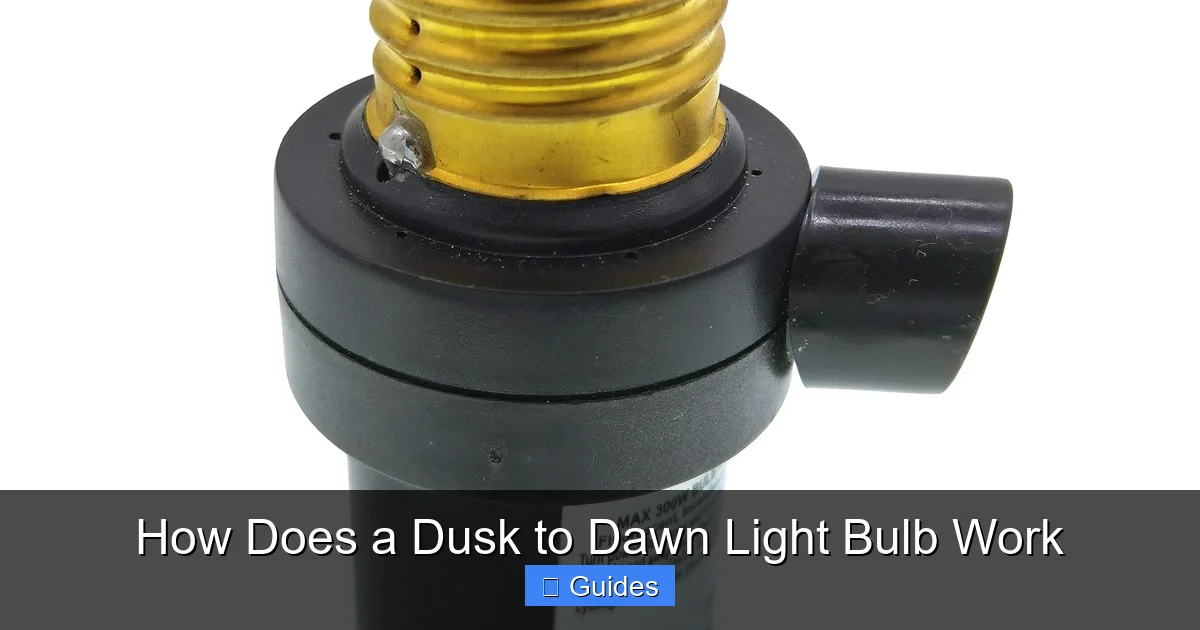
Visual guide about How Does a Dusk to Dawn Light Bulb Work
Image source: storables.com
While the photocell is undoubtedly the star of the show, a dusk to dawn light bulb is a sophisticated piece of engineering that integrates several components to function flawlessly. It’s an “all-in-one” solution that combines sensing, processing, and illumination into a standard screw-in form factor.
The LED Component: Efficient Illumination
Modern dusk to dawn light bulbs almost exclusively use LED (Light Emitting Diode) technology for their light source. This is a crucial choice because LEDs are incredibly energy-efficient and boast a very long lifespan. Unlike old incandescent bulbs that waste most of their energy as heat, LEDs convert a much higher percentage of electricity into visible light. This efficiency is paramount for a bulb designed to be on for many hours every night. If a dusk to dawn light bulb used an inefficient light source, the energy savings benefit would be significantly diminished.
The Control Circuitry: The Brains Behind the Operation
Beyond the photocell and the LEDs, there’s a miniature control circuit board housed within the bulb’s base. This circuitry acts as the intermediary, receiving signals from the photocell and relaying commands to the LEDs. It contains components that manage power flow, rectify AC current to DC for the LEDs, and interpret the precise light thresholds. Some more advanced dusk to dawn light bulbs might even include small microcontrollers to refine their operation, making them more resistant to transient light flashes (like car headlights) or offering adjustable sensitivity. This internal intelligence ensures the bulb only turns on and off at the appropriate times.
Integrated Design: Simplicity at its Best
What makes a dusk to dawn light bulb so user-friendly is its integrated design. All these components – the photocell, the control circuitry, and the LEDs – are cleverly packaged within a standard light bulb housing. This means you don’t need any special fixtures, wiring, or external timers. You simply screw it into any compatible socket, and it’s ready to go. This “plug-and-play” simplicity is a major reason for the widespread adoption of the dusk to dawn light bulb.
The Benefits of Embracing Dusk to Dawn Lighting
Beyond the cool technology, the practical advantages of using a dusk to dawn light bulb are truly compelling. They offer a blend of convenience, safety, and savings that makes them an excellent upgrade for any home.
Unmatched Convenience: Set It and Forget It
Perhaps the most immediate benefit of a dusk to dawn light bulb is the sheer convenience. Once installed, you never have to think about your outdoor lights again. No more fumbling in the dark for a switch, no more worrying if you remembered to turn them off before leaving for work. The bulb handles it all automatically, adapting to seasonal changes in daylight hours without any input from you. This hands-free operation makes life just a little bit easier.
Significant Energy Savings: Lighting Only When Needed
Because a dusk to dawn light bulb only illuminates when it’s dark, it prevents unnecessary energy consumption during daylight hours. Compared to leaving a light on all day or forgetting to turn it off, this leads to substantial savings on your electricity bill. Combine this with the inherent energy efficiency of LED technology, and you have a lighting solution that is both smart and economical. You’re only paying for light precisely when it’s needed, not a moment longer.
Enhanced Security and Safety: A Well-Lit Home
A well-lit exterior is a strong deterrent to potential intruders. A dusk to dawn light bulb ensures that your home is never shrouded in darkness, making it less appealing to those with ill intentions. Additionally, consistent outdoor lighting enhances safety for residents and visitors alike, illuminating pathways, steps, and entry points to prevent accidental trips and falls. This constant, reliable illumination offers peace of mind.
Extending Bulb Lifespan: Less Unnecessary On-Time
While LEDs already boast an impressive lifespan, only being on for roughly 10-12 hours a day (instead of 24/7) further reduces wear and tear. This conserved “on-time” means your dusk to dawn light bulb will last even longer, reducing the frequency of bulb replacements and saving you money and hassle in the long run. It’s another subtle way this technology adds value.
Boosting Curb Appeal: Always Welcoming
Imagine arriving home after a long day to a perfectly lit entrance, or your garden pathways gently illuminated. Dusk to dawn light bulbs consistently present your home in its best light, enhancing its curb appeal and creating a welcoming atmosphere. This continuous, thoughtful illumination makes your property look well-maintained and inviting around the clock.
Choosing the Right Dusk to Dawn Light Bulb for Your Home
With a growing variety of options available, selecting the perfect dusk to dawn light bulb for your specific needs can seem daunting. However, by considering a few key factors, you can easily find the ideal fit.
Lumens and Wattage: Brightness Matters
Just like any other light bulb, dusk to dawn bulbs come in various brightness levels, measured in lumens. Consider the area you want to light. For a small porch, 400-800 lumens (equivalent to a 40-60W incandescent) might be sufficient. For a larger driveway or security lighting, you might need 1200-1600 lumens or more (equivalent to 100W+). Remember, LEDs consume much less wattage for the same lumen output, so focus on lumens for brightness and wattage for energy consumption.
Color Temperature: Setting the Mood
Light color, or color temperature, is measured in Kelvin (K). Lower Kelvin numbers (e.g., 2700K-3000K) produce a warm, yellowish light, similar to traditional incandescent bulbs, which is great for creating a cozy, inviting atmosphere. Higher Kelvin numbers (e.g., 4000K-5000K) produce a cooler, whiter light, often preferred for task lighting or a more modern, crisp aesthetic. For security purposes, some prefer cooler white light as it can feel more alert. Decide what ambiance you want for your outdoor space before choosing your dusk to dawn light bulb.
Durability and Weather Resistance: Built for the Outdoors
Since most dusk to dawn light bulbs are used outdoors, their durability and resistance to the elements are crucial. Look for bulbs designed for outdoor use, often indicated by an IP (Ingress Protection) rating. A higher IP rating means better protection against dust and water. For exposed fixtures, ensure the bulb is rated for damp or wet locations. This will ensure your dusk to dawn light bulb can withstand rain, snow, and extreme temperatures without failing.
Sensor Sensitivity and Placement: Avoiding False Triggers
Some dusk to dawn light bulbs have adjustable sensor sensitivity, which can be useful. More importantly, consider the physical design of the bulb’s photocell. Ensure it’s exposed to ambient light and not blocked by the fixture itself or other objects. A common issue is a bulb turning off too early or staying on too long because its sensor isn’t getting a clear view of the sky. Also, try to avoid placing a dusk to dawn light bulb where it can be constantly triggered by passing car headlights or light from an adjacent fixture, which can cause it to flicker or cycle unnecessarily.
Smart Features: Adding a Layer of Control (Optional)
While most dusk to dawn light bulbs are purely automatic, some models now integrate smart features. These might connect to your home Wi-Fi, allowing you to control them via an app, set schedules, or even adjust their sensitivity remotely. If you’re looking for an added layer of control or integration with your smart home system, these advanced dusk to dawn light bulbs could be a great option, though they typically come at a higher price point.
Installation and Best Practices for Optimal Performance
One of the greatest appeals of a dusk to dawn light bulb is its straightforward installation. However, a few best practices can ensure it performs optimally and reliably for years to come.
Simple Screw-In Installation: Anyone Can Do It
Installing a dusk to dawn light bulb is as simple as changing any other light bulb. Just ensure the power to the fixture is off, unscrew the old bulb, and screw in the new dusk to dawn light bulb. That’s it! No complex wiring, no programming, no tools required. This ease of installation makes them accessible to everyone, regardless of their DIY experience.
Strategic Placement for the Sensor: Clear Sky View
The most critical factor for a dusk to dawn light bulb’s performance is the placement of its photocell sensor. The sensor needs a clear, unobstructed view of the ambient light. Ideally, it should face outwards or upwards, away from direct overhead structures that might cast shadows during the day or block natural light. If the sensor is constantly in shadow, the bulb might mistakenly think it’s dark and turn on prematurely.
Avoiding Interference: Light Sources and Shadows
Be mindful of other light sources near your dusk to dawn light bulb. If another bright light (e.g., a street light, a neighbor’s security light, or even another fixture on your own home) shines directly onto the bulb’s sensor, it might trick the photocell into thinking it’s still daytime, causing your bulb to turn off prematurely or not turn on at all. Similarly, ensure no large decorative elements, plants, or parts of the fixture itself are casting shadows over the sensor.
Troubleshooting Common Issues: Quick Fixes
If your dusk to dawn light bulb isn’t behaving as expected, a few quick checks can often resolve the issue:
- Bulb Stays On During the Day: Check if the sensor is blocked by the fixture, shadows, or if a nearby light source is causing interference.
- Bulb Doesn’t Turn On At Night: Ensure the bulb is screwed in tightly, the fixture has power, and no other bright lights are hitting the sensor. Sometimes a faulty bulb needs replacement.
- Flickering: This can be caused by inconsistent power, a loose connection, or sometimes by the sensor being on the edge of its light threshold, rapidly switching between on and off. Check for interference.
Conclusion
Dusk to dawn light bulbs are a brilliant example of how simple technology can bring significant convenience, efficiency, and security to our daily lives. By understanding how a dusk to dawn light bulb works – from its humble photocell sensor to its integrated LED lighting and smart circuitry – you can appreciate the effortless magic they provide. They free you from the task of managing outdoor lighting, ensuring your home is always welcoming, safe, and energy-conscious. So, if you’re looking for a simple yet effective upgrade to your home’s lighting, consider embracing the effortless illumination offered by a dusk to dawn light bulb. You’ll enjoy the perfect blend of smart technology and practical benefits, making your life brighter, one automatic switch at a time.
🎥 Related Video: I Just Bought $10 Dusk To Dawn Bulbs – Do They Work – Must Or Bust
📺 Must Or Bust
Dusk To Dawn Sensor Light Bulbs – How To Use Amazon Basics 60 Watt Equivalent, Dusk to Dawn Sensor, Non-Dimmable, A19 …
Frequently Asked Questions
How accurate are the photocell sensors in these bulbs?
Modern photocell sensors are quite accurate and responsive to changes in natural light. However, their performance can be affected by their placement and any artificial light sources that might shine directly onto them, potentially causing them to turn off prematurely or stay on during daylight.
Are dusk to dawn light bulbs truly energy efficient?
Yes, they are highly energy-efficient. They combine the low power consumption of LED technology with the smart feature of only turning on when dark, ensuring electricity is only used when necessary, leading to significant savings over traditional bulbs.
What’s the main difference between a dusk to dawn bulb and a motion sensor bulb?
A dusk to dawn bulb turns on based on ambient light levels (darkness) and stays on until dawn. A motion sensor bulb turns on when it detects movement and typically stays on for a set period (e.g., 30 seconds) before turning off, regardless of light levels, unless it also incorporates a dusk to dawn feature.
My dusk to dawn bulb stays on during the day. What could be wrong?
This usually indicates that the photocell sensor isn’t detecting enough light. Check if the sensor is obstructed by the fixture, shadows from an overhang, or if a nearby artificial light source (like another lamp or street light) is too close and preventing it from reading natural daylight correctly.
Can I use multiple dusk to dawn bulbs in close proximity?
Yes, but you need to be careful that the light from one bulb doesn’t shine directly onto the sensor of another. This can create a “feedback loop” where one bulb turning on causes a neighbor to think it’s daytime and turn off, leading to erratic behavior. Ensure adequate spacing or proper orientation of the sensors.
Do I need to clean the sensor on my dusk to dawn light bulb?
While not frequently, it’s a good practice to occasionally wipe the clear dome or window of the photocell sensor with a soft, damp cloth. Dirt, dust, or even insect debris can accumulate on the sensor over time, potentially impairing its ability to accurately detect ambient light levels and affecting its performance.
