


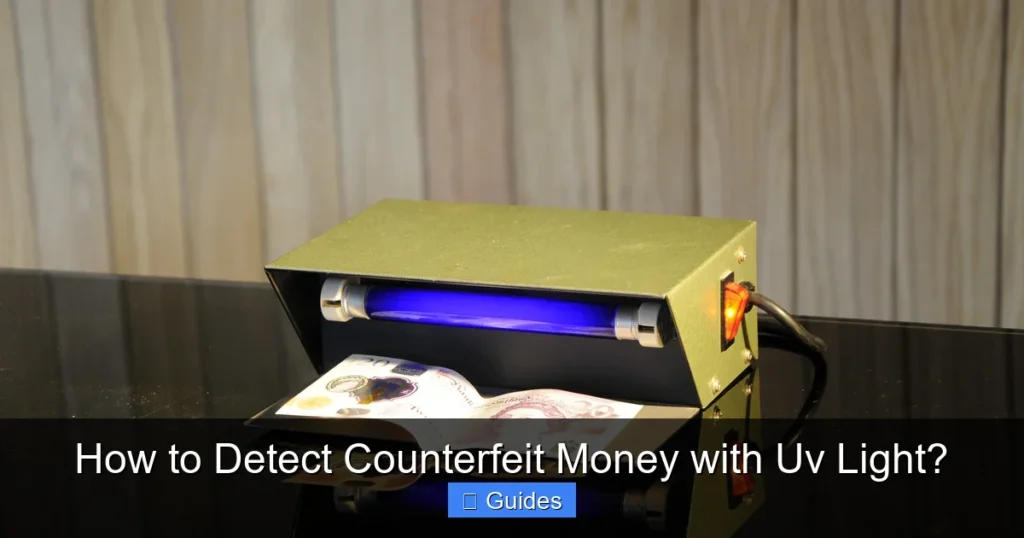
As an Amazon Associate, We earn from qualifying purchases.
Detecting counterfeit money with UV light is a crucial and highly effective security measure against fake currency. Authentic banknotes are embedded with specific fluorescent security threads, fibers, and inks that glow vividly under ultraviolet light, which counterfeit notes often lack or improperly mimic. This guide provides a comprehensive overview of how to use UV light to quickly identify genuine bills and protect yourself from fraud.
Ever found yourself wondering if that crisp bill in your hand is the real deal or a clever fake? In today’s world, counterfeit money is a persistent threat, and falling victim to it can be costly for individuals and businesses alike. From intricate paper textures to barely visible watermarks, genuine currency is packed with security features designed to thwart fraudsters. But among these sophisticated defenses, one tool stands out for its effectiveness and ease of use: ultraviolet (UV) light.
Imagine being able to peer into the hidden world of your banknotes, revealing secret glows and patterns that confirm their authenticity in an instant. That’s precisely what a UV light allows you to do. Many people know about the “feel” and “look” tests for money, but learning how to detect counterfeit money with UV light adds a powerful layer of security to your arsenal. It’s a method trusted by banks, retailers, and law enforcement agencies worldwide, and it’s something you can easily incorporate into your own checks.
This comprehensive guide is your friendly companion to understanding and mastering the art of UV detection. We’ll explore what makes UV light so effective, delve into the specific security features you should look for on different currencies, and walk you through a step-by-step process of using a UV detector. By the end, you’ll feel confident in your ability to detect counterfeit money with UV light, protecting your hard-earned cash and contributing to the fight against financial fraud. Let’s shine a light on the truth!
Key Takeaways
- UV Light Reveals Hidden Security: Genuine banknotes contain specific fluorescent security threads, fibers, and inks that are only visible and glow distinctly under ultraviolet (UV) light, making it a primary tool to detect counterfeit money.
- Specific Features per Denomination: The color and placement of UV-glowing security threads often vary by currency denomination (e.g., a $5 bill’s thread glows blue, a $100’s glows pink), providing a quick check for authenticity.
- Not Just Threads: Beyond security threads, some currencies feature embedded fluorescent fibers or patches, as well as distinct serial numbers or seals that glow under UV light, all designed to help you detect counterfeit money.
- Optimal Detection Environment: For accurate UV detection, inspect banknotes in a dimly lit or dark room to clearly see the glowing security features without interference from ambient light.
- Combine with Other Methods: While powerful, UV light detection should ideally be combined with other sensory checks like the “feel” of the paper, the “look” for watermarks and microprinting, and the “tilt” for color-shifting ink for comprehensive counterfeit identification.
- Beware of Bleached Bills: Counterfeiters sometimes bleach lower-denomination bills to print higher ones; UV light can expose this by revealing remnants of the original, incorrect security thread color or placement.
- Act Responsibly If You Find Fakes: If you suspect you have counterfeit money, do not re-circulate it. Instead, document how you received it and report it to your local law enforcement or bank, as handling counterfeit currency is illegal.
Quick Answers to Common Questions
What wavelength of UV light is best for detecting counterfeit money?
The most effective UV light for detecting counterfeit money typically operates at a wavelength of around 365 nanometers (nm). This specific wavelength is ideal for activating the fluorescent security features embedded in genuine banknotes.
Will all parts of a genuine bill glow under UV light?
No, not all parts of a genuine bill will glow. Typically, only specific security features like security threads, fluorescent fibers, certain seals, and particular printed areas (like serial numbers) are designed to fluoresce under UV light. The paper itself should generally appear dull.
Can a regular UV flashlight from a pet store work to detect counterfeit money?
While some general UV flashlights might show some glowing features, they often operate at higher wavelengths (e.g., 395nm or 400nm) and may not be strong enough or precise enough to activate all security features or reveal them as brightly and accurately as a dedicated counterfeit detector.
What should I do if the entire bill glows under UV light?
If the entire paper of a banknote glows brightly or appears unusually white under UV light, it’s a strong indicator that the bill might be counterfeit. Genuine currency paper is specially formulated not to glow, so an overall glow suggests regular paper was used.
Does UV light detection work for all currencies?
Most modern currencies worldwide incorporate UV-reactive security features. While the specific features (colors, locations) vary by country and denomination, the principle of using UV light to reveal these hidden elements applies to a broad range of international banknotes.
📑 Table of Contents
- Understanding UV Light and Its Role in Counterfeit Detection
- Essential UV Features Across Major Currencies
- Step-by-Step Guide: How to Use a UV Light Detector Effectively
- Beyond the UV: Combining Detection Methods for Ultimate Security
- Common Counterfeit Tricks and How UV Light Exposes Them
- When in Doubt: What to Do if You Suspect Counterfeit Money
- Conclusion
Understanding UV Light and Its Role in Counterfeit Detection
Before we dive into the practicalities of how to detect counterfeit money with UV light, it’s helpful to grasp a little bit about what UV light is and why it’s so critical for currency authentication. Think of UV light as a secret decoder ring for your money, revealing features that are otherwise invisible to the naked eye.
What is UV Light?
UV light, or ultraviolet light, is a form of electromagnetic radiation that falls just beyond the violet end of the visible light spectrum. While we can’t see UV light itself, certain substances have the property of “fluorescence” – they absorb UV light and then re-emit it as visible light, causing them to glow. This phenomenon is at the heart of how we detect counterfeit money with UV light.
Currency manufacturers deliberately incorporate materials that fluoresce under specific UV wavelengths into their banknotes. These materials can be special inks, security threads, or even individual fibers within the paper. When a genuine bill is exposed to the right kind of UV light, these hidden features light up in distinct colors, providing an undeniable sign of authenticity.
How UV Features Are Embedded in Currency
The process of embedding UV features is highly sophisticated and unique to each currency. This makes it incredibly difficult for counterfeiters to replicate perfectly, which is why learning to detect counterfeit money with UV light is so effective. Here’s a look at the common ways these features are integrated:
- Security Threads: Most modern banknotes contain a thin, embedded polyester thread running vertically through the paper. While sometimes visible as a dark line in transmitted light, under UV light, this thread will glow a specific, bright color (e.g., blue, green, yellow, or pink), often with microprinting visible within it.
- Fluorescent Fibers: Some currencies have tiny, multicolored fluorescent fibers randomly scattered throughout the paper. These are usually invisible in normal light but pop into vibrant colors (red, blue, green, yellow) when illuminated by UV light.
- UV Inks: Certain areas of a banknote, such as specific seals, serial numbers, or even small design elements, are printed with special fluorescent inks. These inks remain clear or dull in regular light but glow brightly and distinctly under UV light.
- Denomination Specific Features: To further enhance security and aid in quickly identifying fakes, the UV features often vary by denomination. For example, a $5 bill might have a blue glowing thread, while a $100 bill has a pink one. This specificity is a key indicator when you detect counterfeit money with UV light.
Essential UV Features Across Major Currencies
To effectively detect counterfeit money with UV light, you need to know what you’re looking for on the specific currency you’re inspecting. Different countries employ unique combinations of UV security features. Let’s break down some of the most common ones you’ll encounter.
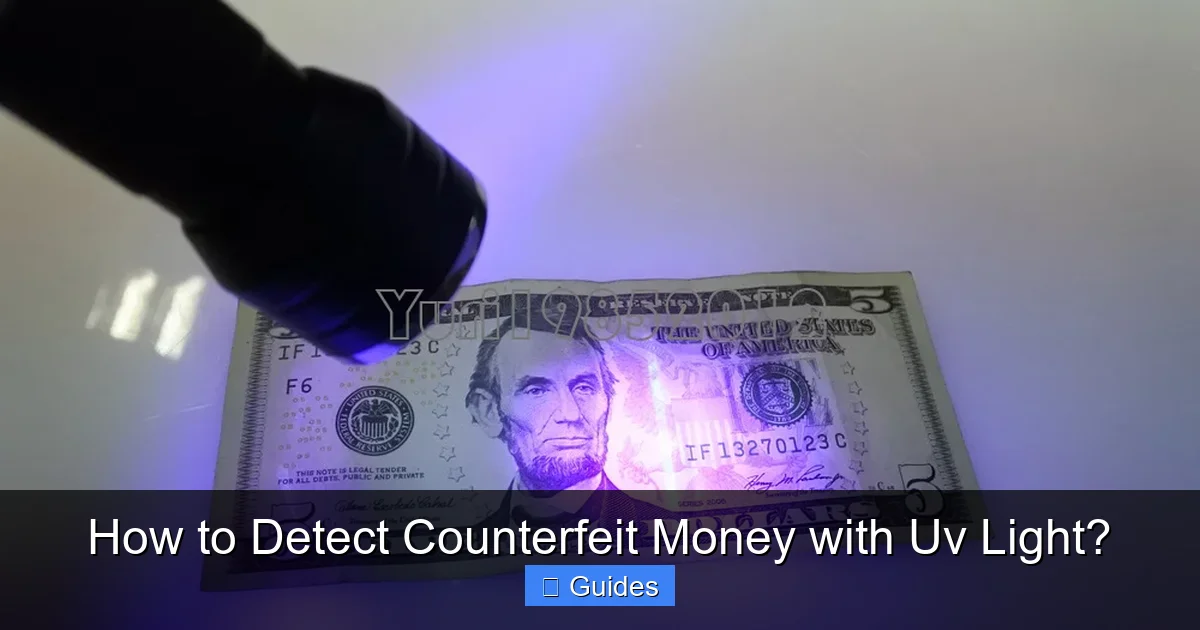
Visual guide about How to Detect Counterfeit Money with Uv Light?
Image source: i.ebayimg.com
The US Dollar: Specific UV Markings
US dollars are famous for their robust security features, and UV light plays a crucial role in verifying their authenticity. When you aim to detect counterfeit money with UV light on US currency, pay close attention to the security thread:
- $5 Bill: The security thread glows blue.
- $10 Bill: The security thread glows orange.
- $20 Bill: The security thread glows green.
- $50 Bill: The security thread glows yellow.
- $100 Bill: The security thread glows pink.
In addition to these color-specific threads, which are embedded on different sides for different denominations (e.g., left for $5, right for $10 and $20), you should also observe the portrait on the bill. Under UV light, the portrait on a genuine US dollar will not glow. Any glowing in the portrait area could be a sign of a bleached bill, where a lower denomination note (say, a $5) has been bleached and then overprinted with the design of a higher denomination (like a $100). This is a common counterfeiting trick that UV light can easily expose.
Euro Banknotes: A Spectrum of UV Security
Euro banknotes are renowned for their highly advanced security features, and UV detection is paramount. When you detect counterfeit money with UV light on Euro notes, look for several distinct elements:
- Paper Fluorescence: The paper itself for Euro notes should appear dull and not glow under UV light. Any overall glow of the paper indicates a potential fake.
- Small Fibers: Embedded in the paper, small fibers will appear in red, blue, and green, randomly scattered across both sides of the note.
- European Flag: The stars on the European flag on the front of the note will glow green, and the signature of the President of the European Central Bank will appear green.
- Map and Bridge: On the back of the note, a map of Europe, a bridge, and the denomination value will appear in yellow.
- Serial Number: The horizontal serial number (and sometimes the vertical one) on the back of the note will glow yellow.
These varied and specific glows make it very effective to detect counterfeit money with UV light for Euro currency.
Other Currencies: General Principles
While specific colors and locations vary, the general principles for how to detect counterfeit money with UV light apply to most major currencies globally, including the British Pound, Japanese Yen, Canadian Dollar, and many others:
- Security Threads: Most will have a security thread that glows a specific color, often with microprinting.
- Fluorescent Fibers: Many currencies incorporate these tiny, multicolored glowing fibers.
- UV Printed Denominations/Symbols: Specific areas, symbols, or the denomination number might be printed with UV ink.
- Dull Paper: Generally, the paper itself should not glow. A bright overall glow of the paper is often a sign of a counterfeit.
Always familiarize yourself with the specific UV features of the currency you handle most frequently. Official central bank websites are excellent resources for detailed security feature guides.
Step-by-Step Guide: How to Use a UV Light Detector Effectively
Now that you know what to look for, let’s get into the practical steps of how to detect counterfeit money with UV light. It’s a straightforward process that anyone can master with a little practice.
Choosing the Right UV Detector
Not all UV lights are created equal. To effectively detect counterfeit money with UV light, you’ll want to use a detector that emits light at the correct wavelength, typically around 365 nanometers (nm). Most dedicated counterfeit detectors use this wavelength. Here are some tips:
- Wavelength: Ensure your device specifies 365nm. Some cheaper UV flashlights emit at 395nm or higher, which might not activate all security features as brightly or accurately.
- Portability: Handheld UV flashlights or compact desk units are ideal for personal use or small businesses. Larger bank-grade detectors are more common in high-volume environments.
- Quality: Invest in a reputable brand. A cheap, weak UV light might fail to reveal subtle features, making it harder to detect counterfeit money effectively.
The Ideal Environment for Detection
For the best results when you detect counterfeit money with UV light, create the right environment:
- Dim Lighting is Key: UV features are often faint, and ambient visible light can wash out their glow. Perform your inspection in a dimly lit or dark room to allow the fluorescent features to stand out vibrantly.
- Clean Surface: Ensure the surface you’re working on is clean and free of reflective materials that could cause glare or distractions.
The Inspection Process
With your UV detector in hand and a suitable environment, you’re ready to learn how to detect counterfeit money with UV light through a simple process:
- Turn on the UV Light: Activate your UV detector.
- Position the Banknote: Hold the banknote flat, about 2-4 inches (5-10 cm) away from the UV light source. You might need to gently move the light or the note to illuminate different areas.
- Examine the Security Thread: This is often the most prominent UV feature. Look for the embedded thread to glow a specific, consistent color as described for your currency (e.g., blue for a US $5, pink for a $100). Check that the color is bright and clear, not dull or patchy.
- Check for Fluorescent Fibers: Scan the entire surface of the note for tiny, randomly placed fibers that glow in various colors. These should be embedded within the paper, not printed on top.
- Inspect UV Inks and Symbols: Look for any other specific areas that are supposed to glow, such as seals, serial numbers, or unique design elements (e.g., the stars on the Euro flag).
- Observe the Paper Itself: The paper of most genuine banknotes is specially formulated not to glow under UV light. If the entire paper glows brightly or appears unusually white, it’s a strong indicator that you might have a counterfeit.
- Compare if Possible: If you have a known genuine bill of the same denomination, compare its UV features side-by-side with the suspicious note. This is an excellent way to train your eye and confirm your findings when you detect counterfeit money with UV light.
Remember, consistency is key. Genuine features will glow uniformly and with the correct color and intensity. Inconsistent glows, wrong colors, or lack of glow are all red flags when you aim to detect counterfeit money with UV light.
Beyond the UV: Combining Detection Methods for Ultimate Security
While learning how to detect counterfeit money with UV light is incredibly powerful, it’s just one piece of the puzzle. The most effective way to identify a fake is to combine multiple detection methods. Counterfeiters might get one or two features right, but rarely all of them. Think of it as a multi-layered defense system.
The Feel Test: Paper Quality
Genuine currency paper is unique. It’s not like regular printing paper; it’s a blend of cotton and linen, giving it a distinct crispness, texture, and durability. When you handle a genuine bill, it should feel slightly rough and firm, not slick or flimsy. Many genuine bills also have subtle raised printing, especially on the portraits and borders, which you can feel with your fingertips. Counterfeit paper often feels smooth, waxy, or like ordinary printing paper.
The Look Test: Visual Inspection
This test involves examining the note in natural light and transmitted light (holding it up to a light source):
- Watermarks: Most modern bills have a faint image, or watermark, embedded in the paper, usually visible when held up to light. This image should be crisp and detailed, not blurry or printed on the surface.
- Security Threads: In addition to their UV properties, security threads often appear as a continuous dark line when held up to a light source. They are embedded, not printed on the surface.
- Microprinting: Many bills feature tiny, almost illegible text printed in various locations (e.g., along borders, within portraits). You’ll need a magnifying glass to see this. The text should be sharp, not blurred or smudged.
- Fine Line Printing: Genuine currency features extremely fine lines and intricate patterns that are incredibly difficult for standard printers to replicate without blurring or losing detail.
The Tilt Test: Color-Shifting Ink and Holograms
Several currencies incorporate inks that change color when you tilt the bill:
- Color-Shifting Ink: On US dollars, the numbers in the lower right-hand corner (on denominations $10 and up) will shift from copper to green when tilted. Euro notes also have similar features.
- Holograms/Kinegrams: Many non-US currencies feature holographic patches or strips that show different images or colors when tilted. These should be sharp and multi-dimensional, not flat or dull.
Magnification: Microprinting Details
Using a small jeweler’s loupe or a strong magnifying glass allows you to inspect microprinting and the clarity of fine lines. Counterfeiters often struggle to reproduce these tiny details, resulting in blurry, broken, or illegible text, which helps you further detect counterfeit money.
By combining these tactile and visual inspections with your UV light checks, you create a robust authentication process that significantly increases your chances of spotting a fake. Each method acts as a backup for the others, providing comprehensive security.
Common Counterfeit Tricks and How UV Light Exposes Them
Counterfeiters are constantly evolving their methods, but UV light remains a powerful tool in exposing their most common deceptions. Understanding these tricks helps you better detect counterfeit money with UV light.
Bleached or Washed Notes
One common technique is for counterfeiters to take a genuine lower-denomination bill (e.g., a $5 or $20 US dollar), bleach it to remove the ink, and then print the design of a higher denomination (e.g., a $100) onto the blank paper. The goal is to reuse the authentic security features of the original bill. However, UV light can often expose this:
- Incorrect Thread Color: The security thread from the original $5 bill (blue) will still glow blue, even if the bill now looks like a $100 (which should have a pink thread). This immediate discrepancy is a clear sign you detect counterfeit money.
- Remnants of Original Printing: Sometimes, traces of the original ink might remain and show up under UV light, or the paper itself might show signs of having been chemically treated, appearing weaker or discolored.
Printed Security Threads
Less sophisticated counterfeiters might try to simply print a black line where the security thread should be, or even attempt to print a colored line that mimics the thread’s appearance. When exposed to UV light:
- No Glow: A printed line will not fluoresce. The lack of the characteristic bright glow is a dead giveaway that you detect counterfeit money.
- Surface Application: Even if a counterfeiter uses fluorescent ink to print a thread, it will appear as a surface application, not embedded within the paper, often looking less sharp or having an inconsistent glow compared to a genuine embedded thread.
Ineffective UV Inks
Counterfeiters often struggle to acquire or properly use the highly specialized fluorescent inks found in genuine currency. As a result, when attempting to replicate UV-activated areas:
- Dull or Incorrect Glow: The counterfeit features might glow, but the color could be wrong, the intensity could be too weak or too strong, or the glow could be inconsistent.
- Missing Features: Often, counterfeiters simply miss applying UV ink to certain areas, resulting in a complete lack of glow where one should be.
The “Prop” Money Phenomenon
With the rise of movie props and novelty money, some “prop” bills are making their way into circulation. While these often have disclaimers like “FOR MOTION PICTURE USE ONLY,” they can still be mistaken for real currency. UV light will quickly expose these:
- Missing All Security Features: Prop money typically lacks any genuine security features, including watermarks, security threads, and UV-reactive inks. Under UV light, these bills will simply appear as regular paper with no glowing elements, making it very easy to detect counterfeit money.
By understanding these common tactics and knowing how UV light reveals their flaws, you empower yourself to confidently identify and reject counterfeit currency.
When in Doubt: What to Do if You Suspect Counterfeit Money
Spotting a fake is only half the battle. Knowing what to do next is crucial for your safety and for helping authorities combat counterfeiting. If you suspect you’ve come across a counterfeit bill, especially after learning how to detect counterfeit money with UV light, here are the steps you should take:
Do Not Return It
Your immediate instinct might be to return the suspicious bill to the person who gave it to you. However, doing so is not advisable. Returning a counterfeit bill could put you in danger, as the person might react negatively. Furthermore, it allows the fake currency to continue circulating, perpetuating the problem. Instead, try to stall and discreetly contact authorities if possible, or accept the bill if you must, but do not recirculate it.
Contact Law Enforcement/Your Bank
As soon as you can safely do so, report the suspicious currency to your local police department or the nearest branch of your financial institution. Banks are required to confiscate counterfeit money and will forward it to the Secret Service, which is responsible for investigating counterfeiting in the US and globally. If you’re a business, instruct employees to contact a manager immediately if they detect counterfeit money.
- For Individuals: If you receive a counterfeit bill, fill out a Counterfeit Note Report (available from the Secret Service or your bank) and surrender the note to the police or your bank. You will not be reimbursed for the value of the fake bill.
- For Businesses: Train staff on what to do. If possible, mark the bill (e.g., with your initials and the date) without damaging it, and try to remember details about the person who presented it.
Document Everything
The more information you can provide, the better. Try to recall:
- Who: A description of the person who presented the bill (gender, age, height, build, hair color, clothing, distinguishing features).
- What: The denomination and serial number of the suspicious bill.
- When: The date and time you received the bill.
- Where: The location where the transaction occurred.
- How: The circumstances under which you received the bill.
By following these steps, you’re not just protecting yourself from potential legal issues (knowingly passing counterfeit money is a crime); you’re also playing an active role in preventing further fraud and assisting law enforcement in their efforts to apprehend counterfeiters.
Conclusion
In a world where financial transactions are constant, protecting yourself and your assets from counterfeit money is more important than ever. While various security features are embedded in genuine currency, understanding how to detect counterfeit money with UV light stands out as one of the most effective and accessible methods. It’s a powerful technique that allows you to see beyond the surface, unveiling the hidden authenticating elements designed by currency manufacturers.
From the specific glowing security threads in US dollars to the vibrant fluorescent fibers in Euro banknotes, UV light acts as your personal detective, exposing the subtle differences between real and fake. We’ve walked through the crucial features to look for, the step-by-step process of using a UV detector, and even how UV light unmasks common counterfeiting tricks like bleached bills. Remember, the key is vigilance and combining UV inspection with other tactile and visual checks for ultimate assurance.
Empower yourself with this knowledge. Invest in a reliable UV detector, practice identifying genuine features, and always be aware of the security elements of the currency you handle. By becoming proficient in how to detect counterfeit money with UV light, you not only safeguard your own finances but also contribute to the broader effort to combat financial fraud. Stay sharp, stay secure, and let your UV light guide you to authenticity.
🎥 Related Video: Banknotes Under UV Light | UV security features of banknotes
📺 The Collector BD
Frequently Asked Questions
How quickly can I detect counterfeit money with UV light?
With a little practice, you can detect counterfeit money with UV light very quickly, often in just a few seconds. Once you know what specific features to look for on different denominations, a quick pass under the UV light will reveal the authenticity or expose a fake.
Is UV light detection foolproof?
While highly effective, UV light detection is not entirely foolproof on its own. It’s an extremely strong indicator, but for ultimate security, it should always be combined with other verification methods like checking the paper’s texture, watermarks, microprinting, and color-shifting ink.
What if I don’t see any UV features on a suspicious bill?
If a bill that should have UV features shows absolutely no glowing elements under UV light, it is a very strong indication that it is counterfeit. Genuine banknotes are designed to have these features consistently.
Can I be reimbursed if I receive a counterfeit bill?
Unfortunately, neither the government nor banks reimburse individuals for counterfeit currency. When a counterfeit bill is identified and confiscated, you will absorb the loss. This highlights the importance of learning how to detect counterfeit money beforehand.
Are UV counterfeit detectors expensive?
UV counterfeit detectors vary in price, but many reliable handheld or compact desktop models are quite affordable, ranging from $15 to $50. More advanced bank-grade machines can be more expensive, but basic models are accessible for personal and small business use.
Does UV light damage genuine banknotes?
No, exposing genuine banknotes to UV light for a brief period during inspection does not cause any damage or degradation to the currency. It is a safe and non-invasive method for verifying authenticity.
