


As an Amazon Associate, We earn from qualifying purchases.
Choosing the right light bulb can seem tricky with so many options, but it’s simpler than you think! Forget old wattage rules; focus on lumens for brightness, checking your fixture’s max wattage for safety. This guide will help you understand how to know what wattage light bulb to use, ensuring perfect illumination for every space while saving energy and enhancing your home’s ambiance.
How to Know What Wattage Light Bulb to Use
Have you ever stood in the light bulb aisle, staring at a dizzying array of options, feeling completely overwhelmed? “40-watt equivalent,” “60-watt,” “800 lumens,” “2700K”… it’s enough to make anyone just grab the cheapest one and hope for the best. Deciphering light bulb labels has become a real challenge, especially with the shift from traditional incandescent bulbs to more energy-efficient options like LEDs and CFLs. The old days of simply grabbing a 60-watt bulb for your living room are long gone, and understanding how to know what wattage light bulb to use is now about much more than just the number on the box.
The good news is that while it seems more complex, it’s actually an opportunity to tailor your lighting exactly to your needs, saving energy and creating the perfect ambiance in every room. This comprehensive guide will demystify the world of light bulbs, helping you confidently choose the right one for every fixture and every purpose. We’ll break down the key terms, explain what truly matters, and provide practical tips so you’ll always know how to select the ideal illumination for your home.
Let’s dive in and shed some light on this common household dilemma! By the end of this article, you’ll be a light bulb expert, ready to brighten your world intelligently and efficiently.
Key Takeaways
- Focus on Lumens, Not Just Watts: Lumens measure a bulb’s actual brightness, while watts indicate energy consumption. For modern LED bulbs, a lower wattage can produce more lumens than an old incandescent.
- Always Check Your Fixture’s Maximum Wattage: This is crucial for safety. Never exceed the maximum wattage rating printed on your light fixture to prevent overheating, fire hazards, and fixture damage.
- Match Lumens to Your Space and Task: Different activities and room sizes require varying levels of brightness. General guidelines suggest 20-30 lumens per square foot for ambient lighting, with higher lumens for task lighting.
- LEDs Are the Go-To Choice: LED bulbs are highly energy-efficient, long-lasting, and offer a wide range of brightness (lumens) and color temperatures (Kelvin) at low wattages, making them the most cost-effective and versatile option.
- Consider Color Temperature (Kelvin) for Ambiance: Beyond brightness, the “color” of the light significantly impacts mood. Lower Kelvin (2700K-3000K) provides warm, cozy light, while higher Kelvin (4000K-5000K) offers cool, crisp light.
- Don’t Forget Dimmability and CRI: If you need adjustable light levels, ensure your bulb and fixture are dimmable. A high Color Rendering Index (CRI 80+) ensures colors appear natural and vibrant under the light.
Quick Answers to Common Questions
What is the most important factor when choosing a new light bulb?
The most important factor is lumens, which measure the bulb’s brightness. Watts measure energy consumption, not brightness, especially with modern LED bulbs.
Can I put an LED bulb with “60-watt equivalent” brightness in a fixture rated for “MAX 40W”?
Yes, you almost certainly can. The “60-watt equivalent” refers to the LED’s brightness, while its actual wattage consumption will likely be very low (e.g., 9-12 watts), well below the 40W maximum for the fixture, making it safe to use.
What does “2700K” mean on a light bulb box?
“2700K” refers to the bulb’s color temperature in Kelvin. 2700K produces a very warm, yellowish light, similar to traditional incandescent bulbs, ideal for a cozy atmosphere.
Do I need a special dimmer switch for LED bulbs?
Yes, for best performance and to prevent flickering or buzzing, it’s highly recommended to use LED-compatible dimmer switches with dimmable LED bulbs. Always check the bulb’s packaging for dimmability.
How many lumens do I need for a bright kitchen?
For a bright kitchen, you generally want between 3000-6000 total lumens from all your light sources. This might translate to several bulbs, each providing 1000-1500 lumens, depending on your fixture setup and room size.
📑 Table of Contents
- The Great Lumens Revolution: Why Watts Aren’t the Whole Story Anymore
- Understanding Your Fixture’s Limitations and Safety
- Matching Brightness (Lumens) to Your Space and Task
- Exploring Different Light Bulb Technologies
- Beyond Brightness: Color Temperature and Other Features
- Practical Steps to Choose the Right Bulb
- Conclusion
The Great Lumens Revolution: Why Watts Aren’t the Whole Story Anymore
For generations, choosing a light bulb was simple: you picked a wattage. A 60-watt bulb was “standard,” a 100-watt bulb was “bright,” and a 40-watt bulb was “dim.” But with the advent of energy-efficient lighting, those old rules have been flipped on their head. To truly understand how to know what wattage light bulb to use, we first need to understand the fundamental shift from watts to lumens.
What Watts Really Mean
Historically, “wattage” told us two things about an incandescent light bulb: its brightness and its energy consumption. The higher the wattage, the brighter the bulb, and the more electricity it used. This direct correlation made wattage a convenient, albeit incomplete, measure. A watt (W) is a unit of power, specifically measuring the rate at which electrical energy is consumed. For an incandescent bulb, most of that energy was converted into heat, with only a small fraction becoming visible light.
Lumens: The True Brightness Measure
Enter lumens (lm). Lumens are the true measurement of a light bulb’s brightness. It quantifies the total amount of visible light emitted by a source. Think of it this way: if you’re buying a car, you look at its horsepower to know how fast it can go, not just how much fuel it consumes. Lumens are the “horsepower” of light. A bulb that produces 800 lumens is always brighter than a bulb that produces 450 lumens, regardless of their wattage. This is the single most important factor when you’re trying to figure out how bright you want your light to be.
The Wattage Equivalence Myth
When LED bulbs first came out, manufacturers needed a way to help consumers relate to their brightness. So, they started labeling them with “wattage equivalency” – for example, “60-watt equivalent” even though the LED might only consume 9 watts. This was helpful for a transitional period, but it’s also led to confusion. An LED bulb that consumes 10 watts might produce the same 800 lumens as an old 60-watt incandescent bulb. This clearly illustrates why simply looking at the wattage on an energy-efficient bulb no longer tells you much about its brightness. When considering how to know what wattage light bulb to use, especially with LEDs, lumens are your primary guide.
Understanding Your Fixture’s Limitations and Safety
Before you even think about lumens, there’s a critical safety factor to consider: your light fixture’s maximum wattage rating. This is non-negotiable and the very first thing you should check when you’re trying to figure out how to know what wattage light bulb to use.
The “Max Wattage” Label: Your First Clue
Every light fixture, whether it’s a ceiling fan, a lamp, or a recessed light, has a maximum wattage rating clearly printed on it. You’ll usually find this on a sticker near the bulb socket, inside the fixture, or on the instruction manual. It might say something like “MAX 60W” or “Max 100 Watts.” This rating tells you the maximum amount of heat that the fixture is safely designed to withstand from a traditional incandescent bulb. Exceeding this limit is a serious safety risk.
Heat: The Hidden Danger
The primary reason for maximum wattage ratings is heat. Incandescent bulbs generate a significant amount of heat. If you put a 100-watt incandescent bulb into a fixture rated for “MAX 60W,” the excessive heat could melt wiring, damage the socket, or even cause a fire. Even if it doesn’t immediately cause a fire, prolonged overheating can degrade the fixture’s components and shorten its lifespan.
Here’s where modern LEDs offer a huge advantage: they produce far less heat than incandescents for the same amount of light. This means if your fixture says “MAX 60W,” you can safely install an LED bulb labeled “60-watt equivalent” (which might only consume 9-15 actual watts) because it will produce significantly less heat than a 60-watt incandescent. So, while you still shouldn’t use an LED that *consumes* more than the max wattage rating (e.g., don’t put a 70W LED in a 60W max fixture, even though such high-wattage LEDs are rare for residential use), you can usually choose a *higher lumen output* LED bulb for a fixture, as long as its *actual wattage consumption* stays below the fixture’s maximum. This flexibility is key when learning how to know what wattage light bulb to use.
Beyond Just Watts: Other Fixture Considerations
Besides maximum wattage, consider the physical size of the bulb and the type of base it needs. Most household fixtures use an E26 or E27 screw base (the standard “Edison” screw base). Some smaller fixtures might use candelabra (E12) or intermediate (E17) bases. Always match the bulb base to your fixture. Also, make sure the bulb fits physically within the fixture’s dimensions – a large bulb might not fit in a small, enclosed fixture.
Matching Brightness (Lumens) to Your Space and Task
Once you’ve cleared the safety hurdle of max wattage, the next step in knowing how to know what wattage light bulb to use is determining how bright you want your light to be. This is where lumens take center stage. The ideal brightness depends on the room, its size, and the activities performed there.
General Guidelines for Room Brightness
Here are some approximate lumen ranges (using LED equivalents) for common room types. Remember, these are guidelines, and personal preference plays a huge role.
- Living Room: This is often a multi-purpose space. Aim for 1500-3000 lumens overall (across multiple fixtures). For a “60-watt equivalent” feel, you’re looking at around 800 lumens per bulb. You might use several 800-lumen bulbs or combine lower lumen bulbs with accent lighting.
- Bedroom: Usually requires softer, more relaxed lighting. 800-2000 lumens (across multiple fixtures) is a good starting point. Dimmable options are great here.
- Kitchen: Needs bright, functional lighting for cooking and cleaning. 3000-6000 lumens are often appropriate, especially for overhead task lighting. Think 1000-1500 lumens per bulb for primary fixtures.
- Bathroom: Good, clear light is essential for grooming. 2000-4000 lumens are common. Consider task lighting around the mirror (800-1000 lumens per side).
- Dining Room: Often benefits from dimmable lighting to set different moods. 1500-3000 lumens, with flexibility, works well.
- Home Office: Requires bright, focused light to reduce eye strain. 1000-3000 lumens per light source (e.g., an overhead light plus a desk lamp) is ideal.
A common rule of thumb for ambient lighting is 20-30 lumens per square foot. So, for a 10×12 foot room (120 sq ft), you’d want 2400-3600 total lumens.
Task Lighting vs. Ambient Lighting
Consider the different layers of light:
- Ambient (General) Lighting: This is your primary light source, illuminating the entire room. It should provide a comfortable base level of light.
- Task Lighting: Brighter, more focused light for specific activities like reading, cooking, or working. Think desk lamps, under-cabinet lights, or reading lamps. These bulbs will generally have higher lumen outputs than purely ambient bulbs.
- Accent Lighting: Used to highlight features like artwork or architectural details. These typically have lower lumen outputs and are not meant for general illumination.
When figuring out how to know what wattage light bulb to use for different purposes, remember that task lighting often requires a higher lumen output for direct illumination, while ambient lighting can be spread out with multiple bulbs.
Personal Preference Matters
Ultimately, brightness is subjective. What feels bright to one person might feel dim to another. Don’t be afraid to experiment! Start with a lower lumen count if you’re unsure, as you can always add more light with additional fixtures or choose a brighter bulb next time. Dimmable bulbs offer the best flexibility, allowing you to adjust the brightness to suit any mood or activity.
Exploring Different Light Bulb Technologies
The type of light bulb you choose dramatically impacts its actual wattage consumption, lifespan, and even the quality of light. While the focus is on lumens for brightness, understanding the different technologies helps you make an informed decision on how to know what wattage light bulb to use.
LED: The Modern Standard
Light Emitting Diodes (LEDs) are the undisputed champions of modern lighting.
- Energy Efficiency: By far the most efficient, converting over 90% of their energy into light rather than heat. An LED producing 800 lumens might only consume 9-12 watts, compared to a 60-watt incandescent.
- Lifespan: Incredibly long, often lasting 15,000 to 50,000 hours (15-25 years with average use).
- Cost: Higher upfront cost, but rapid payback through energy savings and infrequent replacements.
- Versatility: Available in a vast range of shapes, sizes, color temperatures, and dimmable options. Many are smart-enabled.
If you’re wondering how to know what wattage light bulb to use, especially for new purchases, always prioritize LEDs.
CFL: The Spiraled Energy Saver
Compact Fluorescent Lamps (CFLs) were the first widespread energy-efficient alternative to incandescents.
- Energy Efficiency: Much better than incandescents, consuming about 75% less energy. An 800-lumen CFL might consume 13-15 watts.
- Lifespan: Longer than incandescents, typically 8,000 to 15,000 hours.
- Cost: Inexpensive.
- Drawbacks: Often have a warm-up period, contain mercury (requiring special disposal), and some older models have limited dimmability or can hum.
CFLs are becoming less common as LEDs have improved and dropped in price.
Halogen: A Brighter Incandescent Alternative
Halogen bulbs are an improvement on traditional incandescents, offering slightly better efficiency and a whiter light.
- Energy Efficiency: Better than standard incandescents but significantly less efficient than LEDs or CFLs. They are essentially advanced incandescents, still converting a lot of energy into heat.
- Lifespan: Similar to or slightly longer than incandescents, around 1,000-2,000 hours.
- Cost: Relatively low.
- Drawbacks: Still produce a lot of heat, short lifespan compared to LEDs, and consume more actual wattage for their lumen output.
Incandescent: The Classic, But Fading
Traditional incandescent bulbs are what most people grew up with.
- Energy Efficiency: Very inefficient, with most energy wasted as heat.
- Lifespan: Short, typically 750 to 1,000 hours.
- Cost: Very cheap to buy.
- Pros: Provide a warm, familiar light quality, instant on, and perfect dimmability. However, due to energy regulations, they are being phased out in many regions.
If you’re replacing an incandescent, an LED equivalent is almost always the best choice for energy savings and longevity.
Beyond Brightness: Color Temperature and Other Features
Once you’ve determined how to know what wattage light bulb to use in terms of lumens and actual wattage, there are other important factors that significantly impact the feel and functionality of your lighting.
Color Temperature (Kelvin): Setting the Mood
Color temperature, measured in Kelvin (K), describes the “warmness” or “coolness” of the light. It has nothing to do with how hot the bulb actually gets.
- Warm White (2700K-3000K): Emits a soft, yellowish light, similar to traditional incandescents. Ideal for creating a cozy, relaxing atmosphere in living rooms, bedrooms, and dining areas.
- Cool White/Neutral White (3500K-4000K): A more balanced, pure white light. Good for kitchens, bathrooms, and workspaces where you need good visibility without being too harsh.
- Daylight (5000K-6500K): Produces a crisp, bluish-white light that mimics natural daylight. Excellent for task lighting, garages, basements, or areas where high visual clarity is crucial, like a home office or craft room.
Choosing the right color temperature is just as important as brightness in creating the desired ambiance.
Color Rendering Index (CRI): Seeing True Colors
CRI measures how accurately a light source reveals the true colors of objects compared to natural daylight. It’s rated on a scale of 0-100, with 100 being perfect.
- CRI 80+: Generally considered good for most residential applications. Colors will look reasonably natural.
- CRI 90+: Excellent for areas where accurate color representation is critical, such as kitchens, bathrooms (for makeup application), art studios, or displaying artwork.
A higher CRI can make a significant difference in how vibrant and true objects appear under the light.
Dimmability: Control Your Ambiance
If you want to be able to adjust the brightness of your lights, you’ll need both a dimmable light bulb and a compatible dimmer switch. Not all LED or CFL bulbs are dimmable, and those that are often require specific LED-compatible dimmer switches to prevent flickering or buzzing. Always check the bulb packaging for “dimmable” labels.
Smart Bulbs: The Future is Now
For ultimate control, smart bulbs connect to your home’s Wi-Fi or Bluetooth. They allow you to control brightness, color temperature, and even RGB color (on some models) from your smartphone, voice assistant, or smart home hub. They can be set on schedules, integrated into scenes, and controlled remotely, adding a layer of convenience that traditional bulbs can’t match. When choosing a smart bulb, you’re still considering lumens, color temperature, and fixture compatibility, but you also gain advanced features.
Practical Steps to Choose the Right Bulb
Now that you’re armed with all this knowledge, let’s put it into practice. Here’s a simple, step-by-step guide on how to know what wattage light bulb to use for any situation.
Step 1: Check Your Fixture’s Max Wattage
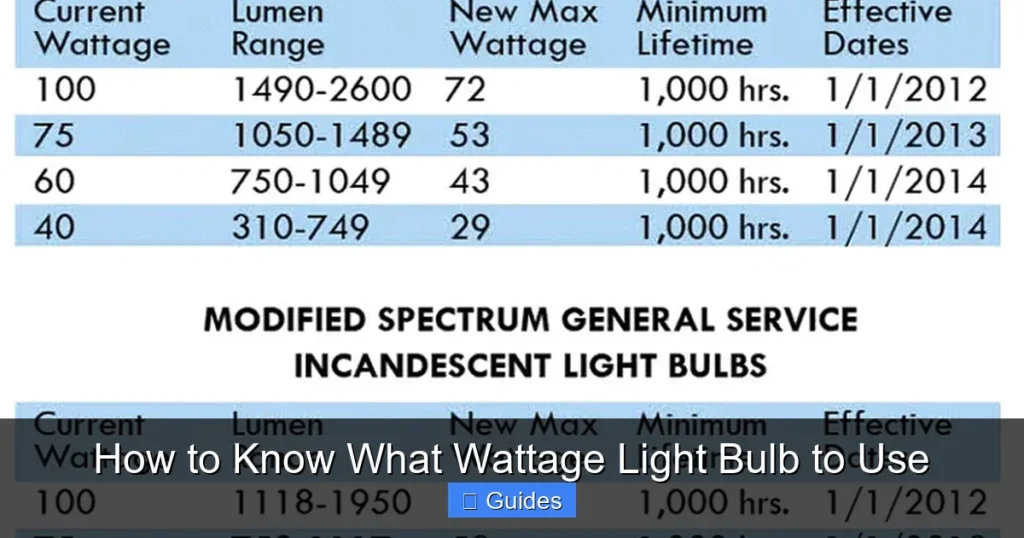
Locate the sticker inside your lamp or fixture. Note the “MAX Wattage” (e.g., MAX 60W). This is your absolute upper limit for the actual wattage consumed by the bulb, regardless of type. If you are using an LED, you can choose one with a “60-watt equivalent” lumen output, as its actual wattage consumption will be much lower and well within the safe limits.

Visual guide about How to Know What Wattage Light Bulb to Use
Image source: familyhandyman.com
Step 2: Determine Desired Lumens (Brightness)
Consider the room size, the type of room, and the activities performed there. Use the lumen guidelines provided earlier in this guide. Do you need bright task lighting, soft ambient light, or something in between? For an average room, an 800-1100 lumen LED is a good starting point for general illumination per bulb.
Step 3: Choose Your Bulb Type (LED Recommended)
For almost all applications, choose an LED bulb. They are the most energy-efficient, long-lasting, and versatile option. They will save you money in the long run and reduce the hassle of frequent replacements.
Step 4: Select Color Temperature and Other Features
Decide on the mood you want to create with color temperature (Kelvin). Warm white (2700K-3000K) for cozy spaces, cool white/neutral (3500K-4000K) for functional areas, and daylight (5000K+) for task-intensive zones. If needed, look for bulbs with high CRI (80+) and ensure they are labeled “dimmable” if you plan to use a dimmer switch.
Step 5: Test and Adjust
Don’t be afraid to buy one bulb and test it out. See how the brightness and color temperature feel in your space. If it’s too dim, try a higher lumen bulb. If it’s too harsh, consider a lower Kelvin. Lighting is personal, and a little experimentation can go a long way in achieving the perfect result.
Conclusion
Gone are the days when knowing what wattage light bulb to use meant simply grabbing a 60-watt bulb. The modern lighting landscape is rich with energy-efficient options that offer incredible control over your home’s ambiance and functionality. By understanding the distinction between watts (energy consumption) and lumens (brightness), respecting your fixture’s maximum wattage, and considering factors like color temperature and dimmability, you are now equipped to make informed decisions. Embrace the flexibility and savings that modern lighting offers. Your home, your eyes, and your energy bill will thank you!
Frequently Asked Questions
What is the difference between watts and lumens?
Watts measure the amount of energy a light bulb consumes, while lumens measure the actual brightness or total light output of the bulb. For modern, energy-efficient bulbs like LEDs, lower wattage can produce a high number of lumens.
Why is it important to check the maximum wattage on my light fixture?
Checking the maximum wattage on your light fixture is crucial for safety. Exceeding this limit, especially with traditional incandescent or halogen bulbs, can cause overheating, damage the fixture, melt wiring, and potentially lead to a fire hazard.
What is a good lumen output for a living room?
For a living room, a good general lumen output range is typically between 1500-3000 total lumens, spread across multiple light sources. This allows for comfortable ambient lighting, often achieved with several “60-watt equivalent” (around 800-lumen) LED bulbs.
What is color temperature and how does it affect a room?
Color temperature, measured in Kelvin (K), describes the “warmness” or “coolness” of the light. Lower Kelvin values (e.g., 2700K) produce a warm, yellowish light suitable for relaxing spaces, while higher values (e.g., 5000K) create a cool, bluish-white light ideal for task-oriented areas.
Are LED bulbs always dimmable?
No, not all LED bulbs are dimmable. If you intend to use a dimmer switch, you must specifically look for LED bulbs labeled “dimmable” on their packaging. Additionally, you may need an LED-compatible dimmer switch for optimal performance.
What is CRI and why should I care about it?
CRI stands for Color Rendering Index, which measures how accurately a light source makes the colors of objects appear compared to natural sunlight. A higher CRI (80+ or 90+) ensures that colors look more vibrant and true to life, which is especially important in kitchens, bathrooms, or areas displaying artwork.
