


As an Amazon Associate, We earn from qualifying purchases.
Decoding light bulb size is simpler than you think! It primarily involves understanding two key components: the base type (like E26, E12, GU10) and the bulb’s shape and diameter. The base ensures it fits your fixture, while the shape letter and accompanying number, often representing diameter in eighths of an inch, define its physical form. Knowing these basics will help you effortlessly choose the right replacement bulb, ensuring a perfect fit and desired illumination without the guesswork.
How to Tell Light Bulb Size
Ever stood in the lighting aisle, utterly bewildered by the endless array of light bulbs? You’re not alone. Figuring out which bulb fits where can feel like trying to solve a cryptic puzzle, especially with all the letters, numbers, and strange shapes. But what if we told you that understanding “how to tell light bulb size” is actually quite straightforward once you know a few simple tricks?
This guide is your friendly flashlight in the dark world of light bulb sizing. We’ll break down the jargon and demystify the codes so you can confidently pick the perfect bulb every single time. Forget the guesswork and the frustration of buying the wrong size; by the end of this article, you’ll be a light bulb sizing pro, ready to illuminate your home with ease. Let’s dive in and learn how to tell light bulb size like a pro!
Key Takeaways
- Base Type is Paramount: The most critical factor is the bulb’s base, which must precisely match your fixture’s socket (e.g., E26, E12, GU10).
- Shape and Diameter Tell the Story: Light bulb sizes are typically identified by a letter (for shape like A, G, PAR) followed by a number (for diameter in eighths of an inch).
- Always Check the Old Bulb: The easiest way to determine light bulb size is to examine the markings on the existing bulb or its packaging.
- Measure When Unsure: If markings are absent, carefully measure the base and the widest part of the bulb to identify its size.
- Specialty Bulbs Have Unique Needs: Floodlights, candelabra, and tubular bulbs often have specific sizing rules beyond the standard A-type.
- The Right Fit Matters: Using the correct light bulb size ensures safety, proper function, optimal light distribution, and aesthetic appeal.
Quick Answers to Common Questions
What are the two main parts of a light bulb size?
The two main parts of a light bulb’s size are its base type (how it connects to the fixture) and its shape and diameter (its physical form).
What does “E26” mean in light bulb sizing?
“E26” refers to an Edison screw base with a 26-millimeter diameter, which is the standard medium screw base in North America.
How do you measure a bulb’s diameter to determine its size number?
You measure the bulb’s diameter at its widest point in inches, then divide that measurement by 0.125 (1/8 of an inch). The resulting whole number is typically the number used in the bulb’s size designation (e.g., A19, PAR38).
Can I use an E12 bulb in an E26 socket?
No, you cannot. Light bulb base sizes, like E12 and E26, are not interchangeable and must precisely match the fixture’s socket to ensure proper connection and safety.
Why is a PAR bulb different from an A-type bulb?
A PAR (Parabolic Aluminized Reflector) bulb is designed for directional light, focusing a beam for spotlights or floodlights, while an A-type (Arbitrary) bulb is a general-purpose, pear-shaped bulb that provides omnidirectional light.
📑 Table of Contents
Understanding the Basics: What Light Bulb Sizes Mean
At its core, a light bulb’s size is defined by two main components: its base type (how it connects to the fixture) and its overall shape and diameter. Think of it like buying shoes – you need the right sole (base) to fit your foot (fixture), and then you choose the style and width (shape and diameter) that suits your taste and comfort. Knowing how to tell light bulb size starts right here.
The Naming Convention: Letter + Number
Most light bulbs follow a simple naming convention: a letter indicating the bulb’s shape, followed by a number representing its diameter. For instance, an A19 bulb is an “A” shape with a “19” diameter. This system is crucial when you want to tell light bulb size. The diameter number almost always refers to the bulb’s widest point, measured in eighths of an inch. So, an A19 bulb is 19/8 inches (or 2.375 inches) in diameter. This standard applies across many common bulb types.
Decoding the Light Bulb Base Types
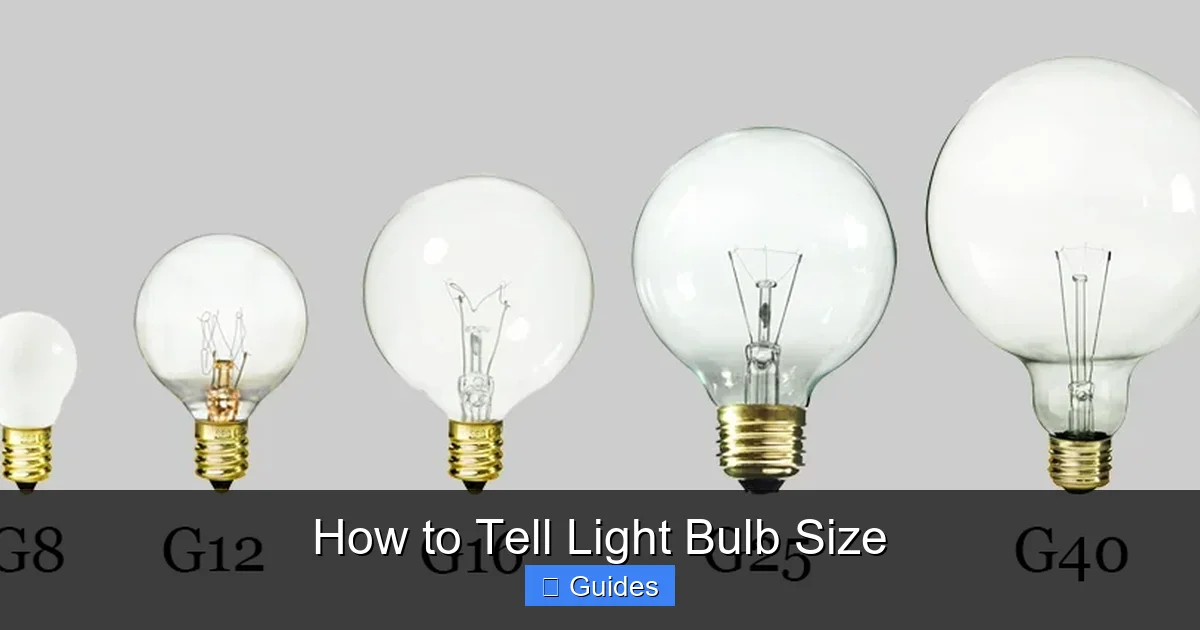
Visual guide about How to Tell Light Bulb Size
Image source: images.squarespace-cdn.com
The base is arguably the most critical part when figuring out how to tell light bulb size. If the base doesn’t match your fixture, the bulb simply won’t fit or work. There are several common base types, each with its own specific name and dimensions.
Edison Screw Bases (E-Type)
These are the most common screw-in bases, named after Thomas Edison. The “E” stands for Edison, and the number following it indicates the base’s diameter in millimeters.
- E26: This is the standard “medium” screw base in North America. It’s what you’ll find in most household lamps, ceiling fixtures, and general lighting applications. When people ask how to tell light bulb size for their everyday lamps, E26 is often the answer.
- E12: Known as the “candelabra” base, this smaller screw base is common in chandeliers, night lights, and decorative fixtures. It’s significantly narrower than an E26.
- E17: This is the “intermediate” base, a less common size that falls between E12 and E26. You might find it in certain older lamps or specific appliance bulbs.
- E14: Similar in size to E12, the E14 is the standard small screw base used in Europe and other regions. While physically close to E12, they are not interchangeable due to thread differences.
Bi-Pin Bases (G/GU-Type)
These bases feature two pins that either push into a socket or twist and lock. The number following the letter usually refers to the distance between the two pins in millimeters.
- GU10: These bulbs often have a twist-and-lock bi-pin base with two flat, thick pins. They are common in track lighting and recessed fixtures, especially for spotlights.
- GU5.3 (MR16): These feature two slender pins that push straight into the socket. MR16 is the common bulb shape associated with this base. They are typically used in low-voltage applications, often found in landscape lighting or accent lighting.
- G4/G6.35/G9: These are smaller bi-pin bases, with the number indicating the pin spacing. G4 and G6.35 are tiny, low-voltage bulbs often found in puck lights or under-cabinet lighting. G9 is a slightly larger, loop-style bi-pin base commonly used in decorative fixtures and modern chandeliers.
Bayonet Bases (B-Type)
Bayonet bases feature two pins on the side that slot into an L-shaped track in the socket, then twist to lock. These are more common in the UK and Europe but can be found in some specialized applications in North America.
- B22d (BC): The standard bayonet cap in the UK and Australia.
- BA15d: A double-contact bayonet base, often found in automotive lighting or marine applications.
Other Specialty Bases
While less common for general household use, you might encounter other bases like:
- Wedge Bases: Often found in automotive or low-voltage landscape lighting, these bulbs have a wedge-shaped base with wires for contact.
- Festoon Bases: Cylindrical bulbs with contacts on both ends, commonly used in older car interiors or some decorative string lights.
- Fluorescent Pin Bases: Linear fluorescent tubes have specific pin configurations (e.g., G13 for T8/T12 bulbs, G5 for T5 bulbs).
When you’re trying to tell light bulb size, identifying the base type correctly is your first and most important step.
Identifying Light Bulb Shapes and Their Numbers
Once you’ve got the base figured out, understanding the shape and diameter helps ensure the bulb not only fits the socket but also fits inside the fixture and provides the desired light distribution. Remember, the number always refers to the diameter in eighths of an inch.
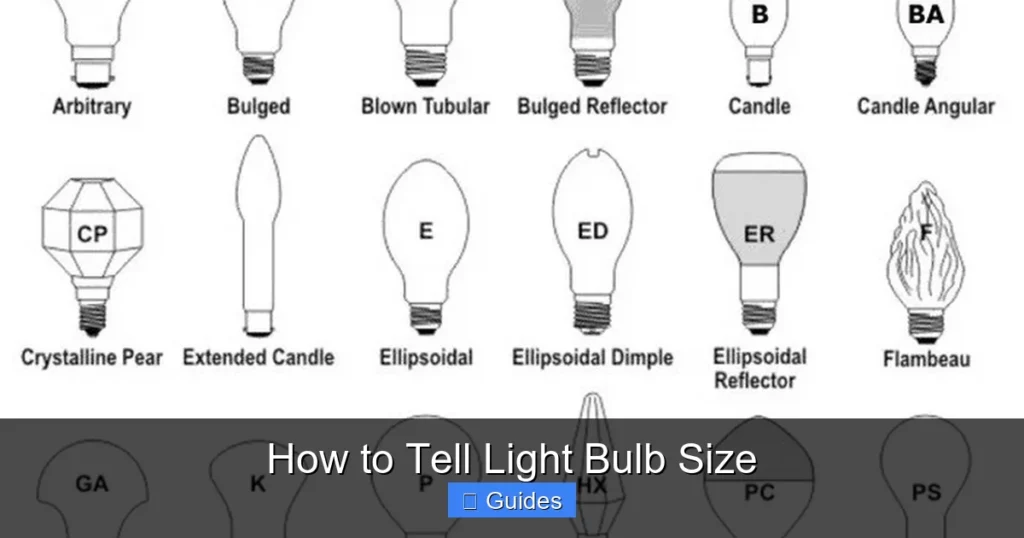
Common Bulb Shapes
- A (Arbitrary/Standard): This is the classic pear-shaped bulb we all recognize.
- A19: The most common household bulb size, about 2.375 inches in diameter.
- A21: Slightly larger than an A19, about 2.625 inches in diameter, often used for higher wattage or lumens.
- A23: Even larger, around 2.875 inches in diameter.
These are your general-purpose bulbs, perfect for lamps and ceiling fixtures. Knowing how to tell light bulb size for these general-purpose applications is vital.
- B/C (Bullet/Candelabra): These are smaller, often pointed or torpedo-shaped bulbs.
- B10: A bullet-shaped bulb, typically for candelabra bases (E12).
- C7/C9: Common for decorative string lights or night lights, C7 is smaller, C9 larger.
They are often used in chandeliers, decorative fixtures, or appliances.
- G (Globe): These are spherical or globe-shaped bulbs, often used in vanity lights or exposed fixtures where aesthetics matter.
- G16.5 (or G16): Small globe bulb, often used in decorative fixtures.
- G25: A medium globe bulb, popular for vanity mirrors.
- G30/G40: Larger globe bulbs, great for exposed fixtures or decorative string lights.
- PAR (Parabolic Aluminized Reflector): These are directional floodlight or spotlight bulbs, designed to focus light. They have a distinct flat or slightly convex front.
- PAR16, PAR20, PAR30, PAR38: The numbers indicate increasing diameter and are commonly used in recessed lighting, track lighting, or outdoor floodlights. A PAR38, for instance, is 38/8 inches (4.75 inches) in diameter.
- BR (Bulged Reflector): Similar to PAR bulbs, but with a softer, wider beam spread and a more rounded, “bulged” front.
- BR30, BR40: Often used in recessed cans where a wider, softer light is desired, particularly in living rooms or kitchens.
- MR (Multifaceted Reflector): Small, highly directional bulbs, usually with a bi-pin base (like GU5.3). The “faceted” refers to the reflective interior.
- MR11, MR16: Common for accent lighting, track lighting, or landscape lighting. MR16 is 16/8 inches (2 inches) in diameter.
- T (Tubular): These are long, cylindrical bulbs, ranging from tiny appliance bulbs to large fluorescent tubes.
- T3, T4, T5, T6, T8, T10, T12: The number indicates the tube’s diameter in eighths of an inch. So, a T8 tube is 8/8 inches (1 inch) in diameter. These are common in fluorescent and some specialty LED linear lights.
- R (Reflector): A more basic reflector bulb than PAR or BR, often with a simpler, rounded front.
- R14, R20: Used for accent lighting or smaller recessed cans.
- S (Sign/Straight): Straight-sided bulbs, often used in exit signs or appliance indicators.
- S11, S14: Small, straight-sided bulbs.
- For screw bases (E-type): Use a ruler or caliper to measure the diameter of the screw base in millimeters. E26 is 26mm, E12 is 12mm, etc.
- For bi-pin bases (G/GU-type): Measure the distance between the center of the two pins in millimeters. GU10 pins are 10mm apart, GU5.3 pins are 5.3mm apart.
- For A, B, C, G, R, S shapes: Measure the widest point, then divide that measurement by 1/8 of an inch (0.125 inches) to get the number. For example, if it’s 2.375 inches wide, divide by 0.125, which gives you 19. So, an A19.
- For PAR, BR, MR shapes: Do the same – measure the widest point and divide by 0.125 to get the number.
- For T-type (tubular) bulbs: Measure the diameter of the tube. A 1-inch diameter tube is a T8 (8/8).
Mastering these shapes and their corresponding numbers is a significant step in learning how to tell light bulb size.
Specialty Bulbs and Their Unique Sizing
Beyond the standard shapes, some bulbs have specific sizing requirements or purposes that don’t always fit the simple letter-number convention for diameter alone.
Decorative and Vintage Bulbs
These bulbs prioritize aesthetics. While they often use standard bases (like E26 or E12), their shapes can be elaborate – flame tips, spirals, or oversized globes with intricate filaments. You’ll still see a G for globe or B for bullet, but the overall design is the primary identifier.
Appliance Bulbs
Refrigerator bulbs, oven bulbs, or microwave bulbs often require specific shapes and sizes to fit in tight spaces and withstand particular conditions (like heat). They often have smaller bases like E12 or E17.
LED Equivalents
Modern LED bulbs are designed to replace older incandescent or halogen bulbs. They will typically retain the same base and shape designation (e.g., an A19 LED will fit where an A19 incandescent did), making it easy to know how to tell light bulb size for replacements. However, their physical dimensions might sometimes be slightly different due to internal components, so it’s always good to double-check.
Fluorescent Tubes
Linear fluorescent tubes are identified by their “T” number (diameter in eighths of an inch) and their length in inches. For example, a “T8 48-inch” tube is 1 inch in diameter and 48 inches long. The base type (e.g., G13 for T8/T12) is also critical.
Practical Tips for Measuring and Verifying Bulb Sizes
Now that you understand the theory, let’s get practical. Knowing how to tell light bulb size quickly and accurately at home or in the store is a game-changer.
1. Check the Old Bulb First
This is by far the easiest method. Most bulbs have their size printed directly on the glass or, more commonly, stamped on the metal or plastic base. Look for codes like “E26 A19,” “GU10,” or “BR30.” If you’re lucky, the wattage and lumens will also be there. This is your primary source for how to tell light bulb size.
2. Examine the Packaging
If you still have the box from the old bulb, or if you’re buying a new one, the packaging will clearly state the base type and shape/diameter. It will also often list compatible fixtures or recommended uses.
3. Measure the Base (If No Markings)
If the markings on your old bulb are worn off, you’ll need to measure.
4. Measure the Bulb Diameter
Use a ruler or tape measure to find the widest point of the bulb.
5. Consult Your Fixture’s Specifications
Some light fixtures will have a sticker or label inside (often near the socket or on the canopy) that specifies the required bulb type and maximum wattage. This is particularly helpful for recessed lighting or ceiling fans.
6. Take a Photo to the Store
When in doubt, take a clear photo of the old bulb (especially its base and any markings) or even bring the old bulb with you to the store. Staff can often help identify it, or you can compare it visually to new bulbs.
Why Getting the Right Bulb Size Matters
Beyond just wanting to light up a room, there are several important reasons why knowing how to tell light bulb size correctly is crucial.
Safety First
Using a bulb that’s too large for a fixture, or one that has an incorrect base, can lead to serious safety hazards. Forcing a bulb into a socket can damage the fixture or the bulb, creating poor electrical contact, short circuits, or even fire risks. Additionally, a bulb that is too large might touch the fixture’s housing, potentially causing overheating if the bulb emits a lot of heat (less of an issue with LEDs, but still a concern for incandescents or halogens).
Proper Fit and Aesthetics
A bulb that’s too big simply won’t fit into the designated space or under a lampshade. Even if it technically screws in, it might protrude awkwardly or block the shade, ruining the aesthetic. Conversely, a bulb that’s too small might look out of place or fail to provide adequate light spread for the fixture’s design. The right light bulb size ensures your fixture looks and functions as intended.
Optimal Performance and Light Distribution
Different bulb shapes are designed to distribute light in specific ways. A PAR bulb, for instance, focuses light directionally, while a G-type globe bulb provides omnidirectional light. Using the wrong shape might result in uneven lighting, glare, or simply not getting the desired effect from your fixture. Knowing how to tell light bulb size means you can achieve the perfect illumination.
Avoiding Frustration and Wasted Money
There’s nothing more annoying than getting home with a new bulb only to discover it doesn’t fit. This leads to wasted time, gas, and the hassle of returns. Learning how to tell light bulb size saves you from these common inconveniences.
Conclusion
Gone are the days of staring blankly at the lighting aisle, hoping to guess the right bulb. By understanding the simple principles of base types, shape letters, and diameter numbers, you’re now equipped to confidently identify “how to tell light bulb size” for any fixture in your home. Remember to check the old bulb first, measure when in doubt, and prioritize getting the correct base type above all else. With these tips in your toolkit, you’ll always choose the right bulb, ensuring safety, perfect fit, and beautiful illumination for every corner of your space. Happy lighting!
🎥 Related Video: Standard Light Bulb – Size & Codes | Spec. Sense
📺 AMRE Supply
What does the A19 code describe? What is an E26 base? In this episode of Spec. Sense, Vance shows how to measure and how …
Frequently Asked Questions
What does the number in a bulb size (e.g., A19) mean?
The number in a bulb size, like the “19” in A19, represents the bulb’s diameter at its widest point. This diameter is always measured in eighths of an inch, so an A19 bulb is 19/8 inches (or 2.375 inches) wide.
Are LED bulbs sized differently than incandescent ones?
Generally, no. LED bulbs are designed to be direct replacements for traditional incandescent or halogen bulbs, so they typically use the same base types (E26, E12, GU10) and shape designations (A19, PAR30). This ensures compatibility with existing fixtures.
Can I use a bulb with a different wattage if the size is the same?
You can often use a lower-wattage bulb if the size is the same, but you should never exceed the maximum wattage rating specified on your fixture. Using a higher wattage bulb can create a fire hazard due to overheating.
How do I know what size bulb my fixture needs if there’s no old bulb?
If there’s no old bulb, check for a label inside the fixture itself (often near the socket or on the canopy) that specifies the required bulb type and maximum wattage. You can also measure the socket opening for the base and the available space for the bulb’s shape.
What’s the difference between a GU10 and an MR16 base?
Both GU10 and MR16 (which typically use a GU5.3 base) are bi-pin bases, but they differ in pin style and voltage. GU10 bulbs have thicker, flat pins that twist and lock into place for line voltage (120V), while MR16 bulbs have thinner pins that push straight in and usually operate on low voltage (12V) with a transformer.
Is it safe to force a bulb into a socket if it’s slightly the wrong size?
No, it is never safe to force a bulb into a socket if it’s slightly the wrong size. Forcing a bulb can damage both the bulb and the fixture, leading to poor electrical contact, short circuits, or even a fire hazard. Always ensure the base type matches perfectly.
