


As an Amazon Associate, We earn from qualifying purchases.
Figuring out which light bulb you need can seem daunting, but it’s simpler than you think! This guide will help you understand key factors like lumens (brightness), color temperature (light appearance), and base type to ensure a perfect fit. Discover how to tell what light bulb I need, whether you’re replacing an old one or choosing a new one for any fixture.
Ever stood in the light bulb aisle, staring at a dizzying array of options, wondering “How do I tell what light bulb I need?” You’re not alone! It can feel like a secret language of numbers, letters, and strange symbols. With so many choices – from traditional incandescent to modern LED, and every shape and size imaginable – picking the right bulb can quickly become overwhelming.
But what if we told you it doesn’t have to be a guessing game? Choosing the correct light bulb is actually quite straightforward once you understand a few key concepts. Think of this as your friendly guide to decoding the world of light bulbs, empowering you to make smart, informed decisions every time. We’re here to help you confidently answer the question, “How to tell what light bulb I need?”
Whether you’re replacing a burnt-out bulb, upgrading to more energy-efficient lighting, or simply looking to set the perfect mood in a room, knowing what to look for will save you time, money, and frustration. Let’s shine a light on the essentials and make your next light bulb purchase a breeze!
Key Takeaways
- Start with the old bulb: It’s your best source of information for base type, shape, and often brightness or wattage.
- Lumens indicate brightness: Forget watts for brightness; look for lumens (lm) to know how bright a bulb truly is.
- Kelvin determines color temperature: Choose Kelvin (K) to get the desired light color, from warm white (2700K) to cool daylight (5000K+).
- Base type is crucial for fit: Always match the base type (e.g., E26, E12, GU10) to your fixture to ensure compatibility.
- LEDs are generally best: For efficiency, longevity, and versatility, modern LED bulbs are almost always the top choice.
- Consider dimming and smart features: If you need dimming, ensure both the bulb and your dimmer switch are compatible. Explore smart options for added control.
- Check fixture limits: Always adhere to the maximum wattage or LED equivalent specified on your light fixture for safety.
Quick Answers to Common Questions
Can I use any LED bulb in any fixture?
No, you cannot. You must always match the bulb’s base type (e.g., E26, E12) to the fixture’s socket. Also, ensure the LED bulb’s actual wattage is below the fixture’s maximum wattage rating.
What’s the most important factor when choosing a light bulb?
The most important factors are the base type (to ensure it fits) and lumens (to get the desired brightness). Color temperature is also crucial for aesthetics and mood.
What does “dimmable” mean for an LED bulb?
A “dimmable” LED bulb is specifically designed to work with dimmer switches, allowing you to adjust its light output. Not all LED bulbs are dimmable, and you might need an LED-compatible dimmer switch for optimal performance.
What if my old light bulb has no readable markings?
If the old bulb has no markings, try to identify its base type and shape by comparing it to common examples. Check the light fixture itself for a label indicating the maximum wattage and sometimes the required base type. If all else fails, take the old bulb to a hardware store for assistance.
What’s the difference between E26 and E27?
E26 is the standard medium screw base in North America, while E27 is the standard medium screw base in Europe and other regions. They are very similar in size and often physically interchangeable, but E27 bulbs are designed for 220-240V circuits, and E26 bulbs for 110-120V. It’s crucial to use the correct voltage bulb for your region.
📑 Table of Contents
Start with the Basics: Your Old Bulb is Your Best Clue
The easiest way to figure out what light bulb you need is often by starting with the bulb you’re replacing. It holds a treasure trove of information that can guide your purchase. If you can, bring the old bulb with you to the store. This removes all guesswork about the physical fit.
The Importance of the Existing Bulb
Your old bulb is a primary source for identifying several critical factors. Look closely at the bulb itself – most have markings printed on the base, the glass, or sometimes even on the inside. These markings often include the wattage, the voltage, the base type, and sometimes even the shape or brand.
- Physical Shape and Size: Does it need to fit into a tight space or a specific enclosure? Make sure your new bulb matches the physical dimensions of the old one, especially if it’s for a recessed fixture or a lamp with a shade.
- Base Type: This is arguably the most crucial piece of information. The base is the part that screws or pushes into your light fixture. If your new bulb doesn’t have the right base, it simply won’t fit. More on this later, but for now, just know that your old bulb usually spells it out.
- Initial Brightness/Wattage: While watts are no longer the primary indicator of brightness for newer bulbs, seeing the wattage of your old incandescent bulb gives you a starting point for how bright you’d like your new bulb to be.
Even if the markings are faded, the physical characteristics of the old bulb – its size, shape, and especially its base – will tell you a lot about how to tell what light bulb I need.
Checking the Fixture Itself
What if you don’t have the old bulb, or it’s completely unreadable? Your light fixture is the next best place to look. Many fixtures have a sticker or label, often near the bulb socket, that specifies the maximum wattage allowed for the bulb. This is a crucial safety measure to prevent overheating.
- Maximum Wattage: This label will often say something like “MAX 60W.” If you’re using an LED bulb, you can often use an LED that has an equivalent brightness to a 60W incandescent, even if the LED itself only consumes 9-10W. Always ensure the LED’s actual wattage is below the fixture’s maximum.
- Base Type: Sometimes, the fixture will also indicate the base type it requires, especially for less common bases.
Taking a moment to check both the old bulb and the fixture’s specifications is the first, most important step in how to tell what light bulb I need.
Decoding the Bulb’s Language: Key Specifications Explained
Once you’ve identified the basics, it’s time to understand the modern language of light bulbs. This is where you really learn how to tell what light bulb I need beyond just the physical fit.
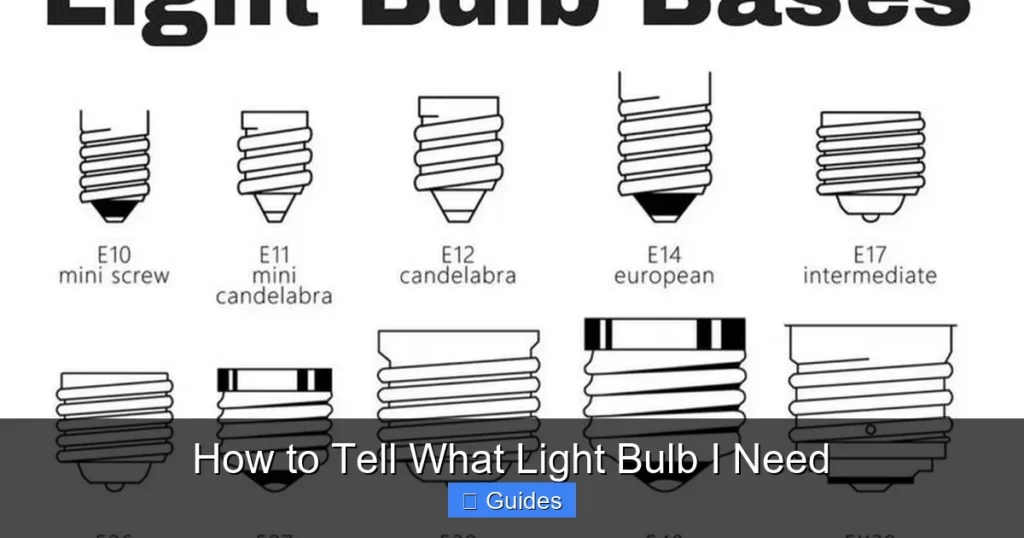
Visual guide about How to Tell What Light Bulb I Need
Image source: images.squarespace-cdn.com
Lumens: The True Measure of Brightness
For a long time, we associated brightness with watts. A 100-watt bulb was brighter than a 60-watt bulb. However, with energy-efficient bulbs like LEDs, wattage no longer equals brightness. Instead, you need to look for lumens (lm).
- What are Lumens? Lumens measure the total amount of visible light produced by a bulb. The higher the lumen number, the brighter the light.
- Incandescent vs. LED Equivalence:
- A traditional 40W incandescent bulb produces about 450 lumens. An LED equivalent might only use 5-7W.
- A 60W incandescent produces about 800 lumens. An LED equivalent might use 8-12W.
- A 100W incandescent produces about 1600 lumens. An LED equivalent might use 15-20W.
When you’re trying to figure out how to tell what light bulb I need for brightness, always prioritize lumens. Decide how bright you want your room to be, then pick the appropriate lumen output. For example, a bathroom vanity might need brighter light (800-1100 lm per bulb), while a cozy living room lamp might be fine with 450-800 lm.
Color Temperature (Kelvin): Setting the Mood
The “color” of light isn’t about red or blue; it’s about how warm or cool the white light appears. This is measured in Kelvin (K).
- Lower Kelvin = Warmer Light:
- 2000K-3000K (Warm White/Soft White): This range produces a yellowish glow, similar to traditional incandescent bulbs. It’s great for creating a cozy, inviting atmosphere in living rooms, bedrooms, and dining areas.
- Mid-Range Kelvin = Neutral Light:
- 3100K-4500K (Cool White/Bright White): This light is less yellow and more neutral, offering a crisper, more energetic feel. It’s often used in kitchens, bathrooms, offices, and workspaces where you need good visibility.
- Higher Kelvin = Cooler Light:
- 4600K-6500K (Daylight): This mimics natural daylight, with a bluish tint. It’s ideal for task lighting, garages, workshops, and areas where very high visibility is crucial, or for displaying true colors.
Think about the function of your room when considering how to tell what light bulb I need for color temperature. Do you want relaxation or concentration?
Base Type: Ensuring a Perfect Fit
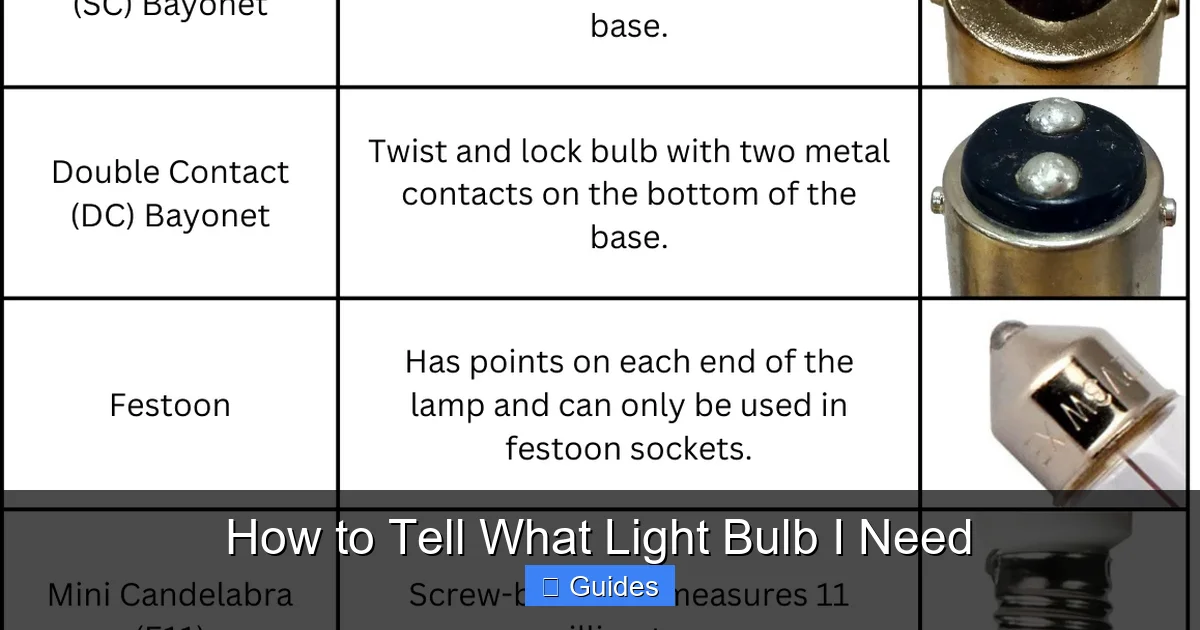
This is where the physical connection happens. The base type of your bulb must match the socket in your fixture exactly. There are many types, but some are far more common than others.
- Edison Screw Bases: These are the most common screw-in types.
- E26: The standard medium screw base in North America. This is likely what you have for most lamps and overhead fixtures.
- E12: The candelabra screw base, smaller than E26, often found in chandeliers, nightlights, and decorative fixtures.
- E17: The intermediate screw base, less common but used in some specific fixtures.
- Pin Bases: These bulbs have two or more pins that push into the socket.
- GU10: A common twist-and-lock pin base, often found in track lighting or recessed spotlights.
- MR16 (GU5.3): A two-pin base, typically for low-voltage directional lighting.
- G9: A two-pin loop base, often found in modern decorative fixtures.
- Other Bases: There are many others, like bayonet bases (B22, BA15d) or specialty bases for appliance bulbs.
Seriously, when learning how to tell what light bulb I need, match the base type perfectly. If you’re unsure, take a picture of your old bulb’s base or the socket itself.
Bulb Shape and Size: Form and Function
While the base ensures the bulb fits the socket, the shape and size ensure it fits the fixture aesthetically and physically.
- A-Shape (A19/A21): The classic “pear” shape, most common for general lighting.
- B-Shape (B10/B11) or C-Shape (C7/C9): Candelabra or torpedo shapes, often used in chandeliers or decorative fixtures.
- G-Shape (G16.5/G25/G30): Globe-shaped bulbs, often used in vanity lights or open fixtures where the bulb is visible.
- BR (Bulged Reflector) and PAR (Parabolic Aluminized Reflector): These are floodlight or spotlight shapes, used for recessed lighting, track lighting, or outdoor security lights. They direct light in a specific beam.
- MR (Multifaceted Reflector): Compact spotlight bulbs, often used for accent lighting.
Consider if the bulb needs to clear a shade, fit into a recessed can, or look good when exposed. This helps in how to tell what light bulb I need that isn’t just functional but also aesthetically pleasing.
Wattage (and Wattage Equivalent): Energy Consumption
As mentioned, actual wattage (W) now refers to the energy consumed by the bulb, not its brightness. For LEDs, this number is significantly lower than their incandescent equivalents. For example, an “800 lumen” LED bulb might only draw 9-10 watts, but its light output is similar to a 60-watt incandescent bulb.
Always respect the maximum wattage limit stated on your fixture. If it says “MAX 60W,” you can use an LED bulb with an actual wattage of 9W (equivalent to 60W incandescent) without issues. Using a bulb with a higher actual wattage than the fixture’s limit can be a fire hazard due to overheating.
Choosing Your Technology: Incandescent, Halogen, CFL, or LED?
The type of technology inside the bulb impacts everything from energy efficiency to lifespan and initial cost. When deciding how to tell what light bulb I need, this choice is crucial.
Incandescent & Halogen: The Old Guards
Incandescent bulbs are the traditional bulbs we grew up with. They create light by heating a filament. They produce a warm, comforting glow but are very inefficient, converting most energy into heat. They are rapidly being phased out in many regions.
Halogen bulbs are a type of incandescent bulb, slightly more efficient and producing a whiter, crisper light. They are also being phased out due to inefficiency compared to LEDs.
Unless you have a very specific application that absolutely requires one of these (which is rare now), you’ll likely want to choose a more modern option.
CFLs: The Compact Fluorescent Option
CFLs (Compact Fluorescent Lamps) were once heralded as the energy-saving alternative to incandescents. They use a coiled tube and a small amount of mercury to produce light. While more efficient than incandescents, they have drawbacks:
- They often take a moment to warm up to full brightness.
- Their light quality can be inconsistent.
- They contain mercury, requiring special disposal.
With the widespread availability and superiority of LEDs, CFLs are also becoming less common.
LEDs: The Modern Standard
LEDs (Light Emitting Diodes) are the current gold standard for lighting. They are incredibly energy-efficient, long-lasting, and offer a wide range of features. When considering how to tell what light bulb I need, LEDs are almost always the recommended choice.
- Energy Efficiency: LEDs use significantly less electricity than any other bulb type, leading to substantial savings on your energy bill.
- Longevity: They can last 15-25 times longer than incandescents, meaning fewer bulb replacements.
- Durability: No fragile filament or glass tubes, making them more resistant to breakage.
- Instant On: LEDs provide full brightness immediately.
- Versatility: Available in all lumen outputs, color temperatures, shapes, and base types. Many are dimmable and some offer smart features.
While the upfront cost might be slightly higher for an LED, the long-term savings and benefits make them the best value and performance choice.
Beyond the Bulb: Considering Your Space and Needs
Once you understand the technical specifications, think about where the bulb will go and what you want it to do. This personalizes how to tell what light bulb I need for your unique situation.
Room Type and Purpose
- Living Rooms & Bedrooms: Often benefit from warmer color temperatures (2700K-3000K) and moderate brightness (450-800 lumens per bulb) to create a relaxed atmosphere. Multiple light sources are often ideal.
- Kitchens & Bathrooms: Typically require brighter, cooler light (3000K-4000K) for tasks like cooking, cleaning, and grooming. 800-1100 lumens per bulb or more can be appropriate.
- Home Offices & Workspaces: Neutral to cool white light (3500K-5000K) can help with concentration and reduce eye strain. Aim for good, even brightness.
- Garages & Workshops: Daylight-like temperatures (5000K-6500K) and high lumen output are best for detailed work and overall visibility.
- Outdoor Lighting: Consider weather-resistant bulbs. Color temperature can vary, with warmer tones for ambiance and cooler, brighter ones for security.
Dimming Capabilities
If you want to control the light level, you’ll need two things:
- A “dimmable” LED bulb: Not all LEDs are dimmable. Look for this designation on the packaging.
- A compatible dimmer switch: Older dimmer switches designed for incandescent bulbs may not work well with LEDs, leading to flickering or buzzing. You might need to upgrade your dimmer to an “LED compatible” or “universal” dimmer.
Checking for dimmability is a key step in how to tell what light bulb I need for adjustable lighting.
Smart Features and Connectivity
The latest innovation in lighting is smart bulbs. These connect to your Wi-Fi or Bluetooth, allowing you to control them via an app, voice assistant, or smart home hub. They can offer:
- Remote control from anywhere.
- Scheduling and timers.
- Color changing (RGBW bulbs).
- Integration with other smart devices.
If you’re building a smart home, this is an exciting option, but remember they typically come at a higher price point.
Specialty Bulbs
Sometimes, your needs are unique:
- 3-Way Bulbs: For lamps with a 3-way switch, offering multiple brightness levels (e.g., 50/100/150W equivalent). Ensure you buy a 3-way compatible bulb.
- Appliance Bulbs: For ovens, refrigerators, microwaves. They are often designed to withstand specific temperatures or vibrations.
- Decorative Filaments: Many LEDs now mimic the look of old Edison-style incandescent bulbs, often with a very warm (2200K) color temperature, perfect for exposed fixtures.
- Grow Lights: Specialized bulbs with specific light spectrums to support plant growth.
Putting It All Together: Your Bulb-Buying Checklist
Now that you’re armed with all this knowledge, let’s create a quick checklist to help you confidently answer “how to tell what light bulb I need” on your next shopping trip:
- Examine the Old Bulb/Fixture: Note the base type (e.g., E26, E12, GU10), physical shape (A19, G25, BR30), and any maximum wattage limits on the fixture.
- Determine Desired Brightness (Lumens): Decide how bright you want the area to be. For general lighting, 450-800 lumens is common. For brighter task lighting, aim for 800-1600+ lumens.
- Choose Your Color Temperature (Kelvin): Think about the mood. Warm white (2700K-3000K) for coziness, cool white (3500K-4500K) for alertness, or daylight (5000K-6500K) for high visibility.
- Select Bulb Technology (LED Recommended): Unless there’s a specific reason, go with LEDs for their efficiency, longevity, and versatility.
- Consider Dimmability: If you have a dimmer switch, make sure your new LED bulb is explicitly labeled “dimmable.” You might need an LED-compatible dimmer.
- Think About Smart Features: Do you want app control, color changing, or integration with a smart home system?
- Check for Specialty Needs: Do you need a 3-way bulb, an appliance bulb, or something decorative?
By following these steps, you’ll no longer feel lost in the light bulb aisle. You’ll have a clear understanding of how to tell what light bulb I need for any given situation, making your home brighter and more efficient.
Conclusion
No more squinting at tiny labels or guessing games at the hardware store! You now possess the knowledge to confidently answer the question, “How to tell what light bulb I need.” From understanding lumens and Kelvin to identifying base types and choosing the right technology, you’re well-equipped to make informed decisions about your home’s lighting.
Embrace the power of knowing exactly what you’re looking for. The right light bulb can transform a room, save energy, and enhance your daily life. So go ahead, illuminate your world with confidence!
🎥 Related Video: Standard Light Bulb – Size & Codes | Spec. Sense
📺 AMRE Supply
What does the A19 code describe? What is an E26 base? In this episode of Spec. Sense, Vance shows how to measure and how …
Frequently Asked Questions
Why are lumens more important than watts when buying LED bulbs?
Lumens directly measure a light bulb’s brightness, whereas watts indicate its energy consumption. For LED bulbs, a low wattage can produce a high lumen output, meaning they are very energy efficient. Focusing on lumens ensures you get the desired brightness regardless of the bulb’s power draw.
How do I choose the right color temperature for a room?
Choose color temperature based on the room’s function and desired mood. Warm white (2700K-3000K) is ideal for relaxing spaces like bedrooms and living rooms. Cool white (3500K-4500K) works well for kitchens and bathrooms where clarity is important. Daylight (5000K-6500K) is best for task-oriented areas like workshops or home offices.
Are smart bulbs worth the extra cost?
Smart bulbs offer convenience features like remote control, scheduling, and color changing, which can greatly enhance your lighting experience and integrate with smart home systems. Whether they are “worth it” depends on your budget, desire for automation, and how much you value these advanced functionalities over a standard bulb.
What does CRI mean on a light bulb?
CRI stands for Color Rendering Index, which measures how accurately a light source reveals the true colors of objects compared to natural daylight. A higher CRI (80 or above is generally good) means colors will appear more vibrant and true-to-life under that light, which is important for art studios, kitchens, or bathrooms.
Can I mix different types of light bulbs in one fixture?
While you technically can, it’s generally not recommended to mix different bulb types (e.g., incandescent and LED) in the same fixture, especially if they are visible. This is because they will likely have different color temperatures, dimming behaviors, and light outputs, leading to an inconsistent and potentially unappealing look. For best results, use bulbs of the same type, lumens, and color temperature.
What should I do with old CFL bulbs that contain mercury?
CFL bulbs contain a small amount of mercury and should not be thrown in regular household trash. Many home improvement stores, municipal recycling centers, or specific hazardous waste collection sites offer free recycling programs for CFLs. Check with your local waste management services for proper disposal instructions in your area.
