


As an Amazon Associate, We earn from qualifying purchases.
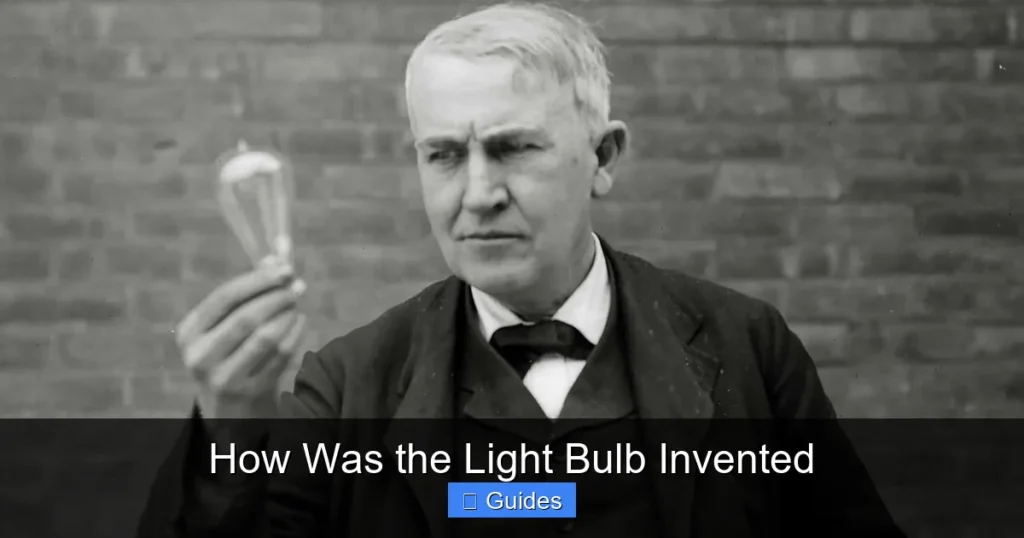
The light bulb wasn’t the sole creation of a single inventor but the culmination of centuries of scientific inquiry and numerous brilliant minds. While Thomas Edison is famously associated with its invention, his genius lay in developing the first *practical, long-lasting, and commercially viable* incandescent light system, building upon the work of many predecessors. It was a collaborative journey that illuminated the world, making accessible, widespread electric lighting a reality for everyone.
How Was the Light Bulb Invented?
Have you ever stopped to think about the simple, everyday miracle of flipping a switch and instantly having light? It’s something we often take for granted, but this incredible convenience wasn’t always available. For most of human history, people relied on fire, candles, or oil lamps for illumination after sunset. The idea of electric light seemed like pure science fiction!
When we ponder how was the light bulb invented, one name almost always springs to mind: Thomas Edison. And while Edison certainly played a monumental role in bringing practical electric light to the world, the truth is a bit more complex and, dare we say, even more fascinating. The journey to the modern light bulb wasn’t a solo sprint but rather a relay race, with countless brilliant minds passing the baton through generations of discovery and innovation. It’s a story of perseverance, scientific breakthroughs, and a collective human desire to banish the darkness.
So, let’s peel back the layers of history and explore the true, intricate tale of how was the light bulb invented. We’ll uncover the forgotten pioneers, the daunting challenges they faced, and how, piece by painstaking piece, the technology that brightened our world came into being. Get ready to have your perceptions challenged and your appreciation for this luminous invention deepened!
Key Takeaways
- Collective Genius: The light bulb’s invention was a process spanning decades, involving numerous scientists and inventors, not just one individual.
- Early Discoveries Were Crucial: Pioneering work by Humphry Davy, Joseph Swan, and others laid the fundamental scientific groundwork for incandescent lighting.
- Edison’s Breakthrough Was Systemic: Thomas Edison’s true genius lay in creating a complete, practical, and economically viable electric lighting *system*, including a long-lasting bulb, generators, and distribution networks.
- Key Challenges: Inventors faced significant hurdles, including finding a durable filament material, creating a high vacuum, and developing efficient power generation and distribution.
- Parallel Inventions and Patent Wars: Many inventors, like Joseph Swan, were working on similar solutions simultaneously, leading to intense competition and legal battles.
- Global Impact: The successful invention and commercialization of the light bulb fundamentally transformed daily life, industry, and urban landscapes worldwide.
- Continuous Innovation: Even after its “invention,” the light bulb continued to evolve significantly, leading to more efficient and specialized lighting technologies.
Quick Answers to Common Questions
Who is credited with inventing the practical incandescent light bulb?
Thomas Edison is widely credited with inventing the first commercially practical and long-lasting incandescent light bulb in 1879, though he built upon the work of many predecessors.
What were the main challenges faced by inventors trying to create a light bulb?
The primary challenges included finding a durable and efficient filament material, creating a high vacuum inside the bulb to prevent the filament from burning out, and developing an entire electrical system for power generation and distribution.
Did anyone else invent a light bulb around the same time as Edison?
Yes, notably Joseph Swan in England developed a long-lasting incandescent light bulb using a carbonized cotton thread filament in 1878, a year before Edison’s publicized breakthrough.
What was Edison’s key contribution beyond just the bulb?
Edison’s most significant contribution was developing a complete, practical, and economically viable electric lighting *system*, including generators, wiring, sockets, and meters, demonstrated with the opening of the Pearl Street Station.
What material did Edison initially use for his long-lasting filament?
Edison’s team initially found success with a carbonized cotton sewing thread filament, later improving it with a carbonized bamboo fiber filament that could last for over 1,200 hours.
📑 Table of Contents
1. The Dawn of Illumination: Early Scientific Discoveries
Before anyone could dream of a light bulb, scientists had to understand electricity itself. The late 18th and early 19th centuries were buzzing with experiments in electromagnetism and electrical phenomena. These foundational discoveries were absolutely critical to understanding how was the light bulb invented.
Humphry Davy and the Electric Arc
One of the earliest and most dramatic demonstrations of electric light came from British chemist Humphry Davy in 1802. Using a powerful battery (known as the electric pile), he connected two charcoal electrodes. When these electrodes were brought close together, an intense, brilliant arc of light formed between them. This phenomenon became known as the “electric arc lamp.”
Davy’s arc lamp was incredibly bright, but it was also impractical for general use. It was too intense, consumed electrodes too quickly, and generated a lot of heat. It was more of a spectacle than a usable light source for homes. However, it proved a vital point: electricity could indeed produce light. This early success lit the path for future inventors trying to figure out how was the light bulb invented in a more practical way.
The Incandescent Principle Emerges
The idea of incandescence – heating a material until it glows – was not new. Blacksmiths had seen hot iron glow for centuries. The challenge was to make a material glow reliably and brightly with electricity, without burning up too quickly.
Throughout the mid-19th century, numerous inventors began experimenting with passing electric current through thin strips of metal or carbon enclosed in glass bulbs. For example, in 1840, British scientist Warren de la Rue enclosed a coiled platinum filament in a vacuum tube and passed an electric current through it. The platinum glowed, but it was expensive and didn’t last long. Around the same time, American John W. Starr filed a patent for an incandescent light bulb using a carbon filament. These early attempts showed promise, but they all suffered from two major problems: the filaments either burned out too quickly or were too costly to be practical for widespread use. These pioneers were still wrestling with the core questions of how was the light bulb invented with longevity and affordability.
2. The Race for a Practical Design: Core Challenges
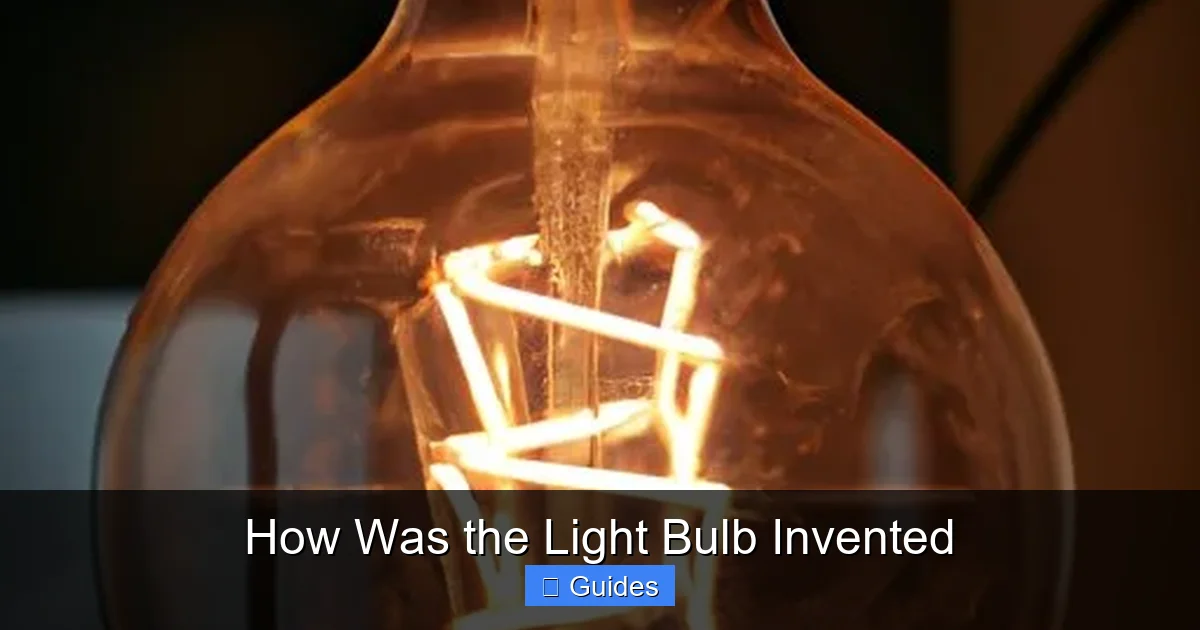
Visual guide about How Was the Light Bulb Invented
Image source: tffn.net
The path to a practical light bulb was fraught with engineering and material science challenges. It wasn’t just about making something glow; it was about making it glow *efficiently, durably, and affordably*. These hurdles kept the dream of widespread electric light just out of reach for decades, truly defining the complex journey of how was the light bulb invented.
The Filament Conundrum
Perhaps the biggest puzzle was finding the perfect filament material. An ideal filament needed several key properties:
- High resistance: It needed to resist the flow of electricity enough to heat up and glow brightly without requiring an enormous current.
- High melting point: It couldn’t melt or vaporize easily at high temperatures.
- Durability: It had to withstand repeated heating and cooling cycles without breaking.
- Affordability: It needed to be made from a material that was readily available and inexpensive to produce in large quantities.
Early experimenters tried platinum, iridium, and various forms of carbon. Platinum was durable but far too expensive. Carbon, derived from materials like bamboo or cotton, was cheaper, but it burned out quickly when exposed to oxygen. This constant search for the right material was a central part of figuring out how was the light bulb invented effectively.
The Vacuum Dilemma
Why did the filaments burn out so fast? Oxygen! When a hot filament is exposed to oxygen, it quickly oxidizes and disintegrates. The solution was to create a vacuum inside the glass bulb, removing as much air as possible. This prevented the filament from burning up, allowing it to glow for a much longer time.
Creating a good vacuum in the 19th century was no easy feat. Vacuum pump technology was still rudimentary, and achieving a near-perfect vacuum was incredibly challenging. Many early bulbs failed because imperfect vacuums still allowed enough oxygen to remain, shortening the filament’s life. Improving vacuum technology was a crucial, often overlooked, aspect of how was the light bulb invented.
Powering the Light
Even if an inventor managed to create a long-lasting bulb, there was another massive problem: how to power it. Arc lamps needed powerful, often dangerous, batteries or generators. For a domestic light bulb, a centralized, stable, and safe electricity distribution system was essential. Early electrical generators were inefficient and unwieldy. The lack of a reliable, affordable, and widespread electrical infrastructure meant that even a perfect light bulb would have been a mere curiosity. The invention of the light bulb was inextricably linked to the development of an entire electrical ecosystem.
3. Thomas Edison’s Breakthrough: System, Not Just Bulb
This is where Thomas Edison enters the story, not necessarily as the *sole* inventor of the light bulb, but as the person who arguably made it *work* for the world. Edison’s genius lay in his systematic approach and relentless pursuit of practicality. He wasn’t just trying to invent a bulb; he was trying to invent an entire *lighting system* that could compete with gaslight. His team’s efforts truly solidified how was the light bulb invented for mass adoption.
Edison’s Menlo Park “Invention Factory”
In 1876, Edison established his legendary research laboratory in Menlo Park, New Jersey. He famously called it his “invention factory,” and it was a hub of intense, collaborative scientific and engineering work. Edison believed that organized, team-based research was the key to rapid innovation. When he turned his attention to electric lighting, he gathered a team of scientists and engineers with a clear goal: create a safe, cheap, and long-lasting electric light for homes and businesses. This was not just about a component, but about understanding how was the light bulb invented to be part of a larger, viable system.
The Carbonized Cotton Thread
Edison and his team embarked on thousands of experiments, testing every conceivable material for the filament. They tried platinum, various metals, and different types of carbon. It was a grueling process of trial and error.
In October 1879, after countless failures, they hit upon a breakthrough: a carbonized cotton sewing thread. When heated in a vacuum, this thin, high-resistance filament glowed for an astonishing 13.5 hours. This was a monumental leap forward! Soon after, they improved upon this by using carbonized bamboo fibers, which extended the bulb’s life to over 1,200 hours. This durable and relatively inexpensive filament was a game-changer and a huge step in answering how was the light bulb invented practically.
Building an Electrical System
Edison understood that the bulb alone wasn’t enough. He needed to create an entire infrastructure to make electric light practical. This meant designing:
- Efficient generators: To produce direct current (DC) electricity reliably.
- Wiring and distribution networks: To carry electricity safely from the generator to individual homes and businesses.
- Sockets, switches, and meters: For convenient and measurable use of electricity.
Edison’s vision culminated in the opening of the Pearl Street Station in New York City in 1882, the world’s first central power plant providing electricity to customers. This was his true triumph, demonstrating that his practical, long-lasting light bulb was not just an invention but the cornerstone of a completely new way of life. When people ask how was the light bulb invented, it’s important to remember this systemic approach.
4. Beyond Edison: Other Pioneers and Parallel Inventions
The story of how was the light bulb invented isn’t solely about Edison. Many other brilliant minds were working on similar problems, often independently, and making significant contributions. The late 19th century was a hotbed of electrical innovation, with parallel developments occurring across continents.
Joseph Swan’s Parallel Path
In Britain, Joseph Swan had been working on incandescent lighting since the 1860s. By 1878, he developed a long-lasting light bulb using a carbonized cotton thread filament and a much better vacuum than earlier attempts. His bulbs were being demonstrated and even installed in homes in England *before* Edison’s widely publicized breakthrough with the carbonized cotton thread.
Swan’s work was highly significant, but he initially lacked the resources and the systematic approach to distribution that Edison possessed. Recognizing each other’s achievements and the potential for a legal battle, Edison and Swan eventually joined forces in 1883, forming the Edison & Swan United Electric Light Company, known as “Ediswan,” to market light bulbs in Britain. This collaboration highlights the shared journey of how was the light bulb invented.
The Great Light Bulb Patent Wars
As you might imagine, with so many brilliant minds racing towards the same goal, patent disputes were inevitable. Edison filed numerous patents for his improvements and his system, leading to clashes with other inventors and companies. One notable legal battle was with Swan, which ultimately led to their partnership. These legal battles, while complex, underscore the intense competition and the value placed on being the one who truly cracked how was the light bulb invented.
Other key figures included Lewis Howard Latimer, an African American inventor and draftsman, who worked for Edison and played a crucial role in developing and patenting an improved carbon filament manufacturing process. His work made filaments more durable and cheaper to produce, further advancing the light bulb’s commercial viability.
A Global Effort
The invention of the light bulb was truly a global endeavor. Russian inventor Alexander Lodygin patented an incandescent lamp in 1874. Hiram Maxim, an American inventor, also developed and patented an incandescent lamp, and was a fierce competitor to Edison. Even Nikola Tesla, a former employee of Edison, would later develop the alternating current (AC) system that eventually became dominant for power distribution, indirectly contributing to the widespread success of electric lighting by making transmission over long distances more efficient.
Each of these individuals and many more contributed pieces to the intricate puzzle of how was the light bulb invented and then scaled for the world.
5. The Electric Age Takes Hold: Impact and Evolution
Once a practical and affordable electric light bulb, along with its supporting infrastructure, was available, the world changed rapidly. The impact was profound, touching nearly every aspect of human life. The successful answer to how was the light bulb invented ushered in the Electric Age.
Transforming Society and Industry
The widespread adoption of electric lighting had monumental effects:
- Extended Working Hours: Factories could operate longer, boosting industrial productivity.
- Enhanced Safety: Electric lights were much safer than gaslights or candles, reducing the risk of fires in homes and businesses.
- Urban Transformation: Cities became brighter, safer, and more vibrant after dark, leading to the “Great White Way” phenomenon in places like Broadway.
- Improved Quality of Life: Homes were cleaner (no soot from gas or oil lamps) and more comfortable. Reading and evening activities became easier.
- Scientific Advancement: The reliability of electric light facilitated further scientific and technological progress.
The shift from a world lit by flame to one lit by electricity was nothing short of revolutionary. It opened doors to modern life as we know it, demonstrating the immense power of innovation when asking how was the light bulb invented.
Continuous Innovation
The story didn’t end with Edison’s bamboo filament. The light bulb continued to evolve:
- Tungsten Filaments: In the early 20th century, scientists discovered that tungsten made an even more efficient and durable filament than carbon or bamboo. This became the standard for incandescent bulbs for decades.
- Gas-Filled Bulbs: Filling bulbs with inert gases like argon or nitrogen further reduced filament evaporation, extending bulb life and efficiency.
- Fluorescent Lamps: Mid-20th century saw the development of fluorescent lighting, which uses gas excitation to produce light more efficiently.
- LED Technology: The late 20th and early 21st centuries brought Light Emitting Diodes (LEDs), revolutionizing lighting once again with their incredible energy efficiency and longevity.
Each of these innovations built upon the foundational principles established by the early pioneers, showcasing a continuous journey of improvement that stemmed from the initial quest for how was the light bulb invented.
Conclusion
So, how was the light bulb invented? It wasn’t a single “Eureka!” moment by one solitary genius. Instead, it was a magnificent tapestry woven from the threads of countless scientific discoveries, engineering challenges, and persistent efforts by a global community of inventors. From Humphry Davy’s spectacular arc lamp to Joseph Swan’s carbon filament and Thomas Edison’s brilliantly practical system, each played a vital role.
Edison’s enduring legacy is not necessarily that he was the *first* to make a bulb glow, but that he was the one who combined existing knowledge with his own innovations to create a comprehensive, reliable, and commercially viable electrical lighting system that transformed the world. His contributions ensured that the answer to how was the light bulb invented included a path to widespread adoption.
The humble light bulb, in all its evolving forms, stands as a powerful testament to human ingenuity and the collaborative nature of progress. It reminds us that innovation is often a long, iterative process, built layer by layer, experiment by experiment. The next time you effortlessly brighten a room with the flick of a switch, take a moment to appreciate the centuries of effort that went into bringing that wonderful, world-changing light into your life.
Frequently Asked Questions
Who invented the light bulb?
While often attributed solely to Thomas Edison, the light bulb’s invention was the result of a long process involving many scientists and inventors. Edison’s contribution was developing the first *practical* and *commercially viable* electric lighting system, which included a long-lasting bulb.
What did Humphry Davy contribute to the invention of the light bulb?
In 1802, Humphry Davy demonstrated the “electric arc lamp,” an intense light produced by connecting two charcoal electrodes to a battery. While impractical for homes, it was a crucial early demonstration that electricity could produce light and laid foundational understanding.
Why was a vacuum necessary inside the light bulb?
A vacuum was necessary inside the light bulb to remove oxygen. Without it, the hot filament would quickly oxidize and burn out, making the bulb short-lived. Creating a near-perfect vacuum significantly extended the bulb’s lifespan.
What role did Joseph Swan play in the light bulb’s history?
Joseph Swan was a British inventor who independently developed a functional incandescent light bulb using a carbonized cotton thread filament in 1878, prior to Edison’s widely recognized achievement. He later partnered with Edison to form the Ediswan company.
How did the light bulb change daily life?
The light bulb dramatically changed daily life by extending working hours, making homes and cities safer and brighter, and reducing the risk of fires compared to gas or oil lamps. It enabled new social activities and industrial productivity after sunset.
Are light bulbs still evolving today?
Absolutely! The light bulb continues to evolve. After incandescent bulbs, fluorescent lamps became popular. Today, Light Emitting Diode (LED) technology is revolutionizing lighting with its superior energy efficiency, longevity, and versatility, building upon centuries of innovation.
