



As an Amazon Associate, We earn from qualifying purchases.
When you see “2700K” on a light bulb, it refers to its color temperature, measured in Kelvin (K). This specific rating indicates that the bulb emits a very warm, soft white light, closely mimicking the traditional glow of old incandescent bulbs. It’s ideal for creating cozy, relaxing, and inviting atmospheres in living rooms, bedrooms, and dining areas, making spaces feel comfortable and welcoming.
Have you ever stood in the lighting aisle, staring at a dizzying array of light bulbs, trying to figure out which one is right for your home? Among all the numbers and symbols, one particular rating often catches people’s eyes: “2700K.” If you’ve ever wondered, “what does 2700k mean on a light bulb?” you’re definitely not alone. It’s a common question, and understanding it is key to creating the perfect ambiance in your living spaces.
Choosing the right light bulb is about more than just how bright it is. It’s about how the light makes you feel, how it affects your mood, and how it transforms the look of a room. The “K” in 2700K is perhaps one of the most important factors in achieving that perfect feel. It refers to the light bulb’s color temperature, a seemingly technical detail that actually has a huge impact on the atmosphere of your home. Let’s peel back the layers and illuminate exactly what this number signifies and why it matters so much.
In this guide, we’re going to demystify “what does 2700k mean on a light bulb.” We’ll explore the science behind light color, delve into the unique characteristics of 2700K light, and show you exactly where and when to use it to create truly inviting and comfortable spaces. By the end, you’ll be able to confidently select the right light bulbs for every room, turning your house into a home that feels just right, day or night.
Key Takeaways
- 2700K Represents Warm White Light: The “K” stands for Kelvin, a unit of measurement for correlated color temperature (CCT). 2700K signifies a very warm, soft white light, often with a slightly yellowish or orange hue.
- Mimics Incandescent Bulb Glow: Light bulbs with a 2700K rating are designed to replicate the familiar, comforting ambiance of traditional incandescent bulbs, which were once the standard for home lighting.
- Ideal for Relaxation and Comfort: This color temperature is perfect for areas where relaxation and coziness are desired, such as living rooms, bedrooms, dining areas, and any space intended for unwinding.
- Creates an Inviting Atmosphere: The warm glow of 2700K lighting can make a room feel more intimate, inviting, and welcoming, promoting a sense of ease and comfort.
- Contrasts with Cooler Temperatures: Unlike higher Kelvin ratings (e.g., 4000K, 5000K), which produce neutral or cool, bluish-white light suitable for task-oriented environments, 2700K is at the warmer end of the spectrum.
- Not About Brightness: It’s crucial to remember that 2700K describes the *color* of the light, not its *brightness*. Brightness is measured in lumens.
Quick Answers to Common Questions
What is 2700K light often called?
2700K light is commonly referred to as “Warm White” or “Soft White” due to its cozy, yellowish-white appearance that mimics traditional incandescent bulbs.
Is 2700K a bright light?
The 2700K rating describes the color of the light, not its brightness. Brightness is measured in lumens. A 2700K bulb can be very bright or very dim depending on its lumen output.
Where is 2700K light best used in a home?
2700K light is best used in areas where you want to create a relaxing, cozy, and inviting atmosphere, such as living rooms, bedrooms, dining rooms, and hallways.
Does 2700K light help with sleep?
Yes, 2700K light is preferable in the evenings compared to cooler, bluer lights. Its warm hue is less disruptive to the body’s natural melatonin production, which helps prepare you for sleep.
Can 2700K light be too yellow?
For some people or in certain decor schemes, 2700K can appear quite yellow or orange. If you desire a slightly cleaner white while retaining warmth, 3000K might be a better option.
📑 Table of Contents
Decoding Kelvin: The Science Behind Light Color
Before we dive deep into 2700K, let’s understand the basic concept behind it. The “K” in 2700K stands for Kelvin, which is a unit of measurement for temperature. But why are we talking about temperature when we’re discussing light color? It might sound strange, but there’s a fascinating scientific reason.
What is Correlated Color Temperature (CCT)?
In the world of lighting, Kelvin is used to describe what’s called “Correlated Color Temperature” or CCT. Imagine heating up a piece of metal. As it gets hotter, it doesn’t just glow, it changes color. First, it glows a dull red, then orange, then yellow, and eventually, if it gets hot enough, it turns white, and then even bluish-white. The Kelvin scale mimics this phenomenon, relating the color of light emitted to the temperature (in Kelvin) that a theoretical “black body radiator” would need to reach to produce that color.
So, a lower Kelvin number, like 2700K, indicates a warmer, more yellowish-red light, similar to how a piece of metal would glow at a lower temperature. A higher Kelvin number, like 5000K or 6500K, indicates a cooler, bluer light, like the color emitted at higher temperatures. It’s a bit counter-intuitive because “cooler” on the Kelvin scale means warmer light, and “hotter” means cooler light, but once you get the hang of it, it makes perfect sense.
The Kelvin Scale: From Red Hot to Cool Blue
- 1000K – 2000K: This range represents a very dim, deep red-orange light, much like candlelight or the embers of a fire. It’s incredibly warm and cozy.
- 2000K – 3000K: This is where 2700K falls. It’s a warm white light, often described as soft white or warm glow, with a distinct yellowish-orange tint. Think of a traditional incandescent light bulb.
- 3000K – 3500K: This is still warm white, but slightly less yellow than 2700K. It’s often called “soft white” or “warm white” and is a good compromise for many spaces.
- 3500K – 4500K: This range is considered “neutral white” or “cool white.” It has less yellow and no blue, providing a crisp, clean light that’s good for task areas.
- 4500K – 6500K+: This is “daylight” or “cool daylight.” It has a distinctly blueish-white hue, mimicking natural daylight. It’s bright and invigorating, often used in offices or commercial settings.
Understanding this scale is your first step to mastering light in your home. Now that we know what the “K” means, let’s zoom in on what does 2700k mean on a light bulb specifically.
What Does 2700K Mean on a Light Bulb? The Warm Glow Explained
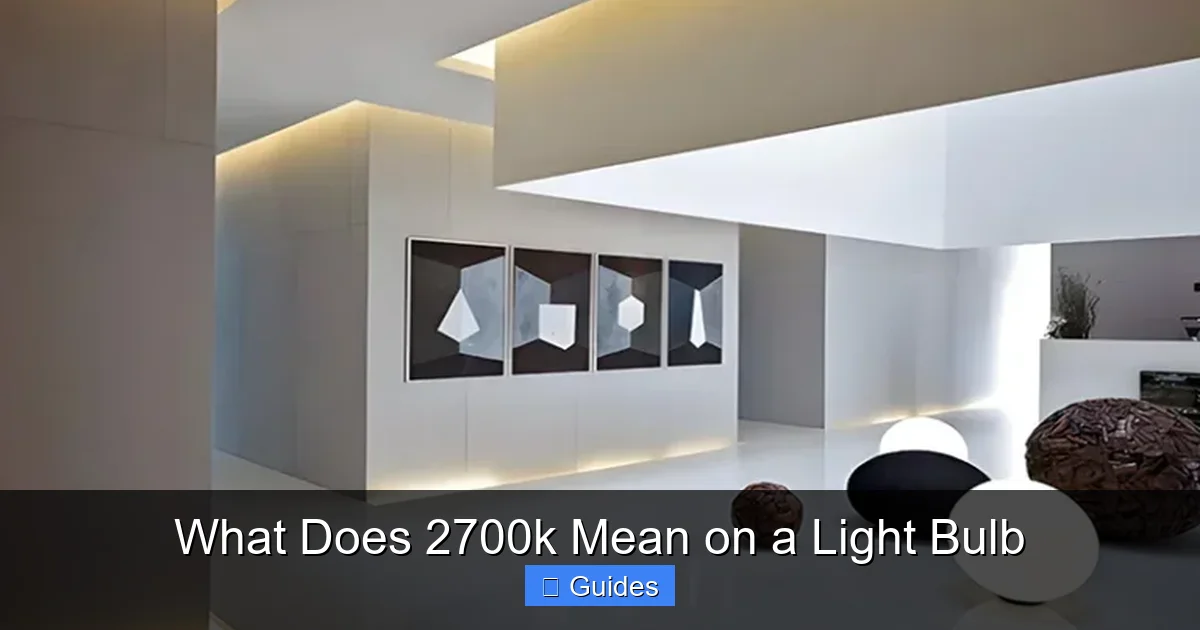
When you see “2700K” on a light bulb’s packaging, it’s telling you precisely what kind of light color you can expect. It means the bulb will emit a light that is distinctly warm white. Imagine the gentle, inviting glow of an old-fashioned incandescent bulb – that’s 2700K in a nutshell. This color temperature is synonymous with comfort, relaxation, and a welcoming atmosphere.
Visual guide about What Does 2700k Mean on a Light Bulb
Image source: essenled.com
The Incandescent Legacy
For decades, traditional incandescent light bulbs were the standard in homes. These bulbs naturally produced light around 2700K to 2800K. As a result, our eyes and brains have become conditioned to associate this warm, slightly yellowish light with home, coziness, and nighttime relaxation. When newer, more energy-efficient lighting technologies like LEDs and CFLs emerged, manufacturers quickly recognized the importance of replicating this beloved incandescent glow. So, a 2700K LED light bulb is designed to perfectly mimic the familiar warmth you grew up with, but with far greater efficiency.
The Visual Experience of 2700K
So, what does 2700k mean on a light bulb in terms of what you actually see? Here’s a breakdown:
- Warm and Soft: The most defining characteristic is its warmth. It’s not harsh or sterile. Instead, it feels soft and gentle on the eyes.
- Yellowish-Orange Tint: You’ll notice a subtle yellow or orange hue, which is what gives it that cozy feel. This tint can make colors in your room appear richer and softer.
- Comforting Ambiance: 2700K light evokes a sense of comfort and ease. It’s the kind of light that encourages you to slow down, relax, and unwind.
- Enhances Skin Tones: This warm light is often flattering to skin tones, making people look healthier and more relaxed. This is why it’s popular in restaurants and homes.
- Lower Contrast: Compared to cooler lights, 2700K light tends to have lower contrast, which can be less stimulating and more calming for the eyes, especially in the evening.
In essence, choosing a 2700K light bulb means you’re choosing to create an environment that feels welcoming, intimate, and perfect for relaxation. It’s a classic choice for a reason.
The Ideal Applications for 2700K Lighting
Now that you understand what does 2700k mean on a light bulb, the next logical question is: where should you use it? The warm, inviting nature of 2700K makes it suitable for specific areas and purposes within your home. It’s all about matching the light to the activity and desired mood.
Creating Comfort and Coziness
The primary benefit of 2700K light is its ability to create a comfortable and cozy atmosphere. This makes it a perfect choice for:
- Living Rooms: This is arguably the most common and best application for 2700K. In your living room, you want a space where you can relax, entertain guests, or simply unwind with a book or movie. The warm glow of 2700K lighting promotes a sense of ease and makes the room feel more inviting. It can be used for general ambient lighting or in table and floor lamps to create pools of warmth.
- Family Rooms/Dens: Similar to living rooms, these spaces are for relaxation and informal gatherings. 2700K helps to create that laid-back, homey feel.
- Entryways and Hallways: First impressions matter! A warm 2700K light in an entryway or hallway welcomes guests with a soft, gentle glow, instantly making them feel at home.
Enhancing Ambiance for Social Spaces
Beyond personal comfort, 2700K is excellent for social settings where you want to foster conversation and intimacy:
- Dining Rooms: Imagine a romantic dinner or a festive meal with family. A warm 2700K light over the dining table, often paired with a dimmer, can enhance the mood, make food look more appetizing, and encourage longer, more relaxed conversations. It adds a touch of sophistication and warmth to any dining experience.
- Restaurants and Cafes: Many high-end or cozy restaurants intentionally use 2700K lighting (or even warmer, like 2200K) to create an intimate, sophisticated, and comfortable dining experience that encourages patrons to linger. You can replicate this professional ambiance in your own home.
Bedrooms: A Sanctuary of Warmth
Your bedroom should be a sanctuary, a place for rest and rejuvenation. 2700K light is supremely suited for this:
- Bedside Lamps: Reading before bed, or simply needing a soft light to navigate the room, benefits greatly from 2700K. It’s gentle on the eyes and helps your body prepare for sleep, unlike brighter, bluer lights that can disrupt melatonin production.
- General Bedroom Lighting: For overall ambient lighting in the bedroom, 2700K creates a calming environment that supports relaxation and sleep.
In short, if you want a room to feel warm, cozy, inviting, and conducive to relaxation or intimate conversation, choosing light bulbs with a 2700K rating is an excellent decision. It’s all about creating the right mood.
Contrasting 2700K with Other Color Temperatures
While 2700K is fantastic for creating warm, cozy spaces, it’s not a one-size-fits-all solution. Different activities and rooms benefit from different light colors. Understanding how 2700K compares to other popular color temperatures will help you make even smarter lighting choices throughout your home. Knowing what does 2700k mean on a light bulb is just the beginning.
3000K: A Slightly Less Warm White
Moving just a bit higher on the Kelvin scale, 3000K light is still considered “warm white,” but it’s noticeably less yellow than 2700K. It offers a slightly cleaner, whiter appearance while retaining a good degree of warmth. It’s a popular choice for:
- Kitchens (especially with warm finishes): If your kitchen has warm wood cabinets or earthy tones, 3000K can complement these finishes without feeling too stark.
- Bathrooms (with warm tones): Similar to kitchens, bathrooms with warm decor can benefit from 3000K for a clean yet inviting feel.
- Utility Rooms/Hallways: Where you might want a bit more clarity than 2700K offers, but still desire a welcoming atmosphere.
If 2700K feels a little too yellow for your taste in certain areas, 3000K often provides a pleasant middle ground.
4000K: Neutral White for Task Lighting
At 4000K, you’re firmly in “neutral white” or “cool white” territory. This light has very little yellow or blue, providing a crisp, clean light that can feel more energizing. It’s often compared to natural moonlight or bright morning light on a cloudy day. It’s excellent for:
- Kitchens (task areas): Under-cabinet lighting or main kitchen fixtures benefit from 4000K to provide clear visibility for cooking and food prep.
- Bathrooms (for grooming): 4000K provides excellent clarity for applying makeup, shaving, or other grooming tasks, as it renders colors more accurately than warmer lights.
- Home Offices/Workshops: Anywhere you need to focus, read, or perform detailed tasks, 4000K helps maintain alertness and reduce eye strain.
- Garages/Laundry Rooms: These utilitarian spaces benefit from the bright, clear light of 4000K for practical tasks.
While 4000K is efficient and clear, it can feel too cool or sterile for living areas where you want to relax. It’s a matter of purpose.
5000K and Beyond: Bright Daylight
Once you hit 5000K and higher (up to 6500K), you’re looking at “daylight” or “cool daylight.” This light has a distinct bluish-white tint, closely mimicking the bright light of midday sun. It’s highly stimulating and invigorating, making it ideal for:
- Commercial Spaces/Retail: To highlight products and keep people alert.
- Art Studios/Workspaces requiring true color rendering: Where color accuracy is paramount.
- Security Lighting Outdoors: Its brightness can be effective for outdoor illumination.
For most residential settings, 5000K and above are generally too harsh and bright for indoor living spaces, often causing a cold or clinical feeling. It’s really important to avoid using these cooler temperatures in bedrooms or living areas if you want a relaxing atmosphere.
The takeaway here is that there’s a spectrum of light colors, and each has its place. Knowing what does 2700k mean on a light bulb for warmth, and how it differs from cooler options, empowers you to create a harmonious lighting scheme throughout your home.
Beyond Color Temperature: Other Factors to Consider When Choosing Bulbs
Understanding “what does 2700k mean on a light bulb” is a crucial step, but it’s not the only factor. To make truly informed decisions, you’ll want to consider a few other specifications printed on the bulb packaging.
Lumens: Brightness, Not Color
While Kelvin tells you the color of the light, lumens tell you its brightness. It’s a common misconception that a higher Kelvin rating means a brighter bulb. Not true! A 2700K bulb can be just as bright (or dim) as a 5000K bulb if they have the same lumen output. When choosing a bulb, consider both Kelvin (for color) and lumens (for brightness) to get the perfect combination for your space. For instance, a reading lamp might need higher lumens at 2700K, while an accent light might need lower lumens, still at 2700K.
CRI (Color Rendering Index): True Colors
The Color Rendering Index (CRI) measures how accurately a light source reveals the true colors of objects compared to natural light. A CRI of 100 is perfect (like natural daylight). Most good quality LED bulbs today have a CRI of 80 or higher, which is generally fine for residential use. For areas where color accuracy is important, like an art studio or a bathroom where you apply makeup, look for a CRI of 90 or above. While 2700K describes the *hue*, CRI describes how *faithfully* that hue will display the colors of your furniture, paint, and skin.
Dimmability and Smart Features
If you love setting the mood, dimmable bulbs are a must-have, especially with 2700K lighting. Dimming a 2700K bulb can make it feel even warmer and more intimate, sometimes even shifting slightly towards a deeper amber as it dims (a feature called “warm dim” or “dim-to-warm” in some advanced LEDs). Check the packaging to ensure your chosen bulb is dimmable if you plan to use it with a dimmer switch. Smart bulbs take this a step further, allowing you to control brightness, and often even color temperature, from your phone or voice assistant. Some smart bulbs can even go from 2700K to 6500K with a single bulb!
Bulb Shape and Base
Don’t forget the practicalities! Ensure the bulb shape (e.g., A19, BR30, candelabra) and base type (e.g., E26, E12) match your fixture. Even if you pick the perfect 2700K light, it won’t do you any good if it doesn’t fit!
Conclusion
So, what does 2700k mean on a light bulb? It’s much more than just a number; it’s a promise of warmth, comfort, and an inviting atmosphere. This specific color temperature brings a soft, yellowish-white light that closely mimics the beloved glow of traditional incandescent bulbs, making it ideal for creating cozy and relaxing spaces in your home.
By understanding the Kelvin scale and the unique characteristics of 2700K, you’re now equipped to make informed decisions that go beyond just brightness. You can intentionally design the mood and feel of each room, turning your living room into a haven of relaxation, your dining room into an intimate gathering space, and your bedroom into a peaceful sanctuary. Remember to balance color temperature with factors like lumens, CRI, and dimmability to achieve a truly personalized and effective lighting scheme.
The next time you’re in the light bulb aisle, you won’t just see numbers and letters. You’ll see opportunities to sculpt light and create environments that truly enhance your home and well-being. Embrace the warmth of 2700K and enjoy the beautiful ambiance it brings!
🎥 Related Video: 2700k light vs 5000k
📺 Handydad Life
Comparing the difference between 2700k, 3000k and 5000k light bulbs. Which one is more yellow vs which one is more white.
Frequently Asked Questions
What is the difference between 2700K and 3000K?
The main difference between 2700K and 3000K lies in their warmth. 2700K emits a very warm, soft white light with a noticeable yellowish-orange tint, closely resembling traditional incandescent bulbs. 3000K is still considered warm white but is slightly less yellow and appears a bit cleaner and brighter while maintaining a cozy feel.
Is 2700K good for a kitchen?
Whether 2700K is good for a kitchen depends on your preference and kitchen style. While it creates a warm, inviting ambiance, some people prefer brighter, more neutral light (like 3000K or 4000K) in a kitchen for better visibility during cooking and tasks. If your kitchen has warm tones and you prioritize atmosphere over task clarity, 2700K can work, especially for ambient lighting.
Can 2700K light be used in a bathroom?
2700K light can be used in a bathroom if you aim for a spa-like, relaxing atmosphere. However, for tasks like applying makeup or shaving, which require accurate color rendering and clear visibility, a slightly cooler temperature like 3000K or 4000K is often preferred. You might consider using 2700K for ambient or accent lighting, paired with brighter task lighting at a higher Kelvin.
Does 2700K affect paint colors?
Yes, 2700K light can definitely affect how paint colors appear. Its warm, yellowish tint will enhance warm colors (reds, oranges, yellows) and soften or slightly warm up cooler colors (blues, greens). If you have crisp white or cool-toned paint, 2700K will likely make it appear softer, creamier, or even slightly yellow, rather than its true cool hue.
Is 2700K considered “warm dim”?
The term “warm dim” or “dim-to-warm” refers to a specific type of LED bulb that changes its color temperature to become even warmer (often mimicking candlelight, dropping below 2700K) as it is dimmed. A standard 2700K bulb will simply become less bright when dimmed, maintaining its 2700K color, unless it explicitly states “warm dim” as a feature.
Is 2700K suitable for outdoor lighting?
2700K is often a great choice for outdoor lighting, especially for accentuating architectural features, landscaping, or creating a welcoming path. Its warm glow can add charm and make your home look inviting from the outside, much like a cozy interior. For security purposes where maximum visibility is needed, higher Kelvin options might be considered, but 2700K works wonderfully for ambiance.
