


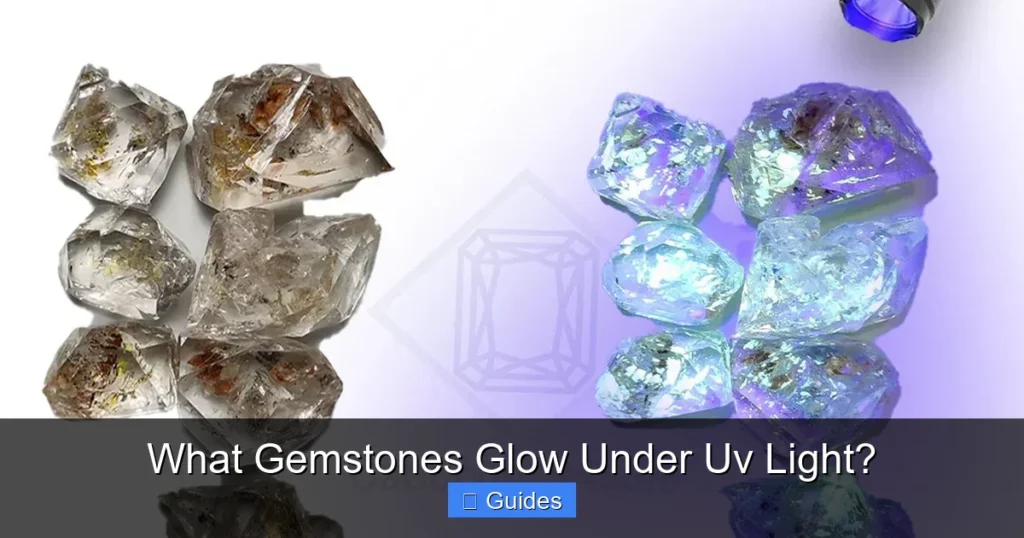
Ever wondered what gemstones glow under UV light? This captivating phenomenon, known as fluorescence, occurs when certain gems absorb ultraviolet radiation and re-emit it as visible light. From fiery red rubies to mystical blue sodalite, a diverse array of gemstones reveal breathtaking hidden colors under a simple UV lamp, making them a delight for collectors and a fascinating subject for gem enthusiasts.
Have you ever walked into a dark room, shined a special light, and watched an ordinary object suddenly burst into vibrant, otherworldly colors? It’s a bit like magic, right? Well, prepare to be enchanted, because the world of gemstones holds a similar, dazzling secret, just waiting to be revealed under the right conditions. We’re talking about the incredible phenomenon of fluorescence, where certain beautiful stones come alive, glowing with an inner light when exposed to ultraviolet (UV) radiation.
It’s not just a cool party trick; understanding what gemstones glow under UV light is a fascinating journey into the physics of light and the unique properties of minerals. For centuries, people have been captivated by gemstones that exhibit this hidden brilliance. Imagine holding a seemingly ordinary diamond that, under a simple UV lamp, emits a stunning blue light, or a piece of opal transforming into a glowing green marvel. This guide will shine a light on this captivating world, explaining why and how certain gems fluoresce, and introducing you to some of the most spectacular examples you can find.
Whether you’re a seasoned gem collector, a budding enthusiast, or just someone curious about the wonders of the natural world, discovering what gemstones glow under UV light adds an entirely new dimension to your appreciation of these treasures. So, grab your imaginary UV lamp, and let’s delve into the radiant realm of fluorescent gemstones – you might just find your next favorite glowing gem!
Key Takeaways
- Fluorescence is the Key: Many gemstones “glow” because they exhibit fluorescence, absorbing invisible UV light and re-emitting it as visible light almost immediately. Phosphorescence is a similar but rarer effect where the glow lingers after the UV source is removed.
- Common Glowing Gemstones: Diamonds (especially blue), rubies, sapphires, fluorite, hyalite opal, willemite, sodalite, amber, and some zircons are well-known for their captivating fluorescence under UV light.
- Not All Gems Glow: Fluorescence is not universal; it depends on trace elements (activators) within the gem’s crystal structure and the absence of quenching elements. Even within the same gem species, not every specimen will fluoresce.
- UV Light Types Matter: Gemstones can react differently to long-wave UV (UVA), short-wave UV (UVC), and sometimes even mid-wave UV (UVB). A good UV lamp for collectors should offer both long-wave and short-wave options.
- Practical Applications: UV light is used by gemologists for identification, detecting treatments (like heating or dyeing), and distinguishing natural gems from synthetics or imitations. For collectors, it reveals a hidden beauty.
- Safety First: Always use UV light sources safely. Avoid direct eye exposure to UV rays and use protective eyewear, especially with short-wave UV lamps, which can be harmful.
- Enhances Appreciation: Exploring gemstones under UV light adds an exciting dimension to collecting, revealing vibrant, often unexpected colors that are invisible in natural light and highlighting the unique characteristics of each stone.
Quick Answers to Common Questions
Can all gemstones glow under UV light?
No, not all gemstones glow under UV light. Fluorescence depends on the presence of specific trace elements or structural defects within the gem’s crystal lattice that act as “activators.”
Is UV light harmful to gemstones?
Generally, short-term exposure to UV light for examination is not harmful to most gemstones. However, prolonged exposure to intense UV, especially UVC, can potentially alter the color of some gems (like certain topazes) or cause minor degradation over very long periods.
What is the most common color of fluorescence in diamonds?
The most common color of fluorescence observed in diamonds is blue, accounting for the vast majority of fluorescent diamonds.
Can synthetic gemstones glow under UV light?
Yes, many synthetic gemstones are designed to mimic the fluorescence of their natural counterparts or exhibit a distinct fluorescent reaction that helps gemologists identify them as synthetic.
What’s the difference between fluorescence and phosphorescence in simple terms?
Fluorescence means the glow stops immediately when the UV light is removed. Phosphorescence means the glow continues for a short period after the UV light is turned off.
📑 Table of Contents
- The Science Behind the Glow: Fluorescence and Phosphorescence
- Understanding UV Light: Not All Rays Are Equal
- What Gemstones Glow Under UV Light? A Dazzling List
- Factors Influencing Fluorescence in Gemstones
- Practical Applications and Tips for Exploring Glowing Gemstones
- Beyond the Glow: A World of Optical Wonders
- Conclusion: The Secret Life of Glowing Gems
The Science Behind the Glow: Fluorescence and Phosphorescence
Before we dive into specific gems, let’s understand the basic science behind why some gemstones glow under UV light. The key terms here are “fluorescence” and “phosphorescence,” both forms of luminescence.
What is Fluorescence?
Fluorescence is an optical phenomenon where a substance absorbs light at one wavelength (like invisible UV light) and immediately re-emits it at a longer, visible wavelength. Think of it like a light energy transaction: the gemstone takes in high-energy UV photons and releases them as lower-energy visible light photons. This glow only lasts as long as the UV light source is active. The moment you turn off the UV lamp, the glow stops almost instantly. The specific color of the fluorescent glow (blue, green, red, yellow, etc.) depends on the impurities or structural defects within the gemstone that act as “activators.”
What is Phosphorescence?
Phosphorescence is very similar to fluorescence, but with one crucial difference: the glow lingers after the UV light source has been removed. This means the absorbed energy is stored for a brief period before being re-emitted as visible light. If you turn off the UV lamp and the gemstone continues to glow for a few seconds or even minutes, you’re witnessing phosphorescence. While less common than pure fluorescence in gemstones, some materials exhibit both.
The Role of Impurities and Activators
The magic of fluorescence in gemstones often comes down to trace amounts of specific elements called “activators.” These are usually transition metals (like manganese, chromium, iron) or rare earth elements (like uranium, lanthanides) incorporated into the gem’s crystal lattice. For example, chromium is a common activator for red fluorescence in rubies, while traces of boron or nitrogen in diamonds can cause blue fluorescence. The absence of “quenching” elements, which would absorb the energy and prevent it from being re-emitted as light, is also vital.
Understanding UV Light: Not All Rays Are Equal
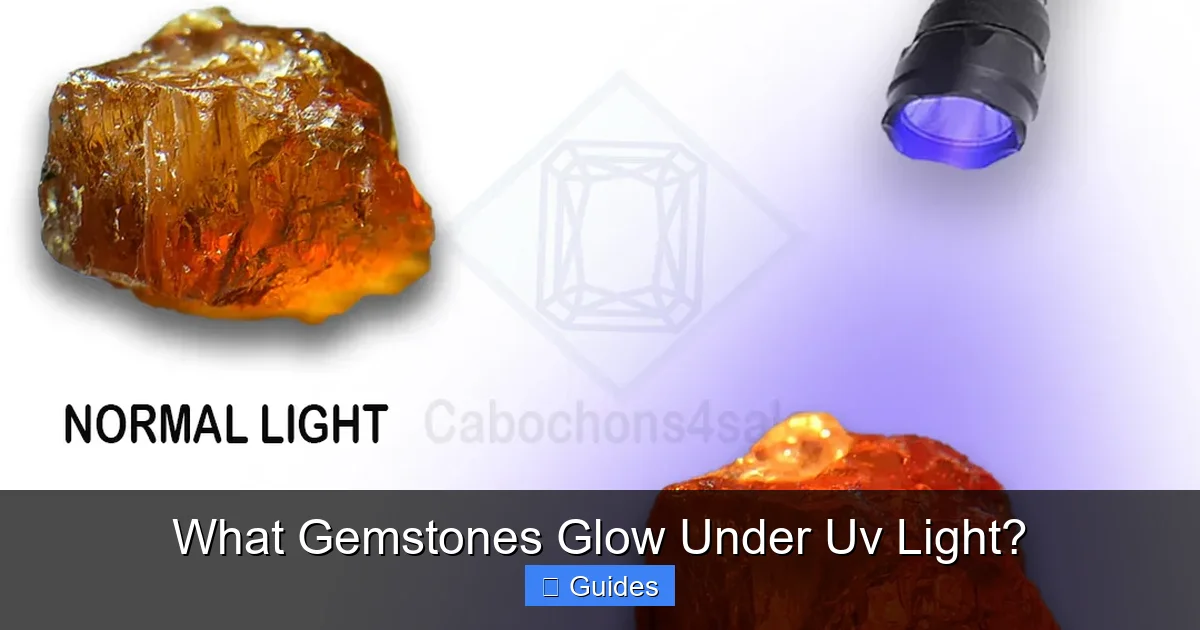
Visual guide about What Gemstones Glow Under Uv Light?
Image source: cdn.shopify.com
When we talk about gemstones glowing under UV light, it’s important to know that not all UV light is the same. UV radiation is divided into different wavelengths, and gemstones can react differently to each.
Long-Wave UV (UVA)
This is the safest form of UV light for casual use and is what most common “black lights” emit. UVA lamps have wavelengths ranging from approximately 315 to 400 nanometers (nm). Many gemstones that fluoresce do so strongly under long-wave UV.
Short-Wave UV (UVC)
Short-wave UV is more energetic and can cause some gems to fluoresce differently, or even glow when they don’t under long-wave UV. UVC lamps have wavelengths from about 100 to 280 nm. **Caution:** Short-wave UV can be harmful to eyes and skin, so always use appropriate protective eyewear and avoid direct exposure when using UVC lamps.
Mid-Wave UV (UVB)
Less commonly used in gemology, mid-wave UV (280-315 nm) can sometimes elicit unique reactions in certain gemstones. Most hobbyist UV lamps focus on long-wave and short-wave capabilities.
For serious collectors or gemologists, a UV lamp that offers both long-wave and short-wave capabilities is ideal, as it allows for a more comprehensive assessment of a gemstone’s fluorescent properties.
What Gemstones Glow Under UV Light? A Dazzling List
Now for the exciting part! Let’s explore some of the most notable gemstones and minerals that exhibit captivating fluorescence under UV light.
Diamonds: The Blue Glow
Perhaps the most famous example of a gemstone that glows under UV light is the diamond. Around 25-35% of natural diamonds fluoresce, most commonly with a blue color, though yellow, green, or orange fluorescence can also occur. The intensity can range from faint to very strong. The presence of nitrogen impurities in the diamond’s crystal structure is often responsible for this blue glow. While some people prefer non-fluorescent diamonds, blue fluorescence generally does not negatively impact a diamond’s appearance in natural light and can even make slightly yellowish diamonds appear whiter.
Rubies: Fiery Red
Natural rubies, especially those from certain origins like Myanmar (Burma), are renowned for their intense red fluorescence under UV light. This red glow can enhance the gem’s color, making it appear even more vivid and fiery. The presence of chromium is the activator here. Many synthetic rubies also fluoresce strongly, making UV light a useful tool in distinguishing them from natural stones in some cases.
Sapphires: Often Inert, Sometimes Surprising
While rubies (a variety of corundum) are famous for their fluorescence, sapphires (also corundum) typically do not fluoresce strongly, if at all, especially blue sapphires. However, some pink, purple, or colorless sapphires can show orange or red fluorescence due to chromium, similar to rubies. The presence of iron in blue sapphires often quenches any potential fluorescence.
Hyalite Opal: The Green Wonder
This is one of the most spectacular fluorescent gemstones! Hyalite opal, a colorless and glassy variety of opal, typically forms in botryoidal (grape-like) masses. Under long-wave UV light, it transforms into an incredibly vibrant, neon green glow. This vivid green is due to the presence of trace amounts of uranium. Don’t worry, the uranium content is usually very low and poses no significant health risk, but it’s what gives this opal its unforgettable glow.
Fluorite: A Kaleidoscope of Colors
Fluorite is literally where the term “fluorescence” comes from! This mineral is famous for its wide range of colors in visible light and an equally diverse fluorescent display. Fluorite can glow blue, green, purple, white, and even red under UV light, depending on its trace impurities (often rare earth elements). Some specimens even exhibit phosphorescence.
Willemite, Zincite, and Franklinite: A Mineralogical Trio
Often found together in deposits from Franklin and Ogdensburg, New Jersey, this trio of minerals creates one of the most stunning fluorescent displays. Willemite glows bright green, zincite glows orange-yellow, and franklinite (a dark, non-fluorescent mineral) provides a striking contrast, making these specimens highly prized by collectors of fluorescent minerals. While not typically cut as faceted gemstones, they are often found as polished cabochons or rough specimens in collections.
Sodalite and Hackmanite: The Blue-Orange Shift
Sodalite can exhibit orange fluorescence, but its rare cousin, Hackmanite (a variety of sodalite), is even more fascinating. Hackmanite is known for its “tenebrescence” or “reversible photochromism,” meaning it changes color when exposed to UV light and then fades back in visible light. Some Hackmanite specimens will show a vivid orange or pink fluorescence under UV light, and then display a beautiful lavender to raspberry red color in natural light after UV exposure.
Amber: Earth’s Ancient Resin
Amber, fossilized tree resin, is known for its beautiful warmth and inclusions. Many amber specimens, particularly those from the Baltic region, exhibit a distinct blue or green fluorescence under long-wave UV light. This glow can often reveal internal fractures, inclusions, or even clarity enhancements that might not be visible in natural light.
Zircon: A Mixed Bag
While many zircons do not fluoresce, some specimens, particularly those from Sri Lanka, can show a yellow or orange fluorescence. This is often due to the presence of uranium and thorium impurities. The intensity can vary greatly.
Other Notable Gemstones and Minerals:
- Calcite: Extremely common and diverse, calcite can fluoresce red, pink, blue, white, or green, often due to manganese.
- Scapolite: Some scapolite specimens from various localities can show a strong pink-orange or yellow fluorescence.
- Grandiderite: While rare, some grandidierite from Madagascar has been reported to show a reddish-orange fluorescence.
- Tugtupite: This rare mineral from Greenland is known for its strong red fluorescence under UV light, and it also exhibits tenebrescence, changing from white to deep red when exposed to UV.
- Benitoite: The official state gem of California, bixbite, is known for its vivid blue fluorescence under short-wave UV.
Factors Influencing Fluorescence in Gemstones
Why do some diamonds glow blue, others yellow, and some not at all? It’s all about the subtle chemistry and structure of the individual stone.
Trace Elements and Impurities
As mentioned, specific trace elements like manganese, chromium, uranium, or rare earth elements act as “activators,” absorbing UV energy and re-emitting it as visible light. The type and concentration of these activators determine the color and intensity of the glow.
Crystal Structure and Defects
Even without specific trace elements, defects or irregularities in a gemstone’s crystal lattice can sometimes create “color centers” that fluoresce. For instance, specific structural defects in diamonds can cause green fluorescence.
Quenching Elements
Just as activators cause a glow, certain elements can “quench” or suppress fluorescence. Iron, in particular, is a strong quencher. This is why iron-rich sapphires generally don’t fluoresce, even if they might contain potential activators.
Geological Origin
The geological environment where a gemstone formed can influence the presence of both activating and quenching elements. For example, rubies from certain regions are known for stronger fluorescence due to specific geological conditions.
Treatments and Synthetics
UV light is an invaluable tool for gemologists to detect treatments. For instance, some heated rubies might show a different fluorescent reaction than unheated ones. Similarly, many synthetic gemstones are designed to mimic natural fluorescence or to have a distinct fluorescent signature that helps differentiate them from their natural counterparts. For example, some synthetic diamonds have a very strong, uniform blue fluorescence that can be different from natural diamonds.
Practical Applications and Tips for Exploring Glowing Gemstones
Beyond the sheer wonder, understanding what gemstones glow under UV light has practical uses for collectors, buyers, and gemologists alike.
Identifying Gemstones and Detecting Treatments
Gemologists frequently use UV light as a preliminary diagnostic tool. It can help:
- Distinguish synthetics from natural gems: Many synthetic rubies and emeralds have characteristic fluorescent reactions.
- Identify treatments: Some dyes, fillers, or heat treatments can alter a gem’s fluorescence. For example, certain polymer resins used to fill fractures in emeralds will fluoresce distinctly.
- Separate lookalikes: If you suspect a stone might be fluorite, its strong, characteristic fluorescence can be a good indicator.
For the Gem Collector and Enthusiast
For those who collect, a UV lamp opens up a whole new world of appreciation:
- Reveal Hidden Beauty: It’s incredibly exciting to see a dull-looking stone suddenly come alive with vibrant color. It adds a “secret” dimension to your collection.
- Display Enhancement: Fluorescent minerals and gemstones make stunning displays in a dedicated “black light” cabinet.
- Educational Tool: It helps you understand the geological history and chemical composition of your specimens.
Tips for Using a UV Lamp:
- Invest in a Good Lamp: Look for a lamp that offers both long-wave (UVA) and short-wave (UVC) capabilities. Portable, battery-powered lamps are convenient for examining stones in different settings.
- Safety First: Always use protective eyewear (UV-blocking glasses) when operating any UV lamp, especially short-wave. Never look directly into the UV light source. Keep short-wave UV away from skin exposure.
- Examine in a Dark Room: For the best results, examine your gemstones in a completely dark room or a dark box. Even ambient light can diminish the fluorescent effect.
- Experiment with Distances: Hold the lamp at different distances from the stone. Sometimes, a closer distance enhances the glow, but be mindful of heat generated by powerful lamps.
- Test All Sides: Rotate the gemstone and examine it from all angles, as fluorescence can sometimes be localized or stronger on certain facets or surfaces.
Beyond the Glow: A World of Optical Wonders
While fluorescence is truly captivating, it’s just one of many amazing optical phenomena gemstones can exhibit. Other fascinating properties include:
- Play-of-Color: As seen in precious opal, where iridescent flashes of spectral colors shift and change as the stone is moved.
- Chatoyancy: The “cat’s eye” effect, a silky band of light that moves across the surface of gems like chrysoberyl or tiger’s eye.
- Asterism: The “star” effect, where intersecting bands of light create a star shape on the surface of cabochon-cut gems like star sapphires or star rubies.
- Adularescence: The “schiller” or “moonstone effect,” a milky, bluish-white light that seems to float across the surface of moonstone.
These phenomena, alongside fluorescence, remind us of the incredible diversity and hidden beauty within the mineral kingdom, inviting us to look closer and appreciate the intricate wonders beneath the surface.
Conclusion: The Secret Life of Glowing Gems
The world of gemstones is full of surprises, and few are as delightful as discovering what gemstones glow under UV light. From the dazzling blue of a diamond to the fiery red of a ruby or the otherworldly green of hyalite opal, these fluorescent wonders reveal a secret life, hidden from the naked eye. The interplay of trace elements, crystal structure, and specific light wavelengths transforms ordinary stones into glowing marvels, offering a unique glimpse into their chemical makeup and geological history.
Whether you’re using UV light to identify gems, detect treatments, or simply to marvel at their unexpected brilliance, exploring fluorescence adds an exciting new dimension to your appreciation of these natural treasures. So, next time you encounter a beautiful gem, remember that there might be a hidden light show waiting to be unleashed. Grab a UV lamp, dim the lights, and prepare to be amazed by the radiant world of glowing gemstones!
🎥 Related Video: What minerals show fluorescence under UV light?
📺 Rock Identifier App
Frequently Asked Questions
What causes a gemstone to glow under UV light?
A gemstone glows under UV light due to fluorescence, a process where it absorbs invisible ultraviolet radiation and re-emits it as visible light. This is typically caused by trace amounts of specific elements (activators) or structural defects within the gem’s crystal lattice.
Is the glow from fluorescent gemstones permanent?
The glow itself is not permanent; it only occurs when the gemstone is exposed to UV light (fluorescence) or for a short period afterward (phosphorescence). The chemical properties that allow the gem to glow, however, are inherent to the stone and are permanent.
Does fluorescence affect the value of a gemstone?
For most gemstones, fluorescence does not significantly affect value, though strong fluorescence in diamonds can sometimes be perceived negatively by some buyers if it causes a milky appearance, which is rare. For collector’s minerals, strong fluorescence can actually increase desirability and value.
Which UV light wavelength is best for observing gemstone fluorescence?
Many gemstones react well to long-wave UV (UVA), which is commonly found in “black lights.” However, some gemstones only fluoresce under short-wave UV (UVC) or display different colors under different wavelengths, so a lamp with both options is ideal for comprehensive examination.
Can UV light be used to identify real vs. fake gemstones?
UV light can be a useful tool in identifying certain natural gems, detecting treatments, and distinguishing synthetics, but it’s rarely a standalone diagnostic. It provides helpful clues that gemologists combine with other tests to make definitive identifications.
Are fluorescent gemstones safe to handle?
Yes, fluorescent gemstones themselves are perfectly safe to handle. The concern lies with the UV light source. Always use appropriate eye protection and avoid direct skin exposure, especially with short-wave UV lamps, as UV radiation can be harmful.
