


As an Amazon Associate, We earn from qualifying purchases.
A CFL light bulb, or Compact Fluorescent Lamp, is a type of fluorescent lamp designed to replace incandescent light bulbs. They operate by using electricity to excite mercury vapor, which produces ultraviolet light that then stimulates a phosphor coating inside the bulb to emit visible light. CFLs became popular for their significant energy efficiency and longer lifespan compared to traditional incandescent bulbs, although they have largely been superseded by LED technology.
Ever walked into a room, flipped a switch, and seen that telltale spiral of light slowly brighten? If so, you’ve likely encountered a CFL light bulb. For decades, these compact, curly lamps were hailed as the future of lighting, a significant leap forward from the energy-hungry incandescent bulbs that came before them. They promised a greener, more efficient way to light our homes and offices, and for a long time, they delivered on that promise.
But what exactly is a CFL light bulb, and why did it become such a household name? Before the widespread adoption of LED technology, CFLs were the go-to choice for anyone looking to save on their electricity bill and reduce their environmental footprint. They represented a bridge between old-world lighting and the ultra-efficient solutions we have today, playing a crucial role in shaping our understanding of energy conservation in everyday life. Let’s peel back the layers and understand the fascinating world of the Compact Fluorescent Lamp.
In this comprehensive guide, we’ll dive deep into the mechanics of how a CFL light bulb works, explore its historical significance, weigh its numerous benefits against its specific drawbacks, and discuss its place in the ever-evolving landscape of lighting technology. Whether you’re curious about the bulb still in your attic or want to understand the lineage of modern lighting, join us as we illuminate the story of the CFL.
Key Takeaways
- Energy Efficiency: CFL light bulbs consume significantly less electricity (up to 75% less) than traditional incandescent bulbs to produce the same amount of light, leading to lower energy bills.
- Long Lifespan: They typically last much longer, often 6 to 15 times longer, than incandescent bulbs, reducing the frequency of bulb replacements.
- How They Work: CFLs operate by passing an electric current through a tube containing argon and a small amount of mercury vapor, which emits UV light. This UV light then excites a phosphor coating on the inside of the tube, creating visible light.
- Environmental Concerns: Due to their mercury content, CFLs require special disposal procedures and should not be thrown in regular household trash to prevent mercury release into the environment.
- Warm-up Time & Light Quality: Some CFLs exhibit a warm-up period, taking a moment to reach full brightness, and their light quality (color temperature) can vary, sometimes differing from the warm glow of incandescents.
- Decline in Popularity: While revolutionary for their time, CFLs are now largely being replaced by Light Emitting Diode (LED) technology, which offers even greater efficiency, longer lifespan, and improved light quality without mercury.
Quick Answers to Common Questions
What does CFL stand for?
CFL stands for Compact Fluorescent Lamp.
Do CFL light bulbs contain mercury?
Yes, all CFL light bulbs contain a small amount of mercury vapor, which is essential for their light production process.
Are CFLs still available for purchase?
While their availability is declining, you might still find CFL light bulbs for sale in some stores, though they are increasingly being replaced by LED alternatives due to phasing-out regulations.
How much energy do CFLs save compared to incandescents?
CFLs typically use 70-75% less energy than incandescent bulbs to produce the same amount of light.
What is the main reason CFLs are being replaced by LEDs?
LEDs offer even greater energy efficiency, significantly longer lifespans, instant full brightness, no mercury content, and improved light quality compared to CFLs.
📑 Table of Contents
- What Exactly Is a CFL Light Bulb? Understanding the Technology
- The Rise to Prominence: Why CFLs Became a Household Name
- Understanding the Nuances: The Pros and Cons of CFL Light Bulbs
- CFLs in Context: How They Compare to Other Lighting Technologies
- Proper Handling and the Future of CFL Light Bulbs
- Conclusion: The Legacy of the CFL Light Bulb
What Exactly Is a CFL Light Bulb? Understanding the Technology
At its core, a CFL light bulb is a type of fluorescent lamp, but specifically designed to be compact enough to fit into the standard light fixtures that previously held incandescent bulbs. The acronym CFL stands for Compact Fluorescent Lamp. Unlike an incandescent bulb, which creates light by heating a filament until it glows, a CFL uses a completely different, more complex, and far more efficient process.
The Inner Workings: How a CFL Produces Light
Imagine a tiny lightning storm happening inside a coiled glass tube. That’s a simplified way to think about how a CFL light bulb works. Here’s a breakdown of the process:
- The Tube and Gas: The characteristic spiral or U-shaped glass tube of a CFL contains an inert gas, usually argon, and a tiny amount of mercury vapor. Yes, mercury! This is a key component, though it’s typically a very small amount, often less than the tip of a ballpoint pen.
- The Ballast: At the base of the CFL light bulb, hidden from view, is a small electronic circuit called a ballast. When you flip the switch, this ballast sends electricity through the gas in the tube.
- UV Light Generation: The electricity excites the mercury atoms within the vapor. When these excited mercury atoms return to their normal state, they emit invisible ultraviolet (UV) light.
- Phosphor Coating: The inner surface of the glass tube is coated with a phosphor material. This phosphor coating is the magic ingredient! When the invisible UV light hits this coating, the phosphor absorbs the UV energy and then re-emits it as visible light – the light we see. This process is called fluorescence.
- No Filament Heating: Because CFLs don’t rely on heating a filament to incandescence, they don’t waste nearly as much energy as heat, making them much more efficient at converting electricity into light.
This ingenious mechanism allows a small amount of electricity to produce a large amount of light, making the CFL light bulb a true powerhouse of energy efficiency compared to its predecessors.
The Rise to Prominence: Why CFLs Became a Household Name
For decades, the incandescent light bulb was king. It was simple, familiar, and produced a warm, comforting glow. But it was also incredibly inefficient, converting only about 10% of the electricity it consumed into light, with the other 90% lost as heat. As energy costs rose and environmental awareness grew, the demand for more efficient lighting solutions became pressing. This is where the CFL light bulb stepped into the spotlight.
Visual guide about What Is Cfl Light Bulb
Image source: lamphq.com
Energy Savings That Made a Difference
The primary driver behind the CFL’s widespread adoption was its remarkable energy efficiency. A 13-watt CFL light bulb could produce the same amount of light (lumens) as a 60-watt incandescent bulb. Think about that for a moment: you’re getting the same illumination for less than a quarter of the electricity usage! This translated directly into significant savings on household and commercial electricity bills, making them an attractive option for consumers and businesses alike.
Longevity: Less Frequent Bulb Changes
Beyond energy savings, the lifespan of a CFL light bulb was another huge selling point. While an incandescent bulb might last for 750 to 1,000 hours, a CFL typically offered a lifespan of 6,000 to 15,000 hours. This meant fewer trips to the store to buy replacement bulbs and less time spent on ladders changing them, particularly in hard-to-reach fixtures. This extended lifespan was a practical benefit that resonated deeply with users.
A Stepping Stone to Modern Efficiency
The CFL light bulb wasn’t just a product; it was a movement. It educated consumers about wattage vs. lumen output and introduced the concept of energy-efficient lighting on a mass scale. Government initiatives and utility rebates often encouraged the switch to CFLs, further accelerating their market penetration. They paved the way for future lighting innovations by demonstrating that high-quality, energy-saving alternatives to traditional lighting were not only possible but practical for everyday use.
Understanding the Nuances: The Pros and Cons of CFL Light Bulbs
While the CFL light bulb brought about a revolution in energy efficiency, like any technology, it came with its own set of advantages and disadvantages. Understanding these nuances is key to appreciating its place in lighting history and why it eventually gave way to newer technologies.
The Bright Side: Key Advantages
- Significant Energy Savings: As mentioned, this is the biggest advantage. CFLs use 70-75% less energy than incandescents for the same light output. This reduced energy consumption helps lower utility bills and decreases demand on power grids, leading to fewer greenhouse gas emissions.
- Extended Lifespan: Their longevity translates to less waste and inconvenience. For areas where bulbs are difficult to change, CFLs were a godsend.
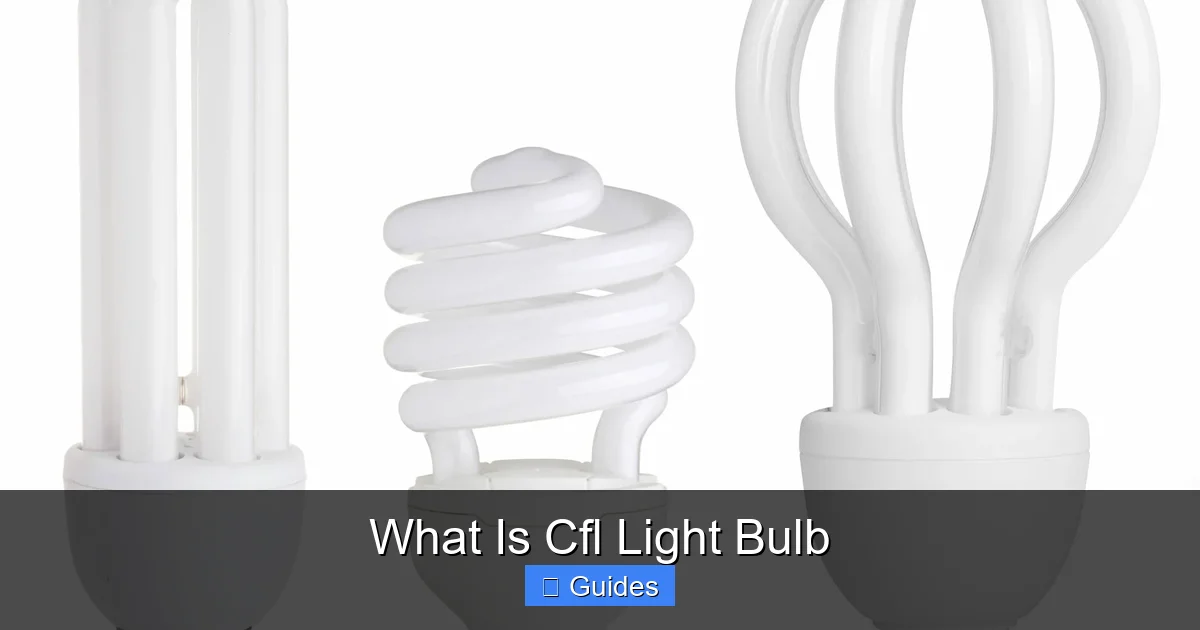
- Variety of Shapes and Sizes: While the spiral shape is iconic, CFLs came in many forms, including globe, candelabra, and covered bulbs, fitting a wide range of fixtures.
- Cooler Operation: Unlike incandescents that get very hot, CFLs produce much less heat, making them safer to handle and reducing cooling costs in illuminated spaces.
The Not-So-Bright Side: Drawbacks and Concerns
Despite their benefits, CFLs faced criticism and presented certain challenges:
- Mercury Content: This is arguably the most significant concern. Every CFL light bulb contains a small amount of mercury. While encapsulated within the bulb, if a bulb breaks, it can release mercury vapor, which is a neurotoxin. This necessitated special handling and disposal guidelines, differentiating them from regular trash.
- Warm-up Time: Many early CFLs and some current ones require a short warm-up period to reach full brightness. This could be anywhere from a few seconds to a minute or two, which was inconvenient for areas requiring instant light, like a closet.
- Light Quality and Color Temperature: Early CFLs often produced a stark, bluish-white light that many found unappealing compared to the warm glow of incandescents. While later models offered warmer color temperatures (measured in Kelvin, e.g., 2700K for “soft white”), some people still preferred the incandescent aesthetic.
- Dimming Issues: Not all CFL light bulbs were designed to be dimmable. Using a non-dimmable CFL with a dimmer switch could lead to flickering, buzzing, or even damage the bulb or switch. Dimmable CFLs were available but often more expensive and less common.
- Flickering and Noise: Some CFLs, especially older or lower-quality ones, could produce a noticeable flicker or an audible hum, which could be irritating to some users.
- Performance in Extreme Temperatures: CFLs generally perform best at moderate temperatures. In very cold environments (e.g., unheated garages or outdoor fixtures), they might take even longer to warm up, produce less light, or have a significantly reduced lifespan.
- Switching Cycles: While a CFL light bulb lasts a long time when continuously on, frequently turning it on and off can reduce its lifespan. This made them less ideal for motion-sensor lights or high-traffic areas where lights are constantly cycled.
CFLs in Context: How They Compare to Other Lighting Technologies
To truly appreciate the CFL light bulb, it helps to understand its place in the broader evolution of lighting. It emerged as a vastly superior alternative to incandescent bulbs and later found itself competing with the even more advanced LED technology.
CFL vs. Incandescent: A Clear Winner
When comparing a CFL light bulb to an incandescent bulb, the CFL was the undeniable champion in terms of efficiency and longevity. Incandescents were cheap to buy but expensive to run and required frequent replacement. CFLs offered a higher upfront cost but paid for themselves many times over through energy savings and extended life. This comparison was the foundation of the CFL’s market success.
- Efficiency: CFLs were 4-5 times more efficient.
- Lifespan: CFLs lasted 6-15 times longer.
- Heat Output: CFLs produced much less heat.
- Cost: CFLs had a higher initial cost but lower operating cost.
CFL vs. LED: The Next Generation Takes Over
While CFLs were a significant step forward, they eventually met their match in Light Emitting Diode (LED) technology. LEDs offer even greater efficiency, longer lifespans, and address many of the drawbacks associated with CFLs.
- Efficiency: LEDs are generally 20-30% more efficient than CFLs, and sometimes even more.
- Lifespan: LEDs boast incredibly long lifespans, often 25,000 to 50,000 hours or more, dwarfing even the best CFLs.
- Instant On: LEDs provide instant full brightness with no warm-up time.
- Dimming: Most LEDs are fully dimmable without issues.
- Durability: LEDs are solid-state devices with no fragile glass tubes or filaments, making them much more robust and resistant to breakage.
- Environmental Impact: LEDs contain no mercury, making their disposal much simpler and safer than CFLs.
- Cost: Initially, LEDs were very expensive, but their prices have dropped dramatically, making them competitive with and often superior to CFLs in terms of total cost of ownership.
Because of these clear advantages, LED technology has largely superseded the CFL light bulb as the preferred energy-efficient lighting solution globally. Many countries have phased out or significantly restricted the sale of CFLs due to the availability of better alternatives and concerns over mercury.
Proper Handling and the Future of CFL Light Bulbs
Even though LED technology is now dominant, many homes and businesses still have CFL light bulbs in operation. Understanding how to handle them, especially at the end of their life, is crucial for both safety and environmental responsibility.
Safe Handling and What to Do if a CFL Breaks
Because of the small amount of mercury inside a CFL light bulb, it’s important to handle them carefully. If a CFL breaks, the U.S. Environmental Protection Agency (EPA) recommends specific cleanup procedures to minimize exposure to mercury vapor:
- Ventilate: Have people and pets leave the room. Open windows and doors to the outside for 5-10 minutes.
- Cleanup Tools: Do NOT use a vacuum cleaner, as this can spread mercury vapor. Instead, use stiff paper or cardboard to scoop up glass fragments and powder. Use sticky tape to pick up smaller fragments.
- Containment: Place all cleanup materials, including the broken bulb, in a sealable container (like a glass jar with a metal lid or a heavy-duty plastic bag).
- Disposal: Take the sealed container to a local household hazardous waste facility. Check with your local waste management authority for specific guidelines.
Responsible Disposal: Recycling Your CFLs
One of the most important things to remember about a CFL light bulb is that it should never be thrown into regular household trash. Recycling CFLs is essential to prevent mercury from entering landfills and potentially contaminating soil and water. Many hardware stores (like Home Depot or Lowe’s), municipal recycling centers, and some utility companies offer free CFL recycling programs. Always check with your local recycling authority or an online resource like Earth911.com for nearby drop-off locations.
The Phasing Out of CFLs
Globally, the market for CFL light bulbs is shrinking rapidly. Regulations in many regions, including the European Union and parts of the United States, have already phased out or are in the process of phasing out CFLs, along with incandescents, in favor of more efficient and mercury-free LED lighting. This means that while you might still find CFLs for sale, their availability will continue to decrease. The era of the CFL light bulb as a leading lighting solution is largely over, but its legacy of pushing energy efficiency forward remains significant.
Conclusion: The Legacy of the CFL Light Bulb
The CFL light bulb carved out a vital chapter in the history of artificial lighting. It was a groundbreaking innovation that offered a compelling solution to the inefficiency of incandescent bulbs, playing a pivotal role in promoting energy conservation and reducing environmental impact for millions worldwide. Its curly, often instantly recognizable form became synonymous with “eco-friendly” and “energy-saving.”
While newer, superior LED technology has now taken center stage, it’s important not to forget the contributions of the CFL. It educated consumers on wattage vs. lumens, introduced the concept of bulb longevity, and proved that a transition to more sustainable lighting was not only possible but beneficial. Even with its drawbacks, like warm-up times and mercury content, the CFL light bulb served as a crucial stepping stone, bridging the gap between outdated technology and the brilliant, highly efficient lighting solutions we enjoy today. So, the next time you see a spiral bulb, remember the era it represented—a time when a small, compact fluorescent lamp truly changed how we saw the light.
Frequently Asked Questions
How do CFL light bulbs save energy?
CFLs save energy by using a process called fluorescence, which converts electricity into light much more efficiently than incandescent bulbs. Instead of heating a filament, they use UV light to excite a phosphor coating, wasting very little energy as heat.
What should I do if a CFL light bulb breaks in my home?
If a CFL breaks, evacuate the room for 5-10 minutes, open windows, and do not use a vacuum cleaner. Carefully scoop up all fragments with stiff paper or cardboard, use sticky tape for smaller pieces, and place everything in a sealed container for proper hazardous waste disposal.
Can CFLs be used with dimmer switches?
Only CFLs specifically labeled as “dimmable” should be used with dimmer switches. Using a non-dimmable CFL with a dimmer can cause flickering, buzzing, or damage to the bulb and the switch.
How should I dispose of old CFL light bulbs?
Old CFLs should not be thrown in regular trash due to their mercury content. They need to be recycled at designated collection points, such as local household hazardous waste facilities, participating retail stores, or municipal recycling centers.
Do CFL light bulbs really last longer than traditional bulbs?
Yes, CFLs typically last significantly longer than traditional incandescent bulbs. While incandescents might last 750-1,000 hours, a CFL light bulb can last anywhere from 6,000 to 15,000 hours, depending on the model and usage.
Are there any health concerns associated with CFLs?
The primary health concern with CFLs is the small amount of mercury they contain. While harmless when the bulb is intact, a broken bulb can release mercury vapor, which is a neurotoxin. This is why proper cleanup and disposal are crucial.
