


As an Amazon Associate, We earn from qualifying purchases.
Understanding how much a light bulb costs per month goes beyond the initial purchase price, encompassing crucial energy consumption. Factors like bulb type (LEDs being most efficient), electricity rates, and daily usage profoundly impact your monthly expenses. By making informed choices and adopting smart habits, you can significantly reduce your lighting bill and enjoy substantial long-term savings.
Ever found yourself staring at your electricity bill, wondering what exactly contributes to that grand total? It’s a common moment for many of us. We pay for heating, cooling, charging devices, and running appliances. But what about the humble light bulb? You switch it on every day, sometimes for hours. Have you ever stopped to think, “How much does a light bulb cost per month?”
It might seem like a small detail in the grand scheme of your household budget. After all, a single light bulb doesn’t consume as much power as, say, a refrigerator or an air conditioner. However, when you multiply that single bulb by all the lights in your home, and then factor in the hours they’re on, the numbers can start to add up surprisingly fast. Understanding the true monthly light bulb cost is the first step towards smarter energy use and real savings.
This isn’t just about the price tag of the bulb itself, though that’s certainly part of the equation. It’s mostly about the energy it consumes every single day, month after month. Let’s peel back the layers and uncover the real monthly light bulb cost, explore the different factors that influence it, and arm you with practical tips to keep your lighting expenses in check.
Key Takeaways
- True Cost = Purchase + Energy: The monthly cost of a light bulb isn’t just its upfront price, but primarily its ongoing energy consumption.
- LEDs are Cheapest Long-Term: While initially more expensive, LED bulbs offer the lowest monthly energy cost due to their superior energy efficiency and long lifespan.
- Usage Habits Matter Most: How long you leave lights on each day is the single biggest factor influencing your monthly energy bill for lighting.
- Electricity Rates Vary: Your local electricity rate (cost per kilowatt-hour, kWh) directly determines how much you pay for a light bulb’s energy consumption.
- Calculations Are Simple: You can easily estimate your monthly light bulb cost using a formula: (Watts / 1000) * Hours * Rate * Days.
- Smart Strategies Save Money: Switching to LEDs, optimizing usage, leveraging natural light, and using smart controls are key to significantly reducing your monthly light bulb expenses.
Quick Answers to Common Questions
How do I calculate the monthly cost of a light bulb?
You can calculate it using the formula: (Bulb Wattage in Watts / 1000) * (Hours of Daily Usage) * (Electricity Rate per kWh) * (Number of Days in the Month).
Which type of light bulb is cheapest per month?
LED (Light Emitting Diode) bulbs are the cheapest per month due to their extremely low energy consumption and very long lifespan, despite a higher upfront cost.
Does leaving a light on for a long time significantly increase my bill?
Yes, daily usage duration is one of the biggest factors. The longer a light is on, the more energy it consumes, directly increasing your monthly electricity bill for that bulb.
What is a good electricity rate per kWh to aim for?
Electricity rates vary widely by region, but generally, anything under $0.15/kWh is considered good, while rates above $0.20/kWh are relatively high. Check your local utility bill for your exact rate.
Can dimmers really save money on my monthly light bulb cost?
Yes, dimmers can save money. When you dim a light, it uses less electricity, thus reducing its energy consumption and contributing to a lower monthly light bulb cost. It also extends the bulb’s lifespan.
📑 Table of Contents
Understanding the True Cost: It’s More Than Just the Bulb
When we ask, “How much does a light bulb cost per month?” we often only think of the initial purchase. You grab a pack of bulbs at the store, pay a few dollars, and that’s it, right? Not quite. The true cost of a light bulb over its lifetime, especially on a monthly basis, is a combination of two main factors: its upfront price and, much more significantly, the electricity it consumes.
Initial Purchase Price vs. Operating Cost
Imagine you buy two different types of light bulbs. One costs $1, and the other costs $5. Intuitively, you might think the $1 bulb is cheaper. But if that $1 bulb uses a lot more electricity and burns out quickly, while the $5 bulb is super-efficient and lasts for years, which one is truly cheaper over time? Often, the initial purchase price is just a small fraction of the total cost of owning and operating a light bulb. The real money drain is in its continuous thirst for electricity.
The Energy Consumption Equation
Every time you flip a light switch, you’re not just getting light; you’re also consuming energy. This energy consumption is measured in watts (W). The higher the wattage, the more electricity the bulb uses, and the more it adds to your monthly electricity bill. This is where the cost really comes into play. A bulb that costs more upfront but uses significantly less energy can drastically reduce your monthly light bulb cost compared to a cheap, inefficient alternative.
Breaking Down Bulb Types and Their Monthly Impact
Not all light bulbs are created equal. In fact, they vary wildly in their energy efficiency, lifespan, and therefore, their monthly light bulb cost. Let’s look at the main types you’ll find today and how they stack up.
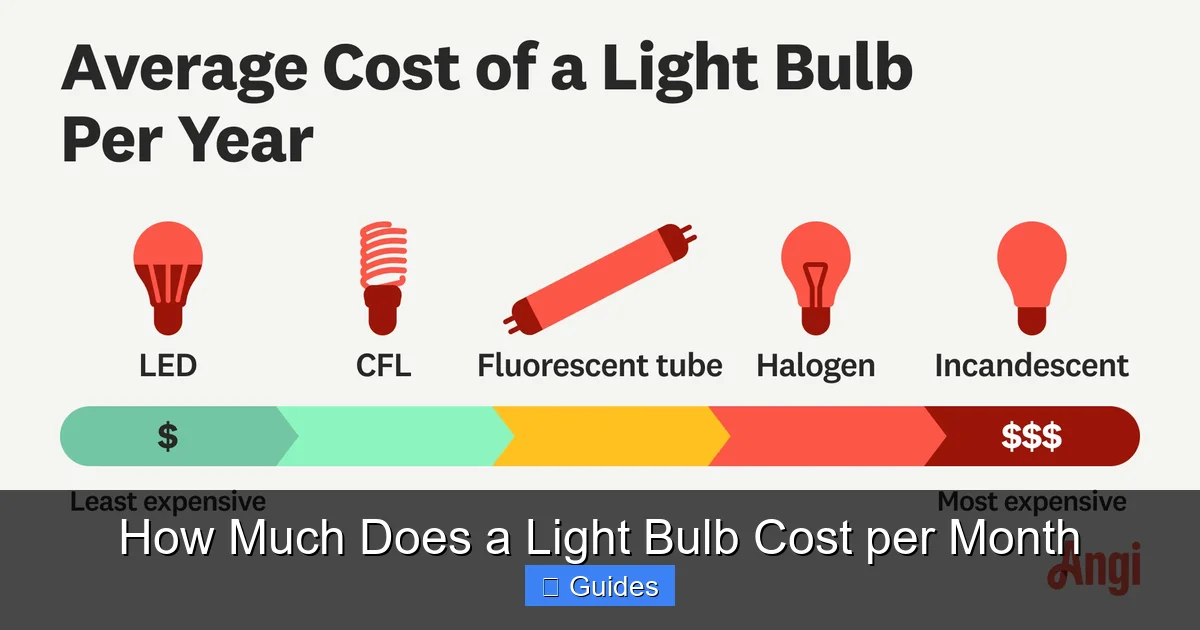
Visual guide about How Much Does a Light Bulb Cost per Month
Image source: media.angi.com
Incandescent Bulbs: The Classic Power Hogs
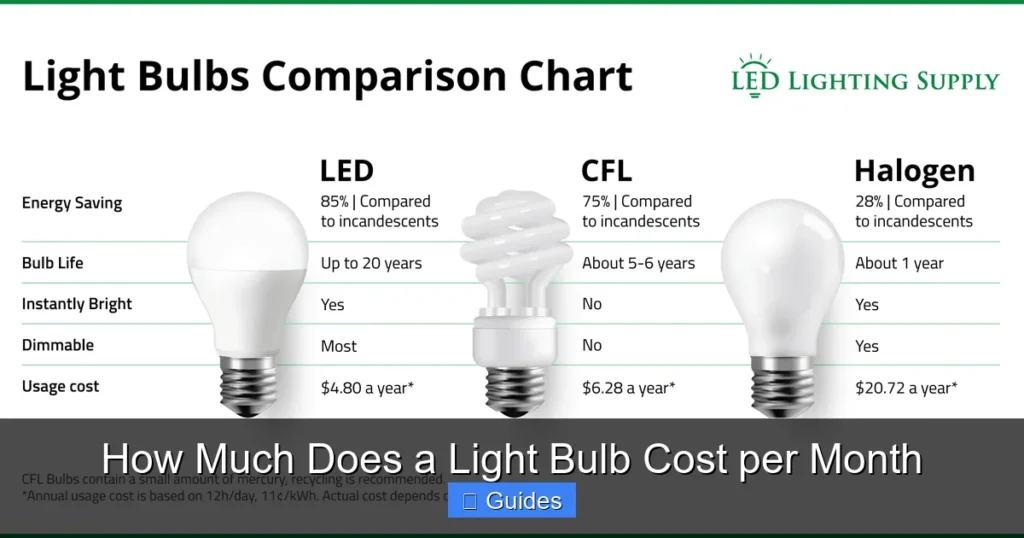
These are the traditional bulbs with a wire filament that glows when heated. They’re cheap to buy, but they are incredibly inefficient. About 90% of the energy they use is wasted as heat, not light! They also have a very short lifespan, typically around 750-1,000 hours. This means you’re buying them often, and they’re always driving up your monthly light bulb cost with their high energy usage.
- Energy Use: High (e.g., 60W for standard brightness)
- Lifespan: Short
- Monthly Cost Impact: Highest due to frequent replacement and high energy consumption.
Halogen Bulbs: A Slightly Better Incandescent
Halogen bulbs are a type of incandescent bulb, but they’re a bit more efficient and last a little longer. They use a halogen gas inside the bulb to increase brightness and lifespan. However, they still convert a lot of energy into heat. While they might be slightly better than traditional incandescents, they are still far from energy-efficient champions.
- Energy Use: Moderate-High (e.g., 43W for similar brightness to 60W incandescent)
- Lifespan: Medium (around 1,000-2,000 hours)
- Monthly Cost Impact: High, but slightly less than traditional incandescents.
CFL Bulbs: Energy Savers with a Twist
Compact Fluorescent Lamps (CFLs) were once considered the go-to energy-saving alternative. They use about 75% less energy than incandescents and last much longer, around 8,000-10,000 hours. While they offer significant savings on your monthly light bulb cost compared to older technologies, they have drawbacks like taking time to reach full brightness and containing a small amount of mercury.
- Energy Use: Low (e.g., 13W for similar brightness to 60W incandescent)
- Lifespan: Long
- Monthly Cost Impact: Low, a good improvement over incandescents/halogens.
LED Bulbs: The Modern Champions of Efficiency
Light Emitting Diodes (LEDs) are the current gold standard for lighting efficiency. They use dramatically less energy than any other type of bulb – up to 85% less than incandescents – and have an incredibly long lifespan, often 25,000 to 50,000 hours or even more. While they have a higher initial purchase price, their minimal energy use and durability make them by far the cheapest option when considering the overall and monthly light bulb cost. The savings are substantial and quickly recoup the initial investment.
- Energy Use: Very Low (e.g., 8-10W for similar brightness to 60W incandescent)
- Lifespan: Very Long
- Monthly Cost Impact: Lowest by a significant margin, making them the best choice for reducing your monthly light bulb cost.
Calculating Your Light Bulb’s Monthly Energy Cost
Now for the fun part: figuring out the actual numbers! Estimating how much a light bulb costs per month in terms of electricity is quite straightforward. You just need a few pieces of information:
- Bulb Wattage (W): How many watts does the bulb use? This is usually printed on the bulb or its packaging.
- Daily Usage (Hours): How many hours per day do you typically leave the light on?
- Electricity Rate (per kWh): How much does your electricity company charge per kilowatt-hour (kWh)? This information is on your electricity bill. It varies significantly by region and provider. For example, it might be $0.15/kWh.
The Formula: Watts, Hours, Rate
Here’s the simple formula to calculate the monthly energy cost for a single light bulb:
(Bulb Wattage in Watts / 1000) * (Hours of Daily Usage) * (Electricity Rate per kWh) * (Number of Days in the Month)
Why divide by 1000? Because electricity companies charge per kilowatt-hour (kWh), and 1 kilowatt (kW) equals 1000 watts.
Practical Examples for Different Bulb Types
Let’s use an example. Assume your electricity rate is $0.15 per kWh, and you use a particular light for 4 hours a day. We’ll calculate the monthly light bulb cost for a 30-day month:
Example 1: 60-Watt Incandescent Bulb
- Wattage: 60W
- Daily Usage: 4 hours
- Electricity Rate: $0.15/kWh
- Calculation: (60 / 1000) * 4 * 0.15 * 30 = 0.060 * 4 * 0.15 * 30 = $1.08
- Monthly Energy Cost: ~$1.08
Remember, this doesn’t include the cost of frequently replacing this short-lived bulb.
Example 2: 13-Watt CFL Bulb (equivalent to 60W incandescent)
- Wattage: 13W
- Daily Usage: 4 hours
- Electricity Rate: $0.15/kWh
- Calculation: (13 / 1000) * 4 * 0.15 * 30 = 0.013 * 4 * 0.15 * 30 = $0.23
- Monthly Energy Cost: ~$0.23
Example 3: 9-Watt LED Bulb (equivalent to 60W incandescent)
- Wattage: 9W
- Daily Usage: 4 hours
- Electricity Rate: $0.15/kWh
- Calculation: (9 / 1000) * 4 * 0.15 * 30 = 0.009 * 4 * 0.15 * 30 = $0.16
- Monthly Energy Cost: ~$0.16
As you can see, the difference in monthly light bulb cost between an incandescent and an LED is significant, even for just one bulb. Now, imagine you have 20 light fixtures in your home. That $1.08 per bulb quickly becomes $21.60 per month for incandescents, versus just $3.20 per month for LEDs for the same amount of light! That’s almost $20 saved every month just on the energy side for 20 bulbs, not to mention the reduced replacement costs. This clearly illustrates how much a light bulb costs per month can vary dramatically based on its type.
Factors That Inflate or Reduce Your Monthly Lighting Bill
Beyond the bulb type and its wattage, several other factors play a crucial role in determining your total monthly light bulb cost for your entire home. Let’s explore these.
Usage Habits: How Long Do You Leave Them On?
This is perhaps the most obvious factor. The longer a light is on, the more energy it consumes. Leaving lights on unnecessarily in empty rooms, forgetting to turn them off before bed, or simply keeping them on all day can significantly inflate your monthly light bulb cost. Being mindful of when and how long your lights are active can lead to immediate savings.
Electricity Rates: Location Matters
Your electricity rate (cost per kWh) is set by your utility company and can vary significantly depending on where you live. For example, someone in a state with low electricity rates might pay $0.10/kWh, while someone in another state might pay $0.25/kWh or more. This means the exact same bulb, used for the same amount of time, will have a very different monthly light bulb cost for different households. Check your electricity bill to find your specific rate.
Number of Bulbs: The More, The Merrier (for your bill)
This is simple math. One light bulb has a certain monthly energy cost. Ten light bulbs will have ten times that cost. A home with many fixtures and a preference for bright lighting will naturally have a higher overall monthly lighting bill. Each additional bulb adds to your total monthly light bulb cost.
Dimmer Switches and Smart Lighting
Modern lighting solutions can help reduce your monthly light bulb cost. Dimmer switches allow you to lower the light output, which in turn reduces energy consumption. Smart lighting systems, which can be controlled by apps or voice commands, offer even more sophisticated ways to save. You can set schedules, turn lights off remotely, or even have them react to motion or natural light levels, ensuring they’re only on when and where needed.
Smart Strategies to Slash Your Monthly Light Bulb Expenses
Understanding “how much does a light bulb cost per month” is great, but taking action is even better. Here are some actionable tips to significantly reduce your monthly lighting bill.
Switch to LEDs
This is the single most impactful change you can make. While LEDs might have a higher upfront cost, their energy efficiency and long lifespan mean you’ll save a tremendous amount on your monthly light bulb cost over time. Replace incandescents, halogens, and even older CFLs with LEDs as they burn out or as your budget allows. The payback period is usually very quick.
Optimize Usage
- Turn off lights: Simple but effective. Get into the habit of turning off lights when you leave a room, even if it’s just for a few minutes.
- Use task lighting: Instead of lighting up an entire room brightly, use focused task lighting (like a desk lamp or reading lamp) when you only need light in a specific area.
- Install occupancy sensors: For areas like hallways, bathrooms, or utility rooms, consider installing motion or occupancy sensors that automatically turn lights on when someone enters and off when the room is empty.
Leverage Natural Light
During the day, make the most of the sun. Open curtains and blinds to let natural light flood your home. Arrange your furniture to maximize light penetration. This reduces the need to turn on artificial lights, directly lowering your monthly light bulb cost.
Use Dimmers and Smart Controls
Install dimmer switches in areas where full brightness isn’t always necessary, like living rooms or dining areas. Dimming lights reduces their energy consumption and extends their lifespan. Smart lighting systems offer even more control, allowing you to schedule lights, dim them from your phone, or integrate them with smart home routines to ensure optimal energy use.
Regular Maintenance (Cleaning Bulbs and Fixtures)
Dust and dirt can accumulate on light bulbs and fixtures, reducing light output and making them appear dimmer. This might cause you to unconsciously use brighter bulbs or leave lights on longer. Regularly cleaning bulbs and fixtures ensures you’re getting the most light from your energy investment, potentially saving on your monthly light bulb cost.
Conclusion
So, how much does a light bulb cost per month? As we’ve seen, it’s not a fixed number. It’s a dynamic calculation influenced by the type of bulb, how often you use it, and how much you pay for electricity. While a single light bulb’s monthly energy cost might seem minimal in isolation, the cumulative effect across your entire home can be substantial.
The good news is that you have a lot of control. By understanding the factors at play and implementing smart strategies – most notably by switching to energy-efficient LEDs – you can dramatically reduce your monthly light bulb cost. It’s an investment that pays dividends, not just in financial savings, but also in reduced energy consumption and a smaller environmental footprint. Start small, replace bulbs as they go out, and watch your savings grow. Your wallet, and the planet, will thank you.
Frequently Asked Questions
How much more efficient are LEDs compared to incandescent bulbs?
LEDs are significantly more efficient than incandescent bulbs, typically using 75% to 85% less energy to produce the same amount of light. This substantial difference leads to dramatic savings on your monthly electricity bill over time.
Do smart light bulbs help reduce monthly costs?
Yes, smart light bulbs often help reduce monthly costs by offering features like scheduling, remote control, and integration with motion sensors. These features ensure lights are only on when needed and can be dimmed or turned off easily, optimizing energy use.
Is the initial purchase price of an LED bulb worth it for the monthly savings?
Absolutely. While LED bulbs have a higher initial purchase price, their drastically lower energy consumption and much longer lifespan mean they quickly pay for themselves through reduced monthly electricity bills and less frequent replacements, offering substantial long-term savings.
How does my electricity rate affect how much a light bulb costs per month?
Your electricity rate, expressed in cost per kilowatt-hour (kWh), directly impacts your monthly light bulb cost. A higher rate means you pay more for every unit of energy consumed by your light bulbs, making efficient choices even more crucial.
What are some simple habits to reduce my overall monthly lighting bill?
Simple habits like turning off lights when leaving a room, making use of natural daylight by opening curtains, and using task lighting instead of brightening an entire space can significantly reduce your overall monthly lighting bill.
Do older light bulbs use more energy as they age?
No, generally, incandescent, halogen, and CFL bulbs don’t significantly increase their energy usage as they age. However, their light output can diminish, making them seem less efficient, and they become more prone to burning out, which then requires replacement.
