


As an Amazon Associate, We earn from qualifying purchases.
When a light bulb explodes, it’s often a startling and unsettling event, but understanding why it happens can help you prevent it. Common reasons include overheating due to improper wattage or poor ventilation, electrical surges, manufacturing defects, or physical damage. While incandescent bulbs are more prone to dramatic explosions, CFLs can crack and LEDs might smoke due to internal component failure. Prioritizing safety, proper bulb selection, and correct installation are key to keeping your home illuminated without incident.
There’s nothing quite like the sudden, startling “POP!” followed by shattering glass that accompanies an exploding light bulb. One moment, your room is bathed in warm light, and the next, you’re plunged into momentary darkness, often with a lingering burnt smell. It’s an unnerving experience that can leave you wondering, “Why did my light bulb explode?” Is it just a fluke, or is there something more serious at play in your home’s electrical system?
You’re not alone in facing this peculiar household drama. While it might seem like a rare and dramatic event, light bulbs do, unfortunately, explode more often than you might think. And while it’s certainly alarming, understanding the underlying causes can empower you to prevent it from happening again. This guide will walk you through the common culprits behind a light bulb explosion, from the mundane to the more serious, and equip you with the knowledge to keep your home safely illuminated.
From overheating incandescent bulbs to the quieter failures of LEDs, we’ll delve into the anatomy of these explosive events, offering practical tips for prevention and advice on what to do if you find yourself cleaning up glass shards. Let’s shed some light on this baffling phenomenon and ensure your home stays bright and safe.
Key Takeaways
- Overheating is a Primary Cause: A light bulb explodes frequently due to excessive heat from using a bulb with wattage too high for the fixture, poor ventilation, or loose connections causing arcing.
- Electrical Issues Play a Role: Sudden power surges, voltage fluctuations, or faulty wiring can stress a bulb’s components and glass, leading to a dramatic failure.
- Manufacturing Defects and Age: Imperfections in the bulb’s glass or filament, or simply the bulb reaching the end of its lifespan, can make it vulnerable to exploding.
- Physical Damage Can Trigger It: Even a slight bump during installation, exposure to water, or extreme temperature changes can compromise the bulb’s integrity.
- CFLs and LEDs Behave Differently: While incandescent bulbs “explode,” CFLs are more likely to crack and release gas, and LEDs typically fail with a pop or smoke due to driver issues, rarely with glass shattering.
- Safety First After an Explosion: Immediately turn off the power, ventilate the area, wear protective gear during cleanup, and consider calling an electrician if issues persist.
- Prevention is Key: Always match bulb wattage to the fixture, ensure proper installation, choose quality bulbs, and maintain your electrical system to avoid future incidents.
Quick Answers to Common Questions
Can a new light bulb explode?
Yes, even new light bulbs can explode, often due to manufacturing defects like tiny glass imperfections, or if they are installed improperly in a fixture with excessive wattage or poor ventilation.
Is it dangerous when a light bulb explodes?
An exploding light bulb can be dangerous due to flying glass shards, potential electrical arcing, and in the case of CFLs, the release of mercury vapor. Always turn off power and wear protective gear for cleanup.
Does an exploding light bulb mean bad wiring?
Not always, but it can. While overheating or bulb defects are common causes, repeated explosions in the same fixture, along with flickering lights or tripped breakers, could indicate underlying faulty wiring or an electrical issue that needs professional inspection.
Can touching a hot light bulb make it explode?
Touching a hot incandescent or halogen bulb with bare hands can leave behind oils and residues. These can create hotspots on the glass, leading to uneven heating and potentially causing the bulb to crack or shatter, especially with halogen bulbs.
Do LED lights explode?
LED lights typically do not “explode” with shattering glass like incandescent bulbs. If an LED fails dramatically, it’s usually due to a malfunction in its internal driver circuit, which might cause a pop, a flash, or smoke, but rarely results in the glass or plastic casing breaking forcefully.
📑 Table of Contents
The Anatomy of a Light Bulb Explosion (And Why it Happens)
Before we dive into the specific reasons, let’s briefly understand what’s happening when a light bulb explodes. Most of us grew up with traditional incandescent bulbs, which are essentially glass envelopes containing a filament and an inert gas (like argon or nitrogen) under low pressure. The filament heats up and glows, and the gas helps prevent it from burning out too quickly. When something goes wrong, this delicate balance is disturbed, often leading to a dramatic breach of the glass.
For a light bulb to “explode” in the classic sense, there’s usually a rapid increase in internal pressure or a sudden weakening of the glass envelope. This can happen due to intense heat causing the glass to expand unevenly, or an electrical fault that superheats the filament and internal gases beyond what the glass can contain. While modern bulbs like CFLs and LEDs operate differently, they too can fail dramatically, though often with less glass shrapnel.
What Does “Explode” Really Mean for a Bulb?
When we say a light bulb explodes, it typically refers to the glass bulb shattering outwards. This can be caused by various factors, but the core idea is a sudden release of pressure or stress within the bulb. Think of it like a tiny, contained pressure cooker that suddenly gives way. The key is understanding what builds that pressure or weakens that container.
Common Culprits: Why Incandescent Bulbs Explode
Incandescent bulbs are the most common type to experience a true “explosion” with shattering glass. Here are the main reasons why your incandescent light bulb exploded:
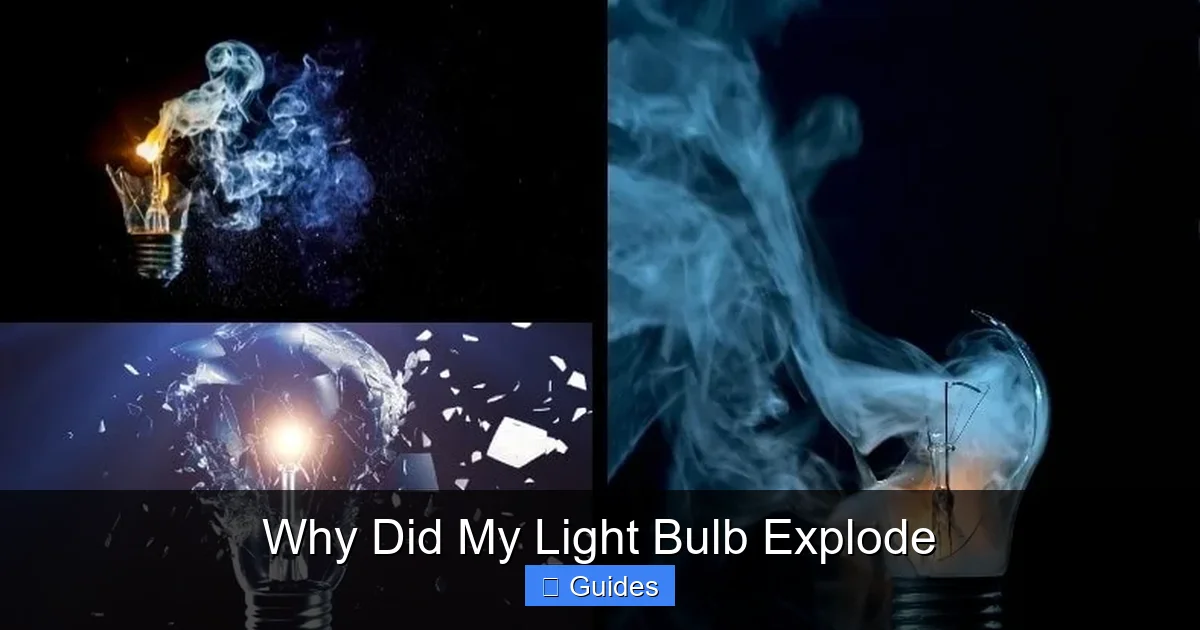
Visual guide about Why Did My Light Bulb Explode
Image source: homeupward.com
Overheating and Excessive Wattage
This is arguably the most frequent reason why a light bulb explodes. Heat is a light bulb’s biggest enemy, and too much of it can lead to catastrophic failure.
- Bulb Wattage Too High for Fixture: Every light fixture has a maximum wattage rating, usually printed near the socket. If you insert a bulb with a higher wattage, it will generate more heat than the fixture is designed to dissipate. This trapped heat can cause the bulb’s glass to expand and weaken until it shatters. Always double-check the recommended wattage!
- Poor Ventilation in Fixture: Enclosed light fixtures, such as those found in ceiling fans or some recessed lights, can trap heat. If the bulb used isn’t specifically rated for enclosed fixtures (often marked “enclosed fixture rated” or similar), the heat buildup can become extreme, making the glass extremely fragile and prone to explosion.
- Loose Connections: If a bulb isn’t screwed in properly, or if the socket itself has loose internal wiring, it can create a poor electrical connection. This causes electrical resistance, generating localized heat and arcing (tiny electrical sparks). This intense, concentrated heat can weaken the glass at the base of the bulb, leading to an explosion.
Electrical Surges and Fluctuations
Electricity isn’t always perfectly stable. Sometimes, your home’s power supply can have spikes or dips that are hard on your bulbs.
- Sudden Power Surge: A power surge, whether from a lightning strike, a tripped circuit breaker, or a utility grid fluctuation, can send a sudden rush of electricity through your bulb. This surge can instantly superheat the filament and the inert gas inside, creating immense pressure that the glass can’t contain. This is a classic reason why your light bulb exploded dramatically.
- Voltage Fluctuations: Less dramatic than a surge, but still damaging, are frequent voltage fluctuations. If your home’s voltage is consistently too high or unstable, it can prematurely age bulbs and put undue stress on the glass and filament, making it more susceptible to an explosion.
Manufacturing Defects and Age
Sometimes, the fault isn’t in your wiring or usage, but in the bulb itself.
- Tiny Imperfections in Glass: During manufacturing, minuscule air bubbles or thin spots can occur in the glass envelope. These imperfections create stress points. When combined with normal heat and vibration from use, these weak spots can eventually give way, causing the light bulb to explode.
- Gas Leaks: Incandescent bulbs rely on an inert gas to protect the filament. If there’s a tiny, undetectable leak in the seal, oxygen can slowly seep in. When the bulb heats up, this oxygen reacts with the hot filament, causing it to burn out much faster and more violently, often leading to a small explosion or rupture of the glass.
- Weakened Filament from Long Use: As an incandescent bulb ages, its filament gradually thins and weakens. While usually this just means the bulb burns out, sometimes the filament breaks in a way that creates an arc or a sudden, intense flash of heat that can stress the surrounding glass and cause a small explosion.
Physical Damage or Contact
Accidents happen, and sometimes a simple bump is all it takes.
- Accidental Impact During Installation: Even a slight tap against the fixture or a hard surface during installation can create a hairline crack in the glass that you might not even notice. Once the bulb heats up, this crack can propagate rapidly, leading to a light bulb explosion.
- Water Contact: Splashing water onto a hot incandescent bulb is a surefire way to cause it to shatter. The sudden temperature differential between the hot glass and cold water creates immense thermal stress, leading to immediate breakage. This is a common reason for bathroom or outdoor fixture explosions.
- Touching Hot Glass: While less likely to cause a full explosion, touching a hot incandescent bulb with bare hands can leave oils and residues. These residues can become hotspots, causing localized heating that weakens the glass and potentially leads to premature failure or a crack.
What About LEDs and CFLs? Do They Explode Too?
Modern lighting technology has changed how bulbs fail. While incandescent bulbs are notorious for dramatic glass shattering, CFLs and LEDs tend to have different failure modes. So, if you’re asking “why did my light bulb explode” and you’re using a modern bulb, the answer might be slightly different.
CFLs and Their Mercury Vapor
Compact Fluorescent Lamps (CFLs) contain a small amount of mercury vapor, which is why their failure is often a greater concern. However, they rarely “explode” with shrapnel in the same way an incandescent bulb does.
- Driver Circuit Failure: CFLs have an integrated ballast or driver circuit that converts AC power to the DC needed for the fluorescent tube. If this circuit overheats or fails, it can emit a burning smell, smoke, or make a loud popping sound. The glass tube itself might crack or shatter, but usually not with the explosive force of an incandescent.
- Overheating: Like incandescents, CFLs can overheat in enclosed fixtures or if their ventilation is poor. This overheating stresses the internal components and can lead to driver failure and a crack in the glass.
- Concerns with Mercury: If a CFL bulb does crack or break, there is a risk of mercury vapor release. It’s important to ventilate the area and follow proper cleanup procedures for mercury-containing products.
LEDs: Usually a Sizzle, Not a Bang
LED (Light Emitting Diode) bulbs are the most robust against dramatic “explosions.” They don’t have a vacuum or inert gas to rapidly expand, nor do they rely on superheating a delicate filament. When an LED fails, it’s usually due to the electronics.
- Driver Circuit Failure: The most common reason an LED bulb fails dramatically (with a pop, flash, or smoke) is the failure of its internal driver circuit. This circuit is complex and includes components like capacitors that can fail with an audible pop if they overheat or short circuit. This might produce smoke or a burning smell, but usually no glass shattering.
- Overheating of Components: While LEDs themselves produce less heat than incandescents, their driver circuits can overheat, especially if they are poorly designed or used in enclosed fixtures without proper heat sinking. This can lead to component failure and a “pop” but rarely causes the glass or plastic casing to explode.
- Quality Issues: Cheaper LED bulbs often use lower-quality components that are more prone to premature failure, sometimes with a dramatic sizzle or pop.
Safety First: What to Do After a Bulb Explodes
An exploding light bulb can be startling, but knowing what to do immediately afterward is crucial for safety.
Immediate Actions
Your first priority should always be safety.
- Turn Off Power Immediately: The very first thing you should do is cut the power to the fixture. Flip the light switch off. If the circuit breaker tripped, leave it off. If it didn’t, consider turning off the circuit breaker for that room or the entire house for extra caution, especially before touching anything.
- Ventilate the Area: If it was a CFL that broke, open windows and doors to air out the room for 5-10 minutes to disperse any released mercury vapor. This is also a good idea for any bulb that caused a burning smell.
- Wear Protective Gear: Before you even think about cleaning up, put on sturdy gloves (work gloves or thick rubber gloves are best) and eye protection. Small glass shards can be incredibly sharp and hard to see.
Cleanup Process
Once the area is safe, you can proceed with cleanup.
- Avoid Touching Broken Glass with Bare Hands: Even tiny fragments can cause cuts. Use a broom and dustpan to sweep up larger pieces. For very fine shards, a damp paper towel or a slice of bread pressed onto the surface can pick them up effectively.
- Do Not Use a Vacuum Cleaner (Especially for CFLs): For CFLs, a vacuum can spread mercury vapor and fine glass particles into the air. For any broken glass, a vacuum might not pick up all fragments and can sometimes damage the vacuum itself.
- Dispose of Broken Glass Safely: Place all broken glass and debris in a sturdy container (like a cardboard box or a thick plastic bag) before disposing of it in the trash. For broken CFLs, check your local recycling or hazardous waste guidelines for proper disposal, as they contain mercury.
- Check the Fixture for Damage: After cleaning up the glass, inspect the light fixture itself. Look for any scorch marks, melted plastic, or exposed wires. If you see any damage, do not insert a new bulb until the fixture has been inspected and repaired by a qualified electrician.
When to Call an Electrician
While an isolated incident might not warrant a professional, certain situations should prompt a call to an electrician.
- Repeated Explosions in the Same Fixture: If bulbs keep exploding in the same fixture, it’s a strong indicator of an underlying electrical problem, such as faulty wiring, a bad socket, or consistent over-voltage.
- Burning Smell from Fixture: A persistent burning smell, even after the bulb is removed, signals an issue with the fixture’s wiring or internal components.
- Circuit Breaker Tripping: If the exploding bulb caused the circuit breaker to trip, or if that particular circuit frequently trips, it suggests an overload or short circuit that needs professional attention.
- Visible Fixture Damage: Any signs of melting, charring, or exposed wires on the fixture itself are red flags.
Preventing Future Light Bulb Explosions
Now that you know why your light bulb exploded, let’s focus on how to keep it from happening again. Prevention is easier than cleanup!
Choose the Right Bulb
The first step in prevention starts at the store.
- Match Wattage to Fixture Recommendations: Always, always use a bulb with a wattage that is equal to or less than the maximum rating of your fixture. This is the single most important step to prevent overheating.
- Use Appropriate Bulbs for Enclosed Fixtures: If a fixture is enclosed or recessed, look for bulbs specifically labeled “enclosed fixture rated” or “suitable for enclosed luminaires.” These bulbs are designed to withstand higher operating temperatures.
- Consider LEDs for Energy Efficiency and Durability: LEDs are generally more durable, produce less heat directly from the light source (though their drivers can heat up), and don’t typically shatter like incandescent bulbs. Upgrading to quality LEDs can significantly reduce the risk of dramatic bulb failures.
- Buy Quality Bulbs: Cheaper, no-name bulbs might save a few pennies upfront, but they are often manufactured with lower-quality materials and less stringent quality control, making them more prone to defects and premature failure.
Proper Installation and Maintenance
How you install and care for your bulbs matters.
- Screw Bulbs in Firmly But Not Too Tightly: Ensure the bulb makes good contact with the socket but don’t overtighten, which can damage the socket or the bulb’s base. A secure but gentle fit is ideal to prevent loose connections and arcing.
- Avoid Touching Glass with Bare Hands (Incandescents): For traditional incandescent or halogen bulbs, the oils from your skin can create hotspots on the glass, leading to premature failure or even explosion. Handle them with a cloth or gloves. This isn’t as critical for LEDs or CFLs.
- Clean Fixtures Regularly: Dust and debris can accumulate around bulbs and inside fixtures, acting as insulation and trapping heat. Regularly (when the fixture is off and cool) wipe down bulbs and the inside of fixtures to ensure proper heat dissipation.
- Check for Loose Sockets: Over time, sockets can become loose or corroded. If a bulb feels wobbly or if you see signs of corrosion, it might be time to replace the socket or have it inspected.
Electrical System Health
Sometimes, the bulb is just a symptom of a larger issue with your home’s electrical system.
- Address Flickering Lights or Frequent Trips: These are often signs of underlying electrical problems. Flickering lights can indicate loose wiring, voltage fluctuations, or an overloaded circuit. A qualified electrician can diagnose and fix these issues, preventing stress on your bulbs and other appliances.
- Consider Surge Protectors: While primarily for protecting electronics, whole-house surge protectors can mitigate the impact of major power surges on your entire electrical system, including light fixtures.
- Regular Electrical Inspections: If your home is older or you’re experiencing frequent electrical anomalies, consider having a qualified electrician perform a thorough inspection of your wiring and electrical panel.
An exploding light bulb can be a jarring experience, leaving you to ponder “why did my light bulb explode?” But with a little knowledge about common causes and preventative measures, you can minimize the risk and ensure your home remains a well-lit, safe haven. Most incidents are often preventable by simply choosing the right bulb for the right fixture and ensuring proper installation. So, next time you’re replacing a bulb, remember these tips and keep your home glowing safely.
By being mindful of bulb wattage, fixture types, and the general health of your home’s electrical system, you can transform a moment of panic into an opportunity for safer, more efficient lighting. Stay safe, stay informed, and keep your lights shining bright, free from unexpected bangs and shattered glass!
Frequently Asked Questions
What causes a light bulb to explode in the socket?
A light bulb exploding in the socket is often due to overheating caused by using a bulb with wattage too high for the fixture, poor ventilation in an enclosed fixture, or loose electrical connections that generate excessive heat and arcing. Manufacturing defects in the bulb’s glass or filament can also contribute.
Can old light bulbs explode?
Yes, old light bulbs are more prone to exploding. Over time, the filament weakens, the inert gas can leak out, and the glass itself can become more fragile due to repeated heating and cooling cycles. These factors increase the likelihood of a dramatic failure or explosion as the bulb reaches the end of its lifespan.
Is it normal for light bulbs to explode?
No, it is not “normal” for light bulbs to explode regularly. While it can happen occasionally due to various factors, frequent light bulb explosions in your home indicate an underlying issue that needs to be addressed, such as incorrect wattage, faulty wiring, or fixture problems.
What should I do if my CFL bulb explodes?
If a CFL bulb explodes or breaks, immediately turn off the light switch, evacuate the room, and open windows for 5-10 minutes to ventilate. Wear gloves and use a stiff piece of paper or cardboard and sticky tape to collect all glass fragments. Do not use a vacuum cleaner, and dispose of the waste according to local hazardous waste guidelines due to mercury content.
How can I prevent light bulb explosions?
To prevent light bulb explosions, always ensure the bulb’s wattage matches or is below the fixture’s maximum rating. Screw bulbs in firmly but not too tightly, use bulbs rated for enclosed fixtures where necessary, and avoid touching hot incandescent bulbs with bare hands. Address any flickering lights or electrical issues promptly.
Can a power surge make a light bulb explode?
Yes, a power surge can definitely make a light bulb explode. A sudden, significant increase in voltage from a power surge can cause the bulb’s filament to instantly overheat and break, or the internal gases to rapidly expand, creating immense pressure that the glass envelope cannot contain, leading to a dramatic explosion.
