



As an Amazon Associate, We earn from qualifying purchases.
Does light bulb wattage matter in today’s world of LED and smart lighting? Absolutely, but not in the way it used to! While traditional wattage indicated brightness for incandescent bulbs, modern lighting focuses on *lumens* for brightness and *watts* for energy consumption. Understanding this shift is crucial for choosing efficient, safe, and appropriately bright bulbs for your home.
Does Light Bulb Wattage Matter?
Hey there, fellow home improver! Have you ever stood in the lighting aisle, staring at a dizzying array of light bulbs, and felt a pang of confusion? You’re not alone. The simple act of buying a light bulb used to be straightforward: “I need a 60-watt bulb,” you’d say. But then came CFLs, and LEDs, and smart bulbs, and suddenly, that familiar number “wattage” seemed to tell a different story. If you’re asking yourself, “Does light bulb wattage matter anymore?” you’ve hit on one of the most common and important questions in modern home lighting.
The short answer is a resounding “yes,” but how it matters has profoundly changed. Gone are the days when a higher wattage automatically meant a brighter light. Today, wattage is less about the light output and more about how much energy a bulb consumes. This shift is a game-changer for your electricity bill, the environment, and even how you think about illuminating your home. Let’s peel back the layers and illuminate exactly what you need to know about light bulb wattage in our increasingly energy-efficient world.
Key Takeaways
- Wattage’s Evolving Meaning: For incandescent bulbs, wattage directly indicated brightness. For LEDs and CFLs, wattage primarily indicates energy consumption, while brightness is measured in lumens.
- Lumens are Key for Brightness: Always check the lumen output when buying new bulbs to understand how bright they will be, regardless of their wattage.
- Fixture Wattage Limits Still Matter: Even with low-wattage LEDs, always respect the maximum wattage rating of your light fixture for safety and to prevent overheating.
- Energy Efficiency is Measured by Wattage: Lower wattage LEDs provide comparable brightness to high-wattage incandescents, leading to significant energy and cost savings.
- Color Temperature and CRI are Important: Beyond brightness, consider Kelvin (color temperature) for the mood and Color Rendering Index (CRI) for accurate color representation.
- Dimmer Compatibility: Not all LED bulbs are dimmable, and some require specific LED-compatible dimmers. Always check the packaging.
- Tailor Lighting to Your Space: Choose different lumen levels, color temperatures, and beam angles to optimize lighting for various rooms and activities.
Quick Answers to Common Questions
What is the difference between watts and lumens?
Watts measure the amount of electricity a light bulb consumes (its energy usage), while lumens measure the total amount of light emitted by the bulb (its brightness).
Can I put an LED bulb into an old fixture that says “Max 60W”?
Yes, almost always! Since an LED bulb uses significantly fewer watts (e.g., 9W for an equivalent 60W incandescent), its actual power draw and heat generation are well within the fixture’s safety limits.
Why do LED bulbs have low wattage but are still bright?
LEDs are highly energy-efficient. They convert a much larger percentage of the electricity they consume into light, and much less into heat, compared to traditional incandescent bulbs. This efficiency allows them to produce high lumen output with low wattage.
Does a higher CRI mean a brighter light?
No, CRI (Color Rendering Index) measures how accurately a light source renders colors compared to natural light. It does not relate to the brightness of the light, which is measured in lumens.
Should I replace all my old bulbs with LEDs?
Generally, yes! Replacing old incandescent or CFL bulbs with LEDs will save significant energy, reduce your electricity bills, and offer a much longer lifespan, often improving the quality of light in your home.
📑 Table of Contents
- The Great Shift: From Watts for Brightness to Lumens for Light
- Why Wattage Still Matters (But Differently Now)
- Beyond Lumens and Watts: Other Key Lighting Considerations
- Choosing the Right Bulb for Every Space: Practical Examples
- Practical Tips for Smart Lighting Choices
- The Future is Bright: Smart, Efficient, and Customizable
The Great Shift: From Watts for Brightness to Lumens for Light
For over a century, the incandescent light bulb was king. When you bought a 60-watt incandescent, you knew exactly what you were getting: a certain level of brightness. The wattage directly indicated how much power the bulb used to produce light (and a lot of heat). Higher watts meant more light. Simple, right? But the arrival of compact fluorescent lamps (CFLs) and especially light-emitting diodes (LEDs) turned this understanding on its head.
Understanding Incandescent Wattage
With traditional incandescent bulbs, electrical current flows through a tiny filament, heating it until it glows, producing light. A 60-watt incandescent bulb drew 60 watts of power and produced a certain amount of light. If you wanted more light, you’d move up to a 75-watt or 100-watt bulb, and you’d use more electricity. This direct correlation made wattage a simple proxy for brightness. So, in this context, yes, light bulb wattage mattered directly for brightness.
The Rise of Lumens: The True Measure of Brightness
Modern bulbs like LEDs are incredibly efficient. They use much less power (watts) to produce the same amount of light as an incandescent bulb. This is why a 9-watt LED can provide the same brightness as a 60-watt incandescent. If you only looked at the wattage, you might think the 9-watt LED was dim, which simply isn’t true. This is where lumens come in.
* What are Lumens? Lumens are the international standard unit for measuring the total amount of visible light emitted by a source. Think of lumens as “how bright” a bulb is, regardless of the technology inside.
* Wattage vs. Lumens: When you buy an LED bulb, you’ll see two key numbers: its wattage (e.g., 9W) and its lumen output (e.g., 800 lumens). The 9W tells you how much energy it consumes, and 800 lumens tells you how bright it actually is. An incandescent 60W bulb typically produced around 800 lumens. This is why modern packaging often states “Replaces 60W incandescent” alongside the lumen count.
So, does light bulb wattage matter for brightness now? Not directly. Lumens are your go-to for brightness.
Why Wattage Still Matters (But Differently Now)
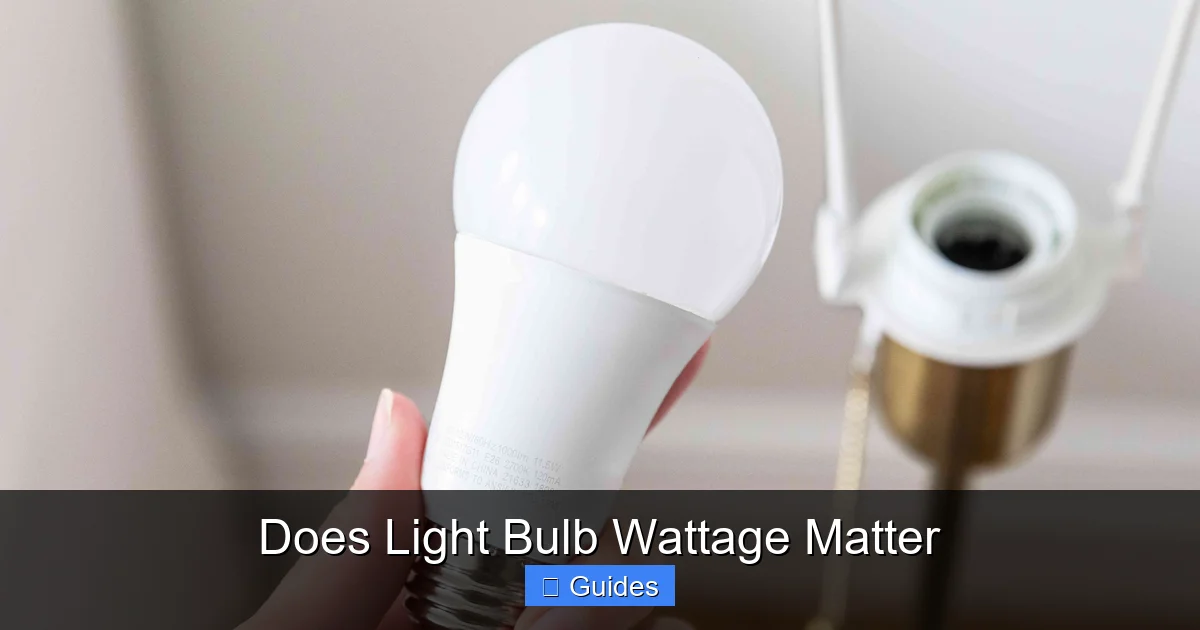
Visual guide about Does Light Bulb Wattage Matter
Image source: thespruce.com
Even though lumens have taken over as the primary indicator of brightness, light bulb wattage still plays a crucial role in other important aspects of lighting. It’s no longer just about how much light, but also about safety, energy efficiency, and compatibility.
1. Fixture Compatibility and Safety
This is perhaps the most critical reason why light bulb wattage *still* matters. Every light fixture has a maximum wattage rating, usually stamped inside the socket or on the fixture itself (e.g., “MAX 60W”). This rating indicates the maximum amount of heat the fixture can safely dissipate without risk of damage, fire, or melting.
* Incandescent Perspective: If you put a 100-watt incandescent bulb into a fixture rated for “MAX 60W,” you’re asking for trouble. The 100-watt bulb generates much more heat than the fixture is designed to handle, leading to overheating, potential fire hazards, and damage to the fixture’s wiring or insulation.
* LED Perspective: With LEDs, the situation is different but the rule remains. A 9-watt LED bulb might produce the same light as a 60-watt incandescent, but it only consumes 9 watts of power and generates significantly less heat. So, can you put a 9-watt LED (equivalent to 60W incandescent brightness) into a “MAX 60W” fixture? Absolutely! You’re well within the safety limits because the LED’s actual power draw (and heat generation) is much lower. In this scenario, the “MAX 60W” is still relevant, guiding you on the *energy consumption* and heat limits, not just the brightness.
Always respect the maximum wattage rating on your fixtures. It’s a safety measure, regardless of the bulb type.
2. Energy Consumption and Your Wallet
This is where the new understanding of wattage truly shines (pun intended!). While an LED’s actual wattage no longer tells you its brightness, it tells you exactly how much electricity it consumes.
* The Savings: A 60-watt incandescent bulb uses 60 watts of power per hour. An equivalent 9-watt LED uses only 9 watts per hour. Over thousands of hours of use, this difference adds up to significant savings on your electricity bill. This difference is precisely why light bulb wattage matters greatly for your budget and the environment.
* Calculating Costs: If you run a 60W incandescent bulb for 4 hours a day, it uses (60W * 4h) = 240 Wh or 0.24 kWh per day. An 9W LED for 4 hours uses (9W * 4h) = 36 Wh or 0.036 kWh per day. At $0.15 per kWh, that’s $0.036 vs. $0.0054 per day per bulb. Multiply that by many bulbs over a year, and the savings are substantial!
3. Dimmer Compatibility
Another area where light bulb wattage (and technology) matters is with dimmers. Older dimmers were designed for the high wattage and resistive loads of incandescent bulbs. LEDs, with their low wattage and different electronic components, often require specific “LED-compatible” dimmers.
* Why it Matters: Using a non-LED-compatible dimmer with LED bulbs can lead to flickering, buzzing, or even premature bulb failure. It’s also crucial that the dimmer can handle the *minimum* load of your low-wattage LED bulbs. If the combined wattage of your LED bulbs on a dimmer circuit is too low, the dimmer might not function correctly.
* What to Look For: Always check if an LED bulb is labeled “dimmable.” If it is, and you experience issues, consider upgrading your dimmer to an LED-specific model.
Beyond Lumens and Watts: Other Key Lighting Considerations
While wattage and lumens are fundamental, modern lighting offers so much more to consider. These factors allow you to fine-tune the ambiance and functionality of any space.
Color Temperature (Kelvin)
This describes the “warmth” or “coolness” of the light. Measured in Kelvin (K):
* **Warm White (2200K-3000K):** Soft, yellowish light, similar to incandescents. Ideal for living rooms, bedrooms, and creating a cozy atmosphere.
* **Cool White / Bright White (3500K-4500K):** More neutral, whiter light. Good for kitchens, bathrooms, and task lighting where clarity is needed.
* **Daylight (5000K-6500K):** Very bright, bluish-white light, mimicking natural daylight. Best for workshops, garages, or areas where very high visibility is required.
Color Rendering Index (CRI)
CRI measures how accurately a light source reveals the true colors of objects compared to natural light. A CRI of 100 is perfect (like natural daylight).
* **Importance:** For areas where accurate color representation is crucial (e.g., art studios, makeup vanity, kitchen prep areas), look for bulbs with a high CRI (80+ is good, 90+ is excellent).
* **Impact:** A low CRI light might make colors look dull or distorted.
Beam Angle and Directionality
Not all bulbs spread light equally.
* **Omnidirectional (Standard A-shape):** Spreads light broadly, great for general room illumination.
* **Directional (Spotlights, Floodlights, PAR/BR types):** Focuses light in a specific direction, ideal for accent lighting, recessed cans, or outdoor security.
Choosing the Right Bulb for Every Space: Practical Examples
Now that you know that “does light bulb wattage matter” depends on the context, let’s put it into practice for different rooms in your home.
Living Room: Ambiance and Versatility
* **Brightness (Lumens):** 800-1600 lumens per bulb, depending on room size and number of fixtures. You might want multiple light sources to achieve layered lighting.
* **Color Temperature:** Warm white (2700K-3000K) for a cozy, inviting atmosphere.
* **Special Features:** Dimmable bulbs are a must for flexibility. Smart bulbs can offer ultimate control over brightness and color.
Kitchen: Brightness for Task and General Illumination
* **Brightness (Lumens):** 1000-2000 lumens per fixture for general lighting, 400-800 lumens for under-cabinet task lighting.
* **Color Temperature:** Cool white (3500K-4000K) for clear visibility during cooking and cleaning.
* **CRI:** High CRI (85+) is excellent for seeing true food colors.
Bedroom: Relaxation and Softness
* **Brightness (Lumens):** 400-800 lumens for bedside lamps; 800-1200 lumens for general overhead lighting.
* **Color Temperature:** Warm white (2700K) for a relaxing environment.
* **Special Features:** Dimmable options and smart bulbs with adjustable color temperature are fantastic for winding down.
Bathroom: Clarity and Task Lighting
* **Brightness (Lumens):** 800-1600 lumens per fixture, especially around the vanity for grooming tasks.
* **Color Temperature:** Cool white or bright white (3000K-4000K) to provide good visibility for makeup or shaving.
* **CRI:** High CRI (85+) is beneficial for accurate color reflection in mirrors.
Outdoor Lighting: Security and Curb Appeal
* **Brightness (Lumens):** Varies greatly. 300-700 lumens for path lights, 700-1500+ lumens for floodlights or security lights.
* **Color Temperature:** Often daylight (5000K-6000K) for security, or warm white (2700K-3000K) for accent lighting.
* **Special Features:** Weather-resistant, motion-sensor compatible, and durable options are key.
Practical Tips for Smart Lighting Choices
Navigating the world of modern lighting doesn’t have to be complicated. Here are a few straightforward tips to help you make informed decisions, especially concerning how light bulb wattage matters.
- Focus on Lumens for Brightness: This is the golden rule. When you want to know how bright a bulb is, look at the lumen output, not the wattage.
- Always Respect Fixture Wattage Limits: Even though LEDs consume far fewer watts, the maximum wattage rating on your fixture is still a safety guideline. Ensure the *actual* wattage of your new LED bulb is below this limit.
- Consider Color Temperature (Kelvin): Decide what mood you want to create. Warm for cozy, cool for functional, daylight for clarity.
- Check for Dimmability: If you plan to dim your lights, make sure the bulb is explicitly labeled “dimmable” and consider if your dimmer switch needs an upgrade for LED compatibility.
- Embrace Smart Lighting: Smart bulbs offer unparalleled control over brightness, color temperature, and even color, often controllable via apps or voice assistants. They often allow you to adjust both lumens and perceived “wattage equivalent” without changing bulbs.
- Calculate Your Savings: The low wattage of LEDs translates directly into lower energy bills. Calculate the payback period for replacing old incandescent or CFL bulbs with new LEDs. You’ll likely be surprised by the savings!
- Don’t Forget CRI: For areas where true color perception is important, aim for bulbs with a CRI of 80 or higher.
The Future is Bright: Smart, Efficient, and Customizable
The journey from a simple 60-watt incandescent to today’s sophisticated LED technology illustrates a profound shift in how we light our homes. The question, “Does light bulb wattage matter?” has moved from a straightforward answer about brightness to a more nuanced discussion about energy efficiency, safety, and compatibility. As technology continues to evolve, we’re seeing more integrated smart lighting systems that allow for personalized control over every aspect of light—from brightness and color temperature to scheduling and automation.
The good news is that this evolution empowers you to create more comfortable, efficient, and beautiful spaces than ever before. By understanding lumens, remembering the safety implications of fixture wattage, and exploring options like color temperature and smart features, you’re well-equipped to make brilliant lighting choices for your home. So go ahead, step into that lighting aisle with confidence, knowing exactly what to look for!
Frequently Asked Questions
What is the ideal lumen output for a living room?
For a living room, a general guideline is to aim for a total of 800-1600 lumens, depending on the room’s size and desired ambiance. Many people use multiple light sources, like a few 800-lumen bulbs in an overhead fixture combined with lower lumen lamps, to create layered lighting.
Does light bulb wattage matter for smart bulbs?
Yes, light bulb wattage still matters for smart bulbs as it indicates their energy consumption. However, smart bulbs often offer adjustable brightness (lumens) through an app, so while their maximum wattage is fixed, their effective light output can be varied.
What is “color temperature” in light bulbs?
Color temperature, measured in Kelvin (K), describes the visual appearance of the light emitted by a bulb. Lower Kelvin values (2700K-3000K) produce a warm, yellowish light, while higher values (5000K-6500K) produce a cool, bluish-white light similar to daylight.
Can I mix different wattage bulbs in the same fixture?
If you’re using modern LED bulbs, you can mix different lumen outputs (and thus different actual wattages) in the same multi-bulb fixture, as long as each bulb’s individual wattage is below the fixture’s maximum rating. For incandescent bulbs, it’s generally safe but will result in uneven brightness.
How long do LED bulbs typically last compared to incandescents?
LED bulbs have a significantly longer lifespan than incandescents. While an incandescent bulb typically lasts around 1,000-2,000 hours, an LED bulb can last 15,000 to 50,000 hours or even more, drastically reducing the need for replacements.
Is it true that lower wattage bulbs produce less heat?
Yes, generally this is true. Lower wattage bulbs consume less electricity, and a significant portion of wasted energy in traditional bulbs is converted to heat. LEDs are particularly good at converting energy into light rather than heat, which is why their low wattage also means much cooler operation.
