



As an Amazon Associate, We earn from qualifying purchases.
The question, “Did a Black man invent the light bulb?” leads us to the pivotal contributions of Lewis Latimer. While Thomas Edison is widely credited with the commercial incandescent light bulb, Latimer, an ingenious African American inventor, played a crucial role in making it practical and long-lasting through his patent for the carbon filament. His work was indispensable for the widespread adoption of electric light.
Have you ever paused to think about the everyday marvels we often take for granted? One such invention, the humble light bulb, literally changed the world, extending our days and transforming societies. But when we talk about who invented it, a single name often comes to mind: Thomas Edison. Yet, a deeper look into history reveals a more complex, collaborative story, prompting a fascinating and incredibly important question: “Did a Black man invent the light bulb?”
It’s a question that challenges common narratives and pushes us to explore the often-overlooked contributions of Black inventors in history. The answer isn’t a simple “yes” or “no,” but rather a rich tapestry of innovation, improvement, and collaboration. It’s a story that introduces us to a brilliant mind whose work was absolutely essential in making the light bulb a practical reality for millions of homes and businesses around the globe.
So, let’s turn on the lights, so to speak, and illuminate the full history of the light bulb, focusing on the remarkable individual who played a pivotal role: Lewis Howard Latimer. We’ll explore his life, his genius, and why his contributions are so vital to understanding the true story of electric illumination.
Key Takeaways
- The Light Bulb Was a Collaborative Effort: No single individual “invented” the light bulb; it was a culmination of decades of scientific research and engineering improvements by many inventors, building upon previous work.
- Thomas Edison’s Role: Edison is credited with creating the first commercially practical and long-lasting incandescent light bulb and developing the entire electrical distribution system to power it. His innovation was bringing together many existing elements into a viable product.
- Lewis Latimer’s Crucial Contribution: Lewis Howard Latimer, an African American inventor, made a significant and often overlooked contribution by patenting an improved carbon filament manufacturing process. This stronger, more durable filament was vital for the light bulb’s longevity and widespread commercial success.
- Latimer Worked for Edison: After working with Hiram Maxim, a competitor, Lewis Latimer later joined Thomas Edison’s company, where his expertise in electrical illumination and patent drawing was highly valued.
- Impact of Latimer’s Work: Latimer’s improvements drastically increased the lifespan of light bulbs, making them more affordable and practical for everyday use, directly contributing to the electrification of homes and cities.
- Beyond the Light Bulb: Lewis Latimer also invented a more efficient bathroom for railway cars and was a gifted draftsman and poet, showcasing his diverse talents and contributions beyond just electrical engineering.
- Importance of Recognizing Diverse Innovators: Exploring the question “did a Black man invent the light bulb” highlights the need to acknowledge the rich and often underrepresented contributions of Black inventors throughout history, ensuring a more accurate and inclusive understanding of innovation.
Quick Answers to Common Questions
Who is Lewis Latimer in relation to the light bulb?
Lewis Latimer was an African American inventor who made crucial improvements to the light bulb, most notably by patenting an improved carbon filament manufacturing process. This made light bulbs more durable and affordable.
Did Lewis Latimer invent the entire light bulb?
No, Lewis Latimer did not invent the entire light bulb from scratch. He significantly improved upon existing designs, particularly the filament, which was essential for the light bulb’s commercial viability and widespread adoption.
What was the main problem Latimer’s invention solved for the light bulb?
Latimer’s invention solved the problem of early light bulbs having short lifespans due to brittle filaments. His improved carbon filament was more durable and cost-effective, making light bulbs practical for everyday use.
Did Lewis Latimer work for Thomas Edison?
Yes, Lewis Latimer worked for Thomas Edison’s company starting in 1884. He was hired for his expertise in electric lighting and patent drafting, playing a key role in patent litigation and documentation.
Why is Lewis Latimer’s contribution to the light bulb often overlooked?
Lewis Latimer’s contribution is often overlooked due to historical biases that have marginalized the achievements of Black inventors. Traditional narratives often focus on a single “inventor” rather than acknowledging the collaborative nature of innovation.
📑 Table of Contents
- The Light Bulb’s True History: A Symphony of Minds
- Thomas Edison: The Commercial Visionary
- Lewis Howard Latimer: The Unsung Architect of Durability
- Beyond the Bulb: Latimer’s Other Innovations and Legacy
- Why Does the Question “Did a Black Man Invent the Light Bulb?” Matter So Much?
- Illuminating the Path Forward
The Light Bulb’s True History: A Symphony of Minds
Before we dive into Lewis Latimer’s story, it’s crucial to understand that the invention of the light bulb wasn’t a “Eureka!” moment by a single person in a lab. Instead, it was an incremental process, a relay race of scientific discovery and engineering refinement that spanned decades. Many brilliant minds contributed to its development, each building on the work of those who came before.
Pre-Edison Era: Early Attempts at Illumination
Long before Edison filed his patents, numerous scientists and inventors across the globe were experimenting with electric light. Humphry Davy, a British chemist, demonstrated an “electric arc lamp” in 1802. Joseph Swan, also British, developed a long-lasting incandescent light bulb with a carbonized paper filament in the 1860s, even patenting it in Britain. The challenge was always to create a bulb that was durable, affordable, and energy-efficient enough for widespread use.
These early versions often burned out quickly, were too expensive to produce, or required massive amounts of power. The pathway to a practical light bulb was paved with countless trials, errors, and small but significant breakthroughs by a diverse group of thinkers.
Thomas Edison: The Commercial Visionary
When most people hear “inventor of the light bulb,” Thomas Edison’s name immediately comes to mind. And for good reason! While he didn’t invent the *concept* of electric light, he famously created the first commercially viable, long-lasting incandescent light bulb. What set Edison apart was not just the bulb itself, but his holistic approach.
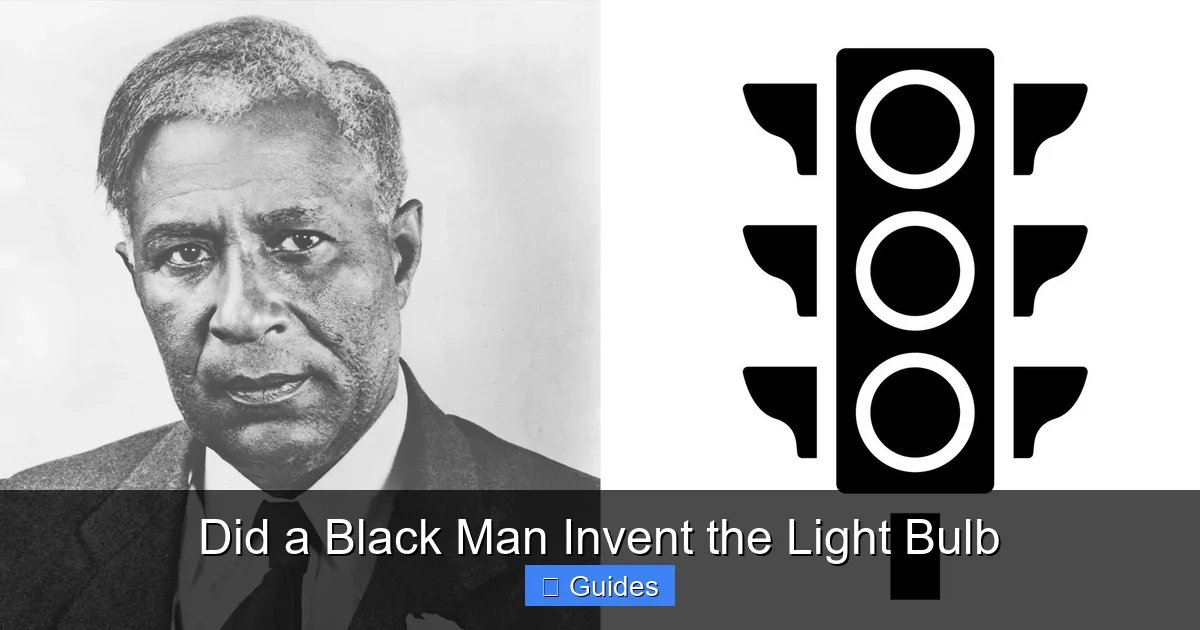
Visual guide about Did a Black Man Invent the Light Bulb
Image source: assets.editorial.aetnd.com
Edison’s System: More Than Just a Bulb
Edison understood that a light bulb alone wasn’t enough. For electric light to revolutionize society, an entire system was needed: power stations, wiring, meters, and switches. He and his team at Menlo Park developed a high-resistance platinum-iridium filament and later, after extensive trials, a carbonized bamboo fiber filament that could last for many hours. This was a monumental achievement, transforming electric light from a laboratory curiosity into a practical utility.
His genius lay in his relentless experimentation, his ability to organize a team of skilled technicians and engineers, and his vision for bringing electricity to every home and factory. But even Edison’s incredible efforts relied on the specialized expertise of others, and this is where Lewis Latimer steps into the spotlight.
Lewis Howard Latimer: The Unsung Architect of Durability
The question, “Did a Black man invent the light bulb?” often leads directly to Lewis Howard Latimer, and for very compelling reasons. Born in Chelsea, Massachusetts, in 1848, Latimer was the son of formerly enslaved people who had escaped to freedom. His path to becoming an inventor was remarkable, especially given the racial barriers of his time.
From Union Soldier to Master Draftsman
Latimer served in the Union Navy during the Civil War. After the war, he secured a position as an office boy at a patent law firm. Despite having no formal technical training, his innate talent for mechanical drawing quickly became apparent. He taught himself technical drawing and drafting, eventually becoming a master draftsman – a critical skill for documenting and illustrating new inventions for patent applications.
His skills were so exceptional that he rose through the ranks, eventually becoming a principal draftsman. This background gave him an invaluable understanding of intellectual property, engineering principles, and the process of innovation itself.
Latimer’s Breakthrough: The Carbon Filament
Latimer’s direct contribution to the light bulb came while working with Hiram S. Maxim, a fierce competitor of Thomas Edison, at the U.S. Electric Lighting Company. Maxim’s company was also striving to perfect the incandescent light bulb.
- The Problem: Early filaments, including Edison’s bamboo fiber, were brittle and had a relatively short lifespan. This made light bulbs expensive to replace and hindered their widespread adoption.
- Latimer’s Solution: In 1881, Lewis Latimer co-patented a new method for manufacturing carbon filaments, making them more durable and cost-effective. His process involved a way to encapsulate the carbon filament within a cardboard container, which prevented the carbon from breaking down prematurely. This wasn’t just a small tweak; it was a fundamental improvement.
Think about it: A light bulb that lasts longer means less frequent replacement, lower costs, and more reliable illumination. This innovation was absolutely critical for electric light to become a practical and affordable utility for the masses. Without Latimer’s more robust filament, the widespread adoption of Edison’s light bulb system would have been significantly delayed and far more costly.
Joining Edison’s Team
Recognizing his unparalleled expertise, Thomas Edison hired Lewis Latimer in 1884. Latimer wasn’t just another employee; he was a valuable asset in Edison’s “Pioneer’s Core” team of engineers and scientists. His role included drafting patent drawings, translating patent applications into French and German (he was fluent in both), and serving as an expert witness in patent infringement lawsuits against Edison’s company.
His deep understanding of patent law and his detailed knowledge of electric lighting technology made him indispensable during this period of intense competition and innovation in the nascent electrical industry.
Beyond the Bulb: Latimer’s Other Innovations and Legacy
While his work on the carbon filament is his most direct link to the light bulb, Lewis Latimer’s inventive spirit wasn’t limited to illumination. He also patented a significantly improved water closet (toilet) for railroad cars in 1886, making travel more comfortable and sanitary.
A Renaissance Man
Latimer was truly a renaissance man. He was a gifted artist, a talented poet, and a dedicated advocate for civil rights. He even helped establish the Unitarian Church in Flushing, New York, demonstrating his commitment to community and intellectual growth. His story is a powerful reminder that genius often transcends narrow categories and that contributions can come from unexpected places.
Why Does the Question “Did a Black Man Invent the Light Bulb?” Matter So Much?
Asking “Did a Black man invent the light bulb?” is more than just a trivia question. It’s a crucial act of historical correction and recognition. For too long, the contributions of Black inventors and scientists have been marginalized, ignored, or actively suppressed in mainstream historical narratives. This oversight creates an incomplete and inaccurate picture of human progress.
Correcting the Historical Record
By highlighting figures like Lewis Latimer, we gain a more accurate understanding of how major innovations actually came about. It teaches us that invention is a collective process, often relying on diverse talents and perspectives. It also challenges the perception that innovation is the exclusive domain of a few well-known figures, typically from dominant cultural groups.
Inspiring Future Generations
For young Black children, knowing about Lewis Latimer, George Washington Carver, Garrett Morgan, and countless other Black innovators is incredibly empowering. It provides role models and demonstrates that intelligence, creativity, and the ability to change the world are universal. It counters stereotypes and fosters a sense of pride and possibility, encouraging them to pursue STEM fields and make their own groundbreaking contributions.
The Power of Collaboration and Diversity
Latimer’s story is a testament to the power of collaboration and the value of diverse teams. Imagine if his talents had been overlooked or stifled due to racial prejudice; the light bulb might have taken much longer to become the universally adopted technology it is today. His work with both Maxim and Edison underscores how different minds, working together, can solve complex problems and drive progress faster and more effectively.
Illuminating the Path Forward
So, the answer to “Did a Black man invent the light bulb?” is nuanced and profound. While Thomas Edison is correctly credited with creating the first commercially successful light bulb system, Lewis Latimer, a brilliant African American inventor, made an indispensable contribution by patenting the improved carbon filament that gave the bulb its longevity and practicality. His work was not just an enhancement; it was foundational to the widespread adoption of electric light.
Latimer’s story reminds us to look beyond the headlines and single names to appreciate the intricate web of contributions that truly drive human innovation. It encourages us to continually question, research, and celebrate the diverse minds that have shaped our world, ensuring that no one’s legacy is left in the dark. The light bulb, a symbol of progress, indeed shines brighter when we acknowledge all the hands that helped ignite it.
Frequently Asked Questions
Who is generally credited with inventing the light bulb?
Thomas Edison is widely credited with inventing the first commercially practical and long-lasting incandescent light bulb. However, his work built upon decades of research and development by numerous other inventors.
What was the specific contribution of Lewis Latimer to the light bulb?
Lewis Latimer’s most significant contribution was patenting an improved method for manufacturing carbon filaments, making them more durable and efficient. This innovation dramatically extended the lifespan of light bulbs, making them more practical and affordable for widespread use.
Were there other Black inventors involved in the development of electrical technology?
Yes, many other Black inventors contributed to electrical technology. For example, Granville T. Woods, known as the “Black Edison,” held numerous patents for electrical inventions, including improvements to the electric railway and telegraph systems.
Why is it important to ask “Did a Black man invent the light bulb?”
Asking this question is important because it challenges common historical narratives and ensures that the contributions of often-overlooked Black inventors like Lewis Latimer are recognized. It provides a more accurate and inclusive understanding of technological progress and inspires future generations.
Did Edison and Latimer work together on the light bulb?
Yes, Lewis Latimer worked for Thomas Edison’s company after making his own significant contributions to light bulb technology. He served as a draftsman and expert witness, using his knowledge to help secure and defend Edison’s patents.
What challenges did Lewis Latimer face as an inventor?
Lewis Latimer faced significant challenges as an African American inventor in the 19th century, including racial prejudice and limited access to formal education and resources. Despite these barriers, his talent and determination allowed him to make groundbreaking contributions to technology.
