


As an Amazon Associate, We earn from qualifying purchases.
The invention of the light bulb was a seismic shift, fundamentally transforming human civilization. It pushed back the boundaries of darkness, extending work and leisure hours, and drastically improving public safety and productivity. This innovation didn’t just provide light; it became the bedrock for modern industrialization, urbanization, and a 24/7 global society, forever altering how we live, work, and connect.
How Did the Light Bulb Change the World
Imagine a world where the day ends abruptly with the setting sun. A world where darkness ushers in a hush, limiting activity to the faint glow of a candle or a flickering gas lamp. This wasn’t some distant past; it was the reality for humanity for millennia. Before the advent of reliable, artificial illumination, our lives were intrinsically tied to the sun’s rhythm. Work stopped, travel became hazardous, and social gatherings were constrained by the encroaching night.
Then came a flash of brilliance, both literally and figuratively: the light bulb. While often attributed solely to Thomas Edison, the development of the incandescent light bulb was a culmination of many minds and decades of experimentation. What Edison and his team truly perfected, however, was not just a light source, but a practical, long-lasting, and commercially viable system for delivering light into homes and businesses. This invention wasn’t merely about seeing in the dark; it was about fundamentally reshaping the human experience. So, how did the light bulb change the world? Its impact was nothing short of revolutionary, touching every aspect of society, from work and leisure to safety and our very perception of time.
This isn’t just a story about a filament and a glass bulb; it’s a narrative about how a single invention unlocked unprecedented potential, pushing the boundaries of what was possible. It ushered in an era of continuous operation, spurred industrial growth, transformed urban landscapes, and even altered our social habits and psychological well-being. Let’s shine a light on the profound ways the light bulb changed the world forever.
Key Takeaways
- Extended Hours of Activity: The light bulb allowed for work, study, and leisure activities to continue well beyond sunset, drastically increasing productivity and the availability of entertainment.
- Enhanced Public Safety and Urbanization: Widespread street lighting made cities safer at night, encouraging urban development and the growth of public spaces, contributing to a sense of security.
- Catalyst for Industrial Growth: Factories could operate continuously, boosting production, creating new industries around electricity generation and appliance manufacturing, and accelerating economic expansion.
- Transformed Domestic Life: The light bulb brought convenience and comfort into homes, reducing reliance on dangerous and less efficient light sources, and paving the way for other electrical appliances.
- Democratized Knowledge and Leisure: With accessible light, reading, studying, and engaging in cultural activities became easier for more people, fostering education and new forms of entertainment.
- Foundation for Modern Infrastructure: The widespread adoption of the light bulb necessitated the development of extensive electrical grids, laying the groundwork for virtually all modern electrical infrastructure.
- Shifted Human Rhythms: By severing our dependence on natural light cycles, the light bulb profoundly changed human sleep patterns, social interactions, and our overall relationship with time.
Quick Answers to Common Questions
What was the main problem the light bulb solved?
The light bulb primarily solved the problem of limited human activity due to natural darkness by providing a safe, reliable, and eventually affordable source of artificial light, extending work, study, and leisure hours.
Who is credited with perfecting the light bulb?
While many inventors contributed to electric lighting, Thomas Edison and his team are widely credited with perfecting the practical, long-lasting, and commercially viable incandescent light bulb and the entire system for its distribution.
How did the light bulb impact factory work?
The light bulb allowed factories to operate continuously, 24 hours a day, significantly increasing production, efficiency, and accelerating industrial output and economic growth.
Did the light bulb only provide light?
No, the light bulb’s widespread adoption necessitated the development of electrical grids, which in turn powered a vast array of other electrical appliances and technologies, fundamentally laying the groundwork for modern electrical infrastructure.
What are the modern descendants of the original light bulb?
The modern descendants of the original incandescent light bulb include more energy-efficient technologies like fluorescent lamps (CFLs) and Light Emitting Diodes (LEDs), which are now integrated into smart lighting systems.
📑 Table of Contents
Illuminating the Night: Ending the Reign of Darkness
For countless generations, humanity’s ability to operate was dictated by the sun. From ancient fire pits to sophisticated gaslight systems, efforts to extend the day were always limited by efficiency, safety, and cost. The light bulb changed all that, providing an accessible, relatively safe, and eventually affordable way to defy the night.
From Fire to Filaments: The Pre-Electric Era
Before the light bulb, people relied on a progression of light sources, each with its own set of challenges. Candles, made from tallow or beeswax, offered dim, flickering light and were quite expensive for continuous use. Oil lamps, burning various animal or vegetable oils, provided slightly better illumination but were messy, prone to tipping, and carried the risk of fire.
The 19th century saw the rise of gaslight, a significant improvement for urban areas. Gas lamps, piped into homes and streets, offered brighter, more consistent light than candles or oil. However, they required complex infrastructure, posed explosion risks, emitted significant heat and fumes, and still needed manual ignition. Imagine the daily chore of lighting every gas lamp in a home or along a street! These limitations meant that even with gaslight, darkness still largely dictated human activity, making us truly appreciate how the light bulb changed the world.
The Breakthrough Moment: Edison and Beyond
The invention of the practical incandescent light bulb wasn’t a single “aha!” moment by one person. Many inventors across the 19th century contributed to the development of electric lighting. Humphry Davy demonstrated an electric arc lamp in the early 1800s. Joseph Swan created an early incandescent bulb using carbonized paper filaments in the 1860s. However, these early designs suffered from short lifespans or high energy consumption, making them impractical for widespread adoption.
Thomas Edison’s genius, along with his team at Menlo Park, lay in perfecting the entire system. In 1879, after thousands of experiments, Edison developed a high-resistance platinum filament bulb, followed quickly by a more durable carbonized bamboo filament that could burn for hundreds of hours. Crucially, Edison also developed the associated infrastructure: power generators, distribution systems, meters, and switches. It was this comprehensive approach – not just the bulb itself, but the practical means to deliver electricity to it – that made the light bulb a game-changer and truly answered the question of how did the light bulb change the world. His work transformed electric light from a scientific curiosity into a usable, reliable commodity for the masses.
Reshaping Society: Life Beyond Sundown
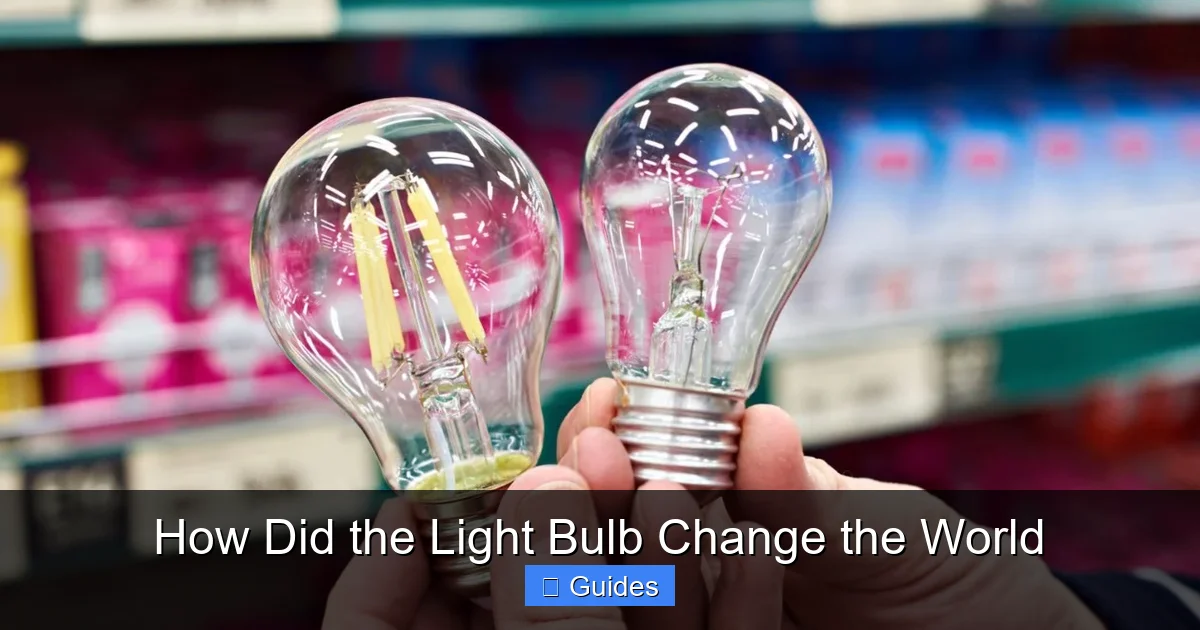
Visual guide about How Did the Light Bulb Change the World
Image source: storables.com
With reliable, widespread artificial light, the boundaries of the day expanded dramatically, leading to profound societal shifts. The light bulb didn’t just illuminate spaces; it illuminated possibilities.
The 24/7 Society: Work and Productivity
Perhaps one of the most immediate and significant impacts of the light bulb was on work. Factories, previously limited by daylight hours or dangerous, inefficient lighting, could now operate around the clock. This meant increased production, greater efficiency, and a massive boost to industrial output. Workers could maintain continuous shifts, leading to more goods being produced and faster economic growth. The light bulb was a key enabler of the Second Industrial Revolution, accelerating the pace of modernization and significantly influencing how did the light bulb change the world of work.
Offices, shops, and various other businesses also extended their operating hours. This shift wasn’t just about longer hours; it was about more flexible working arrangements and the ability to conduct business across different time zones more effectively. Suddenly, the world felt smaller, and commerce became less constrained by natural cycles.
Urbanization and Public Safety
Imagine walking through a city at night before electric streetlights. It was a perilous journey, rife with shadowed alleys and uncertain footing. The widespread installation of street lighting, powered by the light bulb, transformed urban environments. Cities became safer, reducing crime and making evening travel less daunting. People felt more secure venturing out after dark, leading to a flourishing of nighttime activities.
This improved safety encouraged further urbanization. As cities became more attractive and manageable after dark, more people moved into them, fueling growth and development. Public spaces, parks, and promenades could be enjoyed into the evening, fostering a new sense of community and social interaction. The glow of electric light became a symbol of progress and modernity, fundamentally changing the character of urban life and demonstrating how did the light bulb change the world’s cities.
Education and Access to Knowledge
The light bulb also had a profound impact on education and access to knowledge. Previously, studying or reading after sunset was difficult and often damaging to eyesight with the dim, flickering flames of candles or lamps. With bright, steady electric light, people could read, write, and study comfortably well into the night. Libraries could extend their hours, and schools could offer evening classes.
This democratization of light meant that education was no longer confined to daylight hours. It empowered individuals to pursue self-improvement, fostering a more educated populace. Students could dedicate more time to their studies, leading to advancements in various fields. The light bulb truly broadened intellectual horizons, showing how did the light bulb change the world of learning.
The Economic and Industrial Revolution Accelerator
The light bulb wasn’t just a product; it was an industry creator. Its existence necessitated vast infrastructure, spawned new businesses, and accelerated economic development on a global scale.
New Industries and Job Creation
The widespread adoption of the light bulb created an entirely new ecosystem of industries. The most obvious was the manufacturing of the bulbs themselves, but that was just the beginning. The demand for electricity spurred the growth of power generation plants, requiring massive investments in coal, hydropower, and later other energy sources. An extensive distribution grid had to be built, involving the production of wires, insulators, transformers, and poles.
This infrastructure boom created millions of jobs for engineers, electricians, linemen, factory workers, and administrators. It also led to the development of new technologies and materials. Furthermore, the availability of electricity paved the way for countless other electrical appliances – from motors and refrigerators to washing machines and radios – each spawning its own set of industries. The economic ripple effect of the light bulb was immense, underscoring how did the light bulb change the world’s economy.
Efficiency and Innovation in Business
Beyond just enabling longer operating hours, the light bulb brought unprecedented efficiency to businesses. Factories could be designed with better illumination for workstations, reducing accidents and improving precision. Assembly lines could be more finely tuned, and quality control enhanced.
Retail businesses also benefited immensely. Well-lit shop windows and interiors could display goods more attractively, drawing in customers and extending shopping hours. The advertising industry found new avenues to capture attention with illuminated signs and displays. The ability to control and direct light also opened up new possibilities for architectural design and interior spaces, making them more functional and aesthetically pleasing. This move towards optimized environments highlights how did the light bulb change the world of commerce.
Global Electrification and Infrastructure Development
The journey of the light bulb wasn’t confined to a few cities. It sparked a global race for electrification. Countries invested heavily in building national and regional electrical grids, transforming entire landscapes. This wasn’t a trivial undertaking; it required massive capital, political will, and technological expertise.
The development of these vast power networks connected communities, facilitated industrial expansion in remote areas, and became a cornerstone of modern national infrastructure. Today, it’s hard to imagine life without a stable, widespread electrical supply, a testament to the foundational impact of the light bulb in driving this global development. Understanding how did the light bulb change the world means recognizing this monumental infrastructure build-out.
Cultural and Social Transformations
Beyond the practical and economic, the light bulb subtly but profoundly reshaped our culture, leisure activities, and even our relationship with our homes.
Entertainment and Leisure
Before electric light, public entertainment was largely restricted to daytime or involved costly, fire-prone lighting. The light bulb revolutionized this. Theaters could now be brightly lit, enhancing stage productions. The emergence of cinemas became possible with projector technology and the need for dark auditoriums that could still be safely navigated. Sports arenas could host evening games, drawing larger crowds and expanding the reach of professional sports.
At home, the light bulb freed people from the constraints of twilight. Evening card games, reading, hobbies, and social visits became more comfortable and common. Later, the availability of electricity, largely driven by the demand for lighting, enabled the invention and adoption of radio and television, further transforming home entertainment. This broadening of leisure options clearly shows how did the light bulb change the world of fun and relaxation.
Domestic Life and Convenience
The home experienced a dramatic transformation. No longer did families gather exclusively around a single hearth or lamp; every room could be bathed in light with the flick of a switch. This not only improved convenience but also hygiene, as cleanliness became easier to maintain in well-lit spaces. The light bulb dramatically reduced the fire hazards associated with oil and gas lamps, making homes safer.
Furthermore, the electrical infrastructure put in place for lighting soon powered a host of other domestic appliances. Refrigerators, vacuum cleaners, washing machines, and electric irons all followed, making household chores less arduous and profoundly changing the lives of homemakers. The modern comfortable home, filled with conveniences, owes much to the initial demand for electric light. The light bulb’s role in this domestic revolution is a key aspect of how did the light bulb change the world.
Psychological Impact: Control Over Environment
Perhaps one of the most understated yet significant impacts of the light bulb was psychological. It gave humanity an unprecedented degree of control over its environment. The ability to banish darkness at will brought a sense of security and comfort. No longer were people at the mercy of natural light cycles; they could extend their personal time, work on projects, socialize, or simply relax under artificial illumination.
This control fostered a sense of empowerment and mastery over nature. It also contributed to changes in human sleep patterns, as the clear distinction between day and night for rest began to blur. While offering immense benefits, this shift also brought new considerations regarding artificial light exposure and its effects on circadian rhythms, a complex facet of how did the light bulb change the world.
The Legacy and Evolution of Light
The incandescent light bulb, while groundbreaking, was just the beginning. Its legacy continues to evolve, shaping our present and future in unexpected ways.
Beyond Incandescence: From CFLs to LEDs
The initial light bulb, revolutionary as it was, wasn’t perfectly efficient. Much of the energy it consumed was wasted as heat. This led to decades of innovation in lighting technology. Fluorescent lamps, introduced in the mid-20th century, offered significantly more energy efficiency and longer lifespans, becoming ubiquitous in commercial and industrial settings.
The late 20th and early 21st centuries saw the rise of Compact Fluorescent Lamps (CFLs) for home use, providing energy savings over incandescents. Today, Light Emitting Diodes (LEDs) represent the pinnacle of lighting efficiency and versatility. LEDs consume minimal power, last for tens of thousands of hours, and can be designed in a vast array of colors and brightness levels. This continuous evolution in lighting technology shows an ongoing quest for better, more sustainable illumination, directly stemming from the initial challenge that the light bulb addressed.
Future Implications: Sustainable Lighting and Smart Cities
The conversation around lighting has shifted from merely providing light to intelligent and sustainable illumination. Modern lighting is integrated into smart home systems, allowing for remote control, dimming, and color changes. In cities, smart street lighting can adjust brightness based on traffic or pedestrian presence, saving energy and improving safety dynamically.
The focus is now on energy conservation, reducing the environmental footprint of lighting, and harnessing light for purposes beyond just visibility, such as data transmission (Li-Fi) or even promoting plant growth. The fundamental question of how did the light bulb change the world continues to be answered as light evolves from a simple utility into an integral component of our connected, intelligent future. From a basic filament to a complex network of smart lighting, the journey of artificial light is far from over.
Conclusion
The story of the light bulb is far more than an account of an invention; it is the narrative of a transformation. It’s about how a simple device, perfected through ingenuity and persistence, shattered the age-old barriers of darkness, allowing humanity to extend its productive hours, enhance its safety, and explore new avenues of leisure and learning.
From enabling round-the-clock factory operations to illuminating our homes, from making cities safer to fostering global electrification, the impact of the light bulb reverberates through every facet of modern life. It catalyzed industrial revolutions, spurred economic growth, and fundamentally reshaped our social and cultural landscapes. Without it, the world as we know it—our 24/7 economy, our vibrant urban centers, our access to knowledge, and our modern conveniences—would simply not exist.
So, the next time you flick a switch and a room is instantly bathed in light, take a moment to appreciate this marvel. The light bulb truly changed the world, not just by providing illumination, but by lighting the path to an entirely new era of human progress and potential. It stands as a powerful reminder of how a single innovation can unlock unimaginable possibilities and redefine what it means to be human.
🎥 Related Video: How Did The Light Bulb Change The World? – Science Through Time
📺 Science Through Time
How Did The Light Bulb Change The World? In this informative video, we will explore the transformative impact of the light bulb on …
Frequently Asked Questions
What were common light sources before the electric light bulb?
Before the electric light bulb, common light sources included candles, oil lamps, and gaslight. These options were often dim, inefficient, costly, and posed significant fire hazards or required extensive infrastructure like gas piping.
How did the light bulb contribute to urbanization?
The light bulb greatly contributed to urbanization by enabling widespread street lighting, which made cities safer at night. This increased public safety encouraged people to move into and thrive in urban environments, fostering growth and expanding public life after dark.
What economic impact did the light bulb have?
The light bulb had a massive economic impact by creating entirely new industries, such as power generation, electrical grid construction, and appliance manufacturing. It also boosted productivity in existing industries by allowing round-the-clock operations and improving efficiency.
Did the light bulb affect education?
Yes, the light bulb significantly affected education by allowing people to read, study, and learn comfortably after sunset. This extended access to knowledge, enabled libraries to stay open longer, and facilitated evening classes, democratizing learning.
How did the light bulb change social life and entertainment?
The light bulb revolutionized social life and entertainment by making evening activities more accessible and safer. Theaters, cinemas, and sports venues could operate after dark, and homes became centers for comfortable evening gatherings and hobbies, eventually paving the way for radio and television.
What is the long-term legacy of the light bulb?
The long-term legacy of the light bulb is a world fundamentally reshaped by continuous operation, extended human activity, and the pervasive presence of electricity. It laid the foundation for modern infrastructure, fostered countless technological advancements, and transformed human interaction with time and environment.
